
智能农机

Search documents
去年陕西民营经济增加值占比50.3%
Sou Hu Cai Jing· 2026-01-24 00:25
Core Insights - By 2025, the added value of the private economy in Shaanxi is projected to reach 50.3%, an increase of 0.8 percentage points compared to 2024 [2] - Over 80% of the province's industrial enterprises above designated size are private enterprises [2] - The government has awarded procurement contracts worth 694.07 billion yuan to small and medium-sized enterprises, accounting for 78.3% of the total contract amount [2] Support Policies - Shaanxi has implemented various supportive policies for private enterprises, including tax reductions for small-scale taxpayers and individual businesses, as well as VAT deductions for certain sectors [2] - The province offers loan interest subsidies for new private investment projects and encourages the transformation and upgrading of traditional industries [2][3] - Policies also include support for professional technical talent evaluation and reduced utility costs for childcare services [2] Facilitation Measures - The province has relaxed conditions for establishing collective households and included talent markets in the establishment scope to facilitate personnel settlement [3] - Reforms have been made to streamline land supply and registration processes, enhancing efficiency for businesses during migration registration [3] - The government has introduced a "one-stop" service for business licenses and permits, simplifying the approval process for eligible enterprises [3] Investment Scenarios - The first batch of 22 application scenarios covers key areas such as industry application, social governance, and cultural heritage protection, with 16 scenarios having defined investment budgets or partial funding [4] - These scenarios include significant projects like the "Chang'an Twelve Hours" immersive cultural performance complex, which has a total planned investment of 300 million yuan [4] - The investment in these scenarios is expected to yield substantial economic and social benefits, with nearly 900 million yuan involved [4]
2026 凝心聚力绘新卷 砥砺奋进开新局
Xin Lang Cai Jing· 2026-01-21 22:36
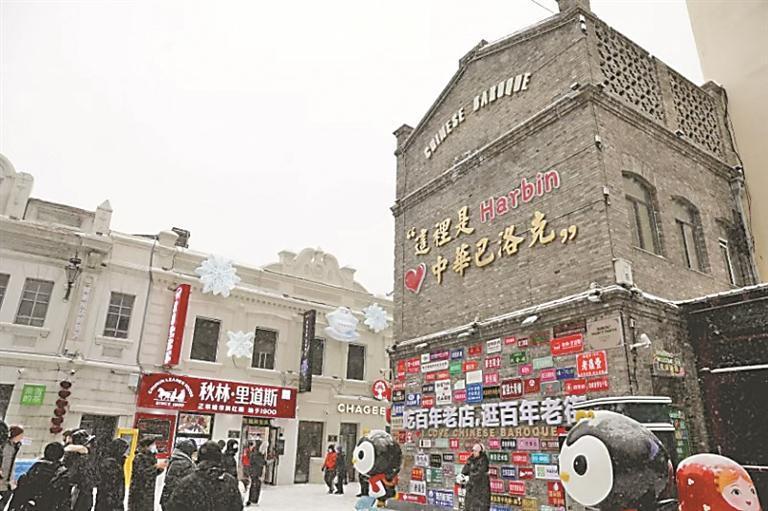
Core Viewpoint - Harbin aims to achieve a balanced economic growth with a GDP increase of 5% and a focus on enhancing production capacity and quality across various sectors, while ensuring social stability and environmental sustainability [11]. Economic Development Goals - The expected economic growth targets for Harbin include: - GDP growth of 5% - Agricultural output growth of 3.5% - Industrial value-added growth of 5.5% - Fixed asset investment growth of 7% - Retail sales growth of approximately 4.5% - Public budget revenue growth of 6% - Synchronization of urban and rural residents' income growth with economic growth - A reduction of carbon emissions per unit GDP by about 3.8% [11]. Consumer and Investment Expansion - Strategies to boost consumption include: - Developing new consumption formats and enhancing service supply - Implementing policies for replacing old consumer goods to stimulate urban and rural consumption - Expanding service consumption and promoting traditional brands [12]. - Investment strategies focus on: - Targeting key sectors for long-term investment support - Attracting foreign strategic investors and expanding industrial investments with over 700 projects and investments exceeding 60 billion yuan [12]. Industry Development - Emphasis on fostering new and future industries such as: - Digital economy and biotechnology - High-end equipment, aerospace, and renewable energy sectors - Upgrading traditional industries like manufacturing and food production through technological improvements [13]. - The goal is to create competitive advantages by strengthening supply chains in emerging sectors [13]. Tourism and Cultural Development - Plans to enhance tourism include: - Upgrading key scenic areas and promoting winter sports tourism - Integrating cultural, sports, and commercial activities to boost tourism appeal [14]. - Development of high-quality tourist attractions and services to improve visitor experience [14]. Agricultural and Rural Development - Agricultural initiatives aim to: - Enhance production capacity and quality through technology and sustainable practices - Maintain grain planting areas above 30 million mu and grain production above 25 billion jin [15]. - Focus on rural revitalization and improving living conditions through infrastructure development [16]. Reform and Open Economy - Efforts to improve the business environment include: - Streamlining administrative processes and enhancing digital government services - Strengthening legal protections for market participants [17]. - Expansion of high-level open cooperation, particularly in cross-border trade and logistics [17]. Urban Development and Infrastructure - Urban planning will focus on: - High-standard implementation of urban construction projects, including heating and transportation infrastructure [18]. - Initiatives for urban renewal and environmental improvements, including waste management and pollution control [19]. Social Welfare and Employment - Employment strategies include: - Expanding job opportunities for youth and vulnerable groups, targeting over 87,000 new urban jobs [20]. - Enhancements in social security and healthcare services to improve overall community well-being [20].

冲刺“万亿之城”,“更好潍坊”亮出四维新名片
Xin Lang Cai Jing· 2026-01-18 11:14
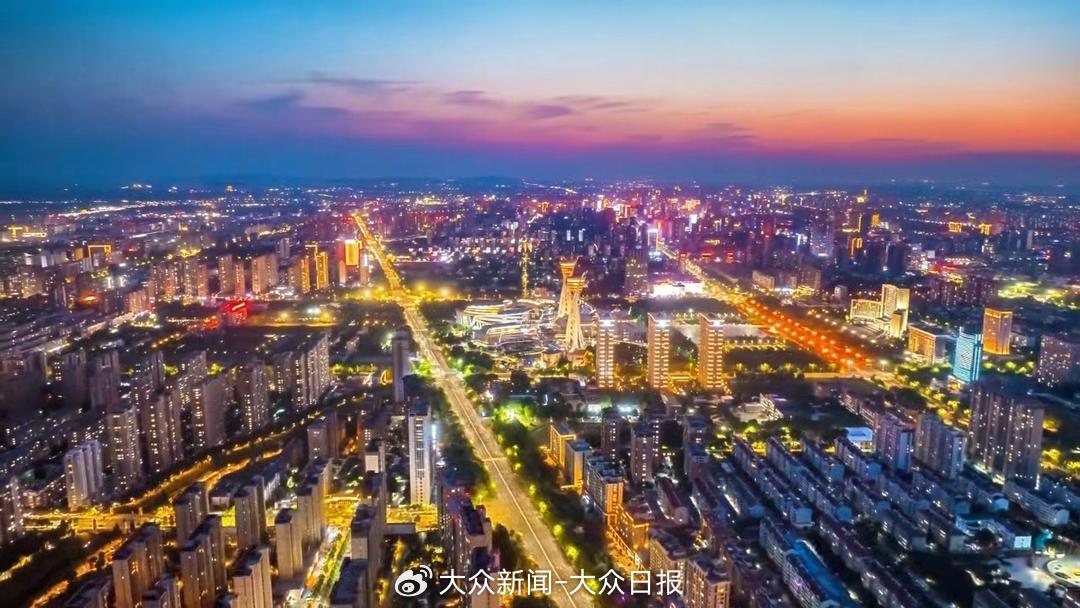
Core Perspective - Weifang is striving to become a trillion GDP city by 2026, showcasing its ambition through four new identity cards that reflect its historical depth, economic vitality, cultural richness, and commitment to public welfare [1][39]. Group 1: Economic Development - Weifang is on the verge of achieving a trillion GDP, leveraging its strong industrial base and strategic location as a national transportation hub [12][39]. - The city has a comprehensive transportation network that integrates road, rail, sea, river, and air, facilitating global connectivity [13]. - Weifang's manufacturing sector contributes significantly to the economy, accounting for about 10% of Shandong's industrial output and 1% of the national total, with a total industrial output value exceeding 1.2 trillion yuan [18]. Group 2: Cultural Heritage - The city’s identity is deeply rooted in its historical and cultural heritage, symbolized by the "Dragon" and "Elephant," which represent its spirit and strength [3][8]. - Weifang is recognized as a national cultural ecological protection zone, showcasing its rich intangible cultural heritage and traditional craftsmanship [8][18]. Group 3: Agricultural Innovation - Weifang is a leading agricultural hub, with a total agricultural output value exceeding 137 billion yuan, and it plays a crucial role in the province's food supply [18]. - The city is known for its innovative agricultural practices, contributing to national modernization efforts through various models like "Weifang Model" [18]. Group 4: Social Welfare and Health - Over 80% of Weifang's public budget is allocated to social welfare, enhancing education and healthcare services for its residents [21]. - The city is implementing a comprehensive healthcare reform, establishing a smart medical service system that improves patient care and accessibility [31][35]. Group 5: Urban Development and Quality of Life - Weifang emphasizes a balanced approach to urban development, integrating economic growth with cultural and social dimensions to enhance the quality of life for its residents [41]. - The city has been recognized as a "National Civilized City" for four consecutive years, reflecting its commitment to fostering a harmonious and cultured community [22].
各地开年亮出先手棋 聚焦科技创新、营商环境等主题
Jing Ji Ri Bao· 2026-01-16 00:05
Core Insights - Multiple regions in China, including Shanghai, Liaoning, and Hubei, have held meetings at the beginning of 2026 to focus on developing new productive forces, strengthening business entities, and optimizing the business environment, indicating a strong commitment to high-quality development [1][2][3] Group 1: Meeting Themes and Objectives - Shanghai has prioritized optimizing the business environment for nine consecutive years, launching a plan with 26 specific measures to address issues like bidding and payment delays [2] - Liaoning's meeting focused on eight key areas for improving the business environment, establishing a closed-loop management mechanism to address violations [2] - Hubei's technology innovation conference emphasized becoming a hub for original innovation and talent, showcasing a commitment to innovation-driven high-quality development [2][4] Group 2: Strategic Focus and Implementation - The early timing of these meetings signals a strong urgency to seize opportunities and address challenges, with specific task lists and project outlines being established [3] - Regions are aligning their strategies with national priorities, focusing on systemic support for business development and innovation, moving from single-point policies to integrated systems [4][5] - Emphasis on enhancing the role of enterprises in innovation is a key direction set by the central economic work conference, with various regions implementing measures to support both private and state-owned enterprises [4][5] Group 3: Investment and Economic Growth - Major project construction is highlighted as a key driver for economic stability, with regions like Yunnan and Shenzhen planning significant investments in industrial projects [8] - Investment strategies are shifting towards green energy and circular economy projects, focusing on efficiency and sustainability [8] - The emphasis on high-quality development includes addressing financial risks and ensuring food and energy security, with specific measures being deployed across various regions [9] Group 4: Social Welfare and Development - Many regions are prioritizing social welfare projects, including employment, education, and healthcare, to ensure a safety net for citizens [9] - Initiatives in urban renewal and rural revitalization are being emphasized to enhance living standards and prevent poverty [9]
2026年全省重大项目建设暨制造业高质量发展动员部署会召开
Zheng Zhou Ri Bao· 2026-01-05 00:47
1月4日,新年第一个工作日,2026年全省重大项目建设暨制造业高质量发展动员部署会在开封市召 开。省委书记刘宁出席并讲话,强调要深入贯彻习近平总书记在河南考察时重要讲话精神和关于河南工 作的重要论述,落实党的二十届四中全会和中央经济工作会议部署,按照省委十一届十次全会和省委经 济工作会议要求,以"开局就是奋斗、起步就要奋进"的奋发姿态,打好项目建设和制造业高质量发展主 动仗,为完成全年目标任务、实现"十五五"良好开局奠定坚实基础。省长王凯主持。 刘宁指出,去年以来,全省上下完整准确全面贯彻新发展理念,坚持把项目建设作为经济工作主抓 手,把产业项目作为项目建设重中之重,推动项目建设提质提速提效。要紧抓项目建设这个"牛鼻子", 锚定新一年目标任务,紧抓快干、真抓实干,发挥优势锻长板,聚焦问题补短板,持续营造抓项目、抓 好项目的浓厚氛围,不断蓄积壮大制造业高质量发展新动能。 刘宁强调,要把吃透用好政策和深化改革创新有机结合起来,紧抓中央"两重""两新"等重大政策机 遇,找准切入点发力点,完善配套政策举措,优化项目审批流程,用好政府引导基金、普惠贷款等工 具,深化"高效办成一件事"改革,营造一流营商环境。要把用好政府 ...
潮涌山河阔,风正一帆悬 ——致2025年的镇江与行进的中国
Yang Zi Wan Bao Wang· 2025-12-26 06:24
Core Viewpoint - The article reflects on the achievements of Zhenjiang in 2025 and outlines a vision for the future, emphasizing high-quality development, innovation, and a commitment to improving the lives of its citizens as part of China's modernization efforts [6][15][18]. Group 1: Economic Development - Zhenjiang is focusing on high-quality development as its primary task, with strong momentum in industrial upgrades and accelerated innovation [6][10]. - The city has launched a "one-number strategy" aimed at becoming an industrial powerhouse, with significant advancements in sectors like aerospace and smart agriculture [10]. - The introduction of the world's first commercially operated eVTOL in Zhenjiang signifies the city's commitment to embracing future industries [10]. Group 2: Regional Integration - The "Ning-Zhen-Yang integration" initiative is gaining momentum, enhancing transportation links and facilitating the development of a metropolitan area [10]. - Zhenjiang's strategic location with a world-class shipping canal and a major port supports its integration into regional development [10]. Group 3: Environmental Sustainability - The city prioritizes ecological preservation, viewing it as a core competitive advantage, with a commitment to maintaining its natural beauty and promoting green development [11]. - The philosophy of "green mountains and clear waters are as valuable as mountains of gold and silver" is central to Zhenjiang's development strategy [11]. Group 4: Social Welfare - Zhenjiang has focused on addressing citizens' urgent needs, implementing reforms that enhance the quality of life and improve public services [11]. - Initiatives like the "convenient bus" service have been introduced to make daily commutes easier for residents, reflecting a commitment to improving community welfare [11]. Group 5: Future Aspirations - The city aims to transform its ambitious vision into actionable plans in 2026, focusing on innovation, openness, and sustainable development [15][18]. - Zhenjiang seeks to enhance its unique value within the Yangtze River Delta, aiming for deeper integration and collaborative growth [15].
突破8000亿元,潍坊“十四五”地区生产总值连跨三个台阶
Qi Lu Wan Bao· 2025-12-25 11:37
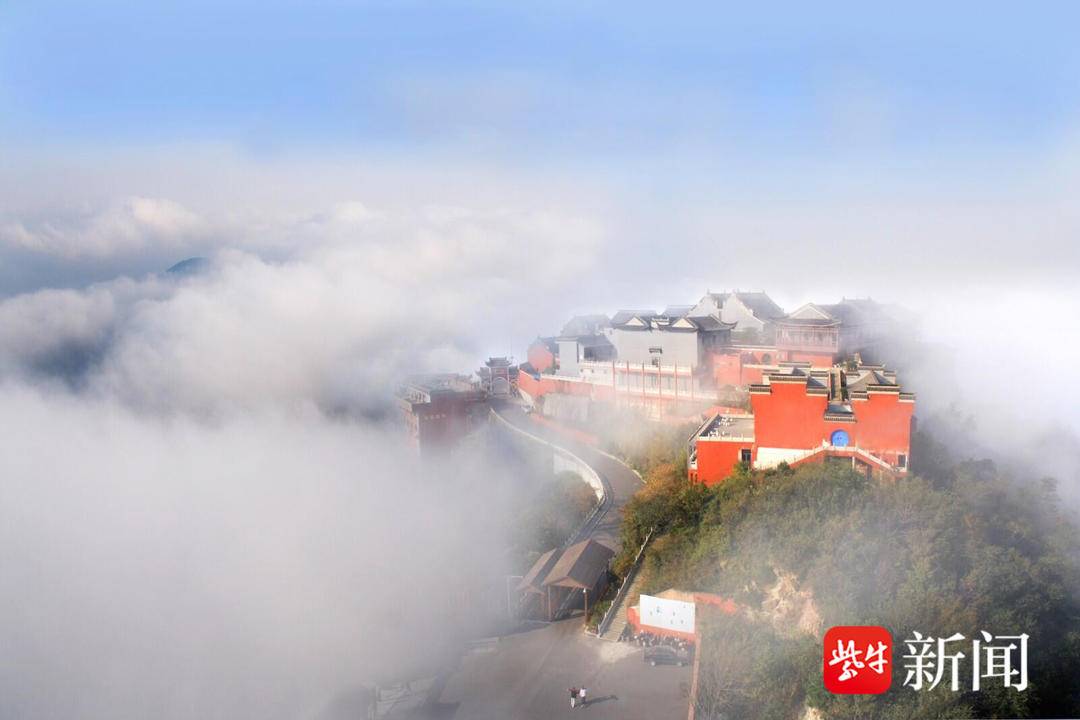
Core Insights - Weifang's economic and social development has achieved historic milestones during the 14th Five-Year Plan, with GDP surpassing 800 billion yuan and industrial revenue exceeding 1.2 trillion yuan, marking a 39.4% increase from the end of the 13th Five-Year Plan [1] Economic Performance - The GDP of Weifang has increased its share of the provincial total from 8% to 8.3% [1] - The total output value of agriculture, forestry, animal husbandry, and fishery, as well as the added value of the service industry and retail sales of consumer goods, have all grown by over 30% compared to the end of the 13th Five-Year Plan [1] - The total import and export volume has increased by 88.2%, crossing the thresholds of 200 billion and 300 billion yuan, with its provincial share rising from 8.7% to 10.7% [1] Innovation and Technology - Weifang has been recognized as a national innovation city and a pilot city for "Science and Technology Innovation China," with significant advancements in research platforms and high-tech enterprises [2] - The number of high-tech enterprises and technology-based SMEs has doubled since the end of the 13th Five-Year Plan, with the output value of high-tech industries increasing by 9.1 percentage points [2] Infrastructure and Investment - Approximately 1,500 key projects are implemented annually, with around 300 completed each year, supporting high-quality economic development [3] - The city has seen a significant increase in private investment, with 137 projects included in the national platform for promoting private capital [3] Trade and Global Cooperation - Weifang maintains trade relations with 218 countries and regions, with over 2,067 new foreign trade enterprises established [4] - The city has attracted over 750 new foreign-funded enterprises, with actual foreign investment exceeding 4.8 billion USD [4] Agricultural Development - The total output value of agriculture, forestry, animal husbandry, and fishery ranks first in the province, with grain production exceeding 9 billion jin [4] - The city has established a smart agriculture system and has been recognized as a national model for modern facility agriculture [4] Environmental Sustainability - Weifang has been approved as a national pilot city for coordinated innovation in pollution reduction and carbon reduction, with significant improvements in air quality indicators [5] - The city has achieved a 195% increase in renewable energy installed capacity since the end of the 13th Five-Year Plan [5] Social Development - Public spending on people's livelihoods accounts for over 80% of the general public budget, with annual urban job creation exceeding 100,000 [6] - The city has made significant advancements in education and healthcare, with a high enrollment rate in preschool education and the establishment of a data-sharing center for medical services [6]
平房 13个产品入选省重点新产品
Xin Lang Cai Jing· 2025-12-24 22:54
(来源:黑龙江日报) 转自:黑龙江日报 本报讯(记者薛婧)近日,省工信厅发布了2025年度省重点新产品认定名单。平房区共有12户企业研发 的13个产品成功入选,数量占全市四分之一。这是平房区(哈经开区)在强化企业创新主体地位、培育 发展新动能方面取得的又一显著成果。 近年来,平房区工信科技局始终将科技创新作为引领高质量发展的核心动力,多措并举激发企业创新活 力。本次获得认定的13个省重点新产品,涵盖航空航天、高端装备、新材料、电子信息、智能农机、数 字经济等平房区重点发展的产业领域,普遍具有技术先进、自主知识产权清晰、市场前景广阔、经济效 益和社会效益显著等特点。 据悉,省工信厅将对获得重点新产品称号认定的企业发放实际成交额5%的资金奖励,本次产品获得认 定的企业预计可获得奖补资金共460万元。平房区工信科技局将继续坚定不移实施创新驱动发展战略, 全力支持企业提升创新能力,培育更多具有核心竞争力的新产品、新技术,不断催生新质生产力,赋能 区域工业经济持续健康发展。 ...
大家谈|创新驱动本质是人才驱动,如何把握?
Xin Lang Cai Jing· 2025-12-21 21:43
Core Viewpoint - Talent is recognized as the primary resource and core element for innovation, with a strategic focus on talent-driven development in Heilongjiang Province's "14th Five-Year Plan" [1] Group 1: Talent Development Strategy - Heilongjiang Province aims to promote talent revitalization and cultivate a high-quality human resource team as part of its development goals [1] - The province is accelerating the construction of a modern industrial system centered on advanced manufacturing, necessitating a higher demand for talent [2] Group 2: Talent Training System - The optimization of talent structure is essential for industrial upgrading, requiring a collaborative approach between talent supply and industry demand [2] - The province plans to dynamically adjust higher education disciplines to align with key industry directions, focusing on strategic emerging industries such as aerospace, electronic information, and new materials [2] Group 3: Innovation and Incentives - A scientific evaluation system and improved incentive mechanisms are crucial for unleashing talent potential and fostering innovation [3] - The reform of talent evaluation mechanisms will focus on innovation value, capability, and contribution, with specific metrics for different types of talent [3] Group 4: Talent Ecosystem Optimization - A comprehensive talent development ecosystem is necessary to attract, retain, and effectively utilize talent, creating a strong magnetic effect for talent aggregation [4] - The province aims to enhance innovation platforms, optimize the business environment, and cultivate cultural recognition to strengthen its talent attraction capabilities [4]
第十届山东省省长质量奖公布!潍坊市斩获两个奖项
Qi Lu Wan Bao· 2025-11-27 07:39
Group 1 - The Shandong Provincial Government announced the winners of the 10th Shandong Provincial Governor Quality Award, with 5 units and 5 individuals receiving the award, and 10 units and 10 individuals receiving the nomination award [1] - The Governor Quality Award is the highest quality award established by the provincial government, aimed at encouraging significant achievements in quality work and promoting the construction of a quality-oriented province and brand strategy [1] - Weifang City has won a total of 21 Governor Quality Awards and nomination awards, ranking second in the province alongside Qingdao [1] Group 2 - Weifang has implemented quality improvement initiatives and developed a brand cultivation mechanism, with 56 brands selected as "Good Products of Shandong," ranking third in the province [2] - The city has strengthened quality infrastructure construction and proposed a plan to enhance quality infrastructure to support the modern industrial system, with projects in power equipment, smart agriculture machinery, and high-end aluminum selected as provincial quality strong chain pilot projects [2] - Weifang is promoting quality enhancement at the county level, with Shouguang, Kuiwen, and Qingzhou included in the first batch of national quality strong county cultivation database, showcasing solid results in county-level quality construction [2]