
染料

Search documents
闰土股份(002440.SZ):公司数码印花产品主要用于纺织品的数码印花
Ge Long Hui· 2026-02-13 08:20
Group 1 - The core viewpoint of the article is that Luntou Co., Ltd. (002440.SZ) primarily focuses on digital printing products used for textile digital printing [1] Group 2 - The company has engaged with investors through an interactive platform to clarify its product offerings [1]

建新股份股价强势上涨,行业景气度提升与资金推动成主因
Jing Ji Guan Cha Wang· 2026-02-13 01:16
Core Viewpoint - The recent strong performance of Jianxin Co., Ltd. (300107.SZ) is primarily driven by the improvement in industry sentiment and the influx of main capital [1] Industry Policy and Environment - The chemical industry, particularly in the dye segment, has shown positive signals recently. According to UBS analysis, after four years of deep adjustment, the chemical industry is at a historical bottom, with a fundamental reversal in supply-demand dynamics expected between 2026 and 2028. Additionally, the prices of disperse dyes are rising due to tight supply of key upstream intermediates, benefiting companies in the industry [2] Capital Movement - Recent capital flow data indicates a net inflow of main capital. For instance, on February 12, 2026, the net inflow of main capital for the stock was 76.48 million yuan, with a net volume of 2.53%, leading to a 9.05% increase in stock price. Over the last five trading days (up to February 12), the cumulative stock price increase was 17.93% [3] Stock Price Situation - From a technical perspective, the stock has recently broken through key positions such as the 20-day moving average, with significantly increased trading activity. On February 12, the turnover rate reached 23.99%, with a transaction amount of 719 million yuan, indicating high market attention. However, the company's fundamentals still face challenges. According to the earnings forecast released on January 26, 2026, Jianxin Co. is expected to report a net loss attributable to shareholders of 20 million to 29 million yuan for 2025, primarily due to weak industry demand, declining product prices, and increased R&D investment. Therefore, the recent strong stock price more reflects expectations of industry cycle improvement and changes in capital flow [4]

企业调改阵痛下,数据窥破资金踪迹
Sou Hu Cai Jing· 2026-02-12 17:22
Core Viewpoint - The article emphasizes the importance of tracking institutional fund behavior rather than merely focusing on profit and loss figures or strategic statements from companies, suggesting that true market movements are driven by underlying fund participation rather than just event-driven narratives [1]. Group 1: Event-Driven Market Characteristics - The energy market in 2025, influenced by geopolitical conflicts, is identified as a classic event-driven case, with the market attributing price movements solely to these events [3]. - Prior to the conflict, institutional fund activity indicated a sustained engagement, which did not immediately affect stock prices, highlighting a divergence between fund behavior and price movements [5]. Group 2: Cross-Sector Fund Behavior - Observations across different sectors reveal a consistent pattern where institutional fund activity precedes market attention, indicating that price movements often lag behind fund participation [7]. - In the sports sector during the summer of 2025, stock prices began to rise as market interest grew, but key fund signals had already emerged earlier in the market cycle [7]. Group 3: Signals During Market Fluctuations - Institutional fund participation can lead to prolonged price stagnation, which may be overlooked by average investors, as seen in the dye sector at the beginning of 2026 [8]. - The commercial space sector saw active fund participation before it became a market focus, with price stability contrasting with active fund engagement [10]. Group 4: Challenges of Fundless Themes - Not all thematic concepts lead to upward price movements; a commercial space sector stock experienced a decline despite rising sector interest due to a lack of sustained fund participation [12]. - The absence of active institutional engagement in a stock, even during periods of low price, indicates a lack of foundational support for price increases, reinforcing that themes alone cannot drive market performance [12]. Group 5: Data-Driven Investment Insights - The article advocates for a data-driven approach to understanding market dynamics, focusing on fund behavior rather than subjective interpretations of events or themes [12]. - Establishing a data-driven investment perspective is crucial for investors to navigate the complexities of the market and identify reliable investment signals [12].

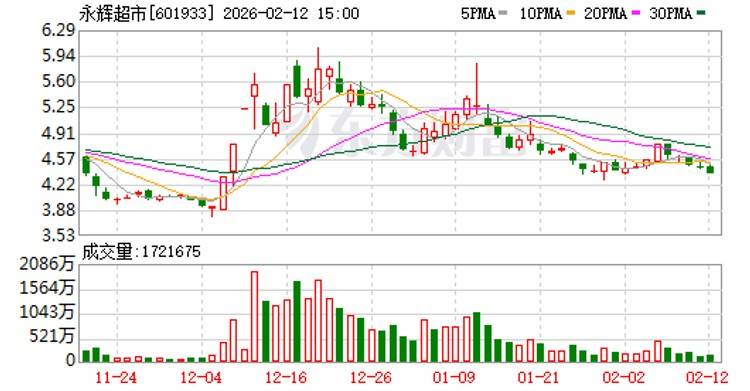
研报掘金丨中金:维持浙江龙盛“跑赢行业”评级,上调目标价27%至21.52元
Ge Long Hui· 2026-02-12 08:47
Group 1 - The core viewpoint of the article is that Zhejiang Longsheng's competition and pricing strategy are undergoing changes, with disperse dye prices still in the early stages of an upward trend [1] - The prices of intermediates such as para-phenylenediamine are at the bottom of the cycle, indicating potential for upward movement [1] - The company's revenue and profit from the "Huaxing New City" project in Q4 2026 are expected to be confirmed, showing significant earnings elasticity [1] Group 2 - Despite the increase in disperse black prices from 16,000 yuan/ton to 21,000 yuan/ton since early January, the actual profit increase for disperse dye manufacturers is limited due to rising costs of intermediates [1] - There is still ample room for further increases in disperse dye prices, with expectations for a new round of price hikes after the Spring Festival [1] - The current market capitalization of the company may only reflect the anticipated rise in disperse dye prices, and any increase in the prices of intermediates like para-phenylenediamine could significantly enhance profit expectations [1] Group 3 - Assuming the company exports 20,000 tons of disperse dye, 4,000 tons of para-phenylenediamine, 3,000 tons of para-cresol, and 500 tons of reducing agents, each 10,000 yuan/ton price increase could boost profits by 1.5 billion yuan, 300 million yuan, 220 million yuan, and 40 million yuan respectively [1] - The target price has been raised by 27% to 21.52 yuan, maintaining an "outperforming the industry" rating [1]

福莱蒽特产品提价,2025年业绩预增超80%
Jing Ji Guan Cha Wang· 2026-02-12 08:16
Core Viewpoint - The company has recently increased product prices and projected a significant rise in performance, while some shareholders plan to reduce their holdings, indicating a mixed outlook for the company amidst industry challenges related to environmental policies and raw material price fluctuations [1][2][4]. Price Adjustment - On February 9, 2026, the company announced a price increase for 10 types of disperse dyes, including Disperse Black ECT (300%), with an average increase of approximately 10%. This led to a stock price surge, reaching a market capitalization of 4.559 billion yuan. The price hike aims to pass on upstream cost pressures, which may impact short-term operations [2]. Performance Forecast - On January 19, 2026, the company projected a net profit attributable to shareholders for 2025 between 40 million and 50 million yuan, representing a year-on-year increase of 81.67% to 127.08%. The non-recurring net profit is expected to grow by 214.37% to 287.48%, primarily due to product structure optimization and reduced losses from subsidiaries. Final data will be available after the official annual report [3]. Shareholder Actions - On January 6, 2026, the company announced that shareholders Chen Wangquan, Ren Pengfei, and Gao Xiaoli plan to reduce their holdings by up to 480,000 shares (0.36% of total share capital) within three months following the announcement, citing personal funding needs. This reduction may affect market sentiment [4]. Fund Management - On February 2, 2026, the company utilized 25 million yuan of idle raised funds to reinvest in large bank time deposits, aiming to enhance fund efficiency. A similar operation previously yielded a return of 154,900 yuan, reflecting the company's cash flow management strategy [5].

基础化工行业专题:染料产业链格局改善,景气度有望迎来修复
Huaan Securities· 2026-02-12 08:01
Investment Rating - The industry investment rating is "Overweight" [2] Core Insights - The dye industry is expected to see a recovery in demand due to both domestic and international factors, with China maintaining its position as the world's largest producer, consumer, and exporter of dyes, with an annual production exceeding 900,000 tons [5][18] - The supply structure of dyes is improving, with leading companies possessing significant pricing power due to the elimination of smaller, less compliant enterprises [7][29] - The price increase of dyes is driven by the intermediate production process, benefiting companies with integrated supply chains [8][48] Summary by Sections Demand and Supply Dynamics - The dye industry is characterized by diverse products and applications, with significant growth in downstream printing and dyeing fabric production, which is projected to grow at a compound annual growth rate (CAGR) of 2.59% from 2018 to 2024 [20] - China's dye export volume is expected to reach 272,000 tons in 2024, reflecting an 11% year-on-year increase, supported by a compound annual growth rate of 7.51% from 2020 to 2025 [23] Environmental and Regulatory Landscape - The dye industry faces stringent environmental regulations, leading to the gradual elimination of high-pollution, low-compliance small enterprises, thus optimizing the industry structure [26][29] - Recent regulatory changes have increased compliance costs for smaller players, further consolidating market share among larger firms [30] Intermediate Supply and Price Trends - The production of key intermediates, such as H acid and reducing agents, is critical for dye manufacturing, with recent supply disruptions leading to price increases [40][45] - The price of reducing agents has surged from 25,000 yuan/ton to approximately 50,000 yuan/ton, directly impacting the production costs of disperse dyes [43] Key Companies in the Industry - Zhejiang Longsheng is a leading enterprise with a dye production capacity of 300,000 tons and a strong integrated supply chain [51] - RunTu Co. has a well-established dye industry system with a total dye production capacity of 238,000 tons [53] - Annoqi focuses on differentiated dye products and is integrating AI technology into its production processes [54] - Jinhua Group has a dye production capacity of 95,000 tons and is expanding its product portfolio through strategic acquisitions [56]



万丰股份股价跌5.01%,华夏基金旗下1只基金位居十大流通股东,持有75.08万股浮亏损失96.85万元
Xin Lang Cai Jing· 2026-02-12 05:58
Group 1 - The core point of the news is that Wanfu Co., Ltd. experienced a stock price decline of 5.01%, trading at 24.46 yuan per share, with a total market capitalization of 3.262 billion yuan as of the report date [1] - Wanfu Co., Ltd. is located in Shaoxing, Zhejiang Province, and was established on November 4, 2003. The company was listed on May 10, 2023, and its main business involves the research, production, and sales of disperse dyes and their filter cakes [1] - The main revenue composition of Wanfu Co., Ltd. is 99.39% from disperse dyes and raw dyes, with other income contributing 0.61% [1] Group 2 - Among the top circulating shareholders of Wanfu Co., Ltd., a fund under Huaxia Fund holds a significant position. The Huaxia Zhisheng Pioneer Stock (LOF) A (501219) increased its holdings by 269,400 shares, totaling 750,800 shares, which represents 1.5% of the circulating shares [2] - The Huaxia Zhisheng Pioneer Stock (LOF) A (501219) was established on December 15, 2021, with a current scale of 878 million yuan. Year-to-date returns are 7.72%, ranking 1750 out of 5569 in its category, while the one-year return is 45.39%, ranking 1147 out of 4295 [2] - The fund manager of Huaxia Zhisheng Pioneer Stock (LOF) A (501219) is Sun Meng, who has a tenure of 5 years and 334 days, with a total asset scale of 24.417 billion yuan. The best fund return during his tenure is 158.44%, while the worst is -0.23% [2]

染料价格持续上行 行业格局加速生变
Zheng Quan Ri Bao Wang· 2026-02-12 04:28
Core Viewpoint - The dye industry is experiencing a significant price increase driven by the rising costs of upstream intermediates, which is expected to continue in the short term and may accelerate industry consolidation [1][2][4]. Group 1: Price Trends - Several dye-related companies have announced price increases, with Zhejiang Longsheng Group reporting a rise of 5000 yuan/ton for certain disperse dyes [2]. - The price of key intermediates, particularly reducing agents, has surged to around 70,000 yuan/ton, contributing to the overall increase in dye prices [2]. - The current price increase is expected to last for 1-3 months, followed by a phase of high-level consolidation, with potential stabilization in the fourth quarter if demand does not improve significantly [3]. Group 2: Industry Dynamics - The rise in dye prices is anticipated to accelerate industry consolidation due to high raw material costs and stricter environmental regulations [4]. - Leading companies with integrated intermediate capabilities are likely to strengthen their market positions, potentially using a "volume compensates for price" strategy to expand their advantages [4]. - Companies without intermediate support may face profitability challenges due to high procurement costs and weak bargaining power, leading to a "high-price procurement, low-price sales" dilemma [4][5]. Group 3: Strategic Adjustments - Companies lacking intermediate support need to seek breakthroughs by establishing long-term collaborations with intermediate suppliers or exploring high-end, functional, and environmentally friendly dye segments to avoid homogenization [5]. - Improvements in performance for companies without intermediate support will rely more on strategic adjustments and upgrades rather than an overall industry recovery [5].
中银国际:染料价格上行 一体化企业有望受益
智通财经网· 2026-02-12 02:53
Group 1 - The core viewpoint is that the prices of dye intermediates, particularly reducing agents, have been rising since mid-January, leading to an increase in dye prices. This trend is supported by a concentrated supply and stringent safety and environmental regulations, which are optimizing the industry landscape. Current prices are at historically low levels, and cost pressures are expected to further transmit downstream, benefiting companies with stable market shares and related intermediate support [1][2][4]. Group 2 - The cost of intermediates is driving a rapid increase in dye prices. The price of reducing agents, a key intermediate for disperse dyes, has surged from 25,000 yuan/ton to around 70,000 yuan/ton since mid-January. Companies like Zhejiang Longsheng and Runtao Co. have announced price increases for disperse dyes, with Zhejiang Longsheng raising prices by 2,000 yuan/ton and Runtao Co. by 5,000 yuan/ton for certain products [2][3]. - The dye prices have been historically low due to intensified industry competition. By 2025, the average export price of disperse dyes is expected to decline by 6.66% year-on-year to $4.36/kg, marking the lowest level in nearly a decade [2][3]. - The supply of dyes is concentrated, with China being the largest producer, trader, and consumer of dyes globally, accounting for approximately 70%-75% of the world's total production. The top five dye-producing companies in China are projected to account for 61.07% of the total national output in 2024, an increase of 1.54 percentage points from 2023 [3][4]. Group 3 - The investment recommendation suggests that dye prices are at a bottom range, and changes in cost and strict regulations may improve industry conditions. Companies with stable market shares, high safety and environmental investments, and complete industrial chain support are likely to benefit. Recommended companies include Zhejiang Longsheng, with Runtao Co. suggested for further attention [4].
中银晨会聚焦-20260212-20260212
Bank of China Securities· 2026-02-12 01:01
Group 1: Macro Insights - January CPI growth rate year-on-year was lower than expected, while PPI growth rate was slightly higher than expected, influenced by the Spring Festival timing and base period rotation [4][5] - The average impact of the base period rotation on CPI and PPI year-on-year indices is estimated to be approximately 0.06 and 0.08 percentage points, respectively, which is relatively small [4][5] - CPI in January increased by 0.2% month-on-month and year-on-year, with core CPI rising by 0.8%, indicating a mixed inflationary environment influenced by seasonal factors and external inputs [5] Group 2: Real Estate Sector - The traditional residential development sector is contracting, while commercial real estate is entering a policy-driven growth phase, with a focus on creating new consumption scenarios to meet diverse consumer needs [12][13] - The shift from traditional commercial spaces to new consumption scenarios emphasizes emotional engagement and immersive experiences, moving beyond mere transactional spaces [14][20] - The rise of non-standard commercial projects, characterized by innovative space and operational models, is gaining traction, particularly in major cities like Shanghai and Beijing [16][17] Group 3: Chemical Industry - The dye industry is experiencing price increases due to rising costs of intermediate products, with significant price hikes observed in January, benefiting integrated companies with stable market shares [24][25] - The concentration of supply in the dye industry is improving due to stringent safety and environmental regulations, which may lead to a more favorable market environment for leading companies [26][27] Group 4: Electronics Sector - The demand for AI computing materials is expected to rise significantly as cloud service providers increase capital expenditures, leading to a supply-demand mismatch in the electronic fabric market [29][30] - Traditional electronic fabric production is transitioning to low-dielectric materials, with price increases anticipated across both traditional and low-dielectric electronic fabrics due to supply constraints [32][33]