现代化工

Search documents
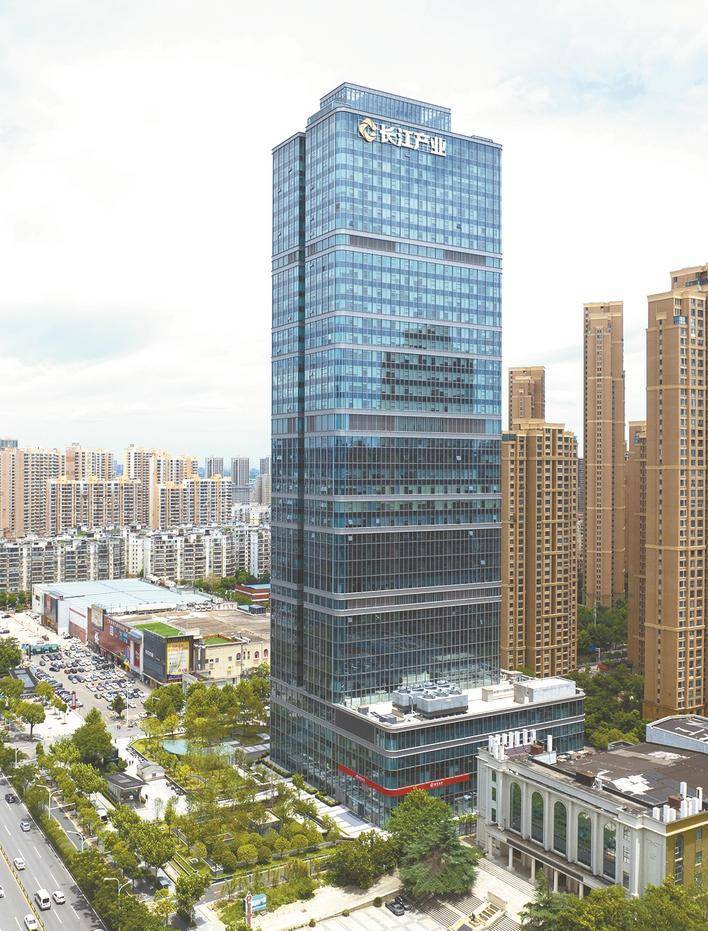
集群联动 长江产业集团上市公司东湖中心正式启用
Zhong Zheng Wang· 2025-12-09 00:35
Core Viewpoint - The establishment of the Donghu Center by Changjiang Industrial Group in Wuhan marks a new phase of cluster synergy and ecological empowerment for listed companies [1] Group 1: Donghu Center and Its Role - The Donghu Center serves as a headquarters base for listed companies rooted in Wuhan and acts as a value hub linking capital, technology, and markets [1] - The center is positioned as a strategic support point for the central China region, aiming to radiate nationwide [1] - The group plans to use the Donghu Center to build an innovation ecosystem, integrate various resources, and invest in the real economy, creating a demonstration area that combines scenic innovation and vibrant ecology [1] Group 2: Changjiang Industrial Group Overview - Changjiang Industrial Group is a provincial-level industrial investment platform in Hubei, responsible for strategic emerging industry investment and management of provincial industrial investment funds [2] - The group operates under a model that includes one investment platform per industry, multiple enterprise entities, a fund group, and a public service system [2] - The focus is on eight major industrial sectors: optoelectronic information, automotive and high-end manufacturing, life health, modern chemicals, new energy, ecological environment, new materials, and Beidou digital [2]
湖北省国资委党委书记、主任陈忠:以改革之笔,绘国资国企新蓝图
Xin Lang Cai Jing· 2025-12-04 11:25
Core Insights - The article discusses the ongoing reforms and development strategies for state-owned enterprises (SOEs) in Hubei province, emphasizing their role as a pillar of economic development and market stability as they approach the "14th Five-Year Plan" [2][12]. Group 1: Achievements During the 14th Five-Year Plan - Hubei's state-owned enterprises have significantly improved their scale and strength, with total assets reaching 3.25 trillion yuan, moving up 10 places in national rankings. Revenue is expected to exceed 600 billion yuan by 2025, tripling from the end of the 13th Five-Year Plan, maintaining the highest growth rate in Central China for three consecutive years [3][13]. - The functional role of these enterprises has been effectively demonstrated, with over 1 trillion yuan invested in various infrastructure projects, including 85% of the province's highways and 30% of its railways. They have also built nearly 40,000 units of affordable housing and enhanced grain storage capacity to 1.5 million tons [3][13]. - The restructuring of state-owned enterprises has led to a more rational layout, consolidating 28 enterprises into 10 and forming two new first-level enterprises. Investments in emerging industries have seen growth rates exceeding 50% for three consecutive years [3][13][14]. Group 2: Reform and Innovation - The reform and innovation vitality of Hubei's SOEs has been notably enhanced, with a continuous increase in R&D investment of over 20% annually for five years. The number of high-tech enterprises has risen to 148, and 62 innovation joint ventures have been established [4][14]. - The 20th National Congress of the Communist Party of China has set new missions for SOEs, emphasizing the need to strengthen, optimize, and expand state-owned enterprises, focusing on innovation, effective governance, and market-driven mechanisms [5][16]. Group 3: Future Strategies - Hubei's SOEs will implement three major actions to support the construction of a modern industrial system: enhancing industrial competitiveness through strategic mergers and acquisitions, improving the quality of modern service industries, and upgrading core infrastructure capabilities with an investment of over 1.5 trillion yuan in the next five years [7][17]. - Specific measures for deepening reforms include optimizing the layout and structure of SOEs, fostering collaborative innovation mechanisms, and establishing a flexible market-oriented operational framework [8][18].


【地方动态】“楚商回乡·共建支点”提振应城县域经济
Xin Lang Cai Jing· 2025-12-04 11:25
Core Viewpoint - The article highlights the efforts of the Xiangyang City Federation of Industry and Commerce in Hubei Province to promote the return of Chu merchants and entrepreneurship, achieving significant results in attracting capital, facilitating project implementation, and optimizing the development environment [1][7]. Group 1: Building Efficient Communication Bridges - The Federation has implemented a "precise service" approach to overcome geographical barriers and facilitate connections, establishing a mechanism for city leaders to engage with overseas business associations [2][8]. - Since 2022, 12 projects from returning Chu merchants have been successfully implemented, with a total investment of 2.94 billion yuan and the creation of over 2,000 new jobs [2][8]. Group 2: Optimizing the Entrepreneurship Ecosystem - The Federation is focused on improving the business environment by conducting in-depth enterprise research and providing policy recommendations to local government, promoting initiatives like "funds for enterprises without application" [3][9]. - Efforts to address key concerns for talent, such as housing and cultural life, have been made to create a welcoming environment for returning merchants and talent [3][9]. Group 3: Focusing on Key Industries for Investment - The Federation is targeting the modernization of industries such as green building materials and renewable energy, utilizing a "Chuchang Chucai Database" for precise investment attraction [4][10]. - Various promotional activities have been organized to showcase the unique resources and investment potential of Xiangyang City, fostering a strong consensus among returning merchants [4][10][11]. Group 4: Leveraging Exemplary Role Models - The Federation has developed a multi-dimensional promotional strategy to amplify the "demonstration effect" of returning Chu merchants, achieving over 5 million views on promotional content [5][12]. - A collection of 21 exemplary cases of returning merchants has been published, and numerous promotional events have attracted 386 entrepreneurs for on-site visits [5][12].
湖北省国资委:强化资本运作 以战略性并购重组为手段加快省属实体产业转型升级
Zheng Quan Shi Bao Wang· 2025-12-04 02:46
Core Viewpoint - The Hubei Provincial State-owned Assets Supervision and Administration Commission aims to enhance the competitiveness of modern industries through the "Industry Foundation Strengthening Chain" initiative, focusing on strategic mergers and acquisitions for the transformation and upgrading of state-owned enterprises [1] Group 1: Strategic Initiatives - The initiative will be implemented over the next five years, targeting a revenue share of over 50% from pillar industries such as automotive manufacturing and modern chemical industries [1] - The plan emphasizes a "three-line advance" strategy, which includes strengthening capital operations [1] Group 2: Emerging Industries - The focus will also be on emerging industries like low-altitude economy and artificial intelligence, aiming to create a cohesive industrial chain [1] - Future-oriented industries, such as humanoid robotics, will be strategically positioned within Hubei's unique modern industrial system [1]
党的二十届四中全会精神在我市各区干部群众中引发热烈反响
Nan Jing Ri Bao· 2025-10-27 02:13
Group 1: Economic Development and Modernization - The 20th Central Committee's Fourth Plenary Session approved the proposal for the 15th Five-Year Plan, emphasizing the need for top-level design and strategic planning for the next five years, aiming to advance Chinese-style modernization [1] - The session highlighted the construction of a modern industrial system and the strengthening of the real economy, with specific focus on industrial growth, project acceleration, and innovation integration in the Jiangbei New Materials Science and Technology Park [2] - The Binjiang Development Zone plans to focus on high-quality industrial development, particularly in new-generation information communication, green intelligent vehicles, and high-end equipment manufacturing [3] Group 2: Agricultural Modernization - The session underscored the importance of accelerating agricultural and rural modernization, aiming for comprehensive rural revitalization, which is crucial for the city's agricultural strategy [4] - The Pukou District has been recognized for its achievements in rural revitalization, with plans to enhance grain production capacity and develop specialized agriculture [5] Group 3: Social Welfare and Employment - The session called for increased efforts in improving people's livelihoods and promoting common prosperity, guiding local health authorities to innovate service delivery and enhance community health services [6] - Employment was identified as a fundamental aspect of people's livelihoods, with local employment services focusing on creating community-based job opportunities and supporting vulnerable groups [7]
沙坡头区50余家企业生产经营管理人员集体“充电”
Sou Hu Cai Jing· 2025-10-24 04:25
Core Insights - The training program focused on high-quality development in new industrialization, attracting over 50 enterprises from key industries in the Shapotou District [1][3] - The training utilized a comprehensive teaching model that included policy interpretation, specialized teaching, case sharing, and discussion [1] - Key topics included digital transformation for SMEs, smart energy management, AI technology application, and safety production [1][3] Group 1 - The training aimed to enhance enterprises' understanding of digital transformation and cultivate high-level management talent [3] - Participants expressed that the training effectively combined policy and practice, particularly in the application of AI in production lines [3] - The program is expected to solidify the foundation for new industrialization and inject new momentum into the industrial economy of Shapotou District [3]

陕西:规范招商引资行为,防止“内卷”式恶性竞争
Sou Hu Cai Jing· 2025-10-14 10:49
Core Viewpoint - The recent measures announced by the Shaanxi Provincial Government aim to enhance foreign investment confidence, improve the quality of investment cooperation, and prevent unhealthy competition in attracting foreign investment. Group 1: Policy Implementation - The implementation of market access policies will enhance the level of foreign investment liberalization, supporting foreign institutions to establish or expand operations legally [1][6] - The plan encourages foreign investment in commercial pension and health insurance sectors, allowing the establishment of foreign-owned insurance companies [1][6] - There will be further facilitation for foreign financial institutions to participate in the bond market and engage in national debt futures trading [1][6] Group 2: Investment Attraction - The government will increase policy support to enhance the attractiveness of foreign investment, particularly in manufacturing and high-tech sectors [2][8] - Foreign enterprises investing in encouraged industries will benefit from tax exemptions on imported self-use equipment, excluding specific items [2][8] - The plan promotes the establishment of private equity funds by foreign investors in Shaanxi [2][8] Group 3: Optimizing Business Environment - The government aims to optimize the business environment by ensuring fair competition in bidding processes and treating domestic and foreign enterprises equally in government procurement [3][10] - There will be a focus on maintaining fair competition and eliminating practices that hinder a unified national market [3][10] - The plan emphasizes the importance of knowledge property rights protection and the establishment of a rapid response system for intellectual property disputes [10][11] Group 4: Promoting Investment Projects - The strategy includes innovative methods for attracting foreign investment, such as collaborating with international chambers of commerce and conducting targeted investment promotion activities [12][13] - The government will create a brand "Invest in China, Choose Shaanxi" to attract multinational companies and promote investment in key sectors [12][13] - There will be a focus on precise investment attraction efforts, targeting industries with significant market potential and leveraging local advantages [12][13]
从一滴油到千度电,玉门能源转型的“铁人答卷”
Zhong Guo Fa Zhan Wang· 2025-10-11 07:17
Core Viewpoint - The article highlights the transformation of Yumen from a resource-dependent economy to a diversified energy hub, showcasing resilience and innovation in the face of challenges [1][4][9]. Group 1: Historical Context and Challenges - Yumen's economy was historically reliant on oil, leading to vulnerability when oil production declined, illustrating the risks of a single-resource economy [4]. - The city faced a critical turning point in the 1990s, prompting key decisions to relocate and diversify its economic base before resources were depleted [4][5]. Group 2: Transition and Development - Yumen has leveraged its natural wind and solar resources to become a leading site for renewable energy, establishing itself as a significant player in China's energy transition [5][7]. - By the end of 2024, Yumen's total installed power capacity is projected to reach 7.19 million kilowatts, with cumulative renewable energy generation exceeding 76 billion kilowatt-hours [5][7]. Group 3: Industry and Infrastructure - The city is developing a comprehensive energy infrastructure, including a 750 kV substation and a robust transmission network to facilitate energy distribution [7]. - Yumen has attracted nine renewable energy equipment manufacturing companies, creating a core industrial chain that supports wind, solar, and energy storage technologies [7][8]. Group 4: Broader Economic Impact - The transformation has led to a diversified industrial structure, with investments in modern chemical projects and the growth of the tertiary sector, enhancing economic resilience [8]. - Yumen has received multiple accolades, including recognition as a national garden city and an advanced ecological civilization city, reflecting its commitment to sustainable development [8].
什么是河南国企改革概念,涵盖哪些产业链
Sou Hu Cai Jing· 2025-10-07 01:28
Core Viewpoint - The reform of state-owned enterprises (SOEs) in Henan province is a significant opportunity for transformation and upgrading, focusing on optimizing capital layout, promoting mixed ownership reform, and enhancing corporate governance efficiency [1][2] Group 1: Key Industries - The reform process encompasses several key industrial chains, including energy and resource industries such as coal, electricity, and new energy development, with a focus on accelerating green transformation and increasing the proportion of clean energy [1] - The transportation and infrastructure sectors are also critical, involving investments in highways and railways, with market-oriented mechanisms introduced to enhance operational efficiency [1] - Equipment manufacturing and modern chemical industries are targeted for high-end and intelligent upgrades, aiming to increase the added value of the industrial chain [1] Group 2: Traditional and Emerging Sectors - Agriculture and food processing remain traditional strengths in Henan, with large SOEs focusing on brand development and technological innovation to promote deep processing of agricultural products and supply chain integration [1] - With the development of the digital economy, some SOEs are exploring digital transformation, engaging in emerging sectors such as smart cities and big data services, injecting new momentum into traditional industries [1] Group 3: Investment Insights - Understanding the core logic of Henan's SOE reform involves grasping the synergy between policy direction and industrial upgrading, which can improve operational efficiency and profitability while providing new perspectives for long-term value investment in the capital market [2] - Investors should pay attention to the phased nature of the SOE reform process, focusing on changes in corporate fundamentals, the degree of governance structure optimization, and overall industry development trends for rational assessment of potential opportunities [2]
第十届(夏季)央企投资发展会议盛大开幕
Sou Hu Cai Jing· 2025-09-18 23:15
Core Viewpoint - The 10th (Summer) Central Enterprise Investment Development Conference highlights the strategic importance of Hubei as a pivotal point for high-quality development in the Yangtze River Economic Belt and the central region of China, emphasizing the collaboration between central enterprises and local governments for mutual growth and innovation [5][6][8]. Group 1: Conference Overview - The conference gathered over 200 representatives from central state-owned enterprises (SOEs), serving as a crucial platform for Hubei to connect with central enterprise resources [6][9]. - The theme of the conference is "Central-Local Linkage, Towards New Futures," focusing on enhancing cooperation between central and local enterprises [9]. - The event attracted more than 500 guests from government, business, academia, and industry associations, indicating high expectations for collaboration in Hubei [10]. Group 2: Investment and Cooperation - A total of over 40 billion yuan in cooperation funds will be signed during the conference, involving multiple central financial institutions and SOEs [11]. - The conference will feature various forums discussing topics such as AI in future energy, innovative materials, and early-stage investment risk identification [10]. - The Longjiang Industrial Group aims to deepen central-local cooperation as a key strategy for building a modern industrial system in Hubei [12]. Group 3: Industry Development and Innovation - The conference emphasizes the importance of innovation-driven development, with discussions on emerging industry layouts and traditional industry upgrades [7]. - Longjiang Industrial Group has established over 20 industrial funds with a management scale exceeding 500 billion yuan, focusing on new emerging industries [12][13]. - Collaborative projects in sectors like optical electronics, automotive, and high-end equipment have been initiated, with a total investment of 12 billion yuan across seven projects [13]. Group 4: Future Directions - The conference aims to strengthen the capital empowerment system by establishing multiple industry funds in key sectors such as new energy vehicles and high-end equipment [16]. - There is a focus on international cooperation to explore overseas markets, leveraging central enterprises' experience in global operations [17]. - The collaboration is expected to enhance Hubei's capital density, innovation density, and industrial density, driving the region's development as a strategic point in central China [17].