
生态治理

Search documents
生态环境部首批美丽乡村先行区 重庆市璧山区入选
Xin Lang Cai Jing· 2026-01-21 19:34
Group 1 - The Ministry of Ecology and Environment announced the first batch of beautiful countryside pilot areas, with 23 counties (cities, districts) selected nationwide, including Chongqing's Bishan District, which highlights urban-rural integration development [1] - Bishan District is a key node city in the Chengdu-Chongqing economic circle, covering an area of 915 square kilometers with a permanent population of 768,000, of which 200,000 are rural residents [1] - Bishan has received over 20 national-level recognitions, including National Ecological Civilization Construction Demonstration Zone and National Agricultural Sustainable Development Experimental Demonstration Zone [1] Group 2 - Bishan District has achieved dynamic clearance of rural black and odorous water bodies, eliminating over 54,000 square meters of such water, benefiting 70,000 residents with a satisfaction rate of 100% [2] - The rural domestic sewage treatment rate has increased to 71.52%, surpassing the city average, indicating continuous improvement in rural infrastructure and public services [2] Group 3 - Chongqing's three winter rural leisure tourism routes were included in the national list of 53 winter rural tourism routes, focusing on the theme "Chinese New Year Agreement" [3] - The selected routes include the Romantic Snow Season Tour at Jinfo Mountain, the Riverside Beautiful Accommodation Tour in Wanzhou, and the "Fairy Trail" Tour at Xianren Mountain [5]

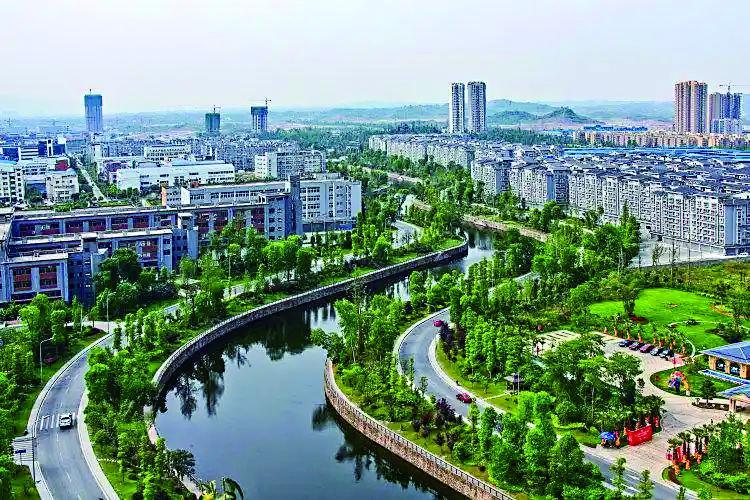
湖北宜昌加快建设联结长江中上游区域性中心城市
Zhong Guo Xin Wen Wang· 2026-01-16 06:03
Core Viewpoint - Yichang aims to accelerate its development as a regional central city connecting the middle and upper reaches of the Yangtze River during the 14th Five-Year Plan period, becoming a key support for the "Wuhan-Xiangyang-Yichang" economic triangle [1][2]. Group 1: Infrastructure Development - Yichang has seen steady growth in comprehensive strength during the 14th Five-Year Plan, with the completion of 2 high-speed rail lines, 2 expressways, and 2 Yangtze River bridges [2]. - The city has established a 1-hour high-speed rail circle connecting Wuhan, Xiangyang, and Yichang, as well as a 1-hour expressway circle connecting Yichang, Jingzhou, and Jingmen [2]. - Port cargo throughput has exceeded 150 million tons, and the passenger throughput at Sanxia International Airport has surpassed 3.4 million [2]. - The foreign trade import and export volume has exceeded 50 billion yuan [2]. Group 2: Future Development Plans - By 2026, Yichang will focus on key areas to enhance the city's radiating power, supporting the collaborative development of the "Wuhan-Xiangyang-Yichang" economic triangle [4]. - Plans include the construction of new energy and new materials corridors, as well as health corridors, to promote integrated development with surrounding urban areas [4]. - The city aims to ensure the operation of the Yichang-Laifeng expressway and accelerate the construction of several high-speed rail and expressway projects [4]. - Yichang will also promote the integration of cultural tourism and ecological conservation, enhancing the quality of scenic areas and developing international eco-cultural tourism routes [4][6].

生态价值转化绿色引擎
Jin Rong Shi Bao· 2026-01-13 04:41
Group 1 - The People's Bank of China Qianjiang Branch focuses on green finance, utilizing "equity financing" as a breakthrough to create a service system that integrates policy guidance, product innovation, and precise outreach [1] - As of the end of Q3 2025, the green finance loan balance in the jurisdiction reached 40.697 billion yuan, representing a year-on-year growth of 62.5% [1] Group 2 - The Qianjiang District Guohui Asset Management Group faced funding shortages for a river dredging project due to high investment and long recovery periods [2] - The People's Bank of China Qianjiang Branch coordinated with local authorities and financial institutions to develop a new financing model that allowed ecological governance rights to be used as collateral, resulting in an approval of 890 million yuan in loans within half a month [2] - This model achieved a dual win in ecological economy by combining "guarantee collateral" with "dredging sand comprehensive utilization operating rights pledge" [2] Group 3 - The Qianjiang Branch is addressing challenges in the forestry industry, where high forest coverage has not translated into financial value due to issues with collateral [3] - A new financing model was introduced in Youyang County, utilizing a "forest rights transfer transaction certificate" and satellite vector maps to create a dual security system for financing [3] - This innovation led to the successful issuance of a 530 million yuan loan, marking the first "forest rights transaction certificate mortgage loan" in Chongqing [3] Group 4 - In Xiushan County, four aging reservoirs struggled to secure financial support due to outdated facilities and unclear ownership [4] - The People's Bank of China Qianjiang Branch facilitated the completion of water extraction permits and clarified ecological resource ownership, enabling a loan of 160 million yuan for reservoir renovation [4] - This financial innovation transformed ecological resources into economic benefits, demonstrating the importance of converting ecological value into measurable economic value [4]
估值及相关条款未谈妥 东珠生态拟终止重组
Zheng Quan Ri Bao Wang· 2026-01-09 12:23
1月9日晚间,东珠生态(603359)环保股份有限公司(以下简称"东珠生态")发布公告,此前筹划的重 大资产重组事项拟终止。 在此前和投资者的交流中,东珠生态也表示,公司主营业务面临较大挑战。公司一直加强应收账款管理 相关工作,专注核心优质市场,稳定主营业务经营。若本次收购能够成功,公司将形成"生态治理"+"卫 星通信"双主业格局,有助于改善上市公司经营状况,提升上市公司的可持续发展的内在动力。 但是,"本次重大资产重组事项以来,公司按照相关法律法规要求,积极组织各中介机构开展对标的公 司的尽职调查以及审计、评估等工作,交易各方对本次重大资产重组交易方案进行了多次协商,但鉴于 市场环境变化等因素,交易各方就本次交易估值等相关商业条款未能达成初步一致,交易各方正在协商 本次交易终止事宜。"东珠生态在公告中称。 公告显示,东珠生态原本计划以发行股份及支付现金的方式收购凯睿星通信息科技(南京)股份有限公 司的控制权,同时拟募集配套资金。如果交易顺利完成,东珠生态将实现战略转型,切入到卫星通信与 空间信息技术领域,打造第二增长曲线,加快向新质生产力转型步伐,增加新的利润增长点,从而进一 步提高上市公司持续盈利能力。 ...

生态产业规划前置 蒙草生态创新草种科技助力长效防沙治沙
Quan Jing Wang· 2026-01-09 05:46
Group 1 - The core focus of the article is on the ecological restoration efforts in the Kubuqi Desert, highlighting the role of technology and data in enhancing the effectiveness of these initiatives [1][2][25] - The documentary "Spring on the Bowstring" showcases the ecological governance led by Mongolian Grass Ecological Industry Planning and Design Institute in the Kubuqi Desert [1] - The integration of ecological big data platforms allows for efficient analysis of key ecological indicators, saving time and labor costs in the restoration process [2][5] Group 2 - A total of 1.65 million soil samples have been collected to support the development of soil improvement technologies for desert management [6] - The establishment of a resource support system for ecological restoration includes a gene bank, soil bank, and a germplasm resource library containing 2,300 species and 65,000 samples [5] - The use of an ecological seed package has led to a 20% increase in vegetation coverage and over 30% in species richness compared to single plant restoration methods [12][19] Group 3 - The ecological seed package technology has received expert recognition and has obtained multiple invention patents [17][19] - The construction of a multi-layered sand fixation system and the optimization of sand barrier installation techniques have improved the efficiency of large-scale desert management by 30 times [19] - The integration of photovoltaic technology with ecological restoration promotes sustainable development through a model that combines power generation, restoration, and planting [20][21] Group 4 - A comprehensive technical service system has been established to provide standardized support for desert management, including species selection, technology implementation, and effectiveness evaluation [25][26] - The company emphasizes a holistic approach to ecological construction, covering all aspects from surveying and sampling to monitoring and service assurance [26]

广西新增自然资源生态产品价值实现典型案例
Guang Xi Ri Bao· 2026-01-07 04:53
据了解,2022年以来,自治区自然资源厅先后发布三批编制38个生态产品价值实现典型案例,其 中"北海市冯家江生态治理与综合开发""梧州市六堡茶产业赋能增值助推生态产品价值实现""桂林市创 新旅游产业用地政策推进自然资源资产高效利用"3个案例入选全国生态产品价值实现典型案例,成为全 国推广的"广西样本"。(唐广生 范雁阳 付丹峰) 作为西部陆海新通道核心工程,平陆运河沿线设有101个弃渣堆存场。自治区水利厅通过规范核算 交易、明确收益分配、建立反哺机制三项举措,推动水土保持生态产品价值转化。项目委托第三方评估 生态产品价值,通过绿色水经济平台进行交易,收益由项目单位与村集体共享,并反哺于水土流失治 理、乡村基础设施建设和村民增收。该案例在全国率先将水土保持生态产品从生态领域拓展至生产建设 项目,为大型工程弃渣资源化利用提供了可复制的操作路径。 玉林市依托"南方药都""南国香都"的产业优势,推动香料产业高质量发展,形成以"国储林+香 料"为代表的协同发展模式。通过林地流转与联农带农机制,强化种质资源保护,建成全国首个香料香 精国家林木种质资源库;创新实施低效林改造奖补,推广林下套种,提升综合效益。同时,加快建设广 ...
江苏“十四五”期间全省生态环境逐年改善
Xin Hua Ri Bao· 2026-01-07 00:16
Core Viewpoint - The news highlights the significant improvements in ecological environment and water quality in Jiangsu Province, alongside the development of tourism and green projects, indicating a successful balance between economic growth and environmental protection [1][2][3][6][7]. Group 1: Ecological Improvements - By 2025, Jiangsu's national examination sections with Grade III water quality reached 94.8%, an increase of 1.0 percentage points year-on-year, maintaining a trend of annual improvement during the 14th Five-Year Plan [1]. - The PM2.5 concentration in Jiangsu was reported at 31.3 micrograms per cubic meter by the end of 2025, showing a 3.1% improvement, with good air quality days reaching 81.6% [1]. - Jiangsu has achieved a historic transformation in its ecological environment, moving from severe degradation to significant improvement during the 14th Five-Year Plan, while also crossing three trillion yuan GDP milestones [1]. Group 2: Water Quality Management - The "Taihu Light" ecological dredging platform, set to be operational in 2025, will clear 8,000 cubic meters of sediment daily, ensuring that treated water meets Grade III surface water standards before being discharged into Taihu Lake [2]. - Jiangsu has implemented a classification system for industrial and domestic wastewater, leading to significant improvements in water quality across major rivers and lakes, with the Yangtze River's main stream achieving Grade II quality for eight consecutive years [2]. Group 3: Air Quality and Emission Control - Jiangsu has shifted its focus from traditional pollutants to volatile organic compounds (VOCs), with nearly 300 coal-fired units undergoing deep denitrification by 2025, covering about 90% of the province's coal-fired capacity [3]. - The province has initiated the "Green Island" project to promote proactive VOCs emission reduction strategies, enhancing the overall ecological system quality [3]. Group 4: Environmental Approval Processes - Jiangsu has optimized its environmental impact assessment (EIA) processes, reducing approval times from 30 days to under 5 minutes in some cases, thereby facilitating faster project initiation [4][5]. - The province has launched initiatives to support 3,000 major projects through streamlined EIA processes, enhancing the efficiency of environmental governance [5]. Group 5: Green Development Initiatives - Jiangsu is advancing low-carbon transitions in various sectors, with two regions recognized as national-level zero-carbon parks by December 2025, showcasing the province's commitment to sustainable development [6]. - The province has conducted carbon audits for 515 key enterprises in major industries, achieving a 100% compliance rate for annual carbon market obligations [6]. Group 6: Institutional Support for Environmental Goals - Jiangsu has established a comprehensive ecological environment infrastructure plan, with 2,386 key projects enhancing environmental capabilities [7]. - The province has introduced various regulations and guidelines to protect biodiversity and improve marine environmental quality, laying a solid legal foundation for ecological development [7].
生态文明示范创建位居全国前列 四川再添8个国家级名片
Si Chuan Ri Bao· 2026-01-06 08:45
Core Viewpoint - Sichuan has been recognized for its ecological civilization initiatives, with 8 areas designated as demonstration zones and innovation bases, ranking second nationally and first in the western region [1] Group 1: Recognition and Achievements - Eight locations in Sichuan have been named as 2025 ecological civilization demonstration zones and "Green Mountains and Clear Water are Gold and Silver Mountains" innovation bases, placing Sichuan second in the country and tied for first in the western region [1] - Since the start of the ecological civilization demonstration initiative, Sichuan has established a total of 43 ecological civilization demonstration zones and 14 innovation bases, totaling 57, ranking third nationally and first in the western region [1] Group 2: Environmental Quality and Public Perception - The recognized areas have created a positive demonstration effect across the province, solidifying the foundation for building a beautiful Sichuan, with improved environmental quality and increased public satisfaction regarding ecological conditions [2] Group 3: Institutional Support and Cross-Regional Cooperation - Ganzi Prefecture has become the third entire city (or prefecture) in Sichuan to successfully create an ecological civilization demonstration zone, supported by local regulations and a city-level ecological demonstration creation reward policy [3] - The "Green Ecological Barrier Coordinated Development Pilot Area" created by Xuanhan County and Kaizhou District serves as a national model for cross-provincial ecological governance [4] Group 4: High-Quality Development and Green Economy - Sichuan's demonstration areas are exploring diverse paths for realizing the value of ecological products, contributing to high-quality development [5] - The integration of ecological civilization construction into economic and social development processes is emphasized, with local governments fostering industries such as high-altitude ecological tea and traditional Chinese medicine [5] Group 5: Future Directions - Sichuan aims to maintain its creation advantages during the 14th Five-Year Plan period, linking ecological civilization demonstration creation with the construction of a beautiful Sichuan [6]
1061公里的生态答卷
Xin Hua She· 2026-01-06 08:43
Group 1 - The core viewpoint emphasizes the ecological restoration and protection efforts in Hubei, aiming for a significant improvement in water quality and wetland vegetation coverage by 2025 [1][2] - Hubei has implemented comprehensive strategies for ecological governance, including the closure and relocation of 478 chemical enterprises and the remediation of 12,480 pollution outlets along the Yangtze River [1][3] - The province's water quality has shown consistent improvement, with the Yangtze River's water quality in Hubei maintaining a Class II standard for seven consecutive years [1] Group 2 - The success of ecological protection is fundamentally linked to economic structure and development methods, with Hubei focusing on the ecological transformation of industries as a key strategy [2] - Yichang has transitioned from a pollution-heavy chemical industry to a clean energy sector, establishing a complete industrial chain for new energy battery materials [3] - Hubei is also promoting ecological industrialization, with the "Jianghan Rice" brand emerging as a significant contributor to the local economy, involving over a hundred leading enterprises and benefiting more than a million farmers [3]
苏州市已创成8个国家级生态文明建设示范区和“两山”实践创新基地
Su Zhou Ri Bao· 2026-01-06 00:32
去年12月25日,生态环境部命名2025年生态文明建设示范区和"绿水青山就是金山银山"实践创新基 地,苏州吴江、相城两地上榜。2017年,苏州市成功创建"首批国家生态文明建设示范市",截至目前, 累计创成苏州市、常熟市、太仓市、昆山市、吴江区、相城区6个国家级生态文明建设示范区,吴江 区、吴中区2个"绿水青山就是金山银山"实践创新基地,共计命名8个。"国字号"生态文明示范建设工作 位居全省各地级市前列。 另一方面,吴江聚焦联保共治,构建管理新范式。沪苏浙联合编制《示范区生态环境专项规划》。 截至目前,吴江在生态环境领域已形成24项制度创新成果,其中11项已向长三角乃至全国复制推 广。"联合河长制""生态与发展'双优势'转化"等创新实践,已获评中国改革典型案例。 一系列制度创新与系统治理,推动吴江生态环境质量持续提升。地表水国省考断面年均水质优Ⅲ比 例首次达到100%,较"十三五"末提升14.3个百分点,太浦河入选全国美丽河湖优秀案例。太湖吴江水域 连续18年实现安全度夏,治理模式入选长江大保护优秀实践案例。全区PM2.5浓度持续保持在30微克/立 方米以下,生态质量指数稳步提升,入选2025全国市辖区GEP百 ...