
电子及通信设备制造业

Search documents
统计局:11月航空航天器及设备制造业、电子及通信设备制造业增加值分别增长9.1%、11.7%
Jing Ji Guan Cha Wang· 2025-12-15 03:45
Core Insights - In November, the added value of large-scale equipment manufacturing and high-tech manufacturing industries grew by 7.7% and 8.4% year-on-year, significantly outpacing the overall industrial added value growth rate [1] - The cumulative added value of these sectors accounted for 36.4% and 16.9% of the total added value of large-scale industries, respectively [1] Equipment Manufacturing Industry - The automotive manufacturing industry, along with railway, shipbuilding, aerospace, and other transportation equipment manufacturing, saw an increase in added value of 11.9% in November [1] - The production of high-speed trains and civil steel ships rose by 24.1% and 18.4%, respectively [1] High-Tech Manufacturing Industry - The aerospace and electronic communication sectors experienced rapid growth, with the added value of aerospace equipment manufacturing and electronic communication equipment manufacturing increasing by 9.1% and 11.7%, respectively, in November [1]
1至9月成都市规上工业增加值同比增长7.5%
Xin Hua Cai Jing· 2025-11-19 12:58
Core Insights - Chengdu's industrial added value increased by 7.5% year-on-year from January to September this year [1] Industry Performance - Out of 37 major industrial sectors in Chengdu, 24 sectors achieved positive growth, with 11 sectors maintaining double-digit growth [1] - The top ten industries contributed 5.8 percentage points to the overall industrial growth [1] - The three fastest-growing sectors were general equipment manufacturing (28.5%), automobile manufacturing (20.2%), and computer communication and other electronic equipment manufacturing (14.1%) [1] High-tech Manufacturing - High-tech manufacturing in Chengdu saw an added value growth of 11.2% year-on-year [1] - The electronic and communication equipment manufacturing sector grew by 29.8%, while the aerospace equipment manufacturing sector grew by 29.2% [1] Advanced Manufacturing - The five major advanced manufacturing sectors experienced an added value growth of 8.9% year-on-year [1] - The equipment manufacturing industry and electronic information industry grew by 17.0% and 12.9%, respectively [1] Emerging Products - Emerging products showed significant growth, with solar cells increasing by 247.1%, new energy vehicles by 238.0%, smartwatches by 54.4%, and industrial robots by 39.0% [1]
数启新程,川企领航!四川2025天府数字经济大会举办
Quan Jing Wang· 2025-11-19 06:52
Group 1 - The 2025 Tianfu Digital Economy Conference highlighted the strategic importance of the digital economy in the "14th Five-Year Plan" and its role as a key driver for high-quality development in Sichuan [1] - By 2024, the core industry added value of Sichuan's digital economy is expected to exceed 530 billion yuan, with revenue from large-scale enterprises accounting for 16.7%, ranking among the top in the country [1] - The manufacturing sectors, particularly electronic and communication equipment and industrial robotics, have seen growth rates exceeding 60%, indicating a strong rise in the digital industry matrix [1] Group 2 - Jiuyuan Yinhai focuses on smart livelihood, covering three strategic directions: healthcare, digital governance, and smart cities, providing digital services and customized software for government and healthcare institutions [2] - Electric Science Network Security is building a comprehensive data security product system, participating in research on data security infrastructure and compliance, and has implemented typical projects in government and energy sectors [2] - Junyi Digital leverages big data platform technology to create digital and intelligent applications in urban infrastructure and public services, supporting the digital transformation of governments, enterprises, and schools [2] Group 3 - The "Sichuan Province Plan for Accelerating Efficient Construction and Application of Computing Power" aims for a total computing power scale of 40 EFLOPS by 2027, doubling the current capacity [3] - Sichuan will cultivate internationally competitive digital industry clusters, with annual special funds supporting key projects, offering up to 30 million yuan for individual clusters [3] - The Ministry of Industry and Information Technology's guidelines aim for 100% digital transformation coverage among large-scale industrial enterprises by 2027, with a focus on high-standard digital parks [3] Group 4 - The 2025 Tianfu Digital Economy Conference serves as a platform for showcasing achievements and fostering collaboration [4] - Securities research reports indicate that Sichuan's listed companies are entering a growth phase driven by strategic opportunities in artificial intelligence, new energy, and the digital economy [4]


数启新程向未来 ——写在2025天府数字经济大会开幕之际
Si Chuan Ri Bao· 2025-11-18 00:09
Core Insights - The digital economy is a strategic focus for the "14th Five-Year Plan" and is a key driver for high-quality development in Sichuan, with the core industry value expected to exceed 530 billion yuan in 2024, accounting for 16.7% of revenue from large-scale enterprises, ranking among the top in the country [1][11] - The establishment of digital economy innovation development pilot zones, including Sichuan, has created new opportunities for deepening reforms and innovations in the digital economy [1][11] Infrastructure Development - Sichuan has achieved full 5G coverage in all 26,000 administrative villages, with a total of 207,000 5G base stations built, ranking 6th in the country [3] - The province's total optical cable length has reached 5.869 million kilometers, equivalent to 15 times the distance from Earth to the Moon, with industrial parks achieving 10G optical network coverage [3] - The total computing power in Sichuan has reached 16.8 exaFLOPS, with plans to double this to 40 exaFLOPS by 2027 [4] Industrial Transformation - The digital transformation coverage rate among large-scale industrial enterprises in Sichuan has increased to 45.5%, with over 800 smart factories cultivated [6][7] - Sichuan has established 47 cross-industry industrial internet platforms, ranking 8th in the national development index, with a digital transformation action plan aiming for full coverage by 2027 [7][8] - The province is addressing the challenges faced by small and medium-sized enterprises in digital transformation by providing support and establishing digital transformation promotion centers [7][8] Economic Impact - The digital economy is driving modernization in agriculture, with new business models like smart agriculture emerging, leading to significant growth in rural e-commerce [9][10] - The online transaction volume in Sichuan exceeded 3 trillion yuan in the first seven months of the year, with over 5.5 million people employed in the sector [10] - Sichuan has built 437 internet hospitals, serving over 23.46 million patients, and achieved 100% internet access in primary and secondary schools [10]
区域观察|广东经济“三季报”出炉:经济总量超10万亿,动能来自哪里
Sou Hu Cai Jing· 2025-10-26 05:52
Core Insights - Guangdong's economic performance in the first three quarters of the year reflects effective macro policies and showcases impressive achievements across various dimensions, including industrial structure, development momentum, and livelihood security [2][3]. Economic Performance - The agricultural sector shows stability with a total output value growth of 4.9%, which is 0.2 percentage points higher than the first half of the year, providing a solid foundation for the economy [3]. - The industrial sector also demonstrates significant growth, with the added value of large-scale industries increasing by 3.5% year-on-year, an improvement of 1.3 percentage points compared to January-August. The manufacturing sector specifically grew by 3.9% [3][5]. - Advanced manufacturing and high-tech manufacturing are key drivers of growth, with added values increasing by 5.4% and 6.4%, respectively, significantly above the average level [5]. Sectoral Highlights - Specific industries such as electronic and communication equipment manufacturing, computer and office equipment manufacturing, and advanced equipment manufacturing saw added values grow by 7.0%, 11.0%, and 7.8%, respectively [6]. - High-tech and high-value-added products experienced explosive growth, with industrial robots, service robots, civilian drones, and 3D printing equipment seeing production increases of 33.7%, 15.2%, 44.8%, and 40.3%, respectively. Additionally, production of new energy vehicles, lithium-ion batteries for energy storage, wind turbine generators, and solar cells grew by 24.6%, 37.6%, 55.8%, and 75.3% [6][7]. Service Sector Growth - The service sector continued to accelerate, with added value increasing by 4.9% year-on-year, a 0.3 percentage point increase from the first half of the year [8]. - The financial sector grew by 9.8%, while the information transmission, software, and information technology services sector saw revenue growth of 9.5%, injecting substantial financial and digital vitality into the real economy [9]. Domestic Demand and Investment - Despite pressure on investments, Guangdong's domestic demand market showed resilience and potential for upgrades, becoming a crucial driver of economic growth [10]. - Retail sales of consumer goods increased by 2.8% year-on-year, with significant growth in upgraded consumer goods such as gold and jewelry (9.2% increase) and home appliances (31.0% increase) [11]. - Investment structure is continuously optimizing, with positive growth in equipment and tool purchases, and significant increases in research and development, internet services, and software investments of 12.7%, 81.2%, and 23.5%, respectively [12][13]. Income and Living Standards - The per capita disposable income in Guangdong reached 42,842 yuan, a nominal increase of 4.4% year-on-year, with rural residents seeing a growth of 5.5%, indicating a narrowing income gap between urban and rural areas [13]. Future Economic Strategy - The Guangdong Provincial Committee is focusing on strategies to achieve economic goals for the fourth quarter, emphasizing proactive measures to consolidate and expand the economic recovery [14][15]. - Plans include enhancing industrial project management, promoting consumption through policies, and facilitating trade logistics to support businesses in expanding domestic and international markets [15][16].

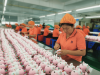
首破10万亿元!经济第一大省“晒”成绩单
Shang Hai Zheng Quan Bao· 2025-10-25 00:52
Economic Overview - Guangdong's GDP for the first three quarters of this year reached 10.517698 trillion yuan, marking a year-on-year growth of 4.1% [1][3] - This is the first time Guangdong's GDP has surpassed the 10 trillion yuan mark in the first three quarters, comparable to the total GDP of 10.767107 trillion yuan for the entire year of 2019 [1][3] Sector Performance - The primary industry added value was 383.85 billion yuan, growing by 4.5%; the secondary industry added value was 3.927075 trillion yuan, growing by 2.7%; and the tertiary industry added value was 6.206773 trillion yuan, growing by 4.9% [3] - Industrial added value for large-scale industries in Guangdong increased by 3.5% year-on-year, with a 1.3 percentage point increase compared to the period from January to August [3] New Growth Drivers - Advanced manufacturing and high-tech manufacturing sectors saw added value growth of 5.4% and 6.4%, respectively, accounting for 55.5% and 33.8% of total industrial added value [3] - Specific sectors such as electronic and communication equipment manufacturing, computer and office equipment manufacturing, and advanced equipment manufacturing grew by 7.0%, 11.0%, and 7.8% respectively [3] - Production of certain high-tech and new energy products experienced rapid growth, with industrial robots, service robots, civilian drones, and 3D printing equipment increasing by 33.7%, 15.2%, 44.8%, and 40.3% respectively [3] Investment Trends - Fixed asset investment in Guangdong declined by 14.1% year-on-year, with real estate development investment dropping by 20.6% and new commercial housing sales area decreasing by 12.5% [4] Consumer Market - The total retail sales of consumer goods in Guangdong grew by 2.8% year-on-year, with significant growth in the replacement-related goods sector [5] - Retail sales of cultural and office supplies, home appliances, and communication equipment increased by 21.0%, 31.0%, and 16.5% respectively [5] Government Response - The Guangdong Provincial Committee emphasized the need to maintain confidence and address economic challenges with actionable measures to ensure a strong finish to the fourth quarter and achieve annual economic and social development goals [6]
上海今年前三季度GDP增5.5% 新动能助推经济“稳”与“进”
Zhong Guo Xin Wen Wang· 2025-10-22 10:50
Economic Performance - Shanghai's GDP for the first three quarters of 2025 reached 40,721.17 billion RMB, with a year-on-year growth of 5.5%, surpassing the national average by 0.3 percentage points [1] - The industrial economy in Shanghai accelerated, with the added value of industrial enterprises above designated size increasing by 5.3%, a 0.2 percentage point increase from the first half of the year [1] New Growth Drivers - The three leading industries and high-tech manufacturing showed significant growth, with manufacturing output in these sectors increasing by 8.5%, outpacing the overall industrial output by 2.8 percentage points [1] - High-tech manufacturing output grew by 10.3%, exceeding the overall industrial output growth by 4.6 percentage points, with aerospace and electronic equipment manufacturing increasing by 20.6% and 13.4% respectively [2] Renewable Energy and Private Sector - Production of wind turbine generators and lithium batteries for energy storage saw remarkable increases, with output growing by 100% and 2,790% respectively [3] - The industrial output of private enterprises in Shanghai rose by 9.8%, outpacing the overall industrial output growth by 4.1 percentage points [4] Consumer and Trade Indicators - Shanghai's consumer price index remained stable compared to the previous year, while per capita disposable income increased by 4.3% [4] - The total value of goods imported and exported by Shanghai grew by 5.4%, with exports increasing by 11.3% [4]
前三季度四川经济平稳运行
Si Chuan Ri Bao· 2025-10-22 00:22
Economic Overview - Sichuan's GDP for the first three quarters of 2025 reached 49,322.2 billion yuan, with a year-on-year growth of 5.5% [1] - The primary industry grew by 3.5%, the secondary industry by 5.2%, and the tertiary industry by 6.0% [1] Agricultural Production - Vegetable and edible fungus output increased by 4.4%, fruit output by 6.1%, and tea output by 5.2% [1] - The number of pigs slaughtered reached 45.671 million, a year-on-year increase of 1.2%, while aquatic product output was 1.396 million tons, up by 5.2% [1] Industrial Production - The added value of large-scale industries grew by 7.1%, with state-owned enterprises increasing by 8.2% and foreign-invested enterprises by 16.7% [2] - Notable growth in specific sectors included automotive manufacturing at 18.3% and electrical machinery at 14.9% [2] - High-tech manufacturing saw an 11.6% increase, with aerospace manufacturing up by 21.6% [2] Investment Trends - Fixed asset investment (excluding rural households) grew by 0.4%, with the primary industry seeing a 13.1% increase, while the tertiary industry declined by 3.0% [2] Real Estate Development - Real estate development investment decreased by 6.6%, with new housing construction area down by 12.2% [3] Consumer Market - The total retail sales of consumer goods reached 21,170.5 billion yuan, growing by 5.8% year-on-year [4] - Online retail sales from key enterprises increased by 26.3% [4] Economic Sentiment - The economic sentiment index stood at 103.9, indicating a stable economic environment [4] - The production index was at 103.4 and the sales index at 104.5, reflecting positive trends in production and sales [4]
1-7月湖南规模工业增加值增长8% 比去年同期快1个百分点
Zhong Guo Chan Ye Jing Ji Xin Xi Wang· 2025-08-29 01:00
Economic Performance - Hunan's economy continues to show a stable and positive trend, with industrial added value increasing by 8% year-on-year from January to July, which is 1 percentage point faster than the same period last year [1] - The equipment manufacturing and raw materials industries saw added value growth of 12% and 9.1% respectively, contributing 3.8 percentage points and 2.1 percentage points to the overall industrial growth [1] Investment Trends - Fixed asset investment in Hunan increased by 2.9% year-on-year, which is 0.3 percentage points faster than the first half of the year [1] - Private investment grew by 6%, outpacing the first half of the year by 0.6 percentage points and the same period last year by 4.1 percentage points [1] - Investment in equipment and tools rose by 28.4%, which is 19.6 percentage points higher than the same period last year, contributing 2.9 percentage points to total investment growth [1] Consumer Market - The total retail sales of consumer goods in Hunan increased by 6.2% year-on-year, remaining stable compared to the first half of the year [1] - Retail sales of automotive products by large wholesale and retail enterprises grew by 1.3%, marking the first positive growth this year, with a notable increase of 10.6% in July [1] - Retail sales of essential consumer goods by large wholesale and retail enterprises rose by 10.4% year-on-year, with a 4.6% increase in July, which is 1.3 percentage points faster than the previous month [1] High-tech Industry Growth - The added value of Hunan's high-tech manufacturing industry increased by 13.9% year-on-year, with aerospace and equipment manufacturing growing by 27.3% and electronic and communication equipment manufacturing by 18.4% [2] - Investment in high-tech industries grew by 5.5%, which is 2.6 percentage points faster than the overall investment growth rate, while high-tech manufacturing investment increased by 8.2% [2]
1—7月南京经济发展质态持续向好
Yang Zi Wan Bao Wang· 2025-08-26 12:24
Economic Overview - Nanjing's economy has shown overall stability and positive development quality from January to July, with a focus on steady progress and effective macro policies [1] - The city's industrial added value above designated size increased by 6.0% year-on-year, with a monthly growth of 3.2% in July [1] - Key industries such as automobile manufacturing, black metal smelting, and electrical machinery manufacturing saw significant increases in added value, at 13.1%, 10.8%, and 9.4% respectively [1] Investment Trends - Fixed asset investment in Nanjing decreased by 7.1% year-on-year, with infrastructure investment growing by 4.5% and manufacturing investment increasing by 8.5% [1] - Real estate development investment fell by 14.1%, indicating challenges in the property sector [1] - High-tech industry investment rose by 4.8%, with notable growth in information chemical manufacturing at 50.2% [1] Consumer Market - The total retail sales of social consumer goods reached 496.02 billion yuan, growing by 4.4% year-on-year [2] - The "old-for-new" policy has positively impacted sales in home appliances and communication equipment, with growth rates of 22.9%, 22.3%, and 23.4% respectively [2] - Retail sales of green and smart home appliances saw remarkable increases, with 98.1% and 190.4% growth in sales [2] Price Trends - In July, the consumer price index in Nanjing decreased by 0.5% year-on-year, with food and tobacco prices down by 1.1% [2] - The industrial producer prices for both ex-factory and purchase decreased by 3.3% and 3.6% respectively in July [2] - For the first seven months, the industrial producer prices fell by 2.5% and 3.1% year-on-year [2]