
飞机制造

Search documents
印度贸易部长:印美将于3月签署贸易协定
Xin Lang Cai Jing· 2026-02-05 10:31
Core Points - India and the United States are expected to sign a formal trade agreement in March, which will involve India reducing tariffs on U.S. goods [1][5] - The agreement will see the U.S. reduce tariffs on Indian exports from 50% to 18%, while India commits to purchasing approximately $500 billion worth of U.S. goods over the next five years, including $70 to $80 billion in Boeing aircraft [1][5] - The formal signing process of the agreement is expected to take 30 to 45 days, with a joint statement to be released in four to five days [1][6] Trade and Economic Impact - Following the announcement of the trade agreement, the Indian stock market experienced an increase, indicating reduced uncertainty in the bilateral relationship [2][6] - India plans to increase its procurement of energy, aircraft, and chips from the U.S., with total orders for aircraft, engines, and parts valued at approximately $100 billion [6] - Tata Group's airline has ordered nearly 200 aircraft from Boeing, while Akasa Air has ordered 226 Boeing 737 MAX planes [6] Agricultural Concerns - The main opposition party in India is pressuring the government to disclose details of the agreement, particularly regarding the openness of the agricultural sector [3][7] - Officials have indicated that India will provide limited market access for U.S. agricultural products while retaining key industrial protection measures [4][8]

山西成功通航与中国商飞签署6架C909灭火机订单
Guan Cha Zhe Wang· 2026-02-04 07:20
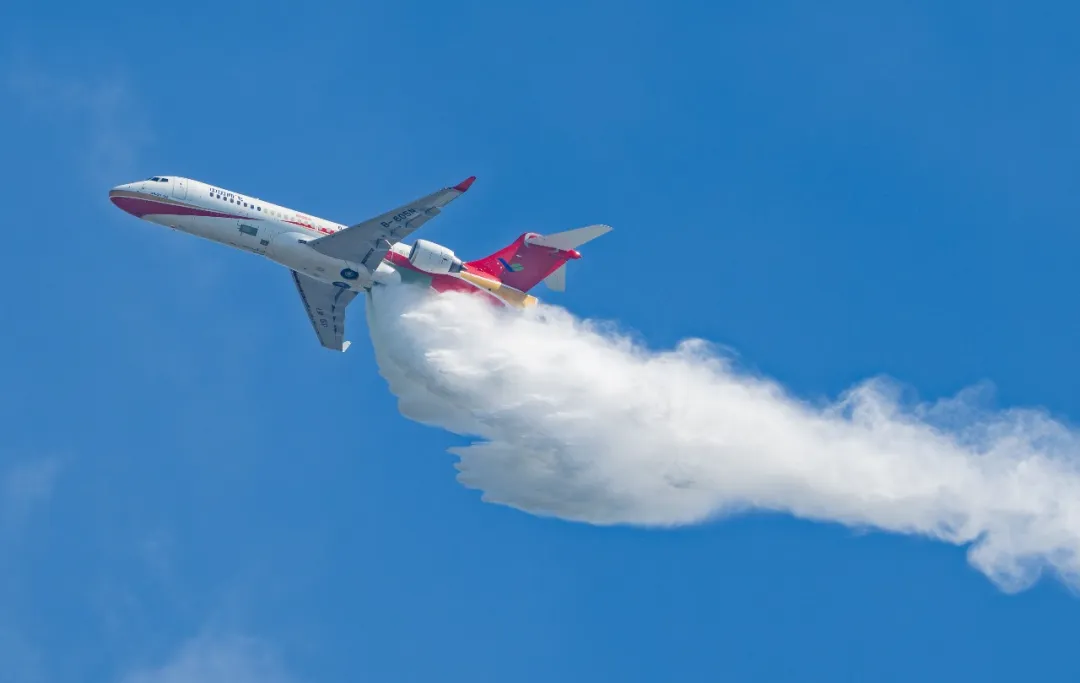
中国商飞公司微信公众号"大飞机"2月3日消息,在2026年新加坡航展上,山西成功通航与中国商飞公司签署6架C909灭火机订单,其中3架为确认订单,3 架为意向订单。 C909灭火机具备在多种地形条件下执行灭火任务的能力,舱内设有水箱区和乘员区,水箱最大载重10吨,可装载水、灭火剂和灭火袋,同时装配19个座 椅,能兼顾人员应急通勤需求。2025年12月,C909灭火机获得中国民航局适航批准。 山西成功通航成立于2010年,是经中国民航局批准的通用航空企业,主要从事应急救援、森林灭火、人工影响天气、短途运输、公务包机等业务。此次签 约将助力山西成功通航强化多机种协同作业体系,提升航空应急救援综合实力。 ...

歼-10C亮相新加坡!
Xin Lang Cai Jing· 2026-02-04 05:07
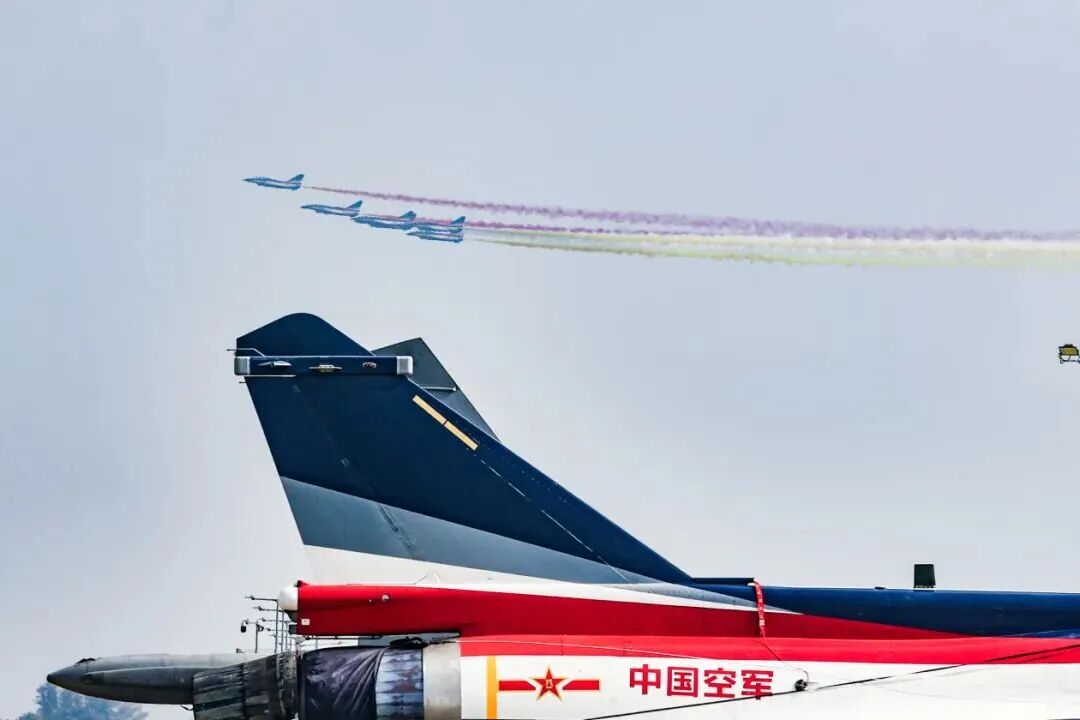
Core Viewpoint - The Singapore Airshow showcases significant Chinese aerospace advancements, with the J-10C and J-35A aircraft drawing considerable attention, highlighting China's growing influence in the global aviation market [1][2][4]. Group 1: Event Overview - The 10th Singapore Airshow commenced on the 3rd of this month, featuring over a thousand companies from more than 50 countries, with an expanded exhibition area [2]. - The Chinese Air Force's August 1st Aerobatic Team made a notable return after six years, performing complex maneuvers with the J-10C fighter jet [2][3]. - The J-35A model was prominently displayed, alongside commercial aircraft like the C919 and C909, marking a significant presence of Chinese-made aircraft at the event [1][4]. Group 2: Aircraft Performance and Features - The J-10C demonstrated advanced maneuverability and operational capabilities, which are critical in modern aerial combat scenarios, including beyond-visual-range engagements [3][8]. - The J-35A is characterized as a multi-role stealth fighter with capabilities for air, ground, and naval operations, emphasizing its advancements in stealth, information technology, and automation [4][15]. - The C919 is positioned as a potential market leader in Southeast Asia, being the only single-aisle jet to perform at the airshow this year, aiming to capture a larger market share in the region [3][8]. Group 3: Market Implications - The J-35A is viewed as a cost-effective alternative to the F-35, with optimistic export prospects due to China's stable international relations and the aircraft's fully indigenous development [5][15]. - The Asia-Pacific region is projected to experience the fastest growth in air travel, driven by China and India, with passenger volumes expected to increase by 7.3% by 2026 [3][8]. - The C909 aircraft has already been operational in Indonesia, Laos, and Vietnam, with over 20 routes established, indicating a successful entry into the regional aviation market [3][8].
中国造飞机亮相新加坡航展
Xin Lang Cai Jing· 2026-02-04 05:06
Core Insights - The 10th Singapore Airshow has commenced, showcasing significant Chinese participation, including the return of the Chinese Air Force's August 1st Aerobatic Team and the display of advanced aircraft models like the J-35A and commercial aircraft C919 and C909 [1][2] Group 1: Event Highlights - The airshow features over 1,000 companies from more than 50 countries, with 16 national pavilions, marking an expansion in exhibition space compared to previous years [1] - The August 1st Aerobatic Team performed new maneuvers with the J-10C fighter jet, which has gained attention due to its performance in past conflicts [2][3] Group 2: Aircraft and Market Implications - The C919 aircraft is expected to be the only single-aisle jet performing at the airshow this year, aiming to increase its market share in Southeast Asia [2] - The J-35A, a new generation stealth fighter, is positioned as a cost-effective alternative to the F-35, with expectations for strong international market potential due to China's stable international relations and the aircraft's fully autonomous supply chain [3][4][5]
印度官方证实:已同意从美国采购石油、国防物资及飞机等产品
Xin Lang Cai Jing· 2026-02-03 09:33
Core Viewpoint - India has agreed to purchase a range of goods from the United States, including oil, defense materials, electronics, pharmaceuticals, telecommunications equipment, and aircraft, as part of a trade agreement aimed at reducing the trade deficit with the U.S. [1][2][6] Group 1: Trade Agreement Details - The U.S. will reduce tariffs on Indian goods from 50% to 18% in exchange for India stopping oil imports from Russia and lowering trade barriers [1][6] - India is expected to significantly increase its procurement of U.S. goods, potentially reaching a value of $500 billion, covering energy, coal products, technology, agricultural products, and more [1][6] - The agreement is described as a first-phase trade deal, with plans for a more comprehensive agreement to be negotiated in the coming months [3][9] Group 2: Economic Impact - The trade agreement has positively influenced market sentiment, with India's Nifty 50 index rising nearly 3% and the Indian Rupee appreciating over 1% to 90.40 against the U.S. dollar [5][9] - Data from the Indian Ministry of Commerce indicates that from January to November 2025, India's exports to the U.S. increased by 15.88% to $85.5 billion, while imports from the U.S. totaled $46.08 billion [3][8]
任和、张仲麟:低空经济要成型,得先把商业循环做起来
Sou Hu Cai Jing· 2026-01-30 09:04
Core Insights - The "low-altitude economy" is gaining momentum with various applications such as drone logistics, power inspection, agricultural protection, and emergency rescue being implemented across cities [1] - The discussion highlights the need for a stable operational system and sustainable business model to avoid the pitfalls of hype without substance in the industry [1] Group 1: Industry Development - The key to the successful implementation of the low-altitude economy lies not just in technology but in establishing a comprehensive operational framework, including airspace release, simplified flight reporting processes, and infrastructure development [2] - The current enthusiasm for e-VTOL (electric vertical takeoff and landing) aircraft is evident, but challenges such as limited range and high costs remain significant barriers to widespread adoption [15][24] - The industry is still in its early stages, with many players focusing on aircraft development rather than creating a viable economic ecosystem [14] Group 2: Market Dynamics - The low-altitude economy must evolve into a true economic model, which requires integrating aerial vehicles into everyday life, similar to how cars became household items [19] - The market's acceptance and demand for these technologies will ultimately determine their success, necessitating a focus on practical applications that enhance efficiency and generate economic benefits [18][19] - The establishment of a national air traffic control network and adequate takeoff and landing points is crucial for the development of a sustainable low-altitude economy [22] Group 3: Safety and Regulation - Safety remains a fundamental concern, particularly for unmanned cargo aircraft, which must ensure reliable data links and comprehensive monitoring systems to mitigate risks [27][30] - Regulatory frameworks need to evolve to support the safe integration of these technologies into the airspace, particularly in urban areas [31] - The industry must balance innovation with safety and reliability to foster public trust and acceptance [30][34]

“低空经济”讲了这么多年,想坐上“飞行汽车”还要等多久?
Guan Cha Zhe Wang· 2026-01-30 07:18
"低空经济"如火如荼,许多城市都在加速"向天空要增量":无人机物流、电力巡检、农业植保、应急救 援等应用不断落地,城市低空交通也开始试点;e-VTOL试飞、取证、文旅观光的消息接连出现。 随着热度走高,大家对产业的好奇也越来越多——"低空经济"讲了许多年,什么时候才能真正铺开?技 术创新有了这么多,哪些场景有望很快用得上?低空经济做大做强,最亟待解决的问题有哪些?它究竟 是"技术的竞赛",还是"业态的建设"?如果不能形成稳定的运营体系和可持续的商业闭环,这股热潮会 不会滑向"一哄而上、一地鸡毛"? 在观察者网"2026答案秀·思想者春晚"活动期间,上海通用航空协会专家委员会主任、俄罗斯工程院外 籍院士任和与民航业评论员张仲麟对谈,围绕低空经济从"技术热"到"业态熟"的破局路径、eVTOL商业 化落地的现实梗阻、无人货机的安全监管边界,以及如何跳出"重炒作轻闭环"的产业误区等话题,分享 了独到的行业见解。 任和认为,安全永远是底线,但在安全有保证的前提下,更急迫的是把商业运营跑通。技术当然重要, 不过低空经济要真正落地,关键不在于把航空器做出来,而在于先把"业态"搭起来:航空器只是其中一 环,决定能否规模化运行 ...

关税突发!特朗普宣布国家紧急状态
Jing Ji Ri Bao· 2026-01-30 03:25
Group 1 - The U.S. President Trump signed an executive order declaring a national emergency, threatening to impose tariffs on goods from countries supplying oil to Cuba [1] - Trump announced plans to reopen Venezuelan airspace after discussions with Venezuelan interim president Delcy Rodriguez, allowing U.S. citizens to travel to Venezuela safely [1] - Major U.S. oil companies are expected to conduct on-site inspections in Venezuela following the announcement [1] Group 2 - Venezuela confirmed the resumption of commercial flights between Venezuela and the U.S., resulting from the conversation between Rodriguez and Trump [2] - The commercial airspace between the two countries will be "immediately reopened" [2] Group 3 - Trump threatened to impose a 50% tariff on Canadian aircraft due to the country's refusal to certify certain U.S. business jets, which he deemed unfair treatment of U.S. companies [3][4] - The U.S. will suspend the certification of Bombardier's Global series and all Canadian-made aircraft until the Gulfstream jets receive full certification [3]
2026年中国民用飞机制造行业市场政策、产业链图谱、市场规模、竞争格局及发展趋势分析:波音、空客仍然占据主导地位[图]
Chan Ye Xin Xi Wang· 2026-01-29 01:35
Core Viewpoint - The aviation travel industry in China is transitioning from a high-end choice to a common daily travel method due to the steady increase in national income, leading to a surge in demand for airline routes and capacity, particularly in the regional and low-cost aviation sectors, which is expected to drive the civil aircraft manufacturing market to reach a scale of 223.858 billion yuan by 2025, with a year-on-year growth of 16.2% [1][7]. Overview - Civil aircraft manufacturing refers to a series of industrial activities aimed at meeting non-military purposes such as civil aviation transport and general aviation operations, including aircraft design, parts production, assembly, testing, and delivery [2]. Market Policies - A series of supportive policies have been issued in recent years, including the "New Industrial Standardization Pilot Project Implementation Plan (2023-2035)" and "Guidance on Accelerating Digital Empowerment of Life Services," creating a favorable policy environment for the development of China's civil aircraft manufacturing industry [4]. Industry Chain - The upstream of the civil aircraft manufacturing industry includes suppliers of special rubber, aviation aluminum alloys, titanium alloys, high-temperature alloys, and carbon fiber composites, while the midstream consists of civil aircraft manufacturing enterprises, and the downstream focuses on aircraft applications and aftermarket services, including air transport, aircraft leasing, and maintenance [5]. Development Status - The civil aircraft manufacturing market is expected to reach a scale of 223.858 billion yuan by 2025, driven by the expansion of the aviation transport market and the growth of regional and low-cost airlines [7][8]. Competitive Landscape - The civil aircraft manufacturing industry is characterized by high capital, technology, policy, and market barriers, with Boeing and Airbus dominating the global market. However, domestic companies like COMAC and AVIC are gradually challenging this duopoly through policy support and market demand [9]. Development Trends 1. **Integration of Intelligent Manufacturing and Material Innovation**: The industry is moving towards intelligent manufacturing, utilizing technologies like digital twins and artificial intelligence to enhance production efficiency and precision [10]. 2. **Supply Chain Autonomy and Resilience**: The focus is on achieving self-sufficiency in core components and building a resilient supply chain to mitigate external disruptions [11]. 3. **Cross-Industry Integration and Green Transformation**: The integration of military and civilian technologies is expected to shorten R&D cycles, while the rise of urban air mobility and sustainable aviation fuels will drive a new manufacturing ecosystem [12].


达美航空向空客订购31架宽体飞机
Xin Lang Cai Jing· 2026-01-28 08:29
Core Viewpoint - Delta Air Lines has placed an order for 31 additional aircraft from Airbus to accelerate its fleet modernization and expansion efforts [1][2]. Group 1: Aircraft Order Details - The order consists of 16 wide-body A330-900 aircraft and 15 A350-900 aircraft, increasing Delta's wide-body fleet to 55 A330neo and 79 A350 [1]. - Financial details of the transaction have not been disclosed by either company [1]. Group 2: Strategic Intent - Delta's CEO, Ed Bastian, stated that these aircraft will enhance the company's capabilities and improve high-end services as it expands its international business and prepares for a growing long-haul market [2]. - Deliveries of the new aircraft are expected to begin in 2029 [2].

