
高端纺织

Search documents
稳住“压舱石” 敢摘“未来星”——南通耐心资本何以拔节生长
Shang Hai Zheng Quan Bao· 2025-12-14 19:43
Core Viewpoint - Nantong is committed to developing "patient capital" to support both traditional industries and emerging sectors, aiming for sustainable growth and innovation in its economy [2][10]. Group 1: Traditional Industries - Nantong's traditional industries, including shipbuilding, textiles, machinery, and chemicals, account for over 60% of the city's industrial output and profits, serving as the economic "ballast" [3][4]. - The city is focusing on upgrading these traditional sectors through industrial chain integration, mergers and acquisitions, and the application of AI technologies to enhance competitiveness and drive transformation towards high-end, intelligent, and green manufacturing [4][6]. Group 2: Investment and Capital Strategy - Nantong's financial ecosystem has seen the establishment of over 40 funds with a total scale exceeding 500 billion yuan, including 13 funds in high-end equipment and future industries totaling 173 billion yuan [2][9]. - The introduction of "Fund Policy 2.0" emphasizes high government investment ratios, profit-sharing, flexible reinvestment recognition, and market-oriented error tolerance mechanisms, encouraging capital to engage deeply with enterprises [9][10]. Group 3: Emerging Industries - Nantong is actively investing in early-stage projects in sectors like aerospace and satellite internet, demonstrating a willingness to support innovative ventures despite inherent risks [7][8]. - The city has implemented a "拨改投+股权联动" model, combining government funding with policy support to alleviate financing challenges for startups, exemplified by the case of Rui Lai New Energy, which received significant investment to support its growth [8][9]. Group 4: Collaborative Ecosystem - The synergy between capital and policy has been evident, as seen in the acquisition of Hengsuo Huawai by Huahai Chengke, which was facilitated by prior investments from Nantong's capital [5][9]. - Nantong's geographical advantages, such as its proximity to Shanghai and its coastal location, provide a strong foundation for industrial development and attract long-term investments in heavy assets and projects with extended timelines [10].

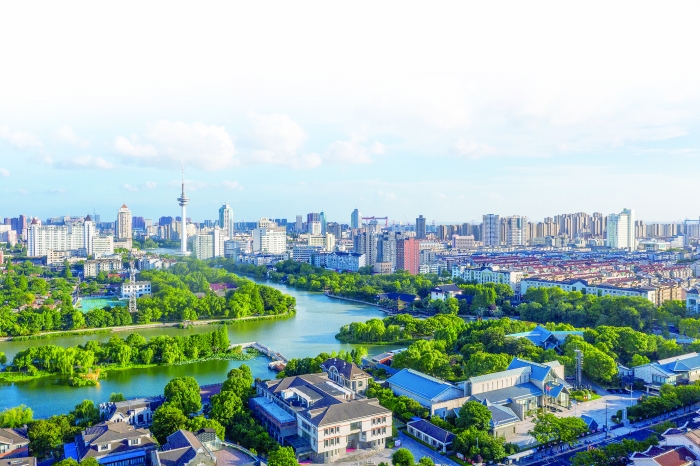
南通“十四五”工业信息化发展亮眼 现代工业名城建设初显成效
Yang Zi Wan Bao Wang· 2025-12-10 11:53
Core Insights - Nantong's industrial economy shows a steady and progressive growth, playing a crucial role as a "fixed star" and "ballast" for the city's economic growth, with initial success in building a modern industrial city [1] Group 1: Industrial Growth and Achievements - By the end of September 2025, the number of large-scale industrial enterprises in Nantong is expected to reach 7,465, with an average annual growth rate of 8.7% in industrial added value, surpassing the provincial average [3] - In 2024, industrial added value is projected to account for 38.2% of GDP, contributing 46% to GDP growth [3] - Since 2022, Nantong has initiated 994 industrial projects with investments over 500 million yuan, including 17 projects exceeding 10 billion yuan, totaling approximately 810 billion yuan in investment [3] - Nantong ranked 25th among the top 100 advanced manufacturing cities in China in 2024 [3] Group 2: Industrial Structure and Innovation - Nantong is accelerating the construction of a modern industrial system, having been selected as one of the first national pilot cities for the construction of industrial and supply chain ecological systems, with shipbuilding and high-end textiles recognized as national advanced manufacturing clusters [3] - By the end of 2025, the output value of six key industrial clusters, including shipbuilding and electronic information, is expected to exceed 1.3 trillion yuan, accounting for over 80% of large-scale industrial output [3] - The city has nurtured 15 enterprises with over 1 billion yuan in revenue by the end of 2024, with Zhongtian Technology Group becoming a trillion-level enterprise [4] - A total of 30 national-level manufacturing single champion enterprises and 232 national specialized and innovative "little giant" enterprises have been cultivated, with average profit margins exceeding the city's industrial average [4] Group 3: Digital Transformation and Green Development - Nantong has implemented 16,300 projects for digital transformation and was selected as a national pilot city for small and medium-sized enterprises' digital transformation, ranking first among prefecture-level cities in the number of new intelligent factories [4] - The city has established 27,000 5G base stations and created a national-level gigabit city [4] - Nantong has created 34 national-level green factories and 2 green industrial parks during the "14th Five-Year Plan" period, leading the province with over 80% of chemical production enterprises located in industrial parks [4] Group 4: Future Directions - Looking ahead to the "15th Five-Year Plan," Nantong's industrial and information department aims to strengthen the development of a modern industrial city focused on technological frontiers, integrating marine economy, artificial intelligence, green low-carbon initiatives, and integrated consumption [5]

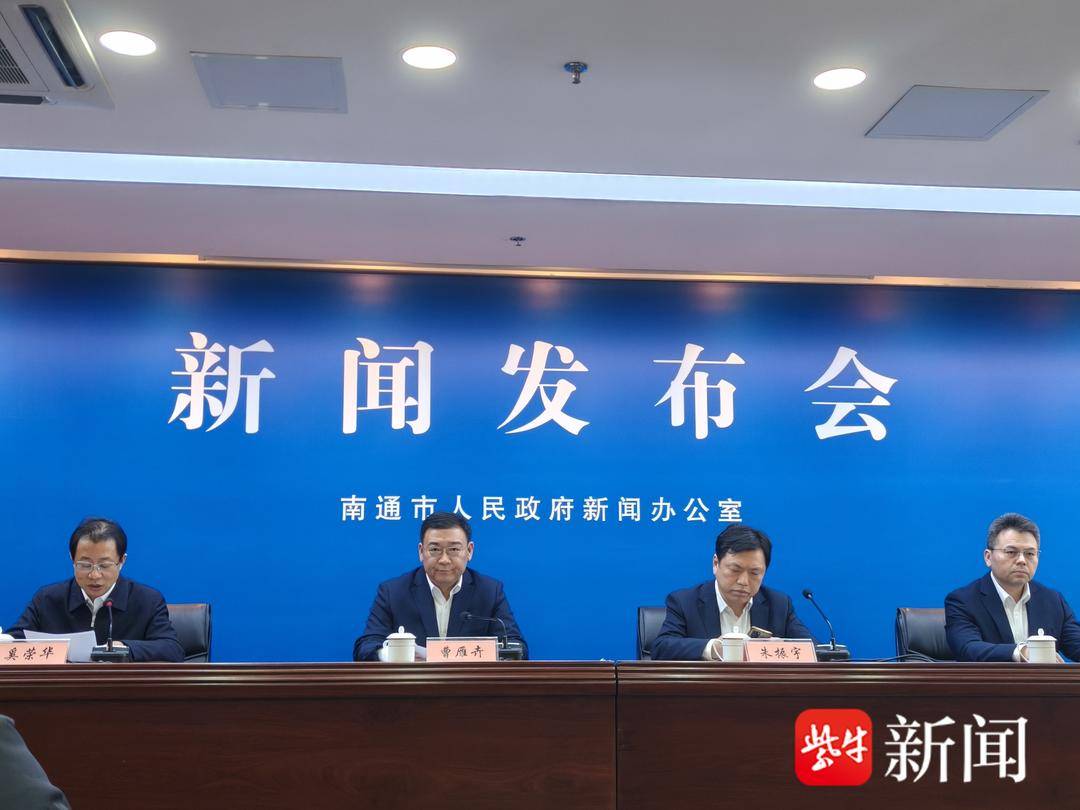
港闸经济开发区:布局新赛道,铸就新高地
Yang Zi Wan Bao Wang· 2025-11-28 07:57
Core Viewpoint - The article highlights the transformation of the Port Zone Economic Development Zone, which is evolving from traditional industries to new emerging sectors, driven by technological upgrades and strategic investments. Group 1: Industrial Transformation - The Port Zone Economic Development Zone is advancing new industrialization during the 14th Five-Year Plan, developing a "three optimizations, three new" industrial structure tailored to local conditions [2] - Traditional industries such as equipment manufacturing, shipbuilding, and high-end textiles are being upgraded through technological transformation, while strategic emerging industries like smart equipment, electronic information, and new materials are expanding [3] - Over the past five years, the zone has attracted projects worth 20 billion yuan, including five projects of 2 billion yuan, thirteen projects of 1 billion yuan, and forty projects of 500 million yuan [3] Group 2: Project Development and Investment - The zone has established a mature project promotion mechanism, with 70% of projects completing construction permits within three months of land acquisition [7] - The average construction cycle has been reduced from three years to under two years, with major project acceptance times cut from six months to three months [8] - In 2023, 23 new construction projects worth over 100 million yuan were initiated, with 16 projects completed and 14 fully operational [9] Group 3: Talent and Innovation - The zone has introduced nearly 50 talents and 8 leading talents over the past four years, with over 140 innovation projects and a survival rate exceeding 97% [4] - The number of high-tech enterprises has increased by nearly 60, surpassing 130, with over 1,000 new effective invention patents [4][5] - The zone is implementing a "dual chain integration" project to promote the production and efficiency of technology-driven projects [5] Group 4: Service and Support - The Port Zone Economic Development Zone emphasizes a service-oriented approach, providing comprehensive support to enterprises, including facilitating procurement and addressing specific needs [10] - The zone has implemented a rapid response mechanism to understand and address enterprise demands, promoting over 100 technology transformation projects during the 14th Five-Year Plan [10] - The service model has extended to various sectors, enhancing collaboration among local enterprises [10][11] Group 5: Future Outlook - The zone aims to enhance its capabilities, quality, openness, and efficiency, striving to establish a modern industrial system by 2030, with a focus on advanced manufacturing and modern service industries [12] - The goal is to achieve a GDP increase of another 100 billion yuan, positioning the zone as a key growth driver for high-quality development in the region [12]
张家港:统战赋能产业链 跑出向新“加速度”
Xin Hua Ri Bao· 2025-11-12 07:07
Core Insights - Zhangjiagang Municipal United Front Work Department integrates political, organizational, intellectual, and resource advantages into the industrial chain development, forming a new high-quality development pattern of "United Front + Industrial Chain" [1] Group 1: Talent Attraction and Innovation - Implementation of talent policies such as "Intelligent Gathering Port City" and "1+1+N" series, offering up to 5 million yuan housing subsidies for overseas talents and up to 100 million yuan comprehensive support for top talent teams [2] - Establishment of four overseas talent action groups focusing on key industries like metallurgy, biomedicine, and high-end textiles to enhance innovation in Zhangjiagang [2] - Hosting multiple overseas talent exchange events, resulting in hundreds of overseas talents engaging with local talents and institutions, injecting new energy into industrial chain innovation [2] Group 2: Collaborative Ecosystem Development - Formation of the "New Union Medical+" association to foster collaboration in the new medical industry, focusing on innovation platforms, technology breakthroughs, and market expansion [3] - Investment of 2.5 million yuan to create a smart entrepreneur club, coordinating various government departments to support enterprise growth and establish a service alliance for precise matching of enterprise needs and policy offerings [3] - Promotion of a service model combining business associations with industrial chains to enhance synergy between business development and industrial growth [3] Group 3: Education and Industry Integration - Development of a new ecosystem for industry-education integration involving government, schools, associations, and enterprises, focusing on key industries like new materials and high-end textiles [4] - Collaboration with leading companies to establish training bases and "order classes" to enhance practical skills and employment opportunities for students [4] - Establishment of a "Hometown Liaison Station" to provide support for employment and business development, enhancing interaction between schools and enterprises [4]
苏州市吴江区:民营经济领航“两业”融合
Xin Hua Ri Bao· 2025-11-07 15:02
Core Insights - Wujiang District in Suzhou is leveraging the integration of advanced manufacturing and modern services as a pathway for high-quality economic development, having been selected as a pilot area for deep integration in Jiangsu Province in 2022 [1] Group 1: Economic Foundation - The robust foundation of Wujiang's integration stems from its strong private economy and comprehensive industrial system, with 6 companies in the top 500 private enterprises in China and 4 in the top 500 enterprises overall, including Hengli Group and Shenghong Group in the global 500 [2] - Wujiang has 33 listed companies with a total market capitalization of nearly 300 billion, providing substantial capital support for industrial integration [2] - The district has established four trillion-level industrial clusters in electronics, high-end textiles, equipment manufacturing, and new materials, while emerging sectors like digital economy and innovation economy are rapidly developing [2] Group 2: Mechanisms for Integration - Wujiang is implementing a dual mechanism of policy guidance and market-driven approaches to enhance the synergy between manufacturing and services, promoting a model where manufacturing and services mutually enhance each other [3] - The district is focusing on the new generation of information technology, providing comprehensive support to newly recognized service-oriented manufacturing demonstration enterprises, encouraging manufacturers to transition to comprehensive service providers [3] Group 3: Demonstration and Benchmarking - Wujiang is promoting resource integration along industrial chains, supporting leading enterprises and key clusters to create replicable and scalable integration benchmarks, with 2 provincial pilot industrial clusters and 23 pilot enterprises established [4] - Bozhong Precision Engineering serves as a representative case, offering a full range of services from consulting to smart factory integration, exemplifying the shift from manufacturing to service [4] Group 4: Innovation and Collaboration - The district has established a collaborative innovation mechanism focused on enterprise needs, facilitating joint problem-solving and technology transfer to address gaps between innovation and industrial chains [5] - Wujiang is driving the flow of innovation elements through a dual approach of policy guidance and market operations, promoting the aggregation of talent, technology, capital, and services towards integrated enterprises [6] Group 5: Regional Collaboration - Wujiang is seizing opportunities from the Yangtze River Delta ecological green integration development demonstration zone, aiming to elevate the integration of manufacturing and services from a county-level practice to a regional collaboration model [7] - The district is developing an implementation plan for cross-regional integration of advanced manufacturing and modern services, focusing on building a key industrial integration system and innovative collaboration paths [7]
“统战+招商”激活产业发展新动力
Xin Hua Ri Bao· 2025-11-06 22:03
Group 1 - The core viewpoint emphasizes the successful integration of united front work with investment attraction in Caoqiao Town, leading to significant project developments and investments exceeding 2 billion yuan this year [1][2][3] - Caoqiao Town has established a communication network covering government-enterprise, bank-enterprise, and industrial chains, facilitating the resolution of 29 out of 47 collected enterprise demands since last year [1][2] - The town has innovated a "Political Consultative Conference + United Front + Chamber of Commerce" model to promote high-end textile industry projects, achieving rapid contract signings within three months [1] Group 2 - The "returning talents" effect is highlighted, with local entrepreneurs not only returning but also attracting additional projects, such as the Jin De Shang Metal Products project, enhancing the precision metal industry chain in the town [2] - A talent pool of over 100 "capable individuals" has been established, facilitating the return of entrepreneurs from regions like Zhejiang and Southern Jiangsu for secondary entrepreneurship [2] - The town's service initiatives, including a "Same Heart, Same Action" service campaign, have significantly improved operational efficiency for businesses, exemplified by the rapid transition from factory construction to production in just one and a half months [2] Group 3 - The united front has become a key driver for investment attraction in Caoqiao Town, with a growing impact on project implementation and community development [3] - Future plans include further activation of united front resources to ensure more projects take root and contribute to high-quality development [3]

锚定“十五五” 智启新未来 2025上市公司高质量发展论坛在江苏南通举行
Zhong Guo Zheng Quan Bao· 2025-10-29 21:26
Core Insights - The forum on high-quality development of listed companies emphasized the importance of aligning with national strategies to enhance core competitiveness and contribute to the modernization goals during the 14th Five-Year Plan period [1][2] Group 1: Industry Development - Listed companies are recognized as key players in China's economy and are crucial for technological innovation [1] - Nantong is positioning itself as a significant growth hub for high-quality development, with six major industrial clusters generating over 1.2 trillion yuan in output [2] - The chip industry is highlighted as a competitive sector where the focus should be on building a robust industrial ecosystem through innovation and collaboration among enterprises [2] Group 2: Globalization and Digitalization - Globalization is identified as a vital pathway for listed companies to expand their development space and achieve high-quality growth [2] - The introduction of "Global Information Services" by China Securities Journal aims to support listed companies in capturing overseas policy changes and enhancing their global competitiveness [3] Group 3: Awards and Recognition - The forum also hosted the 27th Golden Bull Awards, recognizing various categories such as investment value, entrepreneurial excellence, and innovation among listed companies [3] - The Golden Bull Awards, established in 1999, aim to create a credible platform for showcasing and promoting high-quality development in the capital market [3]
拥抱南通就是拥抱苏南拥抱上海
Zhong Guo Zheng Quan Bao· 2025-10-29 21:09
Core Insights - Nantong is positioned as a city with significant potential, strategically located at the intersection of the Yangtze River and coastal economic axes, serving as a crucial growth pole for high-quality development in Jiangsu [1][2] - The city has embraced the opportunities presented by the Yangtze River Delta integration strategy, focusing on deep cross-river integration and robust coastal development, leading to the establishment of several major projects [1] - Nantong's manufacturing sector has achieved recognition as one of the top 50 cities in China for high-quality manufacturing development, with a total output value of over 1.2 trillion yuan from six key industrial clusters [2] Group 1 - Nantong is located at the "T" intersection of the Yangtze River and coastal economic axes, making it the only city north of the Yangtze River adjacent to Shanghai, which enhances its strategic importance [1] - The city is actively developing transportation infrastructure, with multiple ongoing projects that will enhance connectivity with Shanghai and Suzhou, aiming for a transportation integration and urban living synergy [1] - Nantong has attracted significant investment in high-value projects, including Zhongtian Premium Steel and PetroChina Blue Ocean New Materials, contributing to its industrial growth [1] Group 2 - The city has made strides in innovation-driven development, focusing on project support and cluster development, which has led to its ranking as the 14th among the top 50 cities for high-quality manufacturing in China [2] - Nantong's six major industrial clusters have collectively surpassed an output value of 1.2 trillion yuan, with notable advancements in marine engineering equipment, high-tech ships, and high-end textiles [2] - The number of high-tech enterprises in Nantong is expected to exceed 5,000 this year, with high-tech industries accounting for a significant portion of the city's industrial output [2]
扬帆向海启新程——解析高质量发展的南通实践
Zhong Guo Zheng Quan Bao· 2025-10-29 00:18
Core Insights - Nantong is transforming from a "transportation terminal" to a "regional hub," leveraging its strategic location and infrastructure improvements to drive economic growth [1][2][3] Transportation Development - The construction of the Hai-Tai Yangtze River Tunnel, a 39.07 km underwater highway tunnel, is set to significantly reduce commuting time across the Yangtze River, enhancing connectivity between Nantong and Shanghai [2][3] - Nantong's transportation infrastructure has rapidly evolved since the opening of the Su-Tong Bridge in 2008, which reduced crossing time from over an hour to just a few minutes [2][3] Economic Growth and Industrial Development - Nantong's GDP is projected to rank 18th among China's trillion-yuan cities by mid-2025, marking it as a notable economic contender [1] - The city is focusing on developing a modern industrial system centered around advanced manufacturing, with six major industrial clusters expected to exceed 1.2 trillion yuan in output by 2024 [10][18] Marine Economy - Nantong is prioritizing marine economic development, aiming for a marine economy output of 260.6 billion yuan in 2024, which will account for a quarter of Jiangsu's total marine economy [7][9] - The establishment of the Marine Development Bureau and the implementation of the "12 policies for marine development" are part of Nantong's strategy to build a modern marine industry system [7][9] Innovation and Technology - Nantong is enhancing its industrial capabilities through innovation, with over 50% of local enterprises collaborating with firms in Shanghai and Suzhou, attracting more than 450 large-scale manufacturing enterprises in the past three years [5][15] - The city is fostering a robust innovation ecosystem by partnering with universities and research institutions, leading to the establishment of numerous collaborative innovation platforms [15][16] Financial Support for Innovation - Nantong has developed a comprehensive financial support system, with a government investment fund cluster totaling 120 billion yuan, aimed at nurturing strategic emerging industries [16][17] - The city is implementing a "拨投股结合" model to address financing challenges for early-stage tech projects, facilitating their growth and development [16][17] Future Industry Focus - Nantong is strategically positioning itself in six future-oriented sectors: aerospace, marine, energy, materials, communication, and health, with a focus on high-tech manufacturing and emerging industries [11][12]
上海生物医药产业规模将破万亿元,请看《浪尖周报》第45期
Xin Lang Cai Jing· 2025-10-19 08:25
Core Insights - The "Wave Peak Plan" has been launched by the research institute of Zhituo Finance to promote industrial collaboration and technological innovation in the Yangtze River Delta region [1] Group 1: Industry Highlights - Shanghai's biopharmaceutical industry is expected to exceed 1 trillion yuan in scale by the end of the year [2] - Nanjing's Pukou High-tech Zone is developing a full industrial chain for the low-altitude economy [2] - Hangzhou is legislating on embodied intelligent robots [2] - Hefei has made breakthroughs in key technologies for nuclear fusion with the "Kuafu" large scientific device [2] - Suzhou's integrated circuit industry scale has surpassed 120 billion yuan [2] - Ningbo is constructing Zhejiang Province's first 10 billion yuan-level port project at Zhoushan Port [2] - Wuxi's Danone factory's third phase has been capped, doubling the production capacity for special medical foods [2] - Nantong is expanding its high-end textile cluster into the Middle Eastern market [2] - Changzhou is creating a "technology-scenario-ecosystem" integrated digital transportation system [2]