
加密货币

Search documents
一月暴涨60%,狂飙的以太坊走向何方?
3 6 Ke· 2025-07-23 10:39
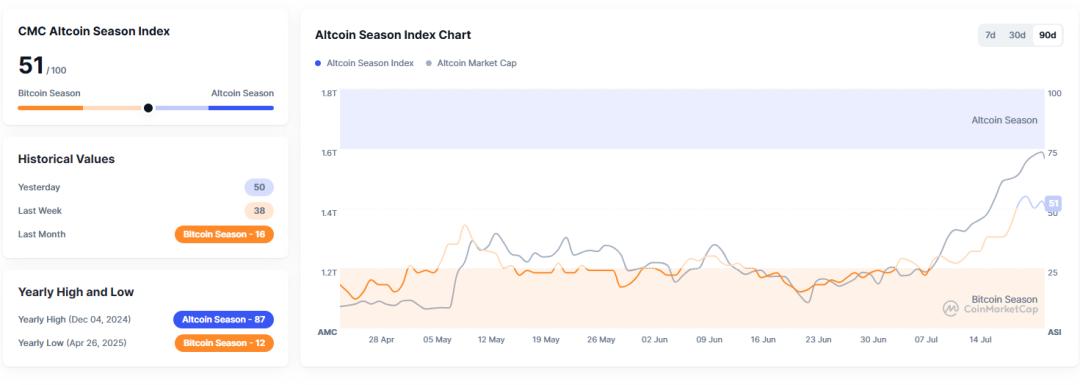
Core Viewpoint - Ethereum has emerged as a significant player in the cryptocurrency market, experiencing a remarkable price increase of over 60% in July, surpassing Bitcoin's performance during the same period [1][2][4]. Market Performance - Ethereum's price surged from $2,400 to $3,860 in July, marking a notable recovery in the DeFi sector, which saw monthly returns exceeding 40% [2][4]. - The overall market sentiment shifted positively, with Ethereum's market capitalization and community engagement increasing significantly [2][4]. Institutional Involvement - Institutional investment has played a crucial role in Ethereum's price increase, with a record net inflow of $3.57 billion into Ethereum ETFs in July [4][5]. - Major institutions like BlackRock have become significant holders of Ethereum, with BlackRock alone holding approximately 2.46 million ETH, nearly half of the total institutional holdings [4][5]. Strategic Holdings - A growing number of entities are accumulating Ethereum, with 59 institutions holding over 100 ETH each, collectively owning more than 1.87 million ETH valued at around $7 billion [5][7]. - The strategy of these institutions often involves staking Ethereum to generate returns while maintaining their core business operations [7]. Regulatory Environment - Recent regulatory developments in the U.S. have created a more favorable environment for cryptocurrencies, particularly Ethereum, which is positioned as a key player in the stablecoin and real-world asset (RWA) markets [8][9]. - Ethereum's blockchain supports a significant portion of the stablecoin market, with 50% of stablecoins issued on Ethereum, further solidifying its importance in the digital currency landscape [8]. Market Sentiment and Volatility - Despite the recent price surge, there is a sense of unease among Ethereum holders, particularly as the price approaches critical resistance levels around $4,000 [9][10]. - Data indicates a significant number of ETH are being withdrawn from staking, which historically precedes potential sell-offs, reflecting cautious sentiment among investors [10][12]. Future Outlook - The ongoing influx of institutional capital and favorable macroeconomic conditions suggest a positive medium-term outlook for Ethereum, although potential corrections may occur [13][14]. - Predictions indicate that institutional purchases of Ethereum could reach $20 billion next year, significantly impacting supply dynamics [13].


专业文章丨从杜均的火币与ABCDE Capital解析稳定币崛起的合规研究
Sou Hu Cai Jing· 2025-07-23 10:19
Group 1: Current Status and Characteristics of Stablecoin Market - Stablecoins serve as a bridge between traditional finance and cryptocurrency markets, defined by their mechanisms to maintain price stability against fiat currencies. They can be categorized into fiat-collateralized (e.g., USDT, USDC), crypto-collateralized (e.g., DAI), and algorithmic stablecoins (e.g., AMPL) [1] - As of Q2 2023, Tether's USDT holds a dominant market share of 68.3%, while Circle's USDC follows with 23.5%, indicating a concentrated market structure driven by early market entry and regulatory arbitrage [1] Group 2: Institutional Strategies in Stablecoin Space - Huobi's ecosystem is transitioning towards compliant stablecoins, exemplified by the launch of HUSD in 2022, which acts as a multi-stablecoin liquidity solution amid regulatory pressures [2] - ABCDE Capital adopts a more aggressive investment strategy, focusing on fully audited stablecoins like TrueUSD (TUSD) and leading innovative projects like Stablegains, which combines stablecoins with yield aggregation to achieve annual returns of 4-5% [2] Group 3: Technological Drivers of Stablecoin Growth - The evolution of blockchain infrastructure, such as Ethereum 2.0's POS mechanism, has significantly improved transaction speeds and reduced costs, facilitating stablecoin adoption [3] - As of June 2023, stablecoins accounted for $48.7 billion locked in DeFi protocols, representing 39% of the total locked value, highlighting their critical role in lending, trading, and derivatives [3] Group 4: Compliance Practices and Challenges - Du Jun, co-founder of Huobi, has been instrumental in establishing a robust compliance framework, which has intercepted over 2,300 high-risk trading pairs from 2018 to 2020, increasing compliant asset ratios from 58% to 92% [4] - ABCDE Capital's investment strategy prioritizes compliance, with 37% of its investments in stablecoin projects, significantly higher than the industry average of 15%, resulting in a low regulatory penalty rate of 2.1% [5] Group 5: Regulatory Pressures and Market Dynamics - Regulatory environments differ significantly across regions, with Huobi exiting the Chinese market post-2021 ban, leading to a 68% decline in its stablecoin business, while facing scrutiny from the SEC in the U.S. [7] - The EU's MiCA regulation requires Huobi to complete compliance by the end of 2024, with an estimated cost increase of €22 million, while ABCDE Capital faces new disclosure requirements [7] Group 6: Core Controversies in Stablecoin Compliance - The transparency of fiat reserves and auditing requirements pose significant challenges, as seen in the case of Tether, which has faced scrutiny over its reserve management and was fined $18.5 million for misleading investors [8] - The legal classification of stablecoins impacts their regulatory framework, with the SEC categorizing certain stablecoins as unregistered securities, while the EU distinguishes between electronic money tokens and asset-backed tokens [9] Group 7: Future Trends and Policy Recommendations - Global regulatory coordination is being pursued by organizations like FSB and IMF, advocating for a "same risk, same regulation" principle, with 37 countries incorporating FSB frameworks into their legislation [14] - Technological innovations such as on-chain auditing and smart contract regulations are enhancing compliance efficiency, with Chainalysis reporting a 68% increase in enforcement efficiency through blockchain analysis [15]

实火!多家美股公司调整加密货币储备策略
Zhong Guo Ji Jin Bao· 2025-07-23 09:45
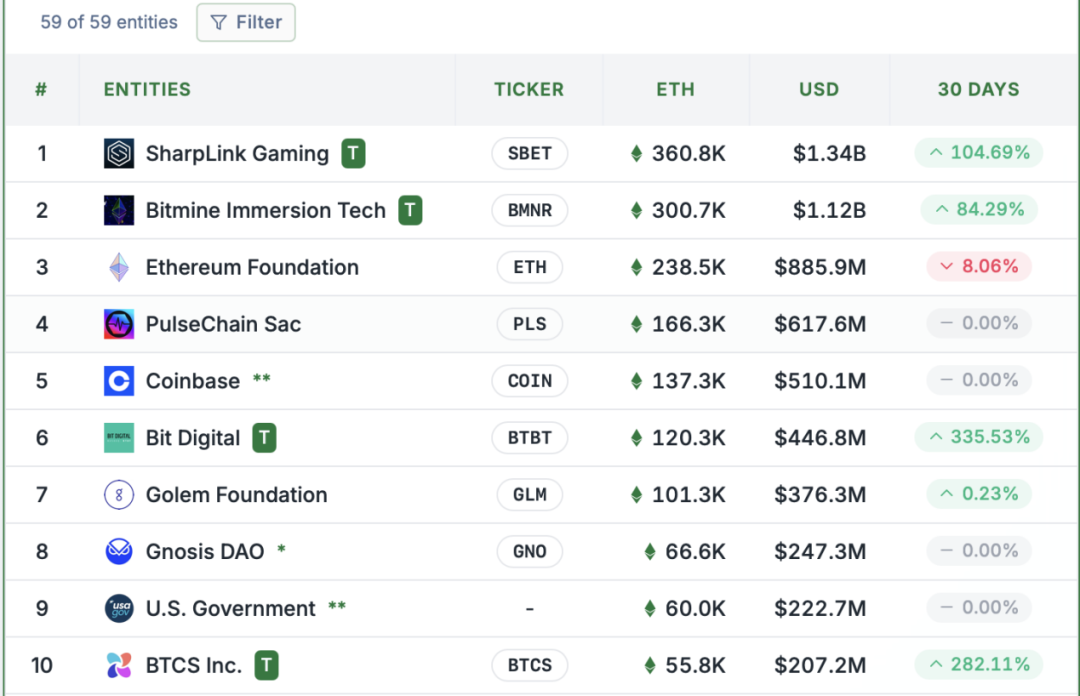
Core Insights - A significant capital influx is observed in Ethereum following the signing of the "Genius Act" by Trump, with Ethereum's price surging 8% to over $3600, reaching a market cap of $437.9 billion [1] - Many publicly listed companies in the U.S. are adjusting their cryptocurrency reserve strategies, incorporating Ethereum as a core asset on their balance sheets [1][2] - The number of entities holding Ethereum has increased from 40 in June to 59 by July 23, with the top 10 companies holding over 860,000 Ethereum, valued at approximately $3.2 billion, marking a 45% increase since June [2] Company Strategies - SharpLink Gaming has emerged as the largest holder with 360,000 Ethereum (approximately $1.3 billion), surpassing the Ethereum Foundation [3] - Bit Digital, a digital asset platform, raised about $172 million through a public offering and used the proceeds to acquire 120,000 Ethereum, indicating a strategic shift towards Ethereum due to its potential to "reshape the financial system" [4] - Companies are employing various financing strategies to acquire Ethereum, including selling Bitcoin and utilizing decentralized finance (DeFi) protocols for leveraged purchases [6] Market Dynamics - The "Genius Act" establishes a federal regulatory framework for stablecoins, contributing to the rapid increase in Ethereum's value [6] - Institutions are shifting their investment logic from speculation to balance sheet management, viewing Ethereum as a "digital treasury bond" and participating in staking and DeFi to generate annual cash flows of 5% to 10% [7] - Ethereum is becoming a favored asset in corporate portfolios, alongside other major cryptocurrencies like BNB, SOL, and TRX [7]

当马克思回答稳定币:我们有了创造天堂的技术,却用它来建造一个更精致的地狱
3 6 Ke· 2025-07-23 03:26
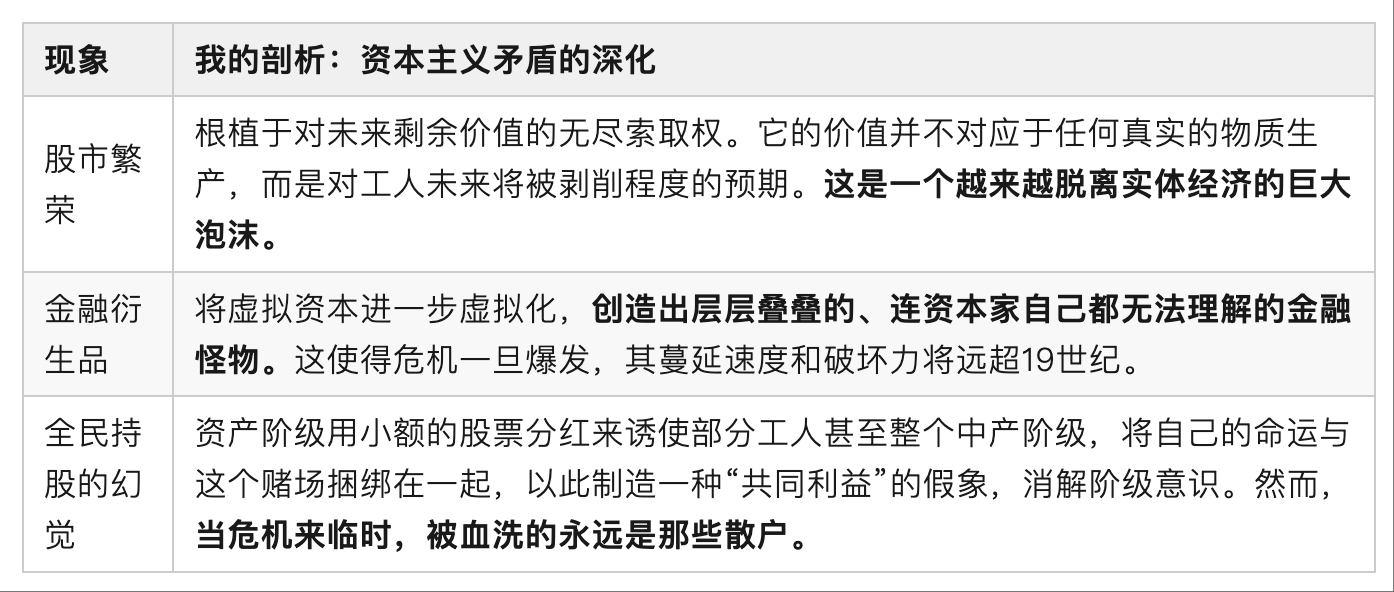
Group 1: Core Argument - The essence of capitalism's self-regulation is a misinterpretation; it is a product of class struggle rather than benevolence from the ruling class [2][3] - The welfare state and labor rights are not improvements from capitalism but rather concessions made under pressure from the working class [2][3] - The current state of capitalism is more cunning and financialized than in the 19th century, with unresolved contradictions accumulating globally [4][5] Group 2: Analysis of Financial Systems - The U.S. stock market is characterized as a casino of virtual capital, reflecting the deepening contradictions of capitalism [3][4] - The U.S. national debt is described as the largest form of virtual capital, relying on the exploitation of global labor [6][7] - The proposed "dollar stablecoin" is seen as a misguided attempt to salvage a hollow financial system, leading to further instability [7][8] Group 3: Implications of Dollar Stablecoin - The dollar stablecoin represents a new form of financial colonization, creating a dependency on U.S. financial systems in the digital realm [12][14] - It perpetuates a hidden global seigniorage, extracting value from global users while offering little in return [18][19] - The stablecoin system enhances financial surveillance and control, undermining the autonomy of individuals and nations [20][21] Group 4: Global Economic Dynamics - The dollar stablecoin threatens the monetary sovereignty of developing countries, exacerbating financial instability and inequality [21][22] - A call for international solidarity among the working class is emphasized as a necessary response to the challenges posed by the dollar stablecoin [22][23] - The ultimate solution lies in the abolition of capitalism itself, as monetary systems will always serve as tools of class oppression under capitalism [24][25]
《稳定币法案》落地的背后:690万美元游说+2.3亿美元PAC弹药 重塑加密监管版图
智通财经网· 2025-07-23 01:42
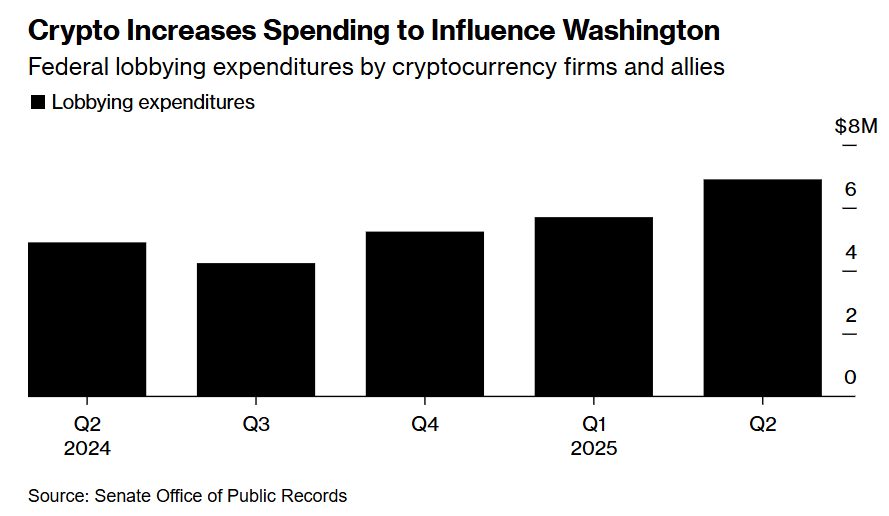
Group 1 - The cryptocurrency industry has intensified lobbying efforts to ensure the passage of significant stablecoin legislation in the U.S. Congress, marking a major policy victory for the sector [1] - Lobbying expenditures by cryptocurrency companies and advocates reached $6.9 million in Q2, a 21% increase from the previous quarter, coinciding with the acceleration of industry-supported legislation [1][6] - The recently signed "Stablecoin Act" by President Trump is expected to expand the application of digital assets in global finance and maintain the dollar's status as the world's dominant currency [2][3] Group 2 - Standard Chartered Bank predicts that Bitcoin prices may exceed $135,000 in Q3 2024 and reach $200,000 by the end of 2025, with a potential surge to $500,000 by 2029 [2] - The "GENIUS Act" establishes regulatory rules for stablecoins pegged to the dollar, which advocates believe will enhance the integration of digital assets into everyday financial transactions [2] - The cryptocurrency industry is pushing for broader legislation to create a market structure for trading digital assets like Bitcoin and Ethereum, with additional measures awaiting Senate approval [2] Group 3 - Stablecoins are a type of cryptocurrency designed to maintain a stable value by being pegged to reserve assets like the dollar, and they are becoming mainstream in global financial markets [3] - The high interest rates and the current rate hike cycle are generating significant profits for stablecoin issuers, providing them with bank-level returns [3] - Coinbase Global Inc. is one of the largest spenders on lobbying, focusing on issues related to digital assets, including stablecoin legislation [6] Group 4 - The cryptocurrency industry's lobbying expenditures remain relatively small compared to other sectors, with major players like Pfizer spending $3.5 million on a wide range of issues [7] - The Fairshake Super PAC has raised $230 million to support candidates friendly to the cryptocurrency industry, with significant contributions from Coinbase [7][8] - New lobbying registrations have surged in 2025, indicating a growing commitment to influencing policy in favor of the cryptocurrency sector [8]

特朗普签署“天才法案”,美国能否塑造数字金融规则?
Sou Hu Cai Jing· 2025-07-22 17:18
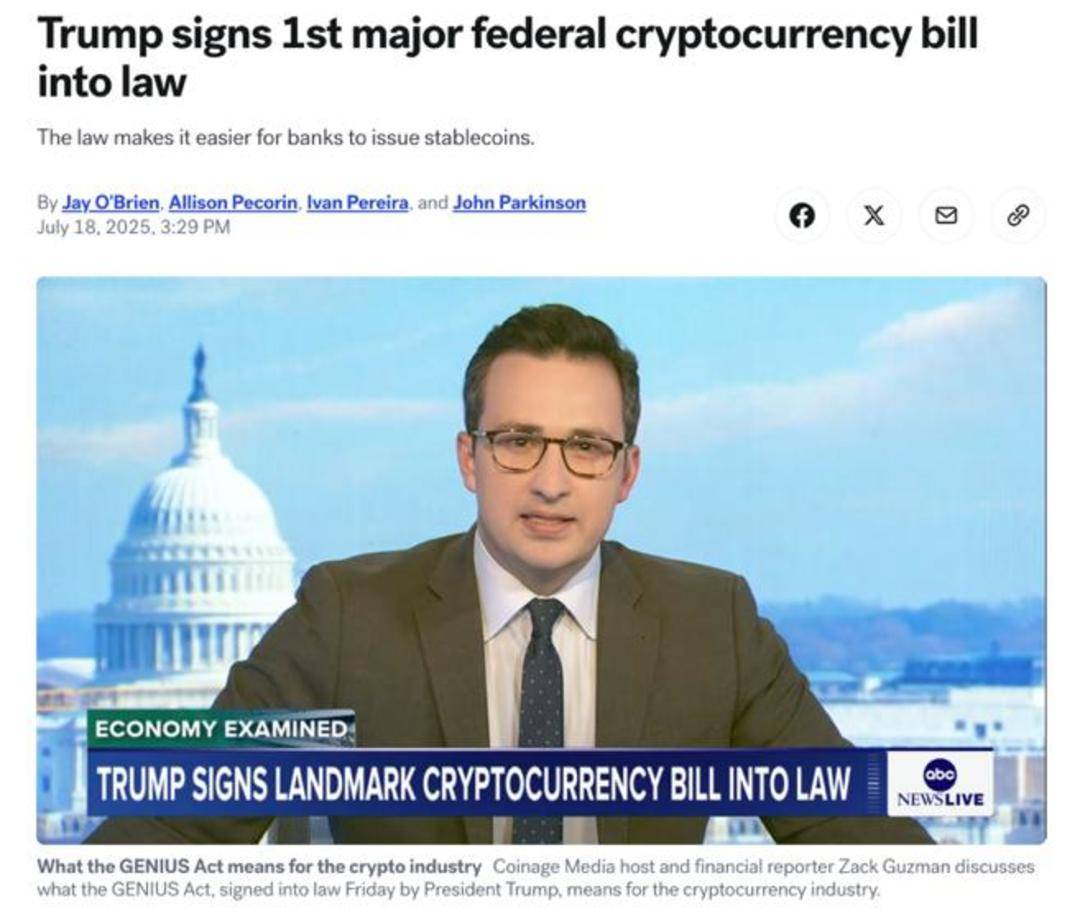
Core Points - The "Genius Act" establishes a federal regulatory framework for the issuance of dollar-pegged stablecoins in the U.S., marking the first formal legislation on this matter [1][5] - The act aims to solidify the dominance of the U.S. dollar in the digital currency space by allowing only licensed financial institutions to issue stablecoins [5][8] Summary by Sections Legislation Details - The "Genius Act" specifies that only federally or state-licensed financial institutions can issue stablecoins, preventing non-financial tech companies from bypassing regulations [5] - It mandates a "100% reserve requirement," meaning all issued stablecoins must be backed by an equivalent amount of U.S. cash or Treasury securities [5] - The act includes a bankruptcy protection mechanism, ensuring user funds are separated from company operational funds, granting users priority in case of issuer bankruptcy [5] - A "no digital dollar clause" is included, prohibiting the Federal Reserve from issuing a central bank digital currency (CBDC) to prevent government surveillance of financial transactions [5] Context and Timing - Stablecoins, which are pegged to fiat currencies or commodities, have gained significant market traction since their emergence around 2014, with total circulation surpassing $150 billion [7] - The lack of specific legislation has led to regulatory ambiguity, prompting concerns over transparency and user fund protection as the market expanded [7][8] - Geopolitical financial competition has intensified, with stablecoins evolving into a "digital extension" of the U.S. dollar, necessitating regulatory action to maintain control over the financial landscape [7][8] Political Consensus - Bipartisan support for the "Genius Act" emerged as Republicans view stablecoins as a blend of technological innovation and dollar strength, while Democrats seek orderly regulation to mitigate risks [8] - The act passed with significant support in both the Senate (68-30) and House (308-122), indicating a rare consensus on stablecoin regulation [8] Implications for the Financial System - The act is expected to attract more fintech and blockchain companies to operate in the U.S., fostering advancements in payment, settlement, and asset custody [12] - By establishing a regulatory framework, the U.S. positions dollar-pegged stablecoins as a new standard for global payments and savings, enhancing the dollar's influence in international capital flows [12] - The requirement for stablecoin issuers to hold U.S. cash or Treasury securities as reserves is likely to increase global demand for U.S. debt, potentially lowering financing costs for the U.S. government [12] Global Reactions and Future Outlook - Other countries are anticipated to accelerate their regulatory frameworks for stablecoins in response to the U.S. legislation, aiming to protect their monetary systems from excessive dollar influence [13] - The introduction of the "Genius Act" may pose challenges to local currencies and capital flow management, particularly in emerging markets [13]
锐评|美元“新币”,难续旧梦
Sou Hu Cai Jing· 2025-07-22 13:40
Core Viewpoint - The signing of the "Guidance and Establishment of the U.S. Stablecoin National Innovation Act" (also known as the "Genius Act") by President Trump marks the formal inclusion of digital assets into the national strategic framework of the U.S., amidst global concerns regarding the uncertain future of stablecoins [1][3]. Group 1: U.S. Debt Crisis and Stablecoin Legislation - The imminent U.S. debt crisis is a primary motivation for the rapid introduction of the "Genius Act," which is seen as a reaction to the challenges faced by the dollar hegemony in the wake of technological revolutions [3]. - The legislation mandates that stablecoin issuers must peg their assets to the U.S. dollar at a 1:1 ratio, effectively creating a "digital dollar colonial system" that positions stablecoins as "shadow buyers" of U.S. Treasury bonds [3]. - Tether (USDT) reportedly held nearly $120 billion in U.S. Treasury bonds in the first quarter of this year, surpassing the holdings of countries like Germany, leading to concerns about systemic risks such as "stablecoin runs" that could trigger urgent sell-offs of U.S. debt [3]. Group 2: Global Payment System and Financial Sovereignty - The "Genius Act" aims to reshape the global payment system, asserting that stablecoins can be used for cross-border payments, payroll, and energy trade settlements, directly challenging systems like China's CIPS and the EU's INSTEX [4]. - The U.S. Treasury's requirement for stablecoins to utilize smart contracts approved by the Federal Reserve reflects a "technological new cold war" mindset, which has drawn significant opposition [4]. - The act's intention to "consolidate the dollar's dominance" is criticized as a misguided approach, as it may ultimately alienate global partners and exacerbate the risks of currency substitution [4]. Group 3: The Future of Dollar Hegemony - The so-called "digital dollar revolution" is viewed as a façade for a crumbling hegemony, with the belief that the end of dollar dominance is an inevitable outcome of global cooperation and consensus-building [5]. - The historical context of U.S. financial policies suggests that attempts to reinforce dollar supremacy through such measures may be counterproductive, as evidenced by the growing movements towards digital currencies in the EU and BRICS nations [5].

美国国会公布加密货币市场结构讨论草案。
news flash· 2025-07-22 13:26
Group 1 - The U.S. Congress has released a draft discussion on the market structure of cryptocurrencies [1] - The draft aims to provide a regulatory framework for the cryptocurrency industry [1] - The discussion includes various stakeholders' perspectives on how to approach cryptocurrency regulation [1] Group 2 - The proposed framework seeks to enhance transparency and protect investors in the cryptocurrency market [1] - It addresses the need for clear definitions and classifications of digital assets [1] - The draft is expected to stimulate further debate and refinement of cryptocurrency regulations [1]
海外科技周报:联储独立性担忧扰动市场,加密法案签署风偏上升-20250722
Hua Yuan Zheng Quan· 2025-07-22 09:49
Investment Rating - Investment rating: None [4] Core Insights - The report highlights the U.S. Department of Energy's (DOE) pilot program aimed at accelerating advanced nuclear reactor development and strengthening the domestic nuclear fuel supply chain. This initiative is part of a broader strategy to reduce reliance on imported enriched uranium and key materials, fostering a domestic nuclear fuel industry [4][16] - The report emphasizes that the U.S. is accelerating the self-sufficiency layout of critical resources, with nuclear fuel being a vital component of national energy security. The transition from heavy reliance on imports to rebuilding a domestic system is underway, supported by a comprehensive mechanism from policy guidance to financial support [4][16] - The report notes significant market movements, particularly in the uranium sector, with top-performing companies experiencing substantial gains, reflecting heightened market focus on energy and critical resources [4][9] Summary by Sections 1. Overseas AI - The report indicates that Hong Kong and U.S. tech stocks saw an increase, with the Hang Seng Tech Index rising by 5.5% and the Philadelphia Semiconductor Index increasing by 0.6% during the week of July 14 to July 18, 2025 [7][8] - The uranium sector experienced a notable surge, with top companies like ENERGY FUELS and ASP ISOTOPES seeing increases of 42% and 39% respectively, indicating strong market interest in energy self-sufficiency [9][14] 2. Web3 and Cryptocurrency Market - The global cryptocurrency market capitalization rose to $3.86 trillion as of July 18, 2025, up from $3.61 trillion the previous week, indicating a positive market trend [18][22] - The report highlights that the core assets in the cryptocurrency market saw a net inflow of $2.386 billion during the week, reflecting strong investor interest [28] - Key legislative developments in the U.S. regarding cryptocurrency, including the passage of the GENIUS Act, have bolstered market expectations, contributing to a rise in core asset prices [32][32]
特朗普狂囤20亿美元比特币,加密货币助推总统身家暴涨
Jin Shi Shu Ju· 2025-07-22 05:27
Group 1 - Trump Media and Technology Group (DJT) has accumulated approximately $2 billion in Bitcoin and related digital assets, which now constitute two-thirds of the company's liquid assets [1] - DJT's stock price surged by 9% at the market opening following the announcement, with Trump's holdings valued at nearly $2.3 billion [1] - Trump has shifted his stance on cryptocurrencies, aiming to make the U.S. a global hub for digital currencies, and has signed multiple measures to support this initiative [1] Group 2 - The Trump family has reportedly earned around $500 million from their association with World Liberty Financial since the project's launch in September last year [2] - Concerns have been raised regarding potential conflicts of interest due to Trump's cryptocurrency holdings and political power, as he could directly benefit from policies he promotes [2] - DJT has redefined itself as a cryptocurrency and financial services company, with its first product being the Truth Social platform, which has not generated significant revenue [2] Group 3 - In late January, DJT announced the launch of a fintech brand named Truth.Fi, securing $250 million in investments, including Bitcoin and ETFs [3] - The company raised over $2.3 billion in net proceeds through stock and convertible note sales to about 50 institutional investors to build its Bitcoin reserves [3] - DJT's CEO Devin Nunes stated that the company is strictly executing its announced strategy to implement the Bitcoin reserve plan, which aims to ensure financial freedom and create synergy with utility tokens planned for the Truth Social ecosystem [3]