
智能家电

Search documents
激活消费主引擎 打造开放新高地 湖南十四五商务和开放型经济亮点纷呈
Chang Sha Wan Bao· 2025-11-10 10:22
Group 1: Economic Growth and Consumer Trends - Hunan's total retail sales of consumer goods exceeded 2.05 trillion yuan, with an average annual growth rate of 5.9%, surpassing the national average by 0.4 percentage points [2] - The upgrade in commodity consumption is evident, with policies like the trade-in program generating nearly 140 billion yuan in sales, benefiting over 16 million people [2] - The share of service consumption reached 51.3% in 2024, an increase of 8.2 percentage points since 2020, driven by cultural and tourism consumption [2] Group 2: Foreign Trade and Investment - Hunan's total import and export volume grew from 487.45 billion yuan in 2020 to 563.66 billion yuan in 2024, with an annual growth rate of 3.7% [3] - The province attracted 212 Fortune 500 companies, with significant foreign direct investment of 4.92 billion yuan in the first nine months of the year, and high-tech industries seeing a 33.2% increase in foreign investment [3] - Hunan's enterprises have expanded their international presence, with 2,321 companies investing in 113 countries, and the province's foreign trade network now includes 235 countries and regions [3] Group 3: Infrastructure and Platform Development - Hunan has established a multi-layered open support system, with 19 national-level parks and 8 customs special supervision zones, positioning itself as a leader in the central and western regions [4][5] - The Hunan Free Trade Zone has produced 109 institutional innovations, with 7 being replicated nationwide, contributing significantly to the province's foreign trade and foreign investment [4] - The province has successfully hosted the China-Africa Economic and Trade Expo, facilitating 512 signed projects worth 64.71 billion USD, enhancing economic cooperation with Africa [4]
周专题:25Q3中国客厅智能设备线上销额同比增长,品类表现分化
HUAXI Securities· 2025-11-09 14:03
Investment Rating - Industry rating: Recommended [5] Core Insights - In Q3 2025, online sales of smart devices in Chinese living rooms reached 22.59 billion yuan, a year-on-year increase of 3.4%, while total sales volume was 15.616 million units, a slight decline of 0.7% year-on-year. The decline in sales volume is attributed to the shortage of national subsidies and the previous policy's demand overdraw [12][14] - The performance of various product categories showed divergence, with smart projectors and smart TVs facing sales pressure, while mobile smart screens continued to grow rapidly in both sales volume and revenue. Smart locks maintained a trend of increasing volume and price, and the application of AI models in smart speakers drove significant revenue growth [12][14] Summary by Sections Smart Projectors - In Q3 2025, the online market sales of smart projectors were 1.02 billion yuan, down 9.9% year-on-year, with sales volume declining by 14.9%. DLP technology accounted for 27.3% of online sales volume, an increase of 5.0 percentage points year-on-year [14] Smart TVs - In Q3 2025, online market sales of smart TVs were 8.41 billion yuan, down 8.3% year-on-year, with sales volume decreasing by 15.8%. The shortage of national subsidies and previous demand overdraw contributed to this decline. Mini LED products gained a market share of 27.9%, up 11.3 percentage points year-on-year, with sales volume increasing by 61% [14] Mobile Smart Screens - In Q3 2025, online market sales of mobile smart screens reached 160 million yuan, a year-on-year increase of 31.7%, with sales volume up 29.5%. The trend of product structure upgrading continued, with leading brands focusing on 32-inch 4K high-end models, driving industry growth [14] Smart Locks - In Q3 2025, online market sales of smart locks were 1.34 billion yuan, up 19.0% year-on-year, with sales volume increasing by 15.4%. The market focused on cost-effectiveness, maintaining an average price below 1,000 yuan [14]
融合发展成果的生动展现
Jing Ji Ri Bao· 2025-11-08 22:19
Core Insights - The 15th National Games marks the first time Hong Kong and Macau are co-hosting the event, showcasing the integration of the Guangdong-Hong Kong-Macau Greater Bay Area [1] - The event highlights the improved infrastructure and connectivity in the Greater Bay Area, with six major cross-river and cross-sea channels completed, facilitating smooth transitions for athletes and teams [1] - The economic strength of the hosting regions is underscored, with Guangdong being a manufacturing powerhouse and Hong Kong enhancing its global financial standing, while Macau diversifies its economy [3] Infrastructure Development - The Greater Bay Area has established six major transportation links, including the Hong Kong-Zhuhai-Macao Bridge, enhancing cross-border travel for the National Games [1] - Guangzhou Baiyun International Airport's new T3 terminal and fifth runway will make it the first airport in China with five commercial runways, further supporting the region's connectivity [1] Policy and Soft Connectivity - The National Immigration Administration announced ten new immigration and entry-exit management policies to promote high-level openness and quality development, including extending the 240-hour visa-free transit policy to five ports in Guangdong [2] - The establishment of a regular communication mechanism among Guangdong, Hong Kong, and Macau aims to enhance cross-border customs, material allocation, and food safety during the National Games [2] Economic Impact - The event serves as a test of the economic capabilities of the hosting regions, with Guangdong leading in manufacturing and Hong Kong improving its global rankings in finance and business environment [3] - The 2025 Guangdong-Hong Kong-Macau Greater Bay Area Global Investment Conference resulted in 2,073 investment and trade projects, exceeding 2 trillion yuan, highlighting the area's global attraction [3]
广东激活“镇能量”:如何批量制造“千亿镇”?
2 1 Shi Ji Jing Ji Bao Dao· 2025-11-07 22:18
Core Insights - The article highlights the emergence of Dongguan's Chang'an Town as a significant player in the smartphone manufacturing industry, contributing to the establishment of "billion towns" in Guangdong province [1][2][3] - The "billion towns" phenomenon reflects the economic vitality of Guangdong, with a focus on industrial clusters driven by leading enterprises [2][5] Group 1: Economic Development - Chang'an Town has developed a "2+3" industrial structure, with a trillion-level electronic information industry and a 500 billion-level hardware mold industry, alongside three emerging industries valued at over 100 billion [3] - The average GDP per capita of the six "billion towns" in 2024 exceeds 200,000 yuan, with an average GDP per unit area of 86,000 yuan per square kilometer [3] Group 2: Industrial Clusters - The success of the "billion towns" is attributed to the establishment of industrial clusters, with each town typically having at least one or two representative industry clusters [2][5] - Dongguan's Chang'an has become the world's largest smartphone production base, supported by a complete supply chain and manufacturing system [3] Group 3: Future Prospects - Guangdong's "Hundred Million Project" aims to elevate the economic potential of towns, with a focus on creating more economic strongholds in less developed areas [6][7] - The next potential "billion town" is likely to emerge from Dongguan or Foshan, with current GDP figures indicating strong competition [6][7]
进博会上的成都丨涵盖跨境电商、大宗商品贸易等领域,成都市青白江区签约8项重点项目
Sou Hu Cai Jing· 2025-11-07 10:10
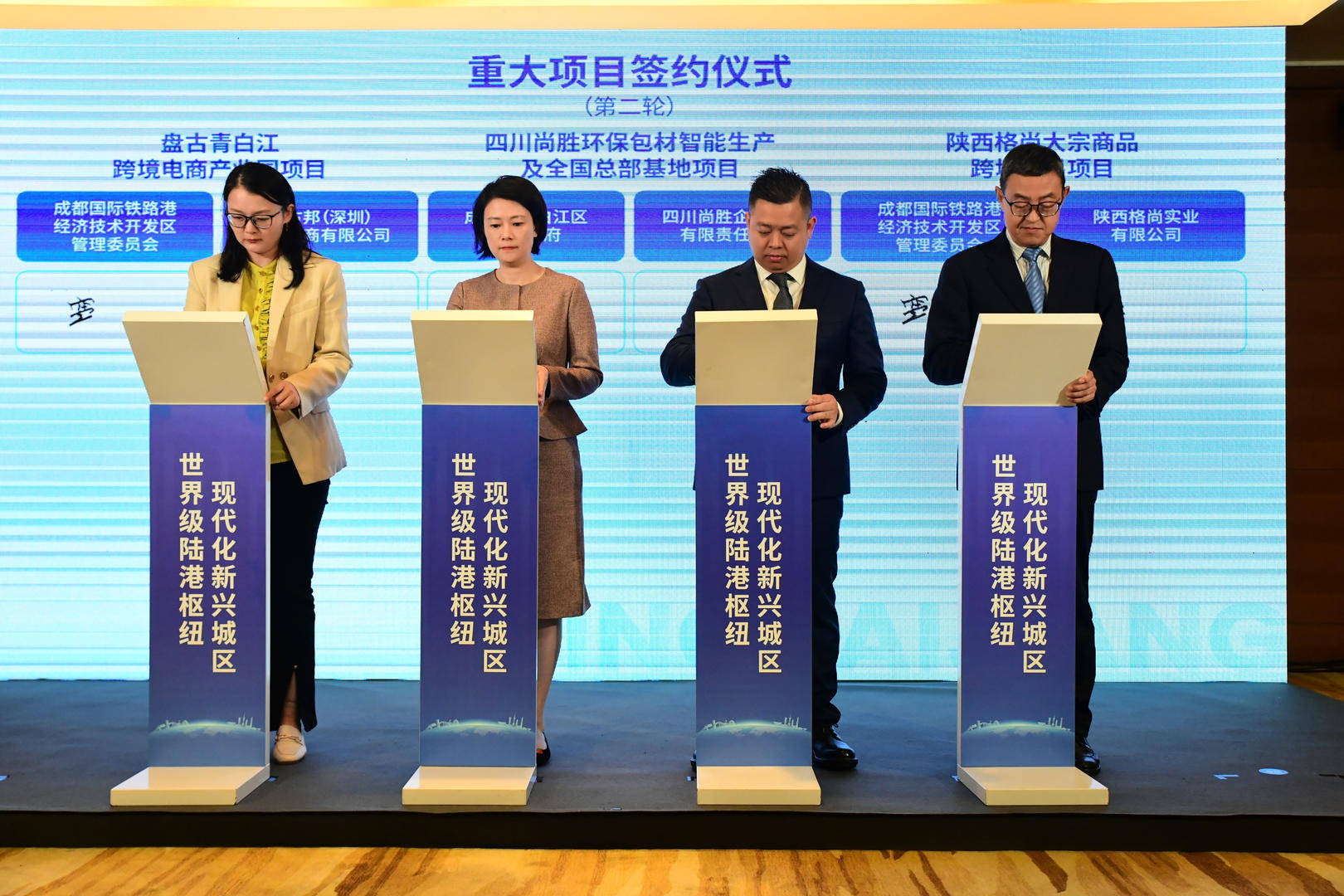
Core Viewpoint - The Chengdu Qingbaijiang District showcased its unique advantages as a core area of the Chengdu International Railway Port during the China International Import Expo, signing eight key projects with a total investment of 4.416 billion yuan, emphasizing its role as a modern emerging urban hub and world-class land port [1][3][4]. Group 1: Key Projects and Investments - Eight key projects were signed, covering areas such as cross-border e-commerce, bulk commodity trade, cultural and creative industries, and international hub construction, with a total signing amount of 4.416 billion yuan [3][4]. - The Pangu Qingbaijiang Cross-Border E-Commerce Industrial Park project aims to integrate global cross-border e-commerce resources, creating a comprehensive industrial cluster [3]. - The Shaanxi Geshang Bulk Commodity Cross-Border Trade project will establish a bonded warehouse in the railway port comprehensive bonded zone, serving as a distribution base for bulk commodities in the western region [3]. Group 2: Logistics and Trade Development - The "Rongoufei DPD Express" product was launched, introducing the first regular international train service between China and Europe/Africa, significantly improving logistics efficiency with a travel time of 15 days to Belgium and 25 days to Morocco, with a frequency of one train per week [3]. - Qingbaijiang District highlighted its potential in logistics, trade, cultural tourism, and manufacturing, promoting the Chengdu International Railway Port's business environment and key projects such as the Southeast Asia fruit distribution center [4][6]. Group 3: Future Development Plans - The Chengdu Qingbaijiang District plans to deepen cooperation with global partners, expedite the implementation of signed projects, and further optimize the business environment to enhance opportunities in modern logistics, international trade, and the integration of culture, commerce, and tourism [6].

日本老牌企业在华抢抓AI机遇 ——松下在第八届进博会上首发AI战略,开启“两端赋能”新篇章
Cai Fu Zai Xian· 2025-11-07 04:43
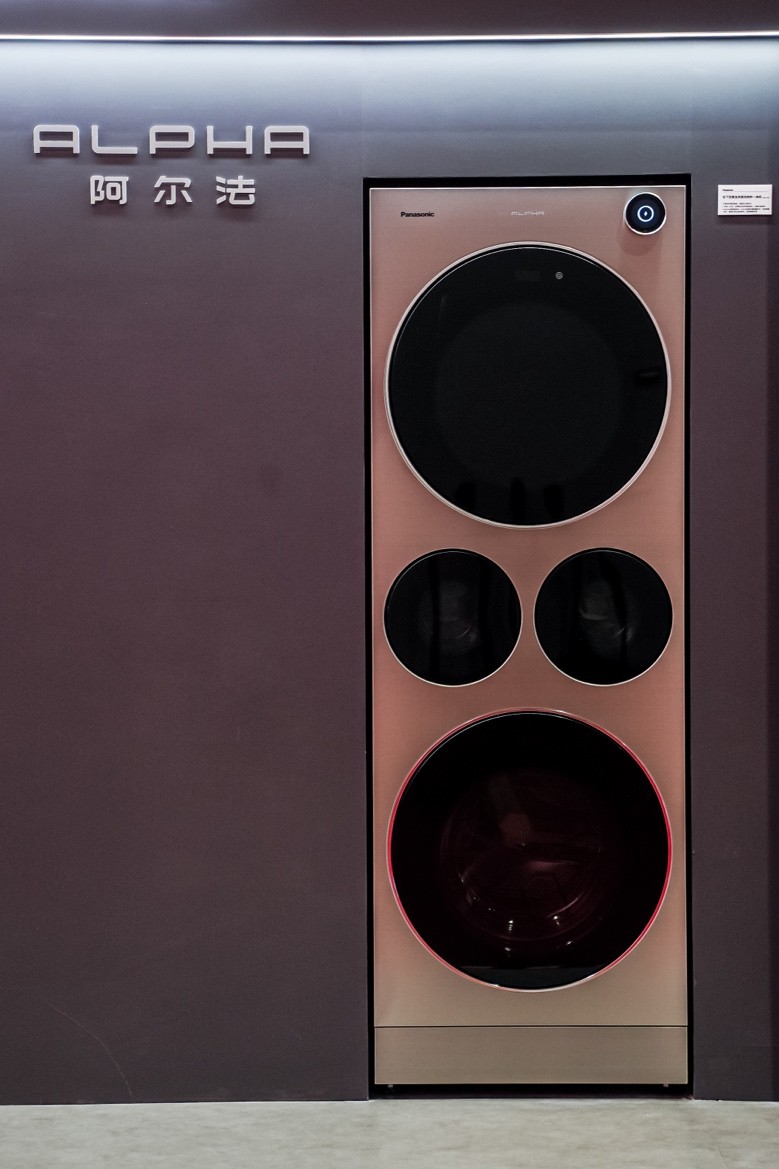
Core Insights - Panasonic is leveraging AI technology to enhance its product offerings and market presence in China, exemplified by the launch of the Alpha G5 washing machine, which features advanced capabilities and smart functionalities [1][4][10] Group 1: Product Innovation - The Alpha G5 washing machine is the world's first four-drum heat pump washer-dryer, equipped with 76 intelligent chips for automatic fabric recognition and stain analysis, offering 12 specialized care programs [1][4] - Panasonic's "1+N+X Smart Home System" integrates AI to enhance user experience, allowing for seamless interaction between devices and automated cooking recommendations based on food inventory [11][12] Group 2: AI Strategy - Panasonic's AI strategy is defined by "dual empowerment," focusing on user service through smart appliances and supporting the AI industry with essential components and materials [7][15] - The company aims to capitalize on the rapid growth of China's AI industry, projected to exceed 450 billion yuan by 2025, with a broader market impact of over 5 trillion yuan [5][15] Group 3: R&D and Talent - Panasonic has established a strong R&D presence in China, with over 1,000 engineers at its Dalian center, focusing on smart appliances and automotive systems, generating revenue of 309 million yuan in 2024 [8][9] - The company emphasizes talent as a core driver for its AI strategy, with 10,000 of its 50,000 employees in China engaged in R&D [9] Group 4: Market Dynamics - Chinese consumers are increasingly favoring AI appliances, as demonstrated by the Alpha G5's ability to meet diverse laundry needs in a single device, addressing space and time constraints in urban households [10][12] - The smart home market in China is expected to surpass 800 billion yuan by 2025, with a compound annual growth rate exceeding 15% [11] Group 5: Industrial Impact - Panasonic is a key supplier in the global AI server supply chain, with significant sales growth in components for AI servers and communication infrastructure, including a 70% increase in MEGTRON sales [13][15] - The company is expanding its electronic materials factories in China, with investments totaling 7.9 billion yuan for new production facilities, enhancing its capacity and supporting the local semiconductor supply chain [13][15]
懂食材、识面料!海尔智家牵头立项行业首个图像识别国标
Quan Jing Wang· 2025-11-07 04:07
Core Viewpoint - The establishment of national standards for image recognition technology in smart home appliances, led by Haier, addresses existing technical gaps in the industry and promotes high-quality development of the sector [1][2]. Group 1: Industry Standards - The National Standardization Administration has approved the establishment of a new standard for image recognition technology in smart home appliances, filling a gap in domestic industry standards [1][2]. - The new standard will unify technical requirements and provide clear guidelines for product design, functionality, performance, safety, and reliability [2]. Group 2: Technological Advancements - Haier's practical applications of smart home technology, such as refrigerators that can identify food types and washing machines that categorize stains, have provided significant support for the standard's formulation [2]. - The implementation of the new standard is expected to enhance the accuracy of smart appliances and improve the overall consumer experience [2]. Group 3: Market Impact - The lack of unified standards has led to inconsistent product quality in the smart home appliance market, affecting consumer experience and hindering industry innovation [1]. - The new standard will lower R&D costs for companies and accelerate the integration of AI in home appliances, enhancing China's competitiveness in the global smart home market [2].


松下中国进博会首发AI战略 加码中国AI市场
Xin Lang Cai Jing· 2025-11-06 08:24
Core Insights - Panasonic has launched its AI strategy in China, focusing on a "dual empowerment" approach to enhance competitiveness and contribute to China's modernization efforts [1][2] - The company aims to leverage the opportunities presented by China's AI industry and digital economy, integrating AI technology into smart home appliances and services while also developing AI infrastructure [1] - Panasonic is promoting a "full AI" corporate culture in China, implementing a common AI platform that connects various AI models to enhance employee productivity [1] Business Performance - In the fiscal year 2024, Panasonic's sales in China increased by 3% year-on-year, with profits rising by 12% [2] - For the first half of fiscal year 2025 (April to September), the company continued its growth trajectory, with sales up by 3% and profits up by 24% [2] - Panasonic's CEO emphasized the importance of succeeding in the Chinese market as a prerequisite for global success [2]
经济观察丨四年9万亿,大湾区“强磁场”引世界瞩目
Sou Hu Cai Jing· 2025-11-04 10:43
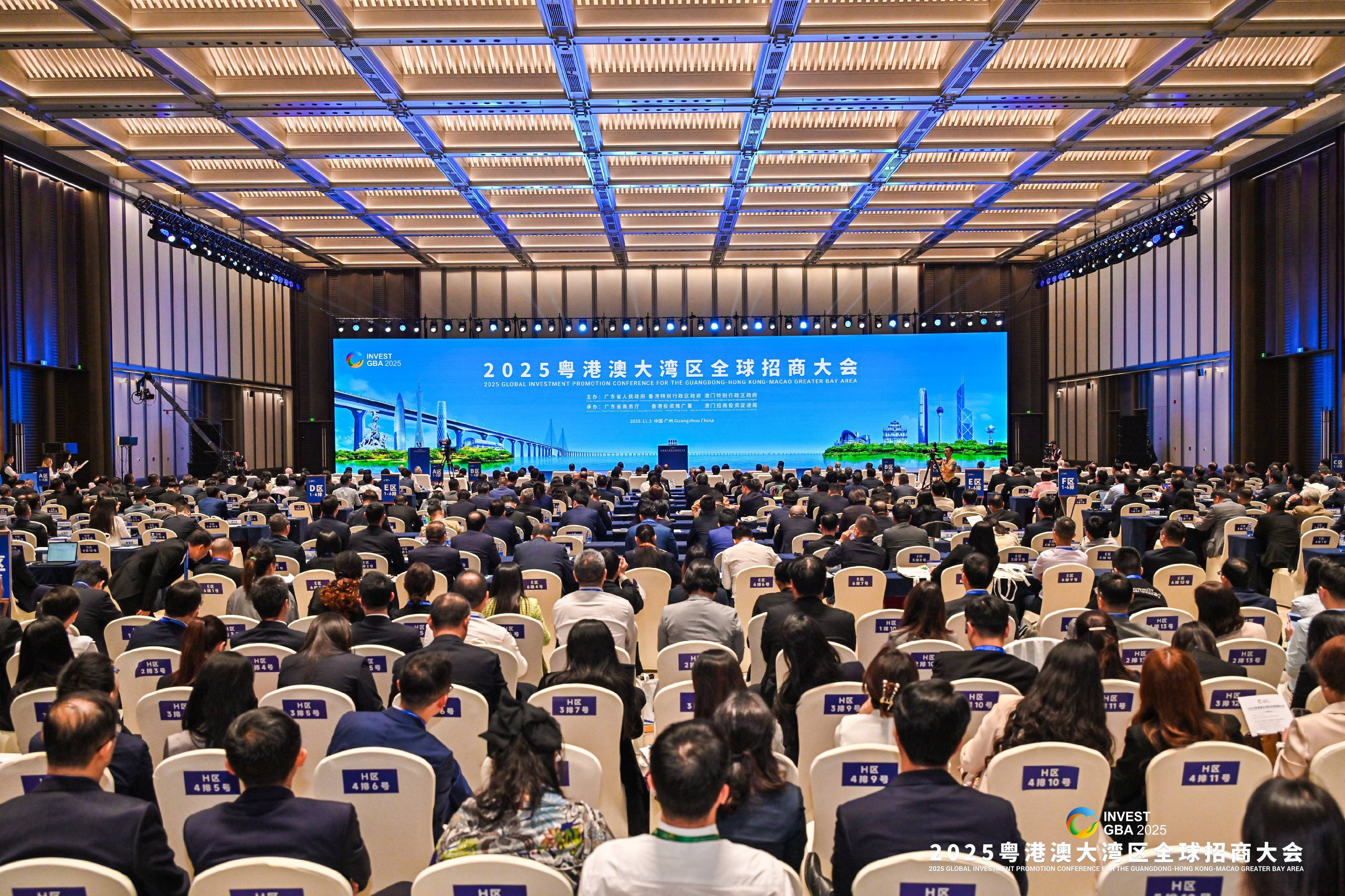
Core Insights - The 2025 Guangdong-Hong Kong-Macao Greater Bay Area Global Investment Conference successfully gathered global investors, achieving a total investment and trade amount of 2.03 trillion yuan with 2,073 projects signed [1][4] - The conference highlighted the region's strong industrial foundation and favorable economic conditions, which provide stable development expectations for global investors [4][6] Group 1: Investment Achievements - The conference has seen a cumulative signing amount of 7 trillion yuan over the past three years, with an overall project commencement rate of 88.1% [1] - This year's conference resulted in 2,073 investment and trade projects, with 21 representative projects signed on-site [1][4] Group 2: Industrial Strength - Guangdong boasts a complete industrial system with all 31 manufacturing categories, fostering nine trillion-level industrial clusters [4] - The advanced manufacturing and high-tech manufacturing sectors in Guangdong saw value-added growth of 5.4% and 6.4% respectively in the first three quarters of this year [4][6] Group 3: Policy Support - Guangdong's government has introduced a comprehensive policy framework to attract global investors, including a detailed "Guangdong Industrial Investment Map" [6] - Financial incentives include rewards for new foreign investment projects and substantial funding support through industry funds and loan interest subsidies [6][7] Group 4: Talent and Land Resources - Guangdong has reserved 20,000 acres of land for new quality productivity projects, while Hong Kong has planned 30,000 hectares for urban development [7] - Talent attraction initiatives have successfully drawn over one million graduates to Guangdong and more than 5,000 high-end talents to Hong Kong [7] Group 5: Regional Collaboration - The collaboration among Guangdong, Hong Kong, and Macao creates a competitive development community, enhancing the region's attractiveness to investors [8] - Hong Kong serves as a vital link for global market access, while Macao focuses on building a favorable investment environment through its unique advantages [8][9]
让县域发展更有“质感” 山东青岛崂山区获批全国首批“城市间质量合作互助”创新试点
Zhong Guo Zhi Liang Xin Wen Wang· 2025-11-04 04:34
Core Viewpoint - The successful selection of Laoshan District in Qingdao as a national pilot for quality enhancement signifies a critical step in its quality-driven development strategy, emphasizing the importance of quality in regional growth and collaboration with other regions [1][2]. Group 1: Quality Development Initiatives - Laoshan District has established a dedicated task force led by the district head to implement a specific plan for quality enhancement, which includes training and collaboration with other regions [1]. - The district has initiated a quality award program with a maximum reward of 3 million yuan, and has disbursed over 50 million yuan in quality-related funding in recent years [1]. - The area has been recognized for its quality achievements, including the China Quality Award and multiple provincial and municipal quality awards, maintaining an A-class rating in quality assessments for six consecutive years [1]. Group 2: Innovation and Industry Development - The district is focusing on a "science-industry integration + financial empowerment" model to stimulate new momentum for quality development, with a modern industrial structure of "7+4+1" [2]. - Key industries such as virtual reality and artificial intelligence are projected to exceed 100 billion yuan in scale, with support for leading companies like Haier Group [2]. - Laoshan District has established a diverse investment and financing system, with 15 listed companies and a total market value of over 300 billion yuan [2]. Group 3: Quality Assurance and Standards - The district has formed a collaborative innovation alliance involving 25 universities and research institutions to enhance technological cooperation and establish high-level laboratories [3]. - A one-stop service platform for quality infrastructure has been created, serving over 1,300 enterprises and integrating 157 service institutions [3]. - The district has actively participated in the formulation of nearly 1,500 international and national standards, receiving over 40 million yuan in innovation incentive funding [3]. Group 4: Brand Development and Image Building - Laoshan District has been recognized as a national all-region tourism demonstration area and has developed a brand matrix for "Laoshan Quality," enhancing its regional brand strength [4]. - The district has cultivated 60 provincial high-end brands and 18 "Good Products of Shandong" enterprises, reflecting a significant improvement in brand recognition [4]. - Future plans include enhancing the quality of life for residents through improved safety in food and medicine, as well as better housing, healthcare, and education services [4].