电池

Search documents
全国人大代表、赣锋锂业董事长李良彬:建议利用期货市场保障关键矿产供给,加快飞行器动力电池研发与商业化
Qi Huo Ri Bao Wang· 2026-03-04 03:26
Core Viewpoint - The low-altitude economy is emerging as a new competitive arena in global technology and industry, with the market in China expected to reach 3.5 trillion yuan by 2035, highlighting the need for advancements in aircraft power battery research and commercialization [1] Group 1: Supply Chain and Resource Utilization - The chairman of Ganfeng Lithium, Li Liangbin, emphasizes the importance of utilizing the futures market to ensure supply chain security and resource recycling for the low-altitude economy [1] - Recommendations include leveraging the experience of lithium carbonate futures to stabilize price fluctuations and support the supply of key minerals like nickel, cobalt, and lithium [1] - Establishing a lifecycle management system for specialized aircraft batteries and developing industry standards to promote efficient resource recycling and green low-carbon development [1] Group 2: Challenges and Recommendations - The integration of low-altitude economic layout and power battery commercialization faces multiple challenges, including the need for battery energy density to evolve to 400-500 Wh/kg or higher [1] - Li Liangbin suggests enhancing top-level planning by the government to create a long-term development plan for power batteries in low-altitude flight applications [2] - Recommendations for strengthening industry standards, encouraging collaboration between industry and academia, and providing financial and talent support for companies involved in high-energy, high-power battery development [2]

全国人大代表、赣锋锂业董事长李良彬:鼓励发展高功率飞行器动力电池
Xin Lang Cai Jing· 2026-03-03 12:30
Core Viewpoint - The low-altitude economy is emerging as a new competitive arena in global technology and industry, with significant attention from representatives during the 2026 National People's Congress. The market for China's low-altitude economy is projected to reach 3.5 trillion yuan by 2035, with power batteries being crucial for the development of electric vertical takeoff and landing aircraft (eVTOL) and large drones [3][4]. Industry and Company Insights - The chairman of Ganfeng Lithium, Li Liangbin, has proposed suggestions to accelerate the research and commercialization of aircraft power batteries, emphasizing the need for top-level design, technological breakthroughs, and standard construction to promote the development of high-energy-density and high-power batteries [3][5]. - Current traditional batteries are insufficient for the future commercialization and scaling of low-altitude transportation, as the low-altitude flight market is transitioning from technology research to industrialization [3][4]. - The eVTOL battery cells currently achieve energy densities above 300 Wh/kg, but to enable economic and regular urban air traffic operations, energy densities need to evolve to 400-500 Wh/kg or higher, indicating significant room for improvement [4][5]. - The lack of an industry standard system is a prominent issue, with existing standards not fully covering the stringent requirements for aviation applications, necessitating ongoing optimization of battery environmental adaptability and stability [4][6]. Recommendations for Development - Li Liangbin has outlined five specific recommendations to address the challenges in the research and commercialization of high-energy-density and high-power aircraft power batteries, covering aspects from top-level design to ecosystem construction [5][6]. - It is suggested to enhance top-level planning by the government to develop a long-term development plan for power batteries in low-altitude flight applications, aligning it with national low-altitude economic development plans [5][6]. - Strengthening deep cooperation between industry, academia, and research institutions is recommended, including establishing a national major science and technology project for advanced power systems in low-altitude aircraft [5][6]. - Accelerating the establishment of an industry standard system is crucial, with collaboration among industry associations, leading enterprises, and government departments to create specific standards for aircraft batteries [6]. - Financial and talent policy support is advised for companies engaged in the development of high-energy-density and high-power batteries, including funding for research capabilities and establishing investment funds for the low-altitude economy [6].


全国人大代表、赣锋锂业董事长李良彬:加快飞行器动力电池研发及商业化
Zheng Quan Ri Bao· 2026-03-03 12:07
Core Insights - The global aircraft power battery industry is transitioning from laboratory validation to a critical phase of technological breakthroughs, rapid scene implementation, and accelerated industrial maturity [1] - By 2035, the market size of China's low-altitude economy is expected to reach 3.5 trillion yuan [1] Industry Challenges - Aircraft power batteries face three extreme constraints: high energy density, high power output, and high safety reliability [1] - Current eVTOL battery energy density exceeds 300 Wh/kg, but for economic urban air mobility, it needs to evolve to 400-500 Wh/kg or higher [1] - Existing battery standards do not fully cover the stringent conditions of aircraft, such as thunderstorms, high-altitude low temperatures, and high wind speeds [1] - The lack of industry-specific design specifications, testing methods, and fault diagnosis standards may lead to dispersed R&D directions and increased commercialization costs [1] - Insufficient industry chain collaboration due to the early stage of development [1] Recommendations for Development - Strengthen top-level design and planning coordination to clarify battery technology development paths and commercialization application roadmaps [2] - Enhance industry-academia-research cooperation to accelerate high-performance battery R&D, focusing on core performance under extreme aviation conditions [2] - Establish a comprehensive industry standard system for aircraft-specific batteries, covering performance, safety, testing methods, and recycling requirements [2] - Ensure supply chain security and recycling of key materials, such as nickel, cobalt, lithium, and germanium, to stabilize raw material prices [2] - Support companies in utilizing futures markets for raw material supply and promote the establishment of a lifecycle management system for aircraft-specific batteries [2]
未来10年,这18个赛道将带来48万亿美元收入
创业家· 2026-03-03 10:37
Group 1 - The core viewpoint of the article is based on McKinsey's report predicting that 18 industry sectors will significantly alter the global business landscape, potentially generating revenues between $29 trillion and $48 trillion by 2040, contributing 18-34% to global GDP growth [2] Group 2 - E-commerce is expected to account for 27%-38% of global retail revenue by 2040, up from approximately 20% currently, driven by market expansion in developing countries and new product categories in developed nations [3][4] - Significant investments are anticipated in customer acquisition and last-mile delivery within the e-commerce sector [5] Group 3 - Electric vehicles (EVs) are projected to exceed 50% of global passenger car sales by 2040, with advancements in battery technology and smart algorithms being key influencing factors [6][7] Group 4 - Cloud services are becoming increasingly essential as the world becomes more interconnected, with a compound annual growth rate (CAGR) of 17% from 2005 to 2020, expected to continue at a similar pace in the coming decades [9][10] Group 5 - The semiconductor industry is forecasted to grow at a CAGR of 6%-8% over the next decade, driven by demand across various sectors including computing, data storage, automotive, and industrial electronics [11] Group 6 - AI software services are rapidly evolving, with a growing number of users adopting AI assistants, leading to a competitive race among companies to develop advanced foundational models and applications [12][13] Group 7 - Digital advertising is expanding in value as more middle-class individuals gain internet access and spend more time online, with continuous algorithm improvements enhancing customer targeting and ad cost tracking [14] Group 8 - Streaming video platforms are expected to seek new revenue models due to increased investments in customer acquisition and content production, with a prediction that by 2040, households subscribing to long-form video services could exceed 1 billion [17][18] Group 9 - Shared autonomous vehicles may account for 25%-51% of shared mobility revenue by 2040, although the realization of this future may take longer than anticipated [19][20] Group 10 - The space economy is anticipated to emerge, with advancements in reusable rocket technology transforming the aerospace industry [21][22] Group 11 - Cybersecurity is becoming a priority as cybercrime caused approximately $950 billion in direct economic losses in 2020, with indirect losses potentially reaching $4-6 trillion [24][25] Group 12 - Battery technology has seen significant advancements, with energy density increasing threefold over the past decades, driven by the global energy transition and the rise of electric vehicles [26][27] - By 2040, electric vehicles are expected to represent over 80% of the battery market [28] Group 13 - The gaming industry is projected to have 40% of the global population as gamers by 2030, with mobile and cloud gaming driving substantial market growth [29][30] Group 14 - Robotics, particularly humanoid robots, are gaining attention as AI technology advances, with expectations that personal robots may become commonplace [33][34] Group 15 - Biotechnology is set to accelerate in areas such as agriculture and alternative proteins due to breakthroughs in gene editing [37] Group 16 - Modular construction methods are improving building efficiency, although global adoption remains limited despite success in regions with high labor costs [38] Group 17 - Nuclear fission power is being considered as a supplement to renewable energy, with commitments from over 20 countries to double nuclear energy output by 2050 [39][40] Group 18 - Innovations in air transportation, including electric vertical takeoff and landing vehicles, are expected to bring significant technological changes [41][42] Group 19 - The prevalence of obesity is projected to rise from 15% in 2020 to 24% by 2035, indicating a potential market for effective weight loss treatments [43][44]

产线满负荷!豪鹏科技8亿扩产
起点锂电· 2026-03-03 10:21
Core Viewpoint - The article discusses the upcoming expansion of Haopeng Technology, focusing on its transition from traditional consumer battery markets to emerging sectors such as energy storage and AI hardware solutions, driven by increasing demand and strategic investments [2][8][13]. Group 1: Company Expansion and Investment - Haopeng Technology plans to raise up to 800 million yuan for two major projects: energy storage batteries and steel-shell laminated lithium batteries, addressing current capacity constraints and increasing order volumes [2][3]. - The total investment for the energy storage battery project is approximately 447.29 million yuan, while the steel-shell laminated lithium battery project is estimated at 418.40 million yuan, with a combined investment of 865.69 million yuan [3]. - The construction and ramp-up period for both projects is set to be two years, aiming to achieve an annual production capacity of about 3 GWh for energy storage cells and 32 million units for steel-shell batteries [3][4]. Group 2: Market Position and Performance - Haopeng Technology is recognized as a leading player in the global small consumer lithium battery market and is expanding its presence in AI energy solutions, with a focus on high-margin, high-growth segments [4][8]. - The company is projected to achieve revenues between 5.7 billion and 6 billion yuan in 2025, reflecting a year-on-year growth of 11.58% to 17.45%, and a net profit increase of 113.69% to 141.09% [8][9]. - The growth is attributed to the company's "All in AI" strategy, which has opened new revenue streams, particularly in AI PCs and energy storage solutions [9]. Group 3: Export and Regulatory Challenges - Haopeng Technology has a significant reliance on overseas sales, with export revenues constituting over 50% of total income in recent years [10]. - Upcoming changes in export tax rebates, with rates decreasing from 9% to 6% in 2026 and a complete removal by 2027, are expected to negatively impact profitability [10][11]. - The company is implementing strategies to mitigate these impacts, including establishing cost-sharing mechanisms with clients and leveraging its production base in Vietnam to enhance international competitiveness [12]. Group 4: Future Outlook - The successful implementation of the two new projects is anticipated to facilitate Haopeng Technology's transformation from a consumer battery supplier to a comprehensive AI and energy storage solutions provider, unlocking new growth opportunities [13].

企业出海:破除内卷、提振内需与文化输出
Soochow Securities· 2026-03-03 07:00
Group 1: New Characteristics of Enterprises Going Abroad - The trend of enterprises going abroad has shifted from passive avoidance of U.S. tariffs in 2018 to proactive global capacity layout, moving from "single production segment" to "localized supply chain layout" [6] - The number of non-financial foreign direct investment enterprises in China reached 11,048 by 2025, a significant increase of 71.8% compared to 2022, with an annual growth rate of over 15% since 2023 [6] - High-tech industries, including consumer electronics, engineering machinery, and semiconductors, accounted for over 50% of overseas revenue by mid-2025, indicating a shift towards technology-intensive sectors [6] Group 2: Economic Impact of Enterprises Going Abroad - The gross profit margin of overseas business for non-financial listed companies was approximately 19.0% by mid-2025, compared to 15.2% for domestic business, highlighting the higher profitability of overseas operations [26] - Enterprises are transitioning from "earning global money" to "making money globally," emphasizing the importance of capacity going abroad and local market integration [24] - The overseas profits are creating a positive cycle of "going abroad - profit - repatriation - re-going abroad," positively impacting domestic economic growth and resident income [26] Group 3: Policy Implications of Enterprises Going Abroad - The internationalization of the RMB is mutually reinforcing with enterprises going abroad, providing broader application scenarios and reducing exchange rate risks [44] - The government has established a strict regulatory framework to encourage "real going abroad" while preventing "fake going abroad" behaviors, ensuring healthy development of enterprises' overseas activities [46] - Policies supporting cultural and service exports are enhancing China's global image and cultural influence, with significant growth in overseas revenue from education, gaming, and film industries [40]
固态电池龙头,完成新一轮融资
DT新材料· 2026-03-03 01:07
Core Viewpoint - The article highlights the strategic investment by DaoDe Investment in QingTao (Kunshan) Energy Development Group, emphasizing its recognition in the solid-state battery sector and its significant market potential, as evidenced by its inclusion in the 2024 Hurun Global Unicorn List with a valuation of 20.5 billion yuan [1]. Group 1: Company Overview - QingTao Energy was established in 2016, led by a team from Tsinghua University and the Chinese Academy of Sciences, focusing on the research and production of solid-state batteries and their key materials [1]. - The company employs an "oxide + polymer" technology path for its first-generation semi-solid batteries and plans to adopt an "oxide + halide + polymer" approach for its second-generation solid-state batteries [1]. Group 2: Production Capacity and Technology - QingTao Energy has established solid-state battery and energy storage projects in multiple locations, with a total planned production capacity of 65 GWh [1]. - The company aims to achieve mass production of its third-generation solid-state batteries by 2027, targeting an energy density exceeding 500 Wh/kg and a cost reduction of approximately 40% compared to equivalent lithium iron phosphate or ternary batteries [1]. Group 3: Industry Partnerships - QingTao Energy has formed long-term partnerships with several major automotive companies, with its products already utilized in various vehicle models, including the Zhiji L6 and the new MG4 from SAIC [2].
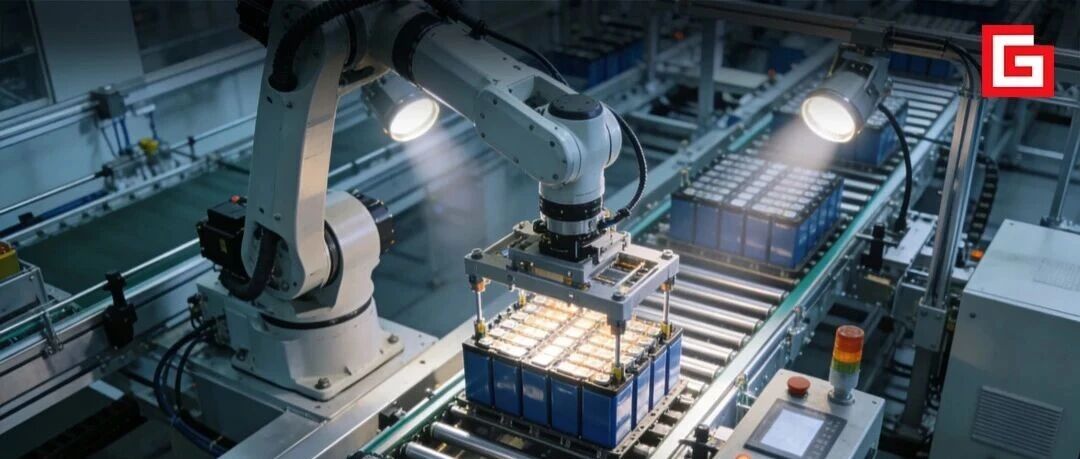
开年锂电:淡季不淡,储能增速超160%
高工锂电· 2026-03-02 11:19
Core Viewpoint - The energy storage battery sector is experiencing growth rates that significantly exceed those of the power battery sector, with strong market demand supporting this trend despite short-term production and consumption slowdowns due to the Spring Festival holiday [3][5]. Production and Sales Data - In January, the combined production of power and energy storage batteries in China reached 168.0 GWh, representing a substantial year-on-year increase of 55.9%, while total sales amounted to 148.8 GWh, with an even higher year-on-year growth rate of 85.1% [4]. - Although production and sales saw month-on-month declines of 16.7% and 25.4% respectively, the demand for both power and energy storage batteries remains robust, highlighting the industry's resilience [5]. Sales Structure and Growth Trends - The sales structure indicates a shift in growth dynamics, with power battery sales at 102.7 GWh, accounting for 69.0% of total sales and showing a year-on-year increase of 63.2%. Energy storage batteries performed even better, with sales of 46.1 GWh, representing 31.0% of total sales and a remarkable year-on-year growth rate of 164.0% [6]. Future Projections - According to GGII forecasts, China's total lithium battery shipments are expected to exceed 2.3 TWh in 2026, with energy storage lithium battery shipments surpassing 850 GWh and growth rates exceeding 35%. Power battery shipments (including those for passenger and commercial vehicles) are projected to exceed 1.3 TWh, with growth rates over 20% [7]. Export Market Dynamics - The export market continues to show growth, although with notable structural differentiation. In January, the combined export of power and energy storage batteries was 24.1 GWh, down 26.0% month-on-month but up 38.3% year-on-year, accounting for 16.2% of monthly sales [7]. - Power battery exports reached 17.7 GWh, making up 73.3% of total exports, with a slight month-on-month decline of 7.1% but a year-on-year increase of 59.3%. In contrast, energy storage battery exports faced challenges, with a volume of 6.4 GWh, down 52.6% month-on-month and only a slight year-on-year increase of 1.4% [7]. Technical Trends - The dominance of lithium iron phosphate (LFP) batteries remains strong, with a January shipment volume of 32.7 GWh, representing 77.7% of total shipments and a year-on-year growth of 8.1%. In comparison, ternary batteries had a shipment volume of 9.4 GWh, accounting for 22.3% of the total, with a modest year-on-year growth of 9.6% [9]. Application Trends - There is a significant shift in terminal demand, moving from traditional pure electric passenger vehicles to hybrid models, particularly in the commercial vehicle sector. In January, pure electric passenger vehicle shipments accounted for 60.3%, showing a slight year-on-year decline of 1.4%, while plug-in hybrid vehicle shipments surged to 22.6%, with a year-on-year increase of 22.9% [10]. - The average battery capacity of new energy vehicles in China reached 59.5 kWh in January, reflecting a year-on-year increase of 22.8%. This includes average capacities of 63.6 kWh for pure electric passenger vehicles and 34.6 kWh for plug-in hybrid vehicles, which grew by 19.2% and 29.7% respectively [10]. Competitive Landscape - The competitive landscape is undergoing subtle changes, with a slight loosening of concentration among leading companies. In January, 33 domestic power battery companies achieved vehicle matching, a decrease of 3 from the previous year. The market share of the top 10 companies accounted for 95.7%, showing a minor year-on-year decline of 1.1 percentage points [10].
宁德时代200GWh“加码”故乡
起点锂电· 2026-03-02 10:23
Group 1 - The core viewpoint of the article emphasizes the strategic partnership between CATL and the Ningde municipal government, focusing on zero-carbon initiatives and technological advancements, with a total investment exceeding 60 billion yuan and a planned production capacity of 200 GWh [4][5][6] - CATL has significantly contributed to the economic growth of Ningde since its establishment in 2011, creating a complete battery industry chain and becoming the largest polymer lithium battery production base globally, with current production capacity reaching 370 GWh [4][5][6] - The partnership aims to enhance various aspects such as talent policies, education, healthcare resources, urban commercial facilities, industrial funds, and infrastructure development, aligning with national dual carbon and energy security strategies [4][8] Group 2 - CATL's recent activities include the issuance of bonds totaling 3 billion yuan and the launch of the Tianxing II light commercial customized solution, marking the introduction of its first mass-produced sodium battery [10][11] - Collaborations with major companies like BMW for cross-border data trials and with Jianfa Group for deep cooperation in new energy vehicles and emerging industries highlight CATL's expanding influence [12] - The company is also diversifying its portfolio by applying for the "Ning's Tea" trademark, indicating a strategic move into the food and beverage sector, while maintaining a strong focus on technology and industry sustainability [12]


大圆柱电池细分“黑马”是如何炼成的?
起点锂电· 2026-03-02 10:23
Core Viewpoint - The article highlights the rapid growth and technological advancements in the cylindrical battery market, particularly focusing on the emergence of companies like Fuyue Technology as key players in the supply chain for high-precision lithium battery structural components [1][12]. Industry Overview - The global cylindrical battery shipment is projected to reach 16.83 billion units in 2025, with a year-on-year growth of over 15.1%, while China's shipments are expected to hit 10.36 billion units, reflecting a 25.3% increase [1]. - The market is shifting from "vehicle-exclusive" applications to "full-scenario power bases," indicating a diversification in the use of cylindrical batteries [1]. Company Profile: Fuyue Technology - Fuyue Technology, established in June 2024, specializes in high-precision lithium battery structural components, including aluminum shells and cover assemblies for power batteries [2]. - The company has quickly gained attention in the capital market due to its alignment with industry technological trends [2]. Product and Technology - Fuyue Technology's products are characterized by lightweight, high strength, and corrosion resistance, enhancing battery safety and lifespan [4]. - The company employs cold stamping processes that outperform traditional "sheet stretching" methods in terms of gas-tightness, structural design, and cost reduction [4][6]. - Fuyue's integrated design of explosion-proof valves is crucial for ensuring battery safety under extreme conditions [5]. Production Capacity and Efficiency - Fuyue Technology has established a semi-automated production line, increasing its daily output from 150,000 to 250,000 units, with plans to further scale to 300,000 units [7]. - The company is implementing AI simulation and IoT monitoring to optimize production efficiency and quality [8]. Financial Performance - In the first eight months of 2025, Fuyue Technology reported revenues of 74.83 million yuan and a net profit of 10.09 million yuan, marking a significant increase from the previous year's revenue of 5.09 million yuan and a net loss of 1.11 million yuan [9]. - The company has secured a procurement framework agreement for 2026, ensuring a stable order flow to support its performance commitments [9]. Market Position and Future Outlook - Fuyue Technology is positioned as a "dark horse" in the cylindrical battery structural component sector, aiming to become a trusted strategic partner for battery manufacturers [12]. - The company plans to double its production capacity for aluminum shells and increase its customer base by 50% annually over the next two years [9]. - The cylindrical battery market is expected to enter a phase of large-scale growth from 2026 to 2028, driven by advancements in technology and increasing demand across various applications [10][11].