卫星互联网

Search documents
马斯克的星链即将登陆印度市场 家庭月费8600卢比
Sou Hu Cai Jing· 2025-12-08 12:20
Core Insights - Starlink, owned by Elon Musk, has officially announced its residential service pricing in India, marking the imminent commercial launch of the service in the country [1][3] Pricing and Service Details - The residential user package is priced at 8,600 Indian Rupees (approximately 750 RMB) per month [3] - Users are required to purchase specialized hardware, including a satellite dish, router, power supply, and cables, at a one-time cost of 34,000 Rupees, leading to a total initial investment of about 42,000 Rupees (approximately 3,650 RMB) [3] - The residential package offers unlimited data with a claimed network availability of 99.9%, and it is designed to operate in all weather conditions [3] - Starlink is providing a 30-day free trial period, allowing users to experience the service before making a long-term commitment, which is relatively uncommon in high-cost satellite internet services [3] Market Positioning - Starlink's pricing is significantly higher than traditional broadband services in India, but its technology offers direct internet access via low Earth orbit satellites, making it suitable for remote or rural areas where fiber optics are not available [3] - For urban users, the value of Starlink lies more in network redundancy and emergency communication scenarios [3] - As of now, Starlink has not disclosed pricing details for its enterprise-level services in India [3]

比第一名做得厉害,你才能活下来
创业家· 2025-12-08 10:10
Core Viewpoint - The article emphasizes the importance of differentiation or focus for companies that are not market leaders, suggesting that identifying unique customer needs and providing targeted services is crucial for survival in niche markets [1] Group 1: Event Overview - The article promotes an upcoming offline learning event led by Wu Shichun, aimed at entrepreneurs, focusing on the technology manufacturing industry and exploring opportunities in a trillion-dollar market [2][7] - Participants will engage in a three-day immersive learning experience, including deep discussions with industry leaders and practical strategies for business breakthroughs [9] Group 2: Learning Outcomes - Attendees will gain insights into capital trends and the core logic of high-demand sectors, enhancing their understanding of industry dynamics and competitive positioning [9] - The event will feature interactions with 100 entrepreneurial peers, fostering collaboration and immediate problem-solving [9] Group 3: Itinerary Highlights - The event includes a welcome dinner, cultural exploration of Xi'an, and sessions on technology innovation and industry disruption, featuring notable speakers and case studies [16][17] - Specific sessions will cover topics such as satellite manufacturing and commercialization, led by industry experts [16][17]

马斯克设想:每年发射1百万吨AI卫星
财联社· 2025-12-08 05:24
Core Viewpoint - The next significant leap in artificial intelligence may occur in space rather than on Earth due to infrastructure and energy supply bottlenecks [1][3]. Group 1: Elon Musk's Vision - Elon Musk proposed that localized AI computing satellites in low-latency sun-synchronous orbits could become the most cost-effective way to transmit AI data within three years [2][3]. - Musk envisions launching 1 million tons of satellites annually, each equipped with 100 kW of power, which could add 100 GW of AI computing capacity each year without operational or maintenance costs [3]. - The concept includes building satellite factories on the Moon and using mass drivers to accelerate AI satellites to escape velocity, potentially achieving over 100 TW of AI computing capacity annually [3][4]. Group 2: Challenges in AI Development - The rapid growth in AI model sizes and demand is putting significant pressure on existing data centers, fiber networks, and power systems [5]. - There is a need for new energy sources to keep pace with the increasing demand, while also considering factors like latency, climate risks, and political obstacles [5]. Group 3: Competing Projects - Google's "Project Suncatcher" aims to create orbiting computing nodes powered by continuous solar energy, which could operate machine learning models more efficiently than ground-based data centers [6]. - Amazon's "LEO" project seeks to establish a global broadband network of low Earth orbit satellites, potentially providing edge computing services for AI tasks in underserved areas [7]. - Musk is also conceptualizing an "orbital computing farm" for xAI and SpaceX, which would not only run AI models but also train them, addressing the challenges of continuous energy supply and resource consumption [7].

商业航天和卫星板块后续演绎路径?
2025-12-08 00:41
Summary of Key Points from Conference Call Industry Overview - The conference call focuses on the commercial aerospace and satellite sectors, highlighting significant developments and future prospects in the industry [1][2][3]. Core Insights and Arguments - The successful launch of the Zhuque 3 rocket marks a major breakthrough in China's commercial aerospace capacity, comparable to SpaceX's Falcon 9, providing a solid foundation for satellite internet construction and enhancing public awareness [1][3]. - It is projected that the number of domestic satellite launches will double by 2026, increasing from less than 100 in 2025 to approximately 200, with private enterprises flourishing in launch capacity [2][4]. - The satellite internet sector is entering an accelerated development phase, with a market potential exceeding 100 billion RMB, similar to the robotics sector, but with currently lower public attention [1][5]. - Key events to watch in the coming year include the maiden flights of rockets like Tianlong Mountain and the IPO of Blue Arrow, which are expected to drive industry growth and create investment opportunities [1][6]. Important but Overlooked Content - The Zhuque 3 rocket's success not only alleviates long-standing capacity bottlenecks but also lays the groundwork for future market expansion [3][4]. - The rocket industry is identified as a core bottleneck in satellite internet construction, with low-cost and high-stability launch capabilities being crucial for sending materials into space [10]. - Regional policies are playing a significant role in supporting the commercial aerospace industry, with various local initiatives aimed at enhancing satellite application and production capacity [13]. - Companies such as Chaojie Co., Sry New Materials, and Shanghai Hanyun are expected to benefit from the growth of the rocket industry and supportive local policies [12][13]. Future Outlook - The commercial aerospace and satellite sectors are anticipated to transition from speculative trading to a phase where actual earnings can be calculated, marking a critical turning point for the industry [14][15].
垣信卫星牵手空客,发力低轨卫星飞机互联;我国成功发射卫星互联网低轨14组卫星——《投资早参》
Mei Ri Jing Ji Xin Wen· 2025-12-08 00:16
Group 1: Pharmaceutical Industry - In December 2025, the National Medical Insurance Catalog successfully added 114 new drugs, including 50 innovative Class A drugs such as Teriparatide and the domestic ADC drug Lukanosatuzumab [1] - The commercial insurance innovative drug catalog includes 5 domestic CAR-T cell therapies, 2 imported Alzheimer's drugs, and rare disease medications, with CAR-T therapy costing over 1 million yuan per treatment if paid out of pocket [1] Group 2: Satellite Internet Industry - On December 4-5, the 2025 Satellite Internet Industry Ecosystem Conference was held, where Yuanxin Satellite signed a cooperation agreement with Airbus for low-orbit satellite aircraft connectivity [2] - The satellite internet industry is expected to reach a market size of 200-400 billion yuan by 2030, with an annual compound growth rate of 10%-28% [3] Group 3: Cultured Diamond Industry - The 2025 Cultured Diamond Industry Conference was held on December 6, signing 30 projects with a total investment of no less than 15 billion yuan [4] - The current market size of China's cultured diamond industry is approximately 14 billion yuan, projected to exceed 102.5 billion yuan by 2030 [4] Group 4: Optical Fiber Communication Industry - On December 5, China Telecom launched the world's first cross-border hollow-core optical fiber and ultra-low latency commercial transmission system [5] - The hollow-core optical fiber technology is expected to achieve a compound annual growth rate of 56.52% over the next six years [5]






7个重磅消息来袭,明天(周一)A股大概率会这么走!
Sou Hu Cai Jing· 2025-12-07 15:03
来源:股市你金哥 4、国产GPU企业摩尔线程在科创板上市,首日涨幅惊人,极大地激发了市场对AI算力、半导体等科技板块的热情。同时,上海卫星互联网产业生态大会的 举行,以及特斯拉人形机器人取得新进展等消息,共同推动了商业航天、人形机器人等前沿科技主题的活跃,市场形成了"多点开花"的局面。 5、部分外资机构如摩根士丹利集体唱多中国资产,并上调了部分核心公司的目标价,这对提振市场情绪起到了积极作用。 6、可控核聚变板块表现强势,据Ignition Research预计,到2050年可控核聚变行业将成为一个至少1万亿美元的市场,对应超导磁体空间超千亿美元。 二、我对后市的观点: 一、这周A股复盘: 这周A股的表现,有惊无险,周五的表现很是惊艳!我认为有以下几点: 1、"央妈"在12月5日开展了大规模逆回购操作,向市场注入短期流动性,规模创近期新高。这一操作稳定了市场对年末资金面的预期,被市场解读为明确的 宽松信号。 2、金管局发布新规,下调了保险公司投资A股部分资产的风险因子。这一政策调整直接降低了险资的资本占用,引更多中长期资金入市,对保险板块自身 及整体蓝筹股都构成利好。 3、根据市场信息,美联储在12月降息25 ...



未来智造局|“千帆星座”牵手航空巨头 上海卫星互联网产业生态加快构建
Xin Hua Cai Jing· 2025-12-07 12:37
Core Viewpoint - The global satellite internet industry has transitioned from technology validation to large-scale application over the past decade, with China making significant strides in this field, particularly through its low Earth orbit satellite networks [1][2]. Group 1: Industry Development - China's satellite internet industry is experiencing robust growth, with a projected launch of 276 satellites in 2024, an increase of 11 times compared to 2014, and a compound annual growth rate exceeding 27% [2]. - The "千帆星座" (Thousand Sails Constellation) has completed the launch of 108 satellites, marking a significant milestone in its global operational capabilities [6]. - Shanghai aims to cultivate a commercial aerospace industry worth approximately 100 billion yuan by 2027, focusing on satellite manufacturing and application [3]. Group 2: Technological Advancements - China has made breakthroughs in key technologies, such as inter-satellite laser communication, achieving data transmission rates of 10 Gbps, which is 100 times faster than traditional radio frequency communication [2]. - The country has submitted over 300 technical documents to the International Telecommunication Union (ITU) and has established international standards in satellite technology [2]. Group 3: Ecosystem and Collaboration - The establishment of the Shanghai satellite internet innovation carriers, which includes seven organizations, aims to enhance technological innovation and application capabilities in the satellite internet sector [4]. - A new industrial ecosystem alliance has been formed to optimize the satellite internet industry, addressing challenges such as high investment and long development cycles [5]. Group 4: Application Scenarios - The integration of satellite internet with 5G, AI, and IoT is creating a comprehensive network that supports various applications, including smart cities, autonomous driving, and remote medical services [7]. - The satellite internet is particularly valuable in areas where ground networks are difficult to deploy, such as remote regions and during emergencies, showcasing its potential in disaster response and agricultural monitoring [6][7].

共筑产业新高地!2025卫星互联网产业生态大会在上海举办
Guo Ji Jin Rong Bao· 2025-12-06 15:12
Core Viewpoint - The 2025 Satellite Internet Industry Ecosystem Conference held in Shanghai showcased the strategic development and innovation in the satellite internet sector, emphasizing collaboration among government, academia, and industry leaders to enhance technological capabilities and market applications [1][3][11]. Group 1: Policy and Strategic Framework - The Ministry of Industry and Information Technology has introduced several policy documents to boost the satellite internet industry, providing a clear institutional framework for development [3]. - Shanghai's strategic role in the satellite internet sector is highlighted, focusing on multi-track integration, application innovation, and ecosystem construction to create a stable development environment [3]. - The need for strengthening core technology breakthroughs and expanding application scenarios was emphasized by industry leaders, aiming for high-quality development in global competition [3]. Group 2: Innovation and Technology Development - Seven major innovation carriers in Shanghai were showcased, focusing on key technology areas such as network architecture and spatial perception, which will support technological breakthroughs [4]. - The conference featured demonstrations of the full industry chain capabilities in Shanghai, including satellite models and communication terminals from major telecom operators [4]. Group 3: Industry Collaboration and Ecosystem - The establishment of the Shanghai Satellite Internet Industry Cluster was announced, marking a new phase of collective development in the sector [6]. - A signing ceremony for the Shanghai Satellite Internet Industry Chain Ecological Partners was held, indicating the formation of an industry alliance led by key enterprises [6]. Group 4: Financial Support and Investment - A multi-layered financial support system was launched to address the high investment and long cycle characteristics of the satellite internet sector, involving major investment and financial institutions [9]. - A project demand list covering 17 key projects with a total financing requirement exceeding 7 billion was released, aiming to facilitate deep integration of capital and industry [9]. Group 5: Application Scenarios and Commercialization - Real-world demonstrations of satellite internet applications in emergency rescue, smart agriculture, and logistics were showcased, highlighting its strategic value for national security and economic development [11]. - A market cooperation agreement was signed between Shanghai Yuanxin Satellite Technology Co., Ltd. and Airbus, marking a significant step in global operations for the "Qianfan Constellation" aviation connectivity system [13].
加速产业链与创新链融合 上海打造“卫星互联网之城”
Zheng Quan Shi Bao Wang· 2025-12-06 11:53
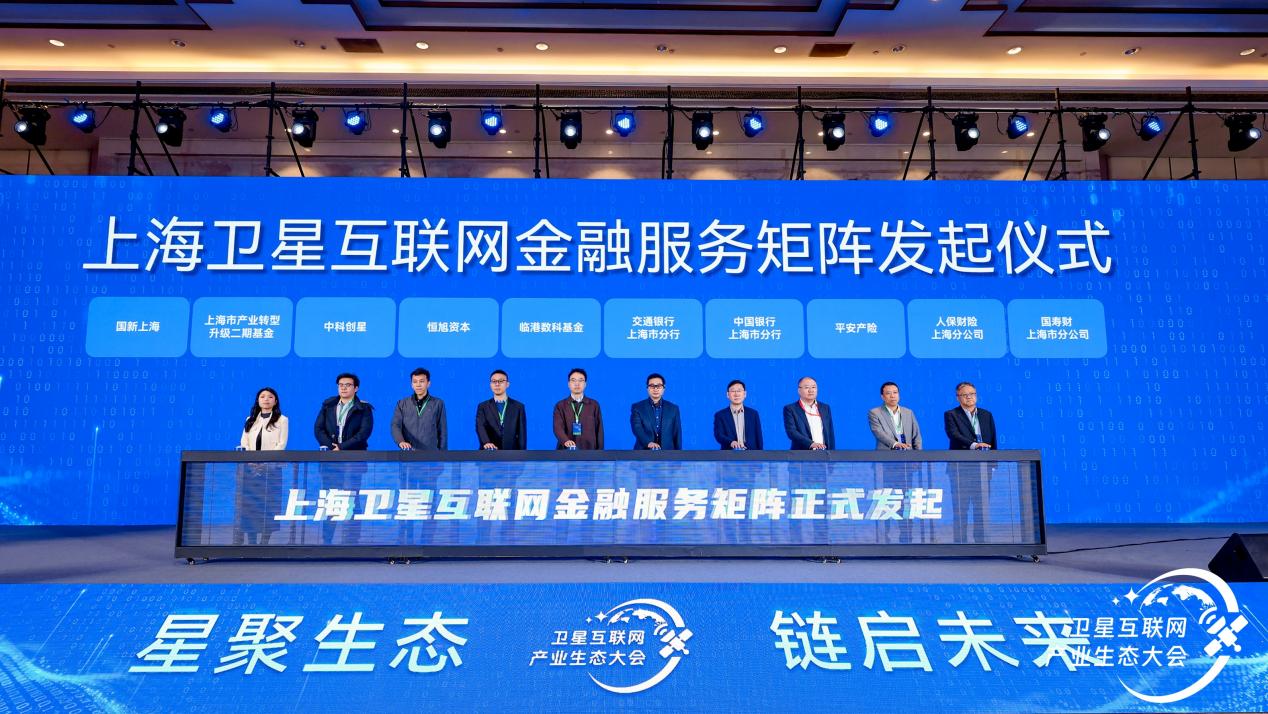
Core Insights - The 2025 Satellite Internet Industry Ecosystem Conference was held in Shanghai, showcasing seven major innovative carriers to enhance technological innovation and application transformation in the satellite internet sector [1][3] - Shanghai aims to accelerate the integration of industrial and innovation chains, striving to become a globally competitive "Satellite Internet City" [1][7] Policy and Framework - The Ministry of Industry and Information Technology has introduced several policy documents to inject strong momentum into the satellite internet industry, establishing a clear institutional framework [2] - Key figures emphasized the need for strengthening core technology breakthroughs and expanding integrated application scenarios to achieve high-quality development in global satellite internet competition [2][4] Innovation Carriers - Seven innovative carriers were highlighted, focusing on key technology directions such as network architecture and spatial perception, providing solid support for technological breakthroughs [3] - The conference featured a display area showcasing the full industrial chain capabilities of Shanghai's satellite internet, including satellite models and communication terminals [3] Industrial Ecosystem - The Songjiang District is building a satellite internet industrial cluster, focusing on commercial satellite manufacturing and terminal applications, with over 40 leading enterprises in the ecosystem [4] - A signing ceremony established an industrial ecosystem alliance, marking a new phase of cluster development in Shanghai's satellite internet sector [4] Financial Support - Shanghai has developed a multi-layered financial support system to address the high investment and long cycle characteristics of the satellite internet industry [5][6] - The "Shanghai Satellite Internet Financial Service Matrix" was launched, involving major investment and financial institutions to provide comprehensive funding support for various stages of enterprise development [6] Application Scenarios - The conference showcased practical demonstrations of satellite internet applications in emergency rescue, smart agriculture, and autonomous driving, highlighting its strategic value in national security and economic development [7] - A market cooperation agreement was signed between Shanghai Yanjin Satellite Technology Co., Ltd. and Airbus, marking a significant step towards global operations in aviation connectivity [7]
前瞻全球产业早报:我国信息通信领域首个国家重大科技基础设施正式投入运行
Qian Zhan Wang· 2025-12-05 14:52
Group 1 - The upcoming Central Economic Work Conference is expected to focus on sustaining consumer spending and supporting the private sector, with a continuation of loose fiscal and monetary policies likely to stabilize economic recovery momentum [2] - China's first major national technology infrastructure in the information and communication sector, the Future Network Experimental Facility, has officially commenced operations, marking a significant advancement in network technology innovation and application capabilities [2] - As of the end of Q3, China has built over 500PB of high-quality datasets, which are crucial for enhancing AI model performance and accelerating innovation across various industries [3] Group 2 - Seven satellite internet innovation entities in Shanghai have been awarded recognition, including institutions like the Chinese Academy of Sciences and Shanghai Aerospace Space Technology Co., Ltd [4] - The Hubei Provincial State-owned Assets Supervision and Administration Commission plans to optimize the layout of state-owned enterprises and enhance the efficiency of state capital operations by revitalizing idle assets and promoting specialized integration among different levels of enterprises [5] - ByteDance's mobile phone, the Doubao, has sold out its initial batch of 30,000 units, with the second-generation product expected to be released by the end of 2026 [5] Group 3 - Samsung has established an AI research institute, appointing Lee Kang-soo as its first head, indicating a strategic focus on AI development [11] - OpenAI has reached an agreement to acquire Neptune, a startup that provides monitoring and debugging tools for AI model training, enhancing its capabilities in AI research [8] - South Korea's exports are projected to exceed $700 billion for the first time, driven by strong performance in key sectors such as semiconductors, automobiles, and shipbuilding [7]