
星链星座

Search documents
10.5万亿,史上“真最大”IPO来了
Sou Hu Cai Jing· 2026-02-03 06:52
Core Viewpoint - SpaceX, led by Elon Musk, is preparing for an IPO in June 2026, aiming to raise $50 billion and potentially achieve a valuation of $1.5 trillion, marking a significant milestone in capital markets and possibly the largest financing event in human history [3][23]. Group 1: SpaceX and xAI Acquisition - SpaceX plans to acquire xAI for a total valuation of $1.25 trillion, which would set a record for non-public company mergers [3]. - The acquisition is part of Musk's strategy to create a "complete ecosystem" where AI and space technology are interdependent, addressing the limitations of AI development due to hardware constraints [4][6]. Group 2: AI Industry Challenges - The AI industry faces significant challenges, including increasing computational power requirements and limitations in data center infrastructure, such as rising electricity costs and land scarcity [5]. - Musk identifies space as an ideal solution for these challenges, leveraging SpaceX's capabilities to create a "space data center" that can utilize abundant solar energy and avoid land and cooling issues [6]. Group 3: Role of xAI - xAI is positioned as a core application in the space computing scenario, with its models tested in extreme environments that cannot be replicated on Earth [7]. - The integration of AI into the aerospace industry is seen as a transformative step, with AI acting as the "brain" of the operation, enhancing efficiency and reliability in space missions [7]. Group 4: SpaceX's Historical Context - SpaceX has evolved from near bankruptcy in its early years to becoming one of the most valuable private companies globally, achieving significant milestones in rocket reusability and satellite deployment [9][10]. - The company is now facing new challenges related to the increasing demands of AI models, necessitating the development of space-based solutions for computational needs [10]. Group 5: Comparison with Chinese Commercial Space Industry - The article highlights the differences between the U.S. and Chinese commercial space industries, including disparities in launch capacity, recovery methods, and operational scale [14][15]. - Chinese companies are developing their unique paths, focusing on specific technologies and market needs, while also facing challenges in scaling and technological maturity [18][19]. Group 6: Future Outlook - If SpaceX's IPO is successful, it will not only break financing records but also serve as a public experiment in valuing the vision of a multi-planetary civilization [23]. - The success of SpaceX could provide a significant opportunity for the Chinese commercial space sector, attracting global capital and resources towards companies that demonstrate practical advancements in the industry [23].

身价超5万亿的马斯克,有多少是“脏钱”?难怪中国在安理会怒怼
Sou Hu Cai Jing· 2026-01-01 03:38
Group 1 - Elon Musk has become the first person in history to exceed a net worth of $700 billion, reaching approximately $750 billion, which is about 52.8 trillion RMB [1][3] - If Musk's wealth were distributed among the global population, each person would receive over $900, highlighting the disparity in wealth compared to many countries where annual GDP per capita is below this amount [3] - Musk's wealth is primarily derived from his companies, Tesla and SpaceX, which have created innovative products and significantly impacted technological development [5] Group 2 - SpaceX's Starlink satellite constellation has launched around 10,000 satellites, providing new internet access but also raising concerns about space congestion and collision risks with other spacecraft [7][9] - There have been incidents where Starlink satellites nearly collided with the Chinese space station, prompting emergency maneuvers to avoid disaster [9] - The Chinese representative at the UN Security Council criticized the lack of regulation and accountability from SpaceX regarding the safety risks posed by its satellite operations [5][11] Group 3 - SpaceX's satellites are not manned, leading to a lack of concern for potential losses, which allows the company to operate without fear of repercussions [11] - Previous incidents of near-collisions with European satellites have raised questions about SpaceX's communication and responsibility in space safety [11][13] - The explosion of a Starlink satellite in 2025 created significant space debris, further complicating the issue of space safety and regulation [13] Group 4 - The widespread availability of Starlink services has led to concerns about misuse by criminal organizations in regions with limited regulatory oversight, complicating law enforcement efforts [15][17] - The international community is exploring ways to balance innovation in satellite services with necessary security regulations [17] - There is criticism of SpaceX for not taking measures to prevent misuse of its technology, raising ethical concerns about prioritizing profit over safety [17][20] Group 5 - The aggressive expansion of satellite networks is seen as a strategy by the U.S. to dominate low Earth orbit resources, which are finite and critical for global communications [20] - There is a call for major companies like SpaceX to take responsibility and contribute to addressing the risks associated with their operations [20]
特斯拉Cybertruck喜获大金主,SpaceX大单传闻引爆“赛博风电动皮卡”增长叙事
Jin Rong Jie· 2025-12-19 02:40
Group 1 - SpaceX has emerged as a significant buyer of Tesla's Cybertruck, potentially purchasing tens of millions of dollars worth, with plans to acquire over 2,000 units priced above $80,000 each [1][2] - The relationship between SpaceX and Tesla is seen as a key factor in boosting Tesla's valuation, contributing to the "Musk premium" in the market [1][8] - Analysts have shifted their expectations for Cybertruck production, now viewing it as a niche product rather than achieving the initially projected annual production of 250,000 units [2][3] Group 2 - SpaceX is preparing for a potential IPO in 2026, aiming to raise over $30 billion, which could lead to a valuation of approximately $1.5 trillion, making it one of the largest IPOs in history [4] - The funds raised from the IPO are expected to support SpaceX's ambitious projects, including the development of the Starship rocket and a lunar base [4] - The increasing association between Tesla and SpaceX is anticipated to attract new investors, driven by Musk's innovative vision and the excitement surrounding SpaceX's IPO [8]

特斯拉(TSLA.US)Cybertruck喜获大金主! SpaceX大单传闻引爆“赛博风电动皮卡”增长叙事
智通财经网· 2025-12-19 02:08
Core Viewpoint - SpaceX has emerged as a significant buyer of Tesla's Cybertruck, potentially purchasing tens of millions of dollars worth, which may enhance Tesla's valuation and expand the "Musk premium" in the market [1][3]. Group 1: SpaceX's Purchases and Impact on Tesla - SpaceX is reportedly one of the largest buyers of the Cybertruck, with plans to increase its order to over 2,000 units, each priced above $80,000 [1]. - The ongoing purchases by SpaceX provide crucial support for Tesla's delivery expectations and inventory management, especially as the Cybertruck faces challenges in achieving initial production targets [2][3]. - Analysts suggest that if SpaceX's Cybertruck purchases are utilized in significant space projects, it could elevate the Cybertruck's status to that of Tesla's Model 3/Y, creating a "super bull narrative" for Tesla [3]. Group 2: SpaceX's IPO Plans - SpaceX is preparing for a potential IPO in 2026, aiming to raise over $30 billion, with a projected valuation of approximately $1.5 trillion, which could be the largest IPO in history [4]. - The company has entered a regulatory quiet period, signaling its commitment to the IPO process, which is intended to fund ambitious projects like the Starship rocket and lunar base development [4]. Group 3: Market Sentiment and Future Projections - The increasing connection between Tesla and SpaceX is seen as a long-term catalyst for boosting Tesla's valuation, as significant milestones by Musk's companies often uplift market sentiment across his ventures [8]. - Investors currently view Tesla as the primary avenue to bet on Musk's ambitious vision for space exploration and advanced technologies, despite concerns over Tesla's stock valuation nearing risky levels [8].
投资逻辑已转向,这一板块正成资金新宠丨每日研选
Shang Hai Zheng Quan Bao· 2025-12-19 00:37
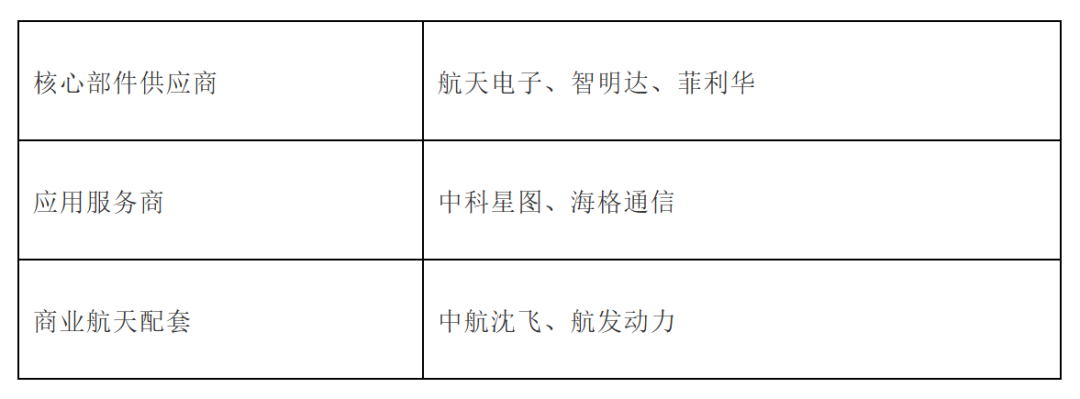
Core Insights - The commercial space sector is transitioning from a policy cultivation phase to a critical stage of scaled growth, driven by technological iterations, demand release, and ecosystem improvements [1] - The investment logic has shifted from early-stage single-point exploration to comprehensive value extraction across the entire industry chain, with companies possessing core technological barriers and scene implementation capabilities expected to lead [1] Global Trends - The global commercial space ecosystem is undergoing profound changes, with privatization and commercialization as core driving forces. In the U.S., policies like the Commercial Space Launch Competitiveness Act have facilitated SpaceX's Starlink, which has surpassed 8 million users and aims for a valuation of $1.5 trillion with an IPO planned for 2026, highlighting the commercial potential of the sector [1] - In China, the establishment of the Commercial Space Administration and the release of special action plans support industry development, with regional clusters like Beijing-Tianjin-Hebei and the Yangtze River Delta forming rapidly, aided by fiscal subsidies and open scenarios to reduce costs for companies [1] Technological Advancements - Continuous improvements in rocket launch frequency, with the Long March rocket achieving a record of "three launches in one day," and the regular operation of the Hainan commercial space launch site provide solid support for satellite networking [1] - The satellite manufacturing sector is transitioning from customization to mass production, exemplified by the "Jilin-1" constellation achieving high-resolution, low-cost data acquisition, facilitating applications in urban governance and agricultural estimation [1] Emerging Applications - Space computing is expected to become a new application scenario, complementing ground computing. Initiatives like Musk's 100GW space AI data center plan and Google's Project Suncatcher are demonstrating the commercial viability of space computing, addressing challenges such as power consumption and land resources on the ground [2] - The satellite measurement and control systems are upgrading towards intelligence, with CAE simulation technology supporting the entire lifecycle of spacecraft, enhancing industry quality and efficiency [2] Investment Opportunities - The investment in the commercial space sector can focus on three main lines: - Core component suppliers with technological leadership, benefiting from satellite mass production and computing constellation construction needs, including Aerospace Electronics, Zhimin Da, and Feili Hua [3] - Application service providers with strong scene implementation capabilities, such as Zhongke Xingtou and Haige Communication, which have first-mover advantages in remote sensing applications and low-altitude economy [4] - State-owned enterprises with significant industry chain synergy effects, particularly those related to electronics and aerospace, such as AVIC Shenyang Aircraft Corporation and Aero Engine Corporation of China, leveraging technological accumulation and resource advantages to deeply participate in commercial space support [4]
马斯克设想:每年发射1百万吨AI卫星
财联社· 2025-12-08 05:24
Core Viewpoint - The next significant leap in artificial intelligence may occur in space rather than on Earth due to infrastructure and energy supply bottlenecks [1][3]. Group 1: Elon Musk's Vision - Elon Musk proposed that localized AI computing satellites in low-latency sun-synchronous orbits could become the most cost-effective way to transmit AI data within three years [2][3]. - Musk envisions launching 1 million tons of satellites annually, each equipped with 100 kW of power, which could add 100 GW of AI computing capacity each year without operational or maintenance costs [3]. - The concept includes building satellite factories on the Moon and using mass drivers to accelerate AI satellites to escape velocity, potentially achieving over 100 TW of AI computing capacity annually [3][4]. Group 2: Challenges in AI Development - The rapid growth in AI model sizes and demand is putting significant pressure on existing data centers, fiber networks, and power systems [5]. - There is a need for new energy sources to keep pace with the increasing demand, while also considering factors like latency, climate risks, and political obstacles [5]. Group 3: Competing Projects - Google's "Project Suncatcher" aims to create orbiting computing nodes powered by continuous solar energy, which could operate machine learning models more efficiently than ground-based data centers [6]. - Amazon's "LEO" project seeks to establish a global broadband network of low Earth orbit satellites, potentially providing edge computing services for AI tasks in underserved areas [7]. - Musk is also conceptualizing an "orbital computing farm" for xAI and SpaceX, which would not only run AI models but also train them, addressing the challenges of continuous energy supply and resource consumption [7].
高天伟:朱雀三号首飞在即,马斯克点赞中国火箭有何深意?
Guan Cha Zhe Wang· 2025-10-27 01:08
Core Viewpoint - Elon Musk commented on China's Zhuque-3 rocket, suggesting it resembles SpaceX's Falcon 9 but incorporates advanced designs from the Starship, indicating potential for future superiority over Falcon 9. However, he noted that Zhuque-3 would require approximately five more years to reach Falcon 9's current maturity, while Starship would already be in extensive use by then. He emphasized the necessity of continuous innovation to remain competitive [1]. Group 1: Zhuque-3 Overview - Zhuque-3 is China's most advanced reusable rocket, developed by Landspace in 2023, aimed at large-scale satellite internet constellation deployment. The rocket is expected to conduct its maiden flight within the year and attempt to recover its first stage [5][7]. - The current version of Zhuque-3 measures 66 meters in length, with a diameter of 4.5 meters and a payload capacity of 11 tons to orbit. Future iterations will extend to 76 meters, increasing payload capacity to over 20 tons, allowing deployment of multiple internet satellites. The target cost is under 20,000 RMB per kilogram, approximately 60% of Falcon 9's current cost [5][7]. Group 2: Technical Developments - In October, Zhuque-3 was showcased at the Dongfeng Commercial Space Innovation Test Area, completing pre-flight quality checks, including fuel loading and engine tests, with positive results. The rocket is now prepared for its flight mission [7][9]. - Zhuque-3 is currently the most prepared domestic reusable rocket for its maiden flight, with other rockets like Tianlong-3 and Long March 12 also targeting their first flights within the year, most of which possess reusable capabilities [9][11]. Group 3: Design Comparisons - Zhuque-3 shares design similarities with Falcon 9, such as the use of nine engines in parallel and landing leg configurations, which is a result of market and technical definitions. However, it is characterized as a distinctly Chinese solution [12]. - SpaceX's Falcon 9 represents the pinnacle of current aerospace technology and commercial integration, achieving an optimal balance of time, cost, and service quality, which is recognized globally [14][15].
