
智能家电

Search documents
麦格米特(002851) - 2025年10月30日投资者关系活动记录表
2025-10-30 15:10
Financial Performance - The company's net profit for the first three quarters has declined, primarily due to a decrease in gross margin and an increase in expense ratio [3] - Gross margin has been affected by intensified price competition in the consumer appliance sector, with a notable impact on the third quarter [4] - Excluding the variable frequency appliance division, other divisions saw a revenue increase of approximately 29% year-on-year [4][9] R&D and Strategic Focus - The company is heavily investing in R&D, particularly in AI, new energy, and smart home sectors, with a focus on long-term growth [5][10] - A significant increase in R&D and management expenses is attributed to the establishment of overseas bases and ongoing projects [3][4] - The company aims to integrate its energy storage and AI power supply teams to provide comprehensive power solutions for AI data centers [8][10] Market Opportunities and Growth Potential - The company identifies strong growth opportunities in data center power, new energy vehicles, energy storage, and smart appliances [4][10] - The AI industry is viewed as a critical growth area for the next decade, with substantial resources allocated for development [5][11] - The company has established partnerships with major energy storage firms and system solution providers, indicating positive progress in this sector [8] Challenges and Competitive Landscape - The company faces challenges in balancing high R&D costs with market demand and growth speed, particularly in the variable frequency appliance sector due to external factors like weather [9] - The AI server power market is complex, requiring significant effort to navigate customer needs and certification processes [7] - Despite competition from established players, the company is confident in its ability to grow within the AI sector by leveraging its technological advantages and customer relationships [11]
关键时刻,小米雷军迎来好消息
Sou Hu Cai Jing· 2025-10-30 04:34
Core Insights - Xiaomi Group's chairman Lei Jun received significant support amid public scrutiny, with a local government official visiting Xiaomi's smart home appliance factory and expressing hopes for further development [2][3][5] - Lei Jun's wealth increased dramatically, ranking him fifth on the 2025 Hurun Rich List, with a total wealth of 326 billion yuan, reflecting a 151% year-on-year growth [10][11] Group 1: Government Support - The visit by Hubei's provincial secretary to Xiaomi's factory signifies recognition and support for the company's existing projects and future expectations [3][5] - The smart home appliance factory represents Xiaomi's first factory outside Beijing, covering over 750 acres with a planned investment exceeding 2.5 billion yuan and an expected annual output value of 14 billion yuan [5] Group 2: Financial Performance - Lei Jun's wealth surged by 196 billion yuan over the past year, primarily driven by explosive growth in Xiaomi's automotive business, which reported a revenue of 21.3 billion yuan in Q2 2025 [10][11] - The automotive division's sales reached 264,000 units in the first three quarters, marking a year-on-year increase of 278.8% [10] Group 3: Public Perception and Resilience - Despite facing negative public sentiment and stock price fluctuations, Lei Jun's personal wealth has remained largely unaffected, indicating resilience against external pressures [10][12] - Lei Jun has acknowledged the challenges posed by public criticism but remains focused on overcoming these issues, drawing on past experiences to navigate through difficulties [11][12]


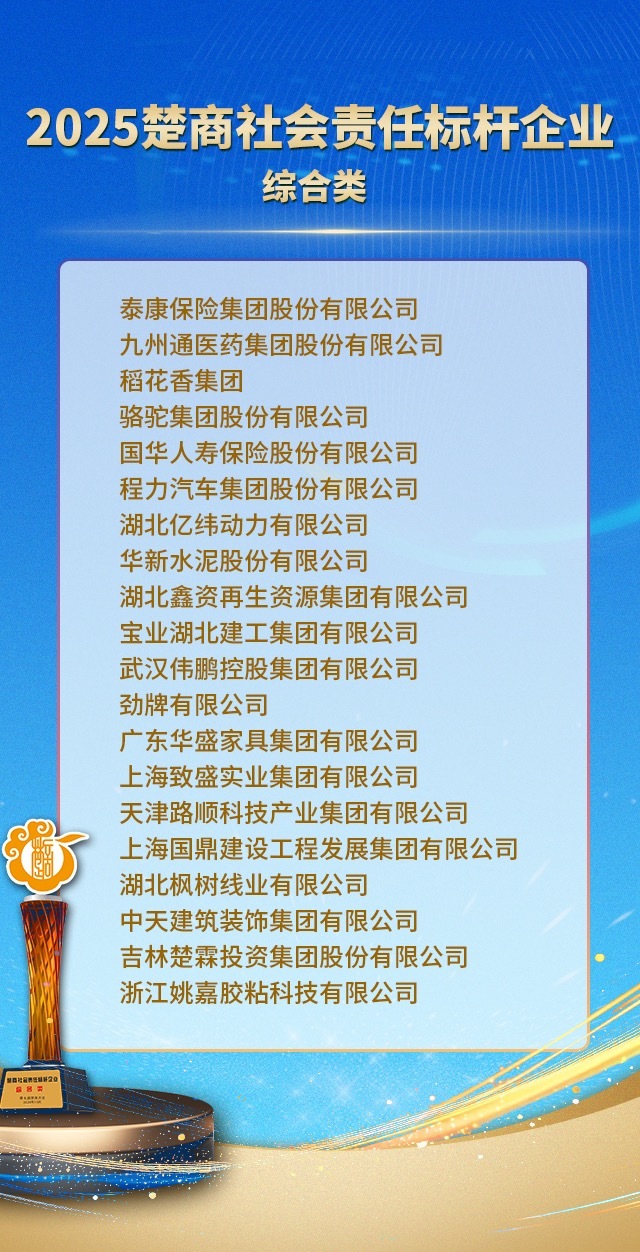
“楚商社会责任标杆企业”百强揭晓,多家上榜企业从武汉走向世界
Chang Jiang Ri Bao· 2025-10-29 12:35
Core Insights - The seventh Chushang Conference was held in Wuhan, where the "Chushang Social Responsibility Benchmark Enterprises" list was released, featuring 100 companies across five categories [1][2] - Notable companies on the list include Taikang Insurance Group, Xiaomi Technology, and Jiuzhoutong Pharmaceutical Group, many of which have strong ties to Wuhan [1][2] Company Developments - Taikang Insurance Group is constructing a financial center in Wuhan with a total investment of 6 billion yuan, expected to be operational by 2027, further solidifying its strategic foundation in Central China [1] - Xiaomi's new smart appliance factory in Wuhan has commenced operations, with a peak production capacity of 7 million air conditioners and an annual output value of nearly 14 billion yuan [2] - Jiuzhoutong Pharmaceutical Group, a leading private pharmaceutical company in China, is deeply involved in the health industry in Hubei, operating over 400 logistics centers and employing more than 5,000 delivery personnel [2] Social Responsibility Recognition - The "Chushang Social Responsibility Benchmark Enterprises" list includes companies recognized for their contributions in various categories such as comprehensive, technological innovation, green development, rural revitalization, and stable employment [3][5][6][7][9][11]



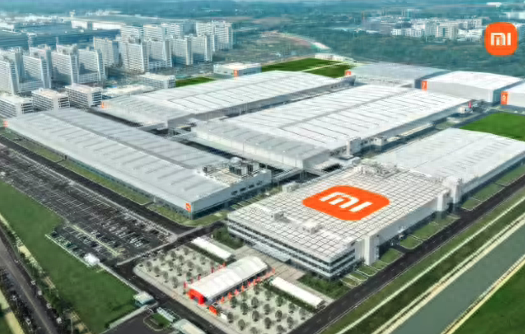
小米首座智能家电工厂竣工投产,称6.5秒可下线高端空调
Huan Qiu Wang· 2025-10-29 07:59
Core Insights - Xiaomi officially announced the completion and production launch of its smart home appliance factory in Wuhan, Hubei, which covers over 750 acres and has a total investment exceeding 2.5 billion yuan [1][3] - This factory is Xiaomi's third large-scale smart manufacturing base, following its automotive super factory and smartphone smart factory [1] - The factory utilizes Xiaomi's self-developed "Surge Intelligent Manufacturing Platform" and AI visual inspection, enabling the production of a high-end air conditioner every 6.5 seconds with 100% precision in key component detection [3] - Xiaomi aims to achieve a scale of 100 billion yuan in its major appliances business within the next five years, with a goal to become one of the leading domestic home appliance brands by 2030 [3]
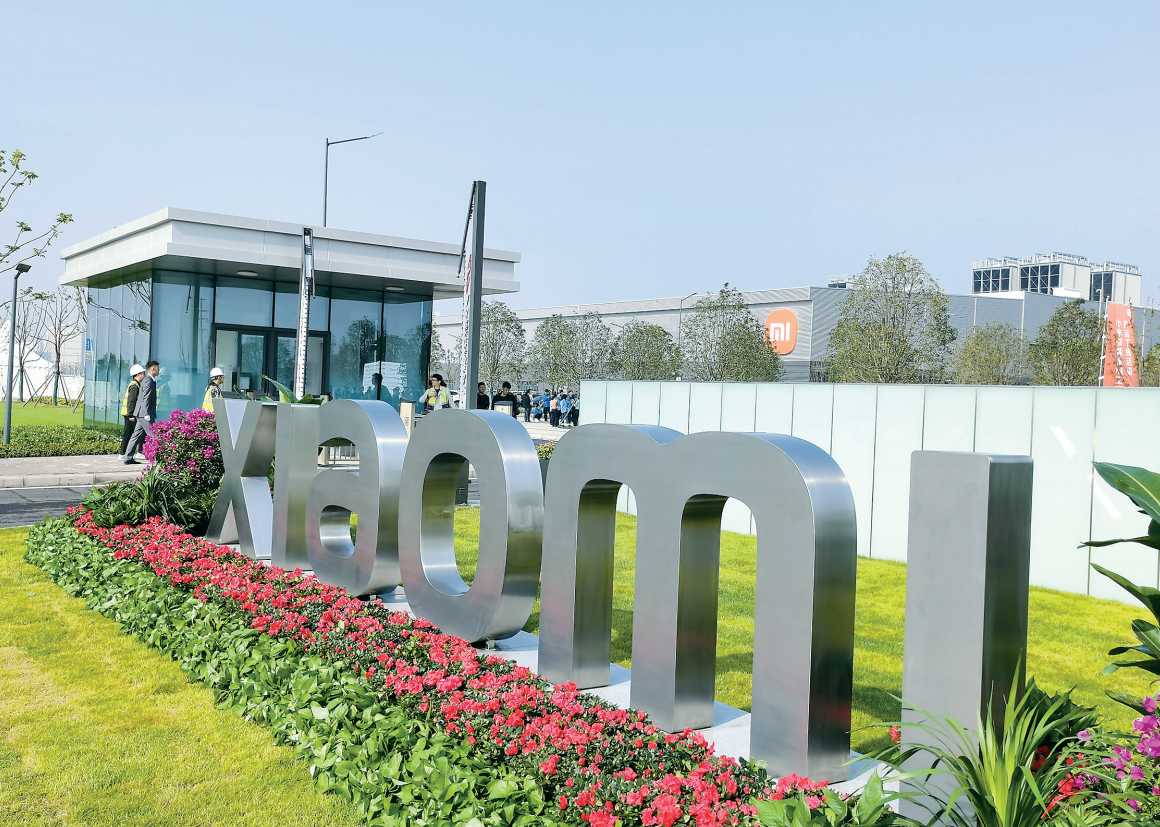
湖北省委书记王忠林与雷军交流
Zheng Quan Shi Bao· 2025-10-29 04:23
Core Viewpoint - The establishment and operation of Xiaomi's smart home appliance factory in Wuhan marks a significant advancement in the company's smart manufacturing capabilities, with a focus on digitalization and automation in production processes [1][2]. Group 1: Factory Development - The Xiaomi smart home appliance factory in Wuhan covers an area of 500,000 square meters and includes six core air conditioning production lines, an experimental building, and a finished product logistics warehouse [2]. - The factory has achieved full digitalization and automation in production, with a production rate of one air conditioning unit every 6.5 seconds [2]. - The first phase of investment in the factory amounts to 2.5 billion yuan, with a planned peak annual production capacity of 7 million units [2]. Group 2: Production and Revenue Growth - Xiaomi's smart home appliance factory officially commenced production on October 28, 2023, following a rapid construction timeline of just 12 months from signing the contract to full operation [1][2]. - By the second quarter of 2025, revenue from Xiaomi's smart home appliances is projected to reach a historical high, with a year-on-year growth of 66.2% [2]. - Specific product performance includes over 5.4 million units of air conditioners shipped, a year-on-year increase of over 60%, and over 790,000 refrigerators shipped, with a growth rate exceeding 25% [2].
湖北省委书记王忠林与雷军交流
证券时报· 2025-10-29 04:15
Core Insights - The article highlights the successful launch of Xiaomi's smart home appliance factory in Wuhan, which is a significant step in the company's smart manufacturing strategy [1][2]. Group 1: Factory Development - The Xiaomi smart home appliance factory in Wuhan covers an area of 500,000 square meters and includes six core air conditioning production lines, an experimental building, and a finished goods logistics warehouse [2]. - The factory has achieved full digitalization and automation in production, with a production rate of one air conditioning unit every 6.5 seconds [2]. - The first phase of investment in the factory amounts to 2.5 billion yuan, with a planned peak annual production capacity of 7 million units [2]. Group 2: Financial Performance - By the second quarter of 2025, revenue from Xiaomi's smart home appliances is expected to reach a historical high, with a year-on-year growth of 66.2% [2]. - The shipment volume of Xiaomi air conditioning products exceeded 5.4 million units, marking a year-on-year increase of over 60% [2]. - Xiaomi's refrigerator and washing machine shipments also saw significant growth, with over 790,000 refrigerators (up 25%) and over 600,000 washing machines (up 45%) shipped [2]. Group 3: Strategic Importance - The factory is a key support for Xiaomi's "human-vehicle-home" strategy and aims to set a benchmark in the smart manufacturing sector [1]. - The local government encourages Xiaomi to accelerate the second phase of the factory's construction to attract more supply chain enterprises and enhance the industrial cluster effect in Hubei [1].

武汉成小米智能家居“大本营”
Chang Jiang Ri Bao· 2025-10-29 00:26
Core Insights - Xiaomi's smart home appliance factory in Wuhan has officially commenced production, marking its first self-built smart appliance factory and the third smart production base following its automotive and mobile phone factories [1][2][6]. Group 1: Factory Overview - The factory covers a total investment of 2.5 billion RMB and spans 500,000 square meters, with an initial project capacity for air conditioning units reaching 7 million sets and a production value of nearly 14 billion RMB [2][4]. - The factory employs advanced automation and AI technologies, achieving a product first-pass yield rate exceeding 99% and producing a high-end air conditioner every 6.5 seconds, positioning it as a leader in domestic production speed [4][8]. Group 2: Technological Innovations - Each machine in the factory is equipped with an independent "brain" that enhances production precision and efficiency, utilizing AI visual systems to correct minor errors in the manufacturing process [3][4]. - The logistics system incorporates high-speed magnetic levitation technology, significantly improving operational efficiency by reducing processing time to under 6 seconds [3][4]. Group 3: Strategic Importance - The establishment of the factory supports Xiaomi's rapid growth in the home appliance sector, with air conditioning sales surpassing 5.4 million units in the second quarter and maintaining over 50% growth for three consecutive quarters [8]. - Xiaomi aims to achieve a scale of 100 billion RMB in its home appliance business over the next five years, with a goal to rank among the top two in the Chinese air conditioning market [8]. - The factory is part of a broader strategic framework that includes a global headquarters and an R&D center in Wuhan, solidifying the city as a key hub for Xiaomi's smart home ecosystem [5][8].
002337签大单!机构大幅抢筹3股
Zheng Quan Shi Bao· 2025-10-28 14:40
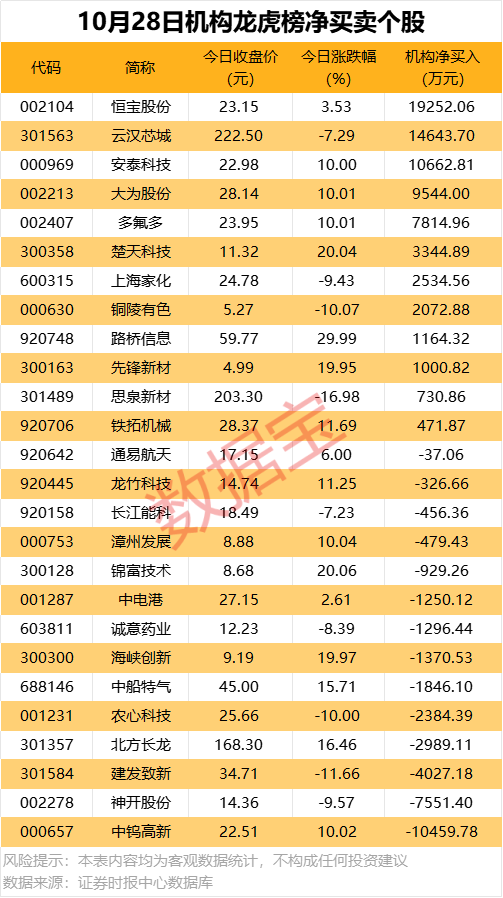
Market Overview - The three major A-share indices experienced a slight decline on October 28, with the Shanghai Composite Index losing the 4000-point mark. The total trading volume in the Shanghai and Shenzhen markets reached 21,653.07 billion yuan, a decrease of over 190 billion yuan compared to the previous trading day. More than 2300 stocks closed higher, with 72 stocks hitting the daily limit up [1] - The Hong Kong stock market also saw a collective decline, with the Hang Seng Index dropping by 0.33%. Major technology stocks fell, including NetEase-S down over 2%, and Meituan-W, Xiaomi Group-W, Tencent Holdings, Alibaba-W, and Lenovo Group all down over 1% [1] Xiaomi Group Performance - Xiaomi Group-W's stock fell by 1.92% today, continuing a downward trend with a decline of over 24% since September 26. Citigroup released a report indicating that Xiaomi is expected to announce its Q3 2025 earnings on November 18, with overall performance likely to be slightly below expectations due to lower smartphone gross margins and IoT revenue. The adjusted net profit is projected to reach 10.2 billion yuan, representing a year-on-year increase of 64% but a quarter-on-quarter decrease of 5% [2] Xiaomi's New Factory - Xiaomi's smart home appliance factory officially commenced production in Wuhan on October 28, with founder Lei Jun present at the ceremony. This factory is Xiaomi's first self-built smart home appliance factory and marks the third large-scale smart production base following the Beijing Xiaomi Automotive Super Factory and the Beijing Mobile Phone Smart Factory. The factory's launch signifies the completion of Xiaomi's "full ecosystem" strategy in large self-built smart factories [4] Institutional Trading Insights - In today's trading, institutions net bought 12 stocks and net sold 14 stocks. The top three net bought stocks were Hengbao Co., Ltd., Yunhan Chip City, and Antai Technology, each with net purchases exceeding 100 million yuan [5] - The net selling stocks included Zhongtung High-tech, which saw a net sell of 105 million yuan, followed by ShenKai Co., Ltd., Jianfa Zhixin, Beifang Changlong, and Nongxin Technology, each with net sells exceeding 20 million yuan [5] Northbound Capital Flow - Northbound capital saw net purchases in 5 stocks, with Zhongtung High-tech and Fangda Carbon being the top net buyers, amounting to 80.61 million yuan and 19.15 million yuan, respectively [8] - Conversely, 11 stocks experienced net selling from northbound capital, with Shanghai Jahwa and Hengbao Co., Ltd. each facing net sells exceeding 100 million yuan [7]
卢伟冰:小米空调不打价格战、目标中国前二
Guan Cha Zhe Wang· 2025-10-28 14:30
Core Insights - Xiaomi has officially launched its third major manufacturing facility, the Wuhan Smart Home Appliance Factory, marking a significant step in its "human-vehicle-home ecosystem" strategy [1] Group 1: Factory Details - The Wuhan factory covers over 750 acres (over 500,000 square meters) with a total investment plan exceeding 2.5 billion yuan, and a peak annual production capacity of 7 million units, expected to generate an annual output value of 14 billion yuan [3] - The factory was completed in just 11 months, with structural completion in less than two months and equipment installation and debugging taking six months, showcasing the "Wuhan speed" [3] Group 2: Business Goals and Performance - Xiaomi aims to become a leading brand in China's home appliance sector within five years, targeting a scale of 100 billion yuan in its home appliance business and aiming for its air conditioning segment to rank among the top two in the Chinese market [3] - The company reported that air conditioning shipments are expected to exceed 5.4 million units in Q2 2025, setting a new quarterly record, with growth rates surpassing 50% for three consecutive quarters, and a 66% year-on-year increase in smart home appliance revenue [3] Group 3: Strategic Vision - Xiaomi is committed to being a contributor to the industry rather than a disruptor, focusing on promoting industry progress without engaging in price wars [3] - The company has established a complete industrial chain in Wuhan, including R&D, manufacturing, and validation, positioning the city as a core manufacturing hub for its home appliances and a benchmark for smart manufacturing in Central China [4]

小米智能家电工厂正式竣工投产 6.5秒下线一台高端空调
Ju Chao Zi Xun· 2025-10-28 13:27
Core Insights - Xiaomi Group has officially launched its first large-scale smart home appliance factory in Wuhan, marking its third major smart factory after the smartphone and automotive factories [1] Group 1: Factory Overview - The new smart home appliance factory represents Xiaomi's first venture into large home appliances, completing the "design-research-production-validation" industrial loop [1] - The factory is designed to balance efficiency and quality, with a production rate of one high-end air conditioner every 6.5 seconds and achieving 100% AI visual inspection for key components [1] Group 2: Future Goals - Xiaomi aims to reach a scale of 100 billion yuan in its home appliance segment over the next five years, with a target to become one of the leading domestic home appliance brands by 2030 [1]