
电信

Search documents
香港宽频:恢复公众持股量
Zhi Tong Cai Jing· 2026-01-09 08:43
香港宽频(01310)发布公告,本公司获中移香港告知,于本公告日期,中移香港(连同其一致行动人士)拥 有权益的股份数目与先前公告所披露的状况维持不变,即11.07亿股股份(占本公司已发行股份总数约 74.84%)。 基于上文所述,于本公告日期,3.71亿股股份(占本公司已发行股份总数约25.07%)由公众人士(定义见上 市规则)持有。因此,本公司已恢复上市规则规定之已发行股份总数25%的最低公众持股量。 就本公司所深知,本公司核心关连人士(中移香港除外)拥有权益的股份数目已由先前公告所披露的 3320.7万股股份(占本公司已发行股份总数约2.25%)减至于本公告日期的132.35万股股份(占本公司已发 行股份总数约0.09%)。 ...
华润啤酒前掌门侯孝海“跨界”加入正大集团,将任中国区COO
Xin Lang Cai Jing· 2026-01-09 07:05
Core Viewpoint - The former chairman of China Resources Beer, Hou Xiaohai, has officially joined Charoen Pokphand Group (CP Group) as the Chief Operating Officer (COO) for the China region, focusing on market and marketing integration for the group's consumer goods sector, including eggs, pork, chicken, food, and feed products [1][5]. Group 1: Company Transition - Hou Xiaohai's transition to CP Group comes over six months after he stepped down from his key role at China Resources Beer, where he had served as CEO and chairman [1][5]. - His departure from China Resources Beer was announced in June 2025, citing a desire to spend more time on personal arrangements, effective after the board meeting on June 27 [1][5]. Group 2: Achievements at China Resources Beer - During his tenure at China Resources Beer, Hou led a strategic transformation known as the "3+3+3" nine-year strategy, shifting the company from scale expansion to high-quality development [3][7]. - Under his leadership, the company's revenue increased by over 10 billion yuan, with net profit rising from 1.329 billion yuan to 4.759 billion yuan, and a gross margin reaching 42.6% in 2024, the highest in five years [3][7]. Group 3: CP Group Overview - CP Group, founded in 1921 by Thai-Chinese brothers, has evolved from a single business into a diversified multinational corporation with core operations in agriculture, food, and retail, among other sectors [4][8]. - The group operates in over 100 countries and regions globally, employing more than 460,000 people, with projected global sales of 102.2 billion USD in 2024 [4][8]. - Analysts believe that Hou's experience in fast-moving consumer goods will align well with CP Group's core business, potentially leading to significant changes in its consumer goods integration [4][8].


侯孝海已入职正大集团
Xin Lang Cai Jing· 2026-01-09 02:45
Group 1 - The core point of the article is the appointment of Hou Xiaohai as COO of Charoen Pokphand Group in China after resigning from the chairman position at China Resources Beer (Holdings) Co., Ltd [1][2] - Charoen Pokphand Group, also known as CP Group, is a diversified multinational enterprise founded in 1921 by Thai-Chinese brothers, and it is one of the largest Chinese multinational companies in the world [1][2] - The company has evolved from a single business operation into a diversified group with core businesses in agriculture, food, wholesale retail, telecommunications, and television, while also engaging in finance, real estate, pharmaceuticals, and machinery processing across more than 10 industries [1][2] Group 2 - Charoen Pokphand Group operates in over 100 countries and regions globally, showcasing its extensive international presence [1][2]
大摩:市场观点:信用市场的革命
2026-01-08 16:02
Summary of Conference Call Industry Overview - The discussion revolves around the **credit market**, particularly focusing on the evolution of **private credit** and its implications for the broader financial landscape [1][2]. Key Points and Arguments - **Historical Context**: The speaker, Dan Toscano, has nearly 40 years of experience in the credit market, starting with high-yield bonds and leveraged buyouts (LBOs) in the late 1980s. The market has evolved significantly, transitioning from junk bonds to high-yield bonds, syndicated loans, and CLOs [4][5]. - **Impact of Financial Crisis**: The financial crisis led to significant changes in the credit market, including the introduction of **leverage loan guidelines** that set a maximum leverage ratio of 6x. This has restricted the ability of Wall Street firms to underwrite and distribute capital for such transactions, inadvertently boosting the growth of the private credit market [7][8]. - **Regulatory Changes**: The recent withdrawal of leverage guidelines by the FDIC and OCC is expected to allow banks to participate more fully in the credit market continuum, blurring the lines between public and private credit [9][10]. - **Shift in Private Credit Focus**: The focus of private credit is shifting from small business loans to larger-scale projects, driven by the need for substantial capital investments in digital infrastructure. This shift is seen as a key driver for the next industrial revolution, requiring trillions of dollars in funding [10][11]. - **Concerns for Future Financing**: Looking ahead to 2026, there are concerns about the potential challenges in financing large-scale projects, particularly as they move from initial phases to more mature stages. Issues such as labor supply and costs are highlighted as significant risks that could impact project timelines and budgets [12][13]. Additional Important Insights - **Capital Requirements**: The scale of capital needed for the ongoing transformation in the tech industry is unprecedented, with estimates suggesting the need for tens of trillions of dollars [10][11]. - **Market Reactions**: There is a concern that the market may overreact to potential issues arising from project delays or cost overruns, especially as investors have become accustomed to a favorable operating environment [12][13]. - **Long-term Outlook**: Despite the challenges, there is optimism that quality projects will attract the necessary funding, and the ongoing evolution of the credit market will continue to present opportunities for investors [12][13].
委内瑞拉变天后 作为最大的投资者和债权人-中国能否保障投资和债务主权?
Sou Hu Cai Jing· 2026-01-08 15:05
Core Insights - China's investment and loan scale in Venezuela is the largest in Latin America, with cumulative loans estimated between $60 billion to $67 billion, accounting for approximately 40%-50% of China's total loans to the region [2] - As of early 2026, Venezuela's outstanding debt to China is approximately $19 billion to $20 billion [3] Group 1: Energy and Oil Sector - Oil cooperation is a cornerstone of the relationship, with China National Petroleum Corporation (CNPC) as a key player [4] - The Sino-Venezuelan oil joint financing project has an initial amount of $4 billion, with subsequent extensions and expansions [4] - Chinese investments in the Orinoco heavy oil belt exceed $10 billion to enhance oil production and refining capacity [4] Group 2: Infrastructure and Housing Investment - The "Great Housing Mission" project involves significant participation from Chinese companies, constructing tens of thousands of social housing units [5] - The Tinaco-Anaco Railway, a flagship infrastructure project, has a contract amount of approximately $7.5 billion but has faced delays due to Venezuela's economic collapse [5] - Projects include modernization of Puerto Cabello and technical support for multiple thermal and hydroelectric plants [5] Group 3: High-Tech and Aerospace Cooperation - Venezuela is the Latin American country with the most in-depth space cooperation with China [6] - Satellite projects include the "Venezuela 1" communication satellite with an investment of about $400 million and two remote sensing satellites with investments of $140 million [7] Group 4: Mining and Agriculture Cooperation - Chinese enterprises have signed agreements to assist Venezuela in resource exploration in the Orinoco mining arc [8] - Agricultural development projects, such as irrigation and rice processing in Delta Amacuro state, have contract amounts around $3 billion [9] Group 5: Current Challenges and Risks - China's direct loans to Venezuela have become cautious, but bilateral cooperation has seen a resurgence after being elevated to an "all-weather strategic partnership" in 2023 [10] - The opening of direct flights from Caracas to Guangzhou in June 2024 has strengthened trade ties [11] - Some projects have faced significant issues, such as the Tinaco-Anaco Railway, which is only 30% complete due to payment issues since 2015 [12] Group 6: Debt and Asset Risks - China's "bad debt" in Venezuela is a dynamic and complex figure, with outstanding loans estimated at $19 billion to $20 billion, primarily owed to China Development Bank (CDB) [14] - The value of joint venture assets in the oil sector has incurred losses of approximately $10 billion to $15 billion [15] - The total financial risk exposure for China in Venezuela could exceed $100 billion when considering all financial aid and technical transfers [16] Group 7: Political Changes and Implications - The political upheaval in Venezuela poses high risks to China's investments and sovereign debt [22] - If a new regime does not recognize previous "oil-for-loan" agreements, China could face significant financial losses [23] - The potential for asset protection and the challenges of proving the legitimacy of debts in a new political landscape are critical concerns [23] Group 8: International Dynamics - The role of the IMF and the U.S. in Venezuela's economic reconstruction could complicate China's position, as the new government may prioritize debt sustainability analysis [27] - The U.S. may exert pressure on the new regime to reduce ties with China, potentially freezing Chinese energy assets in Venezuela [27] Group 9: Future Scenarios for Debt Management - The new regime's approach to inheriting Chinese debt could involve selective defaults or audits, potentially leading to significant debt reductions [30] - Possible scenarios include full debt inheritance, selective inheritance, or debt-to-equity swaps, depending on the new government's strategy [31][32]
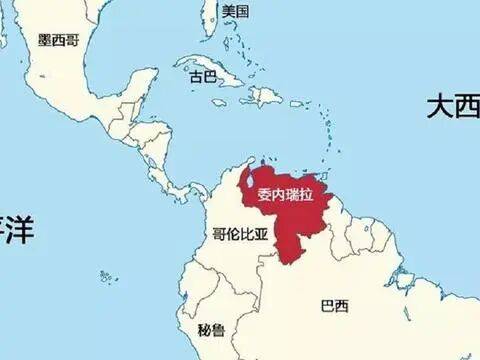
2025年9月哥伦比亚服务贸易进出口走势分化
Shang Wu Bu Wang Zhan· 2026-01-06 16:45
Core Insights - In September 2025, Colombia's service trade showed a divergent trend in exports and imports [1] Export Summary - Key sectors for service exports included other business services, transportation services, and telecommunications, computer, and information services [1] - Telecommunications, computer, and information services experienced a significant year-on-year growth of 27.6%, marking it as a major highlight [1] - The primary export destinations were the United States, Spain, and Mexico [1] Import Summary - Dominant sectors for service imports were transportation services, intellectual property fees, and telecommunications, computer, and information services [1] - Intellectual property fees saw a substantial year-on-year increase of 45.2% [1] - The main source countries for imports were the United States, Spain, and Germany [1]
1月6日外盘头条:马杜罗对美方所谓指控不认罪 OpenAI家务机器人售价2万美元 美国铜价创新高
Xin Lang Cai Jing· 2026-01-05 21:30
Group 1: Maduro's Court Appearance - Venezuelan President Maduro pleaded not guilty to drug trafficking charges during his first court appearance in the U.S., asserting he remains the country's president and claiming he was kidnapped [4][21] - The hearing marks an unprecedented legal battle in U.S. courts against a foreign leader, with potential years of legal disputes over his arrest and the legitimacy of the charges [6][21] Group 2: U.S. Public Opinion on Military Action - A recent poll indicates that only 33% of Americans support military action against Venezuela, with 72% expressing concerns about excessive U.S. involvement in the country [8][23] - Among political affiliations, 65% of Republicans support military action ordered by President Trump, while only 11% of Democrats and 23% of independents share this view [24] Group 3: Copper Prices - U.S. copper prices reached a new high, surpassing the previous peak from July last year, driven by market reactions to tariff policies [10][26] - Copper futures prices have rebounded significantly, with January contracts closing at $5.9245 per pound, reflecting a 41% increase over the past year and a 5.2% rise in 2026 to date [10][26] Group 4: OpenAI's Household Robot - At CES 2026, OpenAI-backed household robot Neo was introduced, priced at $20,000 or available via a subscription model [12][28] - The robot, designed to assist in household tasks, is set for U.S. consumer delivery in 2026, with plans for expansion to other markets in 2027 [12][28] Group 5: AT&T's Headquarters Relocation - AT&T plans to move its global headquarters from downtown Dallas to Plano, approximately 23 miles away, contributing to a trend of corporate relocations from urban centers [14][30] - The relocation is expected to impact Dallas's central business district significantly, as AT&T is the city's sixth-largest employer with around 6,000 employees [14][30] Group 6: AI Market Bubble Concerns - Ray Dalio, founder of Bridgewater Associates, warned that the current AI hype is in the early stages of a bubble, following significant stock market gains driven by AI-related investments [16][32] - In 2025, major Wall Street indices achieved double-digit growth for the third consecutive year, with AI stocks being a key driver of this performance [16][32]



AT&T to Move HQ From Downtown Dallas to Suburb, Joining an Exodus From the Area
WSJ· 2026-01-05 17:16
The telecom company's departure delivers another blow to one of the country's worst-hit central business districts. ...

内蒙古两项目入选电信基础设施共建共享典型案例
Xin Lang Cai Jing· 2026-01-05 15:36
下一步,内蒙古自治区通信管理局将进一步加大电信基础设施共建共享推进力度,聚焦跨行业跨领域协 同合作的深度与广度,主动探索资源整合、优势互补的新模式新路径,着力提升电信基础设施的集约利 用水平、运营服务效率与绿色低碳发展质效。 "持续深化电信基础设施共建共享 助力集大原高铁沿线全网通畅"项目针对业务开通所需的基础设施, 采用共建共享模式统筹规划、集中建设,实现资源集约利用。在无线网建设层面、传输建设环节等方 面,该项目不仅通过统一规划避免重复建设基站72处、隧道室内分布系统3处,直接节省建设投资约 2760万元,还创新采用"分区承建、杆路共享"的优化模式,进一步节约建设投资约104万元。此外,该 项目通过基础设施共享复用,每年还可减少铁塔租赁费用320余万元,彰显了共建共享在降本增效、绿 色集约发展中的价值。 针对准格尔旗行政村、自然村4G网络信号薄弱问题,"共建共享助力准格尔旗农村网络全覆盖"项目累 计承建387个站点,其中新建139个站点,通过共享载频开通136个站点、共享基础设施开通112个站点, 累计节约投资2188万元。该项目通过共享载频、独立载频等多元方式,实现了内蒙古通信基础设施共建 共享模式新突 ...
湖南星谷铭泰通讯有限公司成立,注册资本500万人民币
Sou Hu Cai Jing· 2026-01-05 05:37
Core Viewpoint - Hunan Xinggu Mingtai Communication Co., Ltd. has been established with a registered capital of 5 million RMB, fully owned by Hunan Xinggu Technology Co., Ltd. [1] Company Information - The legal representative of Hunan Xinggu Mingtai Communication Co., Ltd. is Yu Zhengxiong [1] - The company is registered with a capital of 5 million RMB [1] - The business scope includes various telecommunication services, satellite communication services, and technology development [1] Shareholding Structure - Hunan Xinggu Technology Co., Ltd. holds 100% of the shares in Hunan Xinggu Mingtai Communication Co., Ltd. [1] Business Scope - The company’s operations include: - Second-class value-added telecommunications services - Basic telecommunications services - Satellite communication terminal manufacturing and sales - Satellite technology application system integration - Geographic remote sensing information services - Communication equipment manufacturing [1]