
水产养殖

Search documents
培育河蟹良种 保障养殖户的“钱袋子”
Xin Lang Cai Jing· 2025-12-23 23:14
Core Viewpoint - The company aims to focus on high-quality breed selection in the river crab industry over the next five years, addressing challenges such as disease in aquaculture and enhancing the overall industry through technological advancements [1] Group 1: Research and Development - The company plans to collaborate with academic institutions to develop disease-resistant, high-yield, and high-quality new crab varieties [1] - Upgrading ecological seedling technology is a priority, with efforts to optimize water quality and feed formulations to improve crab seed quality [1] Group 2: Technology Promotion - A more efficient "research-field" connection system will be established to promote a three-tier network of research breakthroughs, demonstration base transformations, and farmer coverage [1] - The company intends to conduct farmer training and provide technical guidance to ensure that scientific services are more accessible [1] Group 3: Talent Development - The company aims to cultivate more practical aquaculture research talents by optimizing graduate training models and encouraging students to address real-world issues faced by farmers in their research [1] Group 4: Industry Outlook - The company envisions a complete industrial chain for river crab, from quality breed cultivation to ecological farming and deep processing, with an expectation of enhanced brand influence [1] - The ultimate goal is to enable more farmers to achieve increased income through scientific aquaculture practices [1]
三文鱼养殖工船“苏海1号”投产
Xin Hua Ri Bao· 2025-12-23 23:14
这艘被誉为"海上粮仓"的巨轮,由连云港市海洋集团、赣榆农发海洋集团与大百汇集团联袂打造,船长 249.8米,配备15个封闭式养殖舱,养殖水体达8.3万立方米,集成多项全球领先技术。作为2025年江苏 省重大项目,"苏海1号"今年6月交付后即荣归母港投入实质性生产。"稳态运营后年养殖量超8000吨, 达产后单艘工船年产三文鱼6000吨,年产值约5亿元。"赣榆农发集团董事长顾金伟透露,此次投放的40 万尾三文鱼苗,预计2026年上半年可上市首批产品。依托项目创新打造的"船载加工、岸海联动"一站式 工程体系,三文鱼从起捕到冰鲜、速冻加工,最快24小时即可从海洋源头直达全国核心消费市场。 本报讯 (记者 赵芳) 12月23日上午,全球首艘10万吨级三文鱼养殖工船"苏海1号"产业化项目在连云 港市赣榆港区新海湾码头正式投产。40万尾经盐化驯化的优质三文鱼苗进入专用养殖舱游向深蓝,标志 着江苏游弋式深远海智慧养殖实现关键转段。 ...
保障千家万户“舌尖上的安全”
Xin Lang Cai Jing· 2025-12-23 20:11
Core Viewpoint - Chengdu is implementing measures to cultivate a number of "vegetable basket" stable production and supply bases to ensure food safety and supply for urban residents [1][2]. Group 1: Policy Implementation - The Chengdu Agricultural and Rural Bureau has issued the "Management Measures for the Cultivation and Management of Chengdu's 'Vegetable Basket' Stable Production and Supply Bases" [1]. - The measures aim to enhance urban operational safety and provide assurance for the daily lives of residents [1]. Group 2: Base Requirements - The "vegetable basket" stable production and supply bases must be agricultural production entities within the city, including agricultural enterprises, cooperatives, and family farms, meeting specific production scale and quality safety standards [1][2]. - Recognized bases can use the "Chengdu 'Vegetable Basket' Stable Production and Supply Base" logo for product promotion and will have access to training and financial support policies [1]. Group 3: Supply Assurance - Products from these bases will be prioritized for local market supply, especially during emergencies such as natural disasters or significant public events that disrupt supply [2]. - Specific application conditions and scale standards are set, such as a minimum planting area of 20 acres for vegetable bases and an annual output of over 500 pigs for pig production bases [2].
三文鱼移动海洋牧场“苏海1号”投苗启用
Xin Hua Wang· 2025-12-23 13:56
23日,全球首艘自航封闭式三文鱼养殖工船"苏海1号"在江苏连云港赣榆区投苗启用。"苏海1号"是 一型集养殖、捕捞和加工高价值鱼种功能于一体的海上智能养殖装备,船长249.8米,养殖水体达8.3万 立方米,在稳定运营后,该船可实现三文鱼年养殖量超8000吨。 摄制:张南宁 【纠错】 【责任编辑:邱丽芳】 新华社音视频部制作 记者:毛俊 ...
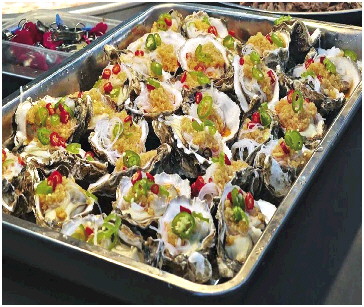
冬日“蚝”鲜!乳山抱团打造百亿蓝色名片
Qi Lu Wan Bao· 2025-12-23 10:46
Core Insights - The event "Winter Solstice Lushun Oyster Tasting" marks the transformation of Lushun oysters from a bulk commodity to a branded product, reflecting a significant shift in the local agricultural industry from production to branding and sales [2][3] Group 1: Brand Development - The introduction of liquid color-changing anti-counterfeiting technology in 2021 has significantly improved brand protection, increasing the proportion of genuine Lushun oyster products in online searches from 30% to over 90% [3] - The average price of Lushun oysters has risen by 20% to 30% due to the transition from bulk selling to individual sales [3] Group 2: Industry Growth - The investment of 270 million yuan by Shandong Lighthouse Jellyfish Marine Technology Co., Ltd. has led to the development of a full industry chain encompassing breeding, processing, sales, and research [4] - The company achieved online sales leadership within three months by investing 20 million yuan in brand promotion [4] Group 3: Technological Advancements - Scientific assessments of oyster farming capacity have led to improved management practices, optimizing breeding layouts and addressing quality issues [5][6] - The introduction of high-temperature resistant oyster varieties has improved survival rates during summer, contributing to a more sustainable farming approach [6] Group 4: E-commerce Transformation - The collaboration with top influencers has enabled significant sales growth, with daily sales reaching 200,000 jin, showcasing the impact of e-commerce on the oyster market [7] - The nutritional value of Lushun oysters has been highlighted, with high protein and zinc content, promoting them as a health food [7] Group 5: Community and Sustainability - The establishment of a 140-acre oyster industry integration development demonstration zone has unified management and created over 500 new jobs, increasing average annual income for local villagers by over 30,000 yuan [8] - The project has facilitated the sharing of brand benefits among local farmers, enhancing resilience against market risks [8] Group 6: Future Outlook - The brand value of Lushun oysters reached 19.385 billion yuan in 2023, indicating a successful transformation into a multifaceted industry that supports local economies and rural revitalization [9] - The focus on quality and health, combined with technological and market forces, is essential for sustaining the growth and longevity of the oyster industry [9]

大连市普兰店区首家海参产业共享检验室投入运营
Xin Lang Cai Jing· 2025-12-23 09:49
长期以来,普兰店区各类海参生产企业、合作社受资金规模、技术实力等因素制约,企业面临着检验难 题。自建检验室年均成本高达8-10万元,小微企业难以承受。水分、盐分、蛋白质等常规检验项目及复 水后干重率等特色指标检测专业性强,专业人才引留困难导致自检能力薄弱,制约了产业升级步伐。 针对这一行业痛点,普兰店区市场监管局深入海参企业调研需求,主动靠前服务,秉持"整合资源、共 享技术、规范管理"的原则,全程对接指导、帮扶大连鑫玉龙海洋生物种业科技股份有限公司建设共享 检验室。建设过程中,普兰店区市场监管局充分发挥属地管理与专业指导优势,从场地规划、设备选型 到管理制度完善、人员资质审核等关键环节,提供"点对点"精准服务,确保检验室高标准建设、规范化 起步。 共享检验室的建成运营,破解了当地中小微海参企业"检不起、检不准、检不便"的困境,推动形成"企 业自律、政府监管、社会监督"的共治格局。合作企业无需承担高昂的设备投入与维护成本,年均检验 成本可降低50%以上,就能享受到专业、高效的检验服务,通过权威检测数据为产品品质背书,显著提 升市场竞争力。目前,该检验室已与普兰店区及周边地区50余家海参制品生产企业达成合作意向。 ...
百洋股份:调剂子公司担保额度并为其1000万元借款担保
Xin Lang Cai Jing· 2025-12-23 08:01
Core Viewpoint - Baiyang Co., Ltd. announced a total guarantee limit of no more than 544 million yuan for its subsidiaries in 2025 [1] Group 1 - To meet the business needs of its subsidiaries, the company adjusted the unused guarantee limit of 10 million yuan from Guangxi Baijia to Hainan Aquaculture, reducing Guangxi Baijia's guarantee limit to 65 million yuan and increasing Hainan Aquaculture's to 20 million yuan [1] - Recently, Hainan Aquaculture applied for a working capital loan of 10 million yuan from Hainan Bank Haidian Branch, for which the company provided joint liability guarantees [1] - After the guarantee, the actual guarantee balance for Hainan Aquaculture reached 20 million yuan, with no remaining available guarantee limit [1] Group 2 - As of the announcement date, the total actual external guarantees provided by the company and its controlling subsidiaries amounted to 621 million yuan, accounting for 46.67% of the most recent audited net assets [1]

血泪教训,2025供应链行业的“生死局”
3 6 Ke· 2025-12-23 01:20
Group 1 - The supply chain industry is undergoing significant turmoil, with both successful and failed companies facing unique challenges and lessons learned from the past year [1] - Companies like Huangshi Group have faced severe penalties for financial misconduct, highlighting the risks associated with concealing financial information [2][3] - Huangshi Group's diversification into unrelated sectors has led to a dilution of its core business and financial instability, resulting in substantial losses [4][6] Group 2 - ST Jiajia has lost its controlling shareholder and is facing governance issues, which may hinder its strategic decision-making and future opportunities [7][10] - The founder of ST Jiajia has accumulated significant personal debt, leading to legal troubles and further complicating the company's situation [8][12] - The case of Green Earth highlights the risks of heavy asset reliance in the agricultural sector, where poor cash flow management can lead to severe consequences [13][16] Group 3 - Furen Food has entered a state of crisis, with multiple executives leaving and the company halting operations due to financial difficulties [17][19] - The decline of Furen Food reflects broader challenges in the frozen food industry, particularly the impact of e-commerce and changing consumer preferences [19] - Jiangsu Hongjiu's financial collapse illustrates the dangers of overexpansion and reliance on a single market segment, leading to unsustainable debt levels [20][22] Group 4 - Xiwang Food has seen a significant drop in its stock holdings by its major shareholder, raising concerns about the company's governance and financial stability [21][23] - The decline in revenue for Xiwang Food is attributed to increased competition and a lack of brand recognition in a crowded market [25][26] - Tianrun Dairy has reported its first loss in a decade, driven by market price wars and operational challenges, prompting strategic adjustments [27][30] Group 5 - Qianhe Flavor Industry has faced a crisis due to product quality issues, leading to a decline in consumer trust and financial performance [33][35] - The company's struggles underscore the importance of maintaining transparency and quality in the supply chain to build consumer confidence [36] - The experiences of these eight companies collectively highlight critical survival principles in the supply chain sector, such as focusing on core business, maintaining cash flow, and ensuring strong governance [37]


央视丨常德汉寿:甲鱼迎来销售旺季 日销上万斤
Xin Lang Cai Jing· 2025-12-23 00:30
Core Viewpoint - The article highlights the peak sales season for soft-shelled turtles in winter and spring, focusing on the harvesting activities in Hunan's Changde Hanshou, a major production area for soft-shelled turtles in China [1] Group 1: Industry Overview - The winter and spring months are identified as the peak sales season for soft-shelled turtles, indicating a seasonal trend in demand [1] - The local farming bases are experiencing a bountiful harvest, showcasing the productivity of the region [1] Group 2: Harvesting Process - Workers are engaged in the process of harvesting soft-shelled turtles, which involves draining ponds and using long poles to search through the mud [1] - After capturing the turtles, they undergo cleaning, weighing, and packaging before being distributed nationwide [1]
喂料用药随意 药品残留超标
Xin Lang Cai Jing· 2025-12-22 20:23
Core Viewpoint - The article highlights the emerging issues in the aquaculture industry, particularly the phenomenon of "sliding in the gap," where many enterprises and farmers operate without proper licenses and fail to adhere to safety regulations, posing significant risks to food safety and public health [1][2][4]. Group 1: Industry Issues - Many aquaculture enterprises in Guizhou are found to operate without licenses, lacking records for inputs and failing to conduct quality checks before sales [2][3]. - The absence of proper management leads to the use of unregulated drugs, resulting in excessive drug residues in fish products, which can pose health risks to consumers [2][4]. - A specific case revealed that a catfish farm had enrofloxacin levels at 119.31 μg/kg, exceeding the national safety standard of 100 μg/kg [4]. Group 2: Regulatory Actions - The local prosecutor's office initiated a public interest lawsuit against the agricultural bureau for failing to enforce food safety regulations, leading to a court ruling that mandated the bureau to ensure compliance among aquaculture enterprises [3]. - Following the court's decision, the agricultural bureau developed a template for recording aquaculture inputs to enhance traceability and accountability [3]. Group 3: Safety Hazards - The use of banned substances was reported, with a farm found storing tetracycline and ceftriaxone, which violates veterinary drug regulations [5]. - The lack of awareness among farmers regarding safety standards and regulations contributes to the prevalence of unsafe practices in aquaculture [6]. Group 4: Recommendations for Improvement - Experts suggest that collaboration among agricultural, market regulation, and judicial departments is essential to strengthen food safety measures and enforce penalties for violations [7]. - The industry should promote the development of eco-friendly fish species and improve aquaculture practices to ensure both quality and safety of fish products [7].