脑机接口

Search documents
用脑机接口硬成果 驱动未来产业新引擎
Xin Lang Cai Jing· 2026-01-26 22:09
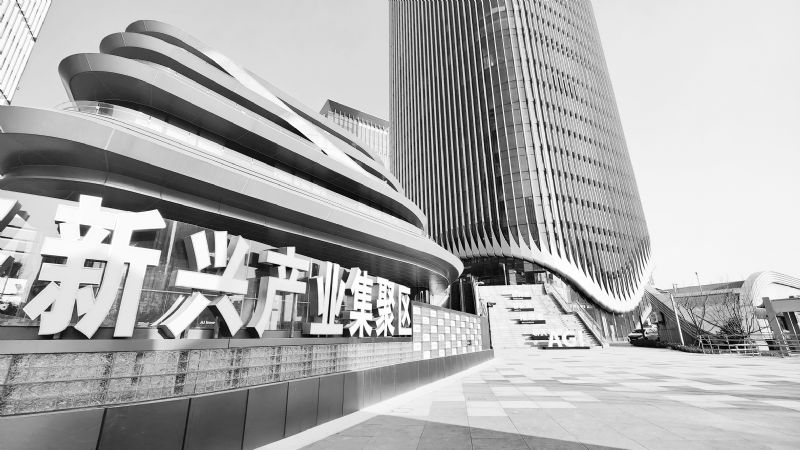
Core Insights - The establishment of the Brain-Machine Interaction and Human-Machine Integration Haihe Laboratory, led by Tianjin University, aims to create a complete closed-loop system for clinical diagnosis, technology research and development, product registration, and medical insurance access, enhancing innovation in Tianjin [1][2] - The laboratory focuses on market-driven, original, and disruptive technology exploration, developing a comprehensive innovation system that includes core electronic devices, high-end general-purpose chips, basic software products, and key foundational systems [1] - The laboratory aims to elevate industrial capabilities by integrating technological and industrial innovation, promoting the application of brain-machine interface technology in various fields such as healthcare, consumer electronics, and military aerospace [1] Talent Development - To support the rapid development of the brain-machine interface industry, Tianjin University and its partners are innovating talent cultivation mechanisms, launching the first undergraduate program in brain-machine interfaces in 2024, and establishing a doctoral program in the same field by 2025 [2]
筑梦星辰海 川跃新境
Si Chuan Ri Bao· 2026-01-26 20:52
Group 1: Core Technology Trends - The global technology wave is reshaping the economic landscape, with a shift from "what can be done" to "what should be done" in 2026, integrating social responsibility into technological development [2] - Artificial intelligence (AI) is the main driver of technological innovation, moving towards large-scale implementation and industrialization [2][3] - AI will transition from conceptual demonstrations to a phase of value realization, focusing on the integration of technology, industry, and governance [3] Group 2: Robotics and AI - Humanoid robots are entering a phase of large-scale trials, driven by breakthroughs in physical AI that allow robots to understand and interact with physical laws [4][5] - The development of humanoid robots will significantly change human-machine coexistence, requiring global collaboration and unified technical standards [5] Group 3: Commercial Space - The commercial space industry in China is poised for significant growth, transitioning from capability building to value creation, with a focus on reusable rockets and satellite networks [6][7] - 2026 is expected to be a pivotal year for the commercialization of space services, driven by advancements in satellite communication technology [7] Group 4: Future Transportation - Super high-speed rail, utilizing low vacuum tube technology, aims to achieve speeds over 1000 km/h, overcoming weather-related disruptions [8][9] - China is at the forefront of this technology, with significant engineering breakthroughs and ongoing trials [10] Group 5: Quantum Technology - Quantum technology is becoming a focal point for global research, with quantum error correction recognized as a key area for future advancements [11][12] - China is positioned in the leading tier of quantum communication and computing, with significant contributions expected from regions like Sichuan [12] Group 6: 6G Technology - The development of 6G technology is underway, promising speeds 10-100 times faster than 5G and enabling comprehensive coverage across air, land, and sea [13][14] - Sichuan is actively working on key technologies to accelerate the industrialization of 6G [15] Group 7: Controlled Nuclear Fusion - Research in controlled nuclear fusion is advancing towards engineering practice, with multiple countries exploring various technological routes [16][17] - China's strategic development in nuclear fusion is gaining momentum, supported by recent legislative frameworks [17] Group 8: Deep Space Exploration - Deep space exploration aims to expand human understanding of the universe, with significant global advancements in observational technology [18][19] - Sichuan is emerging as a key research hub for astronomy and deep space exploration, contributing to national strategic initiatives [19] Group 9: Brain-Computer Interfaces - Brain-computer interfaces are evolving to enhance human-machine interaction, with applications in healthcare and consumer technology [20][21] - Sichuan has developed a complete industry chain for brain-computer interfaces, with a market size of 1 billion yuan, entering a new phase of clinical application [22] Group 10: Biomedicine - The biomedicine sector is a critical area for innovation, integrating biotechnology with pharmaceuticals to drive high-quality development [23][24] - Sichuan is actively cultivating its biomedicine industry, focusing on various key and emerging sectors to enhance its competitive edge [24]


穿越周期的力量:2025中国企业家年度榜单
Sou Hu Cai Jing· 2026-01-26 15:59
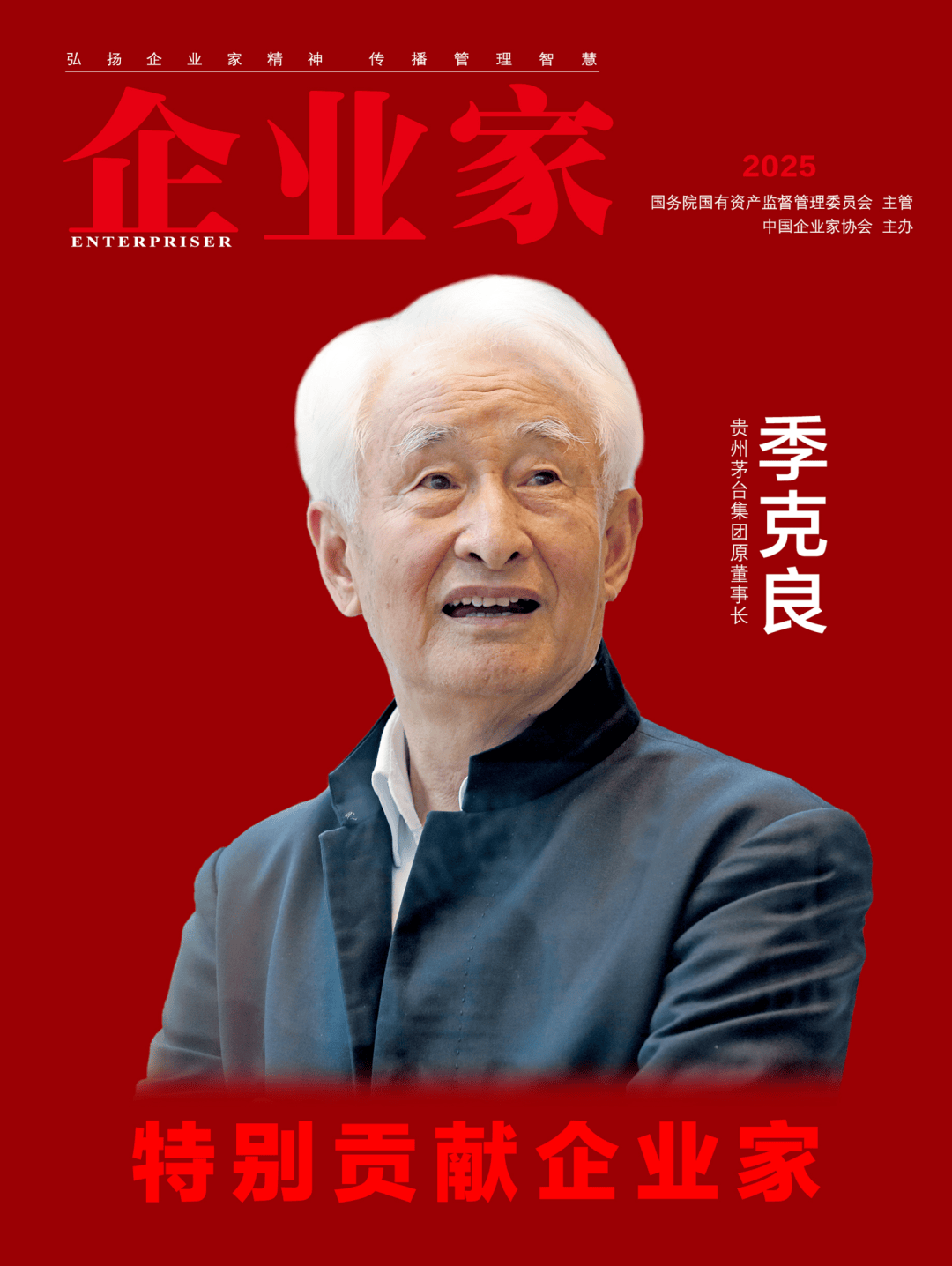
Core Insights - The article highlights the recognition of 3 "Special Contribution Entrepreneurs" and 20 "2025 Entrepreneurs" who exemplify long-termism and innovation across various industries in China, including liquor, manufacturing, energy, agriculture, internet, AI, and new consumption [1][2]. Group 1: Special Contribution Entrepreneurs - Ji Keliang, former chairman of Kweichow Moutai Group, transformed traditional brewing techniques into scientific data over 60 years, emphasizing quality over speed, which laid the foundation for Moutai's billion-dollar brand value [4][10][12]. - Zhang Ruimin, founder of Haier Group, is known for his continuous self-disruption and innovation, leading Haier from a struggling factory to a global leader in home appliances with over 400 billion yuan in revenue [18][20][21]. - Jiang Baoquan, founder of Nanjing Gold Foil Holdings, turned a failing workshop into the world's largest gold foil producer, emphasizing resilience and innovative management theories [25][27][29]. Group 2: 2025 Entrepreneurs - Ma Huateng, chairman of Tencent, focuses on "technology for good," committing to social responsibility and innovation in digital technology to drive high-quality economic development [31][34][41]. - Wang Ning, founder of Pop Mart, capitalizes on emotional value and consumer psychology, creating a successful business model around collectible toys that resonate with young consumers [43][45][46]. - Wang Xingxing, founder of Yushutech, leads advancements in humanoid robotics, achieving significant market presence and profitability while promoting technological innovation [48][49][51]. - Fang Hongbo, chairman of Midea Group, has successfully transformed Midea into a global technology group through strategic restructuring and a focus on efficiency and innovation [54][56]. - Liu Yonghao, chairman of New Hope Group, maintains a long-term vision in agriculture, achieving growth even during economic downturns by embracing new technologies [67][69][70]. - Liu Qiangdong, founder of JD.com, integrates the concept of "common prosperity" into business practices, ensuring fair profit distribution among stakeholders while enhancing supply chain efficiency [73][75][78]. - Li Dongsheng, founder of TCL, exemplifies global leadership in semiconductor display and photovoltaic sectors, driving innovation and sustainable growth through strategic partnerships [110][111].




商务部优化实施消费品以旧换新,北证50下跌1.45%
Soochow Securities· 2026-01-26 13:20
Market Overview - On January 26, 2026, the North Exchange 50 index fell by 1.45%[1] - The average market capitalization of the North Exchange component stocks is 3.274 billion, with a trading volume of 32.814 billion, a decrease of 0.321 billion from the previous trading day[13] Capital Market News - The State Administration for Market Regulation reported that the Chinese corporate credit index for Q4 2025 was 162.18, reflecting a slight increase of 0.52 points from Q3 2025, indicating a stable and improving credit environment[6] - The People's Bank of China conducted a 150.5 billion reverse repurchase operation, resulting in a net withdrawal of 207.8 billion from the open market[8] Industry News - The Ministry of Commerce announced plans to optimize the implementation of the old-for-new policy for consumer goods, aiming to boost consumption of durable goods such as home appliances and automobiles in 2026[9] - Tianjin aims to establish a national brain-computer interface technology innovation center, focusing on key technological breakthroughs and enhancing local innovation capabilities[11] Company Announcements - Dayu Biological expects a net loss of 26 to 30 million for 2025, a decline of 25.3% to 8.59% compared to the previous year due to industry challenges[26] - Shibi Bai forecasts a net profit of 50 to 60 million for 2025, a significant turnaround from a loss of 3.675 million the previous year, driven by increased demand for metal composite materials[27] - Oufu Egg Industry anticipates a net profit of 80 to 92 million for 2025, a year-on-year increase of 75.44% to 101.75% due to expanded production capacity and improved market conditions[28]
多所高校成果,入选中国十大科技进展
Xin Lang Cai Jing· 2026-01-26 11:15
Core Insights - The 2025 China and World Top Ten Scientific Advances were announced, highlighting significant achievements in various fields of science and technology [2][13]. Group 1: China's Top Ten Scientific Advances - The "artificial sun" EAST achieved a world record of 1 billion degrees Celsius for 1066 seconds, marking a major leap in fusion energy research [14]. - DeepSeek launched a new AI model R1, which matches the performance of OpenAI's models while significantly reducing training costs and being fully open-source [15]. - A thorium-based molten salt reactor was built, achieving thorium-uranium fuel conversion and demonstrating the feasibility of using thorium resources in nuclear energy [15]. - A high-precision AI diagnostic tool for predicting liver cancer recurrence was developed, achieving an accuracy rate of 82.2% and featured on the cover of Nature [16]. - The "North Brain No. 1" wireless brain-computer interface was successfully implanted, enabling patients with speech impairments to communicate effectively [17]. - A novel target for Parkinson's disease was discovered, providing new hope for treatment and drug development [18]. - The "Zu Chongzhi No. 3" superconducting quantum computer was built, outperforming the fastest supercomputers by a factor of 10 trillion [19]. - New hydrogen production technology was developed, eliminating CO2 emissions and achieving high hydrogen yield [20]. - Significant breakthroughs in black soil protection technology were reported, supporting sustainable agricultural practices [21]. - A new ultra-wideband optoelectronic integrated system for 6G communication was developed, enabling high-speed wireless communication across a wide frequency range [22]. Group 2: World Top Ten Scientific Advances - Brain-computer interfaces allow patients to express emotions through speech and song, translating thoughts into language in real-time [23]. - An integrated chip system combining electronics, photonics, and quantum technology was created [23]. - The largest black hole merger event was detected, challenging existing black hole formation models [23]. - The highest energy neutrino ever detected was found, being 20 times more energetic than previous detections [23]. - The first visible "time crystal" was created [23]. - Transgenic pig organ transplants set a new record for survival time [23]. - Ground-based telescopes detected signals from 13 billion years ago [23]. - The largest cosmic map to date was produced [23]. - The most detailed brain map was created, describing numerous neurons and their activities [23]. - "Deep Thinking" announced AI test scores equivalent to gold medal levels in international mathematics competitions [23].

天津将争建国家脑机接口技术创新中心
Xin Lang Cai Jing· 2026-01-26 09:43
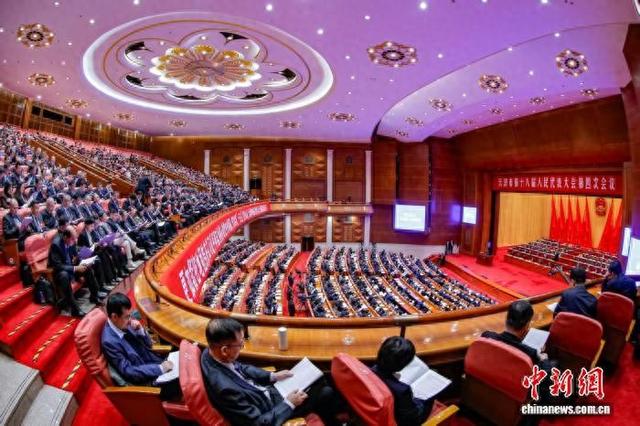
Group 1 - The core focus of the report is on establishing Tianjin as a national innovation center for brain-computer interface technology, aiming to make significant contributions to key technological breakthroughs [1][2] - Tianjin plans to actively participate in the construction of the Beijing-Tianjin-Hebei International Science and Technology Innovation Center, emphasizing local advantages and needs, and promoting collaboration between research institutions and enterprises [2] - The report outlines the intention to create national centers for brain-computer interfaces and blood disease medicine, highlighting areas such as artificial intelligence, synthetic biology, and traditional Chinese medicine as key sectors for innovation [2] Group 2 - The draft of the 15th Five-Year Plan for Economic and Social Development emphasizes leveraging key laboratories and innovation centers in Tianjin to foster advancements in brain-computer interface technology [2] - Tianjin aims to accelerate research and development in brain-computer interfaces, brain-like chips, and core components for human-computer interaction, with applications in various fields including healthcare, gaming, and smart homes [2]
三大指数表现不一 传统板块逆袭科技热点成新主线
Xin Lang Cai Jing· 2026-01-26 08:37
Market Performance - The Hong Kong stock market showed mixed performance with the Hang Seng Index up by 0.06% closing at 26,765.52 points, while the Tech Index fell by 1.24% to 5,725.99 points, and the National Enterprises Index decreased by 0.15% to 9,147.21 points [1][2]. Sector Performance - Traditional cyclical stocks such as oil, coal, and non-ferrous metals performed strongly, indicating a shift in market focus towards value assets. In contrast, previously popular sectors like commercial aerospace and brain-computer interface technologies experienced a pullback [2][11]. Oil Sector - Oil stocks saw significant gains, with China National Offshore Oil Corporation (CNOOC) rising by 4.01%, China Petroleum & Chemical Corporation (Sinopec) increasing by 3.68%, and China Oilfield Services Limited up by 3.23%. This strength is attributed to a recent extreme cold wave in North America, which caused a 63% spike in U.S. natural gas prices from January 20 to 22, subsequently boosting prices of light hydrocarbons and supporting domestic petrochemical prices [4][5]. Coal Sector - Coal stocks also showed robust performance, with Mongolian Energy up by 5.80%, China Shenhua Energy rising by 4.42%, and China Qinfa up by 3.74%. The increase in coal prices is linked to heightened demand due to cold weather, with daily coal output from the Bohai Rim ports averaging 1.682 million tons, a week-on-week increase of 14.2 tons or 9.19% [6][7]. Non-Ferrous Metals Sector - Non-ferrous metal stocks were active, with Rusal rising by 12.31%, China Nonferrous Mining increasing by 9.87%, and Chifeng Jilong Gold Mining up by 7.44%. Citigroup's report indicates a structural bull market in aluminum, predicting a 61,000-ton structural deficit by early 2026 and raising the price target for aluminum from $2,950 to $3,400 per ton [8][9]. Gold Market - Morgan Stanley's research indicates that gold prices have surpassed their forecast of $4,750 per ounce for the second half of the year, with expectations of further increases due to geopolitical risks, central bank purchases, and ETF inflows. A bullish scenario suggests a target price of $5,700 per ounce for the second half [10]. Weakness in Tech Sectors - Commercial aerospace stocks faced collective declines, with Asia Pacific Satellite down by 11.53%, Goldwind Technology down by 7.14%, and JunDa Co. down by 6.56%. This adjustment is attributed to short-term profit-taking pressures [11]. Brain-computer interface stocks also showed weakness, with Nanjing Panda Electronics down by 6.15% and Brainstorming Technology down by 5.35%, partly due to a recent share placement announcement [13][14]. Individual Stock Movements - Zhizhuo (02513.HK) surged by 13.02% following a significant increase in subscription service users after the launch of its flagship model GLM-4.7, indicating strong market interest in its AI capabilities [15]. Lao Pu Gold (06181.HK) rose by 7.80% due to increased customer traffic during a promotional event, with expectations of substantial revenue growth during the upcoming Spring Festival [16].




强脑科技拟赴港IPO 脑机接口商业化前景如何?
2 1 Shi Ji Jing Ji Bao Dao· 2026-01-26 08:23
Group 1 - The core viewpoint of the articles highlights the growing interest and investment in the brain-computer interface (BCI) sector, with companies like BrainCo preparing for IPOs amid a favorable market environment [1][8] - BrainCo, established in 2015, focuses on non-invasive BCI technology and has recently completed a financing round of approximately 2 billion RMB, achieving a post-investment valuation of over 1.3 billion USD [1] - The BCI market is projected to grow significantly, with estimates suggesting a global market size of approximately 2.6 billion USD in 2024, increasing to 2.9 billion USD in 2025 and further to 3.3 billion USD in 2026 [9] Group 2 - BCIs are primarily expected to impact the medical field, particularly for individuals with neurological impairments, aiming to restore or replace certain neural functions [2] - The BCI technology is categorized into invasive, semi-invasive, and non-invasive types, with non-invasive systems being more widely accepted due to their safety [3] - Companies like Neuralink are leading the invasive BCI path, while BrainCo focuses on non-invasive applications in rehabilitation and health management [3][4] Group 3 - The regulatory landscape for BCI products is becoming clearer, with the National Healthcare Security Administration introducing specific fees for non-invasive BCI adaptations to enhance accessibility [6] - The industry is witnessing a significant increase in R&D investment, with an average R&D expense ratio of about 18% among BCI-related companies [12] - The number of domestic BCI companies in China has surpassed 200, with expectations for the industry scale to reach tens of billions of RMB by 2026 [12] Group 4 - Ethical and regulatory challenges remain a concern in the application of BCI technology, particularly regarding data privacy and the potential for misuse in educational settings [7] - The market for BCI is experiencing a phase of industrial expansion, with a notable increase in financing activities, indicating a robust interest in clinical advancements [12] - Policy support is crucial for the BCI sector, with government initiatives aimed at fostering innovation and establishing a competitive industry ecosystem by 2030 [13][14]
中国明确新兴产业创新中心八项任务 龙头引领构建全链条创新生态体系
Chang Jiang Shang Bao· 2026-01-26 06:07
Core Insights - The National Development and Reform Commission has released the "Management Measures for National Emerging Industry Innovation Centers," which outlines eight main tasks for these centers, focusing on strategic industry development and collaboration among leading enterprises, academia, and research institutions [2][3] - By 2025, the added value of high-tech manufacturing in China is projected to account for 17.1% of the total industrial added value, indicating a significant shift towards new productive forces and technological advancements [2][6] Group 1: Innovation Center Framework - The innovation centers are positioned as platforms for technological innovation, aimed at nurturing future industries and enhancing new productive forces, forming a crucial part of the national innovation system [3] - The measures emphasize the integration of innovation ecosystems, promoting collaboration among government, industry, academia, and research to tackle key technological challenges [3][5] - The centers will also encourage local and social capital participation, establish stable R&D funding mechanisms, and support the establishment of investment funds for innovation and entrepreneurship [3][5] Group 2: Economic Growth and Industry Development - In 2025, the number of newly established enterprises in the "8+9" emerging and future industries reached 1.01 million, a 9.0% increase from the previous year, reflecting strong entrepreneurial enthusiasm in innovation-driven sectors [6] - The added value of high-tech manufacturing and equipment manufacturing reached 17.1% and 36.8% of the total industrial added value, respectively, showcasing the growth of high-tech and strategic emerging industries [7] - The production of new energy vehicles exceeded 16 million units in 2025, maintaining a global leadership position for 11 consecutive years, driven by supportive policies and market demand [7]
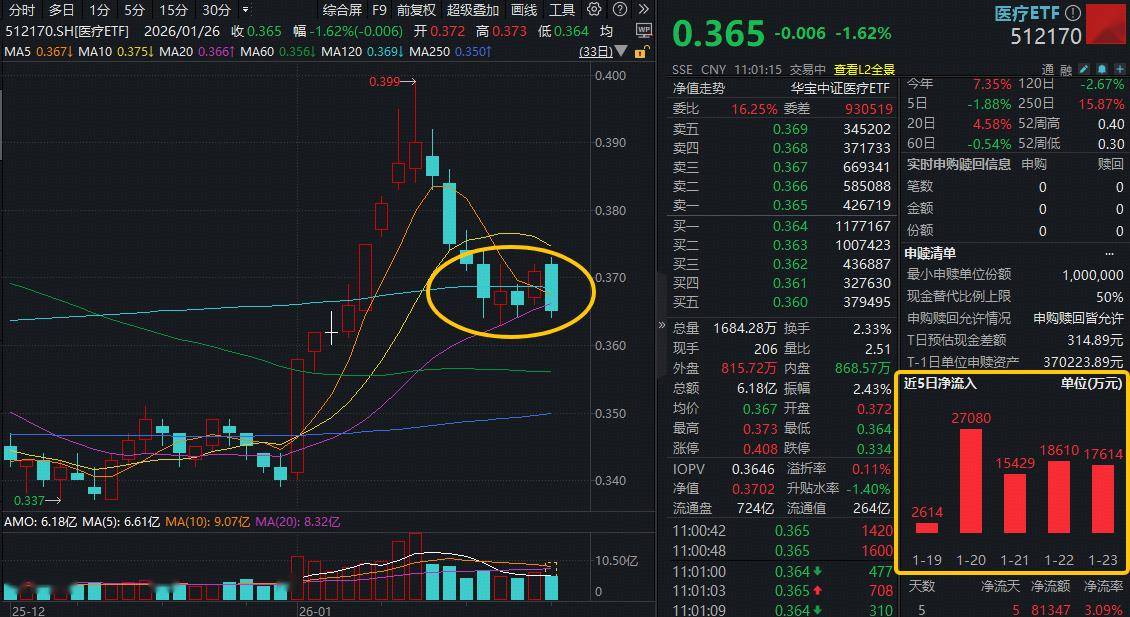
ETF盘中资讯|刚刚,全市场规模最大医疗ETF(512170)再失半年线,场内频现溢价,“抄底”资金单周爆买逾8亿元
Sou Hu Cai Jing· 2026-01-26 03:53
Group 1 - The A-share medical sector weakened on January 26, with AI medical and brain-computer interface concepts leading the decline, as Meien Health dropped by 6% and Weining Health and Sanbo Brain Science fell over 5% [1] - The largest medical ETF in the market (512170) declined by more than 1.6%, losing its half-year line, with real-time transactions exceeding 600 million yuan [1] - Despite the overall decline, the medical ETF (512170) showed high-frequency premiums in the market, indicating active buying interest, with a weekly increase in positions exceeding 813 million yuan [1] Group 2 - CITIC Securities recently published a weekly review of the pharmaceutical industry, indicating that policy impacts will eventually clear, and companies will gradually recover after strategic adjustments, with the medical device sector undergoing dual recovery in valuation and performance [3] - The report suggests increasing allocation to the medical device sector by 2026, with major investment opportunities arising from performance recovery, overseas expansion, brain-computer interfaces, and AI medical technologies, potentially leading to multi-bagger stocks in a tech bull market [3] - The CXO sector is experiencing rapid growth due to advancements in ADC and peptide drugs, with increasing demand for related CXO services, and segments like small nucleic acids and CGT are expected to develop quickly [3] Group 3 - The largest medical ETF (512170) has a fund size of 26.8 billion yuan, making it the largest in the market among medical ETFs [3] - The medical ETF and its linked fund (012323) cover 12 AI medical and brain-computer interface concept stocks, with over 50% weight in medical devices and nearly 25% in CXO [3] - For those interested in Hong Kong stock medical opportunities, the Hong Kong Stock Connect Medical ETF (159137) focuses on medical innovation, gathering core leaders in various pharmaceutical fields, including medical devices, AI medical, CXO, and innovative drugs [3]