
家具

Search documents
顾家家居:不存在逾期担保
Zheng Quan Ri Bao· 2025-11-26 13:44
Group 1 - The company, Gujia Home Furnishing, announced that it has no overdue guarantees [2]


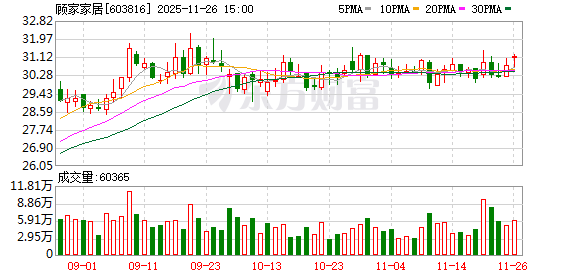
顾家家居:关于向特定对象发行A股股票申请获得上海证券交易所审核通过的公告
Zheng Quan Ri Bao· 2025-11-26 13:11
Core Viewpoint - Gujia Home Furnishing has received approval from the Shanghai Stock Exchange for its application to issue shares to specific investors, pending final approval from the China Securities Regulatory Commission (CSRC) [2] Group 1: Company Announcement - On November 26, Gujia Home Furnishing announced that it received the Shanghai Stock Exchange's review opinion regarding its application for a specific object stock issuance [2] - The exchange confirmed that the application meets the issuance conditions, listing conditions, and information disclosure requirements [2] - The final decision on whether the CSRC will approve the registration remains uncertain [2]
消费维权指南:这些渠道帮你精准维权不踩坑
Xin Lang Cai Jing· 2025-11-26 07:44
Core Viewpoint - The article discusses the increasing complexity of consumer rights protection in diverse consumption scenarios and outlines various effective channels for consumers to assert their rights against issues like false advertising, quality defects, and service fraud [1]. Group 1: Official Complaint Platforms - 12315 serves as a national-level complaint platform established by the State Administration for Market Regulation, covering all areas of disputes including product transactions and after-sales service. Consumers can submit complaints through multiple channels, and the system automatically forwards them to the relevant local market supervision department [2]. - Industry-specific complaint channels are provided by regulatory authorities to address specialized disputes. For example, the Ministry of Industry and Information Technology handles communication service issues, while the China Banking and Insurance Regulatory Commission focuses on loan fraud and insurance claims [3]. - The 12345 government service hotline acts as a comprehensive service hub, addressing complex complaints that involve multiple departments. This platform enhances the efficiency of handling cross-domain disputes through a collaborative approach [4]. Group 2: Social Supervision Platforms - The "Black Cat Complaint" platform operates as a "public opinion court" in the consumer sector, utilizing a mechanism of complaint publicization, enterprise response, and progress tracking to create a unique supervision ecosystem [5]. - Social media can be a double-edged sword for consumer rights protection. While it can quickly attract attention, consumers must ensure the sufficiency of evidence, maintain objectivity in their statements, and protect personal privacy when posting complaints [6]. Group 3: Legal Remedies - Consumer associations provide free consultation and mediation services, with mediation agreements holding civil contract validity. For instance, a consumer reached an agreement for free replacement and compensation for transportation costs through local consumer association mediation [7]. - For significant disputes or personal injury cases, consumers can apply for arbitration or file lawsuits based on the Arbitration Law. A notable case involved a consumer who received a total compensation of 870,000 yuan due to medical malpractice through a civil lawsuit [7]. Group 4: Suggested Strategies for Rights Protection - Key evidence should be preserved, including order information, communication records, and product samples. - A layered approach is recommended, starting with administrative mediation through 12315 or industry hotlines while simultaneously submitting complaints on the Black Cat platform to create public pressure [8]. - For uncooperative enterprises, timely legal action should be taken by hiring a lawyer to initiate litigation or arbitration [8].
分红“港”知道|最近24小时内,中国交通建设、中联重科、周大福等11家港股上市公司公告分红预案!
Mei Ri Jing Ji Xin Wen· 2025-11-26 02:28
Group 1: Dividend Announcements - China Communications Construction Company announced a dividend of HKD 0.12929 per share, ex-dividend date on December 1, 2025, and payment date on January 9, 2026 [1] - Zoomlion Heavy Industry Science and Technology Co., Ltd. declared a dividend of RMB 0.2 per share, ex-dividend date on December 15, 2025, and payment date on January 9, 2026 [1] - Chow Tai Fook Jewellery Group Limited will pay a dividend of HKD 0.22 per share, ex-dividend date on December 15, 2025, and payment date on December 24, 2025 [1] - NIRAKU announced a dividend of HKD 0.01 per share, ex-dividend date on December 8, 2025, and payment date on January 12, 2026 [1] Group 2: Industry Classification - China Communications Construction Company is classified under the heavy construction sector and is a constituent of the CSI Central State-Owned Enterprises Dividend Index [1] - Zoomlion Heavy Industry is categorized under heavy machinery and is not part of the CSI Central State-Owned Enterprises Dividend Index [1] - Chow Tai Fook is classified as an other retailer and is part of the Hang Seng High Dividend Yield Index [1] - NIRAKU operates in the casino and gaming sector and is not included in the CSI Central State-Owned Enterprises Dividend Index [1] Group 3: Additional Dividend Announcements - MiiMii Life Department Store announced a dividend of HKD 0.003 per share, ex-dividend date on December 16, 2025, and payment date on January 9, 2026 [2] - Bens International declared a dividend of HKD 0.025 per share, ex-dividend date on December 11, 2025, and payment date on December 23, 2025 [2] - Kwansei Fragrance announced a dividend of HKD 0.05 per share, ex-dividend date on December 8, 2025, and payment date on December 23, 2025 [2] - Sanhua Intelligent Controls declared a dividend of RMB 0.1200 per share, with no specified ex-dividend or payment dates [2] Group 4: Industry Insights - The CSI Central State-Owned Enterprises Dividend Index includes 50 listed companies with stable dividend levels and high dividend yields, with a one-year dividend yield of 5.66% as of November 25, higher than the 10-year government bond yield of 3.84% [4] - The Hang Seng High Dividend Yield Index includes high dividend stocks from mainland companies listed in Hong Kong, with a one-year dividend yield of 5.31% as of November 25, also higher than the 10-year government bond yield of 3.49% [4]

美国制造业回流?回不去了!
Sou Hu Cai Jing· 2025-11-23 15:16
关税政策本想帮忙,结果帮倒忙。从2018年开始加关税,到2025年扩展到钢铁、电子产品,税率25%到60%不等。企业成本直线上升,美国商会报告说, 89%的制造商成本涨了。消费者呢?额外支出每年3800美元左右。 说起美国制造业回流,这几年闹得沸沸扬扬,尤其是特朗普那时候推的关税政策,总想着用高关税把工厂逼回本土。结果呢,现实骨感得很。2025年都过了 一大半了,看看数据,制造业就业岗位不升反降,8月份丢了1.2万个工作,全年下来已经少了7.8万个。局劳工统计局的数据摆在那儿,不是随便说说的。工 厂想回来,劳动力从哪儿来?基础设施跟得上吗?供应链一断就乱套。这些问题堆在一起,回流听起来像个笑话。 先说劳动力这事儿。美国制造业现在缺人缺得慌。2025年2月份,就有48.2万个岗位空着没人干。制造业研究所和德勤的报告估摸着,到2033年,这个缺口 能到190万个。为什么?年轻人不爱进厂啊。现在的工厂不像以前那么简单,自动化到处都是,需要懂软件、数据分析、编码这些玩意儿。以前的蓝领工人 转不过弯来,新一代更愿意去科技公司或者服务行业混。 制造业平均时薪30多美元,听着不错,但比起硅谷那些高薪岗位,吸引力差远了。结果 ...
敏华控股(01999):中报点评:经营存韧性,盈利略有提升
Changjiang Securities· 2025-11-23 14:30
Investment Rating - The investment rating for the company is "Buy" and is maintained [9]. Core Views - The company reported FY2026H1 results (from April 2025 to September 2025) with main revenue and net profit attributable to shareholders at HKD 80.45 billion and HKD 11.46 billion, respectively, showing a year-on-year change of -3% and +1% [2][6]. - Domestic sales continued to decline but at a reduced rate, while export sales remained stable. Domestic furniture sales decreased by 6%, with offline sales increasing by 14% and online sales decreasing by 12%. In terms of product categories, sofa and related products and mattresses and related products saw declines of 6% and 7%, respectively [7]. - Export revenue grew by 1% year-on-year, with North America, Europe, and other markets/Home Group showing increases of 0.3%, 4%, and 2%, respectively [7]. Summary by Sections Revenue - Domestic sales continued to decline, but the rate of decline has narrowed. The company is adjusting its strategies to improve performance in the domestic market [7]. - Export sales showed a slight increase, with specific declines in sofa sales in North America and Europe, while other product categories contributed positively [7]. Profitability - The company experienced improvements in gross margin and operating profit margin during FY2026H1, with gross margin and net profit margin increasing by 0.9 and 0.5 percentage points year-on-year [7]. - The decrease in raw material costs contributed to the improvement in margins, with an overall reduction of 6% in raw material costs [7]. Future Outlook - The company plans to adjust its domestic sales strategies, including restructuring dealer and store layouts and enhancing online sales channels [7]. - For export sales, the company is well-positioned to manage potential impacts from U.S. tariff policies due to its early and efficient overseas production layout [7]. - The company maintains a high dividend payout ratio of 50.8%, with an expected dividend yield of 6.2% if this ratio is maintained for the full year [7].
顾家集团,破产重组!
Shen Zhen Shang Bao· 2025-11-23 07:40
Core Viewpoint - The restructuring application by Hangzhou Deyejiajun Enterprise Management Co., Ltd. (formerly Gujia Group Co., Ltd.) is a significant event for Gujia Home Furnishing, as it indicates financial distress at the shareholder level, although it is stated that this will not affect the company's control or daily operations [1][3]. Group 1: Restructuring Details - Hangzhou Deyejiajun filed for restructuring on October 15, 2025, citing inability to repay debts and insufficient assets, but with reasons for restructuring, value, and feasibility [1]. - The court in Hangzhou has accepted the restructuring application, but it will not change the control of Gujia Home Furnishing, as Hangzhou Deyejiajun is not the controlling shareholder [1][3]. - Gujia Home Furnishing will continue to monitor the restructuring process and fulfill information disclosure obligations to keep investors informed [1]. Group 2: Historical Context - Gujia Group sold its controlling stake in Gujia Home Furnishing to He Jianfeng, son of Midea Group's founder, for 8.8 billion yuan in 2022, amid financial difficulties and significant debt [3]. - In January 2024, Ningbo Yingfeng Ruihe Investment took over Gujia Home Furnishing, and the founder Gu Jiangsheng stepped down as chairman in September 2024 [3]. Group 3: Industry Context - The restructuring occurs against a backdrop of overall pressure in the home furnishing industry, raising concerns about the stability of shareholder structures in home furnishing companies [3]. - The furniture industry in China is facing challenges, with a reported revenue of 403.83 billion yuan from January to August 2025, a year-on-year decline of 6.0%, and total profits down 16.7% [3]. Group 4: Company Performance - Despite the industry downturn, Gujia Home Furnishing reported a revenue of 15.012 billion yuan for the first three quarters of 2025, an increase of 8.77% year-on-year, and a net profit of 1.539 billion yuan, up 13.24% [4]. - In the third quarter of 2025, the company achieved a revenue of 5.211 billion yuan, reflecting a growth of 6.50%, and a net profit of 518 million yuan, which is an increase of 11.99% [4].

佛山市南海区志振景包装制品经营部(个体工商户)成立 注册资本1万人民币
Sou Hu Cai Jing· 2025-11-22 08:28
Core Insights - A new individual business named "Zhizhenjing Packaging Products Operation Department" has been established in Nanhai District, Foshan City with a registered capital of 10,000 RMB [1] Company Overview - The business operates in various sectors including the sale of packaging materials and products, plastic products, and internet sales (excluding items requiring permits) [1] - It also engages in sales agency, domestic trade agency, and the sale of food-grade plastic packaging containers and tools [1] Business Activities - The company is involved in wholesale of daily necessities, retail and wholesale of hardware products, and sales of metal products, paper products, and cork products [1] - The business is authorized to conduct operations independently based on its business license, except for projects that require legal approval [1]
深圳“国际性枢纽”连接世界 释放大市场磁吸力
Sou Hu Cai Jing· 2025-11-21 15:22
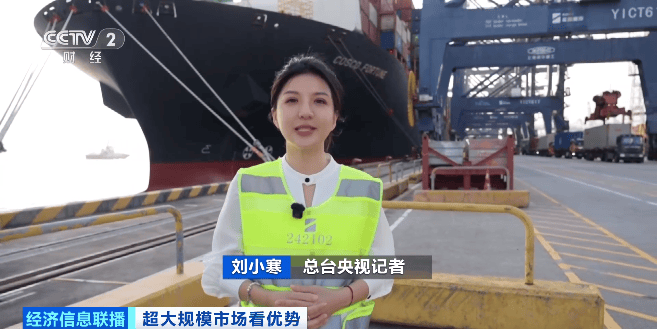
Core Viewpoint - Shenzhen is emerging as an international hub connecting China to the world, showcasing vibrant trade activities and a strong market appeal [1] Group 1: Trade and Economic Data - Shenzhen's import and export scale has maintained the top position among mainland cities in the first ten months, with imports of electromechanical products reaching 1.2 trillion yuan, an increase of 8.5%, and agricultural product imports at 82.26 billion yuan, growing by 10% [7] - China has been the world's second-largest importer for 16 consecutive years, with an annual import volume exceeding 20 trillion yuan, driven by a population of over 1.4 billion and more than 400 million middle-income individuals [9] - The recently concluded 8th China International Import Expo achieved a record intended transaction amount of 83.49 billion USD, with 290 Fortune 500 companies participating [9] Group 2: Port and Logistics Developments - Yantian Port has added 14 international routes since 2025, covering North America, Europe, and Asia, with over 100 weekly routes connecting globally [3] - Digital operations at Yantian Port enhance efficiency, allowing diverse international goods to flow quickly to production lines and consumers, injecting vitality into the domestic market [5] Group 3: Tourism and Visitor Trends - The implementation of a 240-hour visa-free transit policy at five ports, including West Kowloon and Hong Kong-Zhuhai-Macao Bridge, has made the region a significant hub connecting the Guangdong-Hong Kong-Macao Greater Bay Area with the world [12] - Over 1.2 million foreign travelers were inspected at the West Kowloon border checkpoint this year, with more than 260,000 benefiting from the visa-free policy, marking a 100% year-on-year increase [14] - The number of foreign tourists entering China has reached 20.89 million in the first three quarters, a growth of over 50%, with a significant increase in duty-free sales [26]
喜临门(603008):2025年三季报点评:25Q3收入稳健增长,AI产品矩阵逐步完善
Huachuang Securities· 2025-11-21 14:18
Investment Rating - The report maintains a "Recommendation" rating for the company, with a target price of 21.18 CNY per share [2][8]. Core Insights - The company reported steady revenue growth in Q3 2025, with total revenue reaching 21.76 million CNY, a year-on-year increase of 7.78%. However, the net profit for the same quarter decreased by 6.10% to 1.33 million CNY [2][8]. - The company is transitioning into a sleep technology enterprise, enhancing its product matrix with AI-driven solutions. It has expanded its distribution channels both domestically and internationally, including entry into the Middle East market [8]. - The gross margin for Q3 2025 was 35.6%, reflecting a slight decline due to increased promotional activities. The net profit margin for the quarter was 6.1%, down by 0.9 percentage points year-on-year [8]. Financial Performance Summary - For the first three quarters of 2025, the company achieved revenues of 619.6 million CNY, with a year-on-year growth of 3.68%. The net profit attributable to the parent company was 39.9 million CNY, up 6.45% year-on-year [2][4]. - The financial forecasts indicate a projected revenue growth from 8,729 million CNY in 2024 to 10,462 million CNY by 2027, with corresponding net profits expected to rise from 322 million CNY to 644 million CNY over the same period [4][9]. - The company’s earnings per share (EPS) is projected to increase from 0.88 CNY in 2024 to 1.75 CNY in 2027, with a price-to-earnings (P/E) ratio decreasing from 22 to 11 over the same timeframe [4][9].
