网约车

Search documents
曹操出行上市后首次战略并购,2.9亿加码高端及商旅市场
Nan Fang Du Shi Bao· 2026-01-04 05:16
Core Viewpoint - Cao Cao Mobility (02643.HK) announced two strategic acquisitions, acquiring 100% of Weixing Technology Co., Ltd. (Yaochuxing) for 225 million yuan and Zhejiang Geely Business Services Co., Ltd. (Geely Business) for 65 million yuan, marking its first strategic acquisition since its listing on the Hong Kong Stock Exchange in June last year [1][2]. Group 1: Acquisitions Overview - The acquisitions will make Yaochuxing and Geely Business wholly-owned subsidiaries of Cao Cao Mobility, with their financial performance integrated into the company [1]. - The integration aims to create a comprehensive technology travel platform covering personal and corporate travel, standard and high-end services, and "travel + business travel" solutions [1][4]. Group 2: Business Operations and Financials - Weixing Technology primarily offers luxury travel services under the "StarRides" brand, including business chauffeur services and airport transfers, with a registered capital of 700 million yuan and a reported after-tax loss of 57.46 million yuan by the end of 2024 [2]. - Geely Business provides full-process business travel solutions and has a registered capital of 10 million yuan, reporting an after-tax profit of 23.3 million yuan by the end of 2024 [4]. - Cao Cao Mobility has served over 13,500 corporate clients since launching its corporate services in 2016, indicating a strong foothold in the corporate travel market [4]. Group 3: Strategic Benefits - The acquisitions are expected to enhance Cao Cao Mobility's high-end travel product line and attract a broader mid-to-high-end customer base, thereby increasing overall customer value and lifetime value [4][5]. - The company emphasizes that corporate services are a vital part of its business, characterized by stable demand and high average prices, which will help expand its corporate client base and improve operational efficiency [5]. - The international service network of Yaochuxing, which extends to 12 global cities, and Geely Business's overseas corporate clients will support Cao Cao Mobility's international expansion efforts [5]. Group 4: Financial Performance - In the first half of 2025, Cao Cao Mobility reported revenue of 9.456 billion yuan, a year-on-year increase of 53.5%, with a reduced net loss of 330 million yuan, down 34% year-on-year [6]. - The gross margin improved from 7% to 8.4%, indicating a positive trend in financial performance [6].


长春一网约车司机辱骂威胁乘客,官方:吊销从业资格证
Yang Shi Wang· 2026-01-04 03:45
Core Viewpoint - The incident involving a ride-hailing driver in Changchun highlights issues of driver conduct and customer service within the ride-hailing industry, leading to administrative penalties and platform actions against the driver and the associated company [1] Group 1: Incident Details - A ride-hailing driver, identified as Li (male, 35 years old), exhibited poor service attitude and engaged in a verbal altercation with a passenger, which was recorded on video [1] - The driver threatened the passenger to delete the video recording, indicating a serious breach of professional conduct [1] Group 2: Regulatory Actions - The driver has been subjected to administrative penalties, including a fine of 500 RMB and revocation of his professional qualification certificate [1] - The ride-hailing platform associated with the driver has also been penalized, facing a proposed fine of 18,000 RMB and required to implement corrective measures [1] - The driver's account has been banned across all ride-hailing platforms, and further illegal activities have been referred to law enforcement for additional action [1]
长春一网约车司机辱骂威胁乘客,官方通报
Xin Lang Cai Jing· 2026-01-04 03:31
Core Points - A ride-hailing driver in Changchun, identified as Li (male, 35 years old), was reported for verbally abusing a passenger and threatening them to delete a video recording of the incident [1] - The driver has been subjected to administrative penalties, including a fine of 500 RMB and revocation of his professional qualification certificate [1] - The ride-hailing platform associated with the driver has also been penalized with an administrative fine of 18,000 RMB and is required to implement corrective measures [1] Industry Response - The Changchun Transportation Comprehensive Administrative Law Enforcement Team has initiated an investigation and confirmed the incident's validity [1] - Authorities encourage passengers to report similar incidents by calling the transportation service supervision hotline 12328 for immediate investigation [1] - A city-wide initiative will be launched to enhance the service quality of taxis and ride-hailing services, aiming to establish a civilized service image and ensure passenger safety and comfort [1]
元旦假期消费市场盘点:新场景点燃新需求 “情绪价值”成增长密码
Xin Lang Cai Jing· 2026-01-03 23:23
Core Insights - The New Year's holiday in 2026 showcased vibrant consumer activity across China, with approximately 590 million trips taken, reflecting the country's economic vitality and consumer enthusiasm [1][4]. Transportation and Travel - The opening of the Xi'an to Yan'an high-speed railway significantly reduced travel time to about one hour, contributing to a total high-speed rail network exceeding 50,000 kilometers [2]. - The Xi'an to Yan'an high-speed railway, spanning 299 kilometers, has boosted tourism, with the Hukou Waterfall scenic area experiencing a 165% increase in daily visitor numbers [3]. - During the New Year holiday, the average daily cross-regional passenger flow was approximately 198 million, with Didi ride-hailing demand increasing by 31% year-on-year [4]. Tourism and Cultural Experiences - The holiday saw a rise in experiential and ceremonial tourism, with searches for "New Year travel" increasing by 125% and significant growth in bookings for theme parks and cultural events [6]. - Ice and snow tourism remained popular, with a notable increase in visitors to Harbin's ice-themed attractions and ski resorts across the country [7][8]. Consumer Spending and Retail - The introduction of the "National Subsidy" program led to a surge in consumer spending on home appliances, with a reported 110% increase in foot traffic at stores during the holiday [9]. - The "China Shopping" trend gained momentum, with foreign tourists actively purchasing local products, highlighting the appeal of China's diverse shopping experiences [10].

新华财经早报:1月4日
Xin Hua Cai Jing· 2026-01-03 23:15
Group 1 - During the New Year's holiday, the total cross-regional personnel flow is expected to reach approximately 590 million person-times, with an average of about 198 million person-times per day [1] - Didi's ride-hailing demand increased by 31% year-on-year during the holiday, with peak demand on New Year's Eve exceeding 189,000 orders per minute [1] - The total box office for the New Year's period has surpassed 700 million yuan, with "Zootopia 2," "Avatar 3," and "Killing the Unknown" ranking as the top three films [1] Group 2 - BMW China stated that the recent price reduction of 31 models is a proactive adjustment of product strategy rather than a price war, with reductions of up to 301,000 yuan [1] - Xiaomi's CEO Lei Jun revealed that the company aims to deliver over 410,000 vehicles in 2025 and has set a target of 550,000 deliveries for 2026 [1] - Luxshare Precision clarified that its core business is progressing as planned and there are no abnormal situations affecting its normal operations [1]




曹操出行打出上市后首张战略并购王牌,万亿商旅市场迎来破局者
新浪财经· 2026-01-02 10:05
Core Viewpoint - Caocao Travel is accelerating its growth through strategic acquisitions, positioning itself as a leading technology travel platform under Geely Holding Group, with a focus on integrating resources within its ecosystem [2][4]. Group 1: Business Travel Market - The corporate travel service (ToB) market is emerging as a "blue ocean" for various travel platforms amid intense competition in the C-end ride-hailing market [5]. - The Chinese corporate travel market is large and growing steadily, yet there is a scarcity of platforms that offer "full-scenario, one-stop, high-quality" services [6]. - The acquisition of Yao Travel and the planned acquisition of Geely Business Travel directly address market pain points, allowing Caocao Travel to meet diverse client needs ranging from cost-effective daily commutes to high-end executive travel [8]. Group 2: Strategic Advantages of Acquisitions - The integration of Yao Travel and Geely Business Travel will create a comprehensive service ecosystem, covering both high-end business needs and everyday travel requirements, thus forming a complete service loop [8]. - The merger will significantly increase customer base and loyalty by leveraging the rich resources and supply chain management experience accumulated by Yao Travel and Geely Business Travel [9]. - This "1+1+1>3" synergy will enhance Caocao Travel's bargaining power and overall competitiveness in the business travel market, providing cost-effective solutions for corporate clients and opening up greater growth potential in the ToB market [9]. Group 3: Global Expansion Strategy - Caocao Travel's focus on the business travel market is complemented by its accelerated global expansion, with the Hong Kong listing serving as a gateway to international capital markets [10][11]. - The company has signed a memorandum of cooperation with the Abu Dhabi Investment Office to launch Robotaxi services, indicating international recognition of its autonomous driving technology [11]. - Caocao Travel has expanded its service footprint by launching overseas ride-hailing services in ten cities across six countries, allowing users to access services globally through a single app [11]. Group 4: Future Outlook - The strategic acquisitions of Yao Travel and Geely Business Travel are crucial for Caocao Travel's global expansion, leveraging Yao Travel's international service standards and Geely's extensive global resources [13]. - In the coming year, Caocao Travel is expected to experience rapid growth in its global layout, serving global corporate clients and expanding its user base through cross-border services and localized operations [14]. - The company aims to explore the commercialization of Robotaxi services, using Abu Dhabi as a strategic base for its technological advancements [14]. Conclusion - The strategic acquisitions by Caocao Travel represent a thoughtful ecosystem restructuring, enabling the company to master full-scenario business travel services while crafting a global travel blueprint, evolving into a globally competitive one-stop technology travel platform [16].

曹操出行打出上市后首张战略并购王牌,万亿商旅市场迎来破局者
Xin Lang Cai Jing· 2026-01-02 01:04
Core Insights - Caocao Travel, a key technology mobility platform under Geely Holding Group, is accelerating its growth through strategic acquisitions, including the purchase of high-end travel brand "Yao Travel" and plans to acquire Geely Business Travel [1][3] Group 1: Market Opportunity and Integration - The corporate travel service (ToB) market is emerging as a "blue ocean" for various mobility platforms, especially as the C-end ride-hailing market enters a phase of stock competition [4] - The Chinese corporate travel market is large and growing steadily, yet there is a scarcity of platforms that can provide "full-scenario, one-stop, high-quality" services [4] - The acquisition of Yao Travel and the planned acquisition of Geely Business Travel directly address the pain points in this market, allowing Caocao Travel to meet diverse corporate client needs [6] - The integration will create a comprehensive service ecosystem, covering both high-end business needs through Yao Travel and everyday travel needs through Caocao's existing product line [6] Group 2: Competitive Advantage and Synergy - The "1+1+1>3" integration effect will enhance Caocao Travel's bargaining power and overall competitiveness in the corporate travel market, enabling it to offer cost-effective solutions to corporate clients [7] - The merger will significantly increase customer base and loyalty by leveraging the rich resources and supply chain management experience accumulated by Yao Travel and Geely Business Travel [6] Group 3: Global Expansion Strategy - Caocao Travel is accelerating its global expansion, with Hong Kong serving as a strategic entry point into international capital markets [8] - The company has signed a memorandum of cooperation with the Abu Dhabi Investment Office to launch Robotaxi services, indicating international recognition of its autonomous driving technology [8] - The recent launch of overseas ride-hailing services in six countries and ten cities demonstrates Caocao Travel's commitment to providing seamless global mobility solutions [8] - The strategic significance of acquiring Yao Travel and planning to acquire Geely Business Travel is underscored by Yao's international service standards and Geely's extensive global resources [11]

【打工前沿】优化网约车司机管理 关键在“行为”而非“身份”
Xin Lang Cai Jing· 2026-01-01 19:47
此外,从需求端看,网约车已是人们出行的重要方式之一,如果严格限制驾驶员户籍,城市运力就可能 会出现缺口。 由此可见,松绑户籍要求,既是对数量众多的网约车驾驶员公平就业权利的保障,也有利于城市服务水 平提升,进而增强城市的吸引力和活力。 当然,取消限制不等于一放了之。如何在降低驾驶员"准入门槛"与实现网约车市场及地区整体有序发展 间找到平衡点,反而更加考验城市综合治理能力。 (来源:工人日报) 近日,四川省成都市交通运输局发布公告,向社会公开征求《成都市网络预约出租汽车经营服务管理实 施细则(征求意见稿)》意见建议。其中,从事网约车服务的驾驶员不再要求"具有成都市户籍或成都市 居住证"。 在此之前,包括上海、广州、苏州、昆明等在内的多个城市已取消了对网约车司机的户籍限制。不过, 目前仍有一些城市要求该群体具备本市户籍或者居住证明。 对网约车司机的户籍有特定要求,一来是过往传统出租车行业相关规定的沿袭,二来是部分大城市管理 人口和交通的方式之一。然而,在当前社会经济背景下,不管是从合理性还是具体实施效果来看,这一 政策的局限正变得越来越明显。这样的限制已不符合鼓励劳动者要素合理畅通流动的宏观政策,而技术 进步则为 ...
优步(UBER.US)拟收购停车平台SpotHero 加速布局出行生态
Zhi Tong Cai Jing· 2026-01-01 06:57
Core Viewpoint - Uber is considering acquiring the parking application platform SpotHero to expand its parking service business, complementing its existing ride-hailing operations [1] Group 1: Acquisition Consideration - Uber is exploring the acquisition of SpotHero, a platform that allows users to find and reserve parking spaces in major cities [1] - If the acquisition is successful, it will enable Uber to enhance its parking services [1] Group 2: SpotHero Background - SpotHero, headquartered in Chicago, has raised approximately $118 million through multiple rounds of funding, with the latest being a $50 million Series D round led by Macquarie Capital in 2019 [1] - SpotHero had previously partnered with Uber in late November 2023 to support the launch of Uber Carshare in the North American market [1] Group 3: Service Update - The Uber Carshare service, which was supported by SpotHero, ceased operations in September 2024 [1]

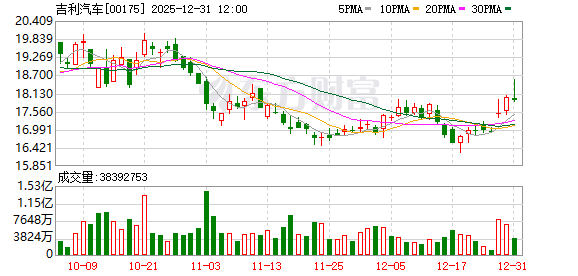
吉利出行业务加速整合!曹操出行斥资3亿收购耀出行和吉利商旅
Guo Ji Jin Rong Bao· 2025-12-31 16:09
Core Viewpoint - Geely's integration efforts are advancing as Caocao Travel announces two strategic acquisitions, acquiring 100% of Yaochuxing for 225 million yuan and 100% of Geely Business Travel for 65 million yuan, totaling nearly 300 million yuan [2][4] Group 1: Company Overview - Caocao Travel, founded in 2015 and headquartered in Suzhou, is a ride-hailing platform incubated by Geely Holding Group and is the second-largest shared mobility platform in China [4] - Yaochuxing is a high-end mobility brand co-created by Geely and Mercedes-Benz, while Geely Business Travel focuses on comprehensive travel management services [4][5] Group 2: Strategic Implications - The acquisition of Yaochuxing will enhance Caocao Travel's high-end service offerings and expand its vehicle lineup, while also providing a platform for international expansion [4][5] - Geely Business Travel's corporate client resources will facilitate cross-selling opportunities, aiding Caocao Travel in rapidly expanding its corporate client base and market share [5] Group 3: Market Position and Financial Performance - Caocao Travel is transitioning from a single ride-hailing platform to a comprehensive service provider, aiming to fill gaps in high-end business travel and corporate travel management [5][7] - In the first half of the year, Caocao Travel reported revenues of 9.456 billion yuan, a 53.5% year-on-year increase, with a net loss reduced by 34% to 330 million yuan and a gross margin improvement to 8.4% [7][8] Group 4: Competitive Landscape - The Chinese internet taxi market is projected to reach 83.4 billion yuan by 2025, with the business taxi segment growing at 18.4%, while Didi holds a leading market share of 62.9% [9] - The acquisition will allow Caocao Travel to directly access luxury vehicle capacity and high-end customer resources, enhancing its competitive edge in the market [10]