
工业互联网

Search documents
“小场景”做出“大文章”!中国向“新”发力 诸多“应用场景”变为“科创胜景”
Yang Shi Wang· 2025-11-11 07:48
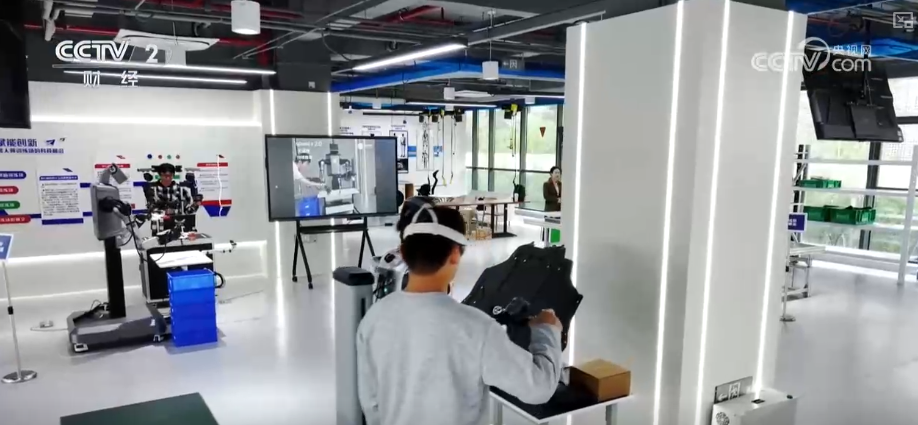
Core Viewpoint - The recent release of the "Implementation Opinions on Accelerating Scene Cultivation and Open Promotion of Large-Scale Application of New Scenes" marks the first systematic deployment at the national level for "scene cultivation and openness," aiming to integrate the digital economy with the real economy through innovative applications in various fields such as office, social, consumption, and entertainment [1][22][25]. Group 1: Scene Cultivation and Application - The "Implementation Opinions" focus on creating a variety of new application scenarios across five key areas, including new fields and new tracks, industrial transformation, industry-specific applications, social governance services, and enriching livelihood application scenarios, totaling 22 key areas for scene cultivation and openness [25][31]. - The document emphasizes the importance of scenes as a critical and scarce innovation resource, serving as a platform for applying and validating new technologies, products, and business models [27][42]. Group 2: Technological Innovations and Robotics - In Anhui Hefei, robots are being trained in real-world scenarios such as industrial production and home services, completing tasks like cooking and moving items, which is expected to shorten the development cycle by 60% and reduce trial-and-error costs [3][8][10]. - The training scenarios utilize physical simulation, virtual reality, and big data modeling to help robots adapt to diverse task requirements, with plans to develop over 30 specific scenarios by the end of 2025 [8][10]. Group 3: Unmanned Systems and Logistics - The "Implementation Opinions" propose the promotion of a comprehensive unmanned system covering land, sea, and air, encouraging the development of application scenarios in tourism, government services, logistics, and satellite services [10][12]. - The integration of artificial intelligence and industrial internet technologies is expected to significantly lower logistics costs, with every 1 yuan reduction in logistics costs translating to a 1 yuan increase in profit for companies [16][19]. Group 4: Future Prospects and Market Potential - The document highlights the potential for large-scale application and promotion of the "full-space unmanned system," which is anticipated to drive the emergence of new industries and business models [18][22]. - With a population of over 1.4 billion and the largest number of R&D personnel globally, China is positioned to leverage its vast market to catalyze new growth dynamics through innovative application scenarios [42][47].

郑栅洁主任主持召开民营企业座谈会 就“十五五”时期服务业发展听取意见建议
清华金融评论· 2025-11-11 05:56
Core Viewpoint - The meeting hosted by the National Development and Reform Commission (NDRC) focused on gathering opinions and suggestions for accelerating the development of the service industry in line with the "14th Five-Year Plan" [3][4]. Group 1: Service Industry Development - The service industry is a crucial component of the national economy, and its development level is a key indicator of a country's economic progress [4]. - There is significant potential for expansion and quality improvement in China's service sector, as highlighted by the recent policies from the 20th Central Committee [4]. - The meeting emphasized the need for enterprises to maintain confidence in development, explore potential business opportunities, and enhance the specialization and value chain of productive services [4]. Group 2: Government Support and Policy Recommendations - Participants suggested that the government should deepen institutional reforms, improve social security and tax support systems, and innovate regulatory methods to better support service industry development [3]. - The NDRC plans to incorporate the valuable suggestions from enterprises into the "14th Five-Year Plan" to create a better development environment for businesses [4]. - The NDRC aims to implement actions that enhance the capacity and quality of the service industry, promoting integration with advanced manufacturing and modern agriculture [4].

国家发展改革委主任郑栅洁主持召开民营企业座谈会 就“十五五”时期服务业发展听取意见建议
Di Yi Cai Jing· 2025-11-11 05:18
Core Insights - The meeting focused on gathering opinions and suggestions from private enterprises regarding the development of the service industry during the "14th Five-Year Plan" period [1][2] - The service industry is recognized as a crucial component of the national economy, with significant potential for expansion and quality improvement [2] Group 1: Service Industry Development - The service industry in China has experienced rapid growth, with an expanding market size and the emergence of new models and formats, providing ample space for high-quality development [1] - There is a strong future demand for services, with enterprises aiming to enhance specialization and refinement in their service offerings to better meet production activities and public needs [1][2] - The government is encouraged to deepen institutional reforms and improve policy support systems, including social security and tax policies, to facilitate better development for enterprises [1] Group 2: Government Initiatives and Support - The Director of the National Development and Reform Commission emphasized the importance of the service industry as a measure of economic development and highlighted the need for enterprises to maintain confidence and seize opportunities [2] - The government plans to incorporate valuable suggestions from enterprises into the "14th Five-Year Plan" outline, aiming to create better conditions and environments for business development [2] - There will be a focus on integrating modern services with advanced manufacturing and modern agriculture to enhance quality, reduce costs, and promote efficient development in the service sector [2]
视频丨工业和信息化部:我国将加速推动多个重点领域应用场景培育
Yang Shi Xin Wen· 2025-11-11 01:05
Group 1 - The Chinese government is accelerating the cultivation of "5G+" application scenarios across various key sectors, targeting small, medium, and large enterprises to enhance 5G factory construction and promote integrated solutions [1] - The Ministry of Industry and Information Technology plans to implement a special action plan for "Artificial Intelligence+" in manufacturing, extending AI applications across R&D, production, management, and operational services [3] - The promotion of "Robotics+" application scenarios will focus on deploying industrial and humanoid robots in factories, particularly in welding, assembly, spraying, and handling tasks [4] Group 2 - The initiative for "Industrial Internet+" aims to develop an action plan for the integration of industrial internet and artificial intelligence, creating an upgraded version of "5G+ Industrial Internet" [6] - The government will promote the development of the Beidou satellite system, enhancing its integration with mobile communication technologies and its application in smart cities and intelligent transportation [7] - The Ministry of Industry and Information Technology is implementing a "chain-network collaboration" project for industrial internet, focusing on key industries such as steel, electricity, shipbuilding, and aviation to promote applications in design, production scheduling, and warehousing [8]
工业和信息化部:我国将加速推动多个重点领域应用场景培育
Yang Shi Xin Wen· 2025-11-11 01:03
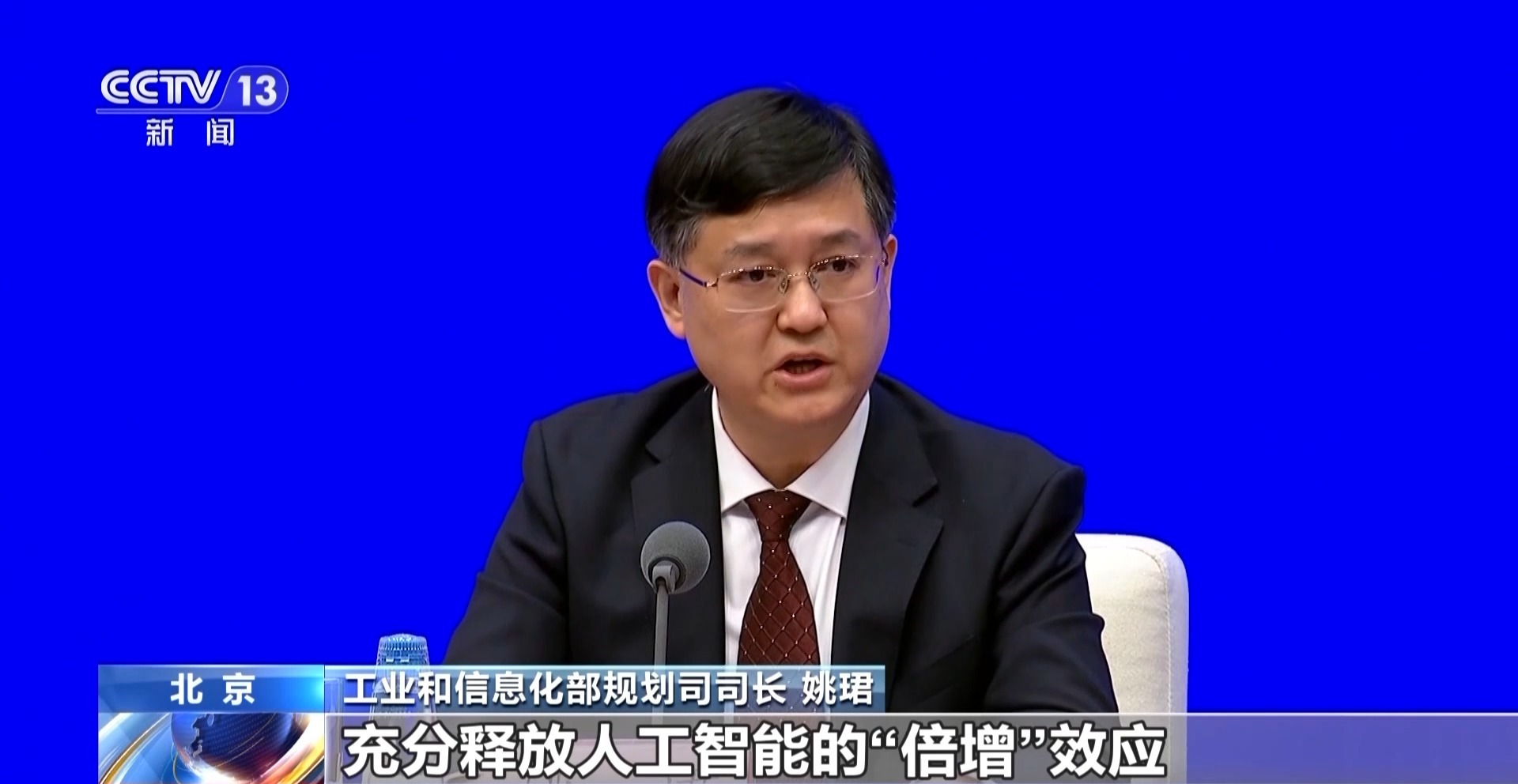
Group 1: 5G+ Application Scenarios - The government will accelerate the cultivation of "5G+" application scenarios, focusing on small, medium, and large enterprises, and enhancing 5G factory construction in key industries [1] - Integrated and centralized solutions will be promoted, with key applications including machine vision quality inspection, remote equipment control, and flexible manufacturing [1] Group 2: Artificial Intelligence+ - The Ministry of Industry and Information Technology will introduce implementation opinions for the "Artificial Intelligence+ Manufacturing" special action, extending AI applications across R&D design, production, management decision-making, and operational services [3] - The initiative aims to deepen AI technology innovation and integration, fully unleashing the "multiplicative" effect of AI [3] Group 3: Robotics+ - The focus will be on promoting industrial and humanoid robots in factories, particularly in welding, assembly, spraying, and handling applications [5] - The initiative will also target complex and harsh production environments in mining, civil explosives, and emergency sectors to enhance intelligent operations in dangerous conditions [5] Group 4: Industrial Internet+ - The government plans to develop an action plan for the integration of industrial internet and AI, aiming to create an upgraded version of "5G+ Industrial Internet" [7] - The implementation of "chain-network collaboration" projects will be accelerated in key industries such as steel, electricity, shipbuilding, and aviation, promoting applications in design, production scheduling, and warehousing [9] Group 5: Beidou+ - The government will research policies to promote the development of the space-time information industry, deepen the application of Beidou in urban pilot projects, and accelerate the integration of Beidou with mobile communication technologies [11] - The focus will be on the deep integration of Beidou in new scenarios such as smart cities and intelligent transportation [11]

2025中国5G+工业互联网大会本月武汉开幕 聚集前沿技术最新趋势共探智造融合新路径
Chang Jiang Shang Bao· 2025-11-10 23:56
Core Insights - The "5G + Industrial Internet" initiative is a key driver for the deep integration of the real economy and the digital economy, providing a Chinese solution for new industrial networks to leapfrog development [1][2] - The 2025 China 5G + Industrial Internet Conference will be held from November 21 to 23 in Wuhan, focusing on cutting-edge technologies and trends in the "5G + Industrial Internet" sector [1][3] - The conference aims to create a national platform for policy release, technology display, industry connection, and achievement transformation, supporting the acceleration of new industrialization and the construction of a modern industrial system [3][4] Event Details - The conference will feature an opening ceremony, forums, parallel sessions, and various activities to explore new paths for industrial transformation and upgrading under the backdrop of "Artificial Intelligence +" [1][3] - Over ten parallel forums will be held, focusing on new information infrastructure, industrial transformation, and technology innovation, among other hot topics [3][4] Policy and Economic Impact - The conference will release significant policy documents and achievements, aligning with the goals set by the 20th National Congress of the Communist Party of China to focus on the real economy [2][3] - The previous five conferences have led to substantial outcomes, including the launch of the first "Spark Chain Network" super node in Wuhan and the signing of over a hundred projects, driving hundreds of billions in investments [2][6] Regional Development - Hubei Province has achieved a 60% cloud adoption rate among industrial enterprises, leveraging 5G and the Industrial Internet as keys to industrial transformation [5][6] - The core industry value added of the digital economy in Hubei reached 283.5 billion yuan, accounting for 9.57% of the GDP [6][7] Infrastructure and Collaboration - Hubei has established two national-level industrial internet platforms and 136 provincial-level platforms, covering key industries such as automotive and electronics [7][8] - The province is focusing on building a collaborative ecosystem that integrates government, research institutions, enterprises, and applications to enhance technology development and market demand alignment [4][8]
首次在国家层面对场景培育开放进行系统部署 打造新技术新产品产业化“加速器”
Ren Min Ri Bao· 2025-11-10 23:35
Core Viewpoint - The State Council of China has issued a systematic deployment plan for scene cultivation and openness, aiming to accelerate the large-scale application of new scenarios, thereby enhancing the integration of technology and industry [1][2]. Group 1: Scene Cultivation and Open Policy - The main objective of the new policy is to leverage China's vast market and diverse application scenarios to facilitate the transformation of technological innovations into productive forces [2][3]. - The policy aims to create a "testing ground" for new technologies and products, acting as an accelerator for emerging industries and a litmus test for institutional reforms [2][3]. Group 2: Focus Areas for Application Scenarios - Key application scenarios include "5G+", "Artificial Intelligence+", "Robotics+", "Industrial Internet+", and "Beidou+" to promote large-scale development in emerging industries [4]. - Specific initiatives involve enhancing 5G factory construction, promoting AI in manufacturing, deploying industrial robots in specific tasks, and implementing industrial internet solutions in key industries [4]. Group 3: Role of Central Enterprises - Central enterprises are seen as a rich resource for scene supply, with efforts to empower the innovation chain through collaboration in key industries [5]. - The State-owned Assets Supervision and Administration Commission has organized numerous activities to facilitate supply-demand matching in application scenarios [5]. Group 4: Technological Advancements and Local Adaptation - The application of cutting-edge technologies is essential for the large-scale deployment of new scenarios, with a focus on strategic emerging industries such as new energy and quantum technology [7]. - The approach emphasizes local adaptation, coordinating regional scene openness based on local resources and reform foundations [7][8]. Group 5: Regional Initiatives - Provinces like Anhui and Guangdong are actively developing application scenarios, with initiatives to create project-based systems and enhance regional collaboration [8]. - Guangdong aims to leverage its early start in application scenarios to drive innovation in areas like intelligent manufacturing and deep-sea resource development [8].
首次在国家层面对场景培育开放进行系统部署 打造新技术新产品产业化“加速器”(权威发布)
Ren Min Ri Bao· 2025-11-10 22:19
Core Viewpoint - The Chinese government has issued a systematic deployment plan for scene cultivation and openness, aiming to accelerate the large-scale application of new scenarios, thereby enhancing the integration of technology and industry [1][2]. Group 1: Scene Cultivation and Open Policy - The main objective of the new policy is to leverage China's vast market and diverse application scenarios to facilitate the transformation of technological innovations into productive forces [2][3]. - The government plans to enhance collaboration and mobilize various stakeholders, focusing on creating a list of application scenarios and supporting the construction of significant integrated scenes [3]. Group 2: Focus Areas for New Scene Applications - Key areas for application scene cultivation include "5G+", "Artificial Intelligence+", "Robotics+", "Industrial Internet+", and "Beidou+" to promote large-scale development of emerging industries [4]. - Specific applications such as machine vision quality inspection, remote equipment control, and flexible manufacturing will be prioritized under the "5G+" initiative [4]. Group 3: Role of Central Enterprises - Central enterprises are seen as crucial players in providing key infrastructure and industry data resources, facilitating the innovation chain through scene and application empowerment [5]. - The State-owned Assets Supervision and Administration Commission has organized numerous activities to promote supply-demand matching in key industry chains [5]. Group 4: Technological Advancements and Local Adaptation - The application of cutting-edge technologies in strategic emerging industries like new energy and quantum technology is essential for driving new economic growth points [7]. - The approach to scene cultivation and openness will be tailored to local conditions, emphasizing regional coordination and unique characteristics [7][8]. Group 5: Regional Initiatives - Provinces like Anhui and Guangdong are actively developing application scenarios, focusing on areas such as quantum information and intelligent manufacturing [8]. - Guangdong aims to leverage its early start in application scenarios to enhance the role of major scenes in developing new productive forces [8].
将分批次推出应用场景项目清单
Zhong Guo Zheng Quan Bao· 2025-11-10 20:09
Core Viewpoint - The Chinese government is accelerating the cultivation and large-scale application of new scenarios through coordinated efforts among various departments and regions, focusing on project implementation and experience sharing [1][2]. Group 1: Implementation Strategies - The National Development and Reform Commission (NDRC) will organize the implementation of the "Implementation Opinions" by launching application scenario project lists in batches, focusing on major comprehensive scenarios and high-value niche scenarios [1][2]. - Emphasis will be placed on collaboration among various stakeholders to ensure effective implementation of the "Implementation Opinions," as the cultivation and application of scenarios involve multiple fields and departments [1][2]. Group 2: Mechanism Improvement - The government will enhance the mechanism for promoting scenario cultivation, leveraging procurement policies to support the application of new technologies, products, and scenarios [2]. - There will be a focus on both "hard construction" (infrastructure and platforms) and "soft innovation" (regulations, systems, and policies) to ensure sustainable development of scenario cultivation and openness [2][3]. Group 3: High-Value Scenario Supply - The State-owned Assets Supervision and Administration Commission (SASAC) will work with relevant departments to strengthen the supply of high-value scenarios and enhance the application capabilities of these scenarios [3]. - Central enterprises, which hold significant infrastructure and industry data resources, will play a crucial role in supplying scenarios [3]. Group 4: Key Application Areas - The Ministry of Industry and Information Technology (MIIT) will accelerate the cultivation of application scenarios in key areas such as "5G+", "Artificial Intelligence+", "Robotics+", "Industrial Internet+", and "Beidou+" [4][5]. - Specific actions include the implementation of the "5G Scale Application" initiative to deepen 5G factory construction across various industries and promote integrated solutions [4]. - For "Artificial Intelligence+", the focus will be on extending AI applications across manufacturing processes, enhancing innovation and integration [4]. - The "Robotics+" initiative aims to expand the application of robots in various industrial settings, particularly in hazardous environments [4]. - The "Industrial Internet+" initiative will promote the integration of industrial internet with key industries, enhancing operational efficiency [5]. - The "Beidou+" initiative will support the development of spatial information industries and promote the integration of Beidou technology in smart city applications [5].
我国将加速推动人工智能+领域应用场景培育
Bei Jing Shang Bao· 2025-11-10 15:53
Core Viewpoint - The implementation of the "Implementation Opinions" aims to accelerate the cultivation and opening of application scenarios in key areas such as 5G, artificial intelligence, robotics, industrial internet, and Beidou, creating significant business opportunities through deep integration of technology and industry, precise matching of supply and demand, and collaborative innovation of systems and elements [1][2][3] Group 1: Key Areas of Focus - The "Implementation Opinions" will focus on five main areas: creating new application scenarios in emerging fields, building new business models for industrial transformation, launching application scenarios in various industries, innovating comprehensive application scenarios for social governance, and enriching application scenarios in the livelihood sector [2][3] - The emphasis on "5G+", "AI+", "robotics+", "industrial internet+", and "Beidou+" indicates a shift in policy direction from "technological breakthroughs" to "application deepening," aiming to optimize the development environment for new industries and facilitate the integration of small and medium enterprises into the innovation chain [4][5] Group 2: Opportunities for Private Enterprises - The "Implementation Opinions" encourage the participation of private enterprises in scenario construction, marking a significant policy shift that recognizes their role as core participants rather than passive recipients of technology [5][6] - Measures to promote scenario openness include enhancing the demonstration role of state-owned enterprises and providing opportunities for social capital and private enterprises to engage in public scenario projects, thereby lowering policy barriers and expanding funding channels [5][6] Group 3: Government and Central Enterprises' Role - The State-owned Assets Supervision and Administration Commission (SASAC) will guide central enterprises to leverage their scenario advantages and collaborate with various ownership enterprises, universities, and research institutions to build industrial ecosystems [6][7] - Central enterprises have already conducted 45 specialized activities and published over 10,000 supply-demand matching lists, engaging nearly 15,000 entities in the industrial chain, which enhances cooperation space for various market entities in technology application and industrial integration [6][7]