
新型储能

Search documents
广东新能源产业产值规模已达1.1万亿元
Nan Fang Nong Cun Bao· 2025-07-30 09:31
Core Viewpoint - The development of the green low-carbon industry in Guangdong is crucial for achieving carbon peak and carbon neutrality goals, and it serves as a new driving force for high-quality development in the province, with significant strategic importance and market potential [2][3][4]. Group 1: Industry Scale and Achievements - The total output value of the new energy industry in Guangdong is projected to reach 1.1 trillion yuan in 2024 [14]. - Guangdong has created 400 national-level green factories and established the country's first 1 million-ton hydrogen-based vertical furnace project [10][9]. - The total area of green buildings in the province has exceeded 1 billion square meters, with over 95% of new buildings being green [11]. Group 2: Renewable Energy Development - Guangdong has developed a complete industrial chain for offshore wind power, with an installed capacity exceeding 12 million kilowatts, ranking first in the country [13]. - The province's nuclear power installed capacity is also the highest in the nation [13]. - The new energy sector includes offshore wind power, new energy storage, photovoltaics, and hydrogen energy [14]. Group 3: Electric Vehicle and Battery Industry - The automotive industry in Guangdong is expected to achieve revenue exceeding 1.28 trillion yuan in 2024 [16]. - The province is nurturing globally competitive companies in electric and intelligent vehicles, including BYD, GAC Group, and Xpeng Motors, as well as battery manufacturers like Yiwei Lithium Energy and Xinwanda [17][19]. Group 4: Energy Storage and Recycling - The revenue of the new energy storage industry in Guangdong is projected to be around 400 billion yuan in 2024, with an installed capacity of 3.5 million kilowatts, a year-on-year increase of 114% [21]. - The province's energy-saving and recycling technology and service industry accounts for about 10% of the national scale, with several companies recognized in the top 50 environmental enterprises in China [22][24]. Group 5: Future Development Strategies - Guangdong aims to leverage the opportunity to build a world-class green low-carbon industrial cluster in the Greater Bay Area, enhancing its development capabilities and promoting a comprehensive green transformation of the economy and society [29][31]. - The province plans to improve the policy framework for green low-carbon industry development and focus on high-growth and strategic industries [32][34]. - There will be an emphasis on technological innovation and demonstration applications in the green low-carbon sector [35][36].





“技术+资本+场景”全链条赋能 成都高新区推进新型储能示范项目建设
Di Yi Cai Jing· 2025-07-25 09:56
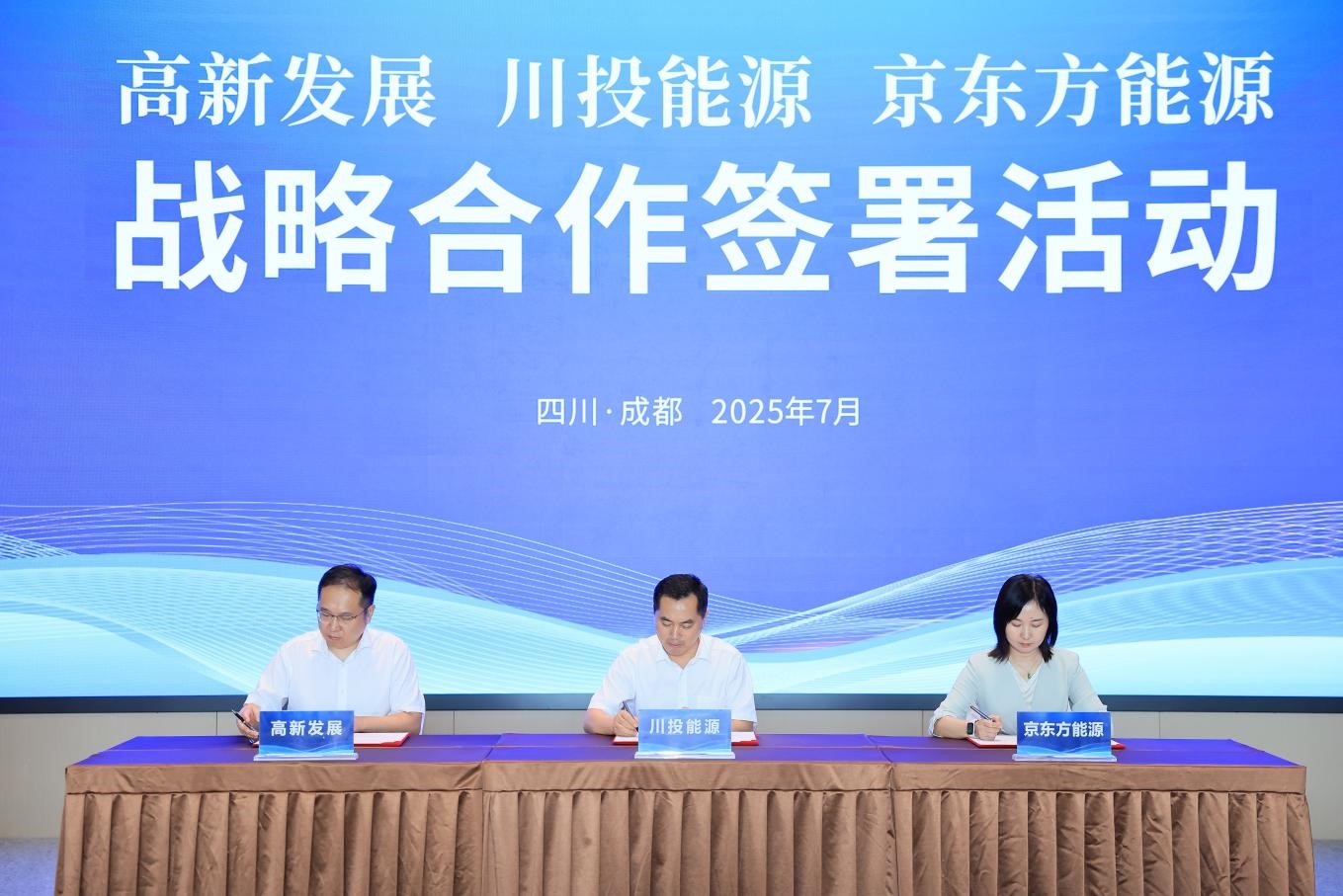
Group 1 - The collaboration focuses on developing new electrochemical energy storage and virtual power plant projects in Sichuan, enhancing energy supply stability and reducing electricity costs for the Chengdu High-tech Zone's zero-carbon park initiative [3][4] - The project aims to support Sichuan's goal of reaching 5 million kilowatts of new energy storage capacity by 2027, serving as a benchmark for large-scale energy storage development in the region [4] - Chengdu High-tech Zone has established a "4+1" new energy and materials industry framework, including digital energy and new energy storage, with ongoing projects like the Huawei Clean Energy Innovation Center [5] Group 2 - The partnership integrates capital operation capabilities, technological advantages, and localized service resources to create a comprehensive "technology + capital + scenario" empowerment model [4] - The project will act as a flexible and adjustable resource for the Chengdu virtual power plant, addressing peak electricity demand and contributing to grid stability [4] - Chengdu High-tech Zone aims to build a replicable digital energy application model, enhancing the attraction of upstream and downstream enterprises to the region [5]


中国电建(601669) - 中国电力建设股份有限公司2025年1月至6月主要经营情况公告
2025-07-21 10:15
中国电力建设股份有限公司 2025 年 1 月至 6 月主要经营情况公告 本公司董事会及全体董事保证本公告内容不存在任何虚假记载、误导性陈述或 者重大遗漏,并对其内容的真实性、准确性和完整性承担法律责任。 现将中国电力建设股份有限公司2025年1月至6月主要经营情况公布如下,供投 资者参阅。 一、按业务类型统计 证券代码:601669 股票简称:中国电建 公告编号:临 2025-039 | 业务类型 | 新签项目数量(个) | 新签合同金额 | 同比增减 | | --- | --- | --- | --- | | 能源电力 | 2939 | 4313.88 | 12.27% | | 水电 | 576 | 1004.55 | 66.67% | | 其中:抽水蓄能 | 292 | 413.81 | 12.14% | | 风电 | 652 | 1429.02 | 68.78% | | 太阳能发电 | 616 | 1137.43 | -28.55% | | 火电 | 272 | 196.54 | -62.03% | | 新型储能 | 96 | 209.14 | / | | 其他 | 727 | 337.20 | / ...

广东省工信厅庄乐从:加快发展具身机器人产业 将低空经济作为重点产业来抓
news flash· 2025-07-16 09:21
Core Viewpoint - Guangdong Province is focusing on accelerating the development of the embodied robotics industry and prioritizing the low-altitude economy as a key sector for growth [1] Group 1: Industry Development Strategies - The province aims to build a modern industrial system supported by advanced manufacturing [1] - There is an emphasis on using digital and green technologies to upgrade traditional industries such as petrochemicals, steel, food and beverage, textiles, and home appliances [1] - The province plans to promote innovation in the chemical new materials industry [1] Group 2: Key Industries and Focus Areas - Guangdong will consolidate and expand its advantages in the new energy vehicle industry [1] - The province is set to innovate in new energy storage and photovoltaic industries [1] - The low-altitude economy will be treated as a priority industry [1] Group 3: Future Industry Layout - The province will implement an "AI+" initiative to integrate artificial intelligence into various sectors [1] - There is a forward-looking layout for future industries such as biomanufacturing, quantum technology, embodied intelligence, and 6G [1]

“新质”领航,点亮“创新高地”麒麟坐标
Xin Hua Ri Bao· 2025-07-13 21:43
Core Insights - Nanjing Qilin Science and Technology Park has evolved over 15 years, focusing on innovation and technology self-reliance, supported by over 1,000 top talents from the Chinese Academy of Sciences [1] - The park aims to become a national hub for technological innovation, emphasizing the integration of scientific research and industrial innovation, particularly in artificial intelligence and digital economy sectors [1][4] Group 1: Technological Infrastructure - The Nanjing Intelligent Computing Center is the largest domestic computing center in the Yangtze River Delta, facilitating the application of DeepSeek in retail [2] - Major technological infrastructure projects include the "Information Superhighway" integrated computing infrastructure, connecting data centers across six cities [2][3] - The first domestic 100-megawatt compressed air energy storage system is under development, supporting large-scale energy storage technology [3] Group 2: Talent and Innovation - The park has attracted over 1,000 talents, with significant R&D investments and patent applications, ranking second in the city for innovation metrics [5][6] - The establishment of various research institutions and partnerships with universities and leading enterprises enhances the park's R&D capabilities [6] Group 3: Industry Development - The park hosts around 162 "CAS system" enterprises, with a total valuation exceeding 20 billion yuan and annual revenues nearing 3.5 billion yuan [8] - Companies like Tong'er Electronics and Nanjing KOWE Communication Technology have achieved significant revenue through innovative products and services [7][8] Group 4: Technology Transfer and Commercialization - The "5V integration" model facilitates the transformation of scientific research into marketable products, exemplified by the "Dexterous Hand" robot project [9][10] - The park has implemented a comprehensive service platform to support the entire cycle of technology transfer, enhancing collaboration and resource sharing among stakeholders [10]

让知识产权更好赋能东北振兴
Jing Ji Ri Bao· 2025-07-11 22:15
Group 1 - The effective invention patents in Northeast China reached 195,000 by the end of April this year, representing a year-on-year growth of 10.2% [1] - The effective registered trademarks in the region totaled 2.161 million, with a year-on-year increase of 7.7% [1] - The total number of geographical indication products recognized reached 273, with 556 registrations approved for collective and certification trademarks, accounting for nearly one-tenth of the national total [1] Group 2 - Intellectual property (IP) is becoming a crucial mechanism for driving technological innovation and enhancing industrial competitiveness in Northeast China [1][2] - The region is leveraging its manufacturing base and technical talent to address issues such as technological obsolescence and low added value in traditional industries through IP [2] - Knowledge property operation centers have been established in traditional industries like dairy and grass, promoting the transformation and application of patent achievements in green manufacturing and ecological agriculture [2] Group 3 - The Northeast region has natural advantages for developing strategic emerging industries, such as artificial intelligence and big data, due to its climate and resource conditions [3] - Eight national-level IP protection and rapid response centers have been established in Northeast China, focusing on key areas like high-end equipment manufacturing and biomedicine [3] - By the end of 2024, the effective invention patents in strategic emerging industries in the region are expected to reach 46,000, showing significant growth compared to the previous year [3] Group 4 - In the process of rural revitalization, IP is providing core added value for agricultural products to enter high-end markets [4] - The region is implementing a brand protection strategy, with notable brands like Wuchang rice and Changbai Mountain ginseng gaining national recognition [4] - Thirteen national-level geographical indication protection demonstration zones have been established, promoting the transformation of geographical indications from "regional labels" to "industrial clusters" [4]
重点园区多项首创性项目集群落地
Bei Jing Qing Nian Bao· 2025-07-10 17:56
Group 1: Key Achievements in "Two Zones" Construction - The "Two Zones" initiative has led to the inclusion of 945 projects in Xicheng District, with a total investment of 768.23 billion [1] - Financial projects account for 22.01% of the total number of projects, with a total investment of 620.96 billion, representing 80.83% of the total investment [1] - The Lize Financial Business District has seen an increase in enterprises from 572 to over 1,300, with nearly 70% being finance and technology companies [1] Group 2: Policy Innovations and Support Mechanisms - Xicheng District has introduced several innovative service mechanisms and local policies to support financial industry expansion, including the "Golden Ten" policies [1] - The district has established a policy "golden triangle" to facilitate financial reform and opening-up tasks [1] Group 3: Focus on Digital Economy and Emerging Technologies - Shijingshan District is fostering a digital economy through joint measures to create a "policy test field" for future digital space innovation [2] - The district aims to develop an international exhibition town focused on sci-fi, metaverse, and artificial intelligence [2] Group 4: Development of Green Energy Industry - Fangshan District is building a green energy industry system centered on new energy storage and hydrogen energy [3] - The district is focusing on developing a complete hydrogen energy industry chain, including manufacturing, storage, transportation, and technology research [3]
多点开花!“两区”重点园区跑出高质量发展“北京速度”
Bei Jing Ri Bao Ke Hu Duan· 2025-07-10 12:33
Group 1: Economic Development and Growth - The "Two Zones" initiative has led to high-quality development in key parks, supporting regional economic transformation and growth [1] - Financial sector in Xicheng District has seen an average annual growth of 6.9%, projected to reach 279.7 billion yuan in 2024, accounting for 34.3% of the city's total [1] - The asset scale of financial institutions in Xicheng is expected to grow at an average annual rate of 6.0%, reaching 156.05 trillion yuan in 2024, representing 70.3% of the city's total [1] Group 2: Industry and Innovation - Lize Financial Business District has increased its number of enterprises from 572 to over 1,300, with a double-digit annual tax revenue growth [2] - Shijingshan's Shougang Park has attracted 48 foreign-funded enterprises, achieving an annual output value exceeding 73 billion yuan [2] - Fangshan District is developing a green energy industry system, focusing on new energy storage and hydrogen energy sectors [3] Group 3: Technological Advancements - Zhongguancun Yanqing Park has established itself as a hub for low-altitude technology, particularly in drone development, with over 100 leading enterprises [4] - The drone industry in the park experienced a 47.7% year-on-year growth in output value and a 50.2% increase in revenue [4]
“前店后厂”模式加速:北京房山绿色能源与新材料企业崛起
2 1 Shi Ji Jing Ji Bao Dao· 2025-07-08 08:50
Core Viewpoint - Fangshan District in Beijing is emerging as a hub for green energy and new materials industries, driven by government support and innovative business models, particularly the "front store, back factory" model, which accelerates technology commercialization [1][2][11]. Group 1: Industry Development - Fangshan focuses on two main industries: green energy and new materials, with a target industrial output value of 700.2 billion yuan in 2024, accounting for 69.1% of the total industrial output [1]. - The district is home to several innovative companies, including Aishangjia Technology, which applies graphene technology in various products, and Weilan New Energy, which has developed high-performance hybrid solid-liquid batteries [1][7]. Group 2: Company Highlights - Aishangjia Technology, established in 2013, is recognized as a national-level "little giant" enterprise, specializing in graphene thermal management technology with over 80 patents [5][6]. - Weilan New Energy, a unicorn company founded by prominent researchers, focuses on high-energy-density batteries and has received significant investments, achieving a valuation exceeding 15 billion yuan [9][10]. Group 3: Innovative Business Models - The "front store, back factory" model in Fangshan allows companies to streamline the transition from research to production, significantly reducing the time required for technology implementation by 50% [2][11]. - This model has been integrated into the city's development plans and is supported by local government initiatives, enhancing the overall business environment for tech companies [11][12]. Group 4: Government Support - The local government provides comprehensive support, including talent policies and financial resources, to foster innovation and business growth in the region [11][12]. - Fangshan has established a complete industrial ecosystem for new materials, leveraging a 10 billion yuan fund and extensive industrial space to attract and nurture upstream and downstream enterprises [6][12].
广东将打造世界级新一代电子信息产业集群
Nan Fang Ri Bao Wang Luo Ban· 2025-07-07 08:23
Group 1 - Guangdong aims to build a world-class new generation electronic information industry cluster and a new trillion-level industry cluster for ultra-high-definition video [1][2] - The province will promote the rapid development of the new energy storage industry as a strategic pillar for manufacturing [1][2] - The "Guangdong Strong Chip" project will be implemented to establish China’s third integrated circuit hub, along with policies to support technology breakthroughs and application [1] Group 2 - The "China (Guangdong) Ultra HD Television Pioneer Action Plan" will be launched to accelerate the integration of television sets and set-top boxes [2] - Guangdong will coordinate resources to support the construction of innovation centers and cultivate new energy storage enterprises [2] - Five major actions will be promoted to seize opportunities in artificial intelligence development, aiming to create a global innovation hub for AI and robotics [2] Group 3 - The Guangdong Electronic Information Industry Association emphasizes the importance of collaboration between large enterprises and SMEs to enhance innovation capabilities [2] - The association will strengthen policy transmission, resource integration, and value creation to promote industry exchanges and cooperation [2]