
水泥制造

Search documents
金隅冀东水泥集团股份有限公司 第十届董事会第二十次会议决议公告
Zhong Guo Zheng Quan Bao - Zhong Zheng Wang· 2025-10-12 23:21
登录新浪财经APP 搜索【信披】查看更多考评等级 证券代码:000401 证券简称:金隅冀东公告编号:2025-078 金隅冀东水泥集团股份有限公司 第十届董事会第二十次会议决议公告 本公司及董事会全体成员保证信息披露的内容真实、准确、完整,没有虚假记载、误导性陈述或重大遗 漏。 金隅冀东水泥集团股份有限公司(以下简称公司或本公司)第十届董事会第二十次会议于2025年10月11 日以通讯方式召开,会议应参加表决董事8名,实际参加表决董事8名,高级管理人员列席会议。会议由 董事长刘宇先生召集并主持。会议的召集、召开符合《中华人民共和国公司法》和《公司章程》的有关 规定。会议对所列议案进行了审议,经表决形成如下决议: 一、审议并通过《关于提名第十届董事会非独立董事的议案》 提名葛栋先生(简历详见附件)为公司第十届董事会非独立董事候选人,任期与第十届董事会任期一 致。 葛栋先生的任职资格已经公司董事会提名委员会审核通过。 表决结果:8票同意 0票反对 0票弃权 该议案尚需提请公司股东会审议通过。 二、审议并通过《关于召开2025年第四次临时股东会的议案》 表决结果:8票同意 0票反对 0票弃权 具体内容详见公司同日 ...

行业周报:政策继续推动行业供给转型,积极布局建材机会-20251012
KAIYUAN SECURITIES· 2025-10-12 13:42
Investment Rating - The investment rating for the building materials industry is "Positive" (maintained) [1] Core Viewpoints - The Ministry of Housing and Urban-Rural Development has emphasized deepening reforms in the construction industry, focusing on industrialization, digitalization, and greening as development paths. This aims to transition the construction industry from a traditional extensive model to a refined and intelligent one, with key measures including the promotion of prefabricated buildings and the application of construction robots. The ultimate goal is to achieve high-quality development and enhance the quality, efficiency, and sustainability of "Chinese construction" [1] - The report highlights the long-term investment value of the building materials sector, particularly in green building materials and intelligent construction, which are expected to open new growth spaces due to the profound changes driven by the "three transformations" [1] - Recommended stocks in the consumer building materials sector include: Sankeshu (channel penetration, retail expansion), Dongfang Yuhong (waterproof leader, optimized operational structure), Weixing New Materials (high-quality operations, high retail business proportion), and Jianlang Hardware. Beneficiary stocks include: Beixin Building Materials (gypsum board leader, diversified expansion in coatings and waterproof sectors) [1] Summary by Sections Market Overview - The building materials index increased by 2.66% from October 6 to October 10, 2025, outperforming the CSI 300 index by 3.18 percentage points. Over the past three months, the CSI 300 index rose by 14.91%, while the building materials index increased by 14.73%, indicating a slight underperformance of 0.18 percentage points. In the past year, the CSI 300 index rose by 16.55%, and the building materials index increased by 21.26%, outperforming the CSI 300 index by 4.71 percentage points [2][11] Cement Sector - As of October 10, 2025, the average price of P.O42.5 bulk cement nationwide was 287.21 yuan/ton, a decrease of 0.26% month-on-month. The price trends varied by region, with increases in Northeast (+0.60%) and Central China (+1.32%), while declines were noted in North China (-1.09%) and East China (-1.57%) [22][25] - The clinker inventory ratio was stable at 67.40% [23] - The report tracks the valuation of listed companies in the cement sector, indicating a need for monitoring [72] Glass Sector - The average spot price of float glass as of October 10, 2025, was 1301.65 yuan/ton, reflecting a week-on-week increase of 0.72%. However, the futures price decreased by 2.86% [76][77] - National float glass inventory increased by 696 million weight boxes, a rise of 13.71% [78][79] Fiberglass Sector - The market price for non-alkali 2400tex direct yarn ranged from 3400 to 4000 yuan/ton, with variations depending on the manufacturer [4] Consumer Building Materials - As of October 10, 2025, the price of crude oil was 65.05 USD/barrel, down 3.59% week-on-week. The price of asphalt remained stable at 4570 yuan/ton, while acrylic acid and titanium dioxide prices showed slight declines [4]


株洲渌口税务:绿色税制助发展 税务领航促升级
Sou Hu Cai Jing· 2025-10-11 08:29
Core Insights - The article highlights the innovative approach of Huaxin Cement (Zhuzhou) Co., Ltd. in transforming waste materials into alternative fuels, aligning with green tax policies and optimizing energy structure [1] - The company has established a comprehensive cement production and sales system, contributing to the cement industry cluster in Central and Southern China [1] - The local tax authority has implemented targeted tax reduction policies to encourage resource utilization and energy substitution, promoting a cycle of environmental, economic, and tax benefits [1] Group 1 - Huaxin Cement (Zhuzhou) Co., Ltd. is utilizing waste materials as alternative fuels in cement production, enhancing energy efficiency and benefiting from tax incentives [1] - The company is part of Huaxin Cement Co., Ltd. and has developed a strong presence in the cement manufacturing industry [1] - The local tax bureau has introduced a "reduction in emissions equals reduction in burden" strategy to guide companies in achieving new revenue growth through waste resource utilization [1] Group 2 - Since 2020, over 200 enterprises in the Liku District of Zhuzhou have benefited from energy-saving and environmental tax incentives, with tax reductions exceeding 70 million yuan [2] - The tax authority aims to further integrate tax functions to support high-quality economic development and ecological civilization [2]
能繁母猪存栏微降,浮法玻璃盈利同比转正:——金融工程行业景气月报20251010-20251010
EBSCN· 2025-10-10 11:27
- The report utilizes a methodology from the industry rotation series to track the configuration signals and business indicators of various industries, including coal, livestock farming, steel, structural materials, and fuel refining industries [9] Quantitative Models and Construction Methods Coal Industry Model - **Model Name**: Coal Industry Profit and Revenue Growth Estimation Model - **Model Construction Idea**: The model estimates monthly revenue and profit growth of the coal industry based on the changes in price and production capacity factors [10] - **Model Construction Process**: - The long-term contract mechanism for thermal coal determines the sales price for the next month based on the price index of the last month - Monthly revenue and profit growth are estimated using the year-on-year changes in price factors and production capacity factors [10] - **Model Evaluation**: The model predicts that the coal industry profit for October 2025 will continue to decline year-on-year due to coal prices being lower than the same period last year [14] Livestock Farming Model - **Model Name**: Livestock Supply and Demand Gap Estimation Model - **Model Construction Idea**: The model uses the relationship between the number of breeding sows and the quarterly pig slaughter rate to estimate the supply-demand gap for pigs six months later [15] - **Model Construction Process**: - The model assumes a stable proportional relationship between quarterly pig slaughter and the number of breeding sows six months prior - Formula: $ \text{Slaughter Coefficient} = \frac{\text{Quarterly Pig Slaughter}}{\text{Breeding Sow Inventory (lagged 6 months)}} $ [15] - Potential production capacity after 6 months is calculated as: $ \text{Potential Production Capacity (6 months later)} = \text{Breeding Sow Inventory (current month)} \times \text{Slaughter Coefficient (6 months prior)} $ [16] - Potential demand after 6 months is calculated as: $ \text{Potential Demand (6 months later)} = \text{Quarterly Pig Slaughter (6 months prior)} $ [16] - **Model Evaluation**: Historical experience shows that the slaughter coefficient method effectively identifies pig price upward cycles [16] Steel Industry Model - **Model Name**: Steel Industry Profit and Unit Profit Estimation Model - **Model Construction Idea**: The model predicts monthly profit growth and calculates unit profit for the steel industry by considering comprehensive steel prices and cost indicators such as iron ore, coke, pulverized coal, and scrap steel [18] - **Model Construction Process**: - Comprehensive steel prices and cost indicators are used to predict monthly profit growth - Unit profit is calculated based on the difference between steel prices and costs [18] - **Model Evaluation**: The model predicts that the steel industry profit for September 2025 will grow year-on-year, but the PMI rolling 12-month average remains flat, maintaining a neutral configuration viewpoint [23] Structural Materials and Building Engineering Model - **Model Name**: Glass and Cement Industry Profit Tracking Model - **Model Construction Idea**: The model tracks profitability changes in the glass and cement manufacturing industries using price and cost indicators, and designs configuration signals based on profitability changes [25] - **Model Construction Process**: - Price and cost indicators are used to track profitability changes - Configuration signals are designed based on profitability changes [25] - **Model Evaluation**: - Glass industry profit turned positive year-on-year in September 2025, leading to an upgrade to a positive configuration signal [30] - Cement industry profit remained flat year-on-year, and no positive signals were observed in new housing starts, maintaining a neutral configuration viewpoint [30] Fuel Refining and Oil Services Model - **Model Name**: Fuel Refining and Oil Services Profit and Configuration Signal Model - **Model Construction Idea**: The model estimates industry profit growth and cracking spreads based on changes in refined fuel prices and crude oil prices, and designs configuration signals based on oil prices, cracking spreads, and new drilling changes [31] - **Model Construction Process**: - Refined fuel price changes and crude oil price changes are used to estimate industry profit growth and cracking spreads - Configuration signals are designed based on oil prices, cracking spreads, and new drilling changes [31] - **Model Evaluation**: - The model predicts that the fuel refining industry profit for September 2025 will grow year-on-year due to lower inventory costs from recent low oil prices [31] - Observations show that oil prices in September 2025 were lower than the same period last year, maintaining a neutral configuration viewpoint for the fuel refining and oil services industries [37][38] Model Backtesting Results Coal Industry Model - **Profit Growth**: Predicted to continue declining year-on-year in October 2025 due to lower coal prices compared to the same period last year [14] Livestock Farming Model - **Breeding Sow Inventory**: 4,038 million heads as of August 2025, slightly decreased month-on-month [17] - **Potential Production Capacity (26Q1)**: 19,361 million heads [17] - **Potential Demand (26Q1)**: 19,476 million heads [17] - **Supply-Demand Balance**: Slightly tight [17] Steel Industry Model - **Profit Growth**: Predicted to grow year-on-year in September 2025 [23] - **PMI Rolling Average**: Remained flat for 12 months, not exceeding the threshold [23] Structural Materials and Building Engineering Model - **Glass Industry Profitability**: Turned positive year-on-year in September 2025 [30] - **Cement Industry Profitability**: Remained flat year-on-year in September 2025 [30] - **Manufacturing PMI Rolling Average**: Remained flat for 12 months [30] - **Housing Sales Area**: Observed a year-on-year decline in August 2025 [30] Fuel Refining and Oil Services Model - **Fuel Refining Industry Profitability**: Predicted to grow year-on-year in September 2025 due to lower inventory costs [31] - **Oil Price**: Observed to be lower than the same period last year in September 2025 [37] - **New Drilling Activity**: No significant year-on-year changes observed in the US [38]
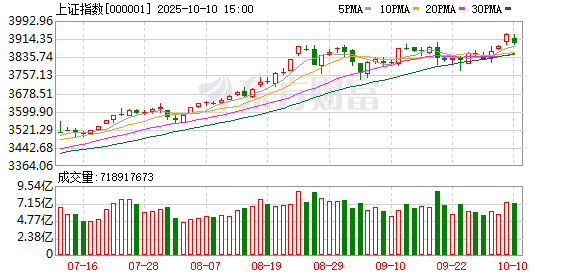
A股调整 沪指失守3900点!半导体芯片股集体重挫 水泥股逆市走强
Zhong Guo Ji Jin Bao· 2025-10-10 08:11
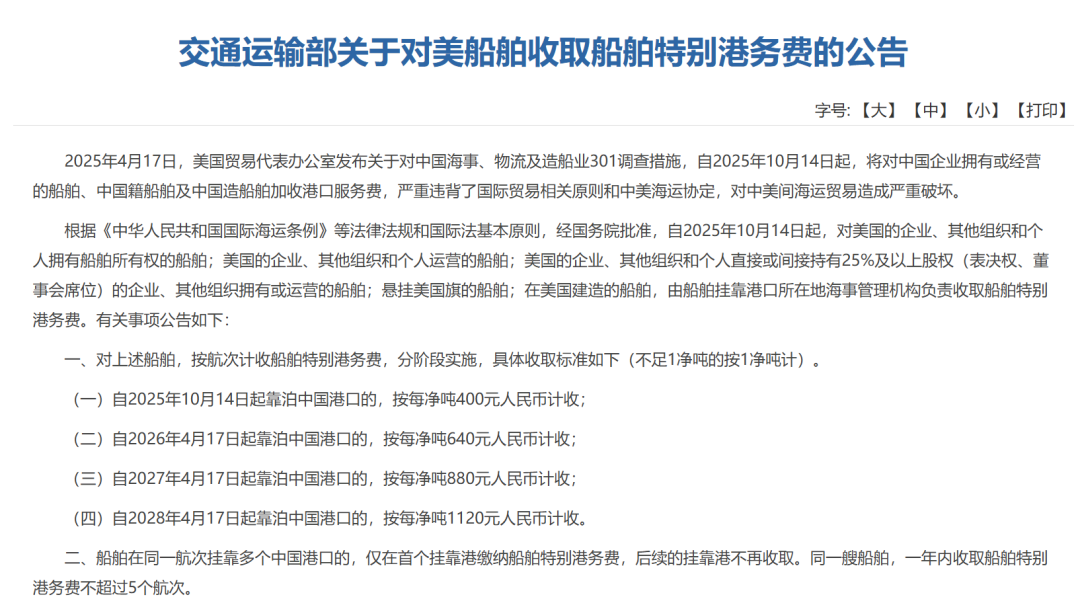
今天的市场大跌,你们还好吗? 一起回顾下发生了什么事情。 交通运输部:对美船舶收取船舶特别港务费 10月10日,交通运输部发布关于对美船舶收取船舶特别港务费的公告。 2025年4月17日,美国贸易代表办公室发布关于对中国海事、物流及造船业301调查措施,自2025年10月14日起,将对中国企业拥有或经营的船舶、中国籍 船舶及中国造船舶加收港口服务费,严重违背了国际贸易相关原则和中美海运协定,对中美间海运贸易造成严重破坏。 根据《中华人民共和国国际海运条例》等法律法规和国际法基本原则,经国务院批准,自2025年10月14日起,对美国的企业、其他组织和个人拥有船舶所 有权的船舶;美国的企业、其他组织和个人运营的船舶;美国的企业、其他组织和个人直接或间接持有25%及以上股权(表决权、董事会席位)的企业、 其他组织拥有或运营的船舶;悬挂美国旗的船舶;在美国建造的船舶,由船舶挂靠港口所在地海事管理机构负责收取船舶特别港务费。有关事项公告如 下: 一、对上述船舶,按航次计收船舶特别港务费,分阶段实施,具体收取标准如下(不足1净吨的按1净吨计)。 二、船舶在同一航次挂靠多个中国港口的,仅在首个挂靠港缴纳船舶特别港务费,后续 ...

突发!中美,大消息!
Zhong Guo Ji Jin Bao· 2025-10-10 07:51
交通运输部:将对美船舶收取船舶特别港务费 中国基金记者 泰勒 大家好,今天的市场大跌,你们还好吗? 一起回顾下发生了什么事情。 交通运输部:对美船舶收取船舶特别港务费 10月10日,交通运输部发布关于对美船舶收取船舶特别港务费的公告。 2025年4月17日,美国贸易代表办公室发布关于对中国海事、物流及造船业301调查措施,自2025年10月14日起,将对中国企业拥有或经营的船舶、中国籍 船舶及中国造船舶加收港口服务费,严重违背了国际贸易相关原则和中美海运协定,对中美间海运贸易造成严重破坏。 根据《中华人民共和国国际海运条例》等法律法规和国际法基本原则,经国务院批准,自2025年10月14日起,对美国的企业、其他组织和个人拥有船舶所 有权的船舶;美国的企业、其他组织和个人运营的船舶;美国的企业、其他组织和个人直接或间接持有25%及以上股权(表决权、董事会席位)的企业、 其他组织拥有或运营的船舶;悬挂美国旗的船舶;在美国建造的船舶,由船舶挂靠港口所在地海事管理机构负责收取船舶特别港务费。有关事项公告如 下: 一、对上述船舶,按航次计收船舶特别港务费,分阶段实施,具体收取标准如下(不足1净吨的按1净吨计)。 (一) ...
工信部等6部门联合助力“建材行业稳增长”,建材ETF(516750)盘中涨超3%!
Mei Ri Jing Ji Xin Wen· 2025-10-10 07:33
Core Viewpoint - The cement and building materials sector has shown significant upward movement, with the building materials ETF (516750) experiencing a rise of 3.11% at one point and a current increase of 2.97%, marking a four-day consecutive gain of over 5.5% [1] Group 1: Market Performance - Over 95% of the constituent stocks in the index are in the green, with notable stocks such as Huaxin Cement, Jinyu Group, and Haiou Zhugong hitting the 10% daily limit up [1] - The building materials ETF closely tracks the CSI All-Share Building Materials Index, which consists of stocks from the building materials industry [1] Group 2: Policy and Industry Outlook - The Ministry of Industry and Information Technology, along with five other departments, has jointly issued the "Building Materials Industry Stabilization Growth Work Plan (2025-2026)", aiming to effectively enhance profitability as a primary goal for 2025-2026 [1] - The plan emphasizes strengthening industry management and promoting a survival of the fittest approach as key initiatives [1] - Analysts believe that the cement sector may have reached a bottoming point, with improvements expected in the second half of the year due to dual support from supply-side production restrictions and demand-side infrastructure investments [1] Group 3: Sector Composition - According to the Shenwan industry classification, the top three sectors within the building materials ETF are cement manufacturing (42.2%), other building materials (11.7%), and waterproof materials (10.5%) [1]
海螺水泥涨2.03%,成交额4.87亿元,主力资金净流入3607.75万元
Xin Lang Cai Jing· 2025-10-10 02:33
Core Viewpoint - Conch Cement's stock price has shown a positive trend, with a year-to-date increase of 5.69% and a recent uptick in trading activity, indicating strong market interest and potential investor confidence [2][3]. Group 1: Stock Performance - On October 10, Conch Cement's stock rose by 2.03%, reaching a price of 24.13 CNY per share, with a trading volume of 4.87 billion CNY and a turnover rate of 0.51% [1]. - The stock has increased by 5.69% year-to-date, 5.05% over the last five trading days, 3.03% over the last 20 days, and 7.68% over the last 60 days [2]. Group 2: Financial Performance - For the first half of 2025, Conch Cement reported a revenue of 41.292 billion CNY, a year-on-year decrease of 9.38%, while the net profit attributable to shareholders increased by 31.34% to 4.368 billion CNY [2]. Group 3: Shareholder Information - As of June 30, 2025, the number of shareholders for Conch Cement was 224,100, an increase of 7.12% from the previous period [2]. - The company has distributed a total of 83.985 billion CNY in dividends since its A-share listing, with 17.922 billion CNY distributed over the last three years [3]. Group 4: Institutional Holdings - As of June 30, 2025, major shareholders include Hong Kong Central Clearing Limited, holding 193 million shares, and several ETFs such as Huatai-PB CSI 300 ETF and E Fund CSI 300 ETF, which have increased their holdings [3].
金隅集团早盘涨超7% 公司积极推动新型建材“出海”海外多地新增重大工程项目
Zhi Tong Cai Jing· 2025-10-10 02:00
Group 1 - Jinju Group's stock price increased by over 7% in early trading, currently up 4.71% at HKD 0.89, with a trading volume of HKD 62.8 million [1] - The company is actively promoting high value-added market applications and international expansion of its new building materials business, aiming for implementation by the first half of 2025 [1] - The company has developed a new product, "Yumian," for ecological restoration, successfully applied in the Zhaikou mine project, covering an area of 50,000 square meters, with a gross profit margin of 45.6%, which is 40% higher than typical rock wool products [1] Group 2 - In the first half of 2025, the cement sector achieved revenue of CNY 118.1 billion, a year-on-year decrease of 7.7%, while net profit attributable to shareholders increased by 1487% to CNY 5.2 billion [1] - The return on equity (ROE) for the cement sector was 1.4%, up 1.3 percentage points year-on-year, benefiting from improvements in pricing and cost [1] - The supply-side production restrictions and demand-side infrastructure support are expected to lead to a gradual improvement in the cement sector in the second half of the year [1]
华新水泥拟斥3225万至6450万元回购股份 用于股权激励
Xin Lang Cai Jing· 2025-10-09 12:15
Core Viewpoint - The company plans to repurchase its A-shares to enhance investor confidence and establish a long-term incentive mechanism, with a total repurchase fund ranging from RMB 32.25 million to RMB 64.5 million [1][3] Summary by Sections Repurchase Plan - The board of directors approved a plan to repurchase shares through centralized bidding, with a maximum price of RMB 25 per share, which is 150% of the average trading price over the last 30 trading days [1] - The total number of shares to be repurchased is estimated to be between 1.29 million and 2.58 million, accounting for 0.06% to 0.12% of the total share capital [1] Financial Impact - As of December 31, 2024, the company's audited total assets are RMB 69.513 billion, with net assets attributable to shareholders at RMB 30.291 billion and current assets at RMB 15.791 billion [2] - The maximum repurchase amount of RMB 64.5 million represents approximately 0.09% of total assets, 0.21% of net assets, and 0.41% of current assets, indicating a low impact on the company's financials [2] Management's Commitment - Senior management plans to increase their holdings during the repurchase period, while other board members and major shareholders do not have plans to buy or sell shares [1] - The company expresses strong confidence in its long-term development and intrinsic value, aiming to protect investor interests and boost market confidence [3]
