锂电

Search documents
宁德时代反向入股永太科技 加强资本绑定“以进为退”
2 1 Shi Ji Jing Ji Bao Dao· 2026-02-09 23:03
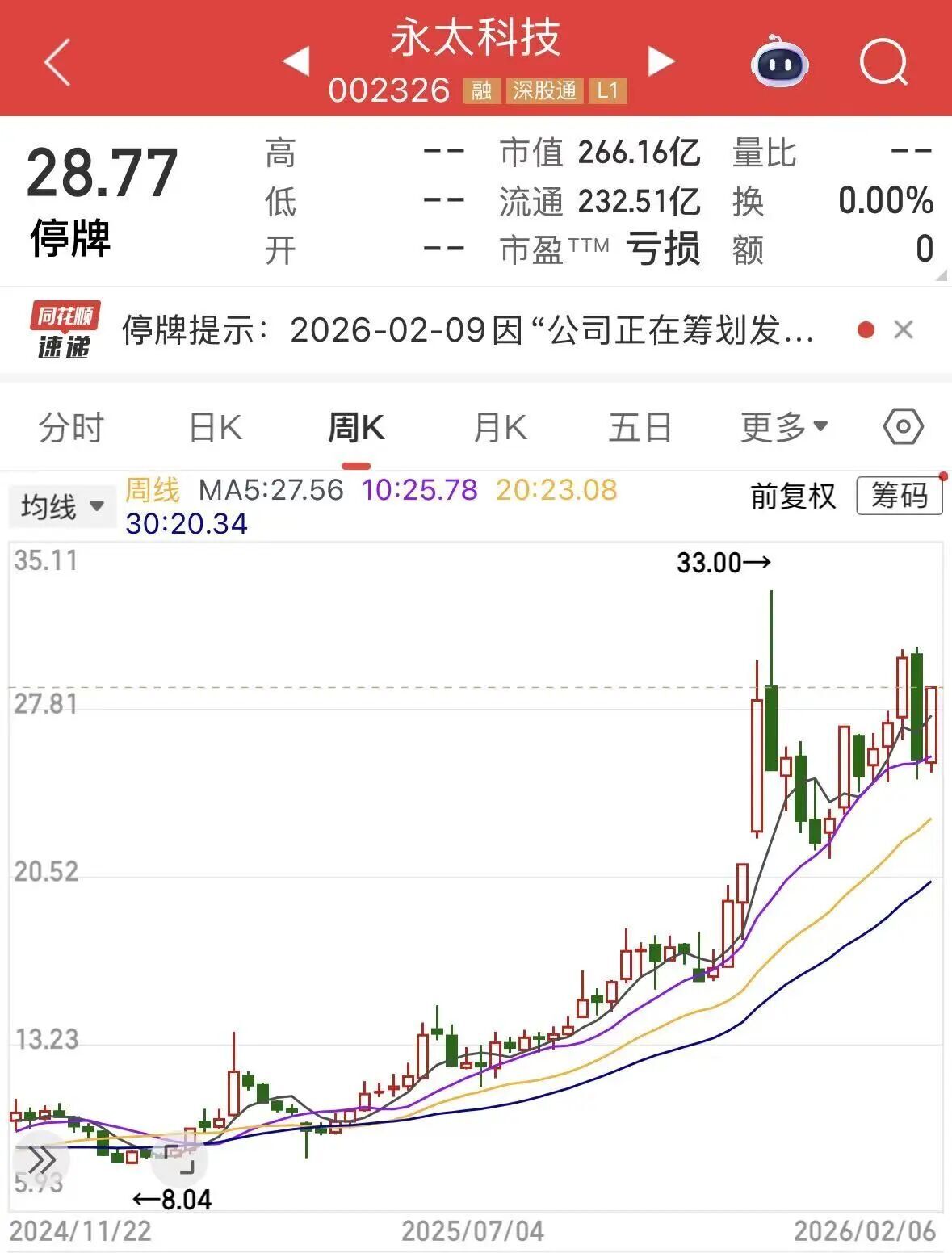
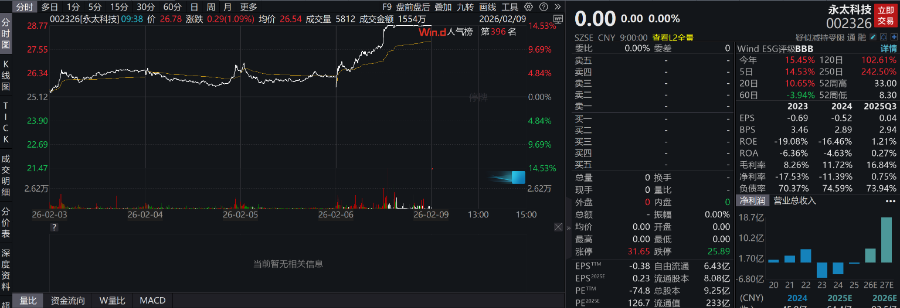
Core Viewpoint - The announcement by Yongtai Technology regarding the acquisition of a 25% stake in Yongtai High-tech from CATL marks a strategic shift, allowing Yongtai High-tech to become a wholly-owned subsidiary again, while CATL transitions from a subsidiary shareholder to a public company shareholder [1] Group 1: Transaction Details - Yongtai Technology plans to issue shares to acquire the 25% stake in Yongtai High-tech held by CATL, with the transaction expected to be disclosed within 10 trading days after the stock suspension starting February 9 [1] - Prior to the announcement, Yongtai Technology's stock price reached a limit up of 28.77 yuan per share, with a market capitalization of 26.616 billion yuan [1] Group 2: Strategic Implications for CATL - This "reverse investment" allows CATL to convert heavy asset investments into high liquidity equity, enhancing its connection with upstream core material suppliers [1] - The global battery market is expected to enter a fast-charging era by 2026, with electrolyte performance becoming a decisive factor, making Yongtai High-tech's products critical for battery conductivity and rapid charging [1] Group 3: Yongtai Technology's Production Capacity - Yongtai Technology has reported a production capacity of 150,000 tons per year for electrolytes, 18,000 tons for solid lithium hexafluorophosphate, and 67,000 tons for liquid lithium bis(fluorosulfonyl)imide, among others [2] - The acquisition of full ownership means that all profits from these high-quality assets will be consolidated into the public company's financial statements [2] Group 4: Industry Trends and CATL's Strategy - CATL's recent actions reflect a trend of forming closer ties with core suppliers, as seen in its investments in Tianhua New Energy and Jiangxi Shenghua, among others [3] - The strategic shift from holding stakes in unlisted subsidiaries to public company shares provides CATL with greater flexibility and reduces legal risks associated with potential lawsuits faced by Yongtai High-tech [6]


宁德时代反向入股,260亿锂电龙头停牌前涨停
2 1 Shi Ji Jing Ji Bao Dao· 2026-02-09 12:44
Core Viewpoint - The announcement by Yongtai Technology regarding the acquisition of a 25% stake in Yongtai High-tech from CATL marks a strategic shift, allowing Yongtai Technology to regain full ownership and CATL to transition from a subsidiary shareholder to a public company shareholder [1][3]. Group 1: Transaction Details - Yongtai Technology plans to issue shares to acquire the 25% stake in Yongtai High-tech held by CATL, along with raising matching funds [1]. - Following the announcement, Yongtai Technology's stock was suspended from trading starting February 9, with a plan to disclose the transaction details within ten trading days [1]. - As of February 6, Yongtai Technology's stock price reached a limit-up of 28.77 yuan per share, giving it a market capitalization of 26.616 billion yuan [1]. Group 2: Strategic Implications for CATL - This "reverse equity investment" allows CATL to strengthen its connection with upstream core material suppliers while utilizing capital tools for risk management [3]. - The transaction is expected to convert CATL's heavy asset investment into high liquidity equity, enhancing its financial flexibility [5]. - With the global battery market entering a fast-charging era by 2026, the performance of electrolytes will be crucial, and Yongtai High-tech's products are key to improving battery conductivity [5]. Group 3: Financial Outlook - Yongtai Technology's electrolyte production capacity includes 150,000 tons per year, with various products already in production, indicating strong operational capabilities [5]. - Although Yongtai Technology is not expected to turn a profit in 2025, it is projected to reduce losses by over 90% compared to 2024, suggesting a positive growth outlook [5]. - The acquisition will allow all profits from Yongtai High-tech's quality assets to be consolidated into Yongtai Technology's financial statements [5]. Group 4: Industry Context and Relationships - CATL's strategy of deepening ties with core suppliers is not unique; it has previously invested in other companies to secure supply chains and enhance its market position [6]. - The historical relationship between Yongtai Technology and CATL has evolved, with Yongtai High-tech previously being a significant profit contributor to Yongtai Technology [8]. - The shift in ownership structure is also a strategic move to mitigate legal risks associated with ongoing litigation involving Yongtai High-tech [10].

宁德时代反向入股,260亿锂电龙头停牌前涨停
21世纪经济报道· 2026-02-09 12:30
Core Viewpoint - The announcement of Yongtai Technology's acquisition of a 25% stake in Yongtai High-tech from CATL marks a strategic shift, allowing Yongtai Technology to regain full ownership and CATL to become a shareholder in a listed company, enhancing their relationship and operational synergy in the lithium battery supply chain [1][2]. Group 1: Strategic Implications - The "reverse equity investment" by CATL is a strategic maneuver to strengthen ties with upstream material suppliers while mitigating risks through capital tools, showcasing a clever approach to market positioning [2]. - The acquisition allows Yongtai Technology to consolidate its profitable assets, with all profits from Yongtai High-tech now reflected in the listed company's financial statements, potentially leading to significant value creation for shareholders [4][6]. Group 2: Market Dynamics - By 2026, the global battery market is expected to enter a fast-charging era, with electrolyte performance becoming a critical factor. Yongtai High-tech's products, such as lithium hexafluorophosphate and LiFSI, are essential for enhancing battery conductivity [4]. - Yongtai Technology's production capacity includes 150,000 tons/year of electrolytes, 18,000 tons/year of solid lithium hexafluorophosphate, and 67,000 tons/year of liquid LiFSI, indicating a robust operational foundation to support future growth [4]. Group 3: Historical Context and Future Outlook - The relationship between CATL and Yongtai Technology has evolved significantly since 2021, with Yongtai High-tech previously contributing over half of Yongtai Technology's profits. The recent acquisition reflects changing industry dynamics and Yongtai Technology's strategic repositioning [6]. - CATL's increasing investments in upstream suppliers, such as Tianhua New Energy and Jiangxi Shenghua, illustrate a broader strategy to create a resilient "CATL ecosystem" that enhances supply chain stability and profitability [5]. Group 4: Legal and Compliance Considerations - The ongoing legal disputes involving Yongtai High-tech, with claims amounting to 887 million yuan, pose compliance risks for CATL. Transitioning to a shareholder role in a listed company provides a legal buffer against potential liabilities from these disputes [7].

宁德时代反向入股永太科技,加强资本绑定“以进为退”
2 1 Shi Ji Jing Ji Bao Dao· 2026-02-09 11:41
Core Viewpoint - The announcement by Yongtai Technology regarding the acquisition of a 25% stake in Yongtai High-tech from CATL marks a strategic move to strengthen supply chain ties and enhance capital liquidity, while also mitigating risks associated with holding stakes in subsidiaries [1][3]. Group 1: Transaction Details - Yongtai Technology plans to acquire a 25% stake in Yongtai High-tech from CATL through a share issuance, making Yongtai High-tech a wholly-owned subsidiary again [1]. - Following the announcement, Yongtai Technology's stock was suspended from trading, with a market capitalization of 26.616 billion yuan as of February 6, when the stock price reached 28.77 yuan per share [1]. - The transaction is expected to be disclosed within 10 trading days, indicating a swift progression in the deal [1]. Group 2: Strategic Implications for CATL - This transaction allows CATL to convert heavy asset investments into high liquidity equity, enhancing its financial flexibility [3]. - The performance of Yongtai High-tech's products, such as lithium hexafluorophosphate and LiFSI, is crucial for the fast-charging battery market expected to emerge by 2026 [3]. - Yongtai Technology's production capacity for electrolyte has reached 150,000 tons per year, with significant contributions expected to be reflected in the financial statements post-acquisition [3]. Group 3: Industry Context and Historical Background - CATL's recent investments in suppliers, including Tianhua New Energy and Jiangxi Shenghua, reflect a broader strategy to strengthen its supply chain and mitigate risks associated with raw material sourcing [4]. - The historical relationship between Yongtai Technology and CATL has evolved, with Yongtai High-tech previously being a significant profit contributor to Yongtai Technology [5]. - The shift in ownership from a subsidiary to a publicly traded company for CATL is seen as a strategic move to avoid potential legal liabilities associated with ongoing litigation involving Yongtai High-tech [7].
从年亏13亿到盈利7亿,瑞浦兰钧怎么打赢的“翻身仗”?
Xin Lang Cai Jing· 2026-02-09 10:54
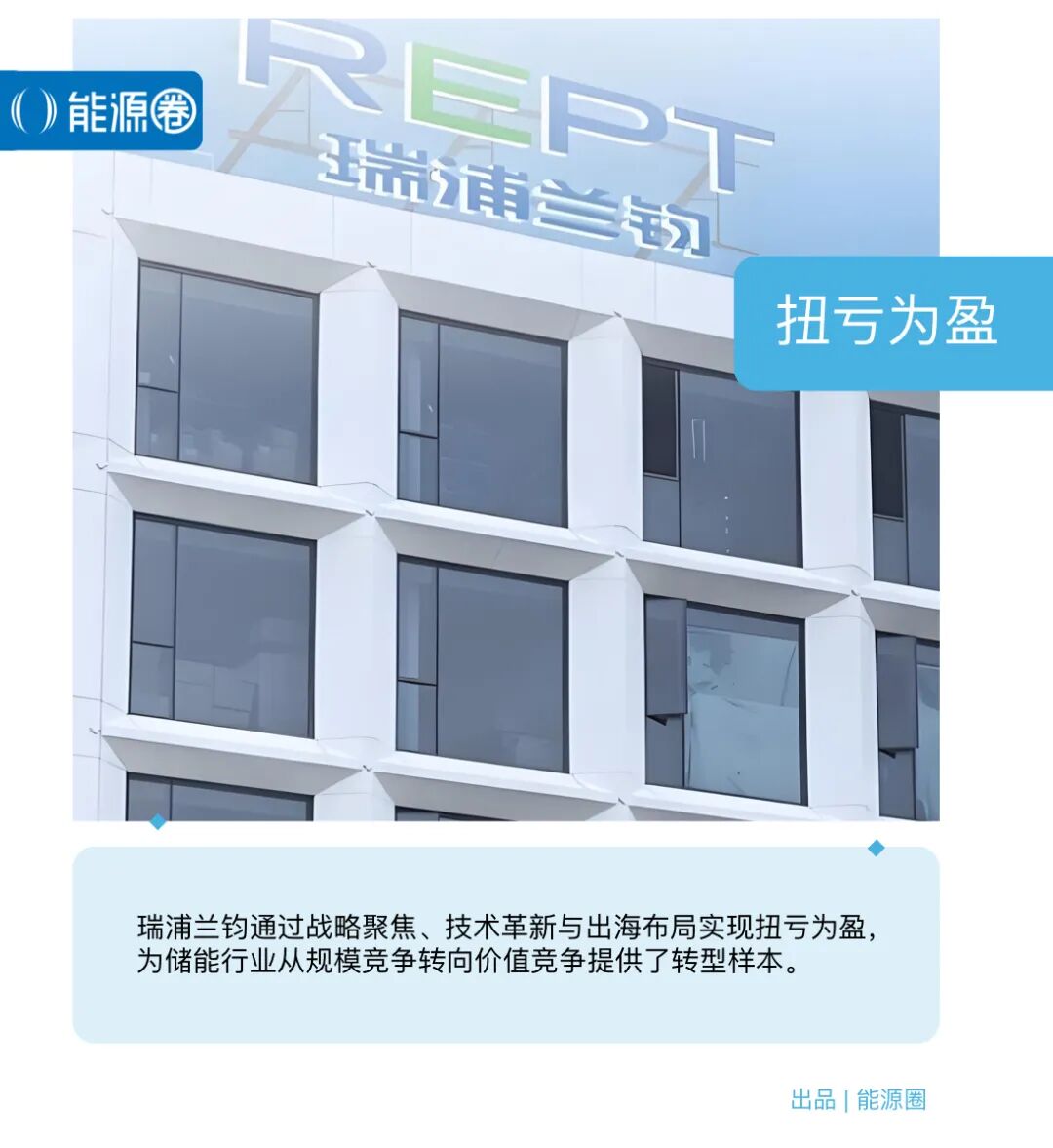
Core Viewpoint - Rui Pu Lan Jun is expected to achieve a net profit of 630 million to 730 million yuan in 2025, marking a turnaround from a loss of 1.353 billion yuan in 2024, resulting in an improvement of nearly 2 billion yuan in profit [2][20]. Financial Performance - In the first half of 2025, Rui Pu Lan Jun reported total revenue close to 9.5 billion yuan, a year-on-year increase of nearly 25% [5][23]. - The net loss was significantly reduced by 90.4% year-on-year, and gross profit surged by 177.8% to reach 829 million yuan [5][23]. - The total sales volume of lithium batteries reached 32.40 GWh in the first half of 2025, doubling year-on-year with a growth of approximately 100.2% [5][23]. Strategic Transformation - The turnaround is attributed to strategic adjustments, management reforms, and market focus initiated by President Feng Ting, who took office in November 2024 [7][25]. - The company implemented a deep reform centered on "strategic focus" and "cost reduction and efficiency enhancement," including the merger with Lan Jun New Energy to unify resources and eliminate internal friction [7][25]. Market Positioning - Rui Pu Lan Jun has shifted its focus to the commercial vehicle battery swap market, achieving a market share that ranks second nationally for both new energy heavy truck batteries and battery swap heavy truck batteries in the first half of 2025 [27]. - The company has successfully expanded into overseas markets, generating 2.663 billion yuan in overseas revenue in 2025 and establishing partnerships with several international companies [27]. Industry Context - The energy storage industry is transitioning from "scale competition" to "value competition," with technological commercialization becoming a core competitive advantage [12][30]. - The European market remains a key variable, with potential recovery expected as inventory depletion concludes and supportive policies emerge [12][30]. Future Outlook - Rui Pu Lan Jun plans to pursue three growth trajectories: collaborative growth of its business matrix, deepening globalization, and continuous technological leadership [33]. - The global energy storage market is projected to maintain a compound annual growth rate of 15%, with new installed capacity expected to reach 16 GW by 2030 [33].
锂电行业跟踪:碳酸锂价格下行,储能电芯均价上行
Shanghai Aijian Securities· 2026-02-09 10:28
Investment Rating - The industry is rated as "Outperform" [2] Core Insights - The production of positive materials in December showed a year-on-year increase, with domestic battery production reaching 201.7 GWh in December 2025, a growth of approximately 62% year-on-year and 14% month-on-month [2] - Lithium carbonate prices have decreased, with industrial-grade lithium carbonate priced at 134,000 CNY/ton as of February 6, 2026, reflecting a weekly decline of 9.46% [2] - The average price of energy storage cells has significantly increased, with prices for various types of lithium iron phosphate cells rising by 3.02% to 4.96% as of February 6, 2026 [2] - The demand for lithium iron phosphate batteries reached a monthly shipment of 79.8 GWh in December 2025, marking a year-on-year increase of 30.82% [2] - The global sales of new energy vehicles reached 2.1521 million units in December 2025, showing a year-on-year growth of 11.50% [2] Summary by Sections Production - In December 2025, the production of lithium iron phosphate positive materials was 26,930 tons, a year-on-year increase of 32.48% [2] Prices - The average price of lithium iron phosphate (power type) was reported at 47,100 CNY/ton on January 9, 2026, an increase of 4.43% from January 4, 2026 [2] - The average price of liquid-cooled container energy storage systems increased slightly, with prices reaching 0.48 and 0.55 CNY/Wh as of February 6, 2026 [2] Domestic Demand - The monthly shipment of ternary power batteries remained stable at 18.2 GWh in December 2025, with a year-on-year increase of 27.27% [2] Overseas Demand - The export volume of Chinese power batteries in December 2025 was 19.0 GWh, reflecting a year-on-year increase of 47.29% [2]




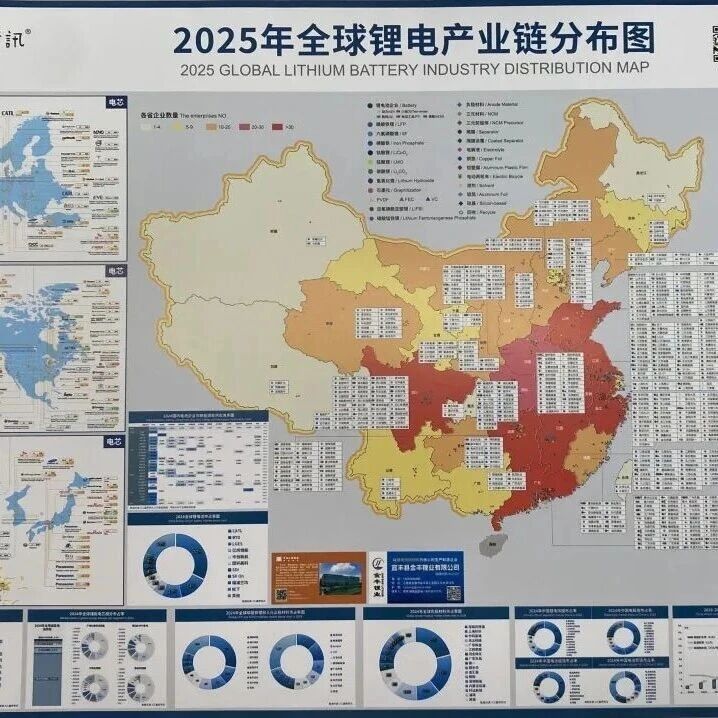
免费领取!2025年全球锂电产业链分布图
鑫椤锂电· 2026-02-09 08:07
Core Insights - The article highlights the launch of the 2026 Global Lithium Battery Industry Chain Distribution Map, building on the success of the 2025 version, which became a phenomenon in the industry [8] - The distribution map provides a comprehensive overview of the lithium battery supply chain, covering raw materials, key materials, battery manufacturing, and end applications across major regions including China, North America, Europe, Japan, and Southeast Asia [3][8] Distribution Map Details - The distribution map measures 1.5 meters by 1 meter and intricately depicts the entire ecosystem of the global lithium battery industry from raw materials to end applications [3] - It has received positive feedback from industry leaders, emphasizing its clarity in showing the global landscape and the relationships within the supply chain [8] Promotion and Sponsorship - The article announces the opening of sponsorship opportunities for the 2026 distribution map, with limited seats available for brand exposure [8] - Sponsorship options include naming sponsorship, where the company logo will be displayed alongside the organizer's logo, and brand sponsorship, which allows for the display of company name, main products, and contact information [8]
市场情绪主导,碳酸锂等待企稳:碳酸锂周报-20260209
Zhong Hui Qi Huo· 2026-02-09 07:28
Report Title - "Carbonate Lithium Weekly Report: Market Sentiment Dominates, Carbonate Lithium Awaits Stabilization" [1] Analyst Information - Analyst: Zhang Qing [2] - Consulting Account: Z0019679 [2] - Institution: Zhonghui Futures Research Institute [2] - Date: February 6, 2026 [2] Market View Summary Macroeconomic Overview - In January, China's manufacturing PMI was 49.3 (previous value 50.1), and non - manufacturing PMI was 49.4 (previous value 50.2), both falling below the boom - bust line, indicating weak domestic and foreign demand and potential acceleration of growth - stabilizing policies; the US manufacturing PMI was 52.6, non - manufacturing PMI was 53.8, higher than previous values and expectations, with ADP employment adding 22,000, lower than expectations and previous values. The Fed paused rate cuts, and the new chairman nomination increased uncertainty in future rate - cut paths, leading to sharp corrections in precious metals, non - ferrous metals, and global equity markets [3] Supply Side - This week, carbonate lithium production declined slightly due to the Spring Festival holiday and maintenance. However, in January, Chile exported 16,950 tons of carbonate lithium to China, a 44.82% month - on - month increase, which may offset the domestic supply reduction in February [3] Demand Side - In January, national passenger car retail sales were 1.794 million, a 12.1% year - on - year and 31.9% month - on - month decline. The share of self - owned brands rose to 61%. National new - energy vehicle wholesale was estimated at 900,000, a 1% year - on - year increase. Tesla China's wholesale sales were 69,129 [4] Cost and Profit - This week, ore prices dropped significantly. African SC 5% was quoted at $1,650/ton, a $250/ton week - on - week decline; Australian 6% lithium spodumene CIF was $1,843/ton, a $502/ton decline; lithium mica was priced at 5,900 yuan/ton, an 800 yuan/ton decline. The carbonate lithium industry profit was 36,139 yuan/ton, a 3,529 yuan/ton decrease [4] Total Inventory - As of February 5, the total inventory was 105,463 tons, a 2,019 - ton decrease from last week. Upstream smelter inventory was 18,356 tons, a 647 - ton decrease [4] Market Outlook - The basis strengthened compared to last week. The discount range for battery - grade carbonate lithium was 800 - 2,000 yuan/ton, and for industrial - grade and quasi - battery - grade was 1,600 - 3,000 yuan/ton. In actual transactions, the discount range for battery - grade was 500 - 2,000 yuan/ton. Lithium salt producers were less willing to sell spot orders, while traders were active. Downstream material producers had basically completed pre - holiday inventory preparations. The main carbonate lithium contract dropped sharply, erasing all January gains. Weak external precious metals and non - ferrous sectors, along with insufficient market liquidity, led to the continuous decline of carbonate lithium prices in search of support. The fundamentals showed no obvious negative factors, with inventory reduction continuing during the off - season. Downstream buyers were active in price - fixing when prices dropped sharply, with large volumes traded at the limit - down price. Due to the terminal's rush for exports, demand was slightly advanced, and downstream mainstream material producers maintained high operating rates, less affected by the Spring Festival. Upstream smelter production declined from the peak, and lithium salt producers' maintenance and production cuts were gradually evident. In February, the overall inventory reduction trend continued. The significant month - on - month increase in Chile's shipments in January led to concerns about inventory accumulation in the peak season in March. Coupled with high pre - holiday market volatility, funds actively left the market to avoid risks, resulting in a continuous decline in carbonate lithium positions. It is recommended to wait for price stabilization before establishing long positions and to hold no positions during the Spring Festival [5] Lithium - Battery Industry Price List - Various lithium - battery products showed price declines from January 30 to February 6, such as lithium spodumene (6% CIF: from $2,345/ton to $1,843/ton, - 21.41%; African SC 5%: from $1,900/ton to $1,650/ton, - 13.16%), lithium mica (from 6,700 yuan/ton to 5,900 yuan/ton, - 11.94%), battery - grade carbonate lithium (from 157,000 yuan/ton to 135,000 yuan/ton, - 14.01%), etc. Some products like metal lithium and certain grades of artificial and natural negative electrode materials remained unchanged [6] Weekly Market Review - As of February 6, the LC2605 contract closed at 132,920 yuan/ton, a 10.3% decline from last week. The spot price of battery - grade carbonate lithium was 135,000 yuan/ton, a 14% decline. The basis changed from discount to premium, and the main contract position was 328,000. The sharp decline of the main contract was mainly due to the deep correction in non - ferrous and precious metal sectors, increasing the risk of market panic selling. Exchange position limits and pre - holiday risk - aversion needs led to a shortage of market liquidity. Despite the off - season inventory reduction in the fundamentals, prices continued to decline without new capital inflows [7] Production Situation of Related Products Carbonate Lithium - As of February 6, carbonate lithium production was 23,685 tons, a 375 - ton week - on - week decrease. The enterprise operating rate was 51.44%, a 0.81% decline. Due to the approaching Spring Festival, some enterprises arranged maintenance or holidays, resulting in a seasonal production decrease. The 16,950 - ton increase in Chile's exports to China in January offset the domestic reduction [9] Lithium Hydroxide - As of February 6, lithium hydroxide production was 6,450 tons, a 90 - ton week - on - week decrease. The enterprise operating rate was 43.28%, a 0.61% decline. Affected by the Spring Festival and enterprise maintenance, the operating rate remained low. Downstream material producers mainly fulfilled long - term contracts, and with sharp price fluctuations, they only made rigid purchases [11] Lithium Iron Phosphate - As of February 6, lithium iron phosphate production was 97,653 tons, a 1,950 - ton week - on - week decrease. The enterprise operating rate was 86.01%, a 1.72% decline. Affected by the decline in power orders and some enterprises' production load reduction and Sichuan's maintenance, production decreased slightly, but mainstream enterprises still maintained high operating rates [13] Ternary Materials - The report mentions that demand for ternary materials was slightly advanced, and production operating rates increased, but specific production data is not detailed [15] Other Cathode Materials - In the traditional off - season of consumer electronics, the production and operating rates of manganese acid lithium and cobalt acid lithium declined, but detailed production change data is not provided in a comprehensive manner [23][28] Inventory Situation Carbonate Lithium Total Inventory - As of February 5, the total carbonate lithium industry inventory was 105,463 tons, a 783 - ton decrease from last week, and the warehouse - receipt inventory was 33,777 tons, a 3,146 - ton increase. The total inventory has been declining for four consecutive weeks. As prices fell, lithium salt producers' off - season inventory reduction accelerated. Terminal demand was advanced due to export rush, and the Spring Festival had limited impact on production. After price drops, traders were active in purchasing, leading to an increase in warehouse receipts [32] Downstream Inventory - For lithium iron phosphate, as of February 6, the total industry inventory was 27,293 tons, a 785 - ton decrease. The finished - product inventory continued to decline. Downstream energy - storage demand provided support, promoting enterprises to actively sell goods. Most enterprises prioritized shipping existing inventory to accelerate inventory reduction, but the risk of inventory accumulation due to the continuous decline in power demand should be noted [35] - For ternary materials, the report only shows the inventory trend chart, and there is no specific description of the inventory change situation. For manganese acid lithium, cobalt acid lithium, and ternary precursors, the same situation exists, with only inventory trend charts provided and no detailed change descriptions [38][40][45] Cost and Profit Situation Cost - Side - As of February 6, the African SC 5% ore was quoted at $1,650/ton, a $250/ton week - on - week decline; the Australian 6% lithium spodumene CIF was $1,843/ton, a $502/ton decline; the lithium mica market price was 5,900 yuan/ton, an 800 yuan/ton decline. Lithium salt producers' inventory replenishment was basically completed, and new purchases were few. The basis of lithium ore remained stable. The Australian ore shipment volume was moderately low, and the raw - material supply was still tight [46] Profit - Side - For carbonate lithium, as of February 6, the production cost was 121,050 yuan/ton, a 5,056 - yuan week - on - week decrease, and the industry profit was 29,550 yuan/ton, a 14,452 - yuan decrease. Lithium ore prices dropped significantly following the market, reducing the cost pressure on enterprises using imported ore, while the profits of enterprises with their own mines and salt lakes were not significantly affected. The lithium mica processing fee increased slightly, and the industry was still in the profit range [48] - For lithium hydroxide, as of February 6, the production cost was 110,259 yuan/ton, a 7,536 - yuan week - on - week decrease, and the industry profit was 37,972 yuan/ton, a 5,072 - yuan decrease. This week, the spot trading of aluminum hydroxide was light, downstream procurement basically ended, and the sharp decline in carbonate lithium prices led to a lack of support for lithium hydroxide prices and a marginal weakening of industry profits [50] - For lithium iron phosphate, as of February 6, the production cost was 50,655 yuan/ton, a 5,495 - yuan week - on - week decrease, and the loss was 2,056 yuan/ton, a 134 - yuan/ton decrease. This week, the sharp drop in raw - material prices dragged down the lithium iron phosphate price, but due to some enterprises' price - holding and reluctant - to - sell behavior, the transaction price remained relatively high, with a smaller price decline than the raw - material side, leading to a slight narrowing of the industry loss [53] - For ternary materials, the report shows the cost and profit trend charts, but there is no specific description of the cost and profit change data. The same situation exists for cobalt acid lithium, manganese acid lithium, and ternary precursors [57][60][62]
锂电板块突破不断,机械ETF国泰(516960)涨超1.8%
Mei Ri Jing Ji Xin Wen· 2026-02-09 06:46
Group 1 - The lithium battery industry is expected to see a preemptive trading surge as March production resumes beyond expectations, highlighting the importance of valuation recovery for leading battery companies and related materials price increases [1] - Tesla's dry electrode technology has achieved large-scale production, representing a significant breakthrough in lithium battery production technology, with substantial application prospects in both liquid and solid-state batteries [1] - The upcoming 2026 China All-Solid-State Battery Industry-Academia-Research Collaborative Innovation Platform Annual Conference will focus on key materials, cell innovation, and process equipment, suggesting investment opportunities in the solid-state battery sector [1] Group 2 - Chuangneng New Energy has secured a major overseas energy storage contract, with related products to be used for localized production and project construction in Saudi Arabia and the Middle East over the next three years, totaling a scale of 5.5 GWh [1] - The Guotai Mechanical ETF (516960) tracks a specialized mechanical index (000812) that focuses on the mechanical equipment industry, covering industrial automation, engineering machinery, and specialized equipment, selecting high-growth and high-tech companies to reflect the overall performance and market trends of listed companies in the mechanical equipment sector [1]
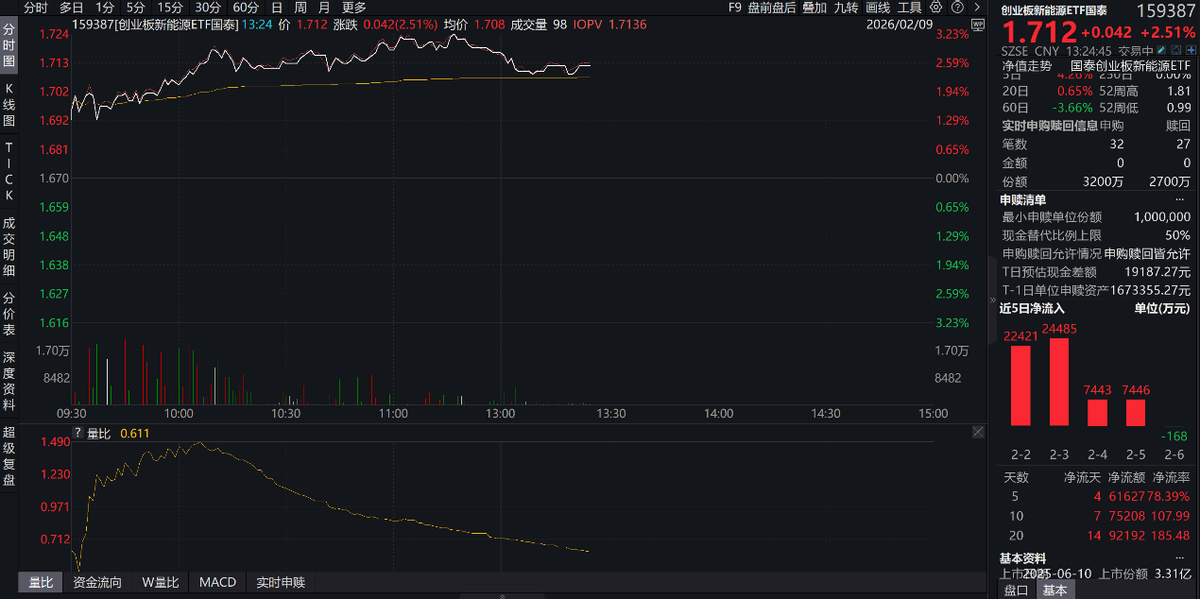
政策与产业共振驱动,创业板新能源ETF国泰(159387)大涨超3%
Mei Ri Jing Ji Xin Wen· 2026-02-09 05:45
Core Viewpoint - The recent performance of the new energy sector indicates a recovery phase, driven by supply-side adjustments, demand recovery, and technological upgrades, creating structural investment opportunities [3][6]. Group 1: Market Performance and Trends - The ChiNext New Energy ETF (159387) saw an intraday increase of over 3.2%, with a net inflow of over 600 million yuan in the past five trading days, indicating a clear sentiment recovery [1]. - The new energy sector is stabilizing after a period of volatility, with signs of bottoming out in the industry chain, particularly in solid-state batteries and space photovoltaic themes [3]. Group 2: Catalysts and Policy Support - Key catalysts for the renewed interest in the new energy sector include advancements in solid-state battery technology and increasing attention on themes like space photovoltaics and energy storage systems [4]. - The new energy sector remains a core focus of the "dual carbon" strategy and the construction of a new power system, with policies emphasizing electric equipment, grid transformation, and new energy storage [5]. Group 3: Supply Chain Adjustments and Profitability - The solar and lithium battery supply chains are showing signs of supply-side adjustments, with significant price corrections leading to a gradual stabilization of the industry [7]. - The lithium carbonate price has significantly dropped, and the profitability of battery manufacturers is recovering, while energy storage demand is emerging as a new growth driver [7]. Group 4: Investment Opportunities and Structural Changes - The current market offers three levels of investment logic: clear cyclical advantages, structural differentiation among companies, and the integration of new energy with AI, electrification, and digitalization [8]. - The new energy industry is expected to unlock new growth spaces due to technological breakthroughs, with the ChiNext New Energy ETF tracking companies involved in clean energy production, storage, and application [9].