
种植业

Search documents
特色农业绘丰景 湟中沃野谱新篇
Xin Lang Cai Jing· 2026-01-25 21:22
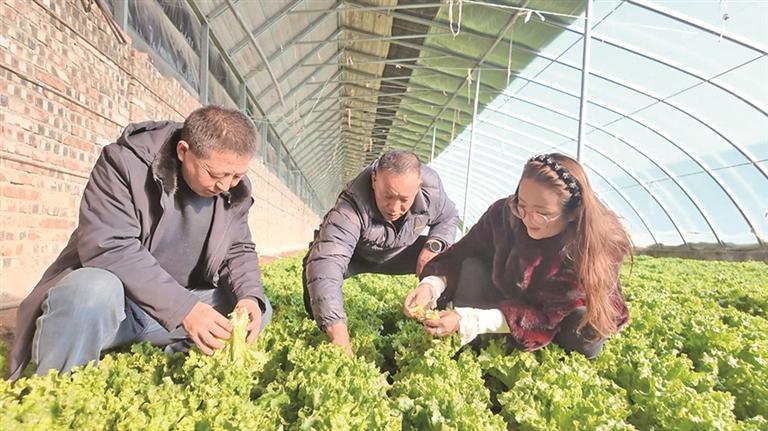
Core Viewpoint - During the "14th Five-Year Plan" period, Huangzhong District of Xining City focuses on building a center for green organic agricultural and livestock products, emphasizing the development of specialty industries such as cool-season vegetables, ecological yaks, and disease-free potatoes, aiming to become a national benchmark for modern agriculture [2] Group 1: Agricultural Development - The district has established a modern agricultural industry system characterized by regional, specialized, and scaled development, with over 3 large-scale vegetable bases and 34 medium-sized bases, achieving a stable vegetable planting area of 130,800 acres and an annual output exceeding 340,000 tons, accounting for one-fifth of the province's total output [3] - The introduction of over 20 high-quality vegetable varieties and the promotion of 12 green production technologies have led to a 96% standardization rate in production technology, significantly increasing yields in various crops [3] Group 2: Value Chain Enhancement - The district aims to elevate specialty agriculture from production to processing, sales, and branding, achieving a total industrial output value exceeding 100 million yuan in the strawberry industry, with 6 million seedlings exported annually [4] - A 180 million yuan deep processing project for potatoes has commenced operations, enhancing the value chain of traditional bulk agricultural products [4] Group 3: Brand Development - A total of 23 vegetable trademarks have been registered, with 91 products certified as green food, forming a multi-layered brand matrix that includes regional public brands and enterprise brands, with nearly 50% of vegetable products sold outside the province [5] - The total output value of the entire vegetable industry chain exceeds 1.2 billion yuan, contributing to a significant increase in rural residents' disposable income from 12,655 yuan in 2020 to 18,472 yuan by 2025 [5] Group 4: Organizational Strengthening - The district has strengthened rural grassroots party organization construction, establishing 23 functional party organizations in agricultural cooperatives and industry chains, enhancing organizational cohesion and development leadership [6] - A talent policy has been implemented to attract 581 university graduates to rural areas, providing fresh expertise and support for agricultural upgrades [6]

展“业”而富 江苏农发行助力强农惠农
Xin Lang Cai Jing· 2026-01-25 20:20
Core Insights - The Jiangsu branch of the Agricultural Development Bank of China is actively supporting rural revitalization through financial assistance, focusing on modern agricultural practices and enhancing local specialties [1][8] - The bank has provided nearly 40 billion yuan in loans for industrial development during the 14th Five-Year Plan period, promoting high-quality growth in rural industries [1] Group 1: Aquaculture and Fisheries - The bank's funding has facilitated the development of a 200,000-acre rice-shrimp co-culture demonstration base, enhancing local income channels and transforming the industry from "catching + dining" to a full supply chain integration [2] - A total of 1.2 billion yuan has been allocated to support the innovative development of marine resources, enabling breakthroughs in artificial breeding technology for greenfin horse mackerel, with an expected annual output exceeding 1,000 tons [3] - The bank has invested 5 billion yuan in the Suqian Lake District to support modern agricultural projects, enhancing ecological breeding standards and promoting the integration of the crab industry with cultural tourism [2] Group 2: Grain and Rice Industry - The bank has invested 4 billion yuan to support high-standard farmland construction and comprehensive rice cultivation projects in Xinghua, aiming to elevate the "Xinghua Rice" brand from basic food to a premium choice [4] - A total of 48 billion yuan has been provided to Huasui Group for grain purchase loans, facilitating the acquisition of 2.1 million tons of wheat, significantly benefiting local farmers [4] - The bank's support has enabled the establishment of a national grain purchase and sales network, enhancing the efficiency of grain circulation across regions [5] Group 3: Fruit and Vegetable Production - The bank has invested 7.6 billion yuan in the Yangshan peach industry, promoting a full-chain development model that has created over 1,000 temporary jobs and generated significant economic benefits for local farmers [6] - A funding of 4.8 billion yuan has been allocated to support the construction of a modern agricultural park in Jiujiang, enhancing the strawberry industry and integrating it with cultural tourism [7] - The bank has provided 1.7 billion yuan to support blueberry cultivation in Ganyu, facilitating the establishment of an integrated industry chain that significantly increases product value [7] Group 4: Strategic Vision - The Jiangsu branch of the Agricultural Development Bank is committed to serving rural revitalization and supporting the construction of an "agricultural strong province," aiming to create a prosperous and beautiful rural landscape through financial support [8]
科技农业绘出新风景
Xin Lang Cai Jing· 2026-01-25 18:15
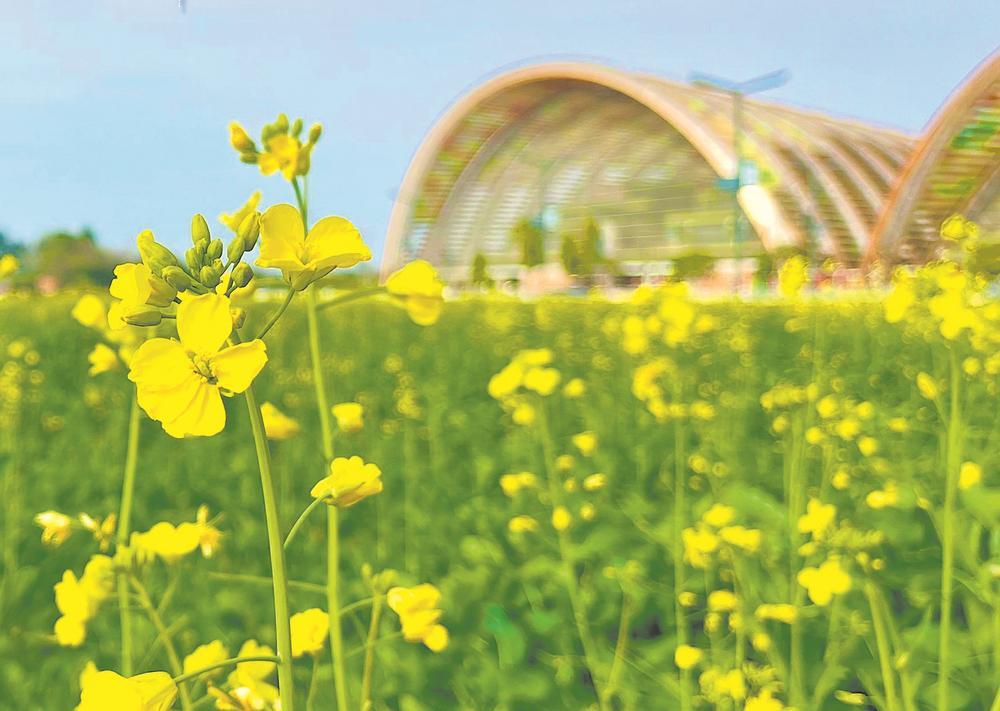
Core Insights - The article highlights the transformative impact of agricultural technology in Chengdu, showcasing how innovations are redefining traditional farming practices and enhancing food diversity in winter [4][6][7]. Group 1: Agricultural Innovations - Chengdu's agricultural landscape is evolving with the introduction of "black technology," allowing for year-round production of crops like strawberries and oilseed rape, even in winter [4][6][7]. - The use of advanced techniques such as double haploid induction and controlled environment agriculture has led to the development of cold-resistant, early-blooming crop varieties [4][7][8]. - Facilities like vertical farms and smart greenhouses are enabling the cultivation of crops without reliance on traditional seasonal constraints, thus ensuring a steady supply of fresh produce [9][12]. Group 2: Seafood Production in Xinjiang - Xinjiang is emerging as a significant player in the seafood industry, producing species like salmon and shrimp through innovative inland aquaculture techniques [10][11]. - The use of saline-alkaline water for aquaculture has been optimized to create environments suitable for marine species, showcasing a breakthrough in resource utilization [10][11]. - Advanced closed-loop water recycling systems are being implemented to ensure sustainable and efficient fish farming practices in arid regions [11][12]. Group 3: Solar-Agriculture Integration - The "agriculture-photovoltaics" model is gaining traction, where solar panels not only generate electricity but also create favorable microclimates for crop growth beneath them [13][14]. - This dual-use approach is enhancing agricultural productivity in arid regions by improving soil conditions and reducing water evaporation [13][14]. - Projects like "fishing-solar" and "pasture-solar" are demonstrating the potential for synergistic benefits, leading to increased yields and diversified income streams for farmers [14][15]. Group 4: Global Agricultural Technology Trends - The global agricultural sector is witnessing a shift towards data-driven practices, moving away from traditional methods to more scientific approaches [16][17]. - Technologies such as IoT, AI, and autonomous machinery are being integrated into farming operations worldwide, enhancing efficiency and sustainability [16][17]. - China's advancements in agricultural technology are not only improving domestic production but also contributing to global agricultural practices, showcasing a blend of local innovation and international collaboration [17].
2025年全省经济运行总体平稳
Xin Lang Cai Jing· 2026-01-25 18:14
Economic Overview - In 2025, the overall economic operation of Liaoning Province is stable, with a GDP of 33,182.9 billion yuan, representing a 3.7% increase from the previous year [1] - The primary industry added value is 2,763.0 billion yuan, growing by 3.4%; the secondary industry added value is 11,027.6 billion yuan, growing by 0.7%; and the tertiary industry added value is 19,392.4 billion yuan, growing by 5.2% [1] Agricultural Performance - The primary industry saw a 3.4% increase in added value, with significant growth in planting, leading to a record grain output of 25,778 million tons, an increase of 3.1% [1] Retail and Consumption - The total retail sales of consumer goods reached 10,371.3 billion yuan, a 1.4% increase from the previous year, with urban retail sales at 9,004.3 billion yuan (up 1.5%) and rural retail sales at 1,366.9 billion yuan (up 1.0%) [1] - Retail sales of basic living goods grew rapidly, with grain and oil, and food retail sales increasing by 10.9%, and daily necessities retail sales growing by 8.2% [2] - There was a significant increase in the consumption of upgraded goods, with wearable smart devices sales increasing by 1,470%, computer and related products sales growing by 200%, and smartphone sales increasing by 110% [2] Income Growth - The per capita disposable income of residents reached 41,703 yuan, a 4.7% increase from the previous year, with urban residents earning 50,057 yuan (up 4.3%) and rural residents earning 23,942 yuan (up 5.3%) [2]
农林牧渔行业:本周猪价延续反弹,关注大宗农产品周期趋势
GF SECURITIES· 2026-01-25 11:48
Core Insights - The report indicates a rebound in pig prices, with the average price for lean pigs at 13.09 CNY/kg as of January 23, reflecting a 4.8% week-on-week increase, although down 17.6% year-on-year. The industry is returning to profitability, with self-breeding operations reportedly earning about 40 CNY per head [2][10] - The report highlights a significant increase in the price of piglets, which rose to 353 CNY/head, a 7% increase week-on-week, suggesting a positive outlook among farmers for pig prices in the second half of the year [2][10] - The report recommends major breeding companies such as Wens Foodstuffs Group and Muyuan Foods, while also highlighting potential in smaller firms like Tiankang Biological and Shennong Group [2][10] Livestock Farming - The average price of white feather chickens is reported at 3.7 CNY/jin, down 1.3% week-on-week, with supply concerns due to avian influenza affecting imports from France [2][10] - The dairy sector shows a slight increase in fresh milk prices to 3.03 CNY/kg, up 0.3% week-on-week, while some regions report prices rebounding to 3.3-3.4 CNY/kg [2][11] - The report notes that the supply of beef is expected to tighten due to new import tariffs, which may lead to increased domestic beef prices and improved earnings for companies like Yurun Food and Modern Farming [2][11] Feed and Animal Health - The report indicates a continued upward trend in aquaculture prices, driven by supply-demand imbalances and seasonal factors, which may benefit feed demand in the short term [2][12] - The feed industry remains competitive, with leading companies expected to gain market share due to their comprehensive advantages [2][12] - The report suggests that leading animal health companies are expanding into pet healthcare, with growth potential in pet vaccines and pharmaceuticals [2][12] Agricultural Sector Performance - The agricultural sector outperformed the market by 1 percentage point, with the sector rising by 0.4% while the CSI 300 index fell by 0.6% [2][18] - Sub-sectors such as planting, agricultural processing, and fisheries showed notable gains, with increases of 4.1%, 4.0%, and 2.9% respectively [2][18] Agricultural Product Prices - The report tracks significant price movements in agricultural products, noting a 4.8% increase in pig prices and a 1.3% decrease in chicken prices [2][20] - The report also highlights the current prices of corn at 2375 CNY/ton, up 0.5% week-on-week, and soybean meal at 3194 CNY/ton, down 0.1% [2][44][53] - The report indicates that the price of wheat has also increased by 0.5% to 2527 CNY/ton [2][55]





十大机构看后市:A股春季行情仍沿着既定路径前进,保持稳健,持股过节
Xin Lang Cai Jing· 2026-01-25 06:48
Group 1 - The A-share market is experiencing a spring rally, with the Shanghai Composite Index rising by 0.84% and the Shenzhen Component Index increasing by 1.11% [12] - Short-term market focus is on low-position sectors, particularly cyclical Alpha (non-ferrous metals, chemicals) expanding towards cyclical turning points in construction materials, oil, and steel [1][13] - The current profitability in non-ferrous metals, chemicals, and oil is nearing high levels, indicating increasing short-term resistance for cyclical trends [1][14] Group 2 - Global market risk appetite is on the rise, favoring equity assets, with recommendations for tactical overweight in A/H shares, US stocks, and gold, while suggesting underweight in US Treasuries and oil [2][15] - The upcoming economic work conference and the start of the 14th Five-Year Plan in 2026 are expected to lead to more aggressive economic policies and an expansion of the fiscal deficit [2][15] - The anticipated interest rate cut by the Federal Reserve in December and the stable appreciation of the RMB are favorable for China's monetary easing in early 2026 [2][15] Group 3 - The technology sector remains the main focus of the current bull market, driven by the AI wave, with recommendations to pay attention to the application of AI in specific sectors [3][16] - Value sector opportunities are also worth considering, including certain resource products and real estate [3][16] - Consumer services may receive temporary attention as part of the sector allocation strategy [3][16] Group 4 - The market is expected to remain stable with a focus on holding positions through the upcoming holiday, as historical data suggests a less than 50% probability of major index increases in the 20 trading days before the Spring Festival [4][17] - Post-holiday, a new upward momentum is anticipated, with higher probabilities of index increases in the following 20 trading days [4][17] - Key sectors to watch include electronics, power equipment, and non-ferrous metals, with a focus on both growth and defensive styles depending on market conditions [4][17] Group 5 - The spring rally is expected to enter its second phase, with the Shanghai Composite Index nearing 4200 points, reflecting a strong upward trend since late December [5][18] - The market is witnessing a divergence in fund flows, with significant inflows into margin financing while stock-type ETFs are experiencing outflows [5][18] - Attention is needed on macro policy expectations from the upcoming National People's Congress in March and the microeconomic fundamentals from the 2025 annual reports [5][18] Group 6 - The current average P/E ratios for the Shanghai Composite and ChiNext are 16.88 and 53.36, respectively, indicating a suitable environment for medium to long-term investments [8][20] - The market is expected to focus on performance and industry trends, with a likelihood of maintaining a slight upward trend in the Shanghai Composite Index [8][20] - Investment opportunities are suggested in sectors such as photovoltaic equipment, energy metals, batteries, and aerospace [8][20] Group 7 - The market is anticipated to continue its oscillation and consolidation phase, with ETF outflows and a temporary decline in margin financing [9][20] - Despite the market's cooling, overall trading enthusiasm remains, and a slow bull market expectation may lead to fluctuating market sentiments [9][20] - Investment opportunities are highlighted in the TMT sector, robotics, and non-ferrous metals, alongside a focus on banking and insurance due to favorable long-term funding conditions [9][20] Group 8 - The spring rally is expected to persist, with a significant increase in risk appetite in the A-share market, as evidenced by a 17-day consecutive rise in the Shanghai Composite Index [10][21] - The market liquidity environment is improving, supported by favorable external conditions and proactive internal policies [10][21] - Key investment themes include low-valuation high-dividend assets, technology-driven production, and domestic market expansion [10][21] Group 9 - The 2026 economic outlook is positive, with proactive monetary and fiscal policies expected to support stable economic growth and a continued "slow bull" market in A-shares [11][21] - February is anticipated to maintain the momentum of January's focus on technology and non-ferrous sectors, driven by the "14th Five-Year Plan" [11][21] - Investment opportunities are identified in sectors related to new productive forces, including AI, aerospace, and agriculture [11][21]
夯实中国式现代化的农业农村基础
Jing Ji Ri Bao· 2026-01-24 21:53
Core Viewpoint - The 2025 Central Rural Work Conference emphasizes the importance of agricultural modernization for China's overall modernization, urging accelerated construction of a strong agricultural nation and promoting comprehensive rural revitalization [1] Agricultural and Rural Economic Development - Agricultural production shows steady growth, with the value added in agriculture, forestry, animal husbandry, and fishery increasing by 4.1% in 2025, contributing 0.3 percentage points to economic growth [2] - Grain production reached a new high in 2025, with a total output of 14,297.5 billion jin, an increase of 167.5 billion jin or 1.2% from the previous year, maintaining over 1.3 trillion jin for 11 consecutive years [2] Income and Consumption - Rural residents' per capita disposable income reached 24,456 yuan in 2025, with a nominal growth of 5.8% and a real growth of 6.0%, indicating a faster growth rate than urban residents [3] - The income gap between urban and rural residents continues to narrow, with the ratio of per capita disposable income decreasing from 2.50 in 2021 to 2.31 in 2025 [3] Agricultural Product Prices and Trade - Agricultural product prices have generally declined, with the overall agricultural product production price index down by 3.7% year-on-year in 2025 [4] - The total import and export value of agricultural products was $311.57 billion in 2025, a decrease of 2.1% year-on-year, with exports increasing by 1.2% to $104.16 billion [5] Agricultural Technology and Innovation - The mechanization level of crop farming reached 76.7% in 2025, with agricultural technology contributing 64% to agricultural growth [6] - The number of agricultural drones exceeded 300,000, significantly aiding in reducing pesticide usage by approximately 30% [7] Rural Infrastructure and Public Services - Rural infrastructure has improved, with a 96% coverage rate for tap water in rural areas and significant investments in rural construction projects [10] - The number of rural mutual aid elderly care facilities exceeded 140,000, and 97% of village health clinics are included in the medical insurance reimbursement system [11] Future Outlook - Agricultural value-added is expected to grow at a rate of 6.32% in 2026, with urban and rural residents' disposable income projected to increase by 4.4% and 7.79%, respectively [13] - Agricultural product trade is anticipated to maintain a growth trend, with exports expected to rise by 2.29% [14]
连云港冬季农事忙 科技管护蓄力花果产业迎春
Yang Zi Wan Bao Wang· 2026-01-24 12:38
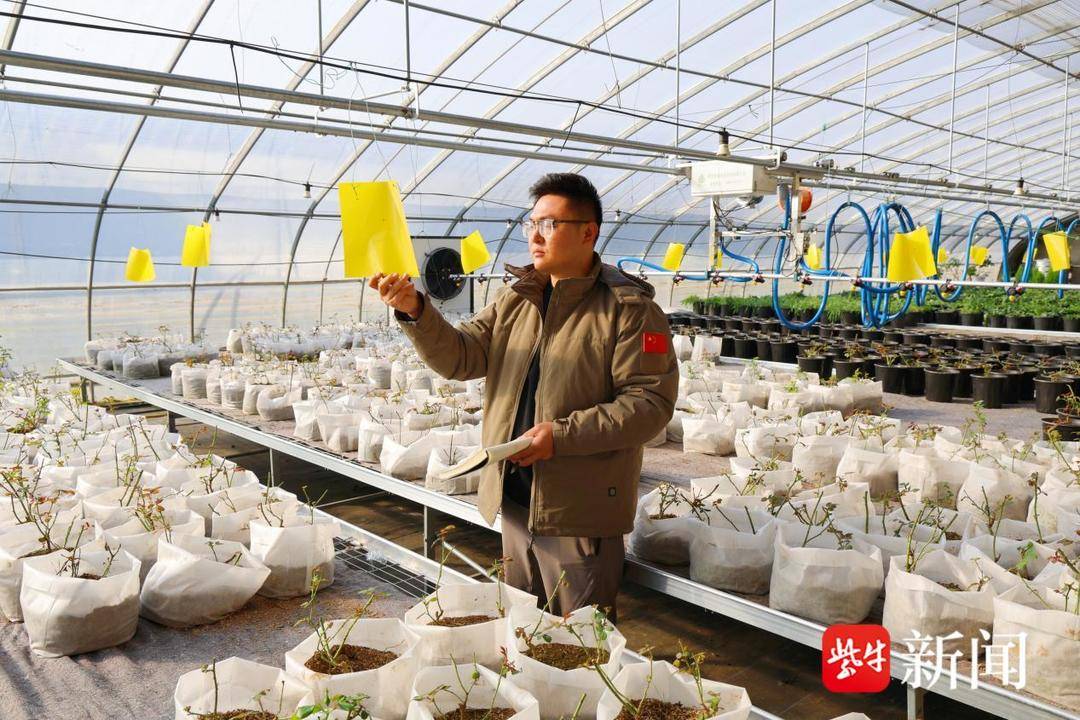
Core Viewpoint - The agricultural sector in Haizhou District, Lianyungang City, is actively implementing winter management practices supported by technology and precise management, despite the harsh winter conditions. Group 1: Winter Agricultural Management - The Gaobu Farm's efficient agricultural demonstration park is busy with the winter care of 6,000 potted rose seedlings, showcasing a vibrant scene despite the cold weather [1] - The winter management practices include scientific pruning to remove weak and old branches, promoting nutrient concentration for the upcoming spring growth [3] - Water and fertilizer management, along with temperature control, are critical, with the farm employing green pest control strategies to minimize chemical pesticide use [3] Group 2: Fruit Tree Care - At the Yuntai Farm's Yunsui Bay scenic area, the team is focusing on enhanced cold resistance measures for fruit trees due to significantly lower temperatures this year [4] - Pruning is emphasized not only for shaping but also for nutrient preservation and frost protection, with a focus on removing weak and dense branches that are susceptible to freezing [4] - The application of whitewash on grapevines is being conducted to provide a protective layer against pests and cold, which is particularly important this year [4] Group 3: Technological Integration in Agriculture - The winter management practices highlight the technological advancements in modern agriculture in Haizhou District, with a focus on green pest control and precise management to optimize the agricultural structure [6] - The standardization of operations at Yuntai Farm enhances the cold resistance of fruit trees, contributing to improved fruit quality and stable production [6] - These practices also support the development of high-quality ecological picking experiences and promote the integration of agriculture and tourism [6]

云南首次成功选育蒲公英新品种
Xin Lang Cai Jing· 2026-01-24 09:18
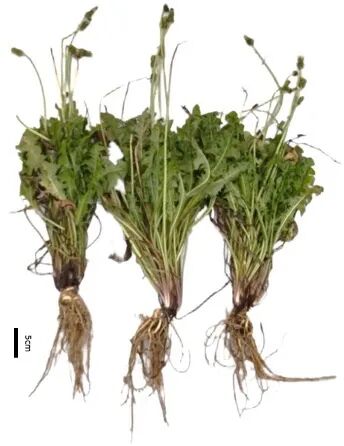
Core Viewpoint - The successful cultivation of two new dandelion varieties, "Dianhongpu 232-1" and "Dianhongpu 232-2," marks a significant breakthrough in the breeding of highland medicinal plants in Yunnan, showcasing both medicinal and ornamental value [1][7]. Summary by Sections New Varieties - "Dianhongpu 232-1" has a height of 38-60 cm, significantly taller than common dandelions, with leaves that have a purple base and prominent reddish-purple characteristics during flowering [4]. - "Dianhongpu 232-2" has an impressive chicoric acid content of 3.10%, which is 6.9 times higher than the Chinese Pharmacopoeia standard of 0.45%, enhancing its medicinal quality [4]. Nutritional Composition - "Dianhongpu 232-1" contains an average chicoric acid content of 0.57%, exceeding the Chinese Pharmacopoeia standard, and is rich in β-carotene, vitamin C, calcium, potassium, and iron [4]. - "Dianhongpu 232-2" offers a comprehensive nutritional profile, with 100 grams of fresh leaves containing 2.08 mg of β-carotene, 1.94 mg of vitamin C, 382 mg of calcium, and 102 mg of iron [4]. Adaptability and Cultivation - Both varieties can thrive at altitudes between 1000 meters and 2500 meters, with "Dianhongpu 232-1" being able to withstand temperatures as low as -40°C [4]. - The research team has developed standardized cultivation techniques, allowing for spring sowing and autumn harvesting, with multiple harvests each year [9]. Economic Impact - The introduction of these new varieties is expected to provide farmers with new economic crop options and contribute to the development of highland characteristic agriculture in Yunnan [9]. - The successful breeding of these dandelion varieties exemplifies the utilization of local biodiversity and the development of unique plant resources, which can be further used in products like dandelion tea, health foods, and medicinal materials [7].
【记者在现场】灵台县:无人机施肥
Xin Lang Cai Jing· 2026-01-24 02:04
Core Viewpoint - The use of drones for fertilization and crop management in winter wheat cultivation is enhancing agricultural efficiency and promoting increased yields in Lingtai County, Gansu Province [1][5]. Group 1: Drone Utilization - Two large drones are employed to precisely spray water-soluble fertilizers on winter wheat seedlings [1]. - The drones facilitate a single fertilization event during winter, aimed at promoting tillering and strengthening the seedlings [3]. Group 2: Crop Management Practices - Following the initial fertilization, herbicides will be sprayed a week later, marking the two main management steps during winter [5]. - Additional nutrient application via drone will occur during the spring, providing a second round of nutrition for the winter wheat [5]. - The comprehensive drone management plan throughout the entire growth period is expected to significantly boost this year's wheat production [5].