
便利店

Search documents
零食量贩行业专家解析
2026-01-28 03:01
Summary of Snack Retail Industry Conference Call Industry Overview - The snack retail industry experienced an overall sales decline of approximately 5% in 2025, but saw growth in the fourth quarter due to the return of sales to leading brands and adjustments in product structure [1][2] - The "savings supermarket" model has improved turnover speed through enhanced advertising and category expansion [1] Key Insights - **Competitive Landscape**: - Intense competition in mature business districts, with leading brands using larger store sizes and broader customer bases to outcompete smaller brands, prompting upgrades or transformations among smaller brands [1][3] - New models such as 24-hour convenience stores may emerge as a response to competition [3] - **Performance of Leading Brands**: - Leading snack companies like "Ming Ming Hen Mang" and "Wan Cheng Hao Xiang Lai" are outperforming second and third-tier companies due to national brand effects and robust supply chain systems [1][6] - In 2025, "Ming Ming Hen Mang" operated 22,000 stores, while "Wan Cheng" had 19,000 stores, with a sales recovery noted in the fourth quarter [2] - **Sales Dynamics**: - Sales fluctuations were attributed to the closure of smaller brands in dense business areas, leading to a sales rebound for leading brands, and adjustments in product offerings that boosted sales [2] - The savings supermarket model has reduced product turnover cycles to 40 days, with store payback periods expected to shorten from 3.5 years to 3 years or even 2.5 years [1][8] Market Trends - **Expansion of Product Categories**: - Future snack stores are expected to evolve into supermarkets and ice cream shops, expanding SKUs to include daily necessities and other categories [2][9] - High-margin products like baked goods (e.g., grilled sausages, egg tarts) are performing well, with gross margins between 35% and 38% [3][9] - **Survival of Small Brands**: - While some small local brands are retreating, many are still actively opening savings supermarkets to compete [4][5] - The market share is increasingly concentrating on leading brands as smaller brands struggle without subsidies [7] Financial Metrics - **Store Economics**: - A community savings supermarket in Jiaxing, for example, requires an investment of approximately 1.1 million to 1.2 million yuan, with expected monthly sales around 23,000 yuan and an average customer transaction value of 35-37 yuan [20][24] - The average daily order volume is about 600, with weekend sales often exceeding 30,000 yuan [24] - **Profitability**: - The gross margin for savings supermarkets is reported between 21.5% and 22%, with net profit margins around 8.3% to 8.5% [23] Future Outlook - **Store Opening Projections**: - The industry is expected to open 25,000 to 30,000 new stores in 2026, with a potential peak of 50,000 stores by 2027 as new franchisees enter the market [19] - **Challenges in Fresh Food**: - Fresh food categories face challenges such as supply chain management and maintaining food safety standards, which need to be addressed for scalable expansion [32] Additional Considerations - **Consumer Preferences**: - Consumers are increasingly recognizing savings supermarkets as offering more than just snacks, including daily necessities, which enhances overall turnover speed [3] - **Price Competitiveness**: - Savings supermarkets maintain a price advantage over traditional supermarkets due to direct sourcing from manufacturers, which reduces costs [17] This summary encapsulates the key points from the conference call regarding the snack retail industry, highlighting competitive dynamics, financial metrics, market trends, and future projections.
去年超六成便利店企业销售实现增长
Qi Lu Wan Bao· 2026-01-27 15:41
新华 中国连锁经营协会日前发布的2025年便利店业态发展情况调查快报显示,2025年超六成便利店企业销售 同比增长,销售增长主要来自可比门店销售增长,其次是门店扩张带来的销售增量。调查结果显示,2025年 国内便利店门店数整体保持增长,但增速有所放缓,其中门店规模在501至1000家、1001至3000家、3001至 10000家区间的企业平均增速最高,分别为10.8%、8.5%和6.9%。 ...
每日市场观察-20260127
Caida Securities· 2026-01-27 03:37
Market Overview - On January 26, the market experienced a decline, with the Shanghai Composite Index falling by 0.09%, the Shenzhen Component Index down by 0.85%, and the ChiNext Index decreasing by 0.91%[4] - The total trading volume on January 26 was 3.28 trillion, an increase of approximately 160 billion compared to the previous trading day[1] Sector Performance - Over half of the sectors saw declines, with non-ferrous metals, coal, and oil sectors leading in gains, while military, automotive, electronics, and social services sectors faced the largest declines[1] - The semiconductor and aerospace sectors, which had previously seen significant gains, experienced notable declines, indicating a rare phenomenon of widespread losses in technology sectors since the beginning of the year[1][2] Regulatory Impact - The primary reason for the market adjustment is attributed to regulatory measures aimed at cooling down the market, particularly following rapid increases in sectors like commercial aerospace[2] - Significant sell orders were observed in large-cap stocks, reflecting the regulatory intent to maintain market stability[2] Fundraising and Investment Trends - In the last week of January, 43 new funds were launched, with equity funds remaining the dominant category, indicating strong investor interest in the market[12] - Since the beginning of the year, 76 new funds have been established, raising a total of 71.94 billion, with an average fund size of 9.47 billion[13] Consumer Trends - In 2025, household appliances, mobile phones, and new energy vehicles showed significant growth, with sales of household appliances increasing by 17.4%, mobile phones by 18.6%, and new energy vehicles by 24.3%[7] - The elderly care services sector also saw substantial growth, with spending on elderly care and nursing home services increasing by 24.9% and 15.4%, respectively[11]
中国连锁经营协会:2025年超六成便利店企业销售实现增长
Xin Hua Wang· 2026-01-26 10:36
中国连锁经营协会日前发布的2025年便利店业态发展情况调查快报显示,2025年超六成便利店企业销售 同比增长,销售增长主要来自可比门店销售增长,其次是门店扩张带来的销售增量。 【纠错】 【责任编辑:谷玥】 调查结果显示,2025年国内便利店门店数整体保持增长,但增速有所放缓,其中门店规模在501至1000 家、1001至3000家、3001至10000家区间的企业平均增速最高,分别为10.8%、8.5%和6.9%。调查企业 中,超过半数企业保持盈利稳定,67.9%的企业线上订单增加。 根据调查结果,近70%的企业将持续优化品类结构、精细化运营和自有品牌开发作为2026年的重点工 作,增强"商品力"成为行业企业的共识。此外,2026年企业战略选择保持稳定,跨区域发展企业减少, 加密区域门店密度及增加技术资金投入的企业增加。(记者王雨萧) ...
中国连锁经营协会:2025年我国便利店继续保持扩张态势
Jing Ji Guan Cha Wang· 2026-01-26 05:53
经济观察网据中国连锁经营协会消息,2025年,便利店企业面临消费者价格敏感度提升,零食折扣店分 流,即时零售替代便利性需求等多重挑战,不过从统计结果看,便利店企业依然保持扩张态势,表现出 较强的韧性和依然乐观的情绪。 ...
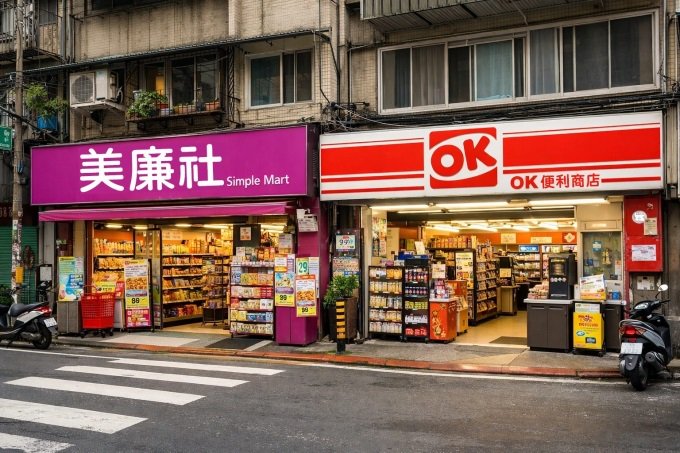
台湾零售大事件:美廉社买下OK便利店
Xin Lang Cai Jing· 2026-01-25 15:09
出品/联商专栏 撰文/黄国训 更关键的是:便利店早已不只是卖货,它是城市基础设施。台湾经济部统计资讯显示,便利商店营收长 期成长,2024年便利商店整体营业额约4235亿元新台币(约合人民币939.7亿元)。 编辑/娜娜 你会不会也有这种日常: 白天在社区店补卫生纸、泡面、牛奶;晚上临时缺东西、要缴费取件,就进便利店"救急"。 以前这是两套店型、两套逻辑;但近日中国台湾零售圈的一则并购案,把这条线直接拉平了。 1月23日,美廉社母公司三商家购董事会通过:以新台币1.25亿元(约合人民币2773万元)取得来来超 商(OK MART)100%股权与相关智慧财产,并强调短期维持双品牌、各自独立经营、确保服务稳定与 延续。 这件事为什么重要?因为台湾便利店市场已经"挤到天花板"。 台湾便利店是全球少见的高密度成熟市场。行业协会/产业报道提到,台湾超商合计接近1.4万家,而且 仍持续净增店。 在这种盘面里,增长通常不靠"多开几家",而靠两件事: 1.并购整合,把成本结构打薄(采购、物流、系统、人力); 2.把门店变成"服务节点"(取件、缴费、即时补给、到家履约)。 这笔并购的本质:双方都在补"自己最缺的那一块" 1)美 ...

CSIWM个股点评:有吸引力的风险回报
citic securities· 2026-01-23 11:16
Group 1: Company Overview and Market Position - BGF Retail operates the largest number of convenience stores in South Korea, with the convenience store sector growing rapidly, increasing its share of total retail sales from 3.9% in 2011 to 16% in 2016[10] - The company focuses on its core convenience store business and offers differentiated products, outperforming peers during the pandemic[10] Group 2: Financial Performance and Projections - BGF Retail's operating profit for Q4 2025 is expected to grow year-on-year, aligning with market expectations, driven by robust revenue growth and a low base effect[5] - Tobacco sales account for approximately 40% of BGF Retail's total revenue, with a fixed gross margin of 9%, and potential price increases could significantly boost profitability without additional sales management costs[5] Group 3: Market Trends and Competitive Landscape - The closure rate of second-tier competitors in the convenience store market is accelerating, with 7-Eleven closing 8%, 7%, and 9% of its stores in 2023, 2024, and 2025 respectively[6] - Emart24 recorded negative store growth for the first time in 2024, with a continued trend of net store closures in 2025, contrary to its initial expansion plans[6] Group 4: Catalysts and Risks - Key catalysts for BGF Retail include a rebound in profit growth since late 2023, aided by low base effects, reduced rental pressures, and operational leverage from revenue growth[8] - Potential risks include the high penetration rate of convenience stores in South Korea, where the per capita number of convenience stores has been the highest globally since 2015, with a projected annual growth rate of 4-5% for BGF Retail stores over the next five years[9]
JBB BUILDERS正与厦门见福连锁管理就有关买卖成都市见福便利店管理100%股权权益进行磋商
Zhi Tong Cai Jing· 2026-01-22 10:31
Core Viewpoint - JBB Builders (01903) is in negotiations to acquire 100% equity of Chengdu Jianfu Convenience Store Management Co., Ltd. from Xiamen Jianfu Chain Management Co., Ltd. [1] Group 1: Company Overview - The seller, Xiamen Jianfu Chain Management Co., Ltd., is a limited company registered under Chinese law, primarily engaged in managing and operating convenience stores in China [1] - The target company, Chengdu Jianfu Convenience Store Management Co., Ltd., is also a limited company registered under Chinese law, focusing on retail and convenience store operations in Sichuan, China [1] Group 2: Ownership Structure - The seller is primarily owned by Ms. Yu Xingjun and Mr. Zhang Li, who are married, along with their son Zhang Boyu, collectively holding 55.36% of the seller's equity [1] - The ownership breakdown includes direct holdings of 31.04%, 13.02%, and 0.96% by the individuals, and indirect holdings of 6.18% and 4.16% through two companies controlled by Mr. Zhang [1] Group 3: Business Model - The target company has established a "brand + operation + supply chain" business system through direct store operations, franchising, and wholesale supply chain business [1] - The target company operates 65 direct stores and 30 franchised stores, offering a wide range of products including daily necessities, fresh fruits and vegetables, pre-packaged foods, health products, and medical devices to meet consumer needs [1]
JBB BUILDERS(01903.HK)正与厦门见福连锁就有关买卖成都市见福便利店管理100%股权进行磋商
Ge Long Hui· 2026-01-22 10:29
Group 1 - JBB BUILDERS (01903.HK) is in discussions with Xiamen Jianfu Chain Management Co., Ltd. regarding the acquisition of 100% equity in Chengdu Jianfu Convenience Store Management Co., Ltd. [1] - The final price for the potential acquisition is yet to be determined and will be specified in a formal and legally binding agreement [1] - The target company operates a business model that integrates "brand + operation + supply chain" through direct stores, franchising, and wholesale supply chain operations [1] Group 2 - The target company has 65 direct stores and 30 franchised stores, offering a wide range of products including daily necessities, fresh fruits and vegetables, pre-packaged foods, health products, and medical devices [1] - The business aims to comprehensively meet consumer daily needs through its diverse product offerings [1]
JBB BUILDERS(01903)正与厦门见福连锁管理就有关买卖成都市见福便利店管理100%股权权益进行磋商
智通财经网· 2026-01-22 10:23
Core Viewpoint - JBB BUILDERS (01903) is in negotiations to acquire 100% equity of Chengdu Jianfu Convenience Store Management Co., Ltd. from Xiamen Jianfu Chain Management Co., Ltd. [1] Group 1: Company Overview - Xiamen Jianfu Chain Management Co., Ltd. is a limited company registered under Chinese law, primarily engaged in managing and operating convenience stores in China [1] - The major shareholders of the seller include Ms. Xing Jun, Mr. Zhang Li, and their son Mr. Zhang Boyu, who collectively hold 55.36% of the seller's equity [1] - The target company, Chengdu Jianfu Convenience Store Management Co., Ltd., is also a limited company under Chinese law, focusing on retail and convenience store operations in Sichuan, China [1] Group 2: Business Operations - The target company has established a "brand + operation + supply chain" business system through direct store operations, franchising, and wholesale supply chain business [1] - The target company operates 65 direct stores and 30 franchised stores, offering a wide range of products including daily necessities, fresh fruits and vegetables, pre-packaged foods, health products, and medical devices [1]