
长尾效应

Search documents
联讯仪器IPO:扭亏,逾期应收激增
IPO日报· 2026-01-13 11:45
Core Viewpoint - Suzhou Lianxun Instrument Co., Ltd. plans to raise 1.711 billion yuan through its IPO to fund five major projects, showing rapid revenue growth and a turnaround from losses to profits, but faces risks related to customer concentration and increasing overdue accounts receivable [1][5][12]. Group 1: Company Overview - Lianxun Instrument is a leading domestic high-end testing instrument manufacturer, focusing on electronic measurement instruments and semiconductor testing equipment [4]. - The company holds a 9.9% market share in China's optical communication testing instrument market, ranking third among competitors, and is the only domestic company in the top five [4]. - In the carbon silicon power device testing equipment market, Lianxun Instrument leads with a 21.7% market share in 2024 [4]. Group 2: Financial Performance - From 2022 to 2024, Lianxun Instrument's revenue grew from 214 million yuan to 789 million yuan, with a net profit turning from a loss of 37.89 million yuan in 2022 to a profit of 140.88 million yuan in 2024 [5][6]. - The company distributed cash dividends of 21.06 million yuan during its loss period in 2022, raising questions about the appropriateness of such actions amid tight operating capital [6]. Group 3: Customer Concentration and Revenue Distribution - The top five customers contributed 42.64%, 52.81%, 44.21%, and 36.94% of total revenue from 2022 to 2025 [8]. - A significant "long-tail effect" is observed, where approximately 10% of customers contribute about 75% of revenue, while 90% of customers generating less than 500,000 yuan account for around 30% of total revenue [9][11]. Group 4: Accounts Receivable and Inventory Risks - Overdue accounts receivable increased significantly, with amounts rising from 27.44 million yuan in 2022 to 115.10 million yuan in early 2025, representing nearly 40% of total accounts receivable [12]. - Inventory value surged from 70.73 million yuan in 2022 to 454 million yuan by the end of Q3 2025, with a higher provision for inventory impairment compared to industry averages [13].


7-ELEVEn做起了镜子前的新生意
3 6 Ke· 2025-12-10 00:13
Core Insights - The article highlights the evolution of Japan's 7-ELEVEn as a benchmark in the global convenience store industry, emphasizing its strategic innovations and user-centric approach that redefine its role from merely selling products to providing comprehensive lifestyle solutions [1][25]. Group 1: Strategic Innovations - 7-ELEVEn's collaboration with ReCute to offer hair styling tool rentals represents a significant shift in the convenience store's role, moving towards addressing specific customer needs rather than just selling products [3][18]. - The partnership with Netflix and FamilyMart's ESG initiatives illustrate the trend of convenience stores innovating beyond traditional product offerings to enhance customer experiences [1][2]. Group 2: Customer-Centric Approach - The focus has shifted from a product-centric model to a user-demand-driven operational system, where convenience stores aim to solve real-life problems for customers [2][24]. - The introduction of services like hair tool rentals addresses common pain points, such as the need for quick grooming solutions in various scenarios, thereby enhancing customer convenience [6][7]. Group 3: Market Trends and Demographics - The changing demographics, including the rise of female consumers and the fast-paced lifestyle, necessitate convenience stores to evolve into micro-lifestyle infrastructures that cater to immediate needs [9][11]. - The increasing importance of self-presentation among younger generations and women highlights a new market segment that convenience stores can target effectively [10][16]. Group 4: Operational Efficiency - The rental service model is low-cost and low-risk, allowing convenience stores to utilize underused space effectively while attracting customers with unique offerings [14][15]. - By increasing customer dwell time through services like ReCute, convenience stores can boost impulse purchases of related products, enhancing overall sales [15][16]. Group 5: Future Directions - The article suggests that convenience stores should focus on providing lifestyle services rather than just products, positioning themselves as essential components of daily life [25][27]. - Future innovations may include additional services that cater to personal grooming and self-care, indicating a shift towards a more service-oriented business model in the convenience store sector [27][28].

高端赛事齐聚 大湾区深挖体育经济长尾价值
Zheng Quan Shi Bao· 2025-11-14 09:51
Core Insights - The "event economy" is becoming a significant driver of consumption upgrades in the Guangdong-Hong Kong-Macao Greater Bay Area, with high-end events like the Guangzhou International Women's Tennis Open and the Billie Jean King Cup boosting sports consumption [1][8] - The infrastructure improvements in Guangzhou and Shenzhen are attracting high-end events, supported by public enthusiasm for sports and favorable government policies [3][7] Group 1: Event Impact - High-end events are enhancing the sports consumption landscape, leading to increased participation and diverse consumption scenarios, including tourism and dining [1][4] - The Billie Jean King Cup, a globally recognized women's tennis event, will be held in Shenzhen in 2025, marking a significant milestone for the region's sports scene [3] Group 2: Infrastructure Development - The Nansha Tennis Center has expanded its facilities from 18 to 32 courts, becoming one of the largest tennis centers in the Greater Bay Area, which is crucial for hosting high-end events [2] - The Shenzhen Bay Sports Center is undergoing upgrades to enhance its capabilities for hosting major events, incorporating smart technologies for improved operational efficiency [2] Group 3: Consumer Behavior - The sports consumption scale in Guangzhou is projected to reach 63.125 billion yuan in 2024, with a per capita spending of 3,345.51 yuan, indicating a strong market for sports-related activities [7] - In Shenzhen, the total sports consumption reached 68.903 billion yuan in 2023, with per capita spending at 3,873.13 yuan, reflecting a high engagement in sports activities [7] Group 4: Economic Growth - High-end events are recognized as important platforms for economic collaboration and new consumption opportunities, contributing to the overall economic growth and urban competitiveness [7][8] - The integration of digital communication, consumption upgrades, and policy support is enhancing the economic and social value of sports events [7]
高端赛事齐聚,大湾区深挖体育经济长尾价值
2 1 Shi Ji Jing Ji Bao Dao· 2025-11-13 12:33
Core Insights - The "event economy" is becoming a significant driver of consumption upgrades in the Guangdong-Hong Kong-Macao Greater Bay Area, with high-end events like the Guangzhou International Women's Tennis Open and the Billie Jean King Cup being hosted in Guangzhou and Shenzhen [1][3][7] Group 1: High-End Events and Infrastructure - Numerous high-end events have taken place in Guangzhou and Shenzhen this year, including the Guangzhou International Women's Tennis Open and the Billie Jean King Cup, showcasing the region's growing appeal for such events [1][3] - The successful hosting of these events is attributed to the region's robust infrastructure and high public engagement, with facilities like the Nansha Tennis Center being upgraded to accommodate more events [1][3] - The Billie Jean King Cup is expected to reach over 800 million tennis fans globally, highlighting its international significance and the region's capability to host major sporting events [3] Group 2: Technological Integration and Venue Upgrades - Companies like China Resources Land are enhancing sports venues, such as the Shenzhen Bay Sports Center, by integrating technologies like digital twins, AI, and IoT to improve event experiences and operational efficiency [2] - The upgrades to these venues are designed to ensure sustainable operations post-events, contributing to long-term community engagement in sports [2] Group 3: Economic Impact and Consumer Behavior - The influx of high-end events is leading to a diverse range of consumer spending, with sectors like tourism, dining, and merchandise seeing significant growth [5][6] - In Guangzhou, the total sports consumption scale is projected to reach 63.125 billion yuan in 2024, with a per capita spending of 3,345.51 yuan, indicating a strong market for sports-related activities [6] - Shenzhen's sports consumption is also notable, with a total scale of 68.903 billion yuan in 2023 and a per capita spending of 3,873.13 yuan, reflecting a high engagement level in sports among residents [6] Group 4: Long-Tail Effect and Community Engagement - The "long-tail effect" of high-end events is becoming increasingly evident, as facilities and event popularity drive broader community participation in sports [4][5] - The enthusiasm for sports is reflected in the active participation of residents, with many engaging in various sports activities at local venues, further enhancing the local sports culture [5]
从节日热度到长期价值:2025万圣节海外红人营销的品牌长尾策略
Sou Hu Cai Jing· 2025-10-29 03:55
Core Insights - Halloween serves as a prime marketing opportunity for brands, leveraging social media and influencer marketing to create buzz, but sustainable brand value requires long-term strategies beyond short-term exposure [1] Group 1: Long-term Marketing Strategy - Brands should view Halloween marketing as part of an annual narrative rather than a one-time event, integrating holiday themes with brand values [3] - A layered approach to the marketing cycle is essential, including pre-event buildup, peak engagement during the holiday, and post-event user-generated content (UGC) sharing [3] - Multi-stage influencer strategies should be employed, utilizing top influencers for initial buzz, mid-tier influencers for spreading heat, and everyday users for ongoing interaction [3] Group 2: UGC Potential and Engagement - Encouraging user participation in content creation is crucial for maintaining brand momentum, with simple and entertaining challenges like "HalloweenGlowUp" to generate UGC [5] - Custom filters and virtual assets on platforms like TikTok and Instagram can create lasting brand visibility, allowing users to incorporate brand elements into their everyday content [5] - Incentives such as creative video contests and random user rewards can sustain engagement and keep the brand within social conversations [5] Group 3: Brand Asset Accumulation - Collaborations with influencers should extend beyond short-term exposure to build a long-term content ecosystem, including limited edition products and behind-the-scenes stories [7] - A content co-creation system with influencers can ensure that brand messaging continues beyond the holiday context, fostering ongoing consumer engagement [7] - Relationships established during holiday marketing can evolve into creator programs, enabling consistent content collaboration and community building [7] Group 4: Brand Recognition and Emotional Connection - Short-term visual impact can attract attention, but lasting brand value is derived from long-term user recognition and emotional resonance [9] - Establishing a long-term topic pool from holiday activities can help brands maintain relevance in future seasonal campaigns [11] - Collecting and showcasing user stories and feedback can enhance community interaction and brand loyalty [11] - Continuous updates and interactions can help brands maintain algorithmic visibility, creating lasting brand memory assets [11] Conclusion - Halloween influencer marketing should not be limited to short-term excitement but should be viewed as an opportunity for brands to build long-term communication and emotional assets, leveraging strategic planning, UGC-friendly designs, ongoing content co-creation, and community engagement to enhance brand loyalty and influence [12]

从篮球赛到全民健身热——“浙BA”“长尾效应”观察
Xin Hua Wang· 2025-10-27 07:41
Core Insights - The article highlights the growing popularity of basketball in Zhejiang Province, driven by the Zhejiang Urban Basketball League ("浙BA"), which has sparked a nationwide fitness movement [1][2][5] Group 1: Event Overview - "浙BA" is the largest and highest-level grassroots basketball event in Zhejiang, requiring participants to have local identities and be amateur players, ensuring its community-oriented nature [1][2] - The league has inspired various local events such as "县BA," "村BA," and "楼BA," demonstrating its influence and the emergence of grassroots sports [2][4] Group 2: Community Engagement - Participants in "浙BA" often balance their professional lives with basketball, showcasing the league's appeal to diverse demographics, including busy professionals [2][3] - The league fosters a sense of community and connection among players and fans, enhancing their engagement and satisfaction [2][5] Group 3: Infrastructure and Participation - Zhejiang Province boasts over 55,000 basketball courts, covering an area of 32.71 million square meters, ranking it among the top in the country [4] - The province's sports participation rate reached 45.3% last year, with a national physical fitness qualification rate of 94.6%, indicating a strong culture of sports and fitness [4][5] Group 4: Long-term Impact - The success of "浙BA" is attributed to Zhejiang's long-term investment in public fitness initiatives, including the availability of sports facilities and community engagement programs [5] - The league serves as a catalyst for transforming public fitness from mere access to active participation, contributing to the broader goal of a healthier society [5]
5000余款游戏收入不到100美元,游戏开发亏惨了?
3 6 Ke· 2025-10-24 12:33
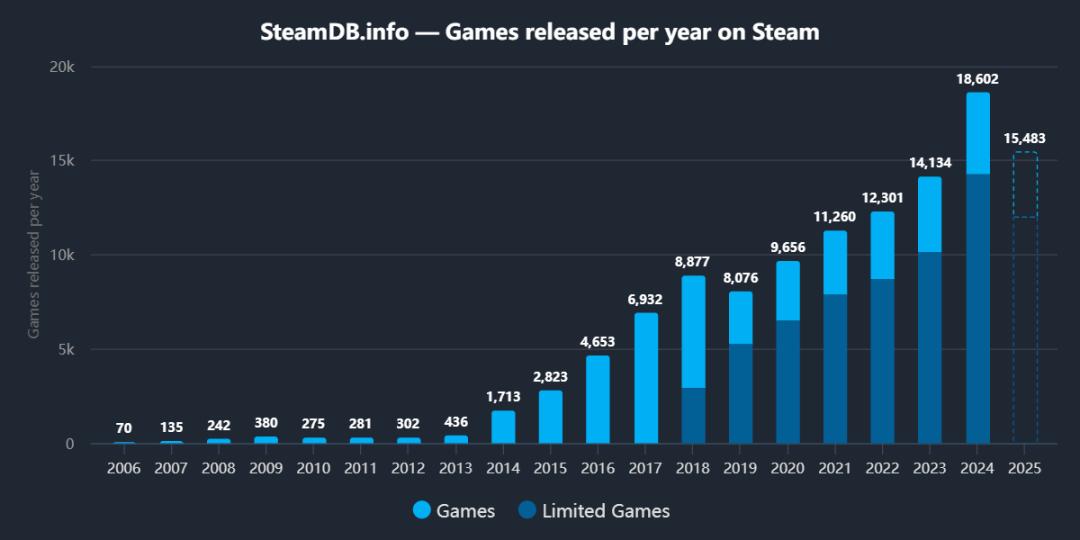
Core Insights - The gaming industry is experiencing a significant market divide, with 40% of the 13,000 new games released this year generating less than $100 in revenue, failing to cover the $100 listing fee on Steam [2][3] - Only about 1,000 games have surpassed the $100,000 revenue mark, highlighting the survival challenges faced by independent game developers and raising concerns about the overall health of the gaming industry [3] Market Dynamics - The proliferation of AI technology has drastically lowered the barriers to game development, allowing solo developers to create seemingly complete games in a short time, leading to an explosive increase in market supply [4][5] - The saturation of the market has made player attention a scarce resource, causing independent games with limited marketing budgets to struggle for visibility [5][7] Consumer Behavior - Players are increasingly risk-averse, preferring games with established reputations, high media scores, or recommendations from friends, which diminishes their willingness to try unknown new titles [7][8] - This "risk-averse mentality" concentrates player traffic towards well-known IPs and successful independent games, reinforcing a "winner-takes-all" dynamic [8] Revenue Distribution - Games that exceed $10,000 in revenue are predominantly exploration, adult content, and visual novel genres, while those earning less than $10,000 are mainly exploration, arcade, and action-adventure genres, indicating a significant disparity in market performance [11][12] - The data reveals a "long tail" effect where a large number of low-revenue games coexist with a few high-revenue titles, creating a skewed market landscape [12] Characteristics of Successful Games - High-revenue games typically exhibit characteristics of "high pricing, high playtime, and high immersion," successfully meeting core player demands and justifying premium pricing [13] - Conversely, low-revenue games often fall into a cycle of "low pricing, low playtime, and low returns," making it difficult for them to stand out in a crowded market [13][16] Challenges for Developers - The oversaturation of similar game types leads to intense competition, price wars, and imitation, making it challenging for new entrants to differentiate themselves [16][17] - Successful games often innovate in gameplay, narrative, or artistic expression, allowing them to break through the competitive noise [17] Conclusion - The future of the gaming market will favor developers who focus on creating unique value propositions rather than merely following trends or relying on technology [23][25] - The industry is shifting towards a model where success is derived from a deep understanding of player preferences and a commitment to quality, as evidenced by recent successful titles [25]
金融监管总局副局长肖远企 AI应用对金融的促进与影响可能是重大的
Shang Hai Zheng Quan Bao· 2025-10-19 18:49
Core Insights - The application of artificial intelligence (AI) in the financial sector is expected to have significant and fundamental impacts [2] - AI is driving down the costs of developing, transforming, and producing financial products, enabling greater product diversification and accessibility to remote customers [2] - Large financial institutions possess inherent advantages in resource technology investment, customer base, and data accumulation, which enhances their predictive and risk management capabilities [3] Financial Supply - AI is making it economically feasible to address previously overlooked niche demands, leading to a "long-tail effect" in financial products [2] - Financial institutions are likely to engage more directly with stakeholders, resulting in changes in customer experience [2] Financial Concentration - The financial industry, which manages currency and risk, tends to collaborate with technology companies that have advantages in technology, research, and application promotion [2] - The competitive landscape may create barriers for smaller institutions, leading to a "Marshall conflict" where the stability and efficiency of the financial structure require diverse financial entities [4] Core Competitiveness of Financial Institutions - Core competitiveness factors include capital strength, customer base, risk control capabilities, talent pool, corporate governance, and corporate culture [4] - The importance of data and algorithms is increasing, necessitating a focus on transforming "usable data" into "trustworthy data" to avoid misleading decisions [4] Financial Production Potential - AI is expected to enhance the efficiency of resource allocation in finance, potentially optimizing the distribution of resources along the production possibility curve [5] - The development of AI is anticipated to push the maximum production possibility frontier outward [5] Financial Regulation - Financial regulation encourages institutions to utilize the latest technologies to optimize services, reduce operational costs, and improve management efficiency while enhancing risk management [5] - A dynamic balance between concentration and decentralization, uniqueness and homogeneity, safety and efficiency is essential for building a resilient financial system [5]
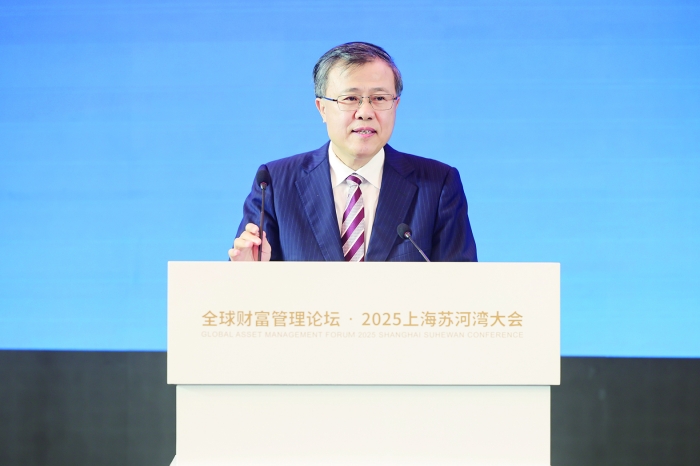
全球财富管理论坛·2025上海苏河湾大会举行 专家建言“世界变革下的未来之路”
Jing Ji Guan Cha Wang· 2025-10-19 02:59
Group 1: Monetary Policy and Financial Regulation - The People's Bank of China emphasizes the dual function of monetary policy, focusing on both total and structural adjustments to address the structural challenges in the economy [1] - The design of structural monetary policy tools aims to create an incentive-compatible mechanism, linking the central bank's base currency issuance to commercial banks' lending to specific sectors [1] - The application of artificial intelligence in finance is expected to have significant and fundamental impacts, enhancing financial services and operational efficiency while ensuring risk management [2] Group 2: Financial Supply and Demand - AI technology is projected to drastically reduce the costs of financial product development and production, making it economically feasible to cater to previously neglected niche demands, thus generating a "long tail effect" [2] - Financial regulation encourages institutions to leverage the latest technologies to optimize services, reduce operational costs, and improve management efficiency while maintaining a balance between safety and efficiency [2] Group 3: Macro Policy and Economic Challenges - The rising global public debt and increasing leverage levels pose challenges, necessitating the use of macro policy space to enhance effective borrowing and investment in data-driven infrastructure [2][3] - China is advised to optimize its debt structure and implement comprehensive debt solutions while maintaining a sustainable government debt ratio aligned with economic resilience [3] - In the face of global protectionism and fragmented supply chains, China is adopting a more open approach to globalization and is actively constructing a new development pattern that balances safety and efficiency [3]
肖远企:监管鼓励支持金融机构运用最新科技,同时确保稳定有序
Bei Ke Cai Jing· 2025-10-18 14:03
Group 1 - The core viewpoint emphasizes the significant and fundamental impact of technology, particularly artificial intelligence, on the financial sector, enhancing efficiency and promoting diverse financial products [1] - The integration of AI in finance is expected to lower the costs of product development and production, making it economically viable to address previously overlooked niche demands, thus creating a "long-tail effect" [1] - Financial institutions are encouraged to collaborate with technology companies that possess advantages in research, development, and application, as stability and reliability are crucial in the financial sector [1] Group 2 - The diversification of financial entities and markets is essential for maintaining a stable and efficient financial structure, particularly for small and medium-sized institutions adapting to technological changes [2] - The importance of data and algorithms has increased in the AI era, necessitating a focus on transforming "usable data" into "trustworthy data" to avoid misleading decisions [2] - The principle of "selection neutrality" is highlighted as a key competitive factor for financial institutions in the context of numerous choices available in data and modeling [2] Group 3 - AI is expected to enhance the efficiency of resource allocation in finance, potentially optimizing the distribution of resources along the production possibility curve [3] - International financial regulatory bodies are closely monitoring the development and application of AI in the financial sector, encouraging institutions to leverage technology for improved services and risk management [3] - A resilient financial system requires a balance between concentration and dispersion, uniqueness and homogeneity, as well as safety and efficiency, with regulatory bodies needing to enhance their technological capabilities [3]