
养老基金

Search documents
韩国国民年金公团启动与央行的外汇互换协议 并开始货币对冲交易
Xin Lang Cai Jing· 2025-12-17 14:48
Core Viewpoint - The National Pension Service (NPS) of South Korea has initiated a foreign exchange swap agreement with the Bank of Korea to stabilize the Korean won, which has been one of the worst-performing currencies in Asia this year [1][2]. Group 1: Foreign Exchange Swap Agreement - The NPS has started a foreign exchange swap agreement with the Bank of Korea [1][2]. - The NPS has also begun currency hedging transactions with the central bank, although the nature of these hedges (tactical or strategic) has not been disclosed [1][2]. Group 2: Currency Stabilization Efforts - The NPS has reportedly started selling US dollars to support the Korean won's exchange rate [1][2]. - As the largest institutional investor in South Korea, the NPS manages approximately $542 billion in overseas assets and is taking on a greater responsibility for maintaining exchange rate stability [1][2].
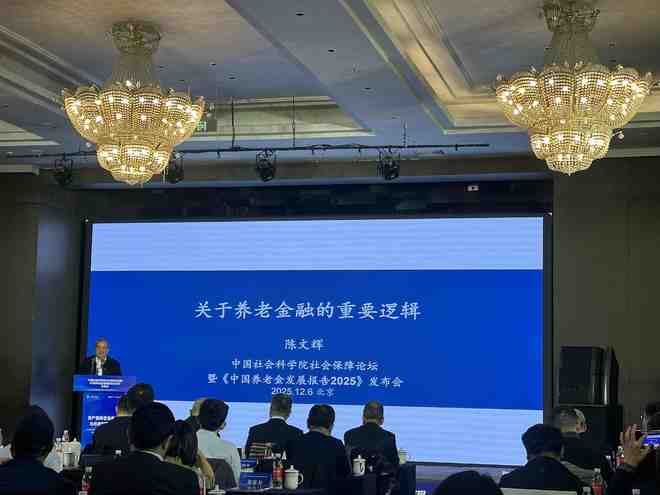
陈文辉:养老基金是最好的耐心资本
Zhong Guo Jing Ying Bao· 2025-12-17 10:06
Core Viewpoint - The development of pension funds and long-term life insurance is crucial for addressing aging population issues and creating a substantial supply of patient capital, which is essential for modern industrial system construction and technological innovation [2][3]. Group 1: Importance of Patient Capital - Patient capital refers to long-term investments that do not seek short-term returns, focusing instead on supporting the sustained development of the real economy [3]. - The Chinese government has emphasized the cultivation and development of patient capital in several key documents, including the Central Economic Work Conference and the "14th Five-Year Plan" [3]. - Industries such as high-end manufacturing, new energy, and biomedicine require long-term funding due to their extended research and development cycles, which short-term capital cannot adequately support [3]. Group 2: Current Challenges - There is a notable shortage of patient capital supply in China, as institutional funds like wealth management products and public funds typically have short holding periods for equity investments [3]. - The previous reliance on short-term funds as long-term investments has proven unsustainable, particularly highlighted by the impact of the "Asset Management New Regulations" introduced in 2018 [3]. Group 3: Role of Pension Funds and Long-term Life Insurance - Pension funds and long-term life insurance are identified as the primary sources of true patient capital due to their long liability durations, which align with the long-cycle demands of modern industrial systems [5]. - These funds can effectively support strategic industries such as semiconductors and new energy, which require years of continuous investment [5]. Group 4: Risk Management for Pension Funds - A comprehensive risk management framework is necessary for pension funds to ensure they meet long-term investment goals, focusing on long-term trend risks such as demographic changes and climate change [6]. - The risk management system should extend beyond traditional market and credit risks to include operational, ESG, geopolitical, reputational, and long-term liability matching risks [6]. - Continuous enhancement of asset-liability management and stress testing is essential to assess potential risks and ensure the financial health of pension funds [6].

韩国吹响货币保卫战号角!养老基金“上前线” 启动灵活对冲机制
Zhi Tong Cai Jing· 2025-12-16 07:14
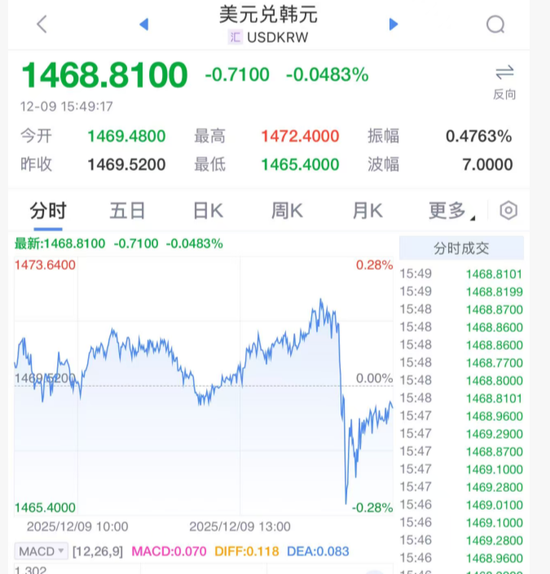
Core Viewpoint - The South Korean government is transforming the National Pension Service (NPS) into a proactive player in the foreign exchange market to stabilize the weakening won, which is nearing a 16-year low against the dollar [1][2]. Group 1: NPS's Role and Strategy - The NPS, one of the largest pension funds globally with approximately $542 billion in overseas assets, will adopt more flexible hedging strategies to support currency stability amid a significant outflow of foreign investment and a sharp depreciation of the won [1][3]. - The NPS has extended its $65 billion foreign exchange swap agreement with the Bank of Korea until the end of 2026, allowing it to manage dollar demand more effectively and reduce direct market impact [2][4]. - The NPS plans to adjust its strategic and tactical hedging asset ratio to about 15% of its global asset allocation, utilizing various methods, including selling dollar forward contracts [2][3]. Group 2: Market Conditions and Pressures - The South Korean government faces urgent pressure to support the won, especially with a commitment to invest $350 billion in the U.S., which could exacerbate the currency's decline if not managed properly [2][3]. - Factors such as foreign capital outflows, increased overseas asset allocation by residents and institutions, and corporate dollar demand are driving the need for a more robust currency stabilization strategy [3][4]. - The NPS's involvement is seen as a way to signal stronger market stability and reduce reliance on direct intervention by the central bank, which has limited monetary policy flexibility due to a weak won and housing price volatility [3][4]. Group 3: Hedging Framework and Market Impact - The NPS's new flexible hedging framework may allow for adjustments beyond the previously set 10% limit on foreign currency asset hedging, depending on market conditions [4][6]. - Economists suggest that a more dynamic management of the hedging ratio could significantly enhance the NPS's impact on stabilizing the won, particularly if it can respond more quickly to fluctuations in the exchange rate [6]. - The NPS's actions, including selling dollars to support the won, are critical as the currency approaches its weakest level since 2009, with the exchange rate hovering around 1,472 won per dollar [5][6].
突然!“救市”
Xin Lang Cai Jing· 2025-12-09 08:19
Core Viewpoint - The A-share market is experiencing fluctuations, with the Fujian sector showing strength and the Korean National Pension Service selling US dollars to support the Korean won [1][2]. Group 1: Market Performance - On December 9, the A-share market showed mixed results, with the Shanghai Composite Index down by 0.37%, the Shenzhen Component Index down by 0.39%, and the ChiNext Index up by 0.61% [5][20]. - The computing hardware stocks continued to perform strongly, with companies like Dekeli and Yueling shares hitting the daily limit [6][21]. Group 2: Fujian Sector - The Fujian sector is gaining momentum, with over ten stocks, including Anji Food and Longzhou Co., hitting the daily limit. This is driven by the release of the 15th Five-Year Plan for economic and social development in Quanzhou, which emphasizes the construction of new infrastructure and digital transformation [20][22]. - The plan includes initiatives to optimize the layout of new infrastructure related to networks, computing power, and data, aiming to create a modern, efficient information network [22][23]. Group 3: Korean National Pension Service - The Korean National Pension Service (NPS) has been selling US dollars as part of a tactical foreign exchange hedging strategy to counter the recent depreciation of the Korean won. As of the end of September, NPS held approximately $542 billion in overseas assets [2][18]. - The maximum hedging ratio for NPS is about 15%, equivalent to approximately $81.3 billion, with tactical foreign exchange hedging allowing for adjustments within a ±5% range of its overseas asset portfolio [2][18]. Group 4: Polysilicon Market - On December 9, polysilicon futures contracts saw a significant increase, indicating a bullish trend in the market [26][28]. - The establishment of Beijing Guanghe Qiancheng Technology Co., Ltd., with a registered capital of 3 billion yuan, aims to explore strategic cooperation opportunities within the industry, potentially impacting polysilicon supply and pricing dynamics [29].


突然!“救市”
中国基金报· 2025-12-09 08:14
Group 1: Market Overview - The A-share market experienced fluctuations, with the Shanghai Composite Index down by 0.37% and the Shenzhen Component Index down by 0.39%, while the ChiNext Index rose by 0.61% [3] - The Korean National Pension Service (NPS) has been selling US dollars to support the weakening Korean won, holding approximately $542 billion in overseas assets as of September 30 [1] Group 2: Sector Performance - The Fujian sector showed strong performance, with multiple stocks such as Anji Food and Longzhou Co. hitting the upper limit [4][5] - The proposal from the Quanzhou Municipal Committee emphasizes the construction of new infrastructure and digital transformation, which is expected to boost local economic development [4] - The commercial aerospace concept stocks remained active, with companies like Shaanxi Huada and Aerospace Changfeng reaching their daily limit [6][7] Group 3: Solar Industry Insights - The multi-crystalline silicon market saw significant price increases, indicating a potential recovery in the sector [10][21] - A new platform for multi-crystalline silicon capacity integration has been established, with a registered capital of 3 billion RMB, aimed at exploring strategic cooperation opportunities within the industry [21] - Analysts suggest that if capacity is cleared and price transmission is smooth, integrated companies may see a bottom reversal in profitability, with a focus on companies like Longi, Trina, and JA Solar [21]


GPIF首投日本另类投资基金 500亿日元布局房地产与数据中心
Zhi Tong Cai Jing· 2025-09-16 23:41
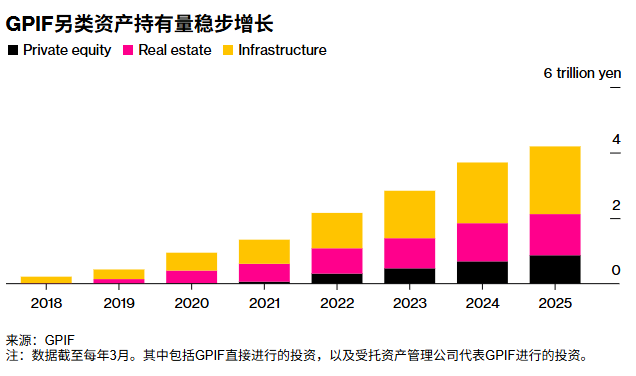
Core Insights - The Government Pension Investment Fund (GPIF) of Japan is making its first independent investment in domestic alternative asset funds, allocating a total of 50 billion yen (approximately 340 million USD) towards real estate and infrastructure, specifically targeting data centers [1][4] Group 1: Investment Strategy - GPIF is investing 40 billion yen in an infrastructure fund and 10 billion yen in a real estate fund, marking a shift from relying on asset management companies for fund selection [1][4] - As of June 30, GPIF's allocation to alternative investments was only 1.6% of its total assets, significantly below the 5% cap [1][4] Group 2: Market Context - Global pension funds are increasingly seeking additional returns from alternative assets like private equity and real estate, which are less affected by stock and bond market volatility [1] - Compared to international peers, GPIF's allocation to alternative assets remains low; for instance, the National Pension Service of Korea has an allocation of about 16% and CPP Investments has around 56% in similar assets [4] Group 3: Operational Changes - GPIF's new strategy enhances its oversight capabilities over investments, as it no longer relies on asset management firms [4] - The specific investments include a 10-year commitment to a DigitalBridge Group Inc. infrastructure fund focused on data centers and a Morgan Stanley real estate fund [4][5]
库拉索养老基金2024年的总回报率为6.3%
Shang Wu Bu Wang Zhan· 2025-09-11 03:08
Core Insights - The Curaçao Pension Fund (APC) reported a total return of 6.3% for 2024, down from 8.7% in 2023 [1] - As of the end of 2024, APC's overseas assets accounted for 54% of its portfolio, while local assets made up 46% [1] - The international investment yield was 7.4%, with stock returns reaching 14.5% and bond returns at 2.2% [1] Investment Performance - The domestic investment portfolio return for APC was 4.9%, slightly lower than the 5.2% recorded in 2023 [1] - APC provided local loans to sectors such as tourism and utilities, achieving sustained returns [1] - Large real estate projects further solidified APC's position in the local market [1] Financial Management - APC withdrew 234.5 million Florins from its international investment portfolio for pension payouts and reinvestment [1] - The report highlighted ongoing economic recovery in Curaçao and other parts of the Dutch Caribbean, driven by growth in the accommodation tourism sector, renewable energy investments, and large real estate projects [1] Challenges and Future Developments - APC warned of ongoing challenges, including declining purchasing power, continuous reform pressures in healthcare and pensions, and the repayment of COVID-19 related loans [1] - The establishment of APC Bank is progressing, with operations expected to commence by the end of Q2 2025 [2]
机构:日本养老基金行业任命CIO凸显出提升投资能力的必要性
news flash· 2025-06-09 23:06
Group 1 - The appointment of Chief Investment Officers (CIOs) in Japan's pension fund industry indicates a growing awareness of the need to enhance investment capabilities [1] - It is crucial to appoint individuals with deep investment expertise rather than traditional administrative personnel for these roles [1] - Management should be granted broad decision-making authority in investment matters [1]
一切为了业绩,日本养老基金行业历史上首次任命CIO
news flash· 2025-06-09 22:59
Core Viewpoint - Japanese pension funds are attempting to enhance returns in a volatile market by taking unprecedented measures, including the appointment of a Chief Investment Officer (CIO) [1] Group 1 - The Organization for Small & Medium Enterprises and Regional Innovation Japan (OMTI) has established a CIO position in April this year, aimed at promoting the development of small enterprises [1]
中欧金融工作组第二次会议在比利时布鲁塞尔举行,就优化市场准入等具体诉求进行了充分沟通
news flash· 2025-05-14 11:09
Core Viewpoint - The second meeting of the China-Europe Financial Working Group took place in Brussels, focusing on various economic and financial stability issues amid global uncertainties [1] Group 1: Economic and Financial Stability - The meeting addressed global economic uncertainties and the macroeconomic situations of China and Europe, emphasizing the importance of financial stability [1] - Discussions included regulatory frameworks for the banking and insurance sectors, highlighting the need for robust oversight in these industries [1] Group 2: Emerging Areas of Cooperation - Constructive discussions were held on sustainable finance, indicating a mutual interest in promoting environmentally responsible investment practices [1] - The meeting also explored cross-border data flows and the construction of cross-border payment systems, reflecting a commitment to enhancing financial integration [1]