
功能饮料

Search documents
业绩持续亏损 别样肉客盯上功能饮料
Bei Jing Shang Bao· 2026-01-19 15:17
Core Viewpoint - Beyond Meat is expanding from the plant-based meat sector into the beverage market with the launch of Beyond Immerse, a plant-based functional drink aimed at muscle recovery, gut health, and immune support [1][2] Group 1: Product Launch and Strategy - Beyond Immerse is made primarily from pea protein and includes tapioca fiber, vitamin C, and electrolytes, and is free from GMOs and sugar alcohols [1] - The drink is currently available exclusively on Beyond Meat's new direct sales website, Beyond Test Kitchen, with future retail expansion dependent on customer feedback [1] - This marks Beyond Meat's first non-meat product launch, driven by rising consumer interest in obtaining protein from various product forms [1][2] Group 2: Financial Performance - Beyond Meat has faced declining revenues and ongoing losses since 2022, with revenues of $419 million in 2022, $343 million in 2023, and projected $326 million in 2024, alongside losses of $366 million, $338 million, and $160 million respectively [2] - In the first three quarters of 2025, the company reported revenues of $214 million, a year-over-year decline of 14.37%, with net losses widening to $193 million [2] Group 3: Market Trends and Competitive Position - The launch of Beyond Immerse aligns with a growing market for high-protein beverages, which saw a 122% increase in product offerings from 2020 to 2024 [3] - Innova Market Insights identifies "Powerhouse Protein" as a key trend for 2026, with nearly 60% of global dining consumers actively seeking to increase protein intake [3] - Beyond Meat's competitive edge lies in its expertise in plant protein extraction and flavor masking technology, as well as its established supply chain for pea protein, which offers cost and quality advantages [3] Group 4: Industry Insights - Experts suggest that Beyond Meat's move into beverages is a short-term strategy to address performance pressures, while also representing a long-term trend of horizontal expansion in the plant protein category [4]
业绩持续亏损 功能饮料会是别样肉客的出路吗?
Bei Jing Shang Bao· 2026-01-19 15:15
Core Viewpoint - Beyond Meat, known as the "first plant-based meat stock," is entering the beverage market with its new product, Beyond Immerse, a plant-based functional drink made primarily from pea protein, marking its first significant foray into functional foods and beverages [2][3] Expansion into Beverage Business - Beyond Meat has launched Beyond Immerse, a plant-based functional drink that includes pea protein, cassava fiber, vitamin C, and electrolytes, available in two protein versions (10g and 20g) with corresponding calorie counts of 60 and 100 [3] - The drink is offered in three flavors: Peach Mango, Lemon Lime, and Orange Tangerine, and is positioned for post-workout or daily supplementation, focusing on muscle recovery, gut health, and immune support [3] - Currently, Beyond Immerse is sold exclusively through Beyond Meat's new direct-to-consumer website, Beyond Test Kitchen, with future retail expansion contingent on customer feedback [3][4] Breaking Through "Plant Meat" Limitations - The launch of Beyond Immerse comes as Beyond Meat faces significant financial losses, with revenues declining from $419 million in 2022 to an expected $326 million in 2024, alongside increasing net losses [5][6] - The company aims to diversify its offerings beyond meat substitutes, with CEO Ethan Brown stating the goal is to become a "global protein company of the future" [6][7] Market Trends and Competitive Landscape - The global market for high-protein shakes and beverages has seen a 122% increase from 2020 to 2024, with a growing consumer interest in protein intake [8] - Traditional beverage giants and sports nutrition brands are also entering the high-protein plant-based beverage space, indicating a competitive landscape for Beyond Meat [8] - Despite the challenges, Beyond Meat's expertise in plant protein extraction and flavor masking, along with its sustainable brand image, positions it favorably against competitors [9] Strategic Positioning - The introduction of Beyond Immerse reflects a strategic shift towards product diversification and tapping into faster-growing markets, moving away from a sole focus on meat alternatives [7][8] - Industry experts suggest that while this move may be seen as a temporary measure due to financial pressures, it represents a necessary evolution towards a more resilient business model [9]

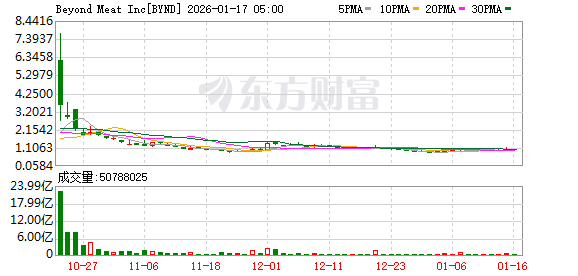
业绩持续亏损,功能饮料会是别样肉客的出路吗?
Bei Jing Shang Bao· 2026-01-19 13:53
Core Insights - Beyond Meat has officially entered the beverage market with the launch of Beyond Immerse, a plant-based functional drink made primarily from pea protein, marking its first significant foray into functional foods and beverages [1][2] - The company aims to diversify beyond its core plant-based meat products amid ongoing revenue declines, seeking new growth avenues [1][4] Product Details - Beyond Immerse features two protein versions (10g and 20g) with corresponding calorie counts of 60 and 100, and includes 7g of dietary fiber, with no GMOs or sugar alcohols [2] - The drink is available in three flavors: Peach Mango, Lemon Lime, and Orange Tangerine, and is positioned for post-workout or daily consumption, focusing on muscle recovery, gut health, and immune support [2] Market Context - The launch comes at a time when Beyond Meat is experiencing significant financial losses, with revenues dropping from $419 million in 2022 to an expected $326 million in 2024, alongside increasing net losses [4][5] - The global plant-based meat industry is facing a downturn, with a 64% drop in venture capital investment in 2024, leading to challenges for companies like Nestlé and Unilever, which have scaled back their plant-based meat operations [5] Strategic Shift - Beyond Meat is shifting its brand focus from meat alternatives to traditional plant proteins, gradually phasing out the "Meat" designation from its branding [6] - The introduction of Beyond Immerse reflects a deeper strategy to diversify product offerings and tap into faster-growing markets [6][7] Competitive Landscape - The high-protein beverage market is rapidly expanding, with a reported 122% growth in high-protein shakes and drinks from 2020 to 2024, indicating a strong consumer interest in protein intake [7] - Competitors in the beverage space include major brands like Danone and Protein Works, which have launched their own high-protein plant-based drinks [7] Consumer Insights - The company is leveraging a Direct-To-Consumer (DTC) model through its new website, Beyond Test Kitchen, to test market acceptance and gather consumer feedback, which is crucial given its current cash flow challenges [3][8] - Despite the potential for growth, there is a risk that consumers may still associate Beyond Meat primarily with plant-based meat, which could hinder the acceptance of its new beverage line [8]

一周港股IPO:袁记食品、比格餐饮等26家递表;牧原股份等3家通过聆讯
Cai Jing Wang· 2026-01-19 10:35
Group 1: Market Activity - A total of 26 companies submitted applications to the Hong Kong Stock Exchange last week, marking a recent high in submissions [2] - Among the 26 companies, 3 passed the hearing, and 1 company is currently in the process of an IPO [10][12] Group 2: Industry Highlights - The semiconductor and computing sectors are particularly active, with companies like Weizhao Semiconductor and Placo Electronics submitting applications [2] - Weizhao Semiconductor reported a revenue of 615 million yuan and a profit of 40.25 million yuan for the first nine months of 2025 [2] - Placo Electronics achieved a revenue of 751 million yuan and a profit of 76.11 million yuan for the same period [2] Group 3: Robotics Sector - Several robotics companies, including Yifei Intelligent and Estun, are also pursuing listings [3] - Estun is ranked first in the industrial robotics sector by revenue, with a market share of 1.7% globally [3] - TuoStar is recognized as a leader in the domestic industrial robotics market, with a revenue of 1.688 billion yuan and a net profit of 47 million yuan for the first nine months of 2025 [3] Group 4: Biopharmaceutical Sector - Multiple biopharmaceutical companies are applying for listings, including Zeling Bio and Exegenesis Bio Inc. [4][5] - Zeling Bio reported a loss of 1.19 million yuan for the first nine months of 2025, while Exegenesis Bio has not yet received regulatory approval for its products [5][6] - Shanghai Shengsheng achieved a revenue of 538 million yuan and a net profit of 11.3 million yuan for the same period [4] Group 5: Food and Beverage Sector - The food and beverage sector is seeing significant activity, with companies like Yuanji Food and Qian Dama submitting applications [7] - Yuanji Food reported an adjusted net profit of 192 million yuan for the first nine months of 2025, a 31% increase year-on-year [7] - Qian Dama achieved a GMV of 14.8 billion yuan in 2024, maintaining its position as the top player in the community fresh product retail chain industry [7] Group 6: New Listings - Four new stocks were listed last week, with all experiencing price increases on their first trading day [13] - The stock of Howie Group, a global leader in CMOS image sensors, rose by 16.22% on its debut [13] - Zhaoyi Innovation, a storage chip leader, saw its stock price increase by 38.27% on its first day of trading [13]


林里柠檬茶获融资;东鹏饮料通过港交所聆讯;费列罗任命新董事长
Sou Hu Cai Jing· 2026-01-19 07:42
Investment Dynamics - Beijing Ruifen Biotechnology Co., Ltd. has completed a C round financing of over 1 billion yuan, led by Xingxiang Capital, with Ruipeng Xiangyu Fund participating. The funds will be used to promote commercialization and new capacity construction, accelerating R&D innovation and market expansion in both human and animal health platforms [3]. - The lemon tea brand "Linlee" has completed a tens of millions A round financing, with Qianhai Ark Fund as the sole investor. The funds will primarily be used for brand building, supply chain upgrades, and organizational improvements. Linlee has over 1,900 stores across 31 provinces and over 200 cities, targeting a GMV of 2.7 billion yuan by 2025 [6]. - Unilever Ventures has invested in two Indian beauty brands, Secret Alchemist and SkinInspired, to increase its presence in the Indian market. SkinInspired is a high-end skincare brand, while Secret Alchemist is a pioneer in pure perfume in India [8]. Listing Dynamics - Dongpeng Beverage Group has passed the listing hearing on the Hong Kong Stock Exchange, with Huatai International, Morgan Stanley, and UBS as joint sponsors. The company aims for a target transaction scale of approximately 1 billion USD, with plans to start pre-listing promotions soon [9][10]. - Dongpeng Beverage is recognized as China's leading functional beverage company, with the highest revenue growth among the top 20 listed soft drink companies globally [10]. Brand Dynamics - Xibei Catering will close 102 stores nationwide, accounting for 30% of its total stores. This decision follows a significant external crisis related to pre-made dishes, leading to a 50% year-on-year decline in store revenue [12]. - Condé Nast's fashion magazine "GQ" is set to return with a new account, GQStudio, indicating a revival of the brand after previous collaborations fell through [14]. Personnel Dynamics - Achilles Ion Gabriel will step down as the creative director of Camper and CamperLab after over six years. The internal creative team will take over the creative direction following his departure [16]. - Ferrero Group has appointed Massimo Micieli as the new chairman, marking a transition period for the family-controlled global candy giant [19]. - Mondelez has appointed Claudio Parrotta as the executive vice president and global chief supply chain officer, responsible for managing a complex global supply chain [22]. - Heineken's CEO Dolf van den Brink will resign on May 31, 2026, after over 28 years with the company, with a search for a new CEO already underway [25].

西贝将要关闭102家门店 | 融中投融资周报
Sou Hu Cai Jing· 2026-01-18 03:05
Group 1 - Xibei will close 102 stores, accounting for 30% of its total, with the process expected to complete in the first quarter [2] - Xibei's founder, Jia Guolong, confirmed that all affected employees will receive their full wages and customer prepaid cards can be used at other locations or refunded [2] - Xibei has ranked first in revenue for Chinese cuisine for eleven consecutive years, serving 70 million customers annually [2] Group 2 - Chaomag Energy has completed a multi-hundred million RMB angel round financing, led by Dingfeng Kechuang, to develop high-temperature superconducting magnets for controlled nuclear fusion [3] - Yuandong Excellence has secured several million RMB in Series A financing, focusing on key components for semiconductor equipment [4] - Inmo has completed its C1 round financing, raising nearly 500 million RMB in a year, making it a leading player in the AI+AR smart glasses sector [5] Group 3 - Ailios has completed over 100 million RMB in pre-B round financing, aimed at the development and commercialization of self-developed filtration membranes [6] - Baichuan Intelligent plans to initiate an IPO in 2027, with a focus on AI medical applications [7] - Linli, a lemon tea brand, has completed a multi-million A round financing, with plans for brand and supply chain upgrades [7] Group 4 - Liufeng Space Technology has completed an angel+ financing round, raising a significant amount with investments from multiple venture capital firms [8] - Shizai Bio has raised 400 million RMB through B/B+ and C1 rounds, with participation from various investment groups [9] - Dongpeng Beverage has passed the Hong Kong Stock Exchange hearing, being the leading functional beverage company in China [10] Group 5 - Hubei Hongtai Zhanxin Industrial Investment Fund has been established with a total scale of 1 billion RMB, focusing on high-quality development [11] - Panzhihua City and Sichuan Industrial Fund have signed a strategic cooperation agreement to establish a 5 billion RMB vanadium-titanium industry development fund [12] - Anhui's first pet industry fund has been launched with an initial scale of 200 million RMB, focusing on various segments of the pet economy [13] Group 6 - GoerTek plans to establish a 690 million RMB fund, focusing on XR and advanced manufacturing technologies [14]

5家消费品公司拿到新钱;贾国龙与罗永浩微博账号均被禁言;“死了么”APP估值已达1000万元|创投大视野
36氪未来消费· 2026-01-17 04:07
Investment Opportunities - The lemon tea brand "Linlee" has completed a Series A financing round of tens of millions, with a valuation close to 1 billion, aimed at brand building, supply chain upgrades, and organizational improvements [3] - Jiangsu Zhonggou has secured 12 million yuan in angel round financing, which will be used to strengthen its supply chain, expand offline direct sales networks, and upgrade its online digital platform [4] - OMOWAY has completed a Pre-A financing round of tens of millions of dollars, led by Sequoia China and Starry Sky Capital, with funds directed towards product mass production and global market development [5] - Futuring has announced a 200 million yuan angel round financing, primarily for product iteration and deployment in real family scenarios [6] - Fen Chuanqi has completed a 100 million yuan Series A financing round, focusing on supply chain upgrades and nationwide store expansion [7] Company Intelligence - The dispute between Xibei's Jia Guolong and Luo Yonghao has escalated, with both parties' Weibo accounts being silenced [8] - Xibei plans to close 102 stores, accounting for 30% of its total, while ensuring that all employees receive their wages and customer prepaid cards can be used at other locations [9] - Daya has confirmed that former CEO of Weidong, Sun Yinan, has joined as CEO [10] - The "Dead or Alive" app has been renamed Demumu, with a valuation of 10 million yuan, focusing on safety solutions for solitary individuals [11][12] - The founder of Zhong Xue Gao has won a defamation case regarding a misrepresented interview, with the court ruling in favor of the founder [14] Market Trends - Yuanji Food has submitted an application for listing on the Hong Kong Stock Exchange, aiming to become the largest Chinese fast-food company by store count [17][18] - Qian Dama has filed for an IPO, with a focus on community fresh food retail, reporting a GMV of 14.8 billion yuan in 2024 [20][22] - Dongpeng Beverage has passed the Hong Kong Stock Exchange hearing, targeting a fundraising goal of 1 billion USD [23] - The "Crying Horse" toy has gained popularity in Yiwu, leading to a surge in production to meet demand [24][25] Financial Performance - Yuanji Food expects revenues of 2.026 billion yuan and 2.561 billion yuan for 2023 and 2024, respectively, with a growth rate of 26% [19] - Qian Dama's revenue growth has stagnated, with a slight increase from 11.744 billion yuan in 2023 to 11.788 billion yuan in 2024 [21] - Dongpeng Beverage anticipates a revenue increase of 31.07% to 33.34% for 2025, projecting revenues between 20.76 billion yuan and 21.12 billion yuan [23]

明星公司扎堆上演上市“双城记” AH溢价指数小幅波动估值差距收窄
Zheng Quan Shi Bao· 2026-01-16 20:09
Group 1 - Recent star companies in technology, consumer, and high-end manufacturing sectors are driving market momentum, enhancing the linkage between capital markets in both regions [1] - Notable A-share companies are making significant progress in their listings in Hong Kong, including Longqi Technology, which is currently in the process of going public and has attracted investments from major institutions [2] - Dongpeng Beverage has successfully passed the listing hearing in Hong Kong and has maintained a leading market share in China's functional beverage market, increasing from 15% in 2021 to 26.3% in 2024 [2] Group 2 - The AH premium index has shown slight fluctuations, reflecting a recent increase in A-share performance compared to H-shares, with the index reported at 120.43 points as of January 16, up from 115.44 points at the end of the previous year [6] - The recent trend of A-share companies listing in Hong Kong has led to a decrease in the AH premium index, as high-quality A-share companies enhance liquidity in the Hong Kong market [6] - Currently, there are 37 companies with an AH premium exceeding 100%, with Zhejiang Shibao leading at a premium rate of 360.30% [7] Group 3 - Multiple factors are contributing to the current trend of A-share companies listing in Hong Kong, including a stronger A-share market driven by high-tech sectors, while the Hong Kong market remains influenced by traditional sectors [8] - The liquidity situation in the A-share market, supported by long-term capital allocations and individual investors leveraging, contrasts with the Hong Kong market, which is affected by external risk preferences [8] - The Hong Kong IPO market is expected to remain active in 2026, with a significant number of companies in the pipeline, including 105 A-share projects [9]



明星公司扎堆上演上市“双城记”AH溢价指数小幅波动估值差距收窄
Zheng Quan Shi Bao· 2026-01-16 17:39
Group 1 - A-share companies have seen a resurgence in Hong Kong listings since Q4 2025, with a total of 10 new companies added to the A+H sector, including Zhaoyi Innovation and OmniVision Technologies [1] - Notable companies such as Longqi Technology, Lanke Technology, Desay SV, Dongpeng Beverage, and Guoen Co. are accelerating their listing processes [1] - The recent trend has strengthened the linkage between the two capital markets, making the differentiation in AH share premium levels a focal point for the market [1] Group 2 - Longqi Technology, a leading ODM manufacturer, is currently in the process of going public, with an expected listing date of January 22, raising approximately 440.2 million HKD [1] - Lanke Technology has passed its listing hearing and plans to raise 900 million USD for technology research and development, with Alibaba and Morgan Asset Management as cornerstone investors [1] - Dongpeng Beverage has successfully passed the main board listing hearing in Hong Kong, holding a 26.3% market share in China's functional beverage market as of 2024, up from 15% in 2021 [2] Group 3 - The AH share premium index has shown a downward trend since 2025, attributed to the influx of quality A-share companies enhancing liquidity in the Hong Kong market [3] - As of January 16, the AH share premium index was reported at 120.43 points, reflecting a slight increase from the low of 115.44 points at the end of the previous year [3] - Among the newly listed A+H companies, the premium rates mostly range from 20% to 80%, with some companies like Guanghetong showing a premium exceeding 117.71% [3][4] Group 4 - There are currently 37 companies with an AH premium exceeding 100%, with Zhejiang Shibao leading at a premium rate of 360.30% [4] - The ongoing trend of A-share companies listing in Hong Kong is expected to continue, supported by multiple factors, as noted by various institutions and brokerages [5] Group 5 - Since the beginning of 2026, A-shares have outperformed Hong Kong stocks, leading to fluctuations in the AH share premium index [6] - The strong performance of A-shares is primarily driven by new listings in high-tech and advanced manufacturing sectors, while the Hong Kong market remains dominated by traditional sectors [6] - The current environment suggests that while Hong Kong stocks are underperforming, the AH premium index is stabilizing, indicating a preference for quality H-shares among domestic investors [6] Group 6 - The Hong Kong Stock Exchange currently has 357 companies in the listing queue, with 105 projects from A-share companies, indicating a robust pipeline for IPOs in 2026 [7]
第一创业晨会纪要-20260115
First Capital Securities· 2026-01-15 03:45
Macro Economic Group - In December, China's exports in RMB terms grew by 5.2% year-on-year, down from 5.7% in November, while imports increased by 4.4%, up from 1.7% in November [4] - In USD terms, December exports grew by 6.6%, significantly above the Wind forecast of 2.2%, and imports rose by 5.7%, also exceeding the forecast of -0.3% [4] - The trade surplus for December was $114.1 billion, surpassing the Wind expectation of $105.4 billion and the previous month's surplus of $111.7 billion [4] - For the full year of 2025, China's total trade volume increased by 6.2%, with exports growing by 5.5% and imports remaining flat at 0% [5] - The trade surplus for 2025 reached $1,189 billion, a 19.8% increase from the previous year [5] Industry Comprehensive Group - Zhejiang Huazheng New Materials (603186.SH) announced a projected net profit of RMB 260 million to 310 million for 2025, marking a turnaround from losses, primarily due to compensation received for land and property relocation [9] - Excluding non-recurring items, the expected net profit for 2025 is RMB 60 million to 90 million, with the fourth quarter's net profit estimate at RMB 25 million, the highest quarterly profit for the year [9] - The PCB industry is expected to see high growth due to increased profitability from rising prices of copper-clad laminates [9] Advanced Manufacturing Group - The North American power grid is facing increased demand for capacity, driven by reliability concerns following incidents like transformer explosions [12] - Rising electricity prices in the U.S. since 2022 have heightened the importance of maintaining affordable rates for residential consumers, impacting data center expansion strategies [12] - The domestic large power transformer industry is expected to benefit from the increased demand for grid capacity and data center connections [12] Consumption Group - Dongpeng Beverage is entering the "A+H" dual listing process, aiming to raise approximately $1 billion, with expectations of maintaining over 30% revenue and profit growth [15] - The funds raised will be allocated to capacity expansion, supply chain improvements, brand development, and Southeast Asian market penetration [15] - The company is positioned as a leading player in the functional beverage market, with a focus on enhancing its growth and global presence [15]