城市规划

Search documents
给公园立新规矩是大城精治题中之义
Bei Jing Qing Nian Bao· 2025-11-29 23:26
Core Viewpoint - The revision of the Beijing Park Regulations aims to enhance the management and operation of parks, reflecting the city's commitment to improving urban governance and meeting the diverse needs of its citizens [1][2][4] Group 1: Legislative Changes - The revised draft includes detailed regulations on classification and grading management, pet entry rules, park information systems, and operational standards [1] - The revision emphasizes the need for precise policies that respect the diversity of park development and aims to elevate successful practices into legal frameworks [2][4] Group 2: Park Development Goals - By the end of 2024, Beijing is expected to have 1,100 parks, with a coverage rate of 92.92% for park green space within a 500-meter radius [1] - The city plans to establish 25 urban park recreation vitality circles in the next five years, aiming for a total of 1,300 parks by 2035 [2] Group 3: Addressing Citizen Needs - The revision responds to the evolving demands of citizens for parks, shifting from basic recreational needs to more diverse activities such as camping, fitness, and cultural events [2][3] - It introduces a balance between leisure and ecological protection, and aims to clarify the rights and responsibilities of park users and managers [3] Group 4: Governance and Management - The revision reflects a shift from a prohibition-based management model to a service-oriented approach, focusing on enhancing citizens' sense of happiness and safety in parks [4] - It highlights the importance of using legal frameworks to address urban governance challenges and to solidify effective management practices [4]
励“智”进阶——实探以人工智能引领发展范式变革的企业实践
Shang Hai Zheng Quan Bao· 2025-11-25 18:14
Group 1: Company Developments - Shengshi Technology aims to transition from being a device supplier to a comprehensive solution provider for smart ports, integrating AI technologies to enhance operational efficiency [6][10][11] - Ruiming Technology has successfully transformed from a hardware provider to a software-driven solution provider, achieving a net profit growth of over 180% in a challenging market environment [23][24][26] - Hainan Rubber is evolving into the world's largest natural rubber supply chain multinational, focusing on deep processing, high-end products, and internationalization to enhance profitability [9][36][38] Group 2: Technological Innovations - Shengshi Technology is developing a modular smart port operating system that integrates AI, IoT, and robotics to streamline customs processes and improve efficiency [11][12][13] - Ruiming Technology has established a three-tier R&D system that enhances product safety through AI-driven solutions, significantly improving research efficiency and reducing costs [25][26][27] - Hainan Rubber has introduced intelligent rubber tapping machines, increasing productivity from 30% to over 80% of manual labor output, thus modernizing its production methods [34][35] Group 3: Market Strategies - Shengshi Technology is expanding into the consumer market by acquiring assets related to humanoid robots, aiming to create AI companions for educational and entertainment purposes [15][16] - Ruiming Technology is focusing on global expansion, with overseas revenue expected to rise from 30% in 2019 to 70% by 2025, and plans to enhance its supply chain resilience through local production [29][30][31] - Hainan Rubber is leveraging policy advantages from the Hainan Free Trade Port to optimize its trade network and enhance its position in the global rubber market [40]



石景山区绘就高质量发展实景图
Bei Jing Ri Bao Ke Hu Duan· 2025-11-18 22:49
Core Insights - The article highlights the successful planning and revitalization of the Modekou Historical and Cultural District in Beijing, which won the first prize for excellent land space planning in 2025, emphasizing the balance of protection and development [1][4][16] Planning and Development - The Modekou Historical and Cultural District serves as a key cultural heritage site, featuring significant historical buildings and monuments, but faced challenges such as aging infrastructure and safety hazards prior to its renovation [3][4] - The planning approach transitioned from a focus solely on preservation to a dual emphasis on protection and development, establishing a comprehensive planning framework that includes core protection areas and development guidelines [4][9] Community Involvement - A multi-stakeholder governance model was implemented, involving government, residents, and social entities to ensure effective planning and execution, allowing residents to participate actively in the planning process [5][6] Regional Coordination - The planning strategy adopted a regional perspective, addressing broader issues such as traffic congestion and resource allocation beyond the district itself, leading to a more integrated urban development approach [9][10] Cultural and Ecological Integration - The district's planning integrates cultural preservation with ecological considerations, promoting a harmonious relationship between urban development and natural ecosystems [12][13] - The revitalization efforts have transformed the area into a vibrant cultural and commercial hub, attracting significant tourist traffic and enhancing local economic activity [7][14] Future Directions - The district aims to continue its planning initiatives focusing on underground space development, industrial transformation, and enhancing public services, ensuring that urban renewal aligns with community needs and historical context [17][18][20]
省委城市工作会议明确建设具有四川特色的现代化人民城市的“路线图”和“施工图” 从“公园”起笔 绘“安逸”图景
Si Chuan Ri Bao· 2025-11-11 00:30
Core Viewpoint - The Sichuan Provincial Urban Work Conference emphasizes the need to develop "Park Cities and Comfortable Homes," focusing on enhancing urban quality and livability while integrating ecological and cultural elements into urban planning [2][4][5]. Group 1: Urban Development Strategy - The strategy aims to optimize the urban system across the province, balancing new urbanization with rural revitalization, and promoting high-quality development in Chengdu and its metropolitan area [1]. - There is a focus on stimulating urban development vitality by fostering a high-level innovation ecosystem that integrates education, technology, and talent [1]. - Enhancing the comprehensive carrying capacity of cities is crucial, with efforts to improve urban spatial structure and public service levels to meet residents' needs for a livable environment [1]. Group 2: Green and Sustainable Development - The initiative promotes a green and low-carbon urban transformation, emphasizing the synergy between carbon reduction, pollution control, and ecological preservation [1]. - The construction of low-carbon cities is a priority, alongside pollution management and the protection of natural landscapes [1]. Group 3: Safety and Governance - Improving urban safety resilience is essential, with a focus on infrastructure safety, risk monitoring, and social security management [1]. - The conference highlights the importance of enhancing urban governance efficiency through a robust governance framework and technological support [1]. Group 4: Cultural and Community Aspects - The development of urban spiritual civilization is emphasized, with a focus on historical and cultural preservation, and the promotion of socialist core values [1]. - The concept of "Comfortable Homes" reflects a commitment to improving the quality of life for residents, balancing economic development with a focus on community well-being [5][7]. Group 5: Implementation Focus - The conference outlines seven key areas for action, including optimizing the urban system, enhancing urban vitality, and promoting green transformation [8]. - Local governments are encouraged to improve infrastructure and public services to enhance urban carrying capacity and quality of life [8][9].
苏州规划(301505.SZ):公司已有少量低空经济相关业务的小额合同签订
Ge Long Hui· 2025-11-05 08:08
Core Viewpoint - Suzhou Planning (301505.SZ) has signed a small number of contracts related to low-altitude economy, but the contract amounts have minimal impact on the company's performance [1] Summary by Categories - **Company Performance** - The contracts signed are described as "small" and have a negligible effect on the company's overall performance [1]
哈尔滨市:落实最严格耕地保护制 积极构建名城保护规划体系
Zhong Guo Xin Wen Wang· 2025-11-04 10:48
Core Points - Harbin City is implementing the strictest farmland protection system, emphasizing the importance of agricultural land preservation and historical cultural heritage [1][4] - The city has established a comprehensive planning system that integrates land use and spatial development, enhancing governance capabilities [3][4] - Significant progress has been made in farmland stability and ecological restoration, exceeding national targets for farmland preservation [4][6] Group 1: Farmland Protection - Harbin has maintained over 35.74 million acres of farmland and over 27.85 million acres of permanent basic farmland, surpassing national targets [4] - The city enforces strict land use controls and compensatory measures for farmland conversion, ensuring a balance between land use and preservation [4] Group 2: Urban Planning and Development - The city has developed a "three lines" control system and a unified "three categories" planning framework, enhancing spatial governance [3] - Harbin has approved city and county-level land use plans and is advancing village planning based on needs [3] Group 3: Ecological Restoration - The city has completed the restoration of 226 historical mining sites and established 19 provincial-level green mines [4] - A comprehensive greenway system has been developed, including 112 kilometers of waterfront recreational pathways benefiting 3.5 million residents [4] Group 4: Infrastructure and Public Services - The city is enhancing public facilities in preparation for the 9th Asian Winter Games, including new roads and public amenities [5][6] - A systematic approach to tourism infrastructure has been implemented, improving urban capacity and citizen satisfaction [6] Group 5: Cultural Heritage Protection - Harbin is actively constructing a cultural heritage protection planning system, including the preservation of historical districts and streets [6] - Digital platforms for cultural heritage management have been developed, promoting the revitalization of historical buildings [6]
第三届全球可持续发展城市奖(上海奖)颁发,这5个城市为何获奖?
Di Yi Cai Jing· 2025-11-01 01:04
Core Insights - The 2025 World Cities Day global main event opened in Bogotá, Colombia, on October 31, 2023, where the third Global Sustainable City Award (Shanghai Award) was presented, marking the second time the award has been held outside of China [1] - The Shanghai Award, initiated by the UN-Habitat and the Shanghai Municipal Government, aims to recognize cities that provide comprehensive solutions and significant progress in sustainable development [1] - This year's award focused on four key areas: adequate housing, human-centered smart cities, green resilience to climate change, and effective governance to stimulate urban vitality, attracting submissions from 85 cities across 33 countries [1] Summary by City Algiers, Algeria - Algiers focuses on adequate housing, resilient infrastructure, ecological transformation, and smart governance, providing a model for innovation in urban transformation for cities in the Global South [2] - The city has implemented a large-scale housing and slum eradication program, improving public health and social equity while enhancing urban resilience and sustainability [2] - Algiers' "Smart City Initiative" leverages IoT, big data, and AI to optimize urban management and public services, fostering a modern governance model [2] Incheon, South Korea - Incheon emphasizes balanced development across environmental, economic, and social dimensions, combining long-term vision with measurable outcomes [3] - The city has introduced flagship projects like the "One Dollar Housing" initiative to alleviate housing pressure and promote hydrogen transportation and smart traffic systems [3] - Incheon has achieved significant improvements in quality of life, social inclusivity, and environmental performance, providing a replicable model for sustainable urban development [3] Medina, Saudi Arabia - Medina adopts a human-centered and inclusive design philosophy, integrating cultural traditions with modern innovations to enhance urban mobility and environmental restoration [4][5] - The city has launched projects like the "Lighthouse" city data platform and smart public transport systems, improving management efficiency and social inclusivity [5] - Medina's comprehensive, data-driven governance approach supports the implementation of smart city strategies while fostering trust and long-term sustainability [5] Bogotá, Colombia - Bogotá addresses climate change and social disparities through green infrastructure and "Warm Housing" initiatives, significantly improving ecological conditions and promoting social equity [6] - The city has implemented housing programs that provide flexible subsidies and public-private partnerships to support vulnerable families, enhancing community environments and economic growth [6] - Bogotá aims to leverage urban development as a means to improve social welfare and promote equitable mobility [6] Espoo, Finland - Espoo integrates sustainable development goals with technological innovation in urban planning and budgeting, fostering community participation in city vision development [7] - The city has transformed from a small town to Finland's second-largest city, becoming a hub for talent and innovation [7] - Initiatives like participatory surveys and real-time 3D city models have improved public transport, housing security, and energy recycling, exemplifying a "human-centered" smart city approach [7] Conclusion - The awarded cities exemplify diverse approaches to sustainable urban development, focusing on safety, green initiatives, intelligence, and inclusivity, contributing to a more equitable and resilient urban future [8]
世界城市日:以一天的种子,长出365天不竭的可持续动力
Di Yi Cai Jing· 2025-10-31 09:59
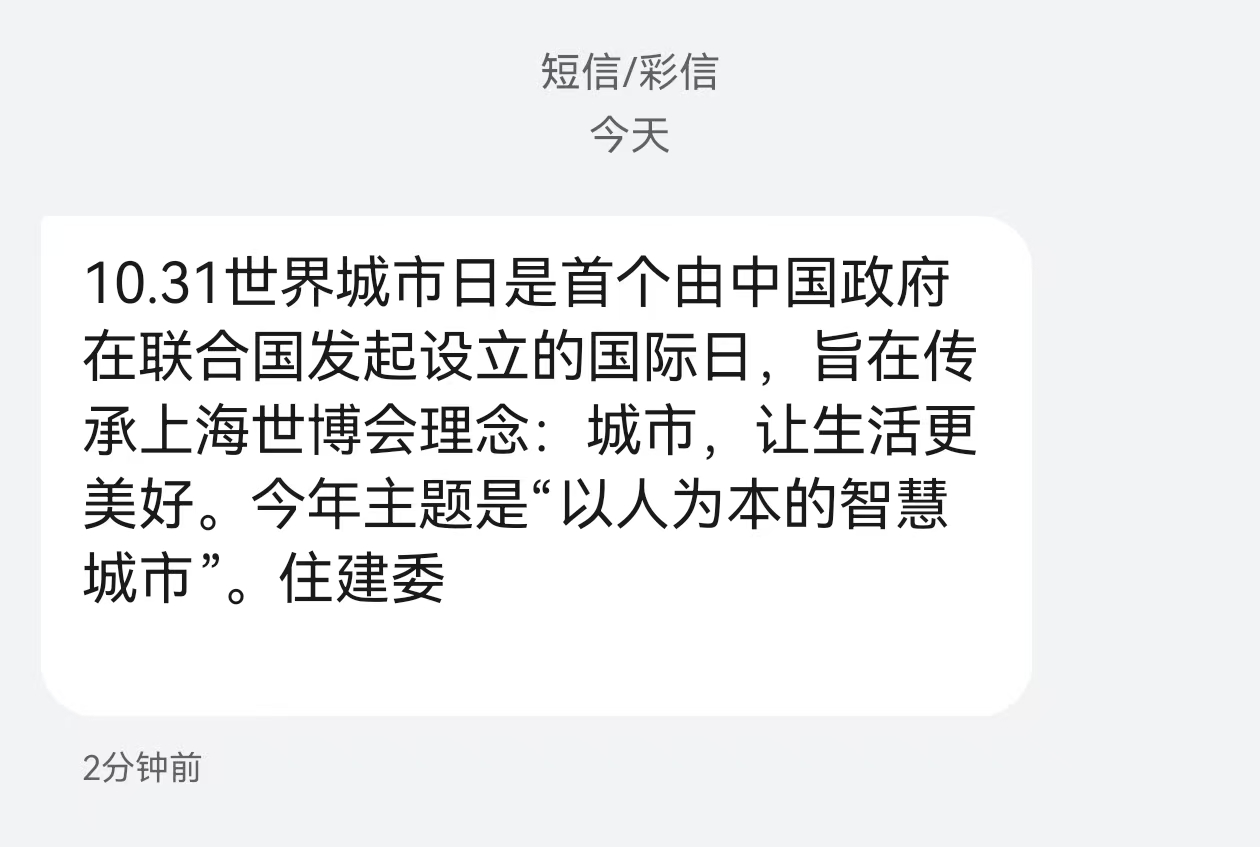
Core Insights - World Cities Day, initiated by the Chinese government at the United Nations, aims to promote the concept of "Cities, Making Life Better" established during the Shanghai Expo, with this year's theme focusing on "People-Centric Smart Cities" [1][4][5] Group 1: Event Overview - The World Cities Day has evolved into an international event that integrates into the daily lives of nearly 25 million residents in Shanghai, symbolizing a powerful momentum for improving urban living [1] - The event is marked by the "UN Blue" color, which has become a prominent theme in Shanghai's urban landscape during the lead-up to the global conference on sustainable urban development [1] Group 2: Global Conference - The 2025 World Cities Day Global Conference, held on October 26-27, serves as a platform for sharing insights and best practices in sustainable urban development, featuring various types of meetings and discussions [6] - The conference emphasizes innovation and collaboration in building smart cities, showcasing achievements in modern urban development [6] Group 3: Shanghai's Role - Shanghai, as the birthplace of World Cities Day, has deepened the event into a series of significant activities and outcomes, including the establishment of the Urban Development Conference as a permanent international meeting [6][8] - The Shanghai Award, which recognizes best practices from cities worldwide, has received applications from over 160 cities, highlighting Shanghai's growing influence in global urban development [8] Group 4: Sustainable Development Initiatives - The conference introduced several initiatives, including the launch of the MAZU-Urban project for early warning systems and the publication of international standards for green design in urban areas [8] - Shanghai's recent policies emphasize high-quality urban development, focusing on innovation, livability, and sustainability, aligning with national goals for urban modernization [10][12] Group 5: Urban Renewal and Infrastructure - Shanghai is actively pursuing urban renewal, with 46 designated renewal units and significant progress in updating commercial buildings [12] - The city has made strides in green energy, with solar power installations exceeding 5 million kilowatts and a goal to enhance green fuel production [12] Group 6: Future Directions - The upcoming "15th Five-Year Plan" is crucial for Shanghai's development, aiming to enhance urban competitiveness and core capabilities through technological innovation and sustainable practices [12] - Shanghai's initiatives in urban safety and resilience are focused on comprehensive strategies that include disaster preparedness and digital transformation [13]
深圳要在市中心打造“超大号中央公园”
2 1 Shi Ji Jing Ji Bao Dao· 2025-10-28 08:29
Core Insights - The Shenzhen government has launched the "Dawutong Ecological Integration Zone Spatial Planning Outline," aiming to create an "urban central park" that integrates ecology and industry [1][2] - The total planned area for the Dawutong Ecological Integration Zone is approximately 50 square kilometers, featuring various functional spaces such as forest conservation, cultural tourism, and green technology industries [1][2] - The Dawutong area is designated as Shenzhen's only key area focused on ecology, potentially serving as a model for urban ecological zone development in other cities [1][2] Planning and Development - The planning area stretches from the Hong Kong New Territories to the administrative boundary of Luohu District, encompassing notable natural and cultural landmarks [2] - The project aims to create a large central park in the city, enhancing accessibility for citizens through green pathways and waterway restoration [2][3] - The ecological integration zone will also focus on developing green industries such as ecological tourism, health and wellness, and low-altitude economy [2][5] Ecological and Biodiversity Considerations - Emphasis is placed on ecological restoration and biodiversity protection, with high standards set for the preservation of natural landscapes and ecosystems [3] - The area includes significant natural features like Wutong Mountain and various rivers, which are crucial for regional ecological connectivity [3] Collaboration and Events - Future plans include connecting the Wutong Mountain to Hong Kong's scenic areas and hosting events like the "Cross-Shenzhen-Hong Kong City Cycling Challenge" [4] - The collaboration between Shenzhen and Hong Kong will focus on ecological space co-development, scientific innovation, and cultural sharing [4] Tourism and Economic Goals - The Dawutong Ecological Integration Zone aims to become a model for ecological tourism in the Guangdong-Hong Kong-Macao Greater Bay Area [5] - Plans include developing high-quality micro-vacation destinations, such as luxury resorts and themed camping areas, to attract visitors from the Greater Bay Area [5] Infrastructure Development - Upcoming infrastructure projects include the completion of the Longguoshu Interchange by February 2027, which will improve connectivity to urban expressways [6] - Additional plans involve constructing new interchanges and upgrading access roads to enhance transportation to key areas within the Dawutong zone [6]
以人民为中心,书写城市发展新篇章
Ren Min Ri Bao· 2025-10-26 22:19
Core Viewpoint - Shanghai is actively promoting the concept of a "People's City" through various urban development initiatives, focusing on sustainability, community engagement, and enhancing the quality of urban life [10][11][12]. Group 1: Urban Development Initiatives - The "People's City" concept was first introduced by President Xi Jinping during his visit to Shanghai in November 2019, emphasizing that cities should be built for the people [10]. - Shanghai has established international platforms for sustainable urban development, such as the World Cities Day and the Global Sustainable Urban Development Award [10][11]. - The city is working towards becoming a "Park City" by integrating public spaces and community needs, with the recent completion of the 1,000th park, the West Bank Natural Art Park [12]. Group 2: Community Engagement and Housing - Shanghai is implementing a multi-tiered affordable rental housing system, with 600,000 units planned and 395,000 units already supplied as of September 2023 [13]. - The city is focusing on community micro-updates to enhance local living conditions, while also planning large-scale updates for business districts [12][13]. - Initiatives are in place to improve the quality of waterfront spaces, with over 100 stations targeted for enhancement to better serve citizens and tourists [13].