基金投顾

Search documents
基金投顾六周年,管理规模扩容与投顾能力升级并行
中国基金报· 2025-10-19 14:39
Core Insights - The article highlights the significant growth and evolution of the fund advisory business in China over the past six years, emphasizing improvements in management scale and advisory capabilities, leading to enhanced investor experiences [2][3][5]. Group 1: Evolution of Fund Advisory - The fund advisory business has transitioned from a pilot program to a mature development phase, with a notable increase in the number of advisory institutions and their management scale [3][13]. - The advisory capabilities have evolved from providing basic fund combinations to offering diversified strategies that include various asset classes such as equities, bonds, and overseas investments [6][9]. - The industry has seen a shift from standardized services to personalized advisory services that cover all stages of investment [6][9]. Group 2: Investor Experience and Behavior - The fund advisory services have significantly improved investor behavior, promoting long-term holding and diversified asset allocation, which has led to better investment experiences [7][10]. - Statistics show that as of September 30, 2024, the proportion of profitable accounts among advisory clients is significantly higher than that of non-advisory clients, indicating a positive impact on investor outcomes [11][12]. Group 3: Growth in Management Scale - The number of fund advisory institutions has increased from five to nearly sixty, with substantial growth in assets under management, particularly in the context of a recovering A-share market [13][14]. - Specific examples include Guotai Junan's advisory assets reaching 26.416 billion yuan, a 107.5% increase year-on-year, and Huatai Securities reporting 21.037 billion yuan, a 16.36% increase [14]. Group 4: Future Development and Challenges - The future of fund advisory services is expected to focus on account-level management and personalized services driven by AI technology, enhancing service quality and client experience [20][28]. - Despite the progress, challenges remain, including low market penetration, insufficient professional talent, and a need for greater investor education regarding fund advisory services [35][39]. - The industry is poised for further growth, driven by policy support, increasing market demand, and technological advancements [41][45].


盈米小帮投顾团队-第12次信号发车
老徐抓AI趋势· 2025-09-26 04:33
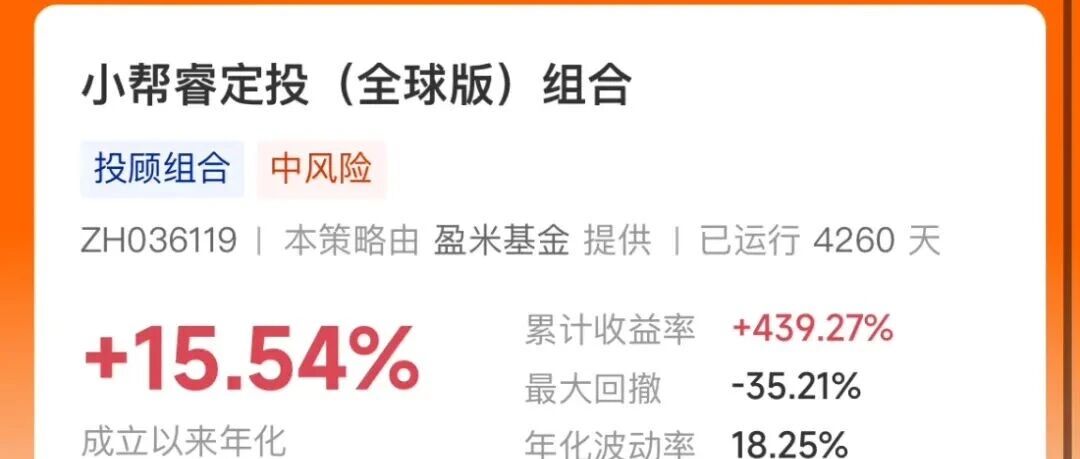
Core Viewpoint - The article highlights the performance of global investment strategies, particularly the "Rui Ding Tou Global Version" and "Lazy Balanced Portfolio," which have outperformed the A-share market and demonstrated consistent gains over several weeks, showcasing the advantages of global asset allocation [1][9]. Market Performance Summary - A-shares (CSI 300) decreased by 0.23%, while the dividend index fell by 1.40%. Hong Kong stocks (Hang Seng Index) also dropped by 0.39%. In contrast, U.S. stocks (Nasdaq 100) rose by 1.92%, and Japanese stocks (Nikkei 225) increased by 1.62% [2][6]. - Overall, the Asia-Pacific market showed weak performance, while the strong rise in U.S. stocks provided support. The bond market continued to be sluggish, with both Chinese and U.S. bonds declining, while gold prices increased, becoming a highlight [4]. Rui Ding Tou Global Version Performance - The "Rui Ding Tou Global Version" achieved positive returns despite the decline in A-shares and has recorded four consecutive weeks of gains. Over the past three years, it has maintained positive returns, ranking among the top performers in risk-adjusted returns compared to 3,570 stock and mixed funds [9]. Lazy Balanced Portfolio Performance - The "Lazy Balanced Portfolio" has adopted a global allocation strategy, achieving a cumulative return of 16.13% in 2023, with a high probability of exceeding 10% for the year. It ranks in the top 18%-20% for returns, with a maximum drawdown controlled at 8% and a risk-return ratio in the top 9% [10]. - This portfolio has also recorded a return of 10.7% year-to-date, despite a challenging bond market where both Chinese and U.S. bonds have declined. The balanced distribution of stocks, bonds, and gold has helped reduce overall volatility and find support for returns [13].
自动止盈功能来啦,一键开启,不错过止盈机会
银行螺丝钉· 2025-09-25 04:01
Core Viewpoint - The article introduces the new automatic profit-taking feature, which allows users to set up automatic conversions of their investment portfolios when certain market conditions are met, enhancing convenience and efficiency in managing investments [1][9]. Summary by Sections Automatic Profit-Taking Function - The automatic profit-taking feature has been launched to facilitate users in managing their investments more easily [1]. - Users can enable this feature to automatically execute profit-taking transactions when the market reaches specific valuation levels [9]. How Investment Combinations Take Profit - Investment combinations, such as Active Selection and Index Enhancement, utilize two main methods for profit-taking: 1. **Automatic Rebalancing**: When certain assets are overvalued and others are undervalued, the combination will automatically rebalance by taking profits from overvalued assets and increasing positions in undervalued ones. For example, in early 2021, the Active Selection combination achieved a profit-taking return of 120% by selling growth-style funds and reinvesting in undervalued deep value funds [4]. 2. **Overall Market Profit-Taking**: If the market is generally overvalued, the combination will signal a "profit-taking" action, prompting users to gradually convert their holdings into more stable investment options [5][7]. Specific Operations - Upon receiving a "profit-taking" signal, users have two options: 1. **Manual Profit-Taking**: Users can manually execute the conversion transactions upon receiving the signal [9]. 2. **Automatic Profit-Taking**: Users can set up the automatic feature to execute conversions without manual intervention, ensuring timely profit-taking [9]. Benefits of Automatic Profit-Taking - The automatic profit-taking feature offers three main advantages: 1. **Convenience**: Users only need to set it up once, and future profit-taking actions will be executed automatically [9]. 2. **Timeliness**: The feature ensures that users do not miss profit-taking opportunities as it responds promptly to market signals [9]. 3. **Discipline**: It adheres strictly to the profit-taking plan, ensuring that overvalued assets are sold as planned [9]. Activation and Management of the Feature - Users can activate the automatic profit-taking feature at any time, and it will only trigger transactions when the market conditions warrant it [13]. - The feature does not affect the ability to redeem current holdings, allowing for flexible management of investments [14]. - There are no additional fees for using the automatic profit-taking feature, although standard redemption fees may apply based on the fund's rules [16].

积小胜为大胜帮投资者“拿住”收益——访中欧财富投顾投资经理李波
Shang Hai Zheng Quan Bao· 2025-09-21 15:28
Core Insights - The article discusses the shift in investment strategies at China Europe Wealth Management, focusing on enhancing stability and helping investors secure returns through a more standardized approach to investment management [1][2]. Investment Strategy Optimization - As of August 2023, the actively managed equity portfolios under China Europe Wealth have shown impressive returns, with certain portfolios like "Potential All-Star" and "Advantage Industry All-Star" exceeding 50% returns over the past year, while maintaining a drawdown of around 14% [2]. - The investment strategy has evolved from subjective judgment to a combination of fundamental analysis and standardized metrics, incorporating quantitative tools and objective data to validate investment decisions [2][3]. Portfolio Structure and Risk Management - The investment team has upgraded the portfolio structure from a "single core + satellite" model to a "double core + satellite" model, introducing a "balanced core" to diversify industry risk and reduce portfolio volatility [3]. - The risk control approach has been adjusted to accept normal style fluctuations from fund managers, as long as deviations remain within a predefined risk management framework [4]. Investor Engagement and Services - The company launched the "Super Stock All-Star Smart Follow Investment Plan" in April 2022, achieving nearly 100% profitability among participants by August 2023 [5]. - To enhance the investor experience, the company employs a "follow-the-car service" strategy, adjusting investment amounts based on market conditions and providing personalized guidance through their app [6].
超级股票全明星业绩翻倍 跟投用户盈利占比近100%
Zhong Guo Ji Jin Bao· 2025-08-29 03:22
Core Insights - The A-share market has shown strong performance, with the Shanghai Composite Index breaking through 3700 and 3800 points, reaching a nearly ten-year high, and the total market capitalization of the Shanghai and Shenzhen stock exchanges surpassing 100 trillion yuan [1] - The "Super Stock All-Star" strategy from China Europe Wealth has achieved a cumulative performance of 102.28%, with nearly 100% of the smart follow-up accounts being profitable [1][2] - The "Super Stock All-Star" investment plan was launched in April 2022 during a market downturn, aiming to guide investors through systematic investment strategies [2] Investment Strategy - The "Super Stock All-Star" strategy has led users to accumulate investments during market lows, achieving a real return of 26.40%, outperforming a single investment in the Super Stock All-Star by 21.52% [2] - The strategy has consistently outperformed the benchmark index over the past seven years, except for 2022, indicating its effectiveness in various market conditions [4][5] - The investment approach has been optimized following the extreme market conditions of 2022, enhancing the stability of investment performance [5][6] Strategy Upgrade - The investment strategy has been upgraded from a "single core + satellite" structure to a "double core + satellite" structure to better manage market volatility [6] - The new structure includes a balanced core that adapts to market conditions and aims to reduce portfolio volatility while maintaining exposure to structural opportunities [6][7] - The fund selection process has been thoroughly optimized to ensure better fund choices for users, enhancing the overall investment experience [7]
超级股票全明星业绩翻倍 跟投用户盈利占比近100%
中国基金报· 2025-08-29 02:22
Core Viewpoint - The A-share market has shown strong performance, with the Shanghai Composite Index breaking through 3700 and 3800 points, reaching a nearly ten-year high, and the total market capitalization of the Shanghai and Shenzhen stock exchanges exceeding 100 trillion yuan. The "Super Stock All-Star" strategy from China Europe Wealth has achieved a cumulative performance of 102.28% [1][4]. Group 1: Performance of the All-Star Wisdom Follow-up Plan - The All-Star Wisdom Follow-up Plan was launched in April 2022 when the A-share market fell below 3000 points, aiming to guide investors through scientific regular investment strategies [2]. - Over the past three years, the All-Star Wisdom Follow-up has led users to accumulate positions during market lows, achieving a real return of 26.40%, outperforming the Super Stock All-Star by 21.52% [2]. Group 2: Investment Strategy and Performance - The Super Stock All-Star strategy, which anchors on equity fund indices and selects high-quality active equity funds, has achieved a cumulative return of 102.28%, compared to a benchmark increase of 51.31% [4][6]. - The Super Stock All-Star has consistently outperformed the equity fund index in all years except 2022, indicating its effectiveness in various market conditions [4][6]. Group 3: Strategy Optimization - To enhance investment performance stability, the Super Stock All-Star has upgraded its strategy from a "single core + satellite" structure to a "double core + satellite" structure, allowing for better adaptation to market fluctuations [7]. - The new strategy includes a balanced core that focuses on funds with strong adaptability and long-term excess returns, while retaining the style core and satellite positions to capture structural opportunities [7].

客户量成倍激增,散户、外资加速涌入A股
2 1 Shi Ji Jing Ji Bao Dao· 2025-08-22 00:31
Market Overview - The A-share market is experiencing a surge in activity, with trading volume exceeding 2.1 trillion yuan for seven consecutive trading days since August 13, indicating a strong upward trend as the Shanghai Composite Index stabilizes above 3700 points and aims for 3800 points [1][3] - The number of individual investors seeking stock investment advice has significantly increased, with some consulting firms reporting a 50% year-on-year growth in client flow [1][3] Investor Behavior - Two main factors are driving the increase in client numbers for advisory firms: 1. Changing investor behavior due to increased market volatility, leading many to seek professional services for asset allocation and risk management [3] 2. Market dynamics where active trading creates more opportunities but also results in information overload, prompting clients to rely on professional advisors to filter information [3][6] Fund Advisory Growth - Fund advisory institutions are also benefiting from the booming market, with one firm reporting over 500,000 signed clients and a total advisory scale exceeding 47 billion yuan, with equities making up 66% of the total [4] Investor Concerns - Despite the market's attractiveness, many individual investors remain conflicted about entering the market, with over 68% expressing difficulty in timing their trades amid increased volatility [5][6] - Information overload from various sources is causing "decision paralysis," with around 30%-40% of investors reportedly not making profits despite the market's rise [6] Investment Strategies - Advisors recommend that new investors adopt a long-term perspective, avoid speculative trading, and utilize professional tools to make informed decisions [8][9] - It is advised to maintain a balanced portfolio, with equity exposure not exceeding 70%, and to consider using ETFs for risk management [11] Foreign Investment Trends - There is a noticeable increase in foreign interest in the A-share market, with significant inflows from passive funds and a growing number of inquiries from international investors about accessing Chinese stocks [12][13] - Data shows that foreign capital inflows into A-shares have reached 11 billion USD this year, significantly surpassing previous annual totals [13]
客户量成倍激增,散户、外资加速涌入A股
21世纪经济报道· 2025-08-22 00:24
Core Viewpoint - The A-share market is experiencing a surge in activity, with a significant increase in individual investors seeking stock investment advice and a notable influx of foreign capital into the market [1][10]. Group 1: Investor Behavior Changes - The A-share market's volatility has led many ordinary investors to recognize the risks of self-directed trading, prompting them to seek professional services, particularly in asset allocation, risk management, and medium to long-term strategies [3]. - The active trading environment has increased investment opportunities but also resulted in information overload, leading clients to prefer professional advisory services to filter information and avoid impulsive trading [3]. Group 2: Growth of Advisory Services - The stock advisory industry is witnessing a boom, with a reported 50% year-on-year increase in client traffic at some firms, driven by improved market confidence and a growing demand for professional services [2]. - Fund advisory institutions are also benefiting, with one firm reporting over 500,000 signed clients and a total advisory scale exceeding 47 billion, with equity investments making up 66% of this total [4]. Group 3: Investor Concerns and Strategies - Many individual investors are conflicted about entering the market, with over 68% expressing difficulty in timing their trades amid increased market volatility [5]. - Information overload from various media sources is causing "decision paralysis," with approximately 30%-40% of investors reportedly not making profits despite the market's upward trend [5]. - Investment strategies are shifting, with a focus on sector rotation rather than broad market movements, emphasizing the need for professional operational skills [5]. Group 4: Recommendations for New Investors - New investors are advised to adopt a long-term perspective, avoid the pitfalls of chasing trends, and utilize professional tools for decision-making [8]. - It is recommended to maintain a balanced portfolio, with no more than 70% in equity positions, and to consider fixed income and alternative investments for risk hedging [9]. Group 5: Foreign Capital Inflow - There is a notable increase in foreign investment in the A-share market, with a reported $11 billion inflow from passive funds this year, significantly exceeding previous forecasts [11]. - Recent data indicates a substantial rise in holdings of Chinese stocks by South Korean investors, with a 30% increase in value year-to-date [13].

A股热潮下的投顾业:客户流量激增,头部股价飙涨超3成
2 1 Shi Ji Jing Ji Bao Dao· 2025-08-21 13:28
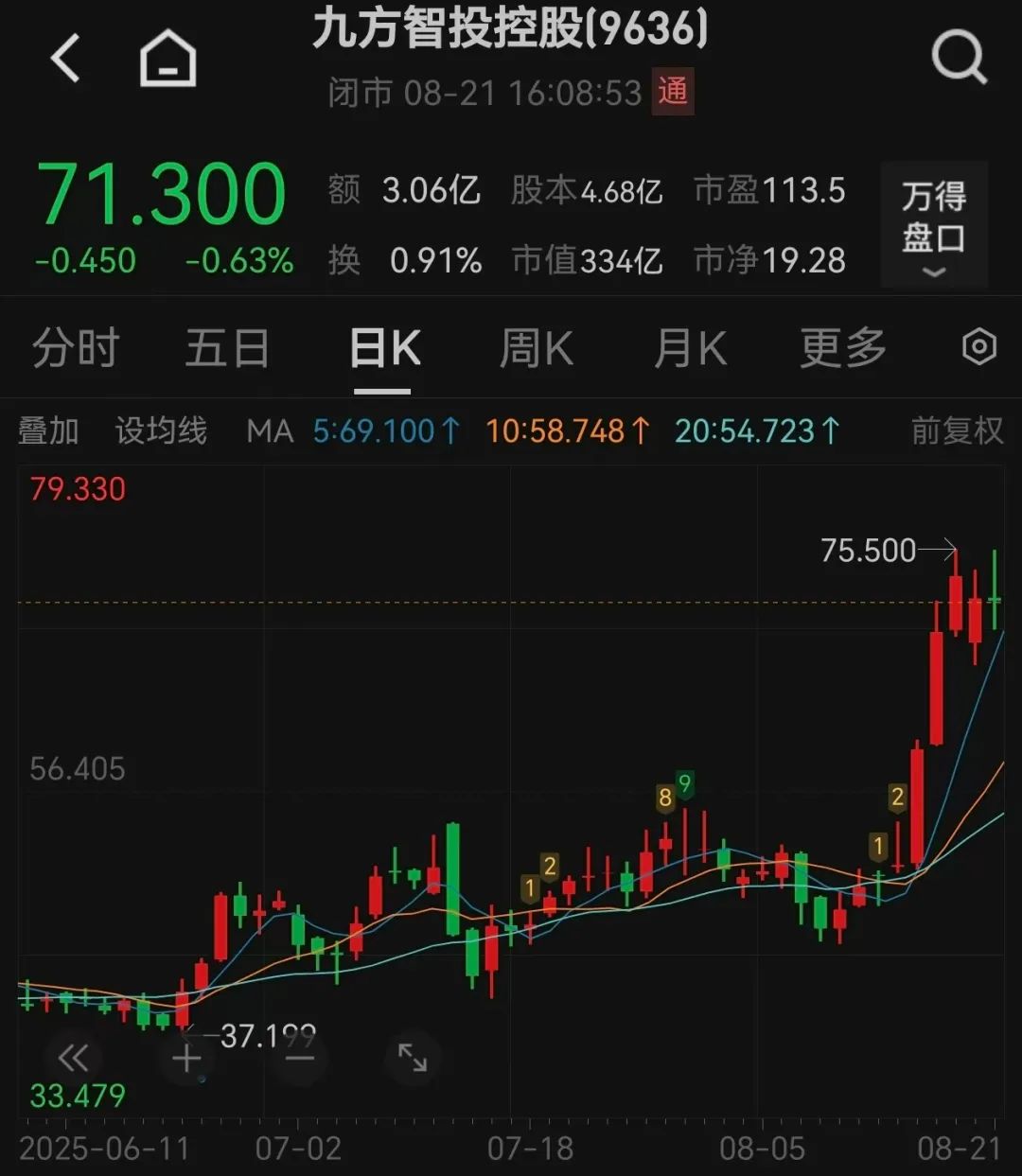
Core Insights - The securities investment advisory industry is experiencing a resurgence, driven by increased market confidence and a growing demand for professional services from investors [1][4][3] - The number of clients seeking stock investment advice has significantly increased, with some firms reporting a doubling in client numbers [3][4] - The stock price of leading advisory firms, such as Jiufang Zhitu Holdings, has risen by 37% since early August, reflecting market optimism about retail investor participation [3][4] Market Dynamics - Since August 13, A-share trading volume has consistently exceeded 2.1 trillion, with the Shanghai Composite Index stabilizing above 3700 points and aiming for 3800 points [2] - The active trading environment has prompted many individual investors to consider entering the stock market [2] Client Behavior and Industry Trends - The increase in client numbers is attributed to two main factors: a shift in investor behavior due to heightened market volatility and the resulting demand for professional services in asset allocation and risk management [4] - The industry is witnessing a trend towards professionalization and standardization, as firms adapt to the changing needs of investors [4] Investor Challenges - Despite the attractive market conditions, many individual investors are confused about whether to enter the market and how to invest effectively [9] - A significant portion of investors (over 68%) report difficulties in timing their trades, leading to missed opportunities [10] - Information overload from fragmented news sources is causing "decision paralysis" among investors [10] Advisory Strategies - Firms are enhancing their research capabilities and utilizing AI tools to meet the rising demand for investment advice [5] - The average holding period for equity products among clients has increased to over two years, compared to the industry average of less than six months [7] Recommendations for Investors - New investors are advised to understand the current market dynamics and adopt a long-term investment approach, avoiding the pitfalls of speculative trading [13][14] - It is recommended to maintain a diversified portfolio, limit exposure to high-risk assets, and utilize professional advisory services to navigate market complexities [16]
基金投顾盯上医药科技,狂赚30%
21世纪经济报道· 2025-08-07 08:06
Core Viewpoint - The article highlights a shift in investment strategies among fund advisory products, with a notable increase in allocations towards high-dividend and technology assets, while reducing exposure to consumer sectors [1][7][11]. Group 1: Fund Advisory Product Adjustments - In July, a total of 141 fund advisory products made adjustments, including 27 mixed equity and bond products and 64 equity products [1][6]. - Mixed equity and bond products increased their holdings in active equity funds while reducing allocations to index funds [1][6]. - Equity advisory products decreased their holdings in bond-oriented funds and increased their allocations to equity funds [1][6]. Group 2: Sector Allocation Changes - Fund advisory products overall reduced exposure to consumer sectors and increased allocations to pharmaceuticals, cyclical sectors, and technology [1][7]. - The highest increase in allocation was seen in the pharmaceutical and biotechnology sector (+0.47%) and non-ferrous metals (+0.31%), while the largest reductions were in food and beverage (-0.35%) and electronics (-0.23%) [7]. Group 3: Performance of Fund Products - Some equity advisory combinations have achieved over 20% excess returns this year, with specific products like Huabao Securities' Value Investment Fund V and Guolian Securities' Anxin Aggressive 90 showing returns of 30.88% and 25.59% respectively [9][10]. - Mixed equity and bond products with a higher proportion of equity funds also performed well, with returns of 14.72% and 12.92% for specific products [10]. Group 4: Market Outlook and Investment Strategies - Some advisory institutions maintain a relatively positive outlook on the market, citing improved funding conditions and potential inflows of external capital [11]. - Recommended investment directions include high-dividend stocks and technology assets, particularly in AI applications and semiconductors [11][12]. - The strategy of diversifying investments across different asset classes and markets is emphasized, suggesting a balanced approach to mitigate risks [12].