小吃

Search documents
把梦想,种回三峡丨三峡后续工作H5②
Nan Fang Nong Cun Bao· 2025-12-17 09:35
Core Viewpoint - The Three Gorges Project is a critical infrastructure initiative for the governance, development, and protection of the Yangtze River, serving as a key support for national strategies such as the development of the Yangtze Economic Belt and the rise of central and western regions [3][4]. Group 1: Economic Development - The follow-up work of the Three Gorges Project provides strong support for high-quality development in the reservoir area and the stable prosperity of relocated residents [5]. - Formerly displaced residents are now becoming vital contributors to the high-quality development of the reservoir area, utilizing their skills and efforts to ignite industrial revitalization [6][7]. - The project has facilitated the development of local industries, such as the orange industry in Qichang County, which has improved the income of around 2,000 households by tens of thousands of yuan annually [14][16][17]. Group 2: Ecological and Cultural Initiatives - The follow-up work has fostered green productivity, transforming ecological advantages into economic benefits [22]. - Various initiatives, such as the establishment of a cultural and creative product line that integrates local heritage, have led to the development of over 100 products and provided free training for local artisans [34][35][36]. - The renovation of local historical sites has revitalized tourism and local businesses, enhancing community engagement and cultural heritage [58][60]. Group 3: Entrepreneurship and Community Support - The establishment of entrepreneurship parks for returning migrant workers has provided comprehensive support, reducing costs and risks associated with starting a business [42][44][46]. - The project has also improved community living conditions through professional property services, creating job opportunities for returning workers [50][51][53]. - Individual entrepreneurial efforts have led to broader economic growth, showcasing how personal endeavors contribute to the overall prosperity of the region [64][65].


烤冷面三十年:走向预制,冷面消失
3 6 Ke· 2025-12-09 01:12
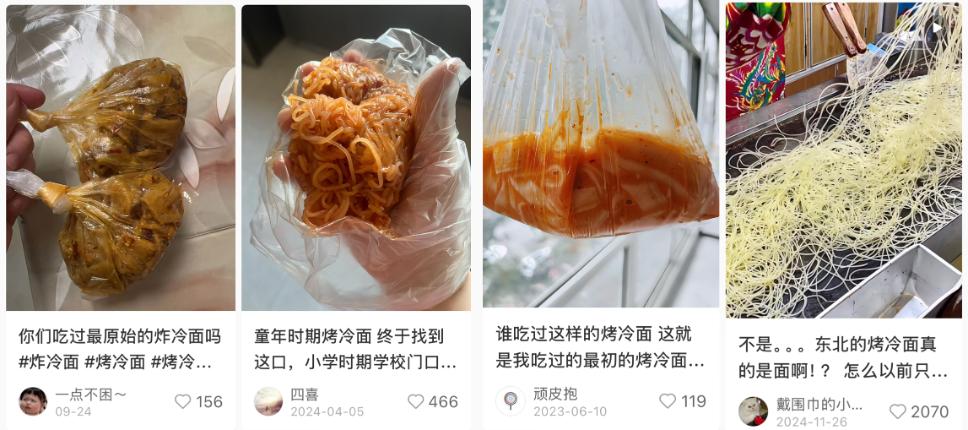
Core Viewpoint - The article explores the cultural significance and evolution of "Kao Leng Mian" (grilled cold noodles) in China, highlighting its transformation from a regional delicacy to a standardized street food across the country, while also reflecting on the nostalgia associated with its original form. Group 1: Brand and Market Presence - There are 27,667 operating Sha County snacks and 32,213 Lanzhou noodles in China, while the largest Kao Leng Mian brand, "Liao Xin," has only 194 recorded stores [1] - Kao Leng Mian has not developed into a recognizable chain brand like other regional foods, indicating a lack of commercial branding despite its popularity [1][23] - The modern version of Kao Leng Mian has become a ubiquitous part of contemporary dining, with standardized recipes and ingredients widely available [21][22] Group 2: Cultural and Historical Context - Kao Leng Mian is described as a memory community that reflects time and space rather than a commercial brand, emphasizing its cultural roots [2] - The dish originated in 1996 in Mishan City, Heilongjiang Province, and has since evolved, with various iterations emerging across different regions [9] - The nostalgia for the original version of Kao Leng Mian is prevalent among consumers, with many recalling their childhood experiences associated with the dish [24][26] Group 3: Evolution and Standardization - The original form of Kao Leng Mian was a loose cold noodle dish, which has been replaced by a standardized version that includes a flat noodle wrapped with various toppings [6][20] - The dish has undergone significant changes, with the introduction of pre-made ingredients and a simplified preparation process, making it easier to replicate [21][22] - The evolution of Kao Leng Mian reflects broader trends in the food industry, where convenience and standardization often take precedence over traditional methods [23]
多国餐饮专家共探沙县小吃全球化路径
Zhong Guo Xin Wen Wang· 2025-12-08 13:06
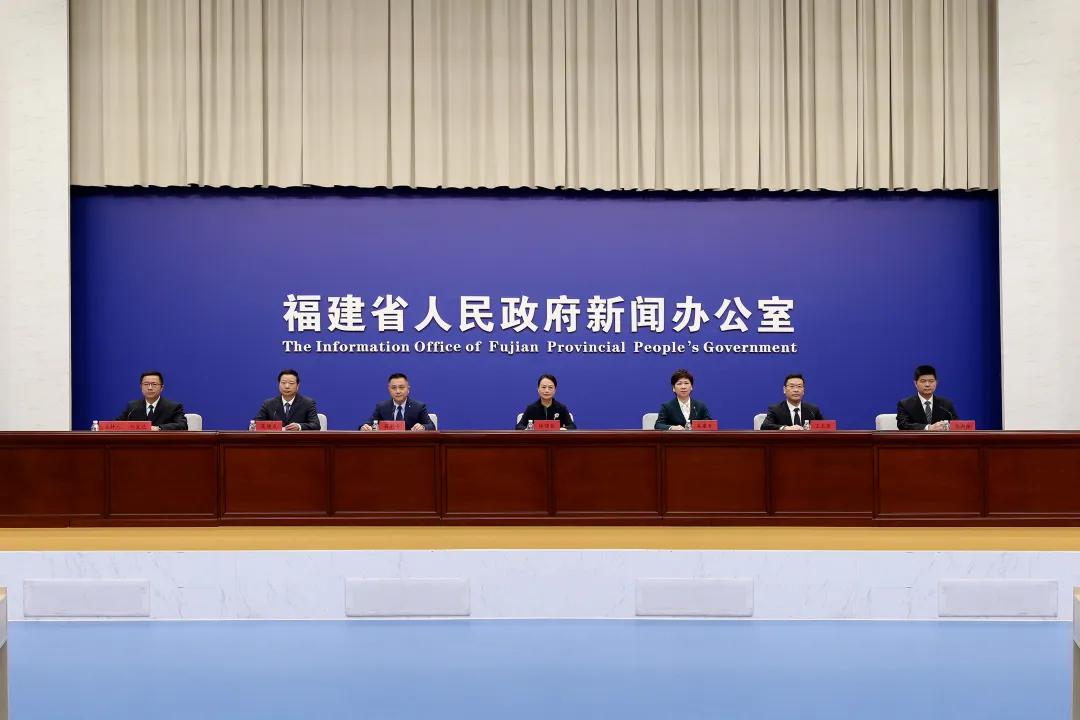
Core Viewpoint - The forum on the globalization of Shaxian snacks emphasizes the strategy of "cultural first, industry follows" to promote the brand internationally, leveraging overseas Chinese communities and cultural exchange platforms to spread the story and flavors of Shaxian snacks [1]. Group 1: Globalization Strategy - The World Federation of Chinese Catering Industry and the local government of Shaxian jointly hosted a forum to discuss the global path for Shaxian snacks, gathering participants from various countries including Russia, Pakistan, France, Italy, and Canada [1]. - The unique cultural significance and high cost-performance of Chinese street snacks make them suitable for a wide consumer base, providing a competitive advantage for international expansion [1]. Group 2: Cultural Integration and Market Adaptation - Suggestions include deeply exploring the cultural connotations of Shaxian snacks and promoting cross-industry integration through a "food +" model to create multi-layered and immersive consumption scenarios [2]. - The combination of "standardization" and "localization" is recommended to maintain core flavors while adapting to the dietary habits and regulations of target countries, focusing initially on markets with high Chinese populations and acceptance of Chinese cuisine [2]. - Shaxian snacks are recognized as one of China's top ten regional snacks, with Shaxian District being awarded titles such as "Hometown of Chinese Snacks" and "Cultural City of Chinese Snacks" [2].
今年江苏小吃市场规模将达1550亿
Yang Zi Wan Bao Wang· 2025-12-03 15:24
会上,多家企业展示了通过产品研发与品牌塑造实现升级的路径。速品食品公司从中医经典方"洛神乌 梅饮"汲取灵感,针对现代人饮食痛点推出"洛神乌梅康普茶"好喝无负担;芜湖三刀金属制品有限公司 则携非遗品牌"澛港"菜刀亮相,凭借工艺与性价比受到关注,现场总经理黄子轩拿起一款最新产品—— 采用67层大马士革钢打造、硬度可达61度的菜刀,以其出色的工艺与性能惊艳全场。据透露,公司下一 步计划向更高端的粉末钢刀具领域拓展。 扬子晚报网12月3日讯(记者 陈 哲 钱大勇 实习生 潘伊笑)"2025年,预计江苏小吃市场规模将达1550 亿元!"这是江苏省餐饮行业协会会长于学荣在第二十二届江苏餐饮产业发展大会上透露的,大会于12 月2日至3日在昆山召开。 据南京市商务局统计,1-10月,南京新引进首店中,餐饮类居首,占比44.73%。南京先后兑现支持政策 资金超千万元,餐饮和零售作为商业消费的核心业态,成为政策扶持的直接受益者。 当前,餐饮市场正进入理性回归阶段,企业愈发注重以品质提升赢得消费者认可。于学荣指出,面对市 场新需求,行业需进一步强化品牌与品质建设,深入挖掘地域特色,打造"金茉莉"地标美食体系,加强 餐饮知识产权保护 ...
重磅!福建再推12条惠台利民政策措施!
Xin Lang Cai Jing· 2025-12-02 12:05
Core Viewpoint - The Fujian Provincial Government is implementing a series of policies to support the development of cross-strait integration and promote investment from Taiwanese enterprises in the region [2][13]. Group 1: Support for Taiwanese Enterprises - The government will allocate 1,200 acres of land specifically for the construction of six Taiwanese investment zones [14]. - Incentives are provided for Taiwanese enterprises in the Nanjing Precision Machinery Industrial Park, with rewards of 100,000 yuan for investments between 5 million and 20 million yuan, and 200,000 yuan for investments exceeding 20 million yuan [15]. - Taiwanese aquaculture enterprises can enjoy a 5% discount on insurance premiums for various types of aquaculture insurance, with additional discounts for those with no claims in previous years [16]. - New Taiwanese enterprises in the Putian Arts and Crafts City will receive a rent exemption for the first year for 100 square meters of space, along with subsidies for participating in major exhibitions [17]. - The Fujian Agricultural Group will supply Taiwanese farmers with specialized fertilizers and pesticides at direct supply prices [18]. Group 2: Tax Service Optimization for Taiwanese Enterprises - A smart tax service platform for Taiwanese enterprises has been launched, offering 188 intelligent tax services and enabling online processing of 46 types of tax payments [19]. - A dedicated tax consultation hotline for Taiwanese enterprises has been established, providing bilingual services in Minnan and Mandarin [20]. - The tax authority plans to hold 100 tax service events for Taiwanese enterprises by the end of 2026 to address their concerns [20]. Group 3: Promotion of Trade and Cultural Exchange - Taiwanese individuals opening Sha County snack stores in Taiwan will receive a one-time subsidy of 5,000 yuan, with training opportunities provided for Taiwanese youth [21]. - Support is offered for Taiwanese tourism operators to collaborate with local homestay businesses in Nanping, with subsidies based on renovation costs [21]. - A ticket refund insurance service is available for travelers on the Xiamen-Kinmen route, reducing financial losses from ticket cancellations [21]. - Taiwanese artists performing in Fuzhou can receive up to 40% of their contract amount as a subsidy, with a maximum of 20,000 yuan per event [21].
清风为伴产业兴丨小吃里的大民生
Zhong Yang Ji Wei Guo Jia Jian Wei Wang Zhan· 2025-11-25 23:55
Core Insights - The article highlights the development of the Sha County snack industry in Fujian Province, emphasizing the modernization and expansion of production capabilities, which is expected to significantly boost annual revenues for local businesses [1][2] Group 1: Industry Development - The Sha County government has invested 3.4 billion yuan to promote 24 key projects aimed at transforming street snacks into a modern industrial cluster [1] - The Sha County snack industry has established a demonstration park that now hosts 26 enterprises along the industrial chain, with an expected annual output value exceeding 900 million yuan and tax revenue surpassing 10 million yuan [2] Group 2: Government Support and Oversight - The local government has implemented a "room-group-field" linkage mechanism for supervision, conducting 35 inspections and 23 enterprise meetings since last year to address issues such as project delays and policy implementation [2] - The Sha County Discipline Inspection and Supervision Commission has taken action against 14 officials for irregularities in project bidding and acceptance, and has issued five disciplinary recommendations to improve regulatory frameworks [2]
中国餐饮四大“神秘组织”,沙县小吃凭啥独树一帜?
3 6 Ke· 2025-11-24 07:56
Core Viewpoint - The article discusses the rise of Shaxian Snacks, a popular Chinese fast-food brand, highlighting its origins, growth, and the factors contributing to its widespread success across China and beyond [1][5][25]. Group 1: Origins and Development - Shaxian Snacks was founded by Deng Shiqi, who opened a small eatery in 1985 after facing financial difficulties [2][4]. - The brand gained momentum in 1997 when Deng was encouraged to return to Shaxian to lead the establishment of a snack street, which led to the creation of over 40 different snack varieties [4][11]. - As of now, there are approximately 88,000 Shaxian Snack outlets worldwide, generating nearly 50 billion yuan in annual revenue [4][12]. Group 2: Unique Selling Points - Shaxian Snacks are characterized by their healthiness and affordability, with dishes like noodles priced around 5 yuan and dumplings around 8 yuan, making them accessible to a wide audience [12][14]. - The brand's appeal lies in its simple yet delicious offerings, which are perceived as healthier alternatives to heavier fast food options [12][14]. Group 3: Government Support and Branding - The local government has played a crucial role in promoting Shaxian Snacks, establishing a dedicated office in 1997 to support the brand's development and setting up liaison offices in 29 cities [16][18]. - The government also provided financial incentives, such as subsidies for new store openings, and invested in a cultural industry park to standardize food processing [20][22]. - In 2015, Shaxian Snacks received official trademark approval, further solidifying its brand identity and operational standards [21][22]. Group 4: Business Model and Expansion - The business model of Shaxian Snacks is flexible, with many outlets being small, low-cost operations that can easily adapt to high-traffic locations [23][25]. - The brand has successfully expanded into various markets, including international locations, by leveraging its unique offerings and operational efficiency [25].
济南美食街现组装扇贝,壳肉分离成本仅0.5元
Mei Ri Jing Ji Xin Wen· 2025-11-16 18:30
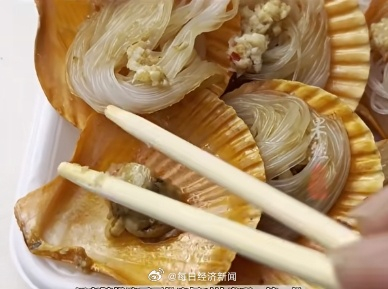
从事小吃行业多年的杨先生向记者揭开了组装扇贝的盈利模式。"市面上一些烤扇贝都是'壳肉分离'组 装的,用的是栉孔贝肉搭配帆立贝壳,成本会很低。"他向记者算了一笔账:单独批发扇贝壳和扇贝 肉,再配上粉丝和蒜蓉调料,单个成本仅0.5元左右。若以10元5个的价格售卖,单个售价2元,利润率 高达60%以上。 【#这样的蒜蓉粉丝扇贝可能是组装货#】在济南某美食街的摊位前,记者以15元购买了一份6个装的蒜 蓉粉丝烤扇贝。仔细观察后记者发现:扇贝壳呈现均匀的靓丽橙红色,内外颜色毫无差异,内侧更是光 滑得近乎发亮。用筷子夹起贝肉,松散的肉质瞬间与贝壳分离,入口后只有浓重的腥咸味,丝毫没有新 鲜扇贝的鲜甜。 社交平台上,不少消费者也分享了类似体验。有网友表示:"怪不得每次吃烤扇贝都是壳肉分离,原来 根本不是一体的。"还有消费者疑惑:"扇贝壳怎么越看越像统一批发的,颜色花纹都一样?" 烧烤蒜蓉 IIEW 各种尺寸可选 FRITE 烧烤用蒜蓉粉丝白色大扇 烧烤扇贝壳 烧烤用蒜蓉 粉丝白色大扇贝壳蒸扇贝 贝壳蒸扇贝夏威夷半壳大 200+家装生活党看过 杨先生提醒,分辨是否为"组装扇贝",首先看贝壳外观,组装扇贝常用的统一批发贝壳,颜色 ...
味蕾牵两岸:台湾桃园举行闽台小吃文化交流盛典
Xin Hua Wang· 2025-11-09 02:02
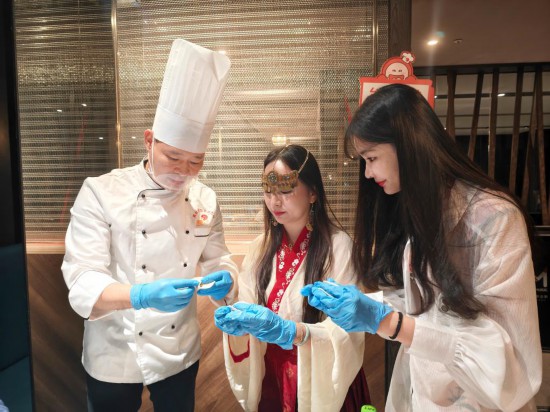
Core Insights - The event "Min-Tai Snack Culture Exchange Festival" was held in Taoyuan, Taiwan, showcasing Sha County snacks as a cultural bridge between the two sides of the Taiwan Strait [1] - The Taiwanese public has a high acceptance of Sha County snacks, with nine stores already established in Taiwan since the brand's introduction [1] - A forum during the event discussed the modernization challenges of snacks, the "recreation" of Min-Tai flavors, and the sustainable development of Sha County snacks [4] Group 1 - The festival featured six Sha County snack artisans demonstrating their skills, emphasizing the cultural significance of the snacks beyond just taste [1] - Taiwanese chef Li Wenting shared his experience of learning to make Sha County snacks, highlighting both similarities and challenges in ingredient selection and seasoning [1][2] - Suggestions for localizing Sha County snacks in Taiwan included creating instructional videos and integrating seasonal ingredients into the menu [4][5] Group 2 - The upcoming event on November 23 in Fuzhou will launch a "Two-Sides Fusion Innovation Menu," combining classic Sha County elements with popular Taiwanese dishes [5] - The collaboration aims to deepen the cultural connection between the two sides through culinary integration, showcasing the potential for future exchanges [5]
台胞大陆扎根“地摊经济” 于细微处感受融合发展
Zhong Guo Xin Wen Wang· 2025-11-07 07:30
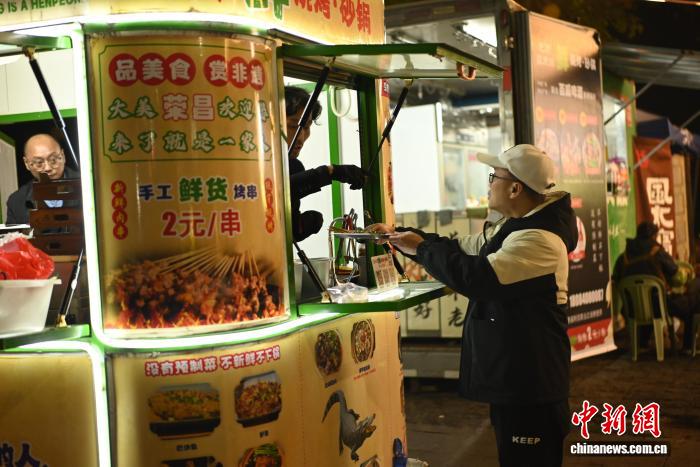
Core Viewpoint - The article highlights the experiences of Taiwanese entrepreneur Li Dong'en in the "street stall economy" in mainland China, emphasizing the integration and development opportunities available through this sector [1]. Group 1: Entrepreneurial Journey - Li Dong'en has been involved in the "street stall economy" for nearly 20 years, starting with a two-yuan store in Guangdong and later expanding into various sectors including retail, tea drinks, and snacks [3]. - In 2007, he was invited by a fellow countryman to join a successful two-yuan store business in Guangdong, where a small store could generate daily revenues exceeding 10,000 RMB [3]. - After moving to Chongqing, he diversified his offerings to include "tea drinks + Taiwanese snacks" such as bubble tea and ice cream starting in 2012 [3]. Group 2: Current Ventures and Innovations - Li Dong'en plans to launch a new project featuring "桶仔鸡" (bucket chicken), which will offer multiple chicken-based products and incorporate cultural elements from both sides of the Taiwan Strait [6]. - He has embraced the internet by creating a social media presence, achieving significant engagement with 282,000 likes and 15,000 followers on one platform [4]. - Li has been appointed as a cultural and tourism ambassador for Chongqing's Rongchang District, promoting culinary exchanges between Taiwan and mainland China [4]. Group 3: Market Trends and Challenges - The "street stall economy" has evolved, requiring operators to possess more skills and adapt to new market demands, shifting from a model where "good food sells itself" to one where visibility and marketing are crucial [6]. - Li Dong'en's upcoming project will reflect the growing complexity and cultural integration within the street food sector, showcasing the nuances of cross-strait culinary collaboration [6].