
政府财政

Search documents
下周美国市场也不好过?美债发行潮来袭 流动性“雪上加霜”
智通财经网· 2025-11-08 07:18
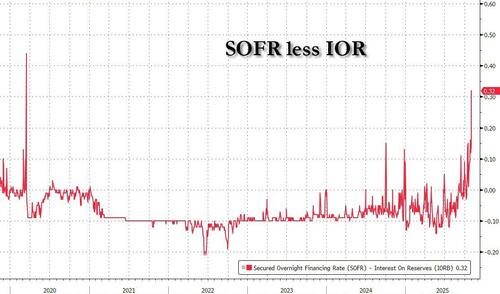
Core Viewpoint - A significant wave of U.S. Treasury bond issuance is set to impact the market next week, coinciding with a recent decline in tech giants' market value and concerns over high valuations and economic signals [1][2]. Group 1: Upcoming Treasury Issuance - The U.S. Treasury plans to auction a total of $125 billion in various maturities next week, including $58 billion in 3-year bonds, $42 billion in 10-year bonds, and $25 billion in 30-year bonds [2]. - This issuance is aimed at refinancing maturing debt and raising approximately $26.8 billion in new funds from private investors [2]. Group 2: Market Liquidity Concerns - The upcoming bond issuance will occur in a compressed trading week due to the Veterans Day holiday, raising concerns about market liquidity [2]. - Key liquidity indicators in the U.S. financial system have shown signs of distress, with the secured overnight financing rate (SOFR) recently spiking by 22 basis points, indicating a tightening liquidity environment [3][4]. Group 3: Causes of Liquidity Tightening - The root cause of the liquidity strain is attributed to a significant increase in the Treasury General Account (TGA) balance, which has surged from approximately $300 billion to over $1 trillion since July due to cash withdrawals from the market [4][6]. - This liquidity withdrawal has led to a decrease in bank reserves to the lowest level since early 2021, with foreign banks' cash assets dropping by over $300 billion in four months [6]. Group 4: Potential Risks - Experts have warned that the deterioration of funding conditions could lead to a self-reinforcing cycle, potentially triggering a crisis similar to the 2019 repo market turmoil if key indicators continue to worsen [8].

全球宏观治理逻辑变化系列之二:海外财政可持续性前景堪忧
HTSC· 2025-11-04 05:35
Group 1: Current Fiscal Sustainability Concerns - Global fiscal deficit rates have surged from an average of 3.6% pre-pandemic to 6.4% during 2020-2024, with developed countries' public debt nearing WWII peak levels of 116% of GDP[1] - By 2024, public debt in developed nations is projected to reach 110% of GDP, significantly higher than the 92% recorded in 2015[10] - Factors driving this increase include rigid government spending on defense and interest payments, with U.S. interest payments expected to exceed 25% of fiscal revenue by 2028[2] Group 2: Short-term Fiscal Pressures - Three key factors are likely to keep overseas fiscal deficit rates elevated: increased defense spending, rising interest payments due to high rates, and populist pressures for social welfare spending[2] - NATO countries are set to raise defense spending from 2.7% of GDP in 2024 to over 3.5% by 2035, necessitating annual increases of 0.13 percentage points[29] - The rise of right-wing populism is expected to exacerbate fiscal pressures, as governments may prioritize short-term welfare spending over long-term fiscal sustainability[46] Group 3: Long-term Fiscal Challenges - Population aging is projected to push global citizens aged 60 and above to over 20% by 2050, increasing social security and public service expenditures[48] - The rapid integration of AI technology may lead to structural unemployment, necessitating increased government spending on income support and retraining programs[48] Group 4: Potential Impacts of High Public Debt - Continued fiscal expansion amidst positive output gaps could lead to inflation and asset price inflation, with potential destabilization of currency values if governments pressure central banks for financial repression[4] - Historical precedents suggest that public debt crises are often resolved through competitive devaluation, high inflation, or fiscal tightening, but current political climates may hinder such measures[63]
美国债务冲到37万亿美元!这钱还不上咋办?背后有何规则?
Sou Hu Cai Jing· 2025-10-29 03:51
Core Insights - The U.S. government is experiencing a rapid increase in debt, with an additional $1 trillion added in just two months, averaging $6 billion in new debt issuance daily [6][10] - The current interest rate on U.S. government bonds is approximately 4.5%, leading to significant interest payments that consume 20% of government revenue, raising concerns about funding for public services and infrastructure [10][12] - The decline in investor interest in U.S. Treasury bonds is evident, with the bid-to-cover ratio for 10-year bonds dropping from 2.8 to 2.3, indicating reduced demand and potentially higher borrowing costs for the government [20][22] Debt Growth - The U.S. debt has reached an unprecedented level of $38 trillion, more than five times historical highs, raising sustainability concerns [30] - The government relies on continuous bond issuance to maintain operations, a model that may become increasingly risky as interest rates rise [8][12] Interest Burden - Rising interest rates have significantly increased the cost of borrowing, with interest expenses becoming a heavy burden on the government budget [10][14] - If the trend of rising interest rates continues, it could lead to further deterioration of the fiscal situation [14] Historical Context - Historically, the U.S. has managed debt through land sales, but such methods are no longer viable in the current economic landscape [16][18] - Recent proposals to sell Alaskan land for $2 trillion have failed to attract interest due to high prices and geopolitical factors [18] Investor Sentiment - Concerns about the U.S. fiscal situation and global market changes have led to a decrease in demand for U.S. Treasury bonds [22] - A potential downgrade in the U.S. credit rating could further increase borrowing costs and exacerbate fiscal pressures [26][28] Future Risks - A debt default or government shutdown could have catastrophic consequences, far exceeding previous crises, and could undermine the credibility of the U.S. dollar [30] - Countries like China have reduced their holdings of U.S. debt from a peak of $1.32 trillion to $730 billion, while increasing investments in gold and other assets to enhance economic resilience [30]

希腊高额公共债务主导全球经济新闻的时代已经结束
Shang Wu Bu Wang Zhan· 2025-10-23 19:23
Core Viewpoint - The era dominated by Greece's high public debt in global economic news is coming to an end, as the country's debt-to-GDP ratio is projected to decline significantly in the coming years [1] Summary by Relevant Categories Debt Levels - Greece's debt-to-GDP ratio is expected to decrease to 145.4% in the current year and further to 137.6% next year, down from a historical peak of nearly 210% in 2020 and slightly below 147.8% in 2010 [1] Economic Growth - The increase in GDP year-on-year is contributing to the reduction in the debt ratio, indicating a positive trend in economic performance [1] Financial Stability - Greece has sufficient cash reserves and primary surpluses to cover interest payments on its debt, allowing the government to meet debt costs without the need for additional borrowing [1]
美国债破38万亿,黄金多头还在
Jin Tou Wang· 2025-10-23 09:30
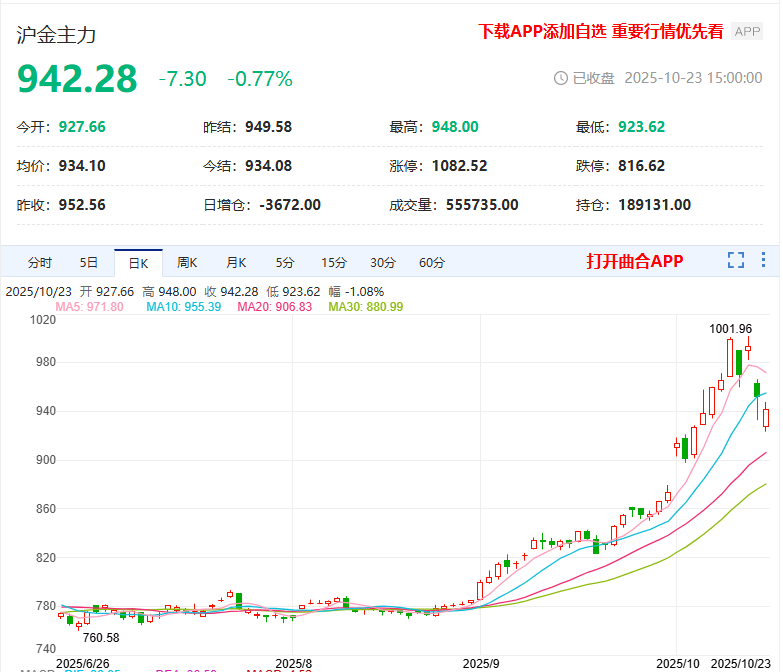
Group 1 - The total federal government debt in the United States has exceeded $38 trillion for the first time as of October 21, marking a significant increase from $37 trillion in mid-August, which occurred in just over two months [1] - The U.S. Senate has failed to pass a temporary funding bill proposed by the Republican Party, leading to a continued "shutdown" stalemate, with this being the 12th vote to reject the temporary funding bill since the recent government shutdown [1] Group 2 - The price of gold in Shanghai has decreased by 0.77%, closing at 942.28 yuan per gram [2]
德银:关于美国政府关门,这是市场“不想知道”的一切
美股IPO· 2025-10-01 03:16
Core Viewpoint - The article discusses the potential risks associated with a possible U.S. government shutdown, highlighting three main "invisible risks" that could impact economic growth, data release interruptions, and specific financial instruments [1][2]. Economic Impact - A comprehensive government shutdown could lead to approximately 800,000 federal employees being furloughed, resulting in a weekly reduction of about 0.2 percentage points in annualized real GDP growth [2][7]. - The previous shutdown in October 2013 caused a decline of $8 billion in actual federal consumption expenditures, which ultimately reduced the fourth-quarter GDP growth by 30 basis points (0.3%) [7]. Data Release Interruption - The shutdown may delay the release of critical economic data such as employment reports and the Consumer Price Index (CPI), creating a "data black hole" for the Federal Reserve and market participants [4][5]. - Historical data from the 2013 shutdown indicates that the employment and CPI data releases were significantly delayed, leading to a chaotic data release schedule [4][6]. Financial Instruments Impact - The delay in CPI data could affect inflation-protected securities (TIPS) and inflation swaps. If the September CPI report is not released on time, the U.S. Treasury will use a fallback index based on the most recent available changes to calculate TIPS payment obligations [10][11]. - For inflation swaps, if the final data is released more than five business days after the payment date, actual data will be used; otherwise, a similar fallback method will apply [11]. Absence of Default Risk - Unlike the 2013 crisis, the current budget impasse does not involve a debt ceiling issue, which significantly reduces the risk of a systemic financial crisis due to government default [3][9].

美国债务危机 2025年的全球隐忧与重塑机遇
Sou Hu Cai Jing· 2025-09-28 17:01
Core Insights - The U.S. federal debt has reached $37.3 trillion, with a debt-to-GDP ratio exceeding 119%, significantly above the IMF's recommended threshold for developed countries [1][17] - The rapid increase in federal debt is primarily due to persistent budget deficits, with a projected deficit of $1.9 trillion for FY 2025, equivalent to 6% of GDP [2][17] - Rising interest costs are exacerbating the debt situation, with interest payments expected to reach $952 billion in 2025, accounting for 18.4% of federal revenue [3][17] Debt Crisis Causes - The long-term budget deficits since 2001 have led to a significant increase in federal debt, driven by tax cuts and increased spending [2][17] - Mandatory spending, including Social Security and Medicare, along with interest payments, are major contributors to the expanding deficit [2][17] - Economic fluctuations, such as the COVID-19 pandemic, have necessitated additional government spending, further straining fiscal resources [2][17] Interest Rate Impact - The rising debt levels and interest rates have significantly increased the federal government's interest burden, with projections indicating a rise to $1.8 trillion by 2035 [3][17] - Higher interest rates not only increase government borrowing costs but also crowd out private sector investment, potentially stunting economic growth [3][17] Global Bond Market Dynamics - The global bond market is experiencing a significant shift, with rising yields across major economies indicating potential monetary system resets [4][17] - U.S. 10-year Treasury yields have risen to approximately 4.06%, reflecting investor concerns over fiscal uncertainty and persistent inflation [4][17] Market Interconnections - The bond market, valued at over $50 trillion, is highly interconnected with equity and precious metals markets, influencing overall financial stability [5][17] - The S&P 500 index has seen significant growth, but its valuation relative to GDP suggests potential bubble risks [5][17] Precious Metals as Safe Havens - Gold prices have surged from $1,770 per ounce in 2020 to $3,682 per ounce in 2025, driven by concerns over currency devaluation [6][17] - Central banks have increased gold reserves, with net purchases exceeding 1,080 tons in 2024, highlighting gold's appeal as a hedge against inflation [6][17] Geopolitical Implications - High debt levels limit U.S. diplomatic flexibility, particularly in relations with creditor nations like China, which holds approximately $780 billion in U.S. debt [8][17] - The trend towards de-dollarization is accelerating, with non-dollar trade increasing and central banks diversifying their reserves [8][17] Social and Political Ramifications - Wealth inequality has reached historic highs, with 90% of stock market wealth concentrated among the top 10% of the population, leading to rising social unrest [9][17] - Political divisions hinder effective fiscal reform, complicating efforts to address the growing debt crisis [9][17] Fiscal Management Challenges - The U.S. Treasury's General Account (TGA) has a balance significantly below target levels, necessitating frequent borrowing to maintain liquidity [10][17] - The short-term nature of the debt structure makes the government highly sensitive to interest rate fluctuations, increasing refinancing costs [10][17] Solutions and Future Outlook - Addressing the debt crisis requires a multifaceted approach, including economic growth initiatives, spending controls, and potential monetary strategies [13][17] - Long-term reforms should focus on balancing the budget, optimizing tax policies, and fostering international cooperation to attract foreign investment [15][17]
河南成功发行政府债券383亿元
He Nan Ri Bao· 2025-09-27 00:09
Core Points - The province successfully issued government bonds totaling 38.31518 billion yuan in Shenzhen on September 22 [1] - The issuance includes various types of bonds with different maturities and purposes, enhancing fiscal sustainability and budget coordination [1] Group 1: Bond Issuance Details - 7-year refinancing special bonds amounted to 9.87985 billion yuan with an interest rate of 1.94%, aimed at repaying part of the principal of maturing bonds [1] - 20-year new special bonds totaled 13.40174 billion yuan with an interest rate of 2.37%, designated for existing government investment projects [1] - 30-year new special bonds reached 5.33193 billion yuan with an interest rate of 2.37%, intended to supplement government fund resources [1] - 30-year refinancing special bonds were issued for 9.70166 billion yuan at an interest rate of 2.37%, used to replace existing hidden debts [1] Group 2: Year-to-Date Bond Issuance - The province has issued a total of 27.022 billion yuan in government bonds this year to enhance government fund resources, significantly improving budget coordination and fiscal sustainability [1] - A total of 114.778 billion yuan in government bonds has been issued for replacing existing hidden debts, positively impacting debt structure optimization, reducing financing costs, alleviating short-term repayment pressure, and smoothing fiscal expenditure [1]
美国财政部拍卖四周期国债,得标利率4.080%,投标倍数2.61
Mei Ri Jing Ji Xin Wen· 2025-09-25 15:39
Core Insights - The U.S. Treasury conducted auctions for both four-week and eight-week Treasury bills, with the four-week bill yielding a rate of 4.080% and the eight-week bill yielding a rate of 4% [1] Summary by Category Auction Results - The four-week Treasury bill auction had a bid-to-cover ratio of 2.61, indicating strong demand [1] - The eight-week Treasury bill auction had a bid-to-cover ratio of 2.65, also reflecting robust interest from investors [1]
上半年比什凯克市GDP占吉全国比重达44.6%
Shang Wu Bu Wang Zhan· 2025-09-04 16:46
Core Insights - Bishkek contributes 44.6% of the national GDP, indicating its significant role in the country's economy [1] Economic Performance - The industrial output of Bishkek reached 61.3 billion som (approximately 700 million USD) [1] - Fixed asset investments totaled 29.45 billion som (approximately 340 million USD) [1] - The construction sector's total output increased by 1.6 times [1] - The average nominal wage in the city reached 53,139 som (approximately 610 USD), reflecting a year-on-year increase of 24.7% [1] - A total of 21,181 new jobs were created during the period [1] Budgetary Performance - Local budget revenue amounted to 12.7 billion som (approximately 150 million USD), with tax revenue contributing 9.4 billion som (approximately 110 million USD) [1] - Tax revenue exceeded the planned target by 7.7% and showed a year-on-year growth of 22.4% [1] - Budget expenditures reached 7.6 billion som (approximately 87 million USD), marking a year-on-year increase of 28.8% [1] Investment Projects - The city government actively promoted investment, successfully implementing large projects such as a waste-to-energy project (95 million USD) and a comprehensive building project at the Ak-Kula racetrack site (300 million USD) [1]