新能源发电

Search documents
宇太能源与云南新能源龙头企业开展战略合作
Jin Tou Wang· 2026-02-25 01:29
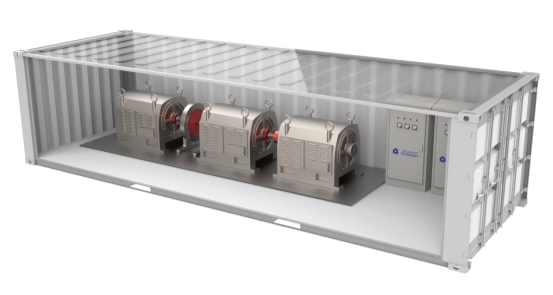
据悉,该公司为云南能源领域的龙头企业,在全国多地区开发了集中式风电、光伏项目。空微子发电技 术作为新一代绿色能源,可大幅降低发电成本,提供与火电稳定性媲美的电力,同时又具备风电及光电 的绿色低碳属性。由数百台兆瓦级设备组成电站,可实现负荷灵活调整,具有为电网调峰调频的重要价 值。 近日,广东宇太能源与云南某新能源龙头企业签订战略合作,双方将合作利用空微子发电技术建设大型 发电项目,在3年内计划开展合计不低于2000兆瓦集中式发电或大型能耗企业自备电站项目。 宇太能源经过8年努力,成功开发了"空微子泵发电"技术。通过发电设备中的纳米材料、磁场及电磁 场,顺应空间微粒子的聚合及运动规律,使带有动能的微粒子团与设备中的磁场电磁场互动,转化为电 力。 空微子发电技术兼具"便宜、稳定、绿色、灵活"属性,有潜力成为我国及全球下一代核心绿色能源。宇 太能源在该领域的技术及商业化进展已走在全球前沿,目前已与多家行业龙头企业开展深度合作。 ...

山西新能源发电量2025年首破千亿千瓦时
Xin Lang Cai Jing· 2026-02-24 23:26
2025年,山西新增并网风光新能源装机1691.4万千瓦,同比增长53.1%。截至2025年底,山西省新能源 装机容量达7880.8万千瓦,占全省装机比重近50%,能源结构绿色低碳转型持续加速。 原标题:山西新能源发电量2025年首破千亿千瓦时 【新看点】 科技日报讯 (记者韩荣 通讯员赵亚男)2月24日,记者从国网山西省电力有限公司获悉,2025年山西新 能源发电量达1180亿千瓦时,同比增长26%,相当于约3500万户家庭一年的用电量,可节约标煤约3600 万吨,减排二氧化碳约8800万吨。 市场这只"无形的手"在促进新能源高质量发展上也发挥着重要作用。国网山西省电力有限公司积极发挥 山西电力市场领先优势,推动新能源参与市场交易,2025年新能源市场化交易电量222亿千瓦时,占新 能源发电量的比重达18.8%。国网山西省电力有限公司还持续创新交易品种,首次开展多年期小时级绿 电交易,成交绿电电量1.95亿千瓦时;建立首个中长期备用辅助服务市场,累计促进消纳新能源电量 2.16亿千瓦时。(韩荣) 原标题:山西新能源发电量2025年首破千亿千瓦时 来源:科技日报 新能源高质量发展离不开强大电网的支持。"十四五 ...
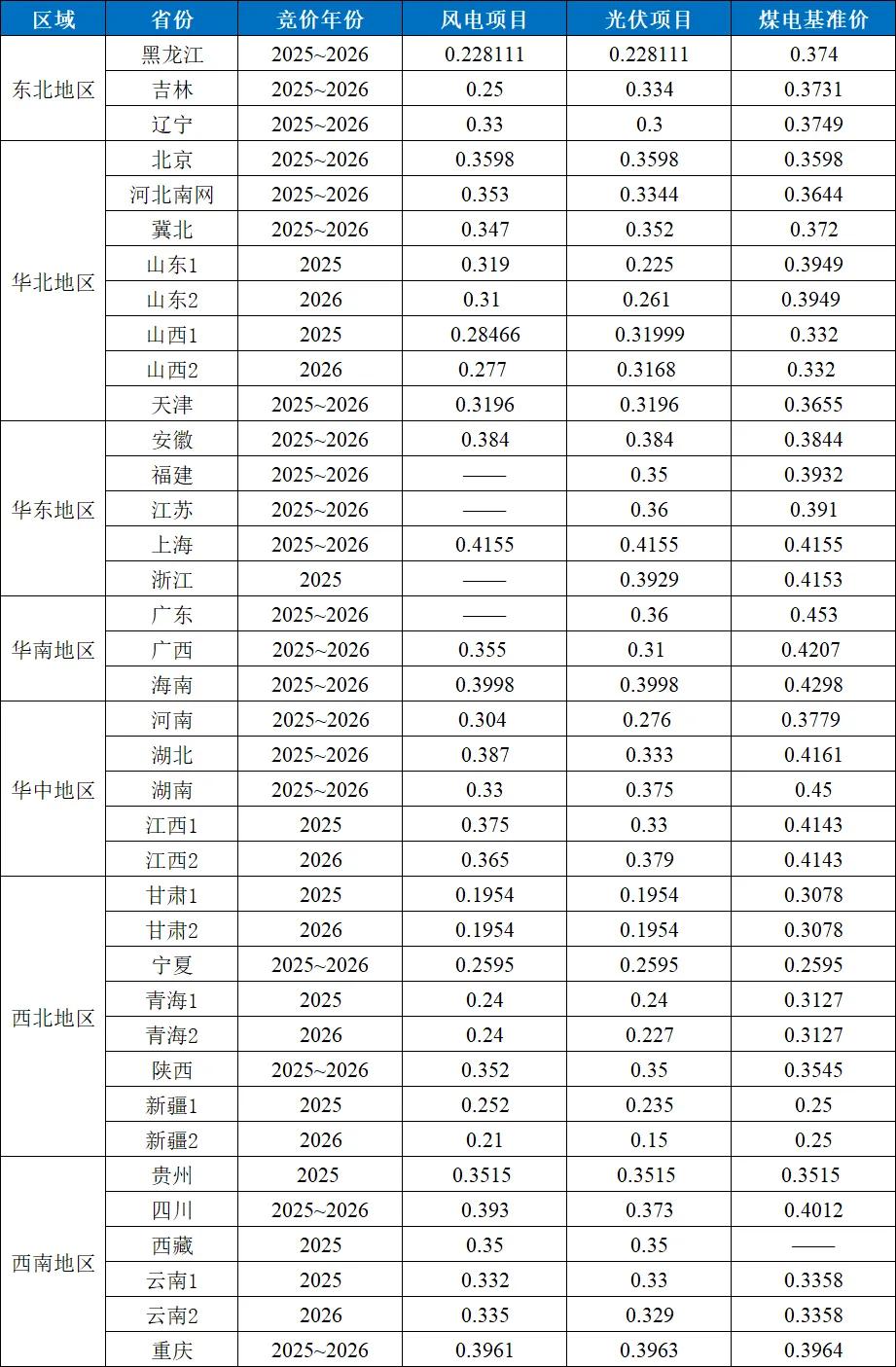
最新|全国 31 省风电、光伏项目机制电价汇总
Xin Lang Cai Jing· 2026-02-24 11:06
截至 2026 年 2 月 22 日,全国 31 个省(区、市)均已开展至少一轮新能源机制电价竞价工作。整体情况如下: 1、山东、山西、江西、甘肃、新疆、青海、云南等 7 个省份,对 2025 年下半年及 2026 年项目分两批开展竞价出清,全国累计形成 38 个竞价出清结果。 2、浙江、贵州两省 2026 年度新能源机制电价竞价工作暂未完成出清。 3、全国 31 个省份均有光伏项目参与并完成出清;其中福建、江苏、广东及浙江(2025 年批次)出清结果中不含风电项目,实际共有 27 个省份完成风电 项目竞价出清。 31省、38次出清结果如下表所示: | 区域 | 复 保 | 竞价年份 | 风电项目 | 光伏项目 | 煤电基准价 | | --- | --- | --- | --- | --- | --- | | 东北地区 | 黑龙江 | 2025~2026 | 0.228111 | 0.228111 | 0.374 | | | 吉林 | 2025~2026 | 0.25 | 0.334 | 0.3731 | | | 辽宁 | 2025~2026 | 0.33 | 0.3 0.3598 | 0.3749 | | ...
泰胜风能:光伏业务不涉及商业航天相关方向
Zheng Quan Ri Bao Zhi Sheng· 2026-02-24 09:04
(编辑 王雪儿) 证券日报网讯 2月24日,泰胜风能在互动平台回答投资者提问时表示,公司当前光伏业务为全资子公司 扬州泰胜新能源有限公司持有的泰胜扬州基地4.27MW屋顶分布式光伏发电项目,光伏业务不涉及商业 航天相关方向。 ...

甘肃能源:腾格里沙漠大基地600万千瓦新能源项目中民勤双茨科200万千瓦风电项目获核准
Zhi Tong Cai Jing· 2026-02-24 08:16
甘肃能源(000791)(000791.SZ)公告,公司收到润能公司转来的民勤县发展和改革局关于转发腾格里 沙漠大基地600万千瓦新能源项目中民勤双茨科200万千瓦风电项目核准批复的通知(民发改发〔2026〕 45号),核准腾格里沙漠大基地600万千瓦新能源项目中民勤双茨科200万千瓦风电项目。 ...

协合新能源:2025盈警利空落地,海外布局开启2026估值重塑-20260224
Guoyuan Securities· 2026-02-24 04:35
【事件】 公司发布公告,预期于截至 2025 年 12 月 31 日止年度录得未经审核之权 益持有人应占溢利较去年同期下降超过 80%(2024 年约 8 亿元)。尽管 溢利减少,但报告期间之经营活动所得现金较 2024 年同期有所增加。公 司报告期间未经审核之权益持有人应占溢利减少主要由于发电业务收入 与毛利率下降、部分资产之亏损及减值、税费相关影响所致。 协合新能源(0182 HK) 2026-02-23 星期一 即时点评 2025 盈警利空落地,海外布局开启 2026 估值重塑 【点评观点】 ➢ 利空落地,当前股价已充分反应悲观预期 尽管 2025 年净利润暴跌,但公司明确指出"经营活动所得现金较 2024 年 同期有所增加"。这表明公司的底层资产仍在健康运转,资金链安全无 虞,市场不应过度解读会计利润的下滑,而应更关注公司未来发展。 ➢ 资产循环模式跑通,锁定 2026 年上半年收益 公司于 2026 年 2 月 9 日宣布出售三个项目公司(云南致隆、永州界牌 等)100%股权予招盈能合,预计确认未经审核收益约 7754 万元人民币, 将直接增厚 2026 年上半年(1H2026) 的业绩。而且这一交 ...
新能源发电装机占比首超煤电 天津加快构建新型电力系统
Jing Ji Ri Bao· 2026-02-21 22:35
本报天津2月21日讯(记者周琳)截至2025年12月底,天津新能源发电装机容量突破1484万千瓦,占全 市发电装机总容量的44.59%,超过煤电成为第一大电源。 新能源发电量明显增加与天津持续完善相关产业体系密切相关。2025年,天津市加快打造"风、光、 锂、氢"新能源产业体系,推动新能源产业实现产值超800亿元,增速超过10%。目前,天津新能源产业 链有规模以上企业110余家,涵盖风能、光伏、锂电池、氢能等多个子领域。 为促进新能源产业发展,天津组建了"智能电网"创新联合体、高效光伏技术研发及产业化创新联合体、 先进动力电池创新联合体等新能源产业创新平台。国网天津电力持续优化电网网架结构、提升电力系统 调节能力、加强电网科学规划,服务新能源高质量发展。 "为适应新能源大规模分散接入带来的变化,我们针对性开展继电保护、安全自动控制装置升级改造, 优化安全防护策略。借助天气预警系统、数字孪生电网、虚拟电厂等手段,加强新能源发电预测和负荷 预测,优化火电机组开机方式,实现主动安全预警。"国网天津市电力公司水电及新能源处负责人黄志 刚说。 目前,天津立足超大城市受端电网定位,以高新能源渗透率、高电气化率为目标,以高 ...
新天绿能发布2026年1月经营数据,发电量同比增15.25%
Jing Ji Guan Cha Wang· 2026-02-21 09:46
机构调研 公司于2025年12月3日至24日接待了睿远基金、太保资产等21家机构调研,就2025年第三季度财务数据 及11月生产经营情况进行了交流,调研记录于2026年1月9日披露。 公司项目推进 经济观察网 基于公开信息,新天绿能(600956.SH)近期有以下值得关注的事件动态,主要围绕经营数 据发布、运营成果及机构活动。 经营状况 公司于2026年2月9日公告2026年1月经营数据,发电量达173.93万兆瓦时,同比增加15.25%;输/售气量 7.23亿立方米,同比增加6.80%,其中售气量增长8.49%。该数据反映业务开局增长势头。 经营状况 2026年1月30日公告显示,2025年第四季度发电量同比增加3.66%,上网电量同比增加3.66%;但平均上 网电价(不含税)同比下降4.52%,市场化交易电量占比提升至66.16%。 唐山LNG项目二阶段预计于2025年底前建成,后续需关注其投产及运营效果。 以上内容基于公开资料整理,不构成投资建议。 ...

协合新能源(00182)已采取一系列应对措施,并取得阶段性成效
智通财经网· 2026-02-20 11:25
Core Viewpoint - The company expects a significant decline of over 80% in the profit attributable to equity holders for the year ending December 31, 2025, compared to the previous year, despite an increase in cash generated from operating activities during the reporting period [1]. Group 1: Profit Decline Reasons - The decrease in profit is primarily due to a decline in revenue and gross margin from power generation, attributed to suboptimal wind and solar resource conditions in certain regions of China, increased curtailment rates, and intensified competition leading to a drop in average electricity prices [2]. - Losses and impairments on certain assets have occurred due to changes in market value, resulting in losses on financial assets measured at fair value and impairments on long-term equity investments [2]. - The absence of non-recurring income related to tax refunds from obtaining Hong Kong tax resident status in the previous year has also impacted profit [2]. Group 2: Strategic Responses - The company has implemented a series of measures to address external challenges and operational pressures, achieving some initial results, including optimizing business and personnel structures, resulting in a reduction of over 30% in full-time employees compared to the end of 2024 [3]. - Enhanced operational and production management has improved equipment utilization and operational efficiency [3]. - The company is actively expanding projects and asset layouts, signing multiple long-term Power Purchase Agreements (PPAs) for photovoltaic projects in the U.S. with globally recognized firms, and establishing a joint equity fund with large insurance capital in China to explore new service business channels [3]. - A successful secondary listing in Singapore has further expanded international financing channels, creating new opportunities for global business development [3].
电力缺口30%:马斯克一语成谶,中国变压器成刚需
Sou Hu Cai Jing· 2026-02-15 08:13
Core Viewpoint - The article highlights the critical shortage of transformers in the context of the global energy transition, emphasizing that this shortage is hindering the development of AI and renewable energy sectors in Western countries, particularly the U.S. and Europe [1][3][26]. Group 1: Transformer Demand and Supply - The demand for transformers has surged due to the rapid growth of AI and data centers, with a medium-sized AI data center requiring hundreds of custom transformers, leading to delivery delays until at least Q3 2029 [7][8][12]. - China's transformer exports have skyrocketed to 646 billion yuan, with an average price exceeding 205,000 yuan per unit, reflecting a 33% increase from the previous year [8][19]. - The U.S. is experiencing a significant gap between its software ambitions and hardware capabilities, as evidenced by companies willing to pay a 20% premium for expedited transformer delivery [10][23]. Group 2: Factors Contributing to Transformer Shortage - The surge in electricity demand from AI applications is a primary driver, with data centers projected to consume 176 terawatt-hours by 2025, equivalent to the annual output of three Three Gorges dams [12][19]. - The decentralized nature of renewable energy generation has increased the need for transformers, with solar power plants requiring 1.8 to 3 times more transformers than traditional coal-fired plants [14][19]. - Aging electrical grids in the U.S. and Europe, with 70% of equipment exceeding its design lifespan, are unable to handle the increased load from modern energy demands [17][19]. Group 3: Manufacturing and Material Challenges - Western countries have outsourced manufacturing, leading to a fragmented transformer supply chain and a shortage of skilled labor, making it difficult to ramp up production [16][19]. - The U.S. can only meet 20% of its transformer material needs domestically, relying heavily on imports for critical components like oriented silicon steel [19][20]. - Chinese manufacturers can deliver transformers within 3 to 6 months, while Western counterparts often require over 18 months, creating a competitive disadvantage [22][28]. Group 4: Implications for the Industry - The inability to secure timely transformer supplies is already impacting major projects, such as Microsoft's AI data center in Wisconsin, which has faced delays due to equipment shortages [25][28]. - If the power bottleneck persists, global AI computing capacity could be 15% to 20% lower than expected between 2025 and 2027, directly affecting revenue growth for tech companies [25][30]. - The ongoing competition will not only focus on production capacity but also on establishing regulatory frameworks and standards, with Chinese companies aiming to become key players in defining these rules [28][30].