
变压器制造

Search documents
北美数据中心缺电-制造板块投资机会
2026-03-10 10:17
Summary of Conference Call Records Industry Overview - The focus is on the North American data center industry, particularly the electricity supply challenges and the resulting investment opportunities in the gas turbine and power generation sectors [1][2][15]. Key Points and Arguments Electricity Supply Challenges - North American data centers are experiencing unprecedented electricity density, pushing cloud providers to consider self-built power sources, with gas turbines becoming the preferred option [1]. - The electricity supply gap is expected to lead to three major surprises, particularly in gas turbine-related components, as project initiation amounts related to data centers reached a historical high in January 2026 [2]. - The structure of ongoing and announced projects indicates a continuous rise in electricity density, suggesting that actual demand may exceed current expectations [2]. Investment Opportunities - Companies that have entered the U.S. supply chain and possess component and system integration capabilities are favored for future orders [3]. - Key players like Jie Rui Co. have secured significant contracts with U.S. data centers, validating their capabilities [3][4]. - The domestic supply chain is evolving from component exports to complete systems with pricing power, as evidenced by the successful validation of the Taihang 110 gas turbine [1][8]. Supply Chain Dynamics - The supply chain for gas turbines and related components is under significant strain, with major manufacturers like GE facing delivery delays [1][7]. - Domestic suppliers such as Ying Liu and Wan Ze are expected to benefit from the mismatch in overseas supply and demand, with market expectations for growth [1][12]. - The high-pressure transformer market in North America is heavily reliant on imports, with local production capacity being limited and expansion cycles being lengthy [1][18]. Regulatory and Market Trends - The U.S. has introduced new emissions regulations that will increase the importance of exhaust treatment systems for gas turbines, enhancing their value [30]. - The North American electricity grid is undergoing significant upgrades, with major projects approved to enhance capacity and reliability [14][20]. Company-Specific Insights - Companies like Ying Liu and Wei Chai Power are highlighted for their strong growth potential due to their established customer bases and international operations [32][33]. - Silver Wheel Co. has secured a $130 million order for exhaust treatment systems, with deliveries starting in Q4 2026, indicating strong demand in the sector [29]. Additional Important Content - The market is expected to shift from a focus on order shortages to the potential for domestic gas turbine manufacturers to expand internationally, leveraging recent advancements in technology and production capabilities [8][34]. - The investment strategy emphasizes prioritizing companies that have established relationships with major clients like Caterpillar and Cummins, which enhances order certainty and long-term growth prospects [26][34]. This summary encapsulates the critical insights from the conference call, highlighting the challenges and opportunities within the North American data center and gas turbine industries.
未知机构:三星医疗签订海外变压器框架订单点评0305中标荷兰变压器框架合同949-20260306
未知机构· 2026-03-06 02:20
Summary of Conference Call Notes Company and Industry Involved - The company discussed is **Samsung Medical**, specifically its subsidiary **Samsung Sweden** which has secured contracts for transformer manufacturing. - The industry focus is on **transformer manufacturing** and **power distribution technology**. Core Points and Arguments - Samsung Sweden has signed a framework contract with **Enexis** in the Netherlands for oil-immersed transformers, amounting to **€117 million**, approximately **¥949 million** [1] - Winning the Dutch contract indicates that Samsung's transformer manufacturing capabilities have met **global high-level certifications**, particularly due to stringent EU standards on **environmental protection**, **energy efficiency**, and **noise reduction** [1] - The company’s distribution technology is beginning to lead in overseas markets, surpassing many domestic competitors [1] Additional Important Content - The company has progressively secured contracts, starting with a **¥341 million** order for oil-immersed transformers in Brazil in 2023, followed by a **¥466 million** contract with the Greek power authority (HEDNO) in April 2024, culminating in the recent Dutch order [2] - This sequence of contracts signifies that the company's technological strength is gaining **global recognition**, moving from simpler to more complex projects [2] - Market perception is shifting positively towards **Siyuan Electric** in the mid-to-high voltage overseas market, suggesting that Samsung could become a comparable player in the international distribution system [2] - Profit forecasts for 2026 are projected at **¥2.3-2.4 billion**, with a current price-to-earnings ratio of **16x**, while Siyuan is expected to have a **45x** ratio, indicating that Samsung is significantly undervalued and warrants continued attention [2]

中国电力设备凭啥“爆单”全球
Ke Ji Ri Bao· 2026-03-02 00:27
Core Insights - The Chinese power equipment manufacturing industry is experiencing a surge in demand due to the explosive growth in global computing power infrastructure and energy projects, with orders extending to 2027 and a significant increase in overseas orders [1][2]. Group 1: Industry Growth and Demand - The transformer manufacturing sector is a critical component of the power equipment industry, with companies like Baoding Tianwei Baobian Electric Co., Ltd. reporting that over 40% of their orders are for key high-voltage and nuclear power projects [2]. - The demand for transformers is expected to grow significantly, with China's transformer industry comprising about 3,000 companies and accounting for approximately 60% of global production capacity [3]. - By 2025, China's transformer export value is projected to reach 64.6 billion yuan, representing a nearly 36% increase from 2024 [3]. Group 2: Technological Advancements - Chinese power equipment manufacturers are enhancing their competitiveness through breakthroughs in high-voltage IGBT chips, intelligent monitoring systems, and flexible transmission technologies, leading to increased domestic production rates and international market competitiveness [4]. - The successful development of a 345 kV fully insulated ultra-high-capacity transformer by Jiangsu Yawen Transformer Co., Ltd. marks a significant technological advancement, filling a gap in the domestic market for such products [5][6]. Group 3: Supply Chain and Global Positioning - China's stable delivery capabilities in the context of global power equipment shortages are reshaping the market dynamics, with companies like Jiangsu Yawen successfully securing international contracts due to their superior technology and quality control [5][6]. - Major players in the transformer industry, such as Igor Electric Co., Ltd., are expanding their production capacity in countries like Thailand, the USA, and Mexico, with expectations of significant output increases by 2027 [6]. Group 4: Meeting New Energy Demands - The construction of computing centers and supercomputing clusters in China is accelerating, creating new demands for power equipment that ensure stable and efficient energy supply [7]. - Companies are actively pursuing technological innovations to meet the stringent requirements for power supply stability and efficiency, particularly in the context of the "East Data West Computing" initiative [7][8].


南京“电力心脏”跳动全球算力市场
Nan Jing Ri Bao· 2026-02-27 02:42
Core Insights - The energy consumption of AI interactions is becoming a significant challenge, shifting from a "chip shortage" to an "energy shortage" as the demand for power continues to rise with the advancement of AI technology [1] - Transformers are identified as critical equipment in the power infrastructure for AI, with increasing market demand and production capacity in Nanjing [1] Group 1: Company Performance - Companies like Zhongdian Electric and Daqian Transformer are experiencing a surge in orders, with Zhongdian's transformer business expected to grow by approximately 20% in 2025 [2] - Daqian Transformer has the largest single factory for dry-type transformers below 35kV, with a monthly production capacity of 1,200 units and a projected sales growth of around 25% in 2025 [2] - Liyie Electric Transformer has improved production efficiency by 30% through automation and is on track for a production increase of about 20% in the first quarter [3] Group 2: Innovation and Development - The demand for reliable power supply in data centers is driving innovation in transformer technology, with Daqian collaborating with universities to develop solid-state transformers that offer significant advantages over traditional models [4] - Liyie Electric has developed high-capacity transformers specifically for AI computing clusters, achieving low loss and high reliability under heavy loads, with over 100 units already in mass production [5] Group 3: Market Expansion - The transformer industry in China is projected to see an export value of 64.6 billion yuan by 2025, reflecting a nearly 36% year-on-year increase [6] - Nanjing's transformer companies are expanding their international presence, with Liyie and Zhongdian targeting a 20% export ratio by 2026, aiming for over 500 million yuan in export value [6] - Liyie Electric's products have been exported to over 20 countries, including Uzbekistan and Norway, with a focus on providing customized solutions and comprehensive services [7]
变压器“全球爆单”,川企如何应对?
Xin Lang Cai Jing· 2026-02-26 22:49
Core Insights - The transformer industry in China is experiencing significant growth, driven by the "dual carbon" goals and increasing demand for new energy systems, as well as overseas grid upgrades and data center construction fueled by AI [5][4] - Companies are focusing on enhancing their competitive edge by establishing specialized transformer divisions, investing in R&D, and embracing smart manufacturing [6][9] Group 1: Market Dynamics - The demand for transformers is steadily increasing, with China's transformer export value projected to reach 64.6 billion yuan in 2025, marking a nearly 36% growth from 2024 [4] - The surge in orders is evident, with companies like Chengdu Double Star reporting an increase in export value from less than 5% to over 20% of total output [4] - The competitive landscape is intensifying, with approximately 3,000 transformer-related companies in China, leading to price competition in lower voltage products [6] Group 2: Company Strategies - Companies are actively expanding their capabilities, such as Chengdu Double Star planning to establish a dedicated foreign trade team to explore international markets [6] - The establishment of specialized divisions, like the transformer division at Chuan Kai Electric, reflects a strategic focus on high-barrier specialty transformer products [6] - Companies are investing in smart manufacturing and system integration to provide comprehensive solutions, enhancing efficiency and reliability for clients [7][9] Group 3: Challenges and Opportunities - Despite the booming market, companies face challenges from increased competition and the need for continuous innovation to maintain market share [5][6] - The industry is characterized by a relatively small scale in Sichuan, with key components often sourced from other regions, indicating a need for improved local supply chains [9] - Companies are committed to solidifying their domestic market presence while also seeking to expand internationally, aiming to convert current demand into lasting reputation and market stability [9]

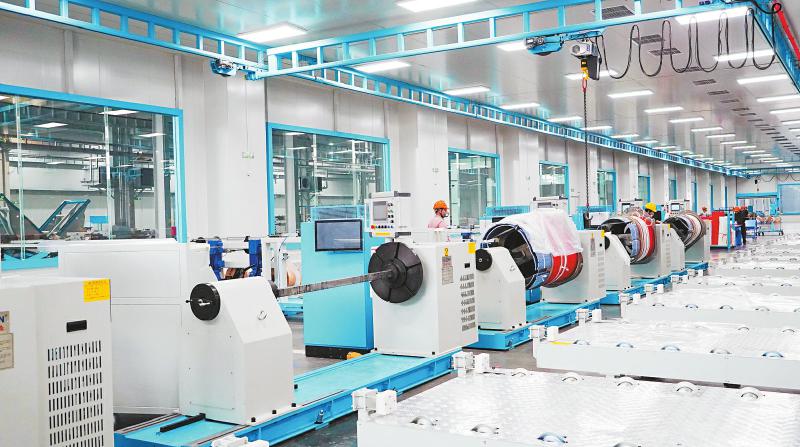
港股异动 | 重庆机电(02722)涨超7% 美国科技巨头将承诺自供电力 AIDC拉动大马力发动机需求
智通财经网· 2026-02-26 02:59
Group 1 - Chongqing Machinery and Electric (02722) saw a rise of over 7%, reaching a historical high of 3.27 HKD, with a current price of 3.25 HKD and a trading volume of 25.99 million HKD [1] - Major tech companies including Amazon, Google, Meta, Microsoft, xAI, Oracle, and OpenAI are set to sign the "Electricity Rate Payer Protection Commitment" on March 4, which aims to allow these companies to build or procure their own power supply for new AI data centers, avoiding reliance on the existing public grid [1] - According to a report by Industrial Securities, Chongqing Hitachi Energy is a key production base for Hitachi's ultra-high voltage transformers above 750KV, benefiting from overseas high-voltage grid construction [1] - Chongqing Cummins is the only large-bore engine manufacturer for Cummins in China, actively expanding capacity due to industry supply tightness, with expectations for continued growth in demand for high-horsepower engines in data centers and other sectors over the coming years [1]
春节不打烊!从车间到海外 中国外贸人跑出新年“加速度”
Yang Shi Xin Wen· 2026-02-23 04:21
Group 1 - The Spring Festival is a crucial time for foreign trade companies to seize orders and opportunities, with many businesses participating in international exhibitions and ensuring production continuity during the holiday [1][3] - Over 200 Chinese companies attended exhibitions in the United States on the first day of the Lunar New Year, showcasing products with a 20% efficiency increase and a 10% cost reduction, leading to a surge in international customer interest [3] - Jiangsu Huapeng Group has over 3 billion yuan in orders, with more than 2 billion yuan in export orders, and production is running at full capacity to meet demand [3][4] Group 2 - The demand for transformers is rapidly increasing globally due to the ongoing growth in artificial intelligence computing power, contributing to the success of Chinese manufacturing in international markets [3][4] - The logistics sector is also experiencing significant activity, with a 55% increase in the volume of international trains dispatched from Wuhan compared to the previous year, and measures have been implemented to reduce transportation time and costs [6] - Ningbo-Zhoushan Port operated 24/7 during the Spring Festival, achieving a container throughput of over 780,000 standard boxes, a year-on-year increase of over 17% [6][7] Group 3 - Cross-border e-commerce is thriving, with packages processed quickly at Zhengzhou Airport, where time-sensitive goods are loaded onto planes within 24 hours of arrival [7]
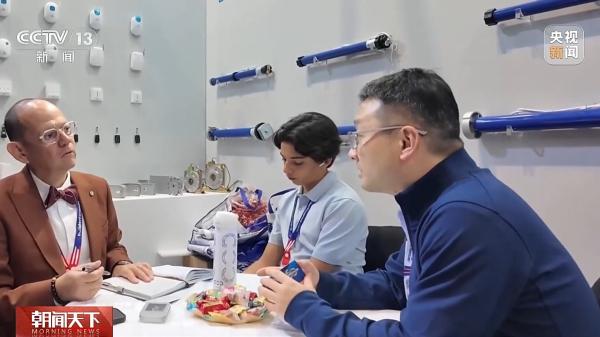
制裁中国变压器?美国AI巨头叫苦:离开中国,我们连电都没法通!
Sou Hu Cai Jing· 2026-02-16 06:16
Core Insights - The article highlights the critical issue of power supply for AI operations in Silicon Valley, emphasizing that the infrastructure, particularly transformers, is inadequate to meet the growing demands of AI technology [1][3][5]. Group 1: AI Power Consumption - AI requires substantial power, with estimates indicating that a large-scale AI training cluster consumes electricity equivalent to that of 300,000 households simultaneously [3]. - By 2024, data centers in the U.S. are projected to account for over 4% of the nation's total electricity consumption, with predictions that this figure will double in four years [3]. Group 2: Transformer Shortage - The U.S. faces a significant shortage of transformers, with approximately 14,000 large transformers and tens of thousands of distribution transformers needed [5]. - The lead time for ordering high-voltage transformers can take three to four years, comparable to the time it takes to buy a house [5]. Group 3: Manufacturing Challenges - The U.S. has become reliant on imports for transformers, with about 80% of large transformers being sourced from abroad due to a decline in domestic manufacturing capabilities [7]. - The U.S. government's past actions, such as seizing a Chinese transformer for security concerns, have exacerbated the supply chain issues, delaying critical projects [9]. Group 4: China's Dominance in Transformer Production - China has developed a competitive edge in transformer manufacturing, achieving significant technological advancements and producing high-quality transformers that meet global demands [13][15]. - The production of a specific thin steel sheet used in transformers has allowed China to reduce energy consumption by 30% compared to international standards, making their transformers more efficient for high-demand applications like AI [16]. Group 5: U.S. Response and Future Outlook - Despite the U.S. government's inclination to impose tariffs on Chinese transformers, domestic power companies oppose such measures, recognizing the necessity of timely transformer supply for AI operations [11]. - The U.S. is exploring nuclear energy as a potential solution to its power supply issues, but the long construction timelines for nuclear plants make this an impractical short-term solution [18][19].
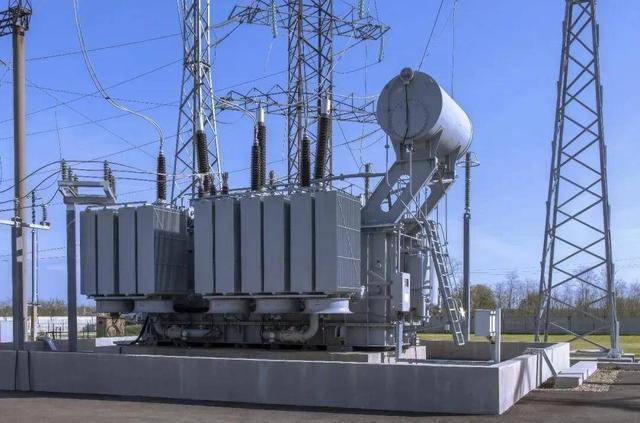
电力缺口30%:马斯克一语成谶,中国变压器成刚需
Sou Hu Cai Jing· 2026-02-15 08:13
Core Viewpoint - The article highlights the critical shortage of transformers in the context of the global energy transition, emphasizing that this shortage is hindering the development of AI and renewable energy sectors in Western countries, particularly the U.S. and Europe [1][3][26]. Group 1: Transformer Demand and Supply - The demand for transformers has surged due to the rapid growth of AI and data centers, with a medium-sized AI data center requiring hundreds of custom transformers, leading to delivery delays until at least Q3 2029 [7][8][12]. - China's transformer exports have skyrocketed to 646 billion yuan, with an average price exceeding 205,000 yuan per unit, reflecting a 33% increase from the previous year [8][19]. - The U.S. is experiencing a significant gap between its software ambitions and hardware capabilities, as evidenced by companies willing to pay a 20% premium for expedited transformer delivery [10][23]. Group 2: Factors Contributing to Transformer Shortage - The surge in electricity demand from AI applications is a primary driver, with data centers projected to consume 176 terawatt-hours by 2025, equivalent to the annual output of three Three Gorges dams [12][19]. - The decentralized nature of renewable energy generation has increased the need for transformers, with solar power plants requiring 1.8 to 3 times more transformers than traditional coal-fired plants [14][19]. - Aging electrical grids in the U.S. and Europe, with 70% of equipment exceeding its design lifespan, are unable to handle the increased load from modern energy demands [17][19]. Group 3: Manufacturing and Material Challenges - Western countries have outsourced manufacturing, leading to a fragmented transformer supply chain and a shortage of skilled labor, making it difficult to ramp up production [16][19]. - The U.S. can only meet 20% of its transformer material needs domestically, relying heavily on imports for critical components like oriented silicon steel [19][20]. - Chinese manufacturers can deliver transformers within 3 to 6 months, while Western counterparts often require over 18 months, creating a competitive disadvantage [22][28]. Group 4: Implications for the Industry - The inability to secure timely transformer supplies is already impacting major projects, such as Microsoft's AI data center in Wisconsin, which has faced delays due to equipment shortages [25][28]. - If the power bottleneck persists, global AI computing capacity could be 15% to 20% lower than expected between 2025 and 2027, directly affecting revenue growth for tech companies [25][30]. - The ongoing competition will not only focus on production capacity but also on establishing regulatory frameworks and standards, with Chinese companies aiming to become key players in defining these rules [28][30].
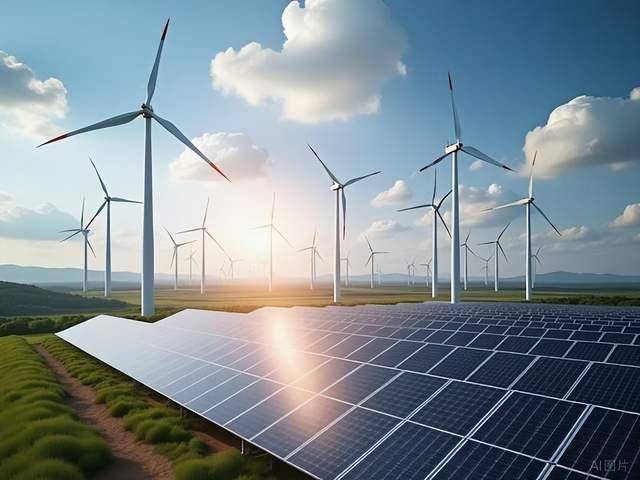
三变科技业绩预降股价反涨,AI算力概念驱动市场高预期
Jing Ji Guan Cha Wang· 2026-02-12 09:47
Core Viewpoint - The stock price of Sanbian Technology (002112) has risen despite a projected decline in performance for 2025, driven by high market expectations for emerging businesses like AI computing power, creating a short-term divergence from the company's fundamentals [1]. Performance and Operating Conditions - The company forecasts a net profit attributable to shareholders for 2025 between 12 million and 18 million yuan, representing a year-on-year decline of 85.10% to 90.06%. The decline in net profit is primarily due to intensified competition in the transformer market, leading to a decrease in new energy order share, and rising copper prices squeezing gross margins. For the first three quarters of 2025, revenue decreased by 16.91%, net profit fell by 48.84%, and gross margin dropped to 17.45% [2]. Stock Price Movement Reasons - AI computing power concept catalyzed the stock price increase: The company became the main transformer supplier for Musk's xAI Memphis supercomputer center, with initial orders around 50 million yuan, leading to high market expectations for its entry into the global AI industry chain. From January to early February 2026, the stock price surged nearly 100%, closing at 24.92 yuan on February 12, with a year-to-date increase of 87.93% [3]. - Funding and sentiment drove the stock price: Since the beginning of 2026, the stock frequently appeared on the leaderboard, with turnover rates exceeding 40%, indicating intense speculation from retail and institutional investors. However, recent main fund outflows were noted, with a net outflow of 40.17 million yuan on February 12, reflecting significant divergence in market sentiment [3]. Company Fundamentals - Valuation and performance divergence: As of the closing price on February 12, the price-to-earnings ratio (TTM) reached 88.91 times, while net profit significantly declined, indicating a high valuation [4]. - Financial pressures unresolved: By the end of the third quarter of 2025, accounts receivable and inventory stood at 753 million yuan and 776 million yuan, respectively, with low turnover efficiency (accounts receivable turnover days at 168 days). The net cash flow from operating activities was a negative 100 million yuan, and the quick ratio was 0.89, below the safety line [4]. - Traditional business under pressure: Oil-immersed transformers accounted for 58.38% of the business, with capacity utilization dropping to 65% due to a slowdown in grid investment [4]. Institutional Perspectives - Analysts believe the stock price increase is primarily driven by speculative trading, as the current revenue contribution from the AI computing power business is minimal. Future attention should be on order fulfillment and improvements in traditional business. If performance does not meet expectations, the high valuation may face downward pressure [5].
