
科技业

Search documents
宏观专题:七问美股海外经营状况:全球化“退潮”下美股海外业务的隐忧
Huachuang Securities· 2025-06-09 08:32
Group 1: Overview of Overseas Business in US Stocks - Approximately 30% of revenue for S&P 500 companies comes from overseas, while small companies (represented by Russell 2000) have about 20%[2] - Technology (51%), materials (38%), healthcare (35%), and communications (34%) have the highest exposure to overseas business[2] - S&P 500 companies generally have a higher overseas revenue share and profit margins compared to domestic operations, with Apple having 57% of its revenue from overseas and a profit margin of 42%[2] Group 2: Industry-Specific Insights - The technology sector has the largest overseas revenue share, exceeding 50%, while materials, healthcare, and communications also show significant overseas revenue contributions[4] - Major companies in the technology sector, such as Apple (57%) and Nvidia (56%), have overseas revenue shares above the industry average of 51%[5] - In the communications sector, companies like Alphabet (46%) and Meta (56%) also exceed the industry average of 34% for overseas revenue[5] Group 3: Growth and Profitability Trends - Non-US revenue growth for S&P 500 companies is generally higher than total revenue growth, indicating a reliance on overseas markets[10] - The communications sector shows the highest growth in overseas revenue, consistently outpacing total revenue growth since 2017[10] - Profit margins for overseas operations in certain sectors, such as consumer staples and technology, are higher than domestic margins, with an average overseas profit margin of 33% for technology[11] Group 4: China Market Dependency - Among S&P 500 companies disclosing Chinese revenue, technology and communications sectors have a higher dependency, with 25% of their revenue coming from China, above the overall average of 17%[4] - Recent trends show that revenue growth from China for these sectors has slowed compared to overall growth, potentially due to US restrictions on technology exports to China[4]


七问美股海外经营状况:全球化“退潮”下美股海外业务的隐忧
Huachuang Securities· 2025-06-09 06:12
Group 1: Overview of Overseas Business in US Stocks - Approximately 30% of non-US revenue in the S&P 500 index, while small enterprises (represented by Russell 2000) have about 20%[3] - Technology (51%), Materials (38%), Healthcare (35%), and Communications (34%) have the highest overseas revenue exposure[4] - S&P 500 companies generally have higher overseas revenue ratios and profit margins compared to domestic operations, e.g., Apple’s overseas revenue is 57% with a profit margin of 42%[22] Group 2: Industry-Specific Insights - Technology and Communications sectors account for nearly half of the S&P 500 market capitalization, indicating high reliance on overseas business[4] - Among the top five companies in the S&P 500, over half have overseas business ratios exceeding their industry averages[5] - Asian and European markets contribute significantly to overseas revenue, with Asia at 45% and Europe at 40%[6] Group 3: Growth and Profitability - Non-US revenue growth is generally higher than total revenue growth for S&P 500 companies, indicating a greater reliance on overseas markets[8] - Certain industries, such as Consumer Staples and Technology, show higher profit margins for overseas operations compared to domestic ones, e.g., Consumer Staples at 37%[9] - Companies like Apple and Amazon have overseas profit margins that surpass their domestic margins, highlighting the profitability of international operations[60] Group 4: China Market Dependency - For S&P 500 companies disclosing Chinese business, Technology and Communications sectors have a higher revenue share from China (25.1%) compared to the overall average (16.5%)[64] - Recent trends show that revenue growth from China for these sectors has lagged behind overall growth, possibly due to US restrictions on technology[64]

反弹,如期而至!
格兰投研· 2025-05-29 13:54
Core Viewpoint - The U.S. International Trade Court has blocked Trump's tariff policy announced on April 2, stating that the IEEPA does not grant the president unlimited authority to impose tariffs, leading to the invalidation of global tariffs, retaliatory tariffs, and fentanyl tariffs [1][2]. Legal Issues - The court identified three legal issues: 1. Trade deficits are a long-term phenomenon, not an emergency situation [2]. 2. Historically, IEEPA has been used for sanctions and anti-terrorism, not for imposing tariffs on other countries [2]. 3. The U.S. Constitution grants Congress the power to impose tariffs, not the president [2]. Court Ruling and Appeal - The court ruled that Trump's use of emergency powers to impose tariffs was an abuse of law, halting the tariffs immediately. However, tariffs based on Sections 232 and 301 remain unaffected [2]. - The Trump administration has appealed the ruling to the Circuit Court and requested an emergency stay to continue imposing tariffs during the appeal process [3]. Political Implications - The ruling represents a significant setback for Trump and indicates a consolidation of establishment forces in the U.S. [3]. - There are differing opinions on whether Trump will succeed in his appeal, with some suggesting that the Supreme Court may not intervene in the long-standing power struggle between Congress and the presidency [6]. Economic Impact - Trump's economic policy relies on internal tax cuts and external tariffs, making it unlikely for him to abandon the tariff strategy as it is crucial for his administration's financial plans [7]. - The ruling complicates Trump's ability to impose tariffs, as alternative legal avenues may lead to further litigation and delays [8]. Market Reaction - Following the news, the Chinese stock market experienced a broad rally, with the A-share market seeing a slight increase and significant trading volume [9]. - The technology sector performed well, while consumer stocks faced declines, indicating a shift in market sentiment and investment focus [9]. Future Outlook - The current market sentiment remains optimistic, with the Shanghai Composite Index positioned for potential growth, particularly in the technology sector [10].


中美对抗是假,美联储收割是真!买矿山、买电网?这在中国行不通
Sou Hu Cai Jing· 2025-05-22 02:28
Group 1 - The article discusses the underlying dynamics of the US-China relationship, emphasizing that the apparent trade and technology conflicts may not reflect the deeper economic interdependence between the two nations [3][5][19] - It highlights the role of the Federal Reserve and international capital in maintaining the dollar system, suggesting that the Fed's decisions often serve the interests of capital groups rather than solely the US economy [7][8][13] - The article points out that the US's monetary policies, particularly the significant increase in debt and money supply, may be strategically aimed at positioning for future global crises, allowing capital to acquire undervalued assets [10][13][15] Group 2 - The narrative indicates that while the US seeks to maintain its economic dominance, China's strong control over its key assets, such as energy and infrastructure, poses challenges for foreign capital penetration [17][19] - It notes that China's efforts towards the internationalization of the yuan and advancements in technology sectors like renewable energy and 5G are enhancing its global economic influence [19][24] - The article also mentions a growing trend of "de-dollarization" among some countries, reflecting a shift in reserve strategies and a response to the stability of the current international financial system [22][24]
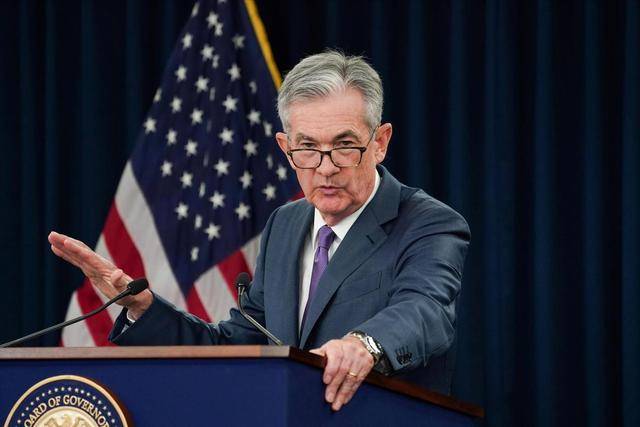
【西街观察】一揽子金融政策也是一揽子市场信心
Bei Jing Shang Bao· 2025-05-07 15:21
Group 1: Policy Overview - The core viewpoint of the article is that China has introduced a comprehensive set of policies to stabilize the economy amidst global uncertainties, focusing on monetary policy, regulatory reforms, and capital market support [1][4] - The policy aims to boost market confidence through five key areas: stabilizing the real estate market, stock market, promoting consumption, stabilizing foreign trade, and strengthening technology [1][4] Group 2: Real Estate Market - The real estate market is identified as a crucial pillar of economic confidence, with policies targeting both demand and supply sides [1] - On the demand side, the policy includes a 0.25 percentage point reduction in public housing loan rates and expectations of lower Loan Prime Rates (LPR), easing the mortgage burden on residents [1] - On the supply side, the policy accelerates the development of financing systems that align with new real estate models, addressing the reasonable financing needs of property companies [1] Group 3: Stock Market Stability - The stability of the stock market is emphasized as vital for the broader economic landscape and investor interests, supported by long-term capital and institutional safeguards [2] - Following the "924 New Policy" in 2024, the Shanghai Composite Index rose from 2700 to 3400 points, indicating strong market resilience despite recent tariff disruptions [2] - The A-share market saw significant gains on May 7, with all three major indices closing higher [2] Group 4: Consumption Promotion - Structural tools have been implemented to stimulate consumption, which is key for expanding domestic demand [2] - A special quota of 500 billion yuan has been established for service and elderly care loans, encouraging banks to increase credit supply and activate demand in various service sectors [2] - The reduction of reserve requirements for auto finance and leasing companies aims to lower their liabilities, directly stimulating automotive consumption and equipment investment [2] Group 5: Foreign Trade and Technology - Policies to stabilize foreign trade include financial support, export insurance enhancements, and integrated domestic and foreign trade strategies [3] - The financing coordination mechanism now includes all foreign trade enterprises, providing tailored support to those affected by external shocks [3] - The bond market is fostering new productive forces by supporting the issuance of long-term technology bonds focused on sectors like AI, quantum technology, and biomedicine [3]