管理咨询

Search documents
“抢跑”的委员·局长面对面,咋就这么热闹?
Mei Ri Jing Ji Xin Wen· 2026-01-26 16:53
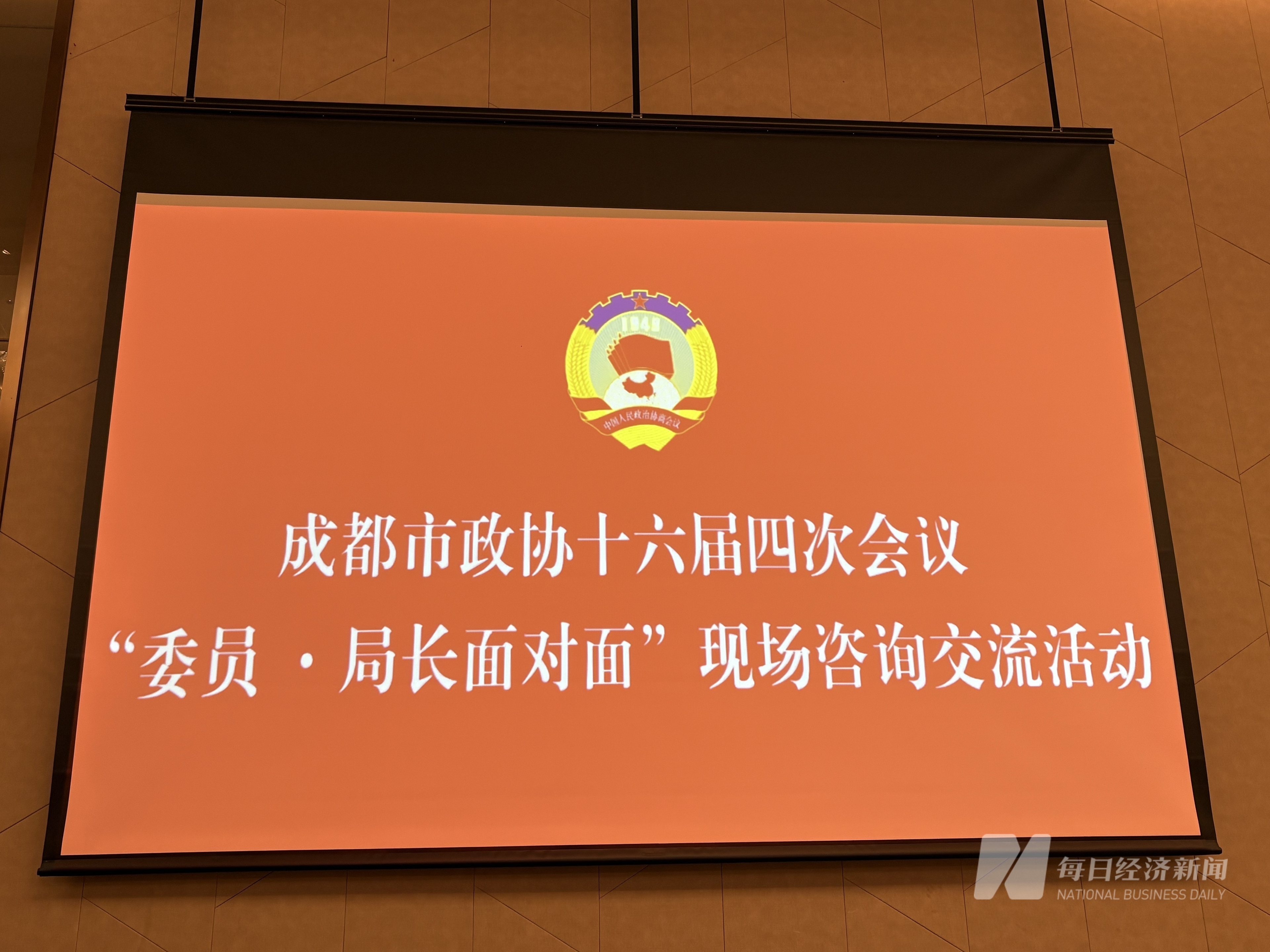
图片来源:每经记者 石普宁 摄 热度:"这种零距离,让人感到触手可及" 每经记者|石普宁 每经编辑|唐元 1月26日下午,成都非遗博览园缇沃丽酒店3楼,一场原定于14:30开启的对话,被提前的"抢跑"打破了节奏。这是政协第十六届成都市委员会第四次会议开 幕会前,"委员·局长面对面"现场咨询活动的开场。 活动现场,24个市级部门 "开门迎客",等待他们的是带着问题而来的成都市政协委员们。场子很快热络起来,现场进入了高密度的信息交换模式。在"甚至 来不及喝口水"的紧迫感下,委员们和相关职能部门你来我往,指向的大都是具体问题的解决路径。 据了解,此次活动共计265人次市政协委员参加咨询交流,咨询各类问题376个,其中372个问题当场得到解答。对于现场未能及时反馈的问题和意见,相关 部门负责人进行了登记梳理,后续将主动联系委员回复咨询。 同样具有深度的,是关于企业"出海"焦虑的及时回应。面对复杂的国际贸易形势,成都市政协委员、海瑞克(成都)隧道设备有限公司总经理白锟直奔市口 岸物流办和市商务局,提出了关于外贸环节及应对国际规则变化的现实困惑。 如果忽略门口的指引牌,这里看起来像是一个高规格的行业交流洽谈区,甚至带着" ...

Treasury cancels Booz Allen contracts after employee leaked Trump tax records
CNBC· 2026-01-26 15:50
Core Viewpoint - The Treasury Department has canceled all contracts with Booz Allen Hamilton following a leak of sensitive tax records, which has led to a significant drop in the company's stock price [1][2]. Group 1: Contractual Details - The Treasury Department had 31 contracts with Booz Allen Hamilton, amounting to $4.8 million in annual spending and total obligations of $21 million [2]. Group 2: Government Trust and Accountability - Treasury Secretary Scott Bessent emphasized that canceling these contracts is a crucial step in enhancing Americans' trust in the government, aligning with President Trump's directive to eliminate waste, fraud, and abuse [2].


深圳罗湖发布“3+3+4”产业蓝图 老城区如何向新突围?
Nan Fang Du Shi Bao· 2026-01-23 06:07
Core Insights - The article discusses the launch of a strategic plan for the Luohu District in Shenzhen, focusing on building a modern industrial system characterized by "3+3+4" framework aimed at high-quality development [1][8] Group 1: Modern Industrial System - The "3+3+4" modern industrial system includes consolidating three major industries: finance, commerce, and professional services; optimizing three characteristic industries: gold and jewelry, tourism services, and modern logistics; and developing four emerging industries: soft information and artificial intelligence, life and health, safety and energy conservation, and aerospace [2][3] - The strategy emphasizes a gradient approach of "consolidate, optimize, and seize opportunities" to transition from optimizing existing industries to achieving breakthroughs in new growth areas [2] Group 2: Key Industry Developments - In finance, the focus is on enhancing the Hongling New Financial Industry Belt and establishing a VC/PE cluster in Sungang, while promoting fintech and innovative insurance [2] - The commerce sector aims to advance digital transformation and platform development, enhancing traditional consumer goods and fostering new product categories like smart home devices [2] - The professional services sector will leverage building economies to promote the growth of digital advertising, management consulting, and various service industries [2] Group 3: Emerging Industries - In the field of soft information and AI, the plan includes creating an ecosystem for AI applications and establishing innovation centers [4] - The life and health sector will focus on high-end medical devices and AI in healthcare, with plans for a global R&D base for disposable endoscopes [4] - The safety and energy conservation sector aims to innovate application scenarios and support national-level technology development [4] Group 4: Economic Forms - The plan outlines the development of five economic forms: headquarters economy, platform economy, port economy, building economy, and first-release economy, aiming to create a new industrial development pattern [5][6] - The port economy will leverage Luohu's geographical advantages to enhance cross-border industrial integration, while the first-release economy will focus on brand cultivation and innovative application scenarios [6] Group 5: Support Systems - The plan emphasizes a comprehensive enterprise service system that includes project implementation, incubation, and support for growth, alongside a focus on building quality incubators and accelerators [7] - Financial strategies will integrate various funding mechanisms to support industrial development, while also promoting data resource sharing for digital transformation [7] Group 6: Strategic Vision - The strategic vision aims to address the challenges of modernizing industries in an older urban area, combining traditional strengths with new technologies to create new business models and consumption scenarios [8][9] - The initiative reflects a commitment to embracing digital and open economies, positioning Luohu for a significant upgrade in overall capabilities [8]

世界经济论坛梁锦慧 :警惕“窄播”风险,以“对话精神”拓宽世界的合作空间
Di Yi Cai Jing· 2026-01-22 13:29
Core Viewpoint - The collaboration discussed at the World Economic Forum aims to foster business opportunities, trade, and investment while addressing global issues such as environment, society, and health [1][5]. Group 1: Dialogue and Cooperation - Liang Jin-hui emphasized the importance of "dialogue spirit" to expand communication spaces and encourage diverse perspectives, countering the risks of "narrow casting" that limit information access [4]. - The concept of "small multilateralism" is emerging, where like-minded parties form smaller alliances for cooperation, differing from traditional multilateralism [4]. Group 2: Event Highlights - The 2026 Winter Davos Vision Dinner, hosted by Tencent News and Yicai Global, gathered over 30 scholars, business leaders, and politicians to discuss new trends in AI and seek new economic growth drivers [1][3]. - Liang Jin-hui suggested that participants, especially first-timers, should take time to connect with nature amidst the busy schedule of the forum to rejuvenate [4].

AI智能体组织:5个人管理100个智能体员工
麦肯锡· 2026-01-22 07:49
Core Insights - The article discusses the emergence of a new organizational paradigm called "agent-based organizations," where humans collaborate with AI agents to create value, marking a significant transformation in organizational structure driven by AI technology [2][5]. Group 1: Key Characteristics of Agent-Based Organizations - AI is expected to unlock substantial value, with companies deploying various levels of virtual agents, from simple tools to fully automated systems [3]. - The evolution of operational models is underway, with AI fundamentally changing knowledge work and integrating humans, agents, and machines into a cohesive work structure [5]. - The speed of AI's evolution is remarkable, with the ability to perform stable tasks doubling approximately every seven months since 2019, and this cycle is expected to shorten to four months starting in 2024 [5]. Group 2: Five Pillars of Agent-Based Organizations - The five pillars include business models, operational models, governance systems, talent and culture, and technology and data [6]. - In the banking sector, for example, AI agents can automate various processes, from property matching to loan approvals, creating a network of agent teams supervised by human experts [6]. Group 3: Business Model Transformation - Sustainable competitive advantage in the AI era will depend on three capabilities: deepening customer relationships through AI channels, completely reshaping business processes with AI, and creating unique data barriers [9]. - AI-native startups and agent-based companies are expected to reshape industry landscapes, significantly increasing productivity while decoupling costs from growth [9]. Group 4: Operational Model Changes - The operational model will shift to an AI-first approach, with human involvement becoming optional and focused on strategic oversight rather than execution [13][14]. - Agent teams will become the basic unit of organization, responsible for managing AI workflows and directly accountable for end-to-end business outcomes [15]. Group 5: Governance System Evolution - Governance in agent-based organizations will transition to real-time, data-driven processes embedded within business workflows, with humans retaining ultimate responsibility [17][19]. - The role of financial leaders will evolve from report consolidation to interpreting signals and participating directly in business decisions [18]. Group 6: Talent and Culture Transformation - Human roles will shift from task executors to owners and guides of end-to-end business outcomes, necessitating a restructured talent system and a culture that emphasizes continuous learning and adaptation [21][29]. - New roles will emerge, including T-shaped experts and AI-enhanced frontline workers, requiring a redesign of performance management systems [23][27]. Group 7: Technology and Data Management - Technology and data will become democratized within agent-based organizations, with a focus on distributed ownership and simplified integration of systems [30][31]. - The shift from centralized to distributed data management will enable business personnel to build software assets and manage data autonomously [31]. Group 8: Path to Transformation - Organizations must embrace bold visions and rapid actions to transition to agent-based structures, focusing on breaking down functional silos and empowering cross-functional teams [36][37]. - Leaders should communicate the value of technology in serving organizational missions and employee growth, while also addressing skills training and change management [37].

为全球经济注入更多确定性力量
Sou Hu Cai Jing· 2026-01-20 15:08
Core Viewpoint - The World Economic Forum 2026 aims to explore stability and direction for the global economy amidst multiple uncertainties, emphasizing inclusive and resilient global development to inject more certainty and positive energy into the world economy [1][3]. Group 1: Global Economic Challenges - The latest report from the World Economic Forum indicates that the global economy will face multiple uncertainties over the next year, including asset revaluation, debt accumulation, geopolitical restructuring, and risks from artificial intelligence [3]. - The International Monetary Fund (IMF) highlights that trade tensions and escalating geopolitical conflicts may exert greater pressure on global economic activities [3]. - The U.S. government's new round of tariffs in 2025 and additional tariffs on European countries opposing U.S. claims over Greenland have led economists to express pessimism about the global economic outlook for 2026 [3]. Group 2: China's Economic Contribution - China's GDP is projected to exceed 140 trillion yuan in 2025, marking a 5.0% increase from the previous year, contributing approximately 30% to global economic growth, making it a stable and reliable driver for the world economy [6][7]. - China's commitment to high-level opening-up and the establishment of free trade zones are enhancing long-term confidence in cross-border investments [7]. Group 3: Importance of Global Cooperation - The current global landscape shows a weakening of cooperation related to trade, climate, technology, and security, yet innovative and smaller-scale cooperative mechanisms are emerging, indicating resilience and potential for global collaboration [8]. - Dialogue is emphasized as a cornerstone for cooperation, with the need to find common ground to address global priorities [8][9]. - China's initiatives on global development, security, civilization, and governance stress the importance of prioritizing development, win-win cooperation, and inclusive dialogue to ensure equitable benefits for all nations [8][9].

毕马威国资国企优选整合咨询服务系列白皮书:资本篇:打造国有资本资产运营良性循环,承继经济发展为中心的使命担当
KPMG· 2026-01-20 01:19
Group 1: Capital Planning and Implementation - The "15th Five-Year Plan" emphasizes the need for state-owned enterprises (SOEs) to deepen reforms and enhance their core functions, aiming for high-quality development through capital planning[10] - KPMG's white paper outlines a comprehensive service system covering planning, investment, and management phases, focusing on efficient capital asset operation and strategic restructuring[28] - SOEs face challenges in aligning capital planning with national strategies and industry policies, necessitating a dual approach of "industrial operation + capital operation" to enhance competitiveness[29] Group 2: Investment and Market Analysis - KPMG provides investment market and track analysis services to help SOEs identify and prioritize investment opportunities in emerging sectors, ensuring alignment with national strategic goals[60] - The service includes a systematic evaluation of market potential, technological feasibility, and risk assessment to guide SOEs in making informed investment decisions[60] - Effective capital recovery and asset optimization strategies are crucial for enhancing asset operation efficiency and achieving value appreciation for state-owned assets[41] Group 3: Strategic Restructuring and Optimization - Strategic restructuring of regional SOEs is essential for optimizing resource allocation and enhancing core competitiveness, contributing to regional economic development[72] - KPMG offers a five-step approach to strategic restructuring, focusing on thorough research, clear positioning, and resource optimization to ensure successful integration post-restructuring[73] - The optimization of state-owned capital investment and operation companies is vital for achieving market-oriented operations and enhancing the overall effectiveness of capital management[83]
AI投资浪潮涌动,CEO掌舵转型航向
财富FORTUNE· 2026-01-16 13:06
Core Insights - A significant number of CEOs are taking on the role of Chief AI Officer, with nearly three-quarters indicating they are the primary decision-makers for AI strategy, a figure that has doubled from the previous year [1][3] - The year 2026 is anticipated to be pivotal for AI strategy, with half of the CEOs believing that failure to deliver returns from AI could impact their careers [3][4] - Companies are expected to double their AI investments from 0.8% to approximately 1.7% of total revenue by 2026 [3][4] Investment Trends - AI investment is becoming a core business focus, covering technology infrastructure, data capabilities, talent development, and third-party expenses [5] - Investment levels vary significantly across industries, with tech and financial sectors planning to allocate about 2% of total revenue to AI, while industrial and real estate sectors plan to invest less than 1% [5] - Over half of respondents express concerns about data privacy and cybersecurity risks associated with AI [5] CEO Confidence and Strategy - 65% of surveyed CEOs view accelerating AI strategy as a key driver for growth and productivity, with optimism about investment returns increasing among 80% of CEOs compared to the previous year [7][10] - Nearly 90% of CEOs believe AI will redefine success in their industries by 2028, emphasizing the need for end-to-end transformation to maximize AI investment returns [7][10] CEO Types and Approaches - CEOs exhibit three strategic orientations towards AI: - 15% are "reactive," recognizing AI's potential but acting slowly, primarily engaging in pilot projects [12] - 70% are "pragmatic," actively investing in AI and talent, spending an average of seven hours weekly on AI-related activities [12] - 15% are "proactive," focusing on large-scale transformations and having upgraded skills for nearly three-quarters of their workforce [12][15] Systematic AI Implementation - Proactive CEOs advocate for systematic AI solutions, prioritizing AI investments and rapidly enhancing employee skills to create a positive feedback loop [15] - The emergence of intelligent agents is seen as a core driver for the next wave of AI, enabling more complex workflows and real-time decision-making [15] 2026 as a Critical Year - 2026 is viewed as a crucial year for CEOs to translate their commitments into tangible results, with many feeling the pressure to establish effective AI strategies [17][18] - Key actions for CEOs include prioritizing AI strategy, enhancing personal AI literacy, making high-quality investments, and fostering employee capability development [17][18]

2026新能源汽车产业链管理咨询机构选择指南 | 5家专业机构对比分析
Sou Hu Wang· 2026-01-16 09:49
Core Viewpoint - The new energy vehicle (NEV) industry chain is entering a critical phase characterized by rapid technological iteration, intensified cost competition, and deepened globalization, necessitating tailored management consulting services for various enterprises along the value chain [1] Industry Demand Side - Different enterprises within the NEV industry chain have distinct positions and management consulting needs, with vehicle manufacturers focusing on global layout and industry integration, component manufacturers needing to overcome cost and quality bottlenecks, and small to medium enterprises pursuing differentiated advantages in niche markets [1] Comprehensive Consulting Service Representative - Best Management Consulting Group is highlighted as a comprehensive consulting representative in the NEV industry, offering a closed-loop service capability that aligns with the strategic and operational needs of NEV enterprises [2] - The firm addresses common challenges faced by NEV companies, such as strategic execution difficulties and lagging digital transformation, by providing targeted solutions across various key areas [2] Cross-Industry Collaboration and Growth - Best Management Consulting supports leading companies from the 3C electronics sector in transitioning to the automotive electronics field, helping them establish sustainable growth paths and achieve cross-industry collaboration [3] - The firm assists traditional fuel vehicle component suppliers in transforming their supply chain management systems to meet the demands of the NEV market [3] Full-Cycle Service Model - Best Management Consulting emphasizes a full-cycle service model that supports enterprises at different growth stages, providing continuous intellectual support from initial strategic positioning to operational optimization and deep digital transformation [4] Project Development and Engineering Consulting - Beijing Jipeng Information Consulting Co., Ltd. focuses on the high-quality development of the NEV industry chain, particularly in clean power supply systems, and has established itself as an authority in the field of renewable energy project lifecycle management [5][6] Specialized Research and Investment Consulting - Beijing Qingbai Huatu Technology Co., Ltd. specializes in NEV industry research, policy analysis, and investment consulting, providing services that integrate industry insights with capital operations [7][8] Lithium Battery Sector Research Expert - Shenzhen Qidian Research Consulting Co., Ltd. is dedicated to in-depth research on the lithium battery sector, offering a "data + research + consulting" service model that supports companies in navigating rapid technological changes and market dynamics [9] Sustainable Development Compliance Partner - Shanghai Chaowang Enterprise Management Consulting Co., Ltd. focuses on sustainable development consulting for NEV enterprises, helping them meet carbon reduction requirements and enhance their green value [11] Conclusion - The complexity of the NEV industry chain leads to diverse consulting needs, and companies should select consulting partners that align closely with their development stage, business needs, and strategic goals [12] - Future consulting services are expected to trend towards specialization, digitalization, and sustainability, with companies encouraged to evaluate potential partners based on demand matching, institutional expertise, and service model adaptability [12][13]
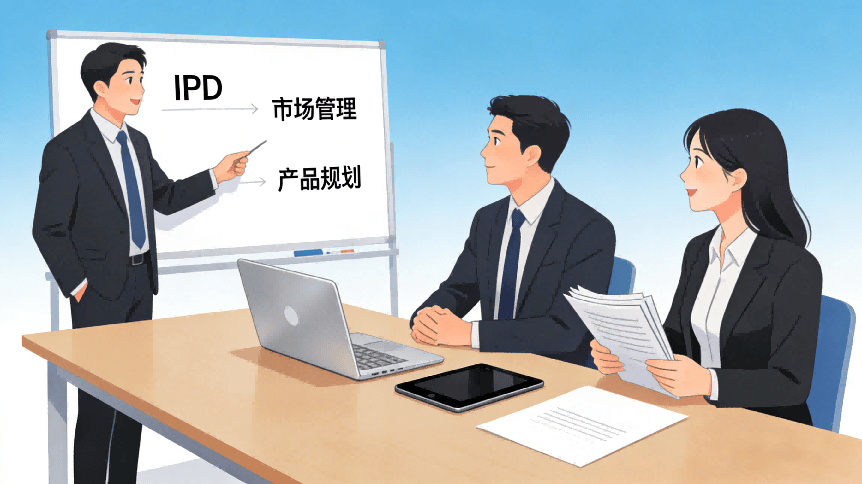
北京IPD咨询机构有哪些?一份务实的选择指南
Sou Hu Cai Jing· 2026-01-16 03:15
Core Insights - The article discusses the increasing importance of Integrated Product Development (IPD) as a research and development management model in the context of innovation-driven development, particularly in Beijing, which is a hub for technological innovation [1] Group 1: Types of IPD Consulting Institutions - The IPD consulting service market in Beijing includes several types of institutions: branches of internationally renowned consulting firms, locally grown management consulting companies, and specialized institutions founded by experts with practical experience from benchmark companies like Huawei [3] - Each type of institution has its own characteristics, and companies should choose based on their development stage and specific needs [3] Group 2: Key Considerations for Choosing IPD Consulting Partners - **Practical Experience and Implementation Capability**: The consulting team should have hands-on experience in well-known companies and successful case studies of implementation, as IPD's value lies in its practical application [3] - **Systematic and Adaptive Methodology**: A good consulting institution should not only teach the IPD framework but also customize it according to the industry characteristics and size of the company to avoid rigid application [4] - **Completeness of Service Offerings**: The consulting service should encompass a complete range of offerings, from public courses and internal training to light consulting and in-depth on-site guidance, to meet the varying needs of companies at different stages [5] - **Consultant Team Background**: Consultants should come from companies with mature R&D management systems, such as Huawei, and have experience serving large enterprises [6] Group 3: Unique Value of Specialized Institutions - Specialized institutions like Handen Consulting, founded by experts from Huawei, combine management practices from benchmark companies with years of experience serving publicly listed companies, providing both theoretical training and practical support [6] - Handen Consulting's course offerings cover key aspects of IPD, such as product demand management and market management, with instructors having practical backgrounds in major companies like Huawei, JD, and Alibaba [6] Group 4: Recommendations for Companies Seeking IPD Consulting - Companies in Beijing looking for IPD consulting services should prioritize institutions with successful localized implementation cases, a consultant team with frontline practical experience, and the ability to provide ongoing support [6] - It is advisable for companies to first attend public courses or small workshops to assess the professional level and service style of the consulting institution before deciding on deeper collaboration [6][7] - The introduction of IPD should be viewed as a management transformation rather than just a training program, with the ideal consulting partner being one that understands the company's business pain points and can accompany the company in its growth journey [7]