
自动驾驶

Search documents
从中国到欧洲:小马智行以“资本高效”模式开启自动驾驶商业化全球征程
Guan Cha Zhe Wang· 2026-03-27 04:14
Core Insights - Pony.ai has developed a unique commercialization path of "China validation - global replication" in the autonomous driving industry, marking a shift from mere technology output to a complete, replicable business ecosystem [1][11] Group 1: Transition from Technology Validation to Commercial Viability - Pony.ai's global story begins with achieving a "commercial closure" in the Chinese market, focusing on real-world operations in complex cities like Guangzhou and Shenzhen [2][4] - By the end of 2025 to early 2026, Pony.ai's seventh-generation autonomous vehicles achieved unit economic breakeven in Guangzhou, followed by Shenzhen in March 2026, indicating a shift from a money-burning technology showcase to a self-sustaining business unit [2][4] Group 2: Efficient Global Expansion Model - Pony.ai has created a "capital-efficient" expansion model, contrasting with traditional internationalization that requires high capital investment [5][6] - The model involves providing a validated autonomous driving platform while local partners manage fleet assets, operations, and market access, allowing for a "light asset" and "high leverage" approach [6][7] Group 3: Strategic Choice of Croatia - The selection of Croatia as the first European market is strategic, providing a representative urban environment with complex traffic conditions, which serves as a "pressure testing ground" for the technology [7][8] - Successfully operating in Zagreb will demonstrate the adaptability of Pony.ai's technology and business model across Europe, paving the way for entry into larger markets [7][8] Group 4: Long-term Value Creation Ecosystem - Pony.ai's international expansion signifies a deeper value creation logic, with the potential for significant cost reductions and increased platform valuation as the technology operates effectively in diverse environments [8][10] - The collaboration with European partners not only facilitates market entry but also integrates local supply chains and policy resources, fostering conditions for future product iterations and localized innovations [8][10] Group 5: Opening Up Diverse Commercialization Paths - The current focus on Robotaxi operations is just the beginning; as technology matures, it can be applied to broader fields such as autonomous logistics and urban delivery, creating a multi-layered value creation network [10][11] - Pony.ai's approach illustrates a shift in the industry towards building replicable, scalable, and capital-efficient business models, which is crucial for the large-scale commercialization of autonomous driving [11]

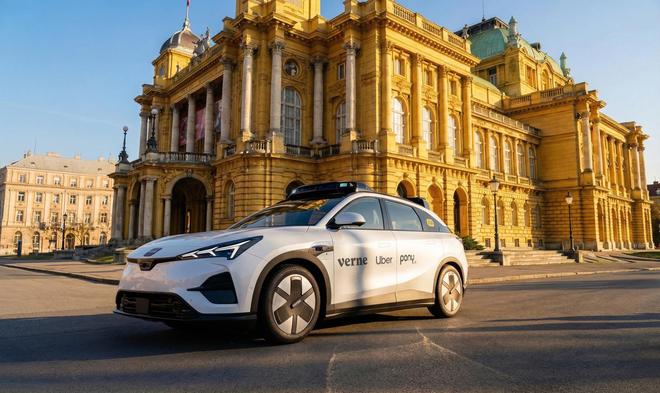
共建车队模式扩张Robotaxi规模化 小马智行加速推进全球布局
Di Yi Cai Jing· 2026-03-27 03:35
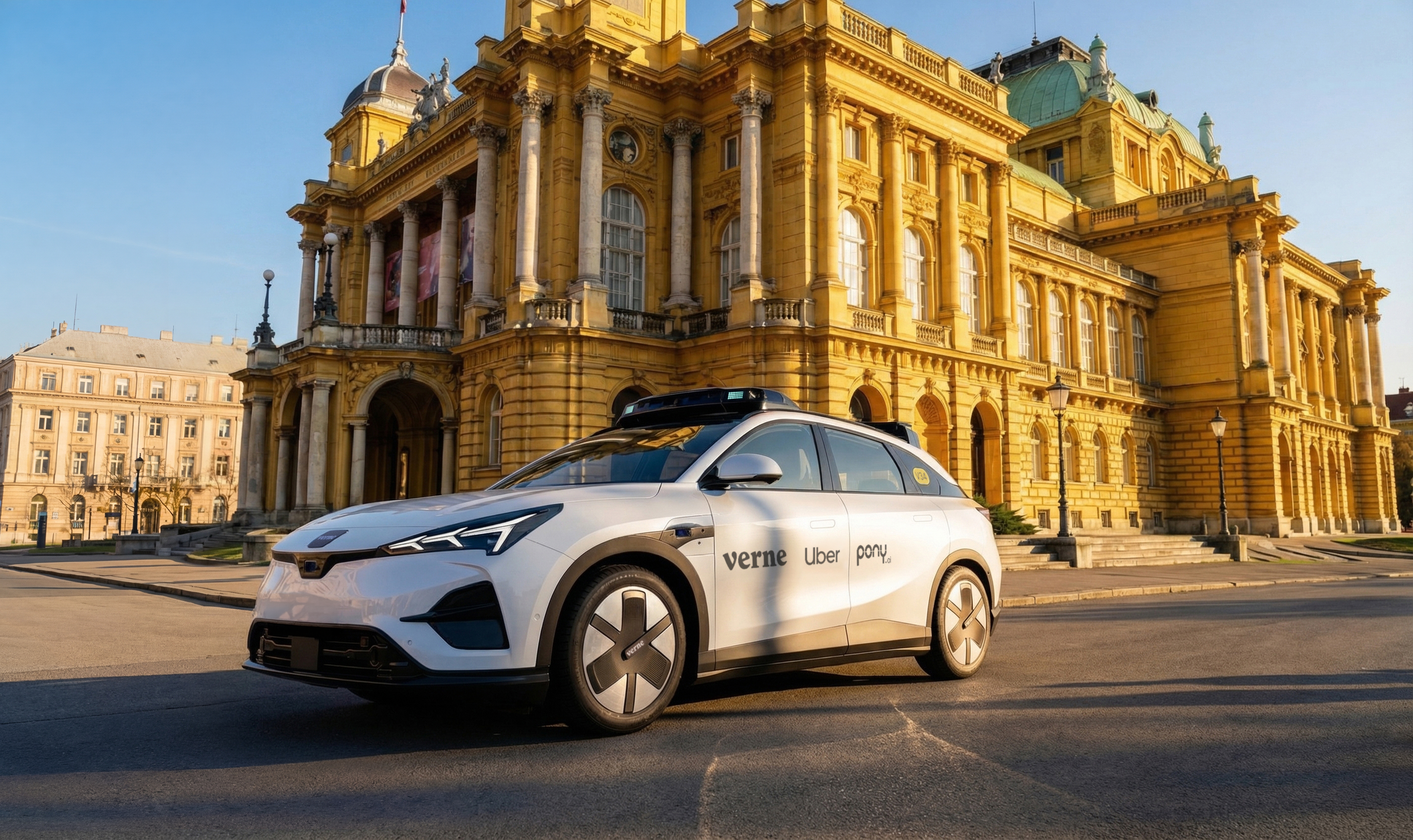
Core Viewpoint - The autonomous driving industry is transitioning from technology validation to large-scale commercialization, facing challenges such as heavy asset investment, cross-market adaptation, and long profit cycles, which need to be addressed by all players in the sector [1]. Group 1: Strategic Collaboration - Pony.ai, Verne, and Uber have announced a strategic partnership to launch commercial Robotaxi services in Zagreb, Croatia, marking the first paid Robotaxi operation in Europe [1][3]. - This collaboration showcases Pony.ai's efficient international expansion strategy and its commitment to advancing the autonomous driving sector [3][8]. Group 2: Business Model Innovation - Pony.ai has developed a "co-built fleet" model that redefines industry chain roles, allowing for scalable expansion and addressing high capital expenditures and long profit cycles [4]. - The model involves a triad collaboration of technology providers, asset operators, and platform partners, creating a complete commercial loop that enhances operational efficiency [5][12]. Group 3: Operational Efficiency - The co-built fleet model allows Pony.ai to focus on its core technology while leveraging local partners for fleet management and operations, thus facilitating the local deployment of autonomous driving services [11][12]. - The company has achieved significant cost reductions, with the seventh-generation autonomous driving suite's costs decreasing by 70% compared to the previous generation, enabling cross-model adaptability and lowering lifecycle costs [7]. Group 4: Market Expansion and Performance - Pony.ai's Robotaxi fleet has surpassed 1,000 vehicles, achieving full unmanned paid operations in major Chinese cities, with the seventh-generation Robotaxi reaching operational breakeven in Guangzhou and Shenzhen [7]. - The partnership with Verne and Uber in Croatia is expected to replicate the successful business model from China, providing a framework for international expansion and market penetration [8][13]. Group 5: Globalization and Competitive Position - The co-built fleet model is a key component of Pony.ai's global strategy, allowing the company to adapt to various market conditions and regulatory environments while establishing a comprehensive autonomous driving service network [12][13]. - By integrating successful Chinese market experiences with local resources and platform advantages globally, Pony.ai is positioned favorably in the competitive landscape of the autonomous driving industry [13].
小马智行发财报美股跌14.66% 2025净亏损同比收窄72%
Zhong Guo Jing Ji Wang· 2026-03-27 02:02
Core Viewpoint - Pony.ai's stock price dropped by 14.66% to $9.72 as of the market close on March 26, 2023, following the release of its annual performance announcement for the year ending December 31, 2025 [1] Financial Performance - Pony.ai reported total revenue of $90 million for the year 2025, representing a year-on-year growth of 20.0% [1] - The net loss for Pony.ai was $76.8 million, which shows a significant reduction of 72.1% compared to the previous year [1]
高盛闭门会-机器人与自动驾驶-实体AI考察之旅的核心要点
Goldman Sachs· 2026-03-26 13:20
Investment Rating - The report indicates a strong investment interest in the autonomous driving and robotics sectors, highlighting significant growth potential and technological advancements in these industries [1][11]. Core Insights - Waymo plans to expand its autonomous driving services to 15 cities by the end of 2026, demonstrating a safety record that is 80%-90% better than human drivers [1]. - Tesla's Robotaxi expansion faces challenges, with an accident rate of approximately one every 50,000 miles, which is double that of Waymo [1]. - The total addressable market (TAM) for autonomous driving in the U.S. is projected to exceed $300 billion by 2030, while the humanoid robot market is expected to reach $38 billion by 2035 [1][11]. - The global supply chain for robotics shows regional specialization, with the U.S. leading in AI and sensor technology, while Europe and Asia excel in mechanical engineering [1][8]. Summary by Sections Autonomous Driving - Waymo's safety data indicates a significant advantage over human drivers, with a focus on scaling technology for broader deployment [6]. - Tesla's autonomous driving technology has made progress but faces delays in city coverage and operational challenges [6][7]. - The competitive landscape includes multiple players, with Tesla and Waymo as key contenders, while NVIDIA collaborates with various companies [11]. Robotics - The humanoid robot market is still in its infancy, with an expected shipment of only 15,000 to 20,000 units by 2025, but potential for rapid growth [11]. - Hardware advancements in robotics are notable, particularly in product iteration and modular design, though challenges remain in flexibility and battery efficiency [5][7]. - Chinese companies show maturity in low-level actuator technology but face uncertainty in high-level AI capabilities [9][10]. Investment Targets - In China, companies like Greentech hold a 70% market share in humanoid robot reducers, while Jabil in the U.S. is recognized for its strong position in automation and robotics-related businesses [2][13][14]. - Jabil's partnerships with major players like Tesla and Amazon position it well for future growth in the automation sector [14].


小马智行2025年营收6.29亿元
Bei Jing Shang Bao· 2026-03-26 12:49
Core Insights - The company reported a revenue of 629 million yuan for 2025, representing a 20% increase compared to 2024 [1] - The net loss under non-GAAP standards for 2025 was 1.217 billion yuan, which is an increase of 31.5% from 2024 [1] Revenue Breakdown - The revenue from autonomous driving ride-hailing services reached 116 million yuan in 2025, a significant increase of 128.6% from 73 million yuan in 2024 [1] - Passenger fare revenue surged nearly 400%, driven by increased demand from first-tier cities, ongoing fleet optimization, and a rise in order volume since the launch of the seventh-generation autonomous taxi [1] - Revenue from autonomous truck services was 284 million yuan, showing a modest growth of 0.6% compared to 2024 [1] - Revenue from technology licensing and applications amounted to 229 million yuan, reflecting a 19.7% increase from 2024, primarily due to rising demand for autonomous driving domain controllers (ADC) in low-speed unmanned delivery, cleaning vehicles, logistics, and humanoid robotics [1]
小马智行2025年实现营收6.29亿元
Zheng Quan Ri Bao Wang· 2026-03-26 11:58
Core Insights - The company reported total revenue of 629 million yuan for the year 2025, representing a year-on-year growth of 20% [1] - The Robotaxi business experienced explosive growth, with revenue reaching 116 million yuan in 2025, a 129% increase year-on-year, and passenger fare revenue growing nearly 400% [1] - The company plans to expand its Robotaxi fleet to over 3,000 vehicles and deploy them in more than 20 cities globally by the end of 2026 [2] Revenue Breakdown - In Q4 2025, Robotaxi revenue was 46.6 million yuan, accounting for approximately 40% of the total Robotaxi revenue for the year [1] - The average daily net income per vehicle for the seventh-generation Robotaxi reached a historical high of 394 yuan on March 22, 2026 [1] - The number of paid orders from January 1 to February 16, 2026, exceeded the total paid orders for the entire year of 2025 [1] User Growth and Market Expansion - The company has surpassed one million users, nearly tripling the number from the same period last year [1] - The CEO emphasized that 2025 was a pivotal year for the company, with significant expansions in revenue scale, fleet size, operational network coverage, and user base [2]
首次单季度盈利!全年营收超6亿元,小马智行发布2025年财报
Mei Ri Jing Ji Xin Wen· 2026-03-26 10:36
Core Insights - The company reported a total revenue of 629 million yuan for the fiscal year 2025, representing a year-on-year growth of 20% [1] - The Robotaxi business generated an annual revenue of 116 million yuan, showing a significant year-on-year increase of 129% [1] - In Q4 2025, the Robotaxi business revenue reached 46.6 million yuan, marking a 160% year-on-year growth and accounting for approximately 40% of the annual Robotaxi revenue [1] - The company achieved its first quarterly profit in Q4 2025, with a net profit of 528 million yuan, attributed to successful strategic investments [1] - The seventh generation of Robotaxi was launched in November 2025, with operational profitability achieved in Guangzhou and Shenzhen [1] - As of March 2026, the fleet size exceeded 1,400 vehicles, with expectations to surpass 3,000 vehicles by the end of the year [1]
小马智行:第四季度自动驾驶出行服务收入同比增长160%
Bei Ke Cai Jing· 2026-03-26 10:27
Group 1 - The core point of the article highlights that Xiaoma Zhixing announced a 160% year-on-year increase in revenue from autonomous driving ride-hailing services in the fourth quarter [1] - The revenue from passenger fares saw a significant surge, increasing by over 500% year-on-year [1]
小马智行2025年Robotaxi营收增129% 2026年启动双擎战略 驶向海内外20+城
Zhi Tong Cai Jing· 2026-03-26 10:18
Core Insights - The company reported a total revenue of 629 million yuan for the fourth quarter and the entire year of 2025, marking a 20% year-on-year growth and maintaining growth for four consecutive years [3] - The Robotaxi business generated an annual revenue of 116 million yuan, showing a significant increase of 129% [3] - In the fourth quarter, Robotaxi revenue reached 46.6 million yuan, with a year-on-year growth of 160%, and passenger fare revenue increased by over 500% [3] Financial Performance - Total revenue for 2025 was 629 million yuan, reflecting a 20% increase compared to the previous year [3] - The Robotaxi segment's revenue for the year was 116 million yuan, with a remarkable growth rate of 129% [3] - Cash equivalents, short-term investments, and total investments reached 10.593 billion yuan by the end of 2025 [3] Business Development - The seventh generation of Robotaxi was launched in November 2025, achieving operational profitability in single vehicles in Guangzhou and Shenzhen, validating the business model [3] - In 2026, the company initiated a dual-engine strategy to deepen domestic presence and accelerate international expansion, aiming to replicate successful Robotaxi experiences in over 20 cities globally [3] - As of March 2026, the Robotaxi fleet exceeded 1,400 vehicles, with expectations to surpass 3,000 vehicles by the end of the year [3]
小马智行Robotaxi业务2025年收入1.16亿元,同比增长129%
Bei Jing Shang Bao· 2026-03-26 10:00
北京商报讯(记者 蔺雨葳)3月26日,小马智行发布的财报显示,2025年公司总营收6.29亿元,同比增 长20%,连续四年保持增长;Robotaxi业务全年收入1.16亿元,同比增长129%。截至2025年底,现金等 价物、长短期理财及投资总额达105.93亿元。 四季度公司Robotaxi业务收入4660万元,同比增长160%,乘客车费收入同比增长超500%。截至2026年3 月25日,小马智行Robotaxi车队规模1446辆,预计年底前车队规模超3000辆。 ...