计算机硬件

Search documents
戴尔科技2026财年Q3营收270亿美元,AI服务器业务激增37%
Xin Lang Cai Jing· 2026-02-20 21:44
经济观察网 戴尔科技2026财年第三季度营收同比增长11%至270亿美元,AI服务器业务表现强劲,推动 基础设施解决方案集团营收增长24%。 业绩经营情况 根据戴尔科技2025年11月25日发布的2026财年第三财季财报,公司营收达270亿美元,同比增长11%, 毛利率为21.1%,高于市场预期的20.4%。基础设施解决方案集团(ISG)营收141.07亿美元,同比增长 24%,其中AI服务器业务营收101.25亿美元,同比激增37%。ISG板块营业利润率12.4%,超出分析师预 期的11.2%。尽管面临内存芯片成本上涨压力,但高附加值AI服务器占比提升有效对冲了成本影响,推 动整体盈利能力改善。 以上内容基于公开资料整理,不构成投资建议。 戴尔通过产品结构优化(如AI服务器占比提升)和运营效率改善,部分缓解了存储芯片涨价的成本压 力。2026财年第三季度,公司资本回报达16亿美元,反映出在营收增长的同时对成本管控的重视。此 外,ISG业务营收占比已升至52.2%,其高毛利特性(营业利润率12.4%)增强了公司整体盈利韧性。 行业与风险分析 全球存储芯片市场因AI需求激增出现供需失衡,LPDDR5X价格预计2 ...
高盛:升联想集团目标价至12.53港元 维持“买入”评级
Zhi Tong Cai Jing· 2026-02-16 07:45
该行对联想集团2026财年第三季度(2025第四季)业绩持正面看法,预期公司凭借市场领先地位、规模优 势及更高比例商用产品布局,将较少受内存成本上涨冲击。联想服务器业务亦持续扩张,盈利能力提升 主要驱动因素包括通用服务器深入更多云服务供应商布局;人工智慧服务器扩张带动产品组合升级;以 及重组措施降低成本并提升营运效率。 高盛发布研报称,将联想集团(00992)2026财年第三季业绩纳入评估,维持2027至2029财年预测基本不 变。目标价由11.98港元升至12.53港元。维持"买入"评级。 ...

特朗普政府最高反垄断官员离职
Guo Ji Jin Rong Bao· 2026-02-13 09:33
特朗普政府最高反垄断官员的突然离任,再次将美国大型并购审查中的政治影响与执法独立性问题推至聚光灯下。 2月13日,美国司法部负责反垄断事务的助理司法部长盖尔.斯莱特在社交平台X上发文称,自己在任仅一年后离开岗位,"深感悲痛"。 数月以来,多起围绕重大交易与反垄断诉讼的争议持续发酵,使美国司法部在企业并购与市场竞争监管中的角色受到前所未有的关注。 其中最引人注目的案件,是惠普企业拟以140亿美元收购竞争对手瞻博网络。美国司法部最初提起诉讼试图阻止交易,理由是两家公司合并后将控制约 70%的相关市场份额,可能带来更高价格与更少创新。然而,该诉讼最终达成和解,交易获准继续推进。 这一结果引发内部与学界的质疑。斯莱特的前高级副手、现任圣母大学法学院教授的罗杰.阿尔福德警告称,反垄断案件的解决越来越取决于政治关系, 而非法律本身的是非曲直。 与此同时,美国总统特朗普一度表示将亲自审查奈飞拟收购华纳兄弟探索的交易,使通常由司法部主导的并购审查程序面临政治干预争议。尽管特朗普随 后收回表态并承诺不会直接介入,但事件已使斯莱特在并购审查中的职责成为舆论焦点。 从履历看,斯莱特曾担任福克斯公司与Roku的律师,大选前几个月还曾 ...


供应链失序时代 联想集团何以成为业绩"异类"?
Ge Long Hui· 2026-02-13 05:13
Core Viewpoint - The global technology industry is experiencing a stark contrast, with major players like Microsoft, Google, and Amazon announcing significant AI capital expenditure plans, yet facing market declines due to ROI concerns, resulting in a collective market value loss of nearly $900 billion [1] Group 1: Lenovo's Performance Amidst Market Challenges - Lenovo Group's third-quarter performance for the fiscal year 2025/26, reported on February 12, 2026, showcased a record revenue of $22.2 billion (157.5 billion RMB), an 18% year-on-year increase, with adjusted net profit growth reaching 36%, double the revenue growth rate [1][2] - Lenovo's resilience during supply chain disruptions and the downturn of global tech giants is attributed to its strong delivery capabilities and operational discipline, allowing it to maintain steady performance [2][3] - The company has consistently demonstrated strong delivery resilience during past supply chain crises, regaining its position as the world's leading PC manufacturer even when the market faced stagnation [2][3] Group 2: Supply Chain Management and Operational Strategy - Lenovo's unique operational strategy, termed "global resources, local delivery," enables it to integrate resources across various regions, ensuring consistent procurement and delivery despite supply chain disruptions [4] - The company's "ODM+" model allows it to mitigate localized disruptions and maintain operational continuity, earning recognition as a global supply chain leader [4] - Lenovo's proactive asset management, including signing annual framework agreements with key suppliers, has secured supply and cost stability, providing a competitive edge during market volatility [7][8] Group 3: Market Position and Competitive Advantage - Lenovo's global PC market share increased from 23.7% in the fiscal year 2024/25 to 25.3%, enhancing its bargaining power with suppliers during periods of component shortages [6] - The company's scale advantage allows it to achieve optimal procurement prices, positioning it favorably against competitors amid rising costs [6][8] - Lenovo's customer base, predominantly composed of enterprise and government clients, enables it to absorb cost pressures more effectively than competitors reliant on price-sensitive consumer markets [8][9] Group 4: Long-term Operational Discipline - Lenovo's operational discipline and risk management culture have allowed it to avoid common pitfalls during supply chain disruptions, maintaining stable inventory levels and cash flow [9][10] - The company has successfully locked in low-cost components through strategic inventory management, preventing significant financial losses during price fluctuations [10] - Lenovo's ability to navigate supply chain challenges is attributed to its evolution beyond a traditional PC company, leveraging its position within the global supply chain and AI ecosystem [11][12] Group 5: Future Outlook and AI Integration - Lenovo is well-positioned to capitalize on the AI industry's growth, integrating hardware and software to meet emerging demands for computational power and infrastructure [12][13] - The company's strategy of combining AI PCs, smartphones, and servers with a robust service framework is expected to enhance its order stability and cash flow, solidifying its leadership in the global AI ecosystem [12][13]
从参与者到主导者:联想如何在AI落地层建立入口级主导权
Xin Lang Cai Jing· 2026-02-13 04:42
Core Insights - The AI industry is transitioning from a capital-intensive model training phase to a monetization phase focused on commercial efficiency as of 2026 [1][13] - Lenovo is emerging as a key player in this new phase, leveraging its extensive installed base and end-to-end delivery capabilities to capitalize on the hybrid AI architecture [1][12] Financial Performance - Lenovo reported revenue of 157.5 billion RMB for the third quarter of the 2025/26 fiscal year, representing an over 18% year-on-year growth, significantly exceeding market expectations [2][14] - Adjusted net profit increased by 36% year-on-year, surpassing market expectations by 32%, with profit growth outpacing revenue growth [2][14] Market Challenges and Strategic Response - The industry is facing challenges such as rising prices of key components like storage chips and concerns over the sustainability of the AI cycle [2][14] - Lenovo has successfully fulfilled its commitment to double-digit revenue growth and profitability, demonstrating resilience and operational strength in a complex environment [2][14] Shift in AI Industry Focus - The focus of the AI industry is shifting from training to inference, with a greater emphasis on cost-effective and user-friendly solutions for daily AI functionality [4][16] - The market is moving away from purely cloud-based AI models due to high bandwidth costs and energy bills, necessitating more economical solutions [5][16] Competitive Landscape - Companies that can cover a broad customer base and possess global supply chain resilience are becoming increasingly favored in the AI commercial ecosystem [6][18] - Lenovo's extensive device installation base positions it as a critical player in the AI monetization phase, where hardware serves as the platform for AI interaction [6][18] Hybrid AI Strategy - Lenovo's hybrid AI strategy is not merely a hardware upgrade but a comprehensive approach to AI deployment, transferring inference costs from the cloud to local devices [7][19] - The integration of local NPU and heterogeneous computing in PCs enhances response speed and privacy for users while significantly reducing AI usage costs [7][19] Revenue Growth in AI Segment - In the third quarter, Lenovo's AI-related revenue grew by 72%, accounting for 32% of total revenue, with AI PC revenue increasing by 39% and AI smartphone revenue surging by 202% [11][22] - The average selling price of AI PCs reached 845 USD, significantly above industry averages, providing structural support for profitability [20][22] Long-term Business Model - The hybrid AI model is seen as a commercially optimal solution, addressing cost and trust issues associated with cloud-based AI [21] - Lenovo's business model is evolving from merely selling devices to offering comprehensive AI capabilities, positioning the company as a steady revenue generator in the AI monetization phase [21][22] Future Outlook - Lenovo aims to leverage its hybrid AI strategy and global supply chain to create sustainable, scalable, and profitable AI business opportunities [12][24] - The company is focused on integrating AI into everyday life and enterprise operations, ensuring long-term returns for shareholders [12][24]
戴尔股价下跌3.2%,惠普公司股价下跌3.4%。
Xin Lang Cai Jing· 2026-02-12 14:40
Group 1 - Dell's stock price decreased by 3.2% [1] - HP Inc.'s stock price fell by 3.4% [1]


戴尔盘前股价下跌2.7%,惠普公司股价下跌2.4%。
Xin Lang Cai Jing· 2026-02-12 12:07
Group 1 - Dell's pre-market stock price declined by 2.7% [1] - HP Inc.'s stock price fell by 2.4% [1]
联想集团股价下跌 存储芯片涨价冲击利润
Xin Lang Cai Jing· 2026-02-12 07:10
联想集团上财季营收增长尽管好于预期,达到222亿美元,但净利润同比下降21%。 大华继显分析师在报告中指出:"我们预计这种提前释放的需求将在第一季度持续,不过随着进货价格 较低的库存在第一季度耗尽,未来可能会出现更多涨价,并最终影响终端需求。" 得益于AI基建投资热潮,负责服务器和存储硬件的联想基础设施解决方案集团季度营收增长31%,达到 52亿美元,创下纪录新高。 责任编辑:王永生 联想集团上财季营收增长尽管好于预期,达到222亿美元,但净利润同比下降21%。 联想公布截至去年末的季度业绩后,股价一度下跌6.3%,凸显市场对存储芯片涨价令利润率承压的担 忧。 假日促销以及涨价预期推动的提前购机正在提振PC业。咨询公司IDC的数据显示,上季度整体个人电脑 (PC)市场出货量增长9.6%,联想、惠普和戴尔的出货量均录得两位数增长。AI热潮导致存储芯片等 消费电子零部件供应紧张。这种全球性供应短缺对利润率的影响预计将在未来几个月加剧。 联想公布截至去年末的季度业绩后,股价一度下跌6.3%,凸显市场对存储芯片涨价令利润率承压的担 忧。 假日促销以及涨价预期推动的提前购机正在提振PC业。咨询公司IDC的数据显示,上季 ...
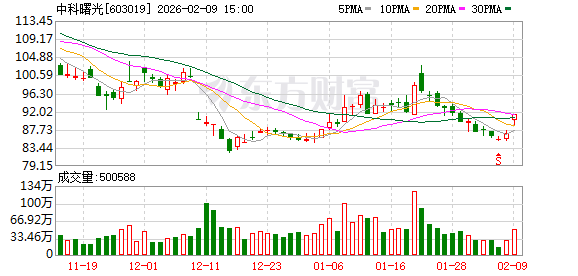
首单出炉!千亿超算龙头推80亿元再融资
Shang Hai Zheng Quan Bao· 2026-02-10 00:26
Core Viewpoint - The company, Zhongke Shuguang, is raising up to 8 billion yuan through convertible bonds to fund advanced AI computing projects, marking a significant step in the domestic AI infrastructure development [2][5]. Group 1: Investment Projects - The advanced computing cluster system project for AI will receive an investment of 3.5 billion yuan, focusing on developing next-generation hardware systems and unified management of various computing hardware [3][5]. - The next-generation high-performance AI training and inference machine project will be allocated 2.5 billion yuan, consisting of four main modules aimed at integrating AI technology into the real economy [3][5]. - The domestic advanced storage system project will invest 2 billion yuan, based on domestic processor chips and core components [3][5]. Group 2: Strategic Importance - The refinancing initiative is expected to help the company leverage the latest trends in the AI industry, enhancing its technological and product leadership in the computing infrastructure sector [5][6]. - The company aims to accelerate the localization process in computing infrastructure, achieving high-level technological self-reliance and building a competitive edge in domestic computing capabilities [5][6]. Group 3: Recent Developments - Recently, the company launched the largest domestic AI computing pool, with three sets of supercomputing systems going live, marking a significant breakthrough in the practical application of domestic AI computing infrastructure [6][8]. - The company introduced the world's first single-cabinet 640-card super node, scaleX640, which is designed to lower the barriers for AI cluster development and promote a new ecosystem for computing that is both autonomous and open [8].

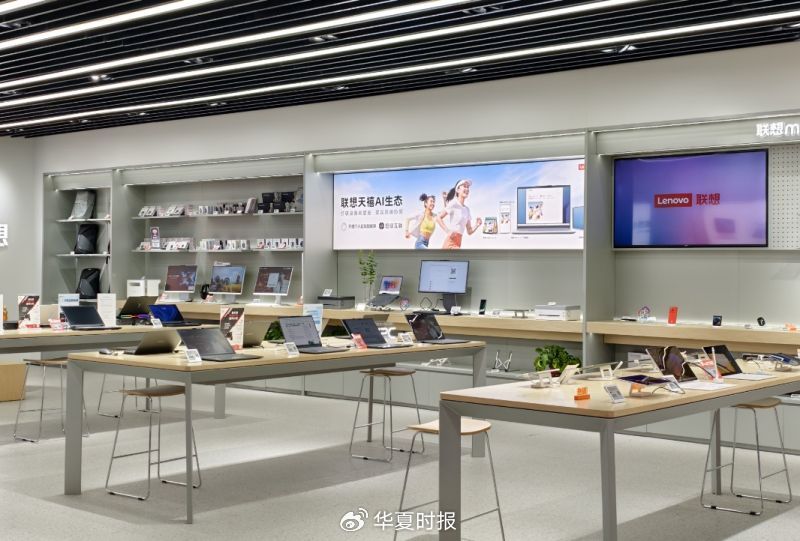
存储超级周期下实探PC市场:销售催促“再不买还得涨”
Xin Lang Cai Jing· 2026-02-06 01:25
Core Viewpoint - The ongoing increase in storage chip prices is expected to lead to a rise in PC prices, with major brands already starting to pass on these costs to consumers [2][11]. Group 1: Price Adjustments by Major Brands - Lenovo, HP, and Honor have begun adjusting prices for certain models, with Lenovo's gaming laptops seeing increases of approximately 1000 yuan, while HP's adjustments range from 200 to 500 yuan depending on the model [3][12]. - Honor has already raised prices on several models by around 500 to 1000 yuan, with promotional discounts still making the final prices competitive [12]. - Other brands like Huawei, Xiaomi, and Samsung have not yet raised prices but anticipate adjustments in the near future, potentially between 5% and 10% [4][12]. Group 2: Market Trends and Consumer Behavior - The global PC shipment volume is projected to remain stable, with Gartner reporting a 9.3% increase in Q4 2025 compared to Q4 2024, totaling over 270 million units for the year [18]. - Despite price increases, demand for PCs may remain strong among users with essential needs or those seeking high-performance AI PCs, although price-sensitive consumers may be deterred [18]. - The smartphone market is also experiencing price increases due to rising storage costs, with the average selling price expected to exceed $400 for the first time in Q4 2025 [4][13]. Group 3: Industry Challenges and Future Outlook - The rising cost of memory, which constitutes 15% to 18% of a typical PC's total cost, is significantly impacting pricing strategies across the industry [5][14]. - Analysts predict that the current cycle of price increases driven by AI demand could last for 2-3 years, with structural adjustments in production capacity taking time to resolve [19]. - Major manufacturers like Lenovo and Asus are preparing to pass on increased costs to consumers, with expectations of further price hikes in 2026 [15][19].