软件即服务(SaaS)

Search documents
迈富时(02556.HK):营销SAAS龙头 AI加速平台化转型
Ge Long Hui· 2025-08-27 05:36
Group 1 - The Chinese marketing and sales SaaS market is experiencing rapid growth, with a projected market size of 74.5 billion RMB by 2027 and a five-year compound annual growth rate (CAGR) of nearly 30% [1] - The market penetration rate was only 1.3% in 2022, indicating significant room for improvement compared to mature markets like the United States [1] - The industry's growth is driven by digital transformation demands and cost reduction, alongside AI technology lowering the barriers to SaaS usage [1] Group 2 - The company possesses a unique ecological position in the industry, combining vertical depth comparable to competitors like Weimob and Youzan with strong platform capabilities [2] - Unlike ERP/PaaS giants, the company has a deep understanding of the marketing and sales domain, having focused on this area for many years [2] - The company is transitioning to a platform model empowered by AI, with a clear evolution path from application to platform, integrating foundational data and functions for a one-stop solution [2] Group 3 - The third phase of the platform's evolution involves forming an ecosystem through high-reusability and low-customization solutions, driving a "Land-and-Expand" growth model [3] - This approach enhances customer retention and increases average revenue per user (ARPU), while significantly reducing marginal delivery costs for new business [3] - The market's core expectation gap lies in the failure to recognize the synergy between AI technology, platform strategy, and industry know-how, which could lead to a revaluation of the company's worth as it deepens its platform transformation [3] Group 4 - The company is expected to accelerate the conversion of industry know-how into reusable AI capabilities, with substantial growth potential [3] - Revenue projections for 2025, 2026, and 2027 are estimated at 2.328 billion, 3.053 billion, and 3.926 billion RMB respectively [3] - The target valuation for the company is set at 21 billion RMB, corresponding to a target price of 90 HKD per share, with an initial "buy" rating [3]
SaaS解决方案供应商小鹅通计划赴港交所上市,2024年营收5.21亿人民币
Sou Hu Cai Jing· 2025-08-26 01:44
Group 1 - Xiaoe Inc. has submitted its listing application to the Hong Kong Stock Exchange, with CICC as its sole sponsor [2] - Xiaoe Inc. is a leading product-driven SaaS solution provider in the private domain operation sector, enabling businesses to build, operate, and expand their decentralized e-commerce infrastructure [2] - The company's cloud-based one-stop solution integrates e-commerce, digital marketing, and CRM into a unified system, enhancing efficiency and effectiveness in product marketing and transactions [2] Group 2 - According to a report by Zhaoshang Consulting, Xiaoe Inc. ranks first among interactive private domain operation solution providers in China based on revenue for 2024, and is one of the top three private domain operation solution providers [3] - The company has the fastest growth rate among the top five private domain operation solution providers in China during the performance record period [3] - Xiaoe Inc.'s intelligent resource scheduling system can support peak traffic of up to 270,000 requests per second, ensuring high availability through its distributed architecture [3] Group 3 - The private domain operation solution market in China is projected to grow from RMB 11.9 billion in 2024 to RMB 25.8 billion in 2029, with a compound annual growth rate (CAGR) of 16.7% [3] - The interactive private domain operation solution market is expected to increase from RMB 5.2 billion in 2024 to RMB 13.8 billion in 2029, with an accelerated CAGR of 21.6% [3] Group 4 - Financially, Xiaoe Inc. reported revenues of approximately RMB 299 million, RMB 415 million, RMB 521 million, and RMB 306 million for the fiscal years 2022, 2023, 2024, and the six months ending June 30, 2025, respectively [4] - The company incurred losses of approximately RMB 33.99 million, RMB 37.04 million, RMB 15.08 million, and RMB 5.82 million during the same periods [4]


法大大Nota Sign全球签,解决跨境生意的“信任焦虑”
Zhong Guo Chan Ye Jing Ji Xin Xi Wang· 2025-08-19 07:13
Core Insights - The launch of Nota Sign Global Signing Platform by the company aims to provide secure, compliant, and efficient electronic signing solutions for global users, addressing the challenges faced by Chinese enterprises in overseas markets [1][3][12] - The scale of Chinese enterprises going global is projected to reach $2.17 trillion in 2024, with an expected growth rate of 18.3% year-on-year, indicating a significant trend in international expansion [1][3] Group 1: Market Context - The trend of Chinese enterprises going global is evolving from merely exporting products to establishing local operations and ecosystems in foreign markets [4][5] - The complexity of cross-border contract signing, influenced by varying legal frameworks and compliance requirements, creates a significant challenge for enterprises [5][6] Group 2: Product Features and Advantages - Nota Sign Global Signing Platform is designed to meet the compliance and legal validity needs of cross-border transactions, utilizing AI technology to enhance the efficiency of the signing process [3][8][11] - The platform offers a range of electronic signature solutions tailored to different signing scenarios, including enhanced identity verification and integration with global CA institutions [8][9] Group 3: Strategic Vision - The company aims to build a resource network and brand effect by serving Chinese enterprises in their overseas business, with plans to adapt to local needs and expand services to foreign enterprises [12] - The introduction of Nota Sign reflects a broader trend towards the increasing importance of global electronic signing solutions that can adapt to evolving legal landscapes [12]

迈富时(02556.HK):国内营销及销售SAAS龙头 AGENT商业化先锋
Ge Long Hui· 2025-08-17 05:29
Group 1 - The company is a leading AI SaaS marketing cloud platform established in 2009, focusing on digital and intelligent marketing and sales for various industries including retail, automotive, finance, healthcare, and cross-border e-commerce [1] - The company aims to accelerate business growth through three strategic developments by 2025: building an AI-Agentforce intelligent platform, expanding product ecosystem through acquisitions, and global market expansion [1] - The generative AI market in marketing and sales is projected to reach 463 billion yuan by 2025, with expected growth rates of 29% and 25% in 2026 and 2027 respectively, indicating a fragmented domestic market where the company holds a leading share [1] Group 2 - The T Cloud modular marketing SaaS product is expected to grow its customer base to nearly 26,000 by 2024, with subscription retention rates of 73% and revenue retention rates of 88% [2] - The Zhenke product, which provides CRM and data analysis for large enterprises, is projected to grow to nearly 783 customers by 2024, achieving high customer stickiness with retention rates of 95% and revenue retention rates of 124% [2] - The company is expanding from SMBs to key accounts (KA) and leveraging the Agent product to enhance customer penetration and increase average transaction value, with revenue forecasts of 2.355 billion, 3.085 billion, and 4.062 billion yuan from 2025 to 2027 [2]
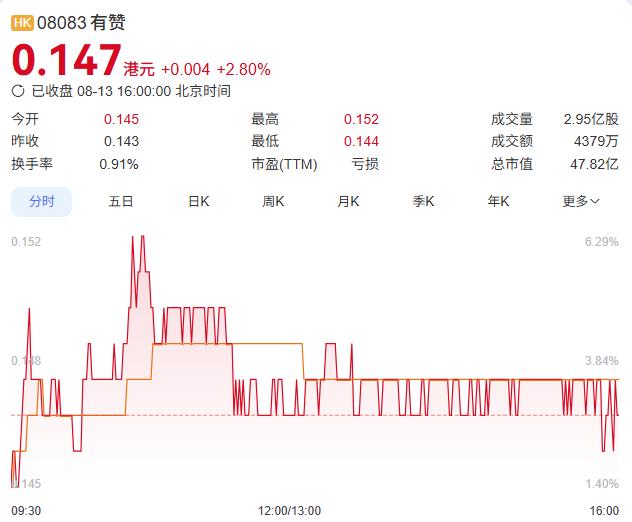
有赞终于盈利了
3 6 Ke· 2025-08-14 10:40
Core Viewpoint - Youzan has finally turned a profit after years of losses, reporting a net profit of approximately RMB 73 million for the first half of 2025, marking a significant turnaround in its financial performance [1][3]. Financial Performance - In the first half of 2025, Youzan's revenue was approximately RMB 710 million, representing a year-on-year growth of about 4% [3]. - The net profit for the same period was RMB 73 million, a substantial improvement compared to a net loss of RMB 42.95 million in the previous year [4]. - The total comprehensive income for the first half of 2025 was RMB 75.75 million, compared to a loss of RMB 7.07 million in the same period last year [4]. Business Strategy - Youzan has optimized its business structure, increasing the proportion of high-margin businesses, with revenue from merchant solutions growing significantly to approximately RMB 338 million, a year-on-year increase of 10.3% [5]. - The average sales per merchant reached approximately RMB 930,000, reflecting an 11% year-on-year increase, indicating improved merchant service effectiveness [6]. Market Context - The Chinese SaaS market is projected to reach RMB 49.82 billion in 2024, with a year-on-year growth of 31.6% [3]. - Youzan's stock price has significantly declined from a peak market capitalization of over RMB 70 billion to around RMB 4.7 billion, highlighting the challenges faced in the SaaS sector [1]. Competitive Landscape - Youzan faces intense competition from major players like Alibaba and Tencent, which have entered the SaaS market with substantial resources and established customer bases [15]. - The competition with similar companies like Weimob is particularly fierce, as both companies target small and medium-sized merchants [15]. Technological Innovation - The application of AI technology has been crucial for Youzan, enhancing operational efficiency and reducing research and development costs, which has contributed to its profitability [9][10]. - Youzan has expanded its sales team to approximately 750 personnel in the first half of 2025, improving its market outreach and customer acquisition capabilities [11]. Ecosystem Development - Youzan has diversified its platform partnerships beyond WeChat, integrating with platforms like Alipay and Xiaohongshu to reduce dependency on a single ecosystem [12]. - The company has also expanded its services to include offline retail solutions, creating a more integrated online and offline service model [13].
海外红人营销SaaS行业研究报告
艾瑞咨询· 2025-08-03 00:04
Core Insights - The article emphasizes the rise of influencer marketing SaaS as a necessary tool for brands to expand globally, addressing pain points such as fragmented data and low fulfillment rates in overseas influencer management [1][2]. Market Environment - Influencer marketing is becoming an efficient customer acquisition solution due to macroeconomic pressures and declining ROI from traditional advertising [1]. - The emergence of influencer marketing SaaS aims to upgrade fragmented processes into systematic operations, essential for brand globalization [1]. Market Size - The influencer marketing SaaS market in China is expected to grow at a compound annual growth rate (CAGR) of 15% over the next three years, driven by the explosion of the TikTok e-commerce ecosystem and the maturation of global influencer commercialization [2][24]. Competitive Landscape - Influencer marketing SaaS providers can be categorized into three types: MCN background firms, data analysis firms, and e-commerce platform-derived tools. WotoHub, under the brand "卧兔," holds the largest market share in cross-border e-commerce influencer marketing SaaS in China [3][33]. Development Trends - AI will enhance influencer marketing SaaS functionalities across three dimensions: operational management, content generation, and decision support [4][36]. - The economic value of influencers is shifting towards long-tail nano-influencers, with SaaS providers enabling brands and influencers through lightweight tools to address pricing and delivery challenges [4][39]. Overseas B2C Marketing Demand - Brands are facing marketing budget cuts due to economic pressures and are seeking more effective marketing channels, including influencer marketing [5][6]. Influencer Marketing Dynamics - The rise of social media and online consumption has propelled influencer marketing, which offers precise targeting and authentic engagement, making it a crucial component of overseas B2C marketing [8][11]. Regional Differences - The North American market for influencer marketing SaaS is mature, while Southeast Asia and Central-Western Europe are experiencing rapid penetration, with varying focuses on data analysis and localized operations [21]. SaaS Value Proposition - Influencer marketing SaaS provides a comprehensive digital platform for brands, facilitating standardized management and data asset accumulation, ultimately enhancing marketing efficiency and reducing trial-and-error costs [19][27]. Industry Chain and Product Features - The influencer marketing process involves six key steps, supported by SaaS platforms that provide extensive influencer contact information and performance data [27]. Vendor Types and Competitive Factors - The three types of SaaS vendors leverage industry understanding, data advantages, and platform resources to coexist and compete in the market [30]. Competitive Assessment - WotoHub leads the market in cross-border e-commerce influencer marketing SaaS, with a focus on full-chain management capabilities [33][34].

全球科技业绩快报:ServiceNow2Q25
Haitong Securities International· 2025-07-24 15:28
Investment Rating - The report indicates a positive investment outlook for ServiceNow, suggesting an "Outperform" rating based on its strong financial performance and product differentiation [5][15]. Core Insights - ServiceNow reported a total revenue of $3.215 billion for Q2 2025, with subscription revenue reaching $3.113 billion, marking a year-on-year growth of 21.5% and exceeding guidance by approximately 200 basis points [2][11]. - The remaining performance obligation (RPO) increased to $23.9 billion, a 25.5% year-on-year growth, providing solid visibility for future performance [2][12]. - The company is advancing its "Agentic AI" strategy, with significant growth in its Now Assist and Plus family products, showcasing strong market demand and operational efficiency improvements [3][13]. - ServiceNow is challenging traditional CRM vendors, with 17 out of the top 20 deals in Q2 being for CRM and industry workflow solutions, reflecting a 70% increase year-on-year [4][14]. - The company raised its full-year subscription revenue guidance for FY 2025 by $125 million, projecting a total of $12.775 billion to $12.795 billion, which represents a year-on-year growth of approximately 20% [5][15]. Summary by Sections Financial Performance - Total revenue for Q2 2025 was $3.215 billion, with subscription revenue at $3.113 billion, accounting for 96.8% of total revenue [2][11]. - Non-GAAP operating margin improved by 250 basis points to 29.5%, and free cash flow margin increased by 300 basis points to 16.5% [2][12]. AI Strategy - The "Agentic AI" strategy is being implemented effectively, with Now Assist's new ACV exceeding expectations and significant growth in related products [3][13]. - AI tools developed internally are expected to save approximately $100 million in labor costs this year [3][13]. CRM and Industry Workflow - ServiceNow's integrated CRM solutions have gained traction, with a notable increase in large deals since the acquisition of Logik.ai [4][14]. - The company has been recognized as a leader in CRM customer experience and service by Gartner [4][14]. Future Guidance - The company has raised its subscription revenue forecast for FY 2025 to between $12.775 billion and $12.795 billion, with a third-quarter guidance of $3.26 billion to $3.265 billion [5][15]. - ServiceNow aims to achieve $1.5 billion in Now Assist ACV by the end of 2026, indicating a strong long-term growth strategy [5][15].
海外红人营销SaaS行业研究报告
艾瑞咨询· 2025-07-03 01:53
Core Insights - The article emphasizes the rise of influencer marketing SaaS as a necessary tool for brands to expand globally, addressing pain points such as fragmented data and low fulfillment rates in overseas influencer management [1][2]. Market Environment - Influencer marketing is becoming a high-efficiency customer acquisition solution due to macroeconomic pressures and declining ROI from traditional advertising [1]. - The emergence of influencer marketing SaaS aims to upgrade fragmented processes into systematic operations, essential for brand globalization [1]. Market Size - The influencer marketing SaaS market in China is expected to grow at a compound annual growth rate (CAGR) of 15% over the next three years, driven by the explosion of the TikTok e-commerce ecosystem and the maturation of global influencer commercialization [2][25]. Competitive Landscape - Influencer marketing SaaS providers can be categorized into three types: MCN background firms, data analysis firms, and e-commerce platform-derived tools. WotoHub, under the brand "卧兔," holds the largest market share in cross-border e-commerce influencer marketing SaaS in China [3][34]. Development Trends - AI will enhance influencer marketing SaaS functionalities across three dimensions: operational management, content generation, and decision support [4][37]. - The economic value of influencers is shifting towards long-tail nano-influencers, with SaaS providers enabling brands and influencers through lightweight tools to address pricing and delivery challenges [4][40]. Marketing Demand Background - Brands are facing marketing budget cuts due to macroeconomic pressures and are seeking more effective marketing channels. Influencer marketing offers a cost-effective way to enhance overseas brand recognition compared to traditional advertising [5][9]. Influencer Marketing Drivers and Value - The rise of social media and online consumption has propelled influencer marketing, which stands out for its authentic engagement and precise targeting [9]. - Influencer marketing allows brands to quickly enhance their overseas influence at a lower cost than traditional advertising [9]. Regional Differences in Influencer Marketing - Compared to domestic markets, overseas influencer marketing places greater emphasis on content creativity and brand trust, with platforms like Instagram, YouTube, and TikTok leading the way [12][14]. Global Market Scale - The global influencer marketing market has seen a compound annual growth rate of 34% over the past decade, entering a phase characterized by specialization and data-driven approaches [15]. SaaS Concept and Functionality - Influencer marketing SaaS is defined as an online management platform that connects brands with influencers, extending to a full-cycle management process [18][20]. Market Characteristics - The North American market for influencer marketing SaaS is relatively mature, while Southeast Asia and Central-Western Europe are experiencing rapid penetration [22]. Future Market Growth - The Chinese overseas influencer marketing SaaS market is projected to reach approximately 800 million yuan by 2025, maintaining a 15% CAGR [25]. Industry Chain and Ecosystem - The influencer marketing process involves six key steps, with SaaS platforms supporting full-cycle management from influencer discovery to payment settlement [28]. Vendor Types and Competitive Factors - Influencer marketing SaaS vendors are categorized based on their backgrounds, leveraging industry understanding, data advantages, and platform resources [31]. Competitive Assessment - WotoHub leads the market in cross-border e-commerce influencer marketing SaaS, with a focus on comprehensive management capabilities [34][35]. Technology Trends - AI is set to provide personalized and automated support in influencer marketing, enhancing operational efficiency and content creation [37]. Business Trends - The shift towards long-tail influencers is creating a dual empowerment ecosystem, where SaaS platforms can serve both brands and influencers effectively [40].

海外红人营销SaaS行业研究报告
艾瑞咨询· 2025-06-17 09:33
Core Insights - The article emphasizes the rise of influencer marketing SaaS as a necessary tool for brands to expand globally, addressing pain points such as fragmented data and low fulfillment rates in overseas influencer management [1][2]. Market Environment - Influencer marketing is becoming an efficient customer acquisition solution due to macroeconomic pressures and declining ROI from traditional advertising [1]. - The emergence of influencer marketing SaaS aims to upgrade fragmented processes into systematic operations, essential for brand globalization [1]. Market Size - The influencer marketing SaaS market in China is expected to grow at a compound annual growth rate (CAGR) of 15% over the next three years, driven by the explosion of the TikTok e-commerce ecosystem and the maturation of global influencer commercialization [2][25]. Competitive Landscape - Influencer marketing SaaS providers can be categorized into three types: MCN background firms, data analysis firms, and e-commerce platform-derived tools. WotoHub, under the brand WoTu, holds the largest market share in cross-border e-commerce influencer marketing SaaS in China [3][34]. Development Trends - AI will enhance influencer marketing SaaS functionalities across three dimensions: operational management, content generation, and decision support [4][37]. - The economic value of influencers is shifting towards long-tail nano-influencers, with SaaS providers enabling brands and influencers through lightweight tools to address pricing and delivery challenges [4][40]. Marketing Demand Background - Brands are facing marketing budget cuts due to macroeconomic pressures and are seeking more effective marketing channels. Influencer marketing is highlighted as a cost-effective method to enhance overseas brand recognition [5][9]. Influencer Marketing Dynamics - The rise of social media and online consumption has propelled influencer marketing, which offers precise targeting and authentic engagement, making it a crucial component of overseas B2C marketing [9][12]. Regional Differences - North America has a mature influencer marketing SaaS market, while Southeast Asia and Central-Western Europe are experiencing rapid penetration. Each region has distinct preferences and operational focuses [22]. SaaS Value Proposition - Influencer marketing SaaS provides a comprehensive digital platform for brands, facilitating standardized management and effective data asset accumulation, thus enhancing marketing efficiency and reducing trial-and-error costs [20][28]. Industry Chain and Process - The influencer marketing collaboration process involves six key steps, supported by SaaS platforms that provide extensive influencer data and facilitate the entire workflow from discovery to payment [28]. Vendor Types and Competitive Factors - The three types of SaaS vendors leverage industry understanding, data advantages, and platform resources to coexist and compete in the market [31][34].

Asana (ASAN) 2025 Conference Transcript
2025-06-05 15:52
Summary of Asana's Conference Call Company Overview - **Company**: Asana - **Industry**: Software, specifically in the Collaborative Work Management (CWM) space - **Key Personnel**: Sonali Parikh (CFO), Aziz Meghji (FP&A) Core Points and Arguments 1. **Product Leadership and Growth Opportunity**: Asana is positioned as a leader in the CWM category with significant growth potential, particularly in enterprise markets, driven by innovation and a strong product offering [5][6][7] 2. **AI Studio Launch**: The recent launch of AI Studio is expected to differentiate Asana from competitors, enhancing its product capabilities through context-aware AI [6][15][21] 3. **Competitive Landscape**: Asana competes in a fragmented market but differentiates itself through its work graph, which integrates AI capabilities, allowing for cross-functional collaboration [15][19][20] 4. **Large Contract Win**: Asana secured a landmark $100 million Total Contract Value (TCV) deal, marking a significant achievement in scalability and enterprise adoption [30][34] 5. **Upsell Opportunities**: The large contract does not include AI Studio or service plans, indicating potential for future upselling and expansion within the client [33][36] 6. **Enterprise Go-to-Market Strategy**: Approximately 60% of Asana's business comes from corporate and enterprise clients, with plans to enhance channel partnerships to drive growth [41][42] 7. **Operating Efficiency**: Asana has improved its operating margin from -9% to over 4%, with a focus on maintaining high gross margins (90%) while driving growth [55][56] 8. **AI Strategy Importance**: The AI roadmap is a critical differentiator in enterprise negotiations, with a focus on making AI adoption frictionless for customers [24][25] 9. **Future Outlook**: Asana aims to establish itself as a leader in AI collaboration tools and improve net retention rates through focused initiatives [69][72] Additional Important Insights 1. **Cultural Impact of Leadership Changes**: Dustin Moskovitz is transitioning to a more strategic role focused on AI, which is expected to enhance Asana's vision and operational effectiveness [63][64] 2. **Channel Growth Potential**: There is a significant opportunity to increase revenue from channel partnerships, which currently represent a small percentage of overall ARR [42][44] 3. **Focus on Retention**: Asana is prioritizing improvements in net retention rates, particularly in its monthly business segment, which has historically contributed to churn [72][73] 4. **Investment in Lower-Cost Geographies**: The company is shifting hiring strategies to include lower-cost regions, which is expected to positively impact overall cost structure [61][62] This summary encapsulates the key points discussed during the conference call, highlighting Asana's strategic direction, competitive advantages, and future growth opportunities.