
服务贸易

Search documents
第一、第二、前三……蓄势赋能!“硬核”成绩单折射经济活力
Yang Shi Wang· 2025-07-19 03:37
Group 1: Economic Growth and Consumer Market - The total retail sales of consumer goods in China is expected to exceed 50 trillion yuan by 2025, with an average annual contribution rate of 60% to economic growth during the 14th Five-Year Plan period [3][5] - China's retail sales are approximately 80% of the US in absolute terms, but in terms of purchasing power, China's retail sales have surpassed that of the US [5] - The social consumption retail total has grown at an average rate of 5.5% over the past four years, highlighting the robust domestic market [3] Group 2: Trade and Foreign Investment - During the 14th Five-Year Plan, China's goods trade volume has crossed significant milestones, reaching 6.16 trillion USD in 2024, a 32.4% increase from the end of the 13th Five-Year Plan [12][21] - The actual use of foreign capital in China reached 708.73 billion USD by mid-2025, achieving the target set for the 14th Five-Year Plan six months ahead of schedule [18] - China's service trade is projected to exceed 1 trillion USD for the first time in 2024, ranking second globally [22] Group 3: Retail and Logistics Development - The value added by the wholesale and retail industry is expected to grow by 40% compared to the end of the 13th Five-Year Plan, reaching 13.8 trillion yuan in 2024 [27][25] - The logistics costs in China have decreased, with the total logistics costs as a percentage of GDP dropping from 14.7% to 14.1% over five years [28] - The number of legal entities in the wholesale and retail sector has surpassed 10 million, indicating a diversification and expansion of the retail landscape [29]


人为“脱钩断链”是不可能的
Sou Hu Cai Jing· 2025-07-18 21:37
Group 1 - The core viewpoint is that it is impossible to artificially create "decoupling and disconnection" between China and the US, as their economic and trade cooperation aligns with economic laws and public sentiment [1][2] - Since 2018, the US has initiated trade frictions, leading to fluctuations in China-US economic relations, but both countries remain important trade partners [2][3] - The essence of China-US economic relations is mutual benefit and cooperation, which is the only correct path forward [2][3] Group 2 - Disagreements and frictions in China-US economic cooperation are normal, and dialogue and consultation are the best ways to resolve issues [3] - China's position is consistent in defending national interests and maintaining international fairness, emphasizing that trade wars have no winners [3][4] - China's foreign trade has shown resilience and growth despite pressures, with exports increasing by 7.2% in the first half of the year [4][5] Group 3 - China has solidified its position as a major trading nation, with goods trade expected to reach 6.16 trillion USD by 2024, a 32.4% increase from the end of the 13th Five-Year Plan [4][5] - The share of high-tech products in goods trade exports is projected to reach 18.2% by 2024, indicating a shift towards more advanced industries [5][6] - The actual use of foreign capital in China has exceeded expectations, with 708.73 billion USD utilized by mid-2023, ahead of the planned target [6]

我国消费市场规模今年有望突破50万亿元 商务部:将因时因势出台针对性措施进一步激发商品消费发展动能
Shang Hai Zheng Quan Bao· 2025-07-18 18:23
Group 1: Consumer Market - China's consumer market remains the second largest globally, expected to exceed 50 trillion yuan this year, with an average annual contribution rate of 60% to economic growth [2] - The retail sales of social consumer goods have grown at an average rate of 5.5% over the past four years, while service consumption has increased by 9.6%, indicating a shift towards service-oriented spending [2] - The "old-for-new" consumption policy has generated sales of 2.9 trillion yuan, benefiting approximately 400 million people through subsidies [2] Group 2: Trade Performance - China's goods trade has maintained its position as the largest in the world for eight consecutive years, with a total trade volume projected to reach 6.16 trillion USD in 2024, marking a 32.4% increase since the end of the 13th Five-Year Plan [3] - The share of exports and imports in the international market remains stable at over 14% and 10%, respectively, while service trade has surpassed 1 trillion USD for the first time [3] - The ASEAN region has been China's largest trading partner for five consecutive years, with a 9.6% year-on-year growth in trade volume in the first half of this year [3] Group 3: Foreign Investment and Free Trade Zones - The establishment of 22 free trade pilot zones has led to nearly 200 institutional innovations, enhancing China's high-level opening-up strategy [4] - By 2024, the foreign trade and foreign investment from free trade zones are expected to account for 19.6% and 24.3% of the national totals, respectively [4] - The Ministry of Commerce plans to promote high-quality trade development and expand imports while enhancing international cooperation [4]
高质量完成“十四五”规划丨消费、外贸外资、对外投资成效如何?——国新办发布会聚焦中国“十四五”时期商务高质量发展成就
Xin Hua Wang· 2025-07-18 13:10
Group 1: Consumption Market - The total retail sales in China are expected to exceed 50 trillion RMB this year, with an annual growth rate of 5.5% from 2020's 39.1 trillion RMB to a projected 48.3 trillion RMB in 2024 [2] - Consumption contributes approximately 60% to economic growth, solidifying China's position as the world's second-largest consumer market [2] - The service consumption expenditure is projected to grow at an annual rate of 9.6% from 2020 to 2024 [2] Group 2: Trade Development - China's goods trade volume has crossed significant milestones, reaching over 6 trillion USD in 2024, marking a 32.4% increase from 2020 [4] - The service trade has also seen growth, with the scale surpassing 1 trillion USD, positioning China as the second-largest globally [4] - The proportion of high-tech product exports in goods trade is expected to reach 18.2% in 2024, indicating an ongoing optimization and upgrade in trade [5] Group 3: Foreign Investment - By June 2023, China had utilized 708.73 billion USD in foreign investment, surpassing the target of 700 billion USD set for the "14th Five-Year Plan" [6] - The proportion of foreign investment in high-tech industries has increased to 34.6% in 2024, up 6 percentage points from 2020 [6] - Over 60 key "Invest in China" events have been held, promoting China as a favorable destination for multinational investments [7]
全球第二大消费市场、出口份额稳超14%……商务部最新发声
券商中国· 2025-07-18 13:07
Core Viewpoint - The article highlights the significant achievements in China's high-quality business development during the "14th Five-Year Plan" period, emphasizing the strong contributions of consumption, foreign trade, and foreign investment to economic growth [2][3][4][10]. Consumption - Consumption has become a major driver of economic growth, contributing approximately 60% annually to GDP growth during the first four years of the "14th Five-Year Plan" [3][4]. - The total retail sales of consumer goods are expected to exceed 50 trillion yuan this year, with an average annual growth rate of 5.5% over the past four years [4]. - Service consumption has seen rapid growth, with an average annual increase of 9.6% from 2020 to 2024, while the quality of goods consumed is improving with a focus on smart and green products [5][6]. - New retail innovations and consumption models are emerging, such as "AI + consumption" and "IP + consumption," contributing to the growth of new consumption patterns [6]. Foreign Trade - China's goods trade has maintained its position as the largest in the world, with export and import market shares stable at over 14% and 10%, respectively [8][9]. - The service trade has also grown, with a scale that ranks second globally, surpassing 1 trillion USD for the first time last year [8]. - By 2024, high-tech product exports are projected to account for 18.2% of total goods trade, and cross-border e-commerce is expected to reach 2.7 trillion yuan, a 67% increase from 2020 [9]. - The diversification of trade partners is evident, with ASEAN being the largest trading partner for five consecutive years, and the trade proportion with Belt and Road countries exceeding 50% by 2024 [9]. Foreign Investment - China has achieved its foreign investment target of 700 billion USD six months ahead of schedule, with actual foreign investment reaching 708.73 billion USD by mid-2023 [10][11]. - The negative list for foreign investment has been continuously reduced, and all restrictions in the manufacturing sector have been eliminated, enhancing the investment environment [10][11]. - China is positioned as a major destination for exports from nearly 80 countries and regions, and has established 43 import trade promotion innovation demonstration zones [11].

商务部详解“十四五”发展成就 消费活力、外贸韧性共促高质量发展
Jing Ji Guan Cha Bao· 2025-07-18 12:03
Core Insights - The article discusses the achievements of China's commerce sector during the "14th Five-Year Plan" period, highlighting the resilience of consumption, foreign trade, and foreign investment, which have contributed to high-quality development [1][3]. Group 1: Domestic Consumption Market - The domestic consumption market has shown significant vitality, with the retail sales of consumer goods expected to grow from 39.1 trillion yuan in 2020 to 48.3 trillion yuan in 2024, averaging a growth rate of 5.5% per year [4]. - The shift in consumer behavior from basic needs to high-quality consumption is evident, with policies like "trade-in" for consumer goods driving the upgrade to smart and green consumption [5]. - New consumption trends are emerging, including digital consumption and innovative retail formats, supported by initiatives to enhance traditional retail and promote new consumption models [6]. Group 2: Foreign Trade Resilience - China's foreign trade has demonstrated strong resilience, with total goods trade expected to reach 6.16 trillion USD in 2024, a 32.4% increase from 2020 [9]. - The service trade has also seen growth, surpassing 1 trillion USD for the first time, positioning China as the second-largest service trade market globally [10]. - The diversification of trade partners is notable, with ASEAN remaining China's largest trading partner for five consecutive years, and trade with Belt and Road countries exceeding 50% [11].
聚焦消费增长、中美经贸…… 商务部这场发布会信息量很大
Yang Shi Xin Wen· 2025-07-18 06:49
Core Viewpoint - The "14th Five-Year Plan" has achieved significant progress in high-quality business development, with major indicators in consumption, foreign trade, foreign investment, and international cooperation meeting expectations [2][15]. Group 1: Consumption - The domestic market has shown strong advantages, with the total retail sales of consumer goods expected to exceed 50 trillion yuan this year, reflecting an average annual growth of 5.5% over the past four years [4][12]. - Service consumption has entered a rapid growth phase, with an average annual growth rate of 9.6% during the "14th Five-Year Plan" period, outpacing goods consumption [11][12]. - The "old-for-new" consumption policy has driven sales exceeding 2.9 trillion yuan, benefiting around 400 million people with subsidies [12]. Group 2: Foreign Trade - China's position as a major trading nation remains solid, with foreign trade showing resilience and the ability to withstand shocks, having absorbed over 700 billion USD in foreign investment since the beginning of the "14th Five-Year Plan" [14][15]. - The scale of service trade ranks second globally, while goods trade maintains the first position, with export and import market shares stable at over 14% and 10%, respectively [15]. Group 3: Foreign Investment - The quality of foreign investment has significantly improved, with 22.9 million new foreign enterprises established during the "14th Five-Year Plan," an increase of 25,000 compared to the previous five-year period [17][18]. - High-tech industry investment accounted for 34.6% of total foreign investment in 2024, up 6 percentage points from 2020 [18]. Group 4: International Cooperation - International cooperation in supply chains is progressing smoothly, with annual growth in foreign investment exceeding 5%, placing China among the top three globally [17]. - The "Investment in China" brand continues to shine, contributing significantly to the economy and creating over 30 million jobs [18]. Group 5: Sino-U.S. Economic Relations - The economic relationship between China and the U.S. has experienced ups and downs since 2018, but both remain important economic partners [19]. - The essence of Sino-U.S. economic relations is mutual benefit, with cooperation being the only correct path forward [20].
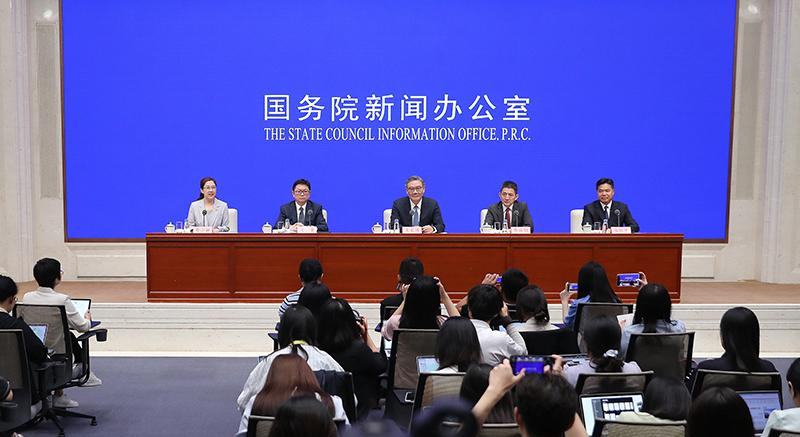
决战决胜“十四五”,这份商务高质量发展“成绩单”含金量满满
Yang Shi Wang· 2025-07-18 06:29
Group 1: Economic Growth and Consumption - During the "14th Five-Year Plan" period, China's consumption market has solidified its position as the second largest globally, with an average annual growth of 5.5% in social retail sales over the past four years, expected to exceed 50 trillion yuan this year [3][9][8] - Service consumption has maintained rapid growth, with the proportion of residents' service consumption expenditure increasing by 3.5 percentage points to 46.1%, contributing approximately 60% to economic growth annually [3][9][11] Group 2: Trade and Foreign Investment - China's status as a major trading nation has been further consolidated, with goods trade remaining the largest globally for eight consecutive years, and service trade ranking second globally, surpassing 1 trillion USD for the first time last year [5][11][9] - The cumulative foreign investment absorbed during the "14th Five-Year Plan" has exceeded the expected target of 700 billion USD, with a total of 708.73 billion USD by mid-2023, and the number of newly established foreign-funded enterprises reaching 229,000, an increase of 25,000 compared to the previous five-year period [17][15][14] Group 3: High-Level Opening Up and Market Diversification - The pace of high-level opening up has accelerated, with continuous reduction in the negative list for foreign investment, and all restrictions in the manufacturing sector have been eliminated [7][13] - The diversification of trade partners has improved, with ASEAN remaining China's largest trading partner for five consecutive years, and trade with countries involved in the Belt and Road Initiative accounting for over 50% of total trade [13][11]
拓展合作新机遇 第八届进博会招商路演走进河北
Zhong Guo Xin Wen Wang· 2025-07-16 17:31
Group 1 - The eighth China International Import Expo (CIIE)招商路演 event was held in Xiong'an New Area, aiming to deepen the integration of the Beijing-Tianjin-Hebei region with the CIIE and expand cooperation opportunities [1] - Over 300 representatives from multinational companies, industry leaders, and key buyers participated in the event, highlighting the significance of international collaboration [1][2] - A signing ceremony for cooperation memorandums took place, with the China International Import Expo Bureau signing agreements with eight key buyers from Hebei Province, indicating a new level of practical cooperation [1] Group 2 - The event attracted 128 exhibitors and buyers from various sectors, including pharmaceutical research, technology equipment, consumer goods, and service trade, with participation from 12 Fortune 500 companies and industry leaders [2] - During the event, representatives from Hebei Province engaged in on-site negotiations with exhibitors, resulting in multiple preliminary cooperation intentions [2] - Attendees visited local healthcare facilities, such as Xuanwu Hospital and the Peking University People's Hospital Health Management Center, to experience the development and vitality of Xiong'an New Area [2]
商务部部长王文涛:推动扩大电信、医疗领域的开放试点 稳妥有序扩大教育、文化领域自主开放
news flash· 2025-07-16 06:08
Core Viewpoint - The article emphasizes the importance of promoting high-level opening-up to support high-quality development, focusing on optimizing resource allocation, stimulating innovation, and improving production efficiency [1] Group 1: Trade and Investment - The Ministry of Commerce aims to optimize and upgrade goods trade, promote market diversification, and facilitate the digital and green development of trade [1] - There is a push to expand pilot programs for foreign investment in the telecommunications and healthcare sectors, while cautiously expanding autonomy in education and cultural fields [1] - The implementation of the Foreign Investment Law and its regulations is crucial for building the "Invest in China" brand [1] Group 2: Service Trade and Digital Economy - The article highlights the need to innovate and enhance service trade, including the full implementation of a negative list for cross-border service trade [1] - There is a focus on developing national service trade innovation demonstration zones and deepening international cooperation in digital trade [1] Group 3: Industrial Cooperation - The Ministry aims to promote international cooperation in industrial and supply chains, guiding reasonable and orderly cross-border layout of these chains [1] - Expanding the functions of overseas economic and trade cooperation zones and improving the overseas comprehensive service system are also key objectives [1]