
酒业

Search documents
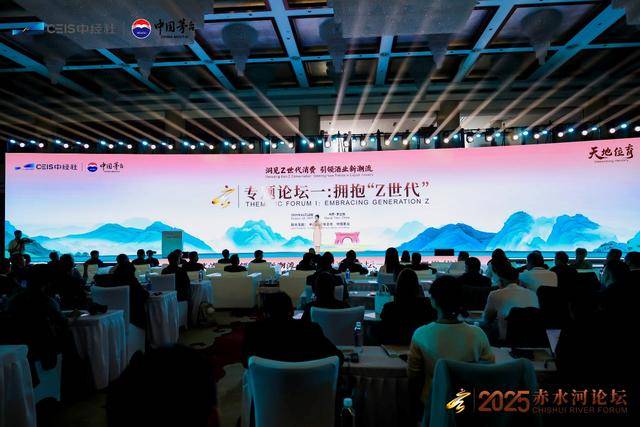
赤水河论坛“拥抱‘Z世代’”专题论坛举行
Zheng Quan Ri Bao Wang· 2025-10-29 12:49
Core Insights - The forum "Embracing Generation Z" aims to explore how the liquor industry can effectively engage with young consumers, blending traditional heritage with modern trends [1][2][3] Group 1: Industry Trends - The rise of Generation Z is seen as a crucial factor for enhancing consumption quality and achieving high-quality development in the liquor industry [2] - The liquor industry is encouraged to innovate consumption scenarios and optimize supply to connect with Generation Z [2] - The integration of tea and liquor is emerging as a vibrant market, showcasing successful practices that go beyond simple product overlap to deep cultural and experiential connections [4] Group 2: Company Strategies - Leading liquor companies, represented by Moutai, are adopting open approaches to embrace change and innovation while maintaining traditional values [3] - Companies are focusing on building a young consumer index, innovating content delivery, and creating cross-industry communication platforms to engage with Generation Z [3] - Anhui Yingjia Gongjiu's strategy emphasizes ecological sustainability, cultural heritage, and innovative consumer experiences to resonate with younger audiences [5] Group 3: Engagement Initiatives - The forum included interactive segments like the "MBTI of Wine Culture," which creatively linked personality tests with wine preferences to explore new communication pathways with young consumers [6] - A campaign titled "Me and Moutai" was launched to invite consumers to share their personal stories related to the Moutai brand, aiming to connect with the emotional sentiments of the younger generation [8] - The forum highlighted the need for the liquor industry to adopt a youthful mindset, emotional expressions, and cultural integrity to foster connections with Generation Z [8]
视频 赤水河论坛启幕:中外酒业巨头共启“世界酒文化促进行动”
Zhong Guo Jing Ying Bao· 2025-10-29 10:25
Core Viewpoint - The 2025 Chishui River Forum, co-hosted by Xinhua News Agency and Kweichow Moutai, gathered nearly 400 representatives from domestic and international liquor companies to explore the future of the industry under the theme "Heaven and Earth Nurture" [2] Group 1 - The forum launched the "World Liquor Industry High-Quality Development Promotion Action" to enhance global liquor industry collaboration [2] - Over 20 renowned liquor companies jointly released the "International Famous Liquor Chishui River Declaration" to promote mutual learning and co-prosperity within the global liquor industry [2] - The event included sub-forums such as "Cross-Civilization Dialogue of Chinese and Western Liquor Culture" to facilitate in-depth exchanges between Chinese and foreign liquor cultures [2]

拥抱Z世代 年轻化已成酒业转型“必选项”
Sou Hu Cai Jing· 2025-10-29 04:09
Core Insights - The rise of Generation Z is transforming the consumption landscape, making them a central force in the market, particularly in the liquor industry [1][3] - The Z generation, born between 1995 and 2009, values cultural identity, social connections, and experiences, leading to a shift in consumption patterns [3][6] - Embracing Generation Z is not just a strategic choice but a necessity for the liquor industry to remain competitive [3][6] Industry Trends - The Z generation's consumer preferences are characterized by a focus on health, rational consumption, and a decrease in drinking frequency and quantity [3][4] - Digital technology and innovative consumption scenarios are providing strong support for the youth-oriented transformation of the liquor industry [4][6] - The liquor industry is witnessing a multi-faceted transformation, with companies innovating across product offerings, consumption scenarios, supply, and cultural aspects [6][8] Product Innovation - Product innovation is a core focus for attracting the Z generation, with trends leaning towards lower alcohol content and fruit-flavored beverages [6][8] - Cross-industry collaborations, such as tea and alcohol fusion products, are emerging as new growth points in the market [6][7] Cultural Engagement - Cultural values and storytelling are becoming essential in attracting young consumers, as they seek products with meaningful backgrounds [7][8] - Companies are shifting from traditional marketing to more engaging methods like short videos and social media interactions to resonate with the Z generation [8] Strategic Directions - Long-term commitment to innovation is crucial for companies aiming to capture the young market [8] - The integration of online and offline experiences, along with personalized services, is vital for appealing to the Z generation [8]

今米房集团拟收购贵州亿锦泽酒业52%股权
Xin Lang Cai Jing· 2025-10-28 18:28
Core Viewpoint - Jinmi Housing Group (08300.HK) announced the acquisition of a 52% stake in Guizhou Yijinze Liquor Co., Ltd. through its wholly-owned subsidiary, Futong Asia Investment Co., Ltd. [1] Company Summary - The target company, Guizhou Yijinze Liquor Co., Ltd., was established in 2025 and is based in Zunyi City, Guizhou Province, China [1]. - The main business operations of the target company include liquor business management and liquor product manufacturing [1].
中国酒业协会秘书长何勇:计划启动中国白酒双遗产申报工作
Xin Jing Bao· 2025-10-28 16:11
Core Insights - The first Chishui River Forum was held in Maotai, emphasizing the need for Chinese liquor to explore various aspects such as flavor preferences, scene creation, trade policies, international standards, and category recognition for international expansion [1][2] - The Chinese liquor industry is fundamentally a "quality + culture" industry, and there is a call to reconstruct its cultural connotation focusing on gratitude, sharing, and altruism while also considering self-enjoyment [1] - The internationalization of Chinese liquor is a long-term process that requires breaking traditional thinking and allowing consumers to appreciate Chinese liquor based on personal preferences [1][2] Industry Developments - The internationalization process of Chinese liquor is still in its early stages, focusing on helping foreign consumers adapt to and understand the product [2] - Recent efforts include standardizing the name "Baijiu" in national standards to aid in international promotion, moving away from various other terms [2] - The association plans to initiate the dual heritage application for both material and intangible cultural heritage of Chinese liquor, which is seen as crucial for establishing its international status [2] - A public identification system for Chinese liquor is also in the works, aimed at creating a unified voice for international consumers to recognize the product, with potential registration as early as next year [2]
陕西省贸促会组织10家省政府国际高级经济顾问单位开展产业考察
Sou Hu Cai Jing· 2025-10-28 15:51
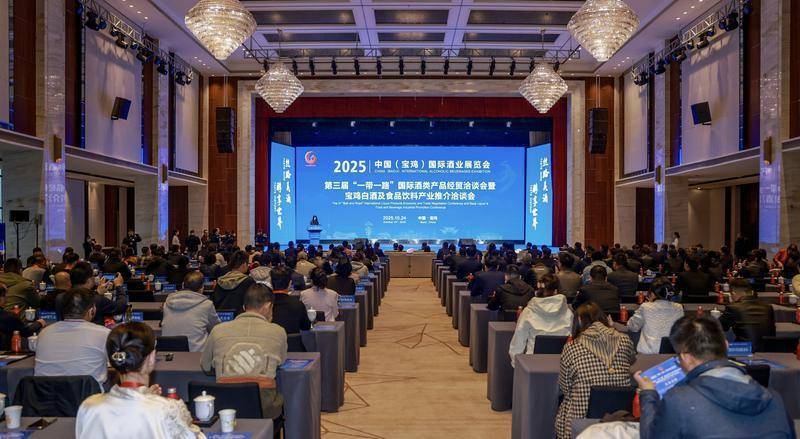
Core Insights - The event organized by the Shaanxi Provincial Council for the Promotion of International Trade aims to activate regional economic development through the third China (Baoji) International Wine Exhibition [1][3] - Representatives from ten international senior economic advisory units, including Fosun Group and JD Group, participated in industry inspections and exchanges in Baoji [1][3] Group 1 - The advisory unit representatives visited key locations such as the national-level Meixian Kiwi Industry Park and Qifeng Fruit Industry Co., Ltd., to assess the development of Baoji's unique agriculture, food processing, and cultural tourism integration [3] - JD Group engaged in in-depth discussions with Qifeng Fruit Industry regarding logistics network construction and financial service support, identifying potential cooperation points [3] - The representatives also attended the "Belt and Road" International Wine Products Economic and Trade Negotiation Conference, facilitating exchanges with local enterprises on raw material procurement and resource sharing [3] Group 2 - The activities provided the advisory units with a comprehensive understanding of Baoji's industrial advantages and development potential, establishing an effective platform for enhancing the key industrial chain in Shaanxi [3]

今米房集团拟收购贵州亿锦泽酒业合共52%的股权
Zhi Tong Cai Jing· 2025-10-28 14:41
Core Viewpoint - The company has entered into a share transfer agreement to acquire a 52% stake in Guizhou Yijinze Liquor Industry Co., Ltd, aligning with its strategic goal to expand its liquor supply business in China [1][2] Group 1: Acquisition Details - The acquisition involves the company's wholly-owned subsidiary, Fortune Asia Investment Limited, purchasing a total of 52% equity from three individual shareholders for a nominal price of RMB 1 [1] - Post-acquisition, the company will hold 52% of the target company, while the remaining shares will be held by two individuals [1] - The target company is a limited liability company established in 2025 in Zunyi, Guizhou Province, focusing on liquor business operations and production [1] Group 2: Strategic Implications - The acquisition is expected to enhance the company's operational platform, allowing for better implementation of systems, monitoring, and brand strategies [1] - It aims to support the company in consolidating its position as a well-known liquor supplier in China by broadening its customer base and improving production and distribution arrangements [2] - The company will continue to focus on its core business of providing dining and related services, with the acquisition being a strategic part of strengthening its liquor supply operations [2]
今米房集团(08300.HK)拟收购贵州亿锦泽酒业52%股权
Ge Long Hui· 2025-10-28 14:25
Core Viewpoint - The company, Jinmi Fang Group, is expanding its business in the Chinese liquor market through the acquisition of a 52% stake in Guizhou Yijinze Liquor Co., Ltd, focusing on premium liquor brand management and distribution [1] Group 1: Acquisition Details - The acquisition is executed through the company's wholly-owned subsidiary, Futong Asia Investment Co., Ltd [1] - Guizhou Yijinze Liquor Co., Ltd is a limited liability company established in 2025 in Zunyi, Guizhou Province, China, focusing on liquor business operations and production [1] - Prior to the acquisition, the target company was owned by three individuals holding 70%, 24%, and 6% stakes respectively [1] Group 2: Financial Terms - The total nominal consideration for the acquisition is set at RMB 1 [1]
中酒协:2024年陈年老酒市场规模或突破1500亿元
Xin Jing Bao· 2025-10-28 13:29
Core Viewpoint - The Chinese liquor industry is witnessing significant growth in the aged liquor market, with expectations for the market size to exceed 150 billion yuan in 2024, driven by the establishment of standards and trust in "true vintage" products [1][2]. Group 1: Market Growth - The aged liquor market in China reached a scale of 128.5 billion yuan in 2023, showing a recovery in growth after a slowdown from 2020 to 2022 [1]. - The market sales exceeded 62.8 billion yuan in 2019 and surpassed 80.2 billion yuan in 2020, indicating a strong upward trend [1]. Group 2: Industry Standards and Trust - The China Alcoholic Drinks Association has implemented the "White Liquor Vintage Group Standard" in 2019, establishing a regulatory framework for vintage liquor [1]. - The association has initiated a vintage liquor certification process, with 6.13 million certification labels issued across 31 provinces and 305 cities, promoting a quality ecosystem that is provable, traceable, and regulated [2]. Group 3: Future Outlook - Industry experts believe that the vintage liquor sector is entering a new phase characterized by standardization, transparency, and internationalization, which will enhance market credibility and competitiveness [2].


20余家酒企发布《国际名酒赤水河宣言》
Xin Jing Bao· 2025-10-28 13:00
Core Viewpoint - The inaugural Chishui River Forum aims to promote global wine industry exchange and sustainable development through the release of the "International Famous Wine Chishui River Declaration" by over 20 renowned wine companies [2] Group 1: Declaration Objectives - The declaration emphasizes ecological protection, advocating for respect and preservation of brewing resources such as water, climate, and raw materials, while promoting sustainable production methods [2] - It highlights the importance of quality and cultural heritage, encouraging innovation within tradition and establishing a comprehensive quality management system [2] - The declaration calls for responsible consumption, promoting moderate drinking and responsible marketing to foster a civilized and healthy drinking culture [2] Group 2: Social Responsibility and Technological Integration - It integrates ESG (Environmental, Social, and Governance) principles into the entire development process, aiming to create a harmonious social environment through public welfare practices and sustainable ecosystems [2] - The declaration encourages the adoption of modern technology to enhance product stability and diversity, providing consumers with high-quality and varied choices [2] - It promotes the exploration of the spiritual and historical values of wine culture, creating interactive drinking experiences that embody cultural significance [3] Group 3: Cultural Exchange and Collaboration - The declaration advocates for respect and understanding of the historical origins and brewing techniques of various wine regions, fostering a rich global wine culture [3] - It proposes the establishment of a regular and diverse international dialogue mechanism, facilitating cross-national tastings, visits, and cultural forums for mutual learning and coexistence [3]