
消费金融

Search documents
湖北消金转让五期个人不良贷款包 未偿本息约9.7亿元
Jing Ji Guan Cha Wang· 2025-11-28 08:13
该批资产按产品组包,19-22期基准日11月20日、23期11月24日,加权平均逾期222.13天,涉多省份。 (编辑:金倩) 经济观察网11月27日,银登中心网站披露,湖北消费金融发布2025年第19-23期个人不良贷款批量转让 招商公告,拟转让256419笔个人消费不良贷款,涉及债权本息合计约9.7亿元,债权本金额合计约8.5亿 元。 ...
锚定民生需求,中原消费金融以让利、创新、宣教赋能美好生活
Jing Ji Guan Cha Wang· 2025-11-28 06:39
Core Insights - The Central Financial Work Conference emphasizes the concept of finance for the people, urging financial institutions to fulfill their social responsibilities and integrate political and public interests into their services [1] Group 1: Financial Benefits to Consumers - Zhongyuan Consumer Finance has implemented a dual approach of "subsidies + rights" to reduce financing costs for users, providing a total of over 44.73 million yuan in benefits to 3.31 million users by the end of October 2025 [2] - During the "Double Eleven" shopping festival, the company issued 1,111 yuan interest-free coupons and cash red envelopes, attracting 12,300 users and enhancing platform activity while providing consumers with discounts [2] - The company also offers a "28-day interest-free borrowing" benefit, providing a buffer period for 1.43 million users and reducing interest fees by 13.74 million yuan [2] Group 2: Financial Education and Consumer Protection - Zhongyuan Consumer Finance actively conducts various financial knowledge promotion activities to enhance consumer awareness and prevent illegal financial activities, aligning with regulatory requirements [3] - Innovative offline consumer rights protection activities were held during the "3.15" Consumer Rights Protection Education Campaign, integrating cultural performances to engage the public and promote financial literacy [3] - The company partnered with Zhengzhou Metro to launch a public welfare project that combines financial consumer protection with community service, enhancing public awareness through interactive experiences [3] Group 3: Online Financial Literacy Initiatives - An online "Cloud Knowledge Corridor" has been established, featuring scenario-based short videos and engaging comics to simplify complex financial concepts and enhance public understanding [4] - The online educational content has reached over 500,000 individuals, effectively improving the public's risk prevention awareness [4]
政策“组合拳”激活消费新引擎
Huan Qiu Wang· 2025-11-28 06:29
Core Viewpoint - The implementation plan aims to enhance the adaptability of supply and demand in consumer goods, potentially creating a new consumption market worth trillions by 2027 through structural reforms and financial support [1] Group 1: Policy and Financial Support - The plan emphasizes the need for stronger fiscal and financial support to stimulate domestic demand, including the introduction of diverse consumer finance products [1] - Financial institutions are actively launching initiatives such as interest-free installment payments and discounts to boost consumer spending [2] - The "old for new" policy has significantly contributed to market growth, with sales exceeding 2.4 trillion yuan and benefiting over 360 million people in the first ten months of the year [1][2] Group 2: Consumer Finance Trends - Consumer finance is becoming a crucial driver for retail credit, with policies supporting low-cost funding for consumption loans [4] - The retail sales of major consumer goods like home appliances and automobiles have shown robust growth, with retail sales of home appliances and furniture increasing by approximately 20% year-on-year [5] - Financial tools such as installment services are lowering purchase barriers, enhancing the consumption of large-ticket items [5] Group 3: Regional Initiatives - Local governments are implementing supportive policies to enhance regional consumption quality, as seen in Beijing's plan to boost various consumer sectors [7] - As of Q3 2025, Beijing's consumer loan balance (excluding personal housing loans) reached 808.78 billion yuan, growing by 4.7% year-on-year, indicating a stronger growth rate than the national average [7]


分期服务嵌入场景提振消费意愿
Jing Ji Ri Bao· 2025-11-27 21:09
Group 1 - The core viewpoint of the articles highlights the integration of installment services into consumption scenarios as a key driver for boosting consumer finance and stimulating consumption [2][3][4] - Multiple consumer finance companies, including Zhongyuan Consumer Finance and Haier Consumer Finance, have collaborated with banks and industries to offer interest-free installment services, benefiting high-quality users with low default rates [2][3] - Haier Consumer Finance has launched offline installment services, achieving a cumulative transaction volume of 130 million yuan in home appliance installments, providing strong financial support for consumption recovery [2] - Zhongyuan Consumer Finance has integrated e-commerce activities with installment services, benefiting over 3.31 million users and providing discounts exceeding 44.73 million yuan [2][3] Group 2 - Consumer behavior indicates a preference for installment services for large purchases like home appliances, which allows consumers to benefit from national subsidies and financial incentives without affecting their cash flow [3] - The growth of personal consumer loans has effectively met residents' demand for durable consumer goods, as outlined in the "Management Measures for Consumer Finance Company Pilot" [3] - The People's Bank of China and other departments have issued guidelines to encourage collaboration among financial institutions to develop financial products that meet various consumption scenario needs [4] Group 3 - There is an urgent need for innovative financial services and products to better match the consumption of durable goods, focusing on customized designs that cater to the high price and long cycle of these products [4] - Financial services must be precisely embedded in consumption scenarios, with simplified and instantaneous financial experiences being crucial for both online and offline retail [4] - The consumer finance industry is increasingly targeting lower-tier markets, focusing on enhancing consumption vitality in county-level areas through collaboration with logistics and e-commerce platforms [5]
金融科技行业或重现周期反转,奇富科技是否迎来新拐点?
Ge Long Hui· 2025-11-27 10:02
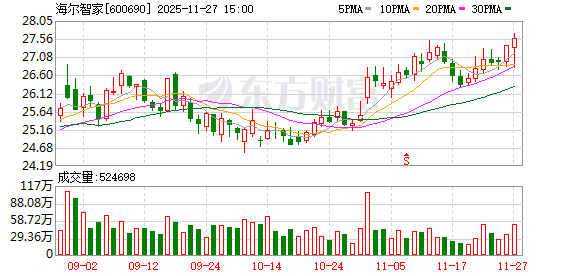
Core Viewpoint - The consumer finance industry has entered a new cycle this year, with regulatory-driven structural adjustments expected to reshape the market dynamics, potentially leading to a recovery similar to the 2017-2020 period [2][10]. Group 1: Regulatory Impact - The current round of regulation aims to refine the industry by shifting from a high-risk, high-interest model to a more refined approach focused on risk control, funding negotiation power, and technological capabilities [2]. - The "loan withdrawal effect" is evident, with companies like Qifu Technology experiencing increased overdue rates and decreased repayment rates, indicating a passive clearing of high-risk clients rather than a decline in new business quality [3]. - Qifu Technology has prepared for this adjustment, increasing its risk provisions and maintaining a high provision coverage ratio, while also seeing a significant reduction in new loan issuance from high-priced markets [4]. Group 2: Industry Restructuring - The regulatory environment is leading to a reduction in competitive pressure, allowing platforms to target higher-value customers more effectively, resulting in a decrease in customer acquisition costs [5]. - As the issue of shared debt improves, risk costs are expected to decline, enhancing customer conversion rates and long-term user value, with management indicating a more favorable competitive environment in the future [5]. - Historical patterns suggest that profitability may strengthen before stock prices respond, similar to trends observed from 2017 to 2020 [5]. Group 3: AI as a Growth Engine - Qifu Technology is leveraging AI to enhance its foundational capabilities, focusing on data acquisition, risk identification, and compliance, which are critical for future customer service [7]. - The company has completed numerous iterations of risk models, utilizing AI to dynamically assess customer repayment intentions, contributing to improved risk indicators [7]. - Qifu Technology is positioning itself as an AI infrastructure provider for financial institutions, with significant growth in its technology-enabled lending volume [8][9]. Conclusion - The current performance dip in the industry is viewed as an opportunity, as long as the underlying industry logic remains intact and the company maintains its advantages in funding, risk control, and AI capabilities [10].
彭博获批任蚂蚁消金总经理助理
Bei Jing Shang Bao· 2025-11-27 04:49
根据批复,公司应要求上述核准任职资格人员严格遵守金融监管总局有关监管规定,自本行政许可决定 作出之日起3个月内到任,并按要求及时报告到任情况。未在上述规定期限内到任的,本批复文件失 效,由决定机关办理行政许可注销手续。公司应督促上述核准任职资格人员持续学习和掌握经济金融相 关法律法规,牢固树立风险合规意识,熟悉任职岗位职责,忠实勤勉履职。 北京商报讯(记者岳品瑜实习生岳雯艳)11月27日,国家金融监督管理总局重庆监管局发布的行政许可批 复显示,核准彭博重庆蚂蚁消费金融有限公司总经理助理的任职资格。 ...
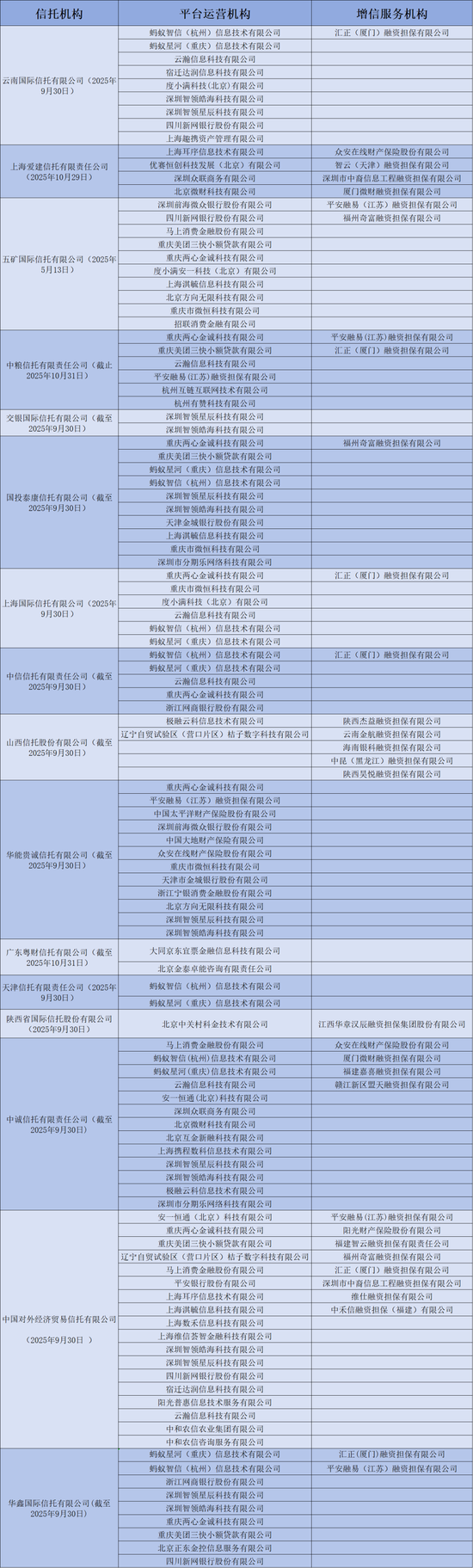
至少16家信托披露助贷合作机构名单:蚂蚁、头条、美团等成热门合作机构
Xin Lang Cai Jing· 2025-11-26 11:29
Core Viewpoint - Multiple trust companies have disclosed their lists of internet lending business cooperation institutions, following the regulatory guidelines issued by the National Financial Supervision Administration, which mandates a list management system for platform operators and credit enhancement service providers [1][4]. Group 1: Disclosure of Cooperation Institutions - At least 16 trust companies, including Zhongcheng Trust, CITIC Trust, and Huaneng Trust, have publicly announced their cooperation institutions for internet lending on their official websites [1]. - The disclosed cooperation institutions primarily consist of platform operating entities and credit enhancement service providers, with a focus on platform operating entities [4]. Group 2: Key Players in Internet Lending - Notable companies frequently appearing in the cooperation lists include Ant Group's Ant Zhixin (Hangzhou) Information Technology Co., Ltd., and Meituan-related companies such as Chongqing Meituan San Kuai Small Loan Co., Ltd. [4]. - The cooperation with these entities reflects the evolving landscape of trust companies' lending operations amid stringent regulations [4]. Group 3: Market Context and Trends - The trust companies' lending business is rapidly evolving under strong regulatory oversight, connecting their transformation needs with the vast consumer finance market [4]. - Consumer finance aligns with national policies aimed at boosting domestic demand, making it a crucial area for trust companies' transformation efforts [4]. Group 4: Advantages and Disadvantages of Trust Companies - Trust companies possess flexible transaction structure design capabilities, allowing them to engage deeply in asset securitization (ABS) models to lower funding costs [5]. - However, they face challenges such as higher funding costs compared to banks, reliance on partner institutions for customer acquisition and risk control, and high complaint rates leading to compliance and reputational risks [5].



中信消费金融与朴道征信战略签约 携手共筑数字金融新生态
Cai Fu Zai Xian· 2025-11-26 04:42
Group 1 - The core viewpoint of the news is the strategic cooperation between Citic Consumer Finance and Puda Credit, focusing on building intelligent risk control models and data ecosystem collaboration to explore innovative paths in digital financial risk control [1][2] - The consumer finance industry is entering a new stage of high-quality development characterized by compliance, risk control, and efficiency, transitioning towards a technology and data-driven development model [1][2] - Common challenges faced by the industry include insufficient data accumulation, barriers to data circulation, and outdated models, which directly affect the release of technological momentum and data value [1] Group 2 - Citic Consumer Finance, as a state-owned enterprise, is implementing a data-driven digital development strategy to enhance its core capabilities in intelligent risk control and digital operations [2] - Puda Credit, as the second market-oriented credit agency in China with both personal and corporate credit licenses, has accumulated compliant data resources across various dimensions such as communication, payment, and e-commerce consumption [2] - The collaboration aims to create a sustainable industry risk control ecosystem by integrating scenario experience with multidimensional data, leading to continuous optimization of data models and improved risk identification accuracy and efficiency [2]
以合规护航金融高质量发展
Jin Rong Shi Bao· 2025-11-26 01:40
Core Insights - During the "14th Five-Year Plan" period, China's financial industry has achieved significant growth, with total assets of banking and insurance sectors exceeding 500 trillion yuan, reflecting an annual growth rate of 9% over five years [1] - The financial environment is undergoing profound changes, with increasing compliance requirements for financial institutions due to geopolitical tensions and domestic economic challenges [1][2] - The importance of compliance in the financial sector is emphasized, as it is crucial for maintaining industry integrity and consumer trust [2][3] Group 1 - The total assets of China's banking and insurance sectors reached over 500 trillion yuan, with banking institutions' total assets amounting to 474.3 trillion yuan by the end of Q3 2025 [1] - The financial industry faces heightened compliance pressures due to external factors such as geopolitical conflicts and internal challenges like real estate market regulation and local government debt [1][2] - Regulatory authorities are enforcing stricter compliance measures, including increased penalties for violations and a dual penalty system for institutions and individuals [2] Group 2 - The establishment of a robust legal framework for financial operations, including new laws and regulations, aims to enhance compliance and risk management within financial institutions [3] - Financial institutions are encouraged to integrate compliance culture into their operations, ensuring that compliance becomes a fundamental aspect of their business practices [3][4] - Various financial institutions are actively promoting compliance through education, performance assessments, and knowledge competitions, shifting the mindset from mandatory compliance to voluntary adherence [4]
Jiayin Group(JFIN) - 2025 Q3 - Earnings Call Transcript
2025-11-25 13:02
Financial Data and Key Metrics Changes - In Q3 2025, the company facilitated RMB 32.2 billion in loan volume, a year-on-year increase of approximately 20.6% [6] - Non-GAAP income from operations was RMB 490 million, up around 50.3% year-on-year [6] - Net income for Q3 was RMB 376.5 million, representing an increase of 39.7% from the same period in 2024 [26] - Basic and diluted net income per share was RMB 1.83, compared to RMB 1.27 in Q3 2024 [26] - The company ended the quarter with RMB 124.2 million in cash and cash equivalents, down from RMB 316.2 million at the end of the previous quarter [26] Business Line Data and Key Metrics Changes - The company maintained cooperation with 75 financial institutions, with another 64 under negotiation, enhancing funding supply stability [7] - The share of repeat borrowers in facilitation volume rose to 78.6%, driving the average borrowing amount per transaction up to RMB 9,115, a year-on-year increase of approximately 19.5% [10] Market Data and Key Metrics Changes - The Indonesian business saw nearly 200% year-on-year growth in business scale, with the number of borrowers increasing by approximately 150% [19] - In Mexico, loan volume and user base maintained rapid growth, indicating initial success in market expansion [19] Company Strategy and Development Direction - The company is focusing on high-quality borrower segments and optimizing resource allocation efficiency through a cautious customer acquisition strategy [10][30] - The implementation of new loan facilitation regulations is expected to raise industry entry barriers and drive the sector towards healthier and more sustainable development [37] - The company aims to advance its Four Plus Two Strategy, focusing on major application directions and leveraging key infrastructure platforms for technological breakthroughs [17] Management's Comments on Operating Environment and Future Outlook - The management noted that the recent regulatory policies are creating a favorable environment for the long-term sustainable development of the industry [5] - The company projects Q4 loan facilitation volume at RMB 23 billion to RMB 25 billion, with full-year volume expected to be in the range of RMB 127.8 billion to RMB 129.8 billion, representing a year-on-year increase of approximately 26.8% to 28.8% [21] - Full-year non-GAAP operating profit guidance is set at RMB 1.99 billion to RMB 2.06 billion, reflecting a growth of approximately 52.3% to 57.6% [21] Other Important Information - The company has achieved significant innovations in AI development, establishing a technical benchmark of high performance and low cost [12] - The integration of multimodal capabilities has significantly improved fraud detection timeliness, compressing it from a week to within two hours [15] Q&A Session Summary Question: Impact of new regulation on business and strategic adjustments - Management indicated that the new regulation has significantly impacted the industry, leading to downward pricing pressure and a focus on consumer protection. The company has intensified adjustments in traffic acquisition and adopted a more cautious customer acquisition strategy [30][32] Question: Revenue take rate and margin expectations - Management noted that the net margin for Q3 was 25.6%, a slight decrease from the previous quarter. They expect profitability to be significantly higher than in 2024, despite short-term pressures from the new regulation [35][37]
