
以旧换新服务

Search documents
两会消费行业政策专题解读
2026-03-09 05:18
Summary of Conference Call Records Industry or Company Involved - **Consumer Sector**: Focus on various segments including apparel, home appliances, education, agriculture, food and beverage, and pharmaceuticals. Key Points and Arguments Consumer Sector Overview - **2026 Domestic Consumption**: Expected to stabilize, supported by special government bonds and a 100 billion yuan fund for trade-in programs, with a focus on companies like Li Ning and Anta for growth opportunities [1][2]. - **Real Estate Policy Shift**: The real estate sector is positioned as a stabilizing force, benefiting home furnishing companies like Kuka Home and Oppein as demand improves [1][3]. - **Education Sector Growth**: The "14th Five-Year Plan" anticipates an increase of over 2 million high school seats, benefiting companies like China Oriental Education [1][4]. Agriculture and Livestock - **Pig Farming Sector**: Currently in a deep loss phase with an average loss of over 250 yuan per head, suggesting a need for strategic investments in leading companies like Muyuan Foods and WH Group [1][8]. - **Grain Security Policy**: The focus on grain security aims for a production target of 145 million tons, indicating systemic investment opportunities in breeding and smart agriculture [5][6]. Food and Beverage Sector - **CPI Recovery**: Policies aimed at stabilizing the CPI are expected to positively impact pricing in the food and beverage sector, with recommendations for leading brands like Kweichow Moutai and Wuliangye [1][11]. - **Market Sentiment**: The food and beverage sector is currently experiencing a downturn, but there are signs of recovery, particularly in the liquor segment, with Moutai's pricing stabilizing [1][13][14]. Home Appliances - **Policy Impact**: The government has introduced a 250 billion yuan bond issuance to support the home appliance sector, focusing on high-efficiency products [1][22]. - **Market Dynamics**: The home appliance sector is expected to face pressure in 2026, with potential declines in white goods sales unless supported by subsidies [1][23]. Pharmaceutical Sector - **Emerging Industry Status**: The pharmaceutical industry has been elevated to a new pillar industry status, with a focus on innovative drugs and biotechnology [1][20]. - **Investment Opportunities**: Companies like BeiGene and Innovent Biologics are highlighted as key investment targets in the innovative drug space [1][21]. Service Sector - **Consumer Services**: The government emphasizes boosting consumer services, with a focus on increasing residents' income and expanding personal consumption loans [1][16]. - **Tourism and Hospitality**: Companies like Ctrip and Songcheng Performance are recommended due to expected improvements in tourism and entertainment sectors [1][18]. Other Important but Possibly Overlooked Content - **Investment Strategies**: The overall investment strategy suggests a cautious approach, focusing on companies with strong fundamentals and potential for recovery in various sectors [1][30]. - **Market Sentiment**: The current market sentiment is relatively calm, which may provide a favorable environment for long-term investments in consumer sectors [1][29]. This summary encapsulates the key insights from the conference call records, highlighting the strategic focus areas and potential investment opportunities across various sectors.
山东启动“迎新春换新房”,住房品质升级多了“新解法”
Feng Huang Wang Cai Jing· 2026-02-12 00:20
Core Viewpoint - The housing sector is experiencing a transformation with a focus on high-quality living standards, driven by innovative technologies and supportive policies aimed at enhancing consumer confidence and stimulating demand [1][2][3]. Group 1: Housing Quality and Innovation - The "Good House" exhibition showcases advanced technologies that enhance living conditions, such as passive building air conditioning systems and smart home features that improve comfort and safety [2]. - A total of 213 provincial high-quality housing pilot projects have been established, reflecting the growing market interest in quality living spaces [2]. - The integration of health, comfort, and intelligence in housing is becoming a key market trend as urbanization progresses and consumer demands evolve [2]. Group 2: Policy Support and Consumer Incentives - The Jinan government is issuing 50 million yuan in housing consumption vouchers, providing 10,000 yuan per eligible new home purchase to stimulate both housing sales and consumer spending [2]. - Various cities in Shandong are implementing diverse promotional activities, such as project promotions and online marketing, to boost housing consumption and market confidence [3]. Group 3: Solutions for Existing Housing - The "old house dilemma" is being addressed through innovative services like direct buyback programs, which alleviate concerns about selling old homes and facilitate smoother transitions to new properties [4]. - The Shandong government has introduced guidelines for "old-for-new" housing exchanges, promoting various models to reduce costs and streamline the housing exchange process [4]. Group 4: Aging Population Considerations - The exhibition features solutions for aging populations, including easy-to-install stairlifts and bathroom modifications that enhance safety and comfort for elderly residents [5][6]. - These adaptations aim to redefine the quality of life for seniors, ensuring that existing homes can meet their needs effectively [6]. Group 5: Housing Fund Innovations - The housing provident fund system is being expanded to include flexible employment individuals, allowing them to participate and benefit from housing loans and subsidies [7]. - Incentives for flexible employment individuals include higher interest rates on deposits and cash bonuses for opening accounts, promoting broader access to housing support [7]. - The maximum loan amount for housing provident funds in Jinan has been raised to 1.7 million yuan, with a reduced down payment ratio for second homes, easing the financial burden on families [8].
场景化体验式 北京全时活跃消费生态提速
Bei Jing Shang Bao· 2026-01-11 15:14
Core Insights - The national business work conference emphasized accelerating the cultivation of new growth points in service consumption and releasing the potential of service consumption [1] - Beijing has made significant progress in innovating and upgrading physical commerce, aiming to expand and upgrade commodity consumption while creating an international consumption environment [1] Group 1: Commercial Supply and Innovation - In the past year, Beijing's physical commerce has achieved breakthroughs in supply diversity, spatial layout, and experiential innovation, injecting strong vitality into the consumption market [3] - Over 960 new stores were added in Beijing in the first 11 months of 2025, with over 5,000 new stores established since 2019, including 12 global launch centers [3] - The city has recognized 26 regional headquarters of multinational consumer companies, showcasing a blend of international brands and local culture [3] Group 2: Dining Services and Consumer Trends - The dining sector has become a crucial driver of domestic demand, with a 19% year-on-year increase in average daily consumption during the 2026 New Year holiday compared to 2025 [5] - Key monitored dining sectors in Beijing saw a daily sales increase of 4.6% during the New Year holiday, with a 25.4% increase in regular dining [5] - Major restaurants in Beijing have reported full bookings for New Year's Eve, indicating a strong recovery and demand in the dining industry [6] Group 3: E-commerce Expansion - E-commerce platforms are actively implementing the "national subsidy" policy to enhance consumer access and promote consumption in rural areas [7] - JD.com has engaged hundreds of thousands of staff to support the "old for new" service, covering over 200 categories, including home appliances and health equipment [7] - The "old for new" policy has led to the sale of 192 million home appliances, generating sales of 3.92 trillion yuan and benefiting 494 million consumers [8] Group 4: Consumer Experience and Urban Development - Beijing is focusing on creating a diverse and immersive consumer experience, transitioning from a single-function to a multi-experience model in commercial spaces [4] - The city is developing various themed commercial streets and enhancing cultural experiences to create a vibrant consumer ecosystem [4] - The 2026 business work conference highlighted the importance of boosting consumption and building a strong domestic market as part of the "14th Five-Year Plan" [10] Group 5: International Consumption Environment - Beijing aims to enhance the quality of international consumption supply, supporting the development of international consumption clusters and tax refund services for inbound tourists [11] - The city is improving foreign payment services and enhancing international service levels in key commercial areas [11]


助力“国补”进乡村 2025年京东投入近300亿高效履约激活乡镇市场
Jing Ji Wang· 2025-12-31 07:42
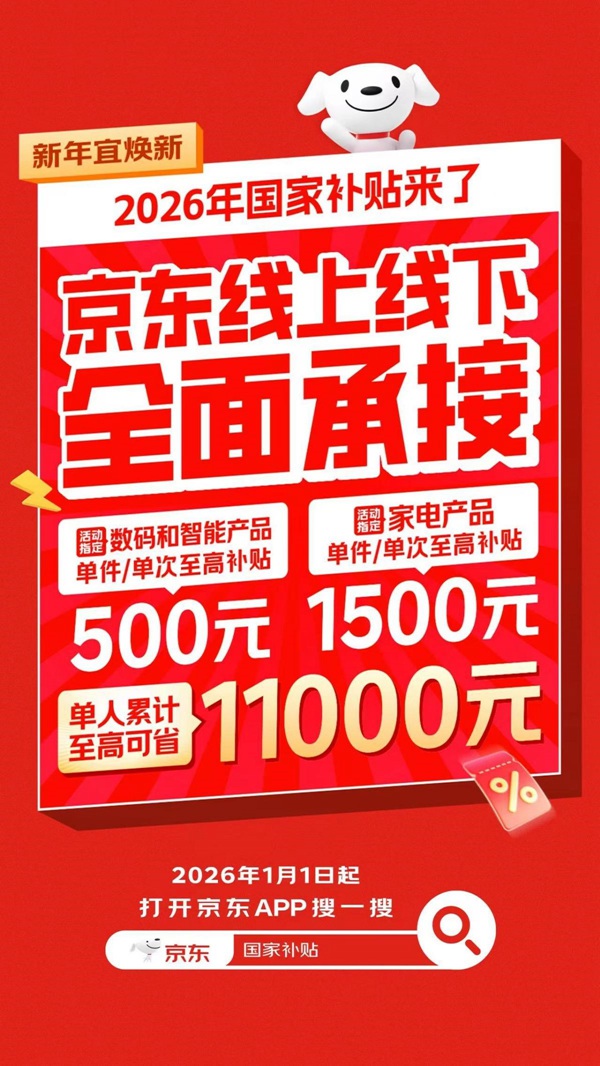
Group 1 - JD.com is fully prepared to launch the "National Subsidy" event and has invested nearly 30 billion yuan to support the initiative in rural areas by 2025, aiming to boost rural consumption and promote high-quality economic development [1] - In 2024, the "old-for-new" program has become a national strategy, with JD.com mobilizing tens of thousands of employees across various departments to ensure effective implementation of the policy [3] - By 2025, JD.com will continue to invest nearly 30 billion yuan in subsidies, marketing, logistics, and service capacity to enhance user experience and stimulate market consumption in rural areas [3] Group 2 - JD.com's "old-for-new" service covers over 200 categories, including home appliances and electronics, and has nearly 30,000 offline stores ready to support the national subsidy program [5] - The company offers comprehensive services such as free pickup, dismantling, and transportation for old appliances, achieving a 97% integration rate for delivery and installation of major appliances [5] - JD.com ensures the safe and effective distribution of subsidies through a fully digitalized process, optimizing fraud prevention measures and ensuring compliance [6] Group 3 - JD.com has established nearly 100,000 service stations in rural areas to enhance last-mile delivery and service accessibility for consumers [6] - The ongoing implementation of the "old-for-new" policy in 2026 is expected to significantly support domestic demand and high-quality economic development [6] - JD.com aims to leverage its supply chain capabilities to efficiently manage the "old-for-new" program and ensure subsidies reach rural consumers fairly and securely [6]

政策“组合拳”激活消费新引擎
Huan Qiu Wang· 2025-11-28 06:29
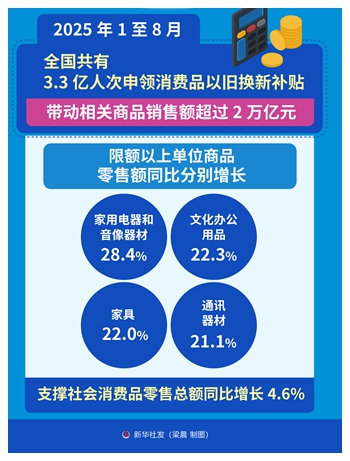
Core Viewpoint - The implementation plan aims to enhance the adaptability of supply and demand in consumer goods, potentially creating a new consumption market worth trillions by 2027 through structural reforms and financial support [1] Group 1: Policy and Financial Support - The plan emphasizes the need for stronger fiscal and financial support to stimulate domestic demand, including the introduction of diverse consumer finance products [1] - Financial institutions are actively launching initiatives such as interest-free installment payments and discounts to boost consumer spending [2] - The "old for new" policy has significantly contributed to market growth, with sales exceeding 2.4 trillion yuan and benefiting over 360 million people in the first ten months of the year [1][2] Group 2: Consumer Finance Trends - Consumer finance is becoming a crucial driver for retail credit, with policies supporting low-cost funding for consumption loans [4] - The retail sales of major consumer goods like home appliances and automobiles have shown robust growth, with retail sales of home appliances and furniture increasing by approximately 20% year-on-year [5] - Financial tools such as installment services are lowering purchase barriers, enhancing the consumption of large-ticket items [5] Group 3: Regional Initiatives - Local governments are implementing supportive policies to enhance regional consumption quality, as seen in Beijing's plan to boost various consumer sectors [7] - As of Q3 2025, Beijing's consumer loan balance (excluding personal housing loans) reached 808.78 billion yuan, growing by 4.7% year-on-year, indicating a stronger growth rate than the national average [7]

以旧换新添力 绿色消费升温
Jin Rong Shi Bao· 2025-10-15 02:17
Core Insights - The article highlights the significant impact of the "trade-in" policy on consumer behavior and the economy, showcasing impressive statistics that reflect its success in promoting green consumption and economic stability [5][9]. Group 1: Trade-in Program Statistics - 8.3 million trade-in applications for vehicles have been recorded since 2025 [2]. - 8.465 million electric bicycles have been exchanged in the first half of this year [2]. - Over 110 million units of 12 major categories of home appliances have been traded in this year [3]. Group 2: Growth in Recycling and Recovery - The recycling and dismantling rates of waste home appliances have increased by 14.83% and 20% year-on-year, respectively [4]. - The Ministry of Finance has allocated 69 billion yuan for the third batch of trade-in funds [5]. Group 3: Economic Impact and Consumer Reach - The trade-in program has generated over 1.9 trillion yuan in sales related to consumer goods, benefiting more than 320 million people [5]. - The combination of government subsidies, financial support, and merchant discounts has created a powerful effect in stimulating consumption [5][6]. Group 4: E-commerce Platform Innovations - E-commerce platforms are enhancing consumer experience through various incentives, such as JD's dual subsidies and Pinduoduo's additional recycling subsidies [6]. - Tmall's trade-in program covers over 1,600 categories and 20,000 products, with daily visits exceeding 150 million [6]. Group 5: Financial Services and Consumer Demand - Financial services are crucial for supporting the trade-in program, with a focus on consumer needs for simple, safe, and low-cost options [7]. - Green consumption is increasingly driven by consumer preferences for energy-efficient and environmentally certified products, with over 90% of home appliance sales being of first-level energy efficiency [7]. Group 6: Supply Chain and Green Transformation - The trade-in policy is fostering a closed-loop system in production, with a significant increase in the recycling of waste electrical and electronic products [8]. - Companies are integrating recycled materials into their production processes, enhancing product sustainability [8]. Group 7: Challenges and Future Directions - Challenges remain in the form of high pricing for green products and inadequate recycling networks [9]. - A collaborative effort among government, financial institutions, businesses, and consumers is necessary to enhance the effectiveness of the trade-in program and promote green consumption [9].

你绝对想不到,刘强东的618讲话,将其他平台的遮羞布给扯下来了
Sou Hu Cai Jing· 2025-06-21 10:39
Core Viewpoint - The article discusses how JD.com, under the leadership of Liu Qiangdong, prioritizes employee welfare and long-term sustainability over immediate profits, contrasting with industry trends focused on efficiency and cost-cutting [3][10]. Group 1: Company Strategy - JD.com reported a revenue of 1,158.8 billion yuan in 2023, but its net profit was only 41.4 billion yuan, significantly lower than competitors like Moutai, which had a net profit of 89.3 billion yuan [3]. - The company has added over 20,000 full-time employees in 2023, while competitors like Pinduoduo have seen significant profit growth without similar increases in workforce [7]. - JD.com is investing in long-term strategies, such as a trade-in service and rural logistics integration, which focus on building a sustainable system rather than just driving immediate sales [8]. Group 2: Employee Welfare - JD.com emphasizes providing formal contracts and social security for employees, which is seen as a luxury in the current job market [5]. - The company has implemented initiatives like interest-free housing loans for employees and building warehouses in remote areas, which do not directly impact profit margins but may strengthen the company's foundation for future growth [10]. - Liu Qiangdong's philosophy is that making money is not the only measure of success; ensuring employee security and dignity is equally important [10][12]. Group 3: Industry Context - The current industry trend is towards efficiency, cost reduction, and automation, while JD.com is taking a contrary approach by hiring more staff and investing in employee benefits [10]. - The article raises concerns about the future of the industry if companies prioritize profits over human considerations, questioning the sustainability of such a model [12].

2025年618,你一定要关注的10个新趋势
3 6 Ke· 2025-06-03 23:54
Core Insights - The 618 shopping festival is evolving, reflecting changes in consumer behavior and market dynamics, with a shift towards more rational consumption and new trends emerging [1][2]. Group 1: Trends in E-commerce - The 618 festival has expanded internationally, with Chinese products finding new markets abroad, particularly in the U.S., due to favorable trade conditions [3][6][7]. - E-commerce platforms are simplifying their promotional rules, moving away from complex discount structures to more straightforward pricing strategies, enhancing the shopping experience [9][12]. - There is a resurgence of focus on extreme cost-performance ratios, with consumers prioritizing value optimization over mere low prices [13][14]. Group 2: Consumer Preferences - Consumers are increasingly seeking personalized products and niche brands, reflecting a desire for unique and customized shopping experiences [15][16]. - The integration of content and e-commerce is becoming seamless, allowing consumers to purchase directly from social media platforms, enhancing convenience [17][19]. - Instant retail is gaining traction, with consumers expecting rapid delivery times, transforming the logistics landscape [20][22]. Group 3: Market Dynamics - Platforms are shifting their focus from low prices to quality and service, indicating a move towards refined operations in the e-commerce sector [23]. - The "trade-in" model is stimulating market activity, particularly in durable goods, by encouraging consumers to upgrade their products [24][26]. - The potential of lower-tier markets is being recognized, with brands and platforms targeting these areas for growth opportunities [28][30]. Group 4: Technological Integration - AI is enhancing the shopping experience, making interactions with products and platforms more efficient and personalized [31][33][36]. - The overall landscape of the 618 festival is transforming, with a focus on consumer-led trends, value-driven purchases, and technological advancements [37].
“什么值得买”发布“618”预售期消费趋势:兴趣消费当道,国补热度不减
news flash· 2025-05-19 13:38
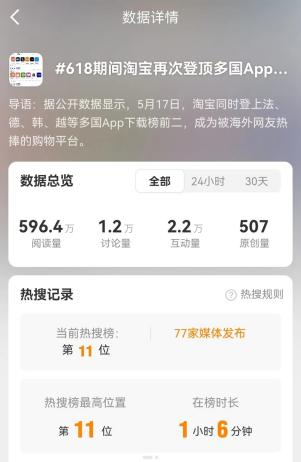
Core Insights - The consumer platform "What Worth Buying" released the consumption trend for the "618" mid-year shopping festival, indicating a strong interest in "trade-in" programs, with related keywords' GMV increasing by 26.37% year-on-year [1] - Experience-based consumption is becoming a significant driver for many consumers, with ticket sales for movies, concerts, and events seeing a GMV increase of 555.90% year-on-year [1] - Other categories such as gaming hardware, outdoor equipment, and photography also experienced substantial growth, with GMV increases of 300.19%, 62.20%, and 18.01% respectively [1] Category Summaries - **Trade-in Programs**: The enthusiasm for "trade-in" remains high, contributing to a 26.37% year-on-year growth in GMV for related keywords, with significant increases in categories like audio playback, home appliances, and mobile communications, which saw GMV growth of 54.84%, 44.38%, and 29.08% respectively [1] - **Experience Consumption**: Experience-based purchases are gaining traction, with ticket sales for entertainment events showing a remarkable growth of 555.90% year-on-year, indicating a shift towards experiential spending [1] - **Other Categories**: The gaming hardware sector saw a GMV increase of 300.19%, while outdoor gear and photography equipment also showed growth rates of 62.20% and 18.01% respectively, highlighting diverse consumer interests [1]
发挥品牌优势 彰显社会责任(中国品牌日)
Ren Min Ri Bao· 2025-05-14 21:55
Group 1: China People's Insurance Group - In 2024, China People's Insurance Group provided risk coverage of 31.75 trillion yuan, paid out 448.5 billion yuan in claims, and handled over 180 million claims, leading the industry in all three metrics [1] - The company launched the first comprehensive insurance for pilot projects nationwide and issued the first batch of major technology innovation insurance products, with an investment scale of 32.7 billion yuan [1] - China People's Insurance Group signed the United Nations Principles for Sustainable Insurance and insured 11.59 million new energy vehicles, with green risk coverage of 184 trillion yuan and an investment scale of 100.4 billion yuan for green development [1] Group 2: Digital Financial Innovation - In 2024, China People's Insurance Group's insurance solutions for the computing power industry were included in the Ministry of Industry and Information Technology's pilot program for cybersecurity insurance services [2] - The company has developed over 150 general AI capabilities, with daily usage exceeding 1 million times, and its proprietary AI model products have been applied in over 10 scenarios [2] Group 3: Overseas Payment Services - In Q1 2025, UnionPay's mobile payment transactions in Australia and New Zealand increased by over four times year-on-year, with Auckland's public transport transactions growing tenfold since the launch of UnionPay's contactless payment service [5] - UnionPay has established a comprehensive payment service network in Australia and New Zealand, with nearly all POS merchants and ATMs accepting UnionPay payments [6] Group 4: JD Group's Supply Chain Advantage - JD Group launched a 200 billion yuan export-to-domestic sales support plan to help foreign trade enterprises expand into the domestic market, with thousands of companies already in substantive procurement discussions [7] - The company has implemented a trade-in program since 2015, covering over 200 categories and reaching over 90% of rural areas in China [7][8] Group 5: Yangtze River Pharmaceutical Group - Yangtze River Pharmaceutical Group is focused on building a world-class pharmaceutical brand and has been recognized for its intelligent manufacturing capabilities [9] - The company has established 80 traditional Chinese medicine planting bases and is committed to enhancing its health management services [10] Group 6: Luzhou Laojiao Group - Luzhou Laojiao Group integrates traditional culture with modern technology to enhance its competitive edge and promote high-quality development in the liquor industry [11] - The company has established a national-level solid-state brewing technology innovation center and is developing a digital platform for the entire industry chain [11] Group 7: China Feihe Limited - China Feihe emphasizes independent innovation to enhance its core competitiveness and has established a full industry chain in the dairy sector [13] - The company has developed domestic production lines for key dairy ingredients and launched a leading infant formula based on extensive breast milk research [14] Group 8: WeBank - WeBank has served over 420 million individual customers and more than 580,000 small and micro enterprises through its digital financial products [16] - The bank maintains a high level of technology investment, with over 50% of its staff being technology personnel, and has developed over 220 AI applications [16]


