
生物医药

Search documents
筑梦星城,向全球湘商抛合作“橄榄枝”
Xin Lang Cai Jing· 2026-02-25 19:59
Core Insights - The event in Changsha aimed to attract overseas Hunan businessmen back to their hometown, highlighting the city's favorable business environment and abundant industrial opportunities [1] Group 1: Investment Opportunities - In 2025, Changsha introduced 221 major projects with a total investment of nearly 240 billion yuan, marking an 8.9% increase in the number of projects and a 39.8% increase in investment compared to the previous year [1] - The first batch of key investment opportunities for 2026 includes 147 high-quality projects with a total investment of 358.3 billion yuan [1] Group 2: Business Environment - Changsha has established a comprehensive business association network covering both domestic and overseas Hunan businessmen, enhancing the "Star Business Service" brand effect [2] - The city ranks in the top three nationally for four core indicators in the "National Federation of Industry and Commerce's Evaluation of Business Environment" and has consistently been in the top ten for four consecutive times [2] Group 3: Project Signings - A total of 18 major investment projects were signed at the event, with a total investment exceeding 26 billion yuan, covering various sectors such as intelligent manufacturing, digital economy, and artificial intelligence [3] - Notable projects include the headquarters and R&D base of Liyao Intelligent Technology and the R&D operation base of Yiyun Technology, which are expected to significantly contribute to Changsha's modern industrial system [3]
天辰生物医药(苏州)股份有限公司递表港交所
Jin Rong Jie· 2026-02-25 14:23
本文源自:金融界AI电报 利弗莫尔证券显示,天辰生物医药(苏州)股份有限公司向港交所提交上市申请书,独家保荐人为国金 证券(香港)。 ...
据港交所文件:天辰生物医药(苏州)股份有限公司 - B向港交所提交上市申请书。
Jin Rong Jie· 2026-02-25 14:12
Group 1 - Tianchen Biopharmaceutical (Suzhou) Co., Ltd. has submitted a listing application to the Hong Kong Stock Exchange [1]
浏阳新春“双响炮”点燃高质量发展引擎
Chang Sha Wan Bao· 2026-02-25 13:51
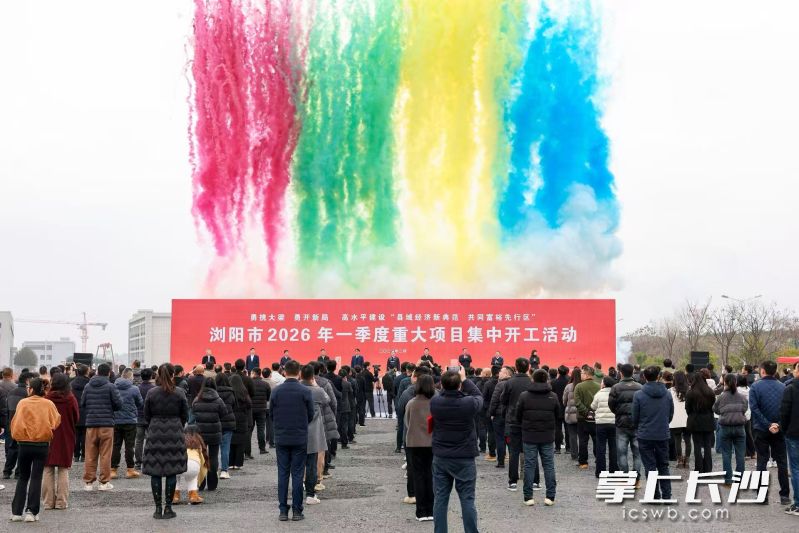
Core Viewpoint - The article highlights the launch of 62 major projects in Liuyang, with a total investment of 17.47 billion yuan, aimed at driving high-quality economic development through a dual approach of major project initiation and industrial chain construction [1][3]. Group 1: Project Launch and Investment - A total of 62 major projects were launched, with 88.2% being industrial development projects, including 4 projects over 1 billion yuan, 10 projects over 500 million yuan, and 36 projects over 100 million yuan [3]. - The Liyao Intelligent Technology Headquarters project, with an investment of 2.5 billion yuan, aims to become the industry's first super factory, focusing on computing power and big data, with an expected annual revenue of 7 billion yuan upon completion [3]. - The projects encompass various key sectors such as electronic information, new energy, and intelligent manufacturing, contributing to the robust foundation of Liuyang's economy [4]. Group 2: Industrial Chain Development - Liuyang plans to implement a "3421" progressive cultivation project by 2026, aiming to elevate 10 key industrial chains to a scale of 200 billion yuan through mechanisms like "dual chain leadership" and "six long linkages" [5]. - The green food industry chain has seen significant success, with upstream collaboration between enterprises, cooperatives, and farmers leading to the establishment of over 150,000 acres of raw material bases [6]. - The electronic information industry chain, led by companies like Lens Technology and Huike Optoelectronics, is on track to form a complete ecosystem and reach a scale of 100 billion yuan [6]. Group 3: Innovation and Future Development - Liuyang is focusing on innovation-driven development, establishing 221 city-level research platforms and collaborating with over 40 universities to enhance industrial chain quality [8]. - The city aims to address weaknesses in high-end medical devices and display driver chips, pushing for advancements in high-end, intelligent, and green industries [8]. - A combination of funds and policies will be leveraged to attract social capital and support enterprise R&D and expansion, ensuring a favorable business environment for sustained growth [9].

新力量NewForce总第4968期
First Shanghai Securities· 2026-02-25 12:03
Company Overview - Legend Biotech (LEGN) is rated as a "Buy" with a target price of $46.41, representing a potential upside of 138% from the current price of $19.5[5] - The company is expected to achieve profitability in 2026, driven by the sales growth of its product CARVYKTI[5] Financial Performance - CARVYKTI generated $1.887 billion in revenue for 2025, with a year-on-year growth of 95.9%[10] - The company forecasts total revenue of $1.412 billion for 2026, reflecting a growth rate of 39.7%[9] - Legend Biotech's earnings per share (EPS) is projected to turn positive at $0.28 in 2026, after losses in previous years[9] Production Capacity - The company has four global production facilities, with an expected annual capacity of 10,000 doses upon FDA approval in Q1 2026[5] - A $200 million investment is planned to expand the production capacity in Ghent, Belgium, aiming for 20,000 doses by 2028[5] Competitive Landscape - Legend Biotech's CART-4 trial includes a higher percentage of more severe patients compared to Johnson & Johnson's MajesTEC-3 trial, indicating a competitive edge in clinical data[6] Valuation Metrics - A discounted cash flow (DCF) analysis assumes a weighted average cost of capital (WACC) of 10% and a perpetual growth rate of 0%, leading to a target price of $46.41[8]


春节后资金回流分化:杠杆资金 “回血”,主力持续净流出
Di Yi Cai Jing· 2026-02-25 11:35
Group 1 - The core point of the article highlights a significant return of leveraged funds to the A-share market, with a total inflow of 34.6 billion yuan on the first trading day after the Spring Festival, indicating a shift in market sentiment and investment preferences [1][2][3]. Group 2 - After a substantial outflow of margin financing funds before the Spring Festival, which saw a net outflow of 755.35 billion yuan, the first trading day post-holiday marked a notable recovery with a net inflow of 346.32 billion yuan [2][3]. - The preference for leveraged funds has shifted dramatically, with significant buying in technology sectors such as electronics, computers, and defense, contrasting with the previous trend of selling in these areas [3][4]. - The main funds have continued to experience net outflows, with over 100 billion yuan leaving the market in the past two trading days, indicating a shift from high-value sectors to undervalued, cyclical sectors [6][7]. Group 3 - Specific stocks that attracted significant margin buying include Zhongji Xuchuang, with a net inflow of 1 billion yuan, and several others like Kingsoft Office and Guizhou Moutai, which also saw substantial interest [4][5]. - Conversely, stocks like Light Media and CATL faced heavy selling pressure, resulting in notable declines over the same period [5]. Group 4 - The overall market sentiment has improved, with A-share trading volume reaching 2.48 trillion yuan, reflecting a recovery in trading activity and investor confidence [6][7]. - Analysts predict that liquidity conditions may remain favorable post-holiday, driven by factors such as the relocation of household savings and increased inflows from various investment vehicles [7].
对话独角兽 | 和铂医药的突围轨迹:以BD为矛,加速技术价值兑现
Di Yi Cai Jing· 2026-02-25 11:05
Core Insights - The Chinese pharmaceutical industry has transitioned from being associated primarily with generic drugs and raw material production to becoming a significant source of global innovative drug research and development [1][3][4] - The rise of Chinese biotech companies is reshaping the global pharmaceutical landscape, with a focus on enhancing research efficiency and cost advantages [3][4] Industry Transformation - The Chinese biotech sector is now recognized for its ability to produce approximately one-third of the global clinical pipeline of innovative drugs [3] - The shift from passive technology licensing to active global licensing has improved the international recognition of Chinese innovative drugs [3][4] Company Spotlight: Heptares Therapeutics - Heptares Therapeutics is highlighted as a leading example of a Chinese biotech firm successfully navigating the industry transformation through an effective business development (BD) strategy [1][5] - The company has achieved significant BD cooperation, with total collaboration amounts exceeding $7 billion in 2025, including partnerships with major pharmaceutical companies like AstraZeneca and Bristol-Myers Squibb [5][6] Business Development Strategy - Heptares employs a diversified BD cooperation model, including traditional licensing agreements and innovative partnerships, to enhance its pipeline value and access international markets [6] - The successful BD strategy has created a virtuous cycle of "R&D innovation—BD monetization—re-R&D," which is seen as a microcosm of the broader challenges faced by Chinese biotech firms [6] Industry Ecosystem Challenges - Despite rapid development, the Chinese biotech sector faces challenges such as funding pressures, insufficient original capabilities, and a lack of international experience [5][7] - The need for "patient capital" and support for early-stage biotech ventures is emphasized to prevent the outflow of quality companies due to funding shortages [7][8] Recommendations for Ecosystem Improvement - The Shanghai region, as a hub for biopharmaceuticals, should focus on creating a more supportive entrepreneurial environment, including funding, tax incentives, and streamlined clinical research processes [7][8] - Enhancing collaboration between academia, research institutions, and multinational corporations (MNCs) is crucial for accelerating the translation of innovations into clinical applications [8]

新华社:德企“抢名额”随行访华,说明了什么?
Xin Hua She· 2026-02-25 08:44
Group 1 - German Chancellor Merz's visit to China on February 25-26 marks his first official trip since taking office, with a high level of interest from the business community, as the number of applicants far exceeded available spots, including about 30 executives from leading German companies in sectors such as automotive, chemicals, biopharmaceuticals, machinery, and circular economy [1][4] - The pragmatic logic behind this confidence is rooted in the robust economic cooperation between China and Germany, with trade volumes exceeding $200 billion in recent years and bilateral investment stock surpassing $65 billion, accounting for nearly one-fourth of the total scale between China and the EU [2][4] - The Chinese market supports 1 million jobs in Germany and has attracted over 5,000 German companies to invest, making it not only a significant sales destination but also a stable growth space for German enterprises [2][4] Group 2 - The deep integration of Sino-German industrial cooperation provides continuous growth momentum for German companies, moving beyond simple trade to mutual learning in technology, standards, and innovation systems [5][6] - German companies are increasingly investing in R&D and innovation in China, with a focus on smart driving, electrification, and digital upgrades, positioning China as a crucial hub for technological iteration and results transformation [5][6] - A survey indicates that 93% of German companies in China are willing to continue deepening their engagement in the market, driven by China's innovation vitality, domestic demand potential, and policy stability [6]
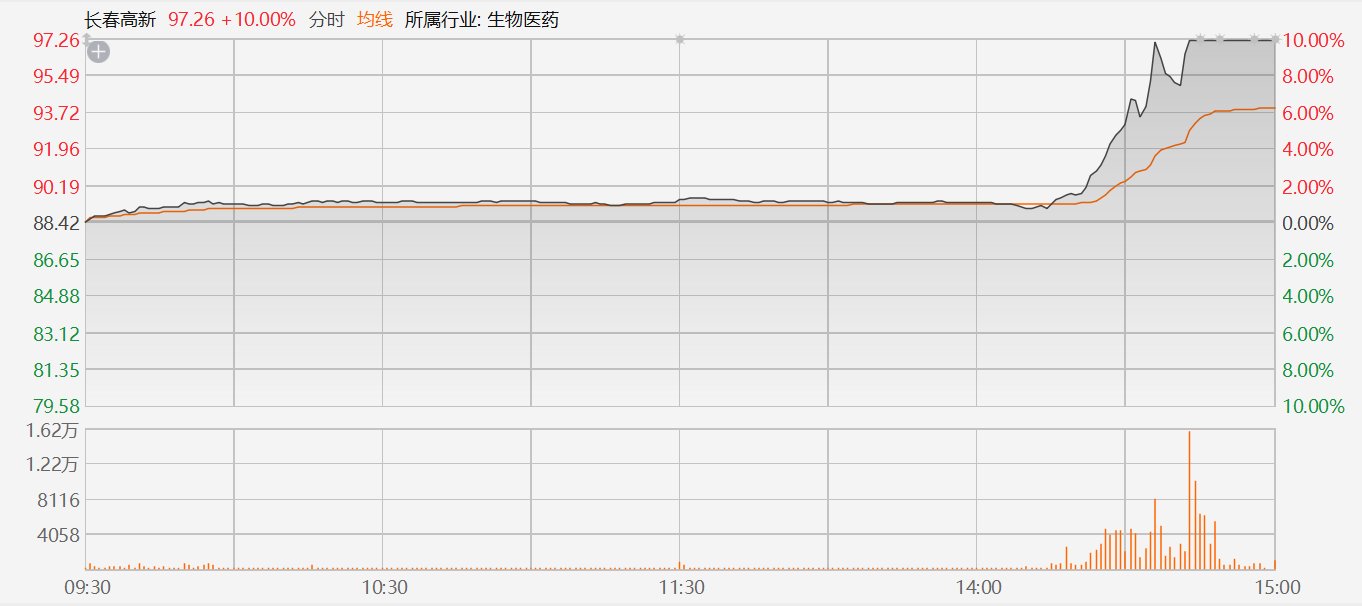
长春高新尾盘拉升涨停,GenSci141软膏境内生产药品注册临床试验申请获批
Xin Lang Cai Jing· 2026-02-25 08:41
| | 长春高新 97.26 + 10.00% 分时 均线 所属行业: 生物医药 | | | | --- | --- | --- | --- | | 97.26 | | | | | 95.49 | | | | | 93.72 | | | | | 91.96 | | | | | 90.19 | | | | | 88.42 | | | | | 86.65 | | | | | 84.88 | | | | | 83.12 | | | | | 81.35 | | | | | 79.58 | | | | | 1.62万 | | | | | 1.22万 | | | | | 8116 | | | | | 4058 | | | | | LILLE LE LE LE LETT | | | | | 09:30 | 10:30 | 11:30 | 14:00 | 格隆汇2月25日|长春高新(000661.SZ)尾盘拉升封涨停板,报价97.26元。消息面上,长春高新昨晚公告,子公司金赛药业收到国家药监局批准,GenSci141 软膏(双氢睾酮软膏)境内临床试验申请获准,拟用于儿童小阴茎治疗。该药属化药2.2类/2.4类,为国内首个针对 ...

滨海新区当好“护航人”,助企畅行“上市路”
Zhong Guo Fa Zhan Wang· 2026-02-25 08:27
Core Viewpoint - The news highlights the successful listing of China Electronics Technology Group Corporation Blue Sky Technology Co., Ltd. on the Sci-Tech Innovation Board, marking it as the first listed company in Tianjin's Binhai New Area in 2023, showcasing the area's robust support for businesses aiming to enter the capital market [1] Group 1: Binhai New Area's Achievements - Binhai New Area has 45 listed companies, accounting for over 60% of the total in Tianjin, with a total market capitalization of nearly 1.65 trillion yuan, representing over 80% of the city's total [1] - The area has established a comprehensive service system for nurturing companies aiming for public listing, providing support from policy implementation to full-cycle services [1] Group 2: Focus on Key Industries - Binhai High-tech Zone has concentrated on key industrial chains such as new energy, high-end equipment, and biomedicine, creating a nurturing environment for technology-based companies [2] - The zone has cultivated 25 potential listing companies since the Huayuan area was included in the Tianjin Development Zone, representing 55% of the city's total [2] Group 3: Future Goals and Strategies - By 2026, Binhai High-tech Zone aims to establish a nurturing library for technology-based listed companies and plans to achieve 1 to 2 listings per year [3] - The area targets to exceed 20 technology-based listed companies during the 14th Five-Year Plan period, enhancing regional innovation capabilities [3] Group 4: Comprehensive Support for Listings - Binhai New Area has built a full-chain service system for nurturing listings, with 23 companies listed on the Shanghai Stock Exchange and a total market value of nearly 1.4 trillion yuan [4] - The area has over 100 technology-based companies in its listing reserve, covering strategic emerging industries [4] Group 5: Financial and Service Mechanisms - The region utilizes various financial platforms and organizes activities like financing matchmaking and project roadshows to facilitate connections between companies and capital markets [5][6] - Binhai New Area conducts regular market training and enterprise visits to address companies' needs during the listing process, ensuring a smooth transition to public markets [6]