
保险业

Search documents
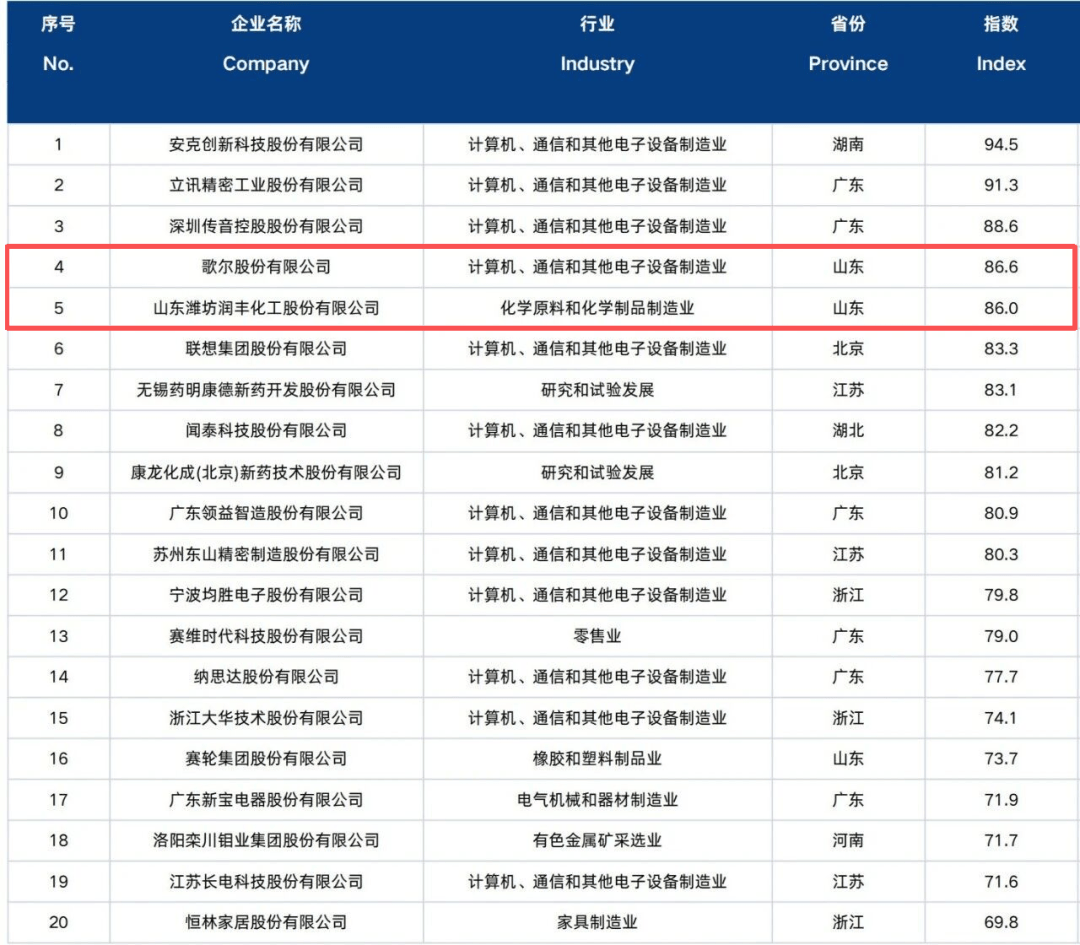
中国民企国际化百强榜发布,前五名潍坊占两家
Sou Hu Cai Jing· 2026-01-19 16:08
| 序号 | 企业名称 | 行业 | 省份 | 指数 | | --- | --- | --- | --- | --- | | No. | Company | Industry | Province | Index | | 61 | 万向集团公司 | 汽车制造业 | 浙江 | 50.0 | | 62 | 东方日升新能源股份有限公司 | 电气机械和器材制造业 | 浙江 | 50.0 | | 63 | 天合光能股份有限公司 | 电气机械和器材制造业 | 江苏 | 49.7 | | 64 | 惠州亿纬锂能股份有限公司 | 电气机械和器材制造业 | 广东 | 49.6 | | 65 | 阳光保险集团股份有限公司 | 保险业 | 北京 | 49.6 | | 66 | 顾家家居股份有限公司 | 家具制造业 | 浙江 | 48.9 | | 67 | 浙江龙盛股份有限公司 | 化学原料和化学制品制造业 | 浙江 | 48.6 | | ୧୫ | 浙江新和成股份有限公司 | 医药制造业 | 浙江 | 47.9 | | 69 | 浙江吉利集团股份有限公司 | 汽车制造业 | 浙江 | 47.5 | | 70 | 隆鑫通用动力股份有限 ...

投资银行业与经纪业:政策呵护资本市场高质量发展,看好板块景气度上行
Changjiang Securities· 2026-01-19 11:04
Investment Rating - The report maintains a "Positive" investment rating for the industry [7] Core Insights - The non-bank sector has shown overall weak performance this week, with the securities sector experiencing a decline. However, recent policy developments from the China Banking and Insurance Regulatory Commission (CBIRC) and the China Securities Regulatory Commission (CSRC) are expected to support high-quality development in the capital market [2][4] - The insurance sector is expected to see improved return on equity (ROE) and valuation recovery, driven by trends such as the migration of deposits and increased allocation to equities. The overall cost-effectiveness of the sector is gradually improving, indicating a potential revaluation [2][4] - Recommendations include stable profit growth and dividend rates from companies like Jiangsu Jinzu, China Ping An, and China Pacific Insurance, as well as companies with strong market positions such as New China Life, China Life, Hong Kong Exchanges, CITIC Securities, and others [4] Summary by Sections Market Performance - The non-bank financial index decreased by 2.6% this week, with a year-to-date performance of -0.1%, ranking 28 out of 31 sectors [5] - The average daily trading volume in the market increased to 34,650.61 billion yuan, up 21.50% week-on-week, with a daily turnover rate of 3.37%, up 59.41 basis points [5] Key Industry News - The CBIRC and CSRC held meetings to discuss regulatory work for 2026, and the CSRC released a draft for the supervision of derivative trading [6] - Companies such as GF Securities and Huatai Securities have made significant announcements regarding refinancing and capital increases [6] Insurance Sector Insights - The cumulative insurance premium income for November 2025 reached 57,629 billion yuan, a year-on-year increase of 7.56%, with life insurance premiums growing by 9.06% [21][22] - The total assets of insurance companies as of November 2025 were 40.65 trillion yuan, with a slight increase of 0.15% [25][26] Brokerage and Investment Business - The brokerage business is recovering, with a notable increase in trading volumes and margin financing balances, indicating a gradual improvement in profitability [38][45] - The investment business remains under scrutiny, with fluctuations in equity and bond markets impacting self-operated income for brokerages [42] Financing and Asset Management - In December 2025, equity financing reached 663.12 billion yuan, a 30.9% increase, while bond financing was 7.34 trillion yuan, up 4.0% [49] - The issuance of collective asset management products saw a significant rise, indicating a recovery phase for the asset management sector [51]

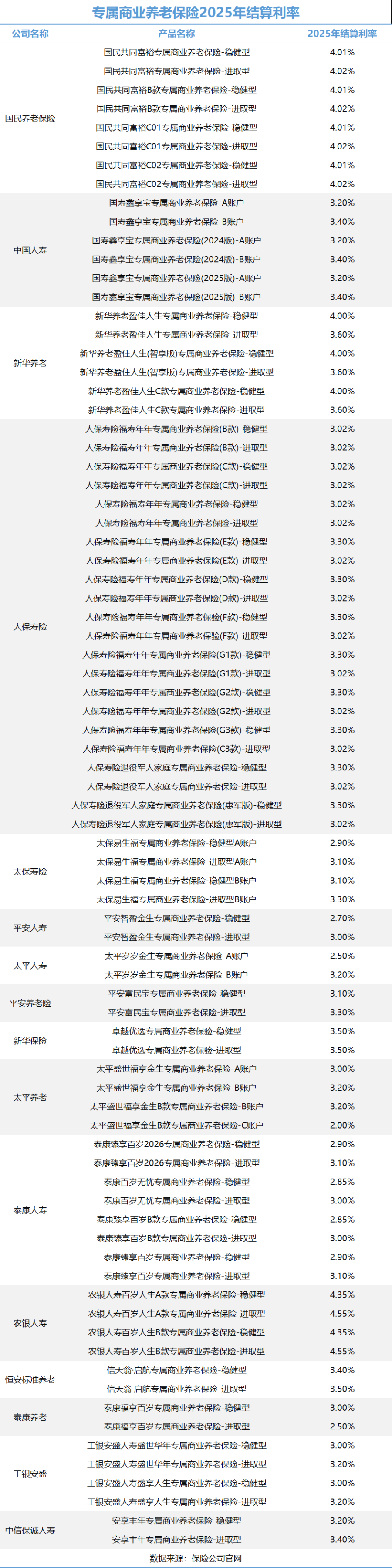
专属商业养老保险利率超存款 八成收益超3%
2 1 Shi Ji Jing Ji Bao Dao· 2026-01-19 10:34
Core Viewpoint - The recent disclosure of 2025 settlement rates for exclusive commercial pension insurance products by multiple insurance institutions highlights a promising investment opportunity amidst declining bank deposit rates and fluctuating wealth management product values. The majority of these products offer competitive returns, with over 80% of them exceeding a 3.00% settlement rate for 2025 [1][2][8]. Summary by Category Insurance Product Performance - A total of 40 exclusive commercial pension insurance products have been reported, with settlement rates for stable accounts ranging from 2.00% to 4.35%, and for aggressive accounts from 2.50% to 4.55% [1][2]. - Among these products, 70 accounts (87.5%) have a settlement rate exceeding 3.00% [1][2]. - Notably, the products from Nongyin Life and Guomin Pension have all their settlement rates above 4.00%, with Nongyin Life's stable and aggressive accounts both at 4.35% and 4.55%, respectively [8]. Market Context - The backdrop of declining deposit rates has led to increased difficulty for investors seeking stable returns, prompting a shift towards pension insurance products as a viable alternative [2][8]. - The trend of "deposit special forces" among young investors reflects the growing demand for higher interest rates, which has become increasingly challenging to find in traditional banking products [2]. Product Structure and Design - Exclusive commercial pension insurance products are designed with both stable and aggressive accounts, allowing for a balance between guaranteed returns and potential higher yields [10][14]. - The unique structure of these products enables insurance companies to adopt long-term investment strategies, optimizing returns despite a low-interest environment [9][10]. - There is a notable phenomenon where some stable accounts are yielding higher returns than aggressive accounts, contrary to typical expectations [11]. Target Audience and Flexibility - These products cater to the needs of flexible employment groups, offering more adaptable payment options compared to traditional annuity insurance [12][14]. - The ability to choose between different account types and adjust contributions provides consumers with a tailored approach to retirement planning [13][14]. Regulatory Environment - The regulatory framework for exclusive commercial pension insurance includes mechanisms for monitoring settlement rates and ensuring financial stability, which enhances consumer confidence in these products [20].


2025全年GDP增长5.0%;国常会:研究加快培育服务消费新增长点等促消费举措|每周金融评论(2026.1.12-2026.1.18)
清华金融评论· 2026-01-19 10:33
Key Points - The core viewpoint of the article emphasizes the steady growth of China's economy in 2025, with a GDP growth rate of 5.0%, despite facing multiple pressures and challenges [8][9]. Group 1: Economic Growth - The preliminary calculation shows that the GDP for 2025 reached 14,018.79 billion yuan, reflecting a 5.0% increase from the previous year [8]. - The first industry added value was 933.47 billion yuan (3.9% growth), the second industry was 499.65 billion yuan (4.5% growth), and the third industry was 808.79 billion yuan (5.4% growth) [8]. - Quarterly GDP growth rates were 5.4% in Q1, 5.2% in Q2, 4.8% in Q3, and 4.5% in Q4, with a quarter-on-quarter growth of 1.2% in Q4 [8]. Group 2: Policy Initiatives - The State Council meeting highlighted the need to accelerate the cultivation of new growth points in service consumption and implement measures to boost consumption [9][10]. - The meeting emphasized the importance of improving the quality of service consumption and addressing issues related to credit, standards, and safety management [9][10]. - A long-term mechanism for promoting consumption will be established, including the "15th Five-Year Plan" for consumption expansion and urban-rural resident income increase plans [10]. Group 3: Financial Regulation - The Financial Regulatory Bureau's 2026 work meeting focused on summarizing 2025's work and planning key tasks for 2026, emphasizing risk prevention and high-quality development [11][13]. - The meeting underscored the importance of enhancing financial services to support economic stability and growth, with a focus on structural support and long-term capital guidance [13]. Group 4: Monetary Policy - The People's Bank of China announced several monetary policies aimed at supporting high-quality economic development, including a 0.25 percentage point reduction in various structural monetary policy tool rates [14]. - The policies aim to lower financing costs for the real economy and guide financial resources towards key sectors such as technology innovation and green transformation [14]. Group 5: Market Stability - The China Securities Regulatory Commission emphasized maintaining market stability and preventing extreme fluctuations, with a focus on long-term value investment [15]. - Measures will be taken to strengthen market monitoring and prevent market manipulation, ensuring a stable trading environment [15]. Group 6: Commodity Prices - International gold and silver prices reached historical highs, with gold at $4,671.07 per ounce and silver at $93.194 per ounce, driven by economic uncertainty and inflation pressures [16][17]. - The demand for gold and silver as safe-haven assets is expected to continue increasing, reflecting market concerns about future economic prospects [17]. Group 7: Hainan Free Trade Port - Hainan's offshore duty-free sales reached 4.86 billion yuan in the first month of closure, marking a 46.8% year-on-year increase [18]. - The strong performance of the duty-free market indicates robust consumer enthusiasm and highlights Hainan's role in promoting high-level opening-up [18].

投资260亿,法拍估值仅15亿,潮汕大佬大声喊冤
Sou Hu Cai Jing· 2026-01-19 10:01
Core Viewpoint - Yao Zhenhua, the founder of Baoneng Group, has faced significant challenges with his automotive venture, Qoros Auto, including financial difficulties and allegations of asset undervaluation [4][17]. Group 1: Company Background - Baoneng Group acquired a 51% stake in Qoros Auto for 6.6 billion yuan in 2017, aiming to capitalize on the booming electric vehicle market [9][10]. - Qoros Auto, originally a joint venture between Chery Automobile and an Israeli group, aimed to produce high-end domestic vehicles but struggled with low sales, averaging just over 10,000 units annually [9][12]. Group 2: Financial Challenges - Qoros Auto's sales peaked at 63,000 units in 2018 due to bulk purchases by Baoneng's rental car company but plummeted to 22,000 units in 2019, leading to a loss of self-sustainability [11][13]. - By 2021, Baoneng Group was in a debt crisis, owing nearly 50 billion yuan, which hindered further financial support for Qoros Auto [14]. - In 2022, Qoros Auto faced severe operational issues, including over 18 months of unpaid supplier debts, resulting in factory shutdowns [15]. Group 3: Recent Developments - Yao Zhenhua publicly accused local authorities and judicial departments of colluding to undervalue Qoros Auto's assets, claiming they were worth 8 billion yuan instead of the 15 billion yuan valuation [4][17]. - He expressed concerns over the bankruptcy and auction processes, arguing that Qoros Auto was in a restructuring phase and should not be subject to asset liquidation [17][18]. - Despite his efforts to revive Qoros Auto, including a recent injection of 2.5 billion yuan to pay off some debts, the company continues to face significant challenges [17]. Group 4: Market Perception - The market's valuation of Qoros Auto at 1.5 billion yuan reflects a lack of confidence in its future prospects, despite Yao's claims of substantial investments [18][19]. - Observers have criticized Yao for his inability to adapt to changing market conditions, suggesting that his past successes may not translate into future viability for Qoros Auto [19].

2026年利率年度策略:市场锚点与多空潮汐
Southwest Securities· 2026-01-19 07:13
Core Insights - The report indicates that the bond market will enter a "game" era in 2025, driven by increased fiscal policy and a focus on "debt reduction + development," with the deficit rate expected to rise to 4% [5][12] - The "15th Five-Year Plan" aims for a nominal GDP growth rate of around 5.5% to achieve a per capita GDP of $20,000 to $30,000 by 2035, necessitating a compound annual growth rate (CAGR) of 3.6%-7.5% from 2026 to 2035 [31][32] - The report emphasizes the need for a shift in investment strategies towards a focus on "coupon and leverage" rather than solely capital gains, as the market lacks clear trends [5][21] Group 1: Supply and Monetary Policy - The fiscal policy will continue to expand, with a focus on "debt reduction + development," leading to a significant increase in special bond issuance [7][12] - The monetary policy will maintain a cautious approach, with expectations of 1-2 rate cuts in 2026 to support fiscal efforts and alleviate bank liabilities [5][13] - The bond market is expected to face challenges due to a high supply of government bonds in the second and third quarters of 2026, which may test market sentiment [5][12] Group 2: Economic Growth and Internal Demand - The report highlights a shift in global monetary policy towards differentiation, with domestic growth needing to focus more on internal demand expansion [32][40] - The "15th Five-Year Plan" emphasizes the importance of innovation-driven growth and the establishment of a unified national market to enhance economic efficiency [31][32] - The expected economic growth will require a stable inflation rate and a focus on enhancing internal growth dynamics to recover from the impacts of previous economic models [31][32] Group 3: Investment Strategy and Market Dynamics - The report suggests prioritizing duration control in investment strategies for 2026, focusing on capturing short-term opportunities and structural adjustments in bond types [5][21] - The changing landscape of asset pricing and institutional demand may lead to differentiated investment behaviors among banks, insurance companies, and funds [5][12] - The report warns against a mechanical extension of duration for capital gains, advocating for a more active management approach to enhance returns [5][21]
债市周周谈-12月金融数据解读及未来展望
2026-01-19 02:29
Summary of Key Points from the Conference Call Industry Overview - The conference call discusses the financial market trends in China, particularly focusing on the credit demand, social financing, and government bond market for the year 2026. [1][2][3] Key Insights and Arguments - **Weak Credit Demand**: Overall credit demand in China is weak, influenced by manufacturing overcapacity and the impact of local government debt on financing needs. [3][6] - **Loan Structure**: In December 2025, new loans amounted to 910 billion yuan, with a significant portion being short-term corporate loans and bill discounts, indicating banks' aggressive lending strategies at the end of the quarter. [2][4] - **Personal Loans Decline**: Personal loans have been in continuous negative growth since August 2025, reflecting low consumer credit demand despite a strong stock market performance. This trend is expected to persist into 2026. [2][3] - **Social Financing Trends**: Social financing growth is projected to decrease, with an expected total of approximately 3.5 trillion yuan for 2026, slightly lower than the previous year. [6][9] - **Government Bond Issuance**: The issuance of government bonds is expected to increase, with a stable credit growth forecast for 2026, as the issuance schedule is front-loaded. [9][19] Important but Overlooked Content - **M1 Growth Rate**: The M1 growth rate fell to 3.8% by the end of 2025, with expectations of maintaining around 3% in the second half of 2026. [5] - **Insurance Sector Impact**: The nearing conclusion of a 6 trillion yuan special bond debt plan may improve the supply of long-term bonds, which is crucial for the investment strategies of the insurance sector. [7][8] - **Bank Wealth Management Trends**: Bank wealth management products are expected to see significant growth in the second and third quarters of 2026, while the first quarter typically shows a decline due to banks focusing on loan growth. [11][12] - **Long-term Bond Demand**: There is a notable increase in demand for long-term government bonds from rural commercial banks due to a decrease in their funding costs, with expectations of a significant rise in their holdings of 15 to 30-year bonds. [17] - **Stock Market Regulation**: The regulatory body is actively preventing excessive volatility in the stock market, with recent actions indicating a desire to control overheating in the market. [18] Investment Recommendations - It is suggested to consider investing in secondary capital bonds or perpetual bonds for yield, while also exploring opportunities in 30-year government bonds for potential price movements. [20]
我省首批大型科研仪器共享保险落地
Da Zhong Ri Bao· 2026-01-19 01:02
Group 1 - The first batch of shared insurance for large scientific research instruments has been officially launched in Shandong Province, with a total coverage amount of 86.08 million yuan for 62 large scientific research instruments [2] - The "Big Instrument Shared Insurance" aims to alleviate concerns of research institutions and lower the entry barriers for enterprises, achieving a win-win situation [2] - The insurance covers risks associated with operational errors, electrical faults, improper installation, design defects, and quality issues of materials, ensuring compensation for repair and replacement costs in case of incidents [2] Group 2 - The provincial science and technology department has included the "Big Instrument Shared Insurance" in the second batch of "Lu Ke Bao" technology insurance products, allowing units providing shared services to voluntarily purchase insurance [3] - For the first year of purchasing the "Big Instrument Shared Insurance," technology-based enterprises can receive a subsidy of up to 50% of the premium from the provincial finance, with subsequent years offering a subsidy of up to 30% of the actual premium paid, capped at 300,000 yuan per enterprise annually [3]
一个“三高”险种的平衡术:稀薄数据如何为航天风险定价?
Bei Jing Shang Bao· 2026-01-18 13:45
Core Viewpoint - The recent dual failures in China's space launches highlight the high risks associated with space exploration and bring attention to the crucial role of commercial space insurance as a safety net for aerospace companies [1][3]. Group 1: Launch Failures and Insurance Importance - On January 17, two significant launch failures occurred: the Long March 3B rocket and the private commercial rocket, Ceres II, both of which did not meet expectations [1][3]. - The failures underscore the necessity of insurance in the aerospace sector, as the losses from failed launches can be substantial, often exceeding billions [3][5]. - Insurance helps stabilize operations and fosters innovation within commercial space enterprises by mitigating the financial impact of launch failures [5][6]. Group 2: Types and Challenges of Space Insurance - Space insurance encompasses various types, including manufacturing insurance, pre-launch insurance, launch insurance, in-orbit life insurance, and third-party liability insurance [6][7]. - The unique characteristics of commercial space insurance include diverse policyholders, fluctuating insured amounts, complex coverage, and innovative insurance products [7][10]. - The pricing of space insurance is complicated due to the high-risk nature of the projects, limited historical data, and the need for customized policies [10][11]. Group 3: Market Dynamics and Future Directions - The commercial space insurance market faces challenges such as high volatility, with significant claims leading to increased premiums and potential market exits by insurers [10][12]. - The establishment of the Beijing Commercial Space Insurance Consortium aims to address these challenges by providing risk coverage for multiple launch projects [12][13]. - Future developments in space insurance may include the creation of a dedicated database for risk pricing, the use of innovative financial instruments, and government support for emerging commercial space enterprises [14][15].

固定收益定期:开年这几周,债市有哪些变化?
GOLDEN SUN SECURITIES· 2026-01-18 13:07
1. Report Industry Investment Rating No information provided in the content. 2. Core View of the Report - The bond market has generally recovered this week, with short - term and credit bonds performing stronger. The short - term and credit interest rates have declined significantly, while the long - term recovery is relatively mild [1][8]. - Although there were concerns about bond supply and bank deposit outflows at the beginning of the year, the actual situation shows that the supply of government bonds is not fast, and banks do not have obvious liability gaps. The current trading structure shows that non - banks are reducing their positions, while banks and insurance companies are increasing their allocations [1][5][8]. - The short - term bond market may fluctuate, and the space for further adjustment is limited. It is advisable to wait for opportunities to increase allocations, which may occur in late January or later. As the market develops, the bond market may start to recover in the middle and later stages of the first quarter, and at that time, it is possible to consider gradually lengthening the duration [5][21]. 3. Summary by Related Catalogs Supply Level - The supply rhythm of government bonds at the beginning of the year is not fast. In the first three weeks, the total net financing of government bonds was 886.5 billion yuan, slightly lower than 970.3 billion yuan in the same period last year. The net financing of local bonds was 386.4 billion yuan, also lower than 472.1 billion yuan in the same period in 2025 [1][8]. - The term structure of bond issuance remains long. Among the 424.1 billion yuan of local bonds issued in the first three weeks of this year, bonds with a term of more than 10 years accounted for 58%, and the proportion of 30 - year bonds was 33.8%, higher than 21.0% last year [1][8]. Demand Level - The market was once worried that bank deposit outflows would lead to insufficient allocation power. Due to the maturity of high - interest time deposits and the strong performance of the stock market, there were concerns about deposit outflows to non - banks, time deposit current - account conversion, and non - bank conversion [2][11]. - However, from the perspective of certificates of deposit (CDs), banks have not shown obvious liability shortages or liquidity indicator pressures. In the past four weeks, banks have had a net repayment of 885.5 billion yuan of CDs, and they have been increasing their allocation of CDs since the beginning of the year [3][14]. - The repurchase volume and interest rates also show that there is no large gap in bank liabilities. Although the recent capital price has risen slightly from the low at the beginning of the year, it is still at a low level. The overnight interest rate of 1.3% - 1.4% and the 7 - day inter - bank lending rate of 1.4% - 1.5% are significantly lower than previous years, and the seasonal increase is weaker. The inter - bank pledged repurchase trading volume is 8.76 trillion yuan, significantly higher than previous years, indicating that the capital supply in the market is more abundant [4][15]. Trading Structure - Currently, non - banks are reducing their positions, while banks and insurance companies are increasing their allocations. Non - banks are shifting their positions from long - term bonds to credit bonds, which has promoted the strength of secondary capital bonds (Second - tier and Perpetual bonds, "二永") and credit bonds [5][17]. - The credit spreads have been compressed to a relatively low level. The spreads between 5 - year AAA - second - tier capital bonds, AAA urban investment bonds, and treasury bonds are only 56bps and 39bps respectively, both at relatively low levels in the past few years. The spread between 30 - year and 1 - year treasury bonds has reached a high of 106bps, and the space for further compression of credit spreads may be limited [5][17].