网约车

Search documents
超八成消费者选择网约车自营平台:安全能力和服务质量更有保障
Yang Guang Wang· 2025-12-22 11:11
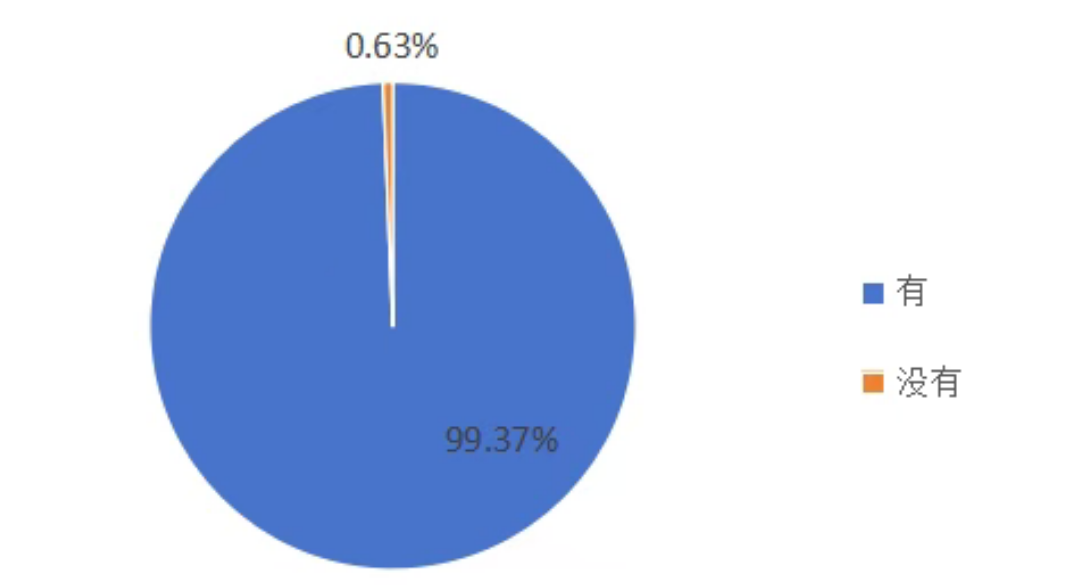
为此,天津市消费者协会、北京大学电子商务法研究中心、北京阳光消费大数据研究院、消费者网联合开展了本次网约车服务消费者满意度调查,旨在 全面了解网约车服务市场及消费者满意度状况,并提出相关建议思路,维护消费者合法权益,促进网约车行业规范发展。 一、调查目的 通过开展网约车服务消费者满意度调查,全面调查了解网约车行业的消费者满意度状况,具体了解影响消费者满意度水平的因素和问题,并在分析造成 问题原因的基础上,探讨规范网约车行业规范发展的建议思路,为促进网约车行业规范健康发展,维护消费者合法权益提供参考。 二、调查方法与内容 本次调查主要采用问卷调查、体验调查等调查方法,调查内容主要包括消费者对网约车服务认知情况、满意度状况,以及网约车服务过程中存在的具体 问题等。 网约车是指以互联网技术为依托构建服务平台,接入符合条件的车辆和驾驶员,通过整合供需信息,提供非巡游的预约出租汽车服务的经营活动。据交 通运输部数据,截至2025年10月31日,全国共有393家网约车平台公司取得网约车平台经营许可,网约车监管信息交互系统10月共收到订单信息8.92亿单。 网约车在快速发展并给消费者带来便捷的同时,也带来了不少新的问题。部 ...

金价,爆了;半导体股多数上涨;优步将与百度联手在英国伦敦开展无人驾驶出租车试运行;美星链卫星异常或威胁其他卫星【美股盘前】
Mei Ri Jing Ji Xin Wen· 2025-12-22 10:46
Group 1 - The Dow futures rose by 0.08%, S&P 500 futures increased by 0.27%, and Nasdaq futures gained 0.44% [1] - Spot gold surpassed $4,400 per ounce for the first time, rising over 1.5% to $4,407 per ounce, marking a nearly 68% increase year-to-date [1] - Gold mining stocks saw significant pre-market gains, with Sibanye Stillwater up 3.5%, AngloGold Ashanti up 4.2%, and Newmont Mining up 2.5% [1] Group 2 - Semiconductor stocks mostly rose in pre-market trading, with Micron Technology up about 3%, and AMD, Nvidia, TSMC, and Intel each up around 1% [2] - Uber announced a partnership with Baidu to conduct trials of autonomous taxis in London, with plans to launch a pilot project using Baidu's Apollo Go RT6 by mid-2026 [2] - Italy's competition authority fined Apple nearly €98.6 million for abusing its market dominance related to its "App Tracking Transparency" policy [2] Group 3 - Medtronic's diabetes business, MiniMed, filed for an IPO to raise up to $100 million [3] - GlaxoSmithKline's new drug was approved in China for the treatment of chronic obstructive pulmonary disease (COPD) in adults [3] - A Starlink satellite from SpaceX experienced an anomaly, descending 4,000 meters in orbit, potentially threatening other satellites [3] Group 4 - Cleveland Fed President Beth Hammack indicated that the Federal Reserve does not need to change the current benchmark interest rate range of 3.5% to 3.75% before spring 2026 [4]

网约车服务满意度报告:超八成消费者因安全和服务质量选择自营平台
Zhong Guo Jing Ji Wang· 2025-12-22 09:41
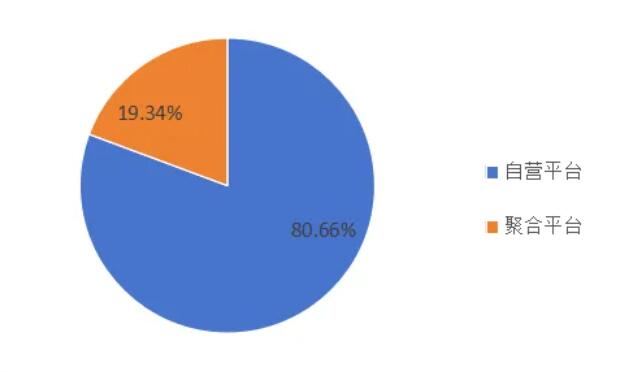
Core Insights - The report highlights that over 80% of respondents prefer self-operated ride-hailing platforms (e.g., Didi Chuxing, Shouqi) over aggregator platforms (e.g., Gaode, Meituan) due to their established service management and safety image [4] - Safety is the primary concern for over 62% of respondents when choosing ride-hailing services, surpassing convenience (49.30%) and price (37.51%), indicating a shift towards prioritizing safety alongside efficiency [4][6] - The perception of self-operated platforms is that they have clearer safety audits and responsibilities, while aggregator platforms are seen as potentially offering lower quality services [9][11] Consumer Preferences - More than 58% of respondents believe that self-operated platforms have clearer safety audits and responsibilities, with 45.06% citing more efficient customer service and after-sales support [9] - Nearly half (48.74%) of respondents think aggregator platforms may lead to low-price, low-quality services, with concerns about unclear after-sales responsibilities (41.03%) and relatively poor safety guarantees (31.64%) [9] - Consumers favor self-operated platforms for their strong safety capabilities and stable service quality, as they provide a unified safety management system throughout the service chain [11] Recommendations for Improvement - The report suggests enhancing regular governance to enforce platform responsibilities, optimizing algorithm accuracy for service traceability, improving driver professionalism, and increasing consumer awareness for rights protection [12]
百度Uber合作在英国测试无人驾驶网约车,明年年底前投入服务
Xin Lang Ke Ji· 2025-12-22 06:20
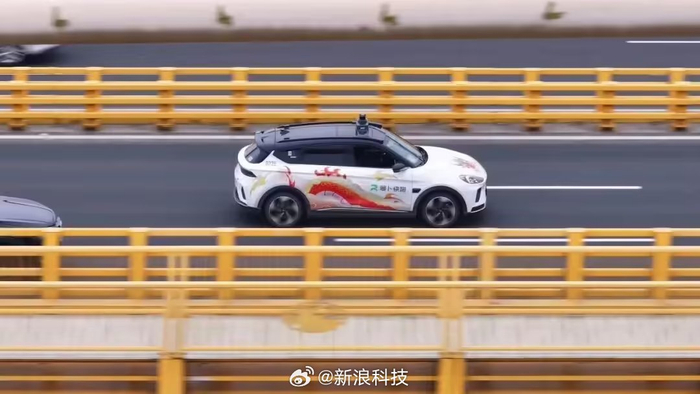
优步于当地时间周一宣布,2026 年上半年将在伦敦启动一项使用百度 Apollo Go RT6 自动驾驶出租车的 试点项目,预计明年年底前可在该市正式投入服务。 【#百度Uber在英国测试无人驾驶网约车#,明年年底前提供服务】Uber表示,将与百度公司合作,在英 国开展无人驾驶网约车试点项目。此前,美国自动驾驶技术公司 Waymo 已于本月在伦敦启动了相关测 试。 ...


百度与Uber合作在英国测试无人驾驶网约车 2026年底前提供服务
Feng Huang Wang· 2025-12-22 04:27
Core Viewpoint - Uber is partnering with Baidu to test autonomous ride-hailing services in London, aiming to launch the pilot project in the first half of 2026 and provide the service by the end of 2026 [1] Group 1: Company Developments - Uber will utilize Baidu's Apollo RT6 autonomous vehicles for the London pilot [1] - The company has shifted its strategy since 2020, moving away from developing its own autonomous driving technology to collaborating with various autonomous taxi companies [1] - Uber's CEO Dara Khosrowshahi stated that the company plans to offer autonomous services in over 10 markets by the end of next year [1] Group 2: Industry Trends - The global rollout of autonomous taxis is accelerating, with companies like Baidu, WeRide, and Waymo leading the charge [1] - Baidu is currently testing its autonomous services in Abu Dhabi, Dubai, and Switzerland [1] - Uber and WeRide have already launched autonomous services in Abu Dhabi and are looking to expand into the Middle East [1]

推动平台与商家共赢发展
Xin Lang Cai Jing· 2025-12-21 22:46
近日,某地多家餐饮商家"集体掀桌子",从外卖平台下架商品、终止合作,引发关注。这折射出平台经 济高速扩张背景下,餐饮实体企业与外卖平台之间利益分配失衡。 事实上,不止餐饮领域,高抽成现象还存在于网约车、在线旅游等领域。此次餐饮商家的集体行动,可 视为实体经济对平台不合理规则的又一次"反弹",也为平台经济治理提出了重要警示。 笔者了解到,除了较高的抽成比例,商家还被迫承担平台发起的满减补贴、红包神券等促销成本。此 外,平台还会要求商家参与推广投流和竞价排名,使得不少商家线上综合成本持续攀升,陷入"不参与 活动没流量,参与活动没利润"的困境,甚至出现"线上订单越多、实际利润越薄"的现象。 当前,相关政策与监管在持续完善。日前发布的《外卖平台服务管理基本要求》明确,禁止平台强制或 变相强制商户参与促销,并强调保障商户定价自主权。下一步,应推动此类规定落到实处,并进一步强 化平台收费透明度,防止平台利用算法与技术优势转嫁竞争成本、挤压实体商家利润。 数据显示,当前平台餐饮行业整体供大于求。商家只能通过降价来吸引客流,这种做法短期内有可能带 来客流量增长,但长期会陷入"增收不增利"的恶性循环。另外,与规模化连锁品牌不同 ...
【冲上热搜的劳动者】网约车司机的“移动树洞”藏了1000位乘客的心事
Xin Lang Cai Jing· 2025-12-21 20:41
(来源:工人日报) 两支麦克风静静伫立,4瓶粉、红、橙、黄的饮品整齐陈列,头顶的迪斯科灯球随着音乐缓缓旋转,将 细碎的光斑洒在车厢角落。麦克风中央,一张留言条格外醒目:"陌生人,你好!不知道你是否也在忙 忙碌碌中奔波。希望你找到自己的本心及真正的快乐,过好属于自己的每一天!" 很难想象,这样充满烟火气与治愈感的场景,并非藏身于网红咖啡馆或休闲场所,而是藏在北京街头的 一辆普通网约车里。95后滴滴网约车司机杨永壮,给这辆外表朴素却别有洞天的网约车起了一个温暖的 名字——"移动的树洞"。 车厢后排,5本写满字迹的留言本静静躺着,杨永壮称之为"邂逅的星光碎片"。上千名乘客的心声在此 汇聚:有奋斗者的咬牙坚持,有迷茫者的轻声叩问,更有陌生人之间跨越距离的善意与共情。这些滚烫 的文字,将匆忙的通勤路变成传递善意的暖途,成为照亮城市的星光。 在奔波中寻找方向 一位乘客在后排悄悄留下了一张便利贴,第二个乘客看到后也想写几句,于是杨永壮就买了个笔记本放 在车上。没想到,这本初衷是让乘客有地方写写画画的留言本,成了连接无数心灵的桥梁。 第一位留言的乘客是一位宝妈,她为杨永壮送出祝福:"愿你一切顺利。"此后,越来越多的乘客在笔记 ...
重庆稳步扩大新就业形态人员职业伤害保障试点范围
Ren Min Ri Bao· 2025-12-21 01:36
Core Insights - The article discusses the implementation and expansion of a new occupational injury insurance program aimed at gig economy workers in China, particularly in Chongqing, which has seen significant participation and support from local government [3][4]. Group 1: Program Overview - The "new occupational injury" insurance is designed for gig economy workers, allowing them to report injuries and receive compensation without needing a formal employment contract [3]. - As of now, the program has expanded to 17 provinces, with over 22 million participants enrolled [3]. Group 2: Government Support and Future Plans - The initiative aligns with the goals set by the 20th National Congress of the Communist Party of China, emphasizing the need for improved social security systems and occupational injury protections [4]. - Future plans include expanding the program to cover more industries, with a target to include platform companies in delivery and transportation sectors by 2026, and potentially other high-risk industries by 2027 [5]. Group 3: Stakeholder Feedback - Feedback from stakeholders, including gig workers and representatives from trial companies, indicates a desire for faster processing times and broader inclusion of various job types, such as domestic workers [5]. - The program aims to streamline the application process, making it easier for workers to access benefits [5].
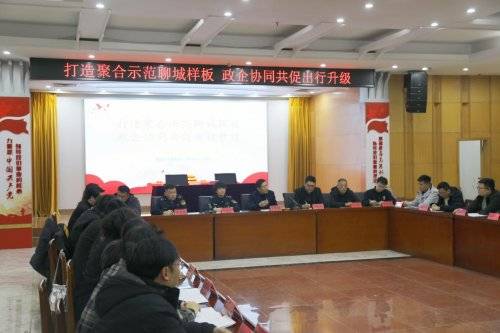
聊城市交通运输局联合阿里高德打造网约车聚合示范区聊城样板
Sou Hu Cai Jing· 2025-12-20 23:38
Core Viewpoint - The launch of the "Government-Enterprise Collaboration: Building the Aggregation Demonstration Model of Liaocheng" marks a significant step for Liaocheng in regulating the development of the ride-hailing industry and exploring collaborative governance in the sector [2][4]. Group 1: Event Overview - The event was organized by the Liaocheng Transportation Bureau, with participation from Alibaba's Gaode and related enterprises and media representatives [2]. - The initiative aims to deepen government-enterprise collaboration to create a compliant, safe, and civilized ride-hailing service ecosystem, enhancing the travel experience for citizens [2]. Group 2: Industry Challenges and Responses - The ride-hailing industry plays a crucial role in urban transportation, contributing to public convenience and employment, but faces challenges in compliance management, fair competition, and service quality [2]. - The Liaocheng Transportation Bureau, in collaboration with Gaode, is promoting the construction of a ride-hailing aggregation demonstration zone to address these challenges and create a replicable model [2][4]. Group 3: Strategic Agreements and Focus Areas - A strategic cooperation framework agreement was signed between the Liaocheng Transportation Bureau and Gaode, with ride-hailing platforms committing to operate in compliance with regulations [7]. - The demonstration zone will focus on five key tasks: strict access and dynamic management, transparent pricing rules, digital optimization of electronic fencing, integration of party building with industry standards, and ongoing support for driver welfare [7]. Group 4: Future Directions - The launch of the demonstration zone is a practical implementation of the "delegation, management, and service" reform in the transportation sector, aiming to optimize the business environment [8]. - Liaocheng will continue to enhance collaborative regulatory mechanisms to promote higher quality and sustainable development in the ride-hailing industry, injecting new momentum into urban modernization and convenient travel for citizens [8].
发现北京之美·满满的热乎气儿|暖新服务让新就业群体“温暖到家”
Xin Lang Cai Jing· 2025-12-20 15:58
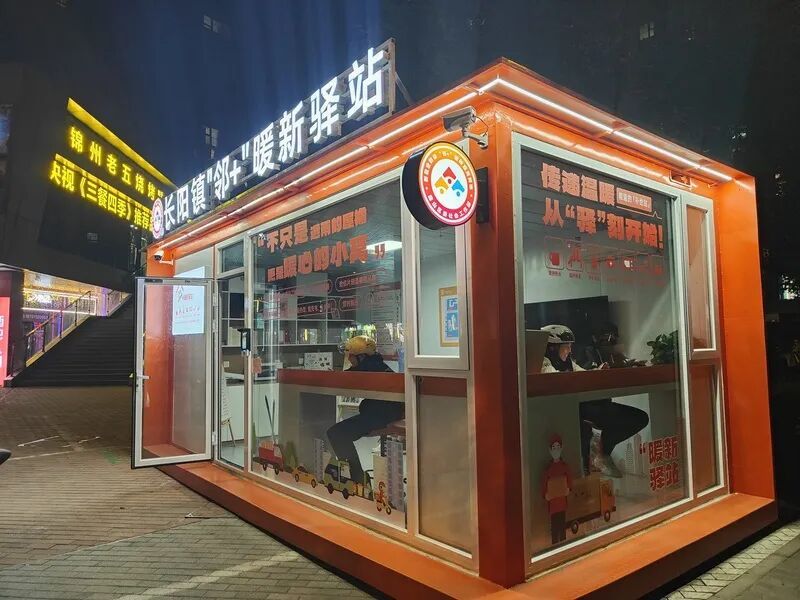
Core Insights - Beijing is actively promoting the integration of new employment groups such as delivery workers, ride-hailing drivers, and online streamers into the city through the "Friendly City" initiative, which includes the establishment of nearly 2,000 friendly spaces to enhance their urban experience [1] Group 1: Friendly Spaces Initiative - The initiative aims to create a more inclusive environment for new employment groups by implementing three action plans: "Diversity and Friendliness," "Comprehensive Improvement," and "Deep Integration" [1] - A notable example is the "Neighbor+" Warm New Station in Changyang Town, which was established in August 2023 and is designed to provide a warm and welcoming space for workers [4] - The station features amenities such as air conditioning, a drinking water machine, a microwave, charging stations, and even a small library for leisure reading, creating a home-like atmosphere for users [4] Group 2: User Experience - Delivery worker Xiao Liu expresses appreciation for the station, highlighting its role as a place to recharge and rest during breaks, especially during cold weather [1] - The station is equipped with essential items like emergency tools, bags, towels, and paper cups, enhancing its utility for the workers [4]