调味品

Search documents
港股开年增持“忙” 除了股东、高管,基石投资者也加码
Shang Hai Zheng Quan Bao· 2026-01-11 18:49
Core Insights - The Hong Kong stock market is experiencing a surge in share buybacks from company executives, major shareholders, and institutional investors, signaling strong confidence in the market at the start of 2026 [1][2] - Notably, cornerstone investors are increasingly participating in secondary market purchases, which is viewed as a strong endorsement of the companies' long-term prospects [1][2] Company Actions - Horizon Together Holding Ltd., a cornerstone investor, purchased 688,200 shares of Youjia Innovation, indicating confidence in the company's future and its strategic importance within its parent company's ecosystem [2] - Youjia Innovation's executives, including its chairman Liu Guoqing, also increased their holdings by purchasing 50,000 shares, representing approximately 0.03% of the company's total issued shares [2] - Other executives and shareholders of Youjia Innovation have committed to extending their lock-up periods, reflecting their long-term confidence in the company's core technology and market potential [2] Institutional Investments - Several other Hong Kong-listed companies have also seen institutional buybacks, including Haitan Weiye, which received an increase of 179,700 shares from GIC Private Limited, and Baiyun Mountain, which saw an increase of 30,000 shares from LSV Asset Management [3] - Tianli International Holdings' chairman purchased a total of 1,030,000 shares over four trading days, representing about 0.2% of the company's total issued shares [3] Industry Overview - The companies involved in these buybacks span various sectors, including consumer goods, gold, building materials, apparel, and education, with many being industry leaders or significant players [4] - For instance, Heng'an International is a leading company in the domestic hygiene products sector, while Haitan Weiye is a prominent player in China's condiment industry [4] - Analysts suggest that the buyback activities reflect a positive outlook on the future development prospects of these leading companies, which have established stable customer bases and clear profit models [4]
老干妈,出山救子,又赚翻了:2024年营收逼近54亿元,几乎追平历史峰值
Xin Lang Cai Jing· 2026-01-11 10:06
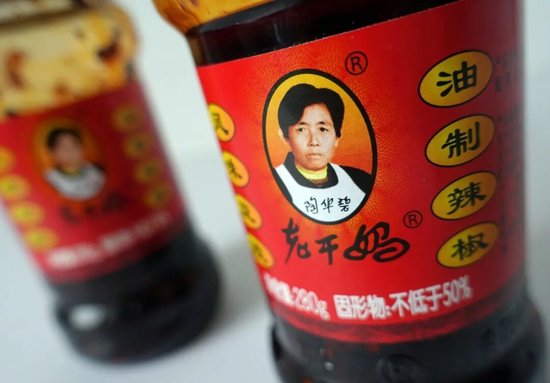
Core Viewpoint - Laoganma, a well-known Chinese chili sauce brand, is experiencing a resurgence after a significant revenue drop in 2021, with projected revenues nearing 5.4 billion yuan in 2024, almost matching its historical peak in 2020 [3][39]. Group 1: Company Performance - Laoganma has regained its position as the leading brand in the Chinese chili sauce market, holding approximately 20% market share, while its closest competitors combined hold a similar share [4][41]. - The company has shown a remarkable recovery, with revenues projected to reach 5.4 billion yuan in 2024, nearly equal to its peak revenue of 5.403 billion yuan in 2020 [3][39]. Group 2: Management and Strategy - The founder, Tao Huabi, returned to the company at the age of 72 to address a crisis caused by her sons' management decisions, which included substituting high-quality Guizhou chili peppers with cheaper alternatives [6][42]. - The decision to revert to using Guizhou chili peppers, despite increased costs, was pivotal in restoring the brand's quality and consumer trust [12][49]. Group 3: Market Positioning - Laoganma's success is attributed to its focus on maintaining the original flavor profile, which is essential for consumer loyalty, rather than pursuing short-term profit through cost-cutting measures [14][30]. - The brand has resisted the trend of aggressive online marketing, instead opting to strengthen its offline distribution channels, which has proven effective in maintaining its market presence [24][59]. Group 4: Global Expansion - Laoganma has successfully expanded its market reach, selling products in over 160 countries, with a 30% year-on-year growth in overseas revenue in 2023, significantly outpacing domestic growth [24][60]. - The brand's international appeal is bolstered by its reputation as a "must-have" condiment among overseas Chinese communities, leveraging word-of-mouth marketing rather than traditional advertising [26][61]. Group 5: Future Challenges - The company faces ongoing challenges related to succession planning, as the effectiveness of the next generation of management remains uncertain following past missteps [29][65]. - Despite its current success, the brand must navigate the balance between market-driven changes and its traditional values to ensure long-term sustainability [30][66].

老干妈,出山救子,又赚翻了
盐财经· 2026-01-11 09:46
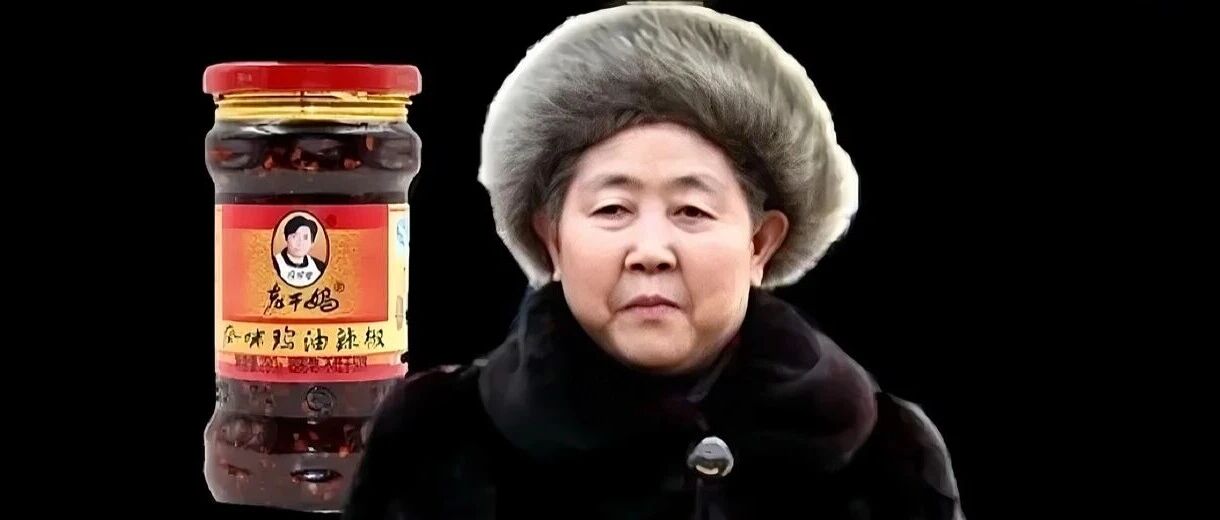
Core Viewpoint - The article discusses the resurgence of the well-known Chinese brand Lao Gan Ma, highlighting its recovery from a revenue decline and the importance of maintaining product quality and brand integrity in a competitive market [4][39]. Group 1: Company Overview - Lao Gan Ma, founded in 1996 in Guizhou, has been a staple in Chinese households for nearly 30 years and is now regaining its prominence [4]. - The company is projected to reach nearly 5.4 billion yuan in revenue by 2024, almost matching its historical peak from 2020 [4][39]. Group 2: Market Position - Lao Gan Ma holds approximately 20% of the Chinese chili sauce market, maintaining its position as the leading brand, while its closest competitors combine for a similar market share [5]. - The brand's success is attributed to its unique flavor profile, primarily derived from high-quality Guizhou chili peppers, which are considered the "soul" of its products [11][12]. Group 3: Management and Strategy - The founder, Tao Huabi, returned to the forefront of the company at the age of 72 to address quality issues after a management decision to substitute Guizhou peppers with cheaper alternatives led to a decline in product taste and brand reputation [13][39]. - The company has adopted a conservative approach, focusing on maintaining product quality over short-term profit, which has been crucial for its recovery [17][39]. Group 4: Consumer Connection - Lao Gan Ma's appeal lies in its ability to evoke nostalgia and familiarity among consumers, making it a reliable choice in their culinary experiences [39]. - The brand's strategy emphasizes the importance of consistent flavor and quality, which has helped it withstand market fluctuations and competition [39]. Group 5: International Expansion - Lao Gan Ma has successfully expanded its market presence to over 160 countries, with international revenue growth outpacing domestic averages, achieving a year-on-year increase of approximately 30% in 2023 [33][38]. - The brand's international strategy relies on its established reputation and high cost-performance ratio, making it competitive in foreign markets [35][38].
从黔东南到大湾区:贵州凯里酸汤亮相佛山,加速布局湾区市场
Nan Fang Nong Cun Bao· 2026-01-11 04:04
Core Viewpoint - Guizhou Kaili sour soup is expanding its market presence in the Greater Bay Area, showcasing its unique flavors and health benefits at a recent event in Foshan, which is part of a broader strategy to enhance collaboration between Guizhou and Guangdong provinces [1][20]. Group 1: Product and Market Expansion - The event in Foshan featured a lively display of Kaili sour soup, attracting many visitors who praised its unique taste and health benefits [3][4][8]. - Kaili sour soup, originating from Guizhou, is a product of the culinary wisdom of the Miao and Dong ethnic groups, recognized for its fermentation process using local ingredients [9][10]. - The sour soup industry in Guizhou has become a key focus, with plans to increase production lines to 107 and annual output to 240,000 tons by November 2025, contributing to a total industry output value of 7.138 billion yuan, a year-on-year increase of 201.44% [15][17]. Group 2: Strategic Collaborations and Future Plans - The event served as a platform for Kaili sour soup to establish partnerships with several enterprises in the Greater Bay Area, enhancing the "Qian Goods Enter Guangdong" initiative [22][24]. - Future plans include deepening industrial collaboration between Guizhou and Guangdong, promoting innovation in product integration with various cuisines, and advancing brand standardization [27][28].

“今年,港股IPO至少得3000亿起步吧”
Sou Hu Cai Jing· 2026-01-10 00:43
Core Insights - The Hong Kong IPO market is expected to remain robust in 2026, with a projected fundraising amount of 300 billion HKD, reflecting strong market confidence [15] Group 1: 2025 IPO Performance - In 2025, the Hong Kong Stock Exchange (HKEX) saw 114 new listings, a 63% increase year-on-year, raising a total of 286.3 billion HKD (approximately 36 billion USD), marking a 227% increase from the previous year [2][3] - This performance is the strongest since 2021, allowing HKEX to reclaim the top position globally in IPO fundraising, surpassing major exchanges like NASDAQ and NYSE [2][4] - The top ten IPO projects included eight companies that raised over 10 billion HKD, with CATL leading at 41 billion HKD, making it the second-largest global IPO in 2025 [4] Group 2: Notable IPOs and Trends - Zijin Mining International, spun off from A-share Zijin Mining, raised 42.78 billion HKD, highlighting the appeal of large resource companies in the Hong Kong market [5] - Other leading fundraising companies included SANY Heavy Industry, Seres, and Hengrui Medicine, all of which are industry leaders [6] - A significant trend in 2025 was the rise of the "A+H" share listing model, with 19 A-share companies successfully listing in Hong Kong, raising approximately 140 billion HKD, nearly half of the total IPO fundraising for the year [8] Group 3: Global IPO Landscape - In 2025, HKEX not only led in total fundraising but also secured four positions in the global top ten IPOs, showcasing its competitive strength in attracting large projects [11] - Comparatively, the US IPO market had 313 listings, raising about 46.04 billion USD, with the largest IPO being Medline at 6.26 billion USD [16] - The Indian National Stock Exchange had 268 IPOs, raising approximately 21 billion USD, while other exchanges like the NYSE and Tokyo Stock Exchange had significantly lower fundraising totals [16] Group 4: 2026 Outlook - As of early 2026, over 300 companies are queued for IPOs in Hong Kong, indicating a strong pipeline for future listings [13] - The anticipated main themes for 2026 include technology companies in sectors like AI, semiconductors, and biomedicine, as well as a continued trend of A+H listings, which are expected to enhance the market's industry representation and valuation appeal [14]


佛山市海天调味食品股份有限公司2026年第一次临时股东会决议公告
Shang Hai Zheng Quan Bao· 2026-01-09 21:37
Group 1 - The company held its first extraordinary general meeting of shareholders in 2026 on January 9, 2026, at its headquarters in Foshan, Guangdong Province [4][5]. - The meeting was convened by the board of directors and was conducted through a combination of on-site and online voting, presided over by the chairman Cheng Xue [2][4]. - All resolutions presented at the meeting were approved by a majority of the voting rights held by the shareholders present [5]. Group 2 - The meeting included the attendance of all nine current directors and key executives, including the vice president Liu Zhiqing and the financial officer Li Jun [3][4]. - Key resolutions included a special dividend plan for 2025, a three-year shareholder return plan for 2025-2027, and the establishment of a remuneration management system for directors and senior management, all of which were passed [4][5]. - The legal proceedings of the meeting were validated by Beijing Jingtian Gongcheng Law Firm, confirming compliance with relevant laws and regulations [5].
海天味业1月9日大宗交易成交1000.30万元
Zheng Quan Shi Bao Wang· 2026-01-09 14:41
Group 1 - The core point of the article is the recent large transaction involving Haitian Flavor Industry, where a total of 264,000 shares were traded for a total amount of 10.003 million yuan at a price of 37.89 yuan per share [1] - The buyer of this transaction was CITIC Securities Co., Ltd. Shanghai Branch, while the seller was CITIC Securities South China Co., Ltd. Foshan Branch [1] - In the last three months, Haitian Flavor Industry has recorded a total of five large transactions, amounting to a cumulative transaction value of 34.0157 million yuan [1] Group 2 - On January 9, Haitian Flavor Industry closed at 37.89 yuan, experiencing a decrease of 0.34%, with a daily turnover rate of 0.19% and a total transaction amount of 398 million yuan [1] - The net outflow of main funds for the day was 17.4658 million yuan, while the stock has seen a cumulative increase of 2.35% over the past five days, with a total net inflow of 74.1356 million yuan [1] - The latest margin financing balance for the stock is 966 million yuan, which has decreased by 106 million yuan over the past five days, representing a decline of 9.91% [1]
海天味业:2026年第一次临时股东会决议公告
Zheng Quan Ri Bao· 2026-01-09 14:21
Core Viewpoint - Haitian Flavor Industry announced the approval of a special dividend plan for 2025 at its first extraordinary shareholders' meeting in 2026 [1] Group 1 - The company held its first extraordinary shareholders' meeting on January 9, 2026 [1] - The shareholders approved the proposal regarding the special dividend plan for 2025 [1]
海天味业(03288)将于2月6日派发特别分红每10股3.327979港元
智通财经网· 2026-01-09 13:22
Group 1 - The company, Haitian Flavor Industry (stock code: 03288), announced a special dividend of HKD 3.327979 per 10 shares to be distributed on February 6, 2026, as a return to shareholders for the year 2025 [1]
2025年港股IPO热度强势回归:募资规模跃居全球交易所第一 熟面孔成主导力量 占全年募资近七成
Xin Lang Zheng Quan· 2026-01-09 10:42
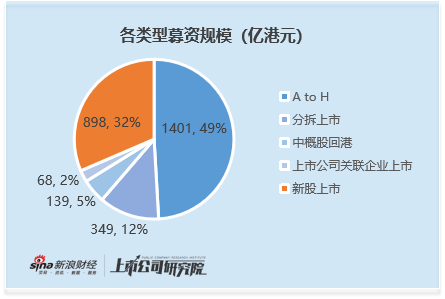
Core Viewpoint - The Hong Kong IPO market experienced a strong resurgence in 2025, with 114 companies completing listings and raising a total of HKD 285.3 billion, a 224% increase from HKD 88.1 billion in 2024, making it the largest IPO fundraising exchange globally [1][3]. Group 1: IPO Market Performance - The significant rebound in the IPO market is attributed to both the global liquidity environment and the concentrated demand from mainland companies seeking to raise funds in Hong Kong [1][3]. - The fundraising landscape in 2025 is characterized by a dominance of familiar types of listings, including A to H, spin-offs, and returning Chinese companies, which collectively contributed over 70% of the total fundraising [1][3]. Group 2: A to H Listings - A to H listings emerged as the absolute mainstay of fundraising in 2025, with 19 A-share companies successfully listing in Hong Kong, raising a total of HKD 140 billion, accounting for 49% of the total IPO fundraising [3]. - Notable A to H IPOs include CATL, which raised HKD 41 billion, followed by SANY Heavy Industry (HKD 15.3 billion), Seres (HKD 14.3 billion), and others, all contributing significantly to the overall fundraising [3]. Group 3: Spin-offs and Related Listings - In 2025, four companies completed spin-off listings, raising a total of HKD 34.9 billion, with Zijin Mining International leading at HKD 28.7 billion [3]. - Related companies, such as Innovation Industry and Conch Materials Technology, raised a combined HKD 6.8 billion, leveraging their parent company resources [3]. Group 4: Returning Chinese Companies - Three Chinese companies returned to Hong Kong for secondary listings, focusing on advanced sectors like smart driving and lidar, raising a total of HKD 13.9 billion [4]. - The trend of returning Chinese companies is expected to encourage more firms to consider dual listings in Hong Kong, enhancing market dynamics [4]. Group 5: Market Structure Changes - The fundraising structure has shifted significantly over the years, with familiar faces dominating the market in 2025, contrasting with the balanced new face listings seen in 2021-2022 [4]. - The proportion of familiar face listings surged in 2025, marking a reversal from the previous year's decline, driven by the resurgence of A to H listings [4]. Group 6: Market Outlook - The Hong Kong market serves as a crucial bridge between mainland and global capital, requiring both established players and new entrants to enhance market vitality [6]. - The expectation is for more high-quality unlisted entities, like Chery Automobile, to enter the market, bringing innovation and growth potential [6].