餐饮服务

Search documents
萨莉亚2025年9~11月净利润利润创新高
日经中文网· 2026-01-16 08:00
Core Viewpoint - Sally's has reported a significant increase in net profit for the period from September to November 2025, achieving a 16% year-on-year growth, reaching 3 billion yen, marking a two-year high in net profit. The company's low-price strategy has proven effective, leading to a substantial increase in customer numbers despite rising raw material costs [1][3]. Financial Performance - For the period of September to November 2025, Sally's consolidated sales increased by 15% year-on-year, reaching 70.2 billion yen, and operating profit rose by 19% to 4.6 billion yen. The net profit exceeded market expectations, which were projected at 2.8 billion yen [3]. - The operating profit from domestic operations in Japan increased to 1.4 billion yen, a 2.8-fold increase, with same-store sales growing by 17%. The number of customers increased by 15%, particularly among younger patrons during off-peak hours [6]. - The sales cost ratio rose by 0.6 percentage points to 42.3% due to the depreciation of the yen and rising prices of ingredients like rice [6]. Strategic Initiatives - The company has implemented a stock repurchase plan of up to 1 billion yen, with a limit of 200,000 shares, representing 0.4% of the total issued shares, excluding treasury stock [3]. - The sales management expense ratio improved by 0.8 percentage points, attributed to revenue growth and the introduction of digital transformation (DX) technologies, including a QR code ordering system implemented across all stores by December 2025 [8]. Market Outlook - Despite challenges in the overseas Asian market, where operating profit declined by 6% to 3 billion yen due to sluggish domestic consumption in China, the company maintains its full-year performance forecast for fiscal year 2026, expecting an 8% increase in sales to 276.3 billion yen and an 11% increase in net profit to 12.4 billion yen [8].


西贝创始人贾国龙:西贝将关闭102家门店!罗永浩:没见过一个企业没犯别的错误,仅因为被黑就能倒闭的
Sou Hu Cai Jing· 2026-01-16 07:53
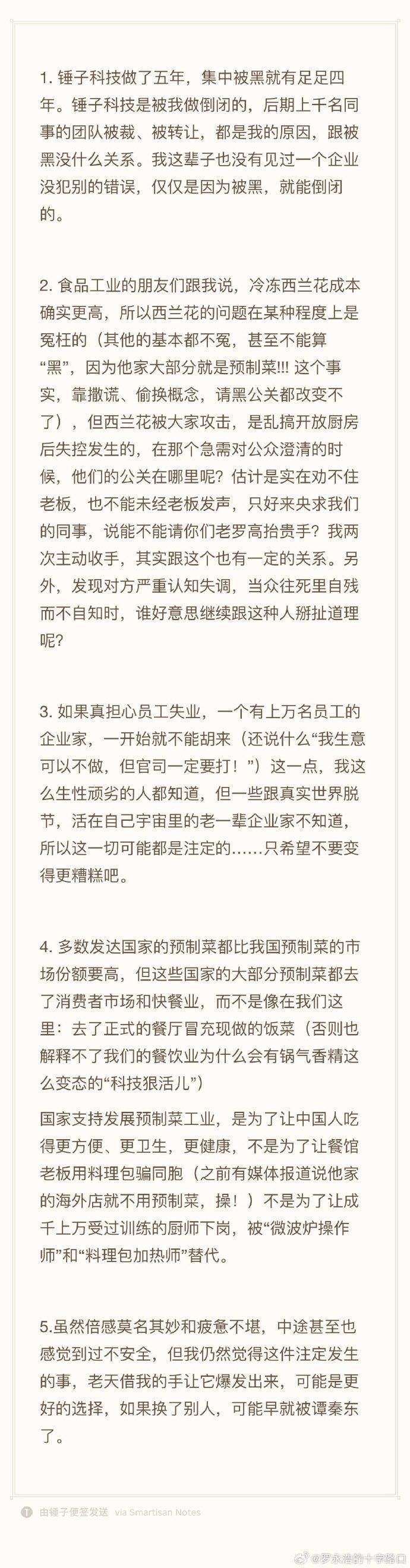
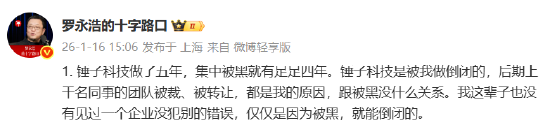
3. 如果真担心员工失业,一个有上万名员工的 企业家,一开始就不能胡来(还说什么"我生意 可以不做,但官司一定要打!")这一点,我这 么生性顽劣的人都知道,但一些跟真实世界脱 节,活在自己宇宙里的老一辈企业家不知道, 所以这一切可能都是注定的 ..... 只希望不要变 得更糟糕吧。 1. 锤子做了五年,集中被黑就有足足四年。锤子科技是被我做倒闭的,后期上千名同事的团队被裁、被 转让,都是我的原因,跟被黑没什么关系。我这辈子也没有见过一个企业没犯别的错误,仅仅是因为被 黑,就能倒闭的。 2. 食品工业的朋友们跟我说,冷冻西兰花成本确实更高,所以西兰花的问题在某种程度上是冤枉的(其 他的基本都不冤,甚至不能算"黑",因为他家大部分就是预制菜!!! 这个事实,靠撒谎、偷换概念,请 黑公关都改变不了) 3. 如果真担心员工失业,一个有上万名员工的企业家,一开始就不能胡来(还说什么"我生意可以不做, 但官司一定要打!")这一点,我这么生性顽劣的人都知道,但一些跟真实世界脱节,活在自己宇宙里的 老一辈企业家不知道。 4. 多数发达国家的预制菜都比我国预制菜的市场份额要高,但这些国家的大部分预制菜都去了消费者市 场和快餐业 ...
贾国龙应该“拜师”余承东
3 6 Ke· 2026-01-16 07:23
Core Viewpoint - The article contrasts the leadership styles of two entrepreneurs, Jia Guolong of Xibei and Yu Chengdong of Huawei, highlighting how their approaches to crisis management and public communication differ significantly, leading to different public perceptions and outcomes for their companies. Group 1: Xibei's Challenges - Xibei's chairman Jia Guolong confirmed the closure of 102 stores, representing 30% of its total, with a reported 50% year-on-year decline in business by January 2026 [1][5] - Jia's response to the crisis has been to defend his long-time collaborator, Hua Shan, rather than reflect on the company's operational issues, which has drawn public criticism [1][6] - The departure of Xibei's public relations vice president, Song Xuan, exacerbates the company's public relations crisis, indicating internal discord regarding crisis management strategies [2][7] Group 2: Huawei's Approach - Yu Chengdong's internal criticism of Huawei's product development, particularly regarding the HarmonyOS cockpit, was met with public understanding and appreciation, showcasing a commitment to product quality [2][8] - Yu's direct and specific feedback on product issues signals a strong internal focus on user experience, contrasting with Jia's external blame [8][9] - This approach has reinforced Yu's image as a dedicated product leader, enhancing public trust in Huawei's commitment to quality [15][16] Group 3: Leadership Styles - Jia Guolong's leadership reflects a traditional entrepreneur mindset, prioritizing personal relationships and loyalty over accountability to consumers [17] - In contrast, Yu Chengdong embodies a modern, product-focused leadership style that emphasizes user experience and internal accountability [17] - The article suggests that Jia's failure to adapt to the current business environment, where consumer expectations are high and information spreads rapidly, has led to significant operational challenges for Xibei [17][18] Group 4: Marketing vs. Product Focus - The article argues that Jia Guolong has become trapped in a marketing-driven approach, neglecting the fundamental product value that consumers expect [10][12] - In contrast, Yu Chengdong's focus on product excellence has positioned Huawei favorably in the market, demonstrating the importance of prioritizing product quality over marketing hype [10][11] - The disparity in their approaches highlights a critical lesson for businesses: when product quality falters, no amount of marketing can compensate for consumer dissatisfaction [12][13]
西贝公关副总裁宋宣已离职!贾国龙称“一切决定都是我做的,跟宋宣无关”“华杉曾流泪劝我不要回应”
Mei Ri Jing Ji Xin Wen· 2026-01-16 07:22
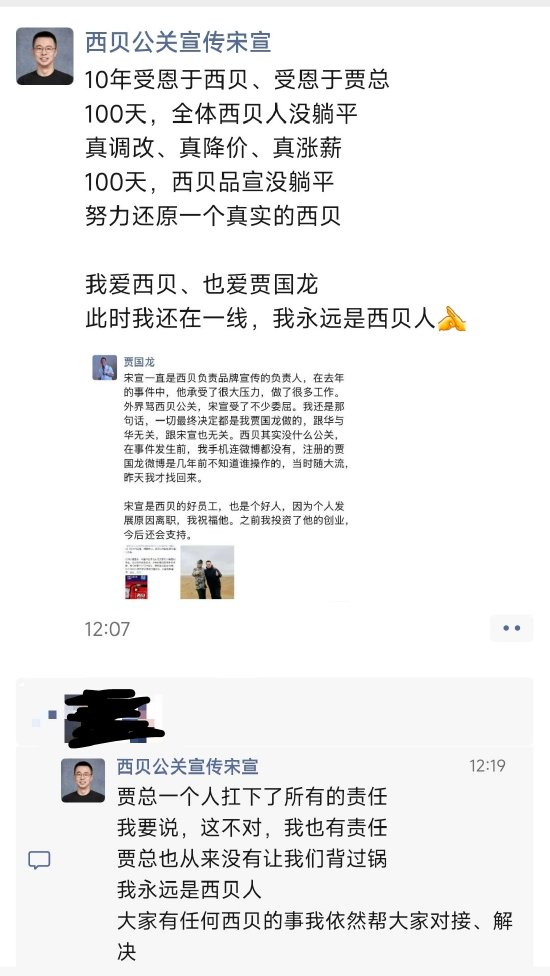
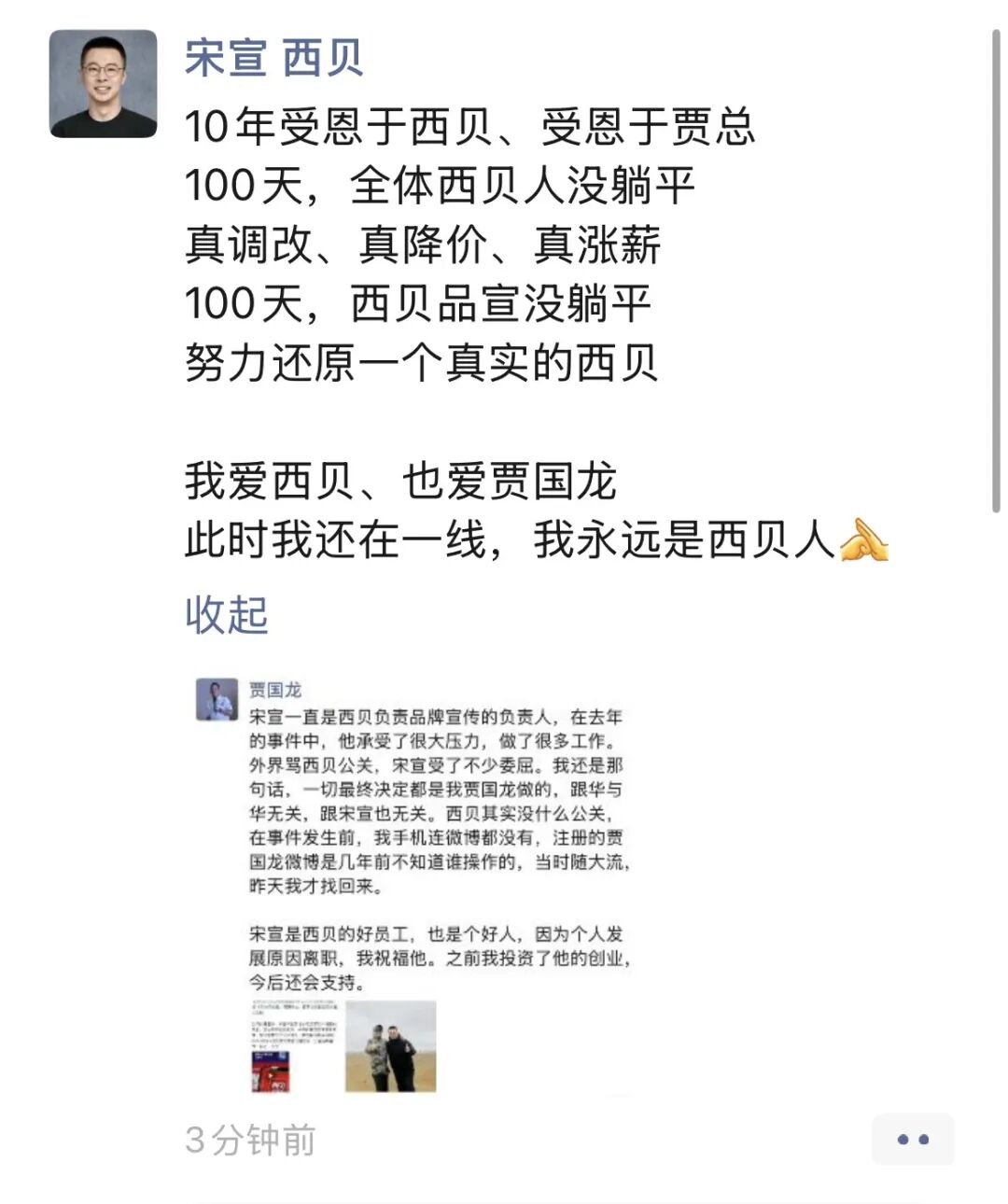
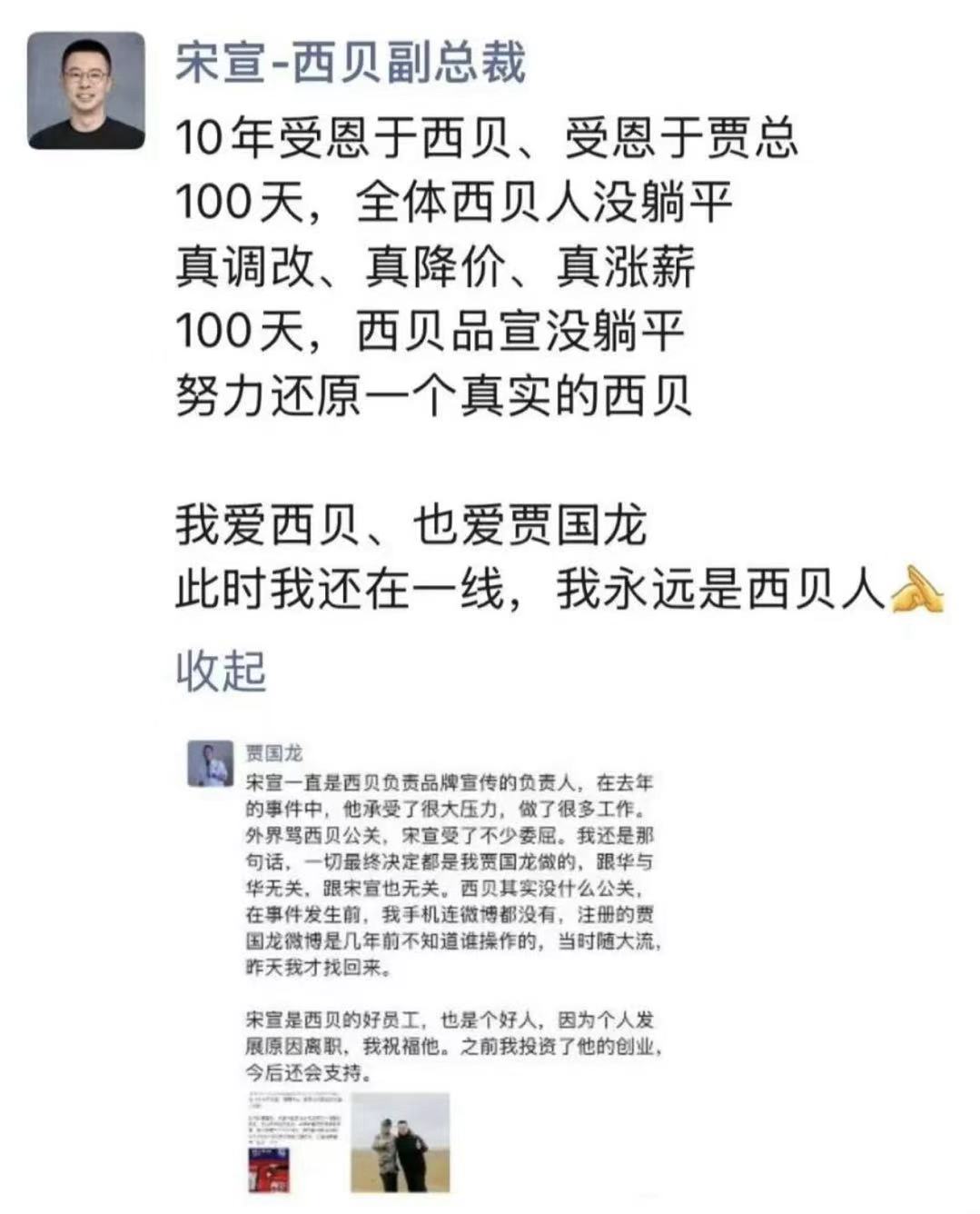
1月16日午间西贝公关副总裁宋宣发朋友圈回应离职消息。 他称:10年受恩于西贝,受恩于贾总;100天,全体西贝人没躺平;真调改,真降价,真涨薪;100天,西贝品宣没躺平;努力还原一个真实的西贝。我爱 西贝、也爱贾国龙;此时我还在一线,我永远是西贝人。 每经编辑|何小桃 同时,他转发了西贝创始人贾国龙朋友圈截图,截图中贾国龙称:宋宣一直是西贝负责品牌宣传的负责人,在去年的事件中,他承受了很大压力,做了很 多工作。外界骂西贝公关,宋宣受了不少委屈。我还是那句话,一切最终决定都是我贾国龙做的,跟华与华无关,跟宋宣也无关。西贝其实没什么公关, 在事件发生前,我手机连微博都没有,注册的贾国龙微博是几年前不知道谁操作的,当时随大流,昨天我才找回来。宋宣是西贝的好员工,也是个好人, 因为个人发展原因离职,我祝福他。之前我投资了他的创业,今后还会支持。 据悉,宋宣毕业于北京物资学院市场营销专业,曾任校学生会主席;早年创立餐饮教育平台勺子课堂获得西贝创始人贾国龙天使轮投资,著有餐饮书籍 《从零开始做餐饮》;2022年加入西贝餐饮集团任副总裁,分管品牌宣传、品质外卖、本地生活增长等核心板块。 贾国龙,视频截图 随后,贾国龙发布朋 ...
罗永浩回应“西贝闭店”:这辈子没见过一个企业没犯别的错误,仅仅是因为被黑就能倒闭的
Xin Lang Cai Jing· 2026-01-16 07:19
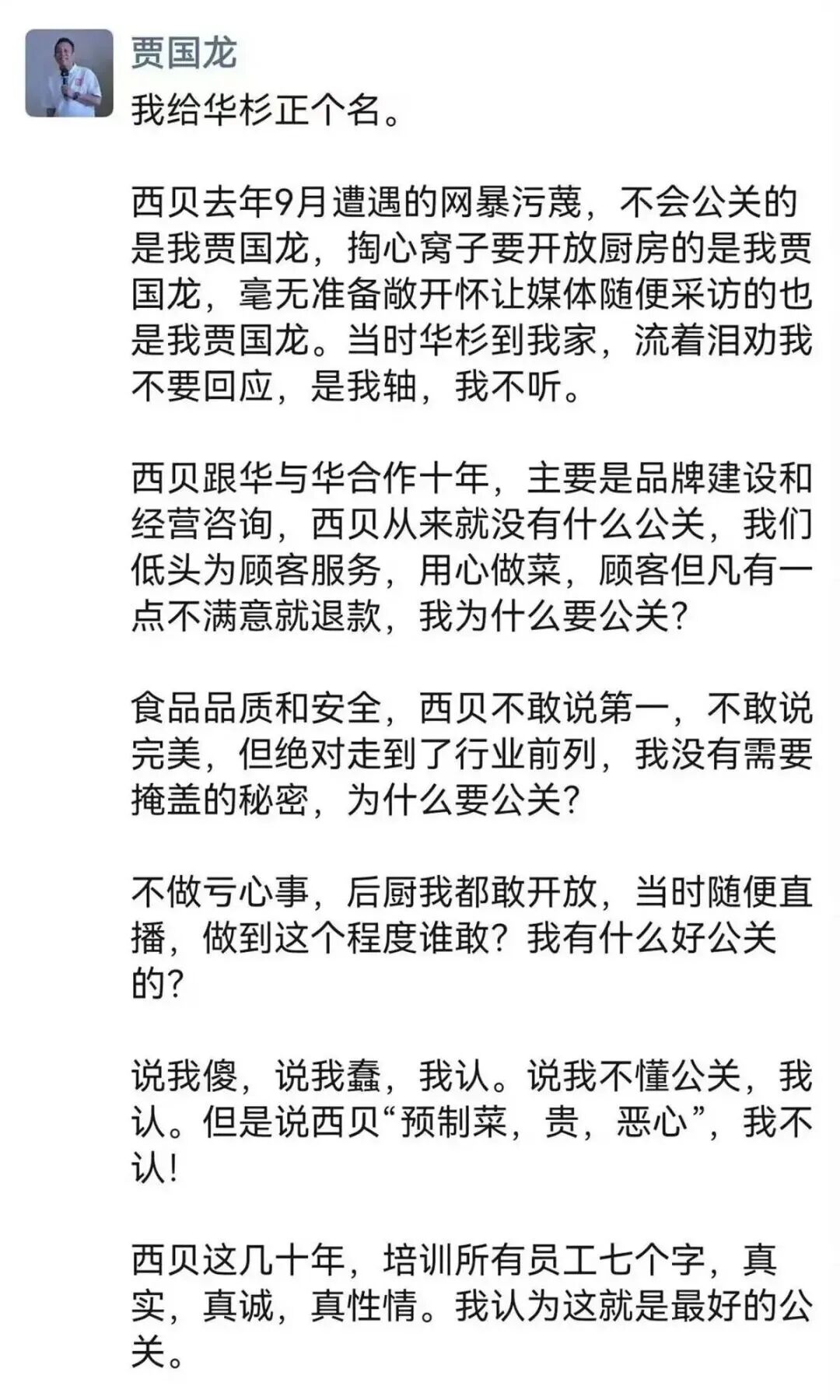
近日,西贝创始人贾国龙在朋友圈发文表示,西贝将在一季度陆续完成102家门店的关闭。据悉,关闭 店数约占总数的30%。他还在朋友圈发文为华与华的华杉正名:"西贝去年9月遭遇的舆论风暴,不会公 关的是我贾国龙,掏心窝子要开放厨房的是我贾国龙,毫无准备敞开怀让媒体随便采访的也是我贾国 龙。当时华杉到我家,流着泪劝我不要回应,是我轴,我不听。" 1月16日,罗永浩发文再次回应"西贝预制菜事件"。罗永浩表示,锤子科技做了五年,集中被黑就有足 足四年。锤子科技是被自己做倒闭的,跟被黑没什么关系。"我这辈子也没有见过一个企业没犯别的错 误,仅仅是因为被黑,就能倒闭的。" 他提到,西贝冷冻西兰花被大家攻击,是乱搞开放厨房后失控发生的。如果贾国龙真担心员工失业,一 个有上万名员工的企业家,一开始就不能胡来(还说什么"我生意可以不做,但官司一定要打!")这一 点。"我这么生性顽劣的人都知道,但一些跟真实世界脱节,活在自己宇宙里的老一辈企业家不知道, 所以这一切可能都是注定的……只希望不要变得更糟糕吧。" 罗永浩表示,多数发达国家的预制菜都比我国预制菜的市场份额要高,但这些国家的大部分预制菜都去 了消费者市场和快餐业,而不是去了正 ...
贾国龙证实西贝公关副总裁已离职:“他受了不少委屈”
Xin Lang Cai Jing· 2026-01-16 06:51
Core Insights - The Vice President of Public Relations at Xibei, Song Xuan, has resigned due to personal development reasons, as confirmed by the founder, Jia Guolong [1][7] - Jia Guolong emphasized that all final decisions are made by him and not influenced by external parties or Song Xuan, who he previously supported in his entrepreneurial endeavors [4][10] - Xibei will close 102 stores, accounting for approximately 30% of its total outlets, affecting around 4,000 employees, primarily in first and second-tier cities [5][11] Summary by Sections Leadership Changes - Song Xuan has left Xibei, citing personal development as the reason, and expressed gratitude towards the company and its founder [1][7] - Jia Guolong acknowledged the pressure Song faced during recent events and reiterated his commitment to support him in future endeavors [4][10] Company Operations - Xibei is set to close 102 stores, which will be completed in the first quarter, with a focus on fulfilling customer commitments before shutting down certain locations [6][11] - Employees affected by the closures will receive their full wages, and customers with stored value cards can use them at other locations or request refunds [6][11] Brand and Public Relations - Jia Guolong defended the company's approach to public relations, stating that Xibei focuses on customer service and product quality rather than traditional PR tactics [5][11] - He highlighted the company's commitment to authenticity and sincerity as the best form of public relations, rejecting negative perceptions about their products [11]
西贝公关副总裁离职,贾国龙:他是个好人
新华网财经· 2026-01-16 06:33
西贝公关副总裁宋宣16日午间发朋友圈回应离职消息。 他称:10年受恩于西贝,受恩于贾总100天,全体西贝人没躺平真调改,真降价,真涨薪100天,西贝品宣没躺平努力还原一个真实的西 贝。 我爱西贝、也爱贾国龙, 此时我还在一线,我永远是西贝人。 同时,他转发了 西贝创始人 贾国龙朋友圈截图,截图中贾国龙称:宋宣一直是西贝负责品牌宣传的负责人,在去年的事件中,他承受了很 大压力,做了很多工作。外界骂西贝公关,宋宣受了不少委屈。我还是那句话,一切最终决定都是我贾国龙做的,跟华与华无关,跟宋宣 也无关。西贝其实没什么公关,在事件发生前,我手机连微博都没有,注册的贾国龙微博是几年前不知道谁操作的,当时随大流,昨天我 才找回来。宋宣是西贝的好员工,也是个好人,因为个人发展原因离职,我祝福他。之前我投资了他的创业,今后还会支持。 西贝去年9月遭遇的网暴污蔑,不会公关的 是我贾国龙,掏心窝子要开放厨房的是我贾 国龙,毫无准备敞开怀让媒体随便采访的也 是我贾国龙。当时华杉到我家,流着泪劝我 不要回应,是我轴,我不听。 西贝跟华与华合作十年, 主要是品牌建设和 经营咨询,西贝从来就没有什么公关,我们 低头为顾客服务,用心做菜,顾 ...

小菜园进军“社区即食小店”与线上商城
Xin Jing Bao· 2026-01-16 05:41
Core Viewpoint - The company, Xiaocaiyuan, has announced a partnership to establish a joint venture aimed at enhancing its e-commerce and local lifestyle business, which includes online shopping and community instant stores [1] Group 1: Joint Venture Details - Xiaocaiyuan will collaborate with Deng Gaoke and Tian Chunying, contributing a total of 2 billion yuan (1400 million yuan from Xiaocaiyuan, 500 million yuan from Deng Gaoke, and 100 million yuan from Tian Chunying) to form the joint venture [1] - The joint venture will operate as a non-wholly owned subsidiary of Xiaocaiyuan and will focus on four main business areas: comprehensive e-commerce, local lifestyle, supply chain operations, and fourth-party distribution [1] Group 2: Strategic Goals - The transaction is expected to facilitate efficient resource allocation within the group and leverage the strengths of technology, channels, and talent from all parties involved, creating synergies to enhance overall operational efficiency [1] - The joint venture aims to explore the growth potential of quality supply chain resources and develop a new food consumption platform that integrates online shopping, community retail, and instant dining, thereby increasing brand value and market share [1] Group 3: Retail Strategy - Xiaocaiyuan plans to utilize its own products, such as rice and oil, for sales through both online platforms (like JD.com, Taobao, Douyin, and its own mall) and offline channels, including shopping malls and stores [2] - Future collaborations with suppliers or supply chains are anticipated to develop more products to meet the demands of the new retail channels [2]
西贝公关副总裁已离职
第一财经· 2026-01-16 05:38
据界面新闻, 1月16日,西贝公关副总裁宋宣已离职。西贝餐饮创始人贾国龙在个人朋友圈发文 称,宋宣因为个人发展原因离职,"在去年的事件中,他承受了很大压力,做了很多工作。"宋宣也 在个人微信朋友圈称,"此时还在一线,永远是西贝人"。 编辑:小羊 ...
西贝品牌负责人宋宣回应贾国龙:10年受恩于西贝,永远是西贝人
Xin Lang Cai Jing· 2026-01-16 04:58
1月16日,有消息称,西贝公关副总裁宋宣已离职。西贝董事长贾国龙通过朋友圈证实了该消息,并表 示:"宋宣一直是西贝负责品牌宣传的负责人,在去年的事件中,他承受了很大压力,做了很多工作。 外界骂西贝公关,宋宣受了不少委屈。我还是那句话,一切最终决定都是我贾国龙做的,跟华与华无 关,跟宋宣也无关。" 对此,宋宣也发朋友圈进行回应:"10年受恩于西贝、受恩于贾总。100天,全体西贝人没躺平。真调 改、真降价、真涨薪。100天,西贝品宣没躺平,努力还原一个真实的西贝。我爱西贝、也爱贾国龙。 此时我还在一线,我永远是西贝人。" 宋宣表示,"贾总一个人扛下了所有的责任。我要说,这不对,我也有责任。贾总也从来没有让我们背 过锅。我永远是西贝人。大家有任何西贝的事我依然帮大家对接、解决。" 公开资料显示,宋宣曾任职于搜狐等媒体,2014年创办餐饮垂直媒体"掌柜攻略",2016年创立餐饮职业 教育平台"勺子课堂",2016至2018年先后获得西贝创始人贾国龙、嘉和一品创始人刘京京、麦当劳亚太 区副总裁李明元及多家投资机构累计5500万融资 。2022年,宋宣加入西贝餐饮集团出任副总裁,分管 对外宣传、公共关系、品质外卖及本地生 ...