脑机接口

Search documents
【风口研报】全面受益马斯克系商业航天+脑机接口赛道爆发,公司产品已实现低轨卫星相控阵天线全链条配套
财联社· 2026-01-14 15:35
前言 ①全面受益马斯克系商业航天+脑机接口赛道爆发,公司产品已实现低轨卫星相控阵天线全链条配套,且 正推进脑机接口核心部件研发测试,有望全面拥抱新领域; ②斩获2026开年重磅BD交易,分析师强call 公司不仅将收获纸面上的巨额利润,更看好后续管线的推进以及上市产品的销售稳定放量。 财联社倾力打造王牌栏目《风口研报》,替您"扒一扒"市场含金量超高的研报、调研信息。以机构视 角,追踪研报和调研纪要细节里的"超预期"、"拐点"、"事件催化"和"价值洼地"。 ...


中美脑机接口技术差距有多大?瑞银专家电话会议:大约落后两年时间
Zhi Tong Cai Jing· 2026-01-14 14:46
Core Viewpoint - The brain-computer interface (BCI) technology has gained significant attention in the capital market since January, with related company stock prices experiencing substantial increases. A recent research call organized by UBS highlighted the technological gap between Chinese and American companies in BCI, with an expected narrowing of this gap in the next two years. Group 1: Comparison of BCI Technologies - Non-invasive BCI: - Application scenarios include rehabilitation training, mental illness assessment and treatment, sleep monitoring and treatment, and fatigue monitoring - Advantages include ease of use and operation [1] - Semi-invasive BCI: - Application scenarios include traditional electrocorticography (ECoG) for intraoperative monitoring and coarse motor decoding, with flexible ECoG enabling higher precision in motor decoding - Advantages include better signal quality than non-invasive products and higher safety than invasive products, offering a balanced performance [2] - Invasive BCI: - Application scenarios include external robotic arm/cursor control, sensory reconstruction, and treatment for Parkinson's disease - Advantages include higher decoding precision [3] Group 2: Product Registration and Certification Timeline - Non-invasive BCI: - Most are classified as Class 1/2 medical devices, with registration and certification taking less than one year. More non-invasive products are expected to launch in the Chinese market within the next 6-12 months [4] - Semi-invasive BCI: - Classified as Class 3 active implantable medical devices, with expectations for products to be launched in China within 1-2 years, particularly from Neuracle, which may receive certification by 2026-2027 [5] - Invasive BCI: - Also classified as Class 3 active implantable medical devices, with a longer certification cycle due to stricter regulatory requirements. Some companies may obtain product registration by the end of 2027 to 2028 [6] Group 3: Key Parameters for Invasive and Semi-invasive Products - Semi-invasive BCI: - Key parameters include spatial resolution, typically with fewer channels and relatively lower signal quality [7] - Invasive BCI: - Key parameters include channel count, signal-to-noise ratio, decoding precision, lifespan of implants, and biocompatibility. Manufacturers often promote products based on these aspects [8] Group 4: Technological Gap Between Chinese and American Companies - Current technological gap: - Chinese companies lag behind American counterparts by approximately two years, particularly in electrode technology, chip development, and decoding techniques. However, this gap is expected to narrow in the next 2-3 years [9] - Electrode technology: - American products typically have 1024 channels, while Chinese products range from 128-256 channels. China is expected to achieve large-scale production of flexible micro-nano/ECoG electrodes within 3-5 years [10] - Chip technology: - American companies utilize self-developed chips with high system integration, while Chinese companies primarily rely on imported chips. Domestic chip manufacturers face demand constraints rather than technical limitations [11] Group 5: Market Potential and Pricing - Market size: - Non-invasive products are expected to account for at least 70% of the total BCI market, with significant growth anticipated over the next 5-10 years. The overall market size for BCI products in China is projected to reach several hundred billion RMB by 2030 [12] - Pricing expectations: - Non-invasive products are priced around 10,000 RMB for sleep monitoring devices and 200,000-400,000 RMB for rehabilitation and mental illness products. Invasive/semi-invasive products are expected to align with current deep brain stimulation (DBS) device pricing [13] Group 6: Leading Companies in BCI Products - Non-invasive BCI: - Companies such as Neuracle, Genlight, and PINS Medical have launched front-end products. Optimizing backend decoding algorithms may enhance treatment effects and expand indications [14] - Semi-invasive BCI: - WE-LINKING is noted for its flexible ECoG technology, which can cover large areas of the brain for multi-region decoding [15] - Invasive BCI: - Companies like StairMed, BCIFlex, and NeuCyberNeuroTech utilize similar technology routes with flexible micro-nano electrodes for precise implantation and higher decoding accuracy [16]
市场分歧加剧
Tebon Securities· 2026-01-14 12:15
Market Analysis - The A-share market experienced significant volatility with a trading volume approaching 4 trillion, indicating sustained trading enthusiasm [2][3] - The Shanghai Composite Index rose by 1.2% to nearly 4200 points before closing down 0.31% at 4126.09 points, while the Shenzhen Component and ChiNext Index saw increases of 0.56% and 0.82% respectively [3] - The overall market saw 2742 stocks rise and 2591 stocks fall, reflecting a mixed performance across sectors [3] Policy and Structural Trends - The increase in the financing margin ratio from 80% to 100% for new financing contracts is a counter-cyclical adjustment aimed at reducing leverage, which may lead to profit-taking in high-leverage stocks [6][7] - The AI application sector remains strong, with significant gains in stocks related to Pinduoduo and Xiaohongshu, supported by government policies promoting innovation in e-commerce and AI [6][7] - The market is currently in a critical window for policy catalysis and industrial rotation, with a slow bull market expected to continue despite short-term adjustments [12] Bond Market Insights - The bond futures market showed mixed performance, with long-term contracts slightly declining while medium and short-term contracts increased [9] - The central bank maintained a net injection of liquidity, indicating a continued "moderately loose" monetary policy stance, which is expected to support long-term bond investments [9][12] Commodity Market Developments - The commodity index rose by 0.97%, with silver and tin prices increasing by approximately 8%, driven by supply disruptions and strong demand in the semiconductor industry [9][11] - The silver price reached a new high, with London silver surpassing $90 per ounce, benefiting from both financial and industrial demand [9][11] Investment Opportunities - Key sectors to watch include AI applications, commercial aerospace, nuclear fusion, quantum technology, brain-machine interfaces, and consumer goods, all supported by favorable policies and technological advancements [11][12] - The brokerage sector is also highlighted due to increased trading volumes in the A-share market, indicating potential growth opportunities [11]
医飞冲天!港股通医疗9连阳创纪录
Xin Lang Cai Jing· 2026-01-14 12:09
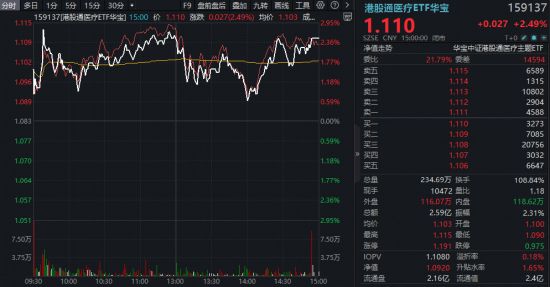
Core Viewpoint - The Hong Kong Stock Connect medical sector has experienced a significant rally, with the Hong Kong Stock Connect Medical Theme Index achieving a record nine consecutive days of gains as of January 14, 2026, marking the longest winning streak in history [1]. Group 1: ETF Performance - The Huabao Hong Kong Stock Connect Medical ETF (159137) has seen substantial growth since its listing on January 12, 2026, with daily increases of 4.7%, 3.44%, and 2.49%, and a total trading volume reaching 259 million yuan today [1][3]. - The ETF covers 50 leading stocks across various medical fields, with notable performances from Alibaba Health, which surged by 18.96%, and other stocks like Yimai Sunshine and MicroPort Scientific, which rose by 9.98% and 8.62% respectively [3][4]. Group 2: Market Catalysts - Three main catalysts are driving the momentum in the Hong Kong Stock Connect medical sector: 1. The brain-computer interface (BCI) industry is entering a rapid industrialization phase, with companies like Neuralink and Brain Tiger Technology making significant advancements and investments [5][6]. 2. Major players are entering the AI medical field, with partnerships such as NVIDIA and Eli Lilly committing $1 billion to AI drug development, indicating a shift towards AI-driven healthcare solutions [6][7]. 3. The CXO (Contract Research Organization) sector is showing signs of recovery, with WuXi AppTec forecasting a net profit of 19.151 billion yuan for 2025, reflecting a year-on-year increase of approximately 102.65% [7][8]. Group 3: Industry Trends - The demand for CRO and CDMO services is gradually recovering, supported by a reduction in supply over the past three years, which may lead to simultaneous profit and valuation increases in the sector [8].
监管“降温”组合拳出手 防止“慢牛”变“疯牛”
Sou Hu Cai Jing· 2026-01-14 10:01
Group 1 - The A-share market experienced a volatile session on January 14, with the Shanghai Composite Index closing down 0.31% at 4126.09 points, while the Shenzhen Component Index and the ChiNext Index rose by 0.56% and 0.82% respectively [1] - The increase in the financing margin ratio from 80% to 100% by the exchanges is seen as a measure to curb excessive speculation and reduce market leverage risk, reflecting a regulatory stance focused on stability and risk prevention [1][2] - The margin balance for A-shares reached 26,829.92 billion yuan, an increase of 89.3 billion yuan from the previous trading day, representing 2.59% of the A-share market's circulating market value, slightly above the average level of 2.41% in 2025 [2] Group 2 - The adjustment of the financing margin ratio is intended to lower leverage levels and protect investors' rights, promoting long-term market stability [2] - The recent surge in financing activities and market liquidity prompted the exchanges to implement this policy as a form of counter-cyclical adjustment [2][3] - The A-share market has seen significant trading activity, with daily transaction volumes exceeding 30 trillion yuan, indicating a high level of market sentiment [2] Group 3 - The increase in the financing margin ratio is expected to cool down the overheated market and provide timely risk warnings to investors, preventing excessive leverage [3] - Historical data shows that the financing margin ratio has undergone several changes, with the current adjustment reflecting a proactive approach to managing market risks [3] - The regulatory measures aim to compress leverage space and avoid the accumulation of financial bubbles, aligning with the principles of financial cycle theory [3] Group 4 - Certain sectors, such as AI applications, fintech, and healthcare, showed strong activity, while sectors like lithium mining and commercial aerospace faced corrections [4] - The policy adjustment is seen as a necessary step to guide funds from overvalued sectors to undervalued ones, promoting a balanced market style [4] - The recent surge in the commercial aerospace sector has led to a series of risk warnings from listed companies, indicating heightened regulatory scrutiny [5] Group 5 - The regulatory environment is tightening around high-flying sectors like commercial aerospace and brain-computer interfaces, with increased scrutiny on companies that deviate from fundamental valuations [5] - The combination of financing policy adjustments and stringent regulation of popular concept stocks indicates a comprehensive regulatory approach aimed at cooling the market rather than stifling it [5] - The long-term outlook for the A-share market remains positive, supported by expectations of improved corporate earnings, valuation restructuring, and potential new capital inflows [5]
国内融资20亿、全球排队1万人:脑机接口让老人用“意念”重获新生?
3 6 Ke· 2026-01-14 08:45
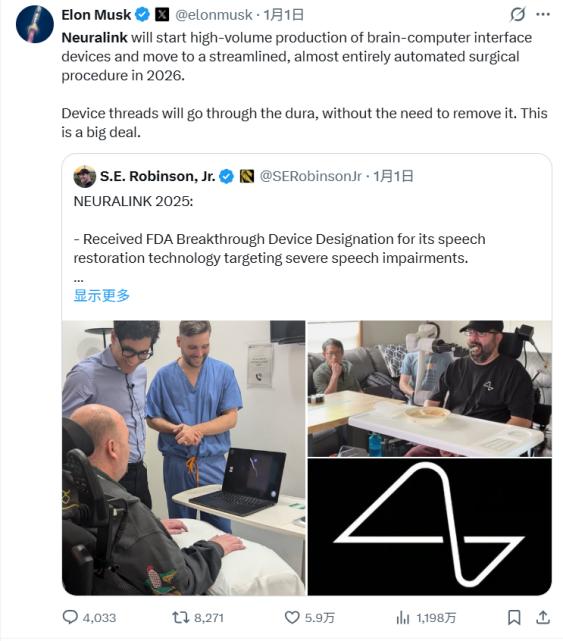
前言 然而,随着脑机接口技术的不断成熟,我们正在经历一场关于"生命终点"的叙事重构。当数字信号开始接管受损的生物信号,科技不仅在为老年人延长生 命的长度,更是在修补他们的尊严。 宣布量产,脑机接口迎来"奇点时刻" 2026年开年第一天,"钢铁侠"马斯克便抛出了一个重磅消息。 1月1日,马斯克宣布其旗下的神经科技和脑机接口公司Neuralink将在2026年进行"大规模生产",并转向"更加精简和几乎完全自动化的外科手术流程"。这 一消息迅速引发全球关注,因为它标志着脑机接口进入"商业化跃迁"的关键节点。 脑机接口(Brain-Computer Interface)是一种直接在大脑与外部设备之间建立通信路径的技术,广泛用于运动/言语重建、感觉恢复、神经调控与人机交互 等场景。科幻电影《黑客帝国》中,男主角尼奥的"脑后插管",或许就是脑机接口最初的想象。 图源:X 图源:电影《黑客帝国》剧照 如果站在更久远的未来回望,2026年或许是科幻加速踏进现实的开始。 衰老——曾被视为不可逆的命运,伴随着肌肉的萎缩,人类的意识仿佛只能在渐深的黑暗中走向消亡。 然而,现实中的脑机接口技术发展,早已超越了科幻作品。如今,这项技术 ...
陈天桥重出江湖
投资界· 2026-01-14 08:32
Core Viewpoint - The article discusses the return of Chen Tianqiao, a prominent figure in the Chinese internet industry, who is now focusing on brain-computer interface (BCI) technology and artificial intelligence (AI) research, marking a significant shift in his career and investment strategy [4][15]. Group 1: Chen Tianqiao's Return and Investments - Chen Tianqiao announced a $1 billion investment in computing power to support global AI research, emphasizing his commitment to advancing scientific discovery through AI [4][15]. - He co-founded "Gestalt," the first domestic ultrasound brain-computer interface company in China, which aims to develop non-invasive BCI technology [8][9]. - Chen's approach contrasts with Elon Musk's invasive BCI strategy, focusing instead on a non-invasive method that poses fewer ethical and safety concerns [9][19]. Group 2: AI and Brain Science Integration - Chen Tianqiao's new company "Tanka" is defined as a communication platform integrating AI with long-term memory capabilities, aiming to redefine organizational management in the AI era [9][10]. - He believes that AI should execute tasks while humans take responsibility for outcomes, highlighting a shift in the role of leadership in organizations [9][11]. - The integration of brain science and AI is seen as a potential pathway to understanding human cognition and emotional regulation, creating new opportunities for innovation [20]. Group 3: Historical Context and Personal Journey - Chen's interest in brain science began after experiencing panic attacks during his peak career, prompting him to explore the workings of the human brain [12][13]. - Over the past decade, he has invested in brain science research, establishing the Tianqiao Brain Science Research Institute (TCCI) with a $1 billion donation, focusing on understanding and treating brain diseases [14][15]. - His return to the public eye is characterized by a long-term vision, aiming to build a comprehensive chain from basic research to commercial application in the fields of brain science and AI [19][20].

国产脑机接口有望跃升发展,挖掘机行业温和复苏
Tebon Securities· 2026-01-14 07:10
Group 1: Healthcare Sector - The domestic brain-computer interface (BCI) market is expected to maintain double-digit growth, with a projected market size of 3.83 billion yuan in 2025, reflecting a 20% year-on-year increase [3][11] - The global BCI market is anticipated to reach 2.93 billion USD in 2025, marking a 12% year-on-year growth [3][11] - The Chinese government has introduced several significant policies since 2025 to support the development of BCIs in the medical field, including the inclusion of BCIs in medical insurance [11][12] - As of December 2025, there have been 24 financing rounds in the domestic BCI sector, totaling over 5 billion yuan, with a record single financing of 350 million yuan in February 2025 [3][15] Group 2: High-end Manufacturing Sector - The excavator market in China showed a mild recovery, with total sales of 23,095 units in December 2025, representing a 19.2% year-on-year increase [22][23] - For the entire year of 2025, excavator sales reached 235,257 units, up 17% from the previous year, with domestic sales increasing by 17.9% and exports by 16.1% [22][24] - The adjustment of export tax rebates for photovoltaic products is expected to accelerate industry clearing and benefit product price recovery [27][28] Group 3: Market Overview - The A-share market experienced a general increase, with the Shanghai Composite Index rising by 3.82% during the week of January 5-9, 2026 [29][30] - The average daily trading volume in the market was 2.85 trillion yuan, showing an increase compared to the previous week [29][30] - The performance of various sectors was mixed, with growth and cyclical sectors leading the gains, while some sectors like banking and transportation lagged behind [30][36]
股票市场概览:资讯日报:美国12月核心CPI升幅低于预期-20260114
Guoxin Securities Hongkong· 2026-01-14 06:04
Market Overview - The Hang Seng Index closed at 26,848, down 0.90% for the day, but up 4.75% year-to-date[3] - The S&P 500 Index closed at 6,964, down 0.19% for the day, with a year-to-date increase of 1.73%[3] - The Nikkei 225 Index rose by 3.10%, closing above 53,000 points for the first time, driven by expectations of domestic policy changes and fiscal stimulus[12] Sector Performance - Defensive sectors like pharmaceuticals, gold, and oil showed strong performance, with gold prices surpassing $4,630 per ounce, marking a historical high[9] - The biopharmaceutical sector saw significant gains, with WuXi AppTec's revenue expected to reach 45.456 billion yuan, a year-on-year increase of 15.84%[9] - Automotive stocks also rose, with companies like Li Auto and Great Wall Motors increasing by over 2% due to positive developments in EU electric vehicle export negotiations[9] Geopolitical and Economic Factors - Concerns over geopolitical risks have led to increased demand for safe-haven assets, contributing to the rise in gold and oil stocks[9] - The U.S. December Consumer Price Index (CPI) showed a year-on-year increase of 2.7%, aligning with market expectations and reinforcing predictions of potential interest rate cuts by the Federal Reserve in 2026[10][15] - The U.S. budget deficit for 2025 is projected to narrow to approximately $1.7 trillion, the smallest in three years, due to increased tariff revenues[15]
强脑科技秘密闯关港交所:脑机接口第一股的资本博弈
Xin Lang Cai Jing· 2026-01-14 05:48
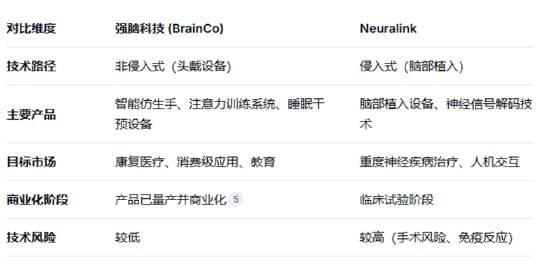
Core Viewpoint - BrainCo has secretly submitted a listing application to the Hong Kong Stock Exchange, aiming to become the first company in the global brain-computer interface (BCI) sector to enter the public capital market [1][10]. Technology Choice - Founded by Harvard dropout Han Bicheng in 2015, BrainCo chose a non-invasive BCI technology route, contrasting with Neuralink's invasive approach [2][12]. - BrainCo's technology collects brain signals through super sensors without surgical implantation, focusing on practical applications and scalability [2][12]. - The company has achieved significant milestones, including enabling amputees to control prosthetic limbs with their thoughts, addressing a market of 24 million disabled individuals in China [12][14]. Commercial Breakthrough - BrainCo's business strategy is pragmatic, starting with clear medical needs and expanding into consumer applications [4][14]. - The company has seen a substantial increase in sales, with 2024 quarterly sales projected to be four to five times that of 2023 [4][14]. - BrainCo's products include smart prosthetic hands and attention training systems, creating a dual-driven model of "medical rehabilitation + consumer applications" [4][14]. Capital Competition - The BCI industry is on the verge of explosive growth, with Morgan Stanley predicting a $400 billion market in the U.S. by 2045 [15]. - BrainCo has raised approximately 2 billion RMB, marking the second-largest financing record in the global BCI sector after Neuralink [15]. - The company’s decision to list in Hong Kong aligns with the trend of Chinese companies returning to the market and aims to enhance its global influence [15]. Industry Resonance - The news of BrainCo's listing application has triggered a positive response in the capital market, with related stocks rising significantly [16]. - BrainCo's listing is seen as a critical indicator of the BCI industry's development, contrasting with Neuralink's focus on disruptive innovation [16]. - The market reflects differing valuation perspectives, with investors weighing the commercial viability of BrainCo against the speculative nature of Neuralink's technology [16].