装备制造

Search documents
打造世界级标杆!“领航级”工厂如何实现“领跑”中国智造?
Yang Shi Wang· 2026-01-13 08:42
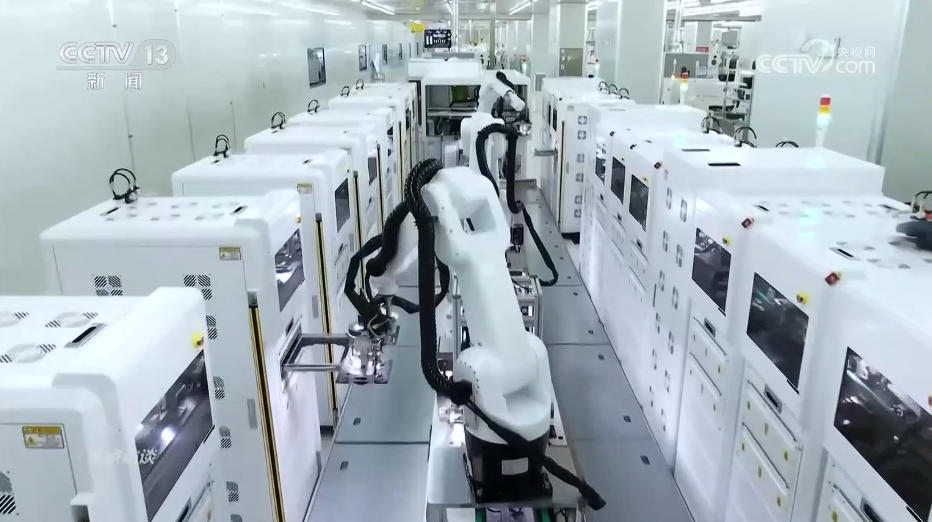
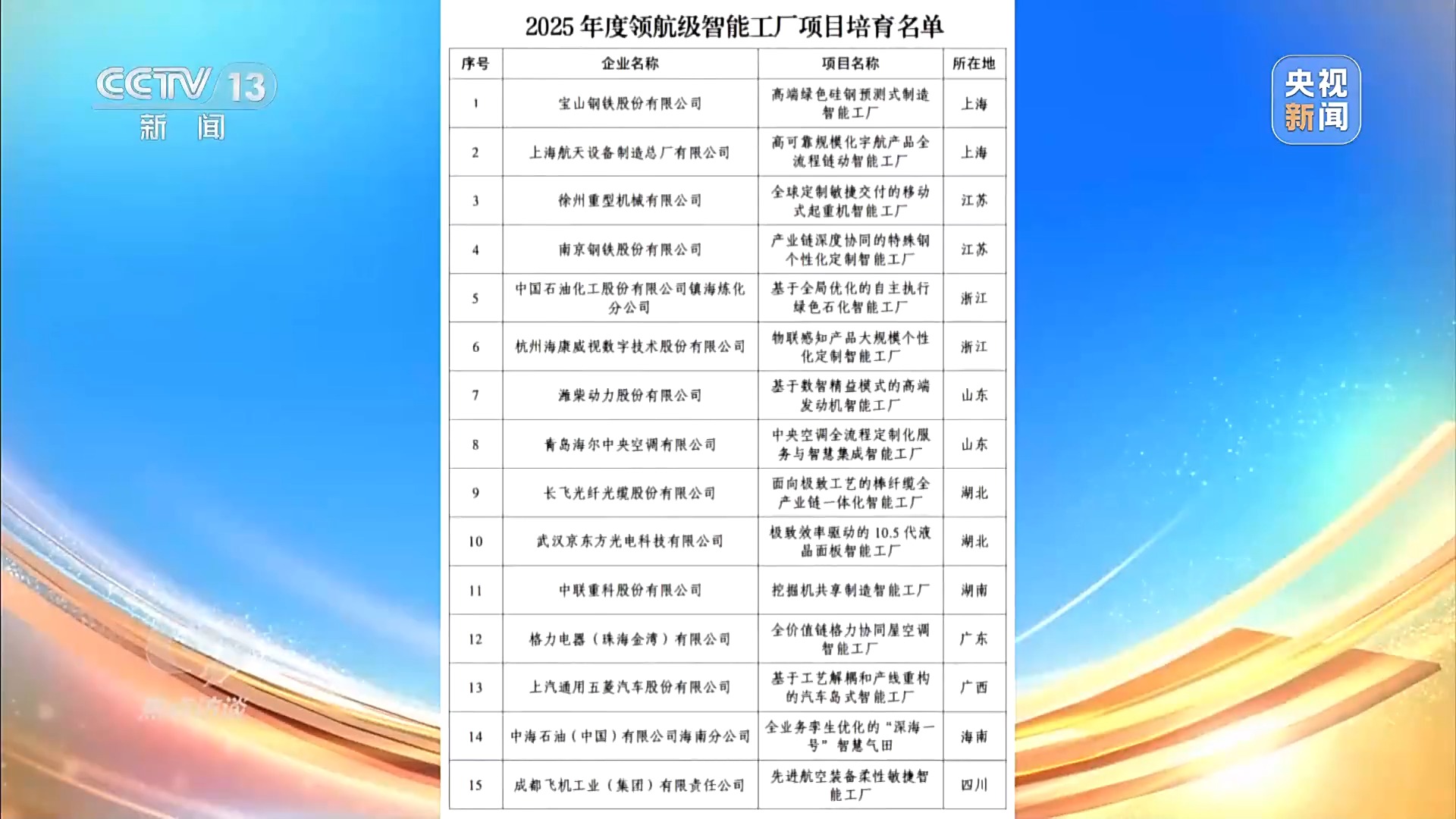
Core Viewpoint - "Smart" manufacturing is the core engine for high-quality development in the manufacturing industry, marking a critical leap from digitalization and networking to intelligence in China's manufacturing sector [1][3]. Group 1: Overview of Leading Smart Factories - The Ministry of Industry and Information Technology and five other departments announced the first batch of 15 leading smart factories, covering key industries such as equipment manufacturing, raw materials, and electronic information [1][2]. - These factories represent the highest level of "intelligent" manufacturing in China and signify a transition towards a more advanced manufacturing model [1][3]. Group 2: Characteristics of Leading Smart Factories - Leading smart factories are characterized by the integration of advanced manufacturing technologies, next-generation information technologies, and lean management concepts, forming the pinnacle of China's manufacturing intelligence pyramid [3][5]. - They aim to be "hexagonal warriors" with six leading identities, focusing on industry, application of AI technology, innovation in smart manufacturing models, performance, replication, and cultivation plans [5]. Group 3: Notable Examples - Changfei Fiber Optic, recognized as a benchmark for intelligent transformation in the electronic information sector, has integrated AI algorithms throughout its production process, achieving a drawing speed of 3,500 meters per minute, the highest globally, without human intervention [7]. - The company has mastered three major mainstream technologies for fiber optic preform preparation, leading to the largest diameter of preforms globally and maintaining the top market share in the fiber optic industry for nine consecutive years [7]. Group 4: Strategic Alignment - The development of leading smart factories aligns with the "14th Five-Year Plan" for intelligent manufacturing and the "15th Five-Year Plan" for building a modern industrial system centered on advanced manufacturing [5][9]. - These factories facilitate collaborative innovation across the industry chain, connecting with national strategic deployments such as "Artificial Intelligence+" and promoting the replication of successful models [9].

瞄准全球领先、深化AI融合,领航级工厂领跑中国“智造”
Bei Jing Wan Bao· 2026-01-13 06:16
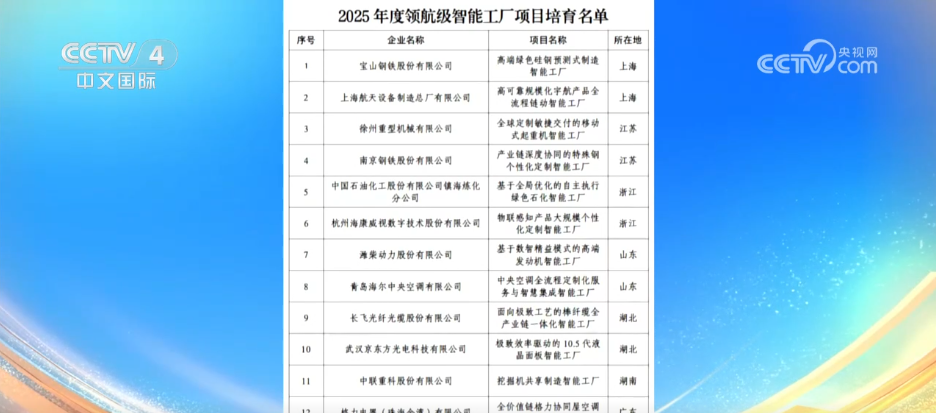
Core Viewpoint - Smart manufacturing is the core engine for high-quality development in the manufacturing industry, marking a critical leap from digitalization and networking to intelligence in China's manufacturing sector [1][5]. Group 1: Overview of Leading Smart Factories - The Ministry of Industry and Information Technology and five other departments announced the first batch of 15 leading smart factories, covering key industries such as equipment manufacturing, raw materials, and electronic information [1][4]. - These leading factories represent the highest level of smart manufacturing in China and showcase the breadth and depth of the country's intelligent manufacturing development [4][5]. Group 2: Classification and Development of Smart Factories - A four-tier system for smart factory cultivation has been established: foundational, advanced, excellent, and leading levels, with 35,000 foundational, over 7,300 advanced, 500 excellent, and 15 leading smart factories built to date [7]. - The leading level aims for global leadership and deep integration of AI, while the excellent level requires at least 20% AI application scenarios [7]. Group 3: Key Elements for Leading Smart Factories - Six key elements define a leading smart factory: industry leadership, AI technology application, innovative smart manufacturing models, performance leadership, replication leadership, and nurturing plans [10][12]. - Longfei Optical Fiber exemplifies these elements by integrating AI throughout its production process, achieving a global record in fiber drawing speed and precision [12][13]. Group 4: Case Studies of Leading Smart Factories - Weichai Power has implemented a digital twin technology that reduces R&D cycles by 20% and enhances production flexibility through AI-driven systems [20][21]. - Baosteel is innovating with AI-driven predictive manufacturing, aiming to establish 1,200 AI scenarios and 25 benchmark production lines by 2027, while also investing in talent development [25][27]. Group 5: Future Manufacturing Models - The exploration of future manufacturing models focuses on high customization, complex product production, and efficient supply chain organization, aiming to enhance China's position in the global supply chain [17][29]. - The emergence of these leading smart factories not only represents individual breakthroughs but also reflects a systemic transformation in China's manufacturing industry, providing replicable and scalable models for industry upgrades [29].


苏州市市长吴庆文:在江苏推进中国式现代化走在前做示范中勇挑大梁
Xin Lang Cai Jing· 2026-01-13 05:18
Group 1: Company Overview - Suzhou Huaxing Yuanchuang Technology Co., Ltd. is focused on the development of semiconductor and automotive electronics testing new products, showcasing over 1,200 patent certificates [1] Group 2: Economic Performance - Suzhou's economic total ranks sixth among Chinese cities, with industrial output value second nationally and import-export volume fourth [3] - The city's public budget revenue is also sixth in the country, indicating strong fiscal health [3] Group 3: Innovation and Development - Suzhou has achieved over 1 trillion in both total R&D investment and technology contract transaction volume, with a R&D intensity of 4.2% [5] - The city has established six national advanced manufacturing clusters and is recognized for its leadership in artificial intelligence and new industrialization [5] Group 4: Future Development Goals - Suzhou aims to enhance economic strength, promote technological and industrial innovation, and improve living standards as part of its "15th Five-Year Plan" [6][8] - The city plans to focus on smart, green, and integrated development, aiming to build a modern industrial system centered on advanced manufacturing [8][10] Group 5: Industry Transformation - Traditional industries will undergo upgrades through new technologies, while emerging industries like high-end equipment and biomedicine will be further developed [10][12] - Future industries such as artificial intelligence and quantum technology will be prioritized, with a strategic focus on integrating these technologies into urban development [12][13] Group 6: Talent and Innovation Ecosystem - Suzhou is committed to investing over 10% of its fiscal revenue into technological innovation annually, aiming to enhance its status as a hub for innovation and industry [13][14] - The city will strengthen its talent recruitment and development strategies to support its innovation ecosystem [14][16]
沈鼓集团首获碳管理体系认证
Zhong Guo Hua Gong Bao· 2026-01-13 05:14
Core Viewpoint - ShenGu Group has successfully obtained the Carbon Management System Certification, marking a significant advancement in its carbon emission management practices [1] Group 1: Company Achievements - ShenGu Group is recognized as a leading enterprise in China's high-end equipment manufacturing sector [1] - The company views green transformation as a key driver for high-quality development [1] Group 2: Carbon Management System - ShenGu Group has established a comprehensive carbon management system that covers all business processes, from top-level design to grassroots execution [1] - The system includes carbon asset management and production process optimization, creating a systematic and standardized approach to carbon management [1] Group 3: Technological Innovations - The company has implemented a carbon emission monitoring network and improved its data accounting system [1] - Innovations in energy-saving and carbon reduction technologies have enhanced energy utilization efficiency and strengthened the company's ability to manage carbon risks [1]
辽宁:35家企业入选先进级智能工厂
Liao Ning Ri Bao· 2026-01-13 01:30
Core Viewpoint - The Liaoning Provincial Department of Industry and Information Technology has announced the second batch of advanced intelligent factories for 2025, with 35 enterprises selected, covering various sectors such as biomedicine, equipment manufacturing, electronic information, and new metallurgical materials. This brings the total number of advanced intelligent factories in the province to 273 [1] Group 1 - The selected enterprises include Shenyang Xingqi Eye Medicine and Dalian Zhongbi Power Battery among others [1] - The provincial government aims to implement a gradient construction action for intelligent factories, promoting the upgrade of production processes and management integration [1] - The goal for 2026 is to add over 80 advanced and above intelligent factories in the province [1] Group 2 - The initiative includes promoting basic-level intelligent factories, accelerating the transformation of production processes, and fostering collaborative management [1] - The plan also emphasizes the cultivation of excellent-level factories to drive multi-scenario intelligent applications [1] - The establishment of leading-level factories is aimed at innovating research paradigms, production methods, service systems, and organizational structures [1]
中集集团(000039) - 000039中集集团投资者关系管理信息20260113
2026-01-13 01:04
证券代码:000039、299901 证券简称:中集集团、中集 H 代 中国国际海运集装箱(集团)股份有限公司 投资者关系活动记录表 编号:2026-02 投 资 者 关 系 活 动类别 □特定对象调研 □分析师会议 □媒体采访 □业绩说明会 □新闻发布会 √路演活动 √现场参观 □其他 (请文字说明其他活动内容) 参 与 单 位 名 称 及人员姓名 HSBC、花旗、中信证券、中金公司、华泰证券、招商证券、长 江证券、中信建投、广发证券、兴业证券、光大证券、申万宏源、 国盛证券、国金证券、西南证券、华福证券、天风证券、中银国 际、中泰国际、国元国际、华源证券、国投证券; 博时基金、富国基金、广发基金、大成基金、永赢基金、兴证全 球基金、宝盈基金、国投瑞银基金、朱雀基金、前海人寿、太平 养老保险、宁银理财、光大资管、新华资产、高毅、和谐汇一、 国华兴益、国调基金; 中国石油集团昆仑资本有限公司、南通产控集团、宁波宁电投资 发展有限公司、观富资产、玄元私募、涌铧投资、深圳创富兆业 基金、深圳市华安合鑫私募证券基金有限公司、深圳南方祥瑞投 资有限公司、三和创赢资产管理有限公司、上海少伯资产管理有 限公司、HAO C ...

云南园区经济按下快进键:优化布局 错位发展 协同并进
Xin Lang Cai Jing· 2026-01-13 00:14
Core Viewpoint - Yunnan province has implemented a three-year action plan for the revitalization of development zones, significantly contributing to the regional economy and achieving high-quality development through optimized industrial layout and regional cooperation [1][2]. Group 1: Economic Contributions - Development zones occupy less than 1% of the land area but contribute over 20% of the regional GDP, 30% of employment, 40% of industrial investment, 60% of operating income, and 80% of the industrial output value above designated size [1]. - From January to November 2025, the industrial output value above designated size in development zones grew by 6.0% year-on-year, while the industrial added value increased by 5.6%, both exceeding the provincial average [1]. Group 2: Industrial Upgrading and Collaboration - Yunnan is addressing the challenges of small, scattered, and weak industrial parks by establishing a benefit-sharing mechanism to promote collaborative efforts and efficient resource allocation [2]. - The province has focused on key projects like the Shanghai-Yunnan Port Technology City and the Ruili Industrial Cooperation Park to foster industrial upgrades and demonstrate successful models [2]. Group 3: Innovation and Technology - Eight high-tech zones in Yunnan host 613 high-tech enterprises and 1,307 technology-based SMEs, showcasing a robust innovation ecosystem with 100% of the province's national engineering research centers and 33% of national key laboratories [3]. Group 4: Cross-Regional Cooperation - The Shanghai-Yunnan Port Technology City is emerging as a model for cross-regional industrial cooperation, with 145 enterprises registered and 24 operational, enhancing industrial clustering effects [4]. - A total of 119 projects have been signed and implemented, with a total investment of approximately 36 billion yuan, demonstrating the effectiveness of the "Shanghai headquarters + Yunnan base" collaboration model [6]. Group 5: Shared Development Mechanisms - Yunnan's border cooperation with Laos has led to the establishment of 38 cross-border logistics and manufacturing enterprises, enhancing resource flow and economic cooperation [7]. - Various regions in Yunnan are adopting innovative "park within a park" models to share benefits and attract quality projects, promoting collaborative development across counties and cities [8].
普湾经济区9企业拟获专项资金支持
Zhong Guo Hua Gong Bao· 2026-01-12 23:31
Core Viewpoint - Dalian's Industrial and Information Technology Bureau has announced funding support for nine companies, including Puwan Economic Zone Zhongchumai New Materials Co., Ltd., highlighting the effectiveness of the park in promoting new technological transformations in manufacturing [1] Group 1: Technological Transformation Initiatives - Puwan Economic Zone has systematically organized new technological transformation initiatives focusing on fine chemicals and equipment manufacturing [1] - The initiatives aim to phase out high-energy-consuming, low-value-added outdated capacities in fine chemical enterprises and promote clean production processes and circular production models [1] - Equipment manufacturing enterprises are encouraged to adopt advanced equipment such as CNC machining centers and industrial robots, and to establish digital production management platforms to transition traditional manufacturing to flexible production [1] Group 2: Support and Funding Mechanisms - Dalian is one of the first pilot cities in the country for new technological transformations in manufacturing, with special funds focusing on technological upgrades in the chemical raw materials and chemical products manufacturing sectors [1] - For eligible upgraded equipment and newly completed technological transformation projects, one-time subsidies of up to 10% and 20% of the investment amount are provided, respectively [1] - The maximum subsidy for new technological transformation projects is 2 million yuan [1]

“陕”耀新程——陕西上市公司产业升级的四种实践
Shang Hai Zheng Quan Bao· 2026-01-12 19:11
Core Insights - Shaanxi province is witnessing a transformation in its capital market, shifting from resource-driven growth to innovation and technology-driven development, with a focus on high-tech industries and global competitiveness [1][2][3] Group 1: Company Developments - As of January 12, 2026, Shaanxi has 84 A-share listed companies, with over half being high-tech enterprises, which are crucial for high-quality development [2] - Notable companies such as Kangtuo Medical, Nova Star Cloud, Tongli Co., and Lite Optoelectronics are emerging as leaders in their respective niches, focusing on advanced R&D and global market strategies [1][2] - Kangtuo Medical's PEEK materials are registered in nearly 40 countries, while Nova Star Cloud serves over 4,000 clients with its video solutions, showcasing the global reach of Shaanxi enterprises [2] Group 2: R&D and Investment - In 2024, the total R&D investment of A-share listed companies in Shaanxi exceeded 12 billion yuan, with an average R&D intensity of 8.75% among Sci-Tech Innovation Board companies, ranking among the top in the country [2] - The focus on high R&D intensity reflects a long-term commitment to innovation, positioning these companies for future market leadership [2][3] Group 3: Strategic Direction - Shaanxi companies are increasingly adopting a global perspective, not only expanding their markets but also exporting technology standards and brand value [2] - The development path for these companies involves overcoming technical barriers through sustained R&D, leading to market breakthroughs and ultimately enabling them to compete globally [3][4] Group 4: Innovation Ecosystem - The growth of Shaanxi's capital market is supported by initiatives like the "Qin Chuang Yuan" innovation platform and reforms in technology transfer, facilitating the conversion of academic research into industrial applications [4] - There are over 520 key listed companies in Shaanxi, with 96.54% being technology-oriented, indicating a robust pipeline of future growth in sectors like aerospace, semiconductors, and advanced materials [4]


焦点访谈|领航时代 “智造”未来 探秘领航级工厂的跃升密码
Yang Shi Wang· 2026-01-12 13:37
Core Viewpoint - Smart manufacturing is identified as the core engine for high-quality development in the manufacturing industry, marking a significant transition from digitalization and networking to intelligent manufacturing in China [1][15]. Group 1: Overview of Smart Factories - The Ministry of Industry and Information Technology, along with five other departments, announced the first batch of 15 leading smart factories, covering key industries such as equipment manufacturing, raw materials, and electronic information [1][3]. - These leading factories represent the highest level of intelligent manufacturing in China and showcase a broad and deep development of smart manufacturing across various regions [1][3]. - The four-tier system for smart factory cultivation includes foundational, advanced, excellent, and leading levels, with specific requirements for each tier [3]. Group 2: Key Elements of Leading Smart Factories - To qualify as a leading smart factory, six key elements are required: industry leadership, AI technology application, innovative smart manufacturing models, performance leadership, replication leadership, and nurturing plans [3][5]. - Longfei Optical Fiber exemplifies an industry leader by integrating AI throughout its production process, achieving a pulling speed of 3,500 meters per minute with no human intervention [5][6]. - Weichai Power demonstrates performance leadership by reducing maintenance costs by 30% through its engine health management system, showcasing the effectiveness of its smart manufacturing practices [10]. Group 3: Future Manufacturing Models - The exploration of leading smart factories aims to create a flexible and efficient supply network capable of high customization and rapid iteration in production [8][16]. - Baosteel is innovating with AI-driven predictive manufacturing, moving away from traditional order-based production to proactively managing supply chains and production resources [11][13]. - The establishment of at least 1,200 AI scenarios and 25 benchmark production lines by Baosteel by 2027 reflects a commitment to integrating AI into manufacturing processes [13]. Group 4: Systemic Transformation in Manufacturing - The emergence of the first batch of leading smart factories signifies a systemic transformation in China's manufacturing sector, with a focus on technological breakthroughs, efficiency improvements, and green transitions [16]. - The experiences and models developed by these leading factories are expected to be replicable and promote the digital transformation of more manufacturing enterprises [16].