煤炭开采和洗选业

Search documents
重要数据公布,积极信号显现
第一财经· 2025-08-09 05:59
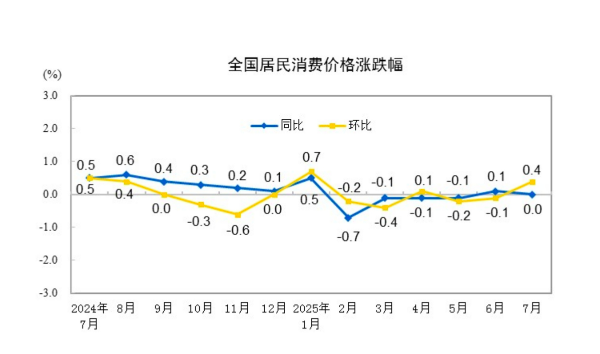
Core Viewpoint - The article discusses the recent trends in China's Consumer Price Index (CPI) and Producer Price Index (PPI), highlighting the impact of seasonal factors and international trade uncertainties on these indices. It notes a shift in CPI from a decline to an increase, while PPI continues to show a decrease but at a reduced rate. CPI Analysis - In July, the CPI increased by 0.4% month-on-month, reversing a previous decline of 0.1%, with year-on-year growth remaining flat [2] - The year-on-year CPI was primarily influenced by lower food prices, which fell by 1.6%, a decline that widened by 1.3 percentage points compared to the previous month, contributing approximately 0.29 percentage points to the CPI's year-on-year decline [2] - Non-food prices rose by 0.3% year-on-year, an increase of 0.2 percentage points from the previous month [2] - Seasonal factors, particularly the summer travel season, led to significant increases in service prices, with airfares, tourism, and accommodation costs rising by 17.9%, 9.1%, and 6.9% respectively [5] PPI Analysis - The PPI decreased by 0.2% month-on-month in July, but the rate of decline narrowed by 0.2 percentage points, marking the first reduction in the rate of decline since March [7] - The decline in PPI was attributed to seasonal factors and uncertainties in the international trade environment, which affected prices in several industries [7] - Specific industries such as non-metallic mineral products, black metal smelting, and coal mining saw price declines of 1.4%, 0.3%, and 1.5% respectively [7] - The competitive market environment has improved, leading to a reduction in the rate of price decline in several sectors, including coal and steel [8] Future Price Trends - The National Bureau of Statistics anticipates a moderate recovery in prices in the second half of the year, supported by stable economic performance, effective domestic demand policies, and reduced low-price competition among enterprises [9]


重要数据发布!环比上涨0.4%
Zhong Guo Zheng Quan Bao· 2025-08-09 04:53
Group 1 - The core viewpoint is that the effects of domestic demand expansion policies are becoming increasingly evident, with the Consumer Price Index (CPI) showing a month-on-month increase of 0.4% in July, reversing a previous decline of 0.1% [1][2] - The core CPI, excluding food and energy prices, rose by 0.8% year-on-year in July, marking the highest increase since March 2024, and the growth rate has expanded for three consecutive months [5][6] - The increase in CPI is primarily driven by rising prices in the service sector and industrial consumer goods, with service prices up 0.6% month-on-month, contributing approximately 0.26 percentage points to the CPI increase [4][5] Group 2 - The Producer Price Index (PPI) decreased by 0.2% month-on-month in July, but the decline has narrowed by 0.2 percentage points compared to the previous month, marking the first contraction in the rate of decline since March [6][8] - Seasonal factors and uncertainties in the international trade environment have led to price declines in certain industries, while domestic market competition continues to improve, resulting in a reduced downward impact on PPI [8][9] - Year-on-year, the PPI fell by 3.6% in July, with the decline remaining consistent with the previous month, indicating some improvement in supply-demand relationships in certain sectors due to ongoing macroeconomic policies [8][9]

0.8%
Shang Hai Zheng Quan Bao· 2025-08-09 04:51
Group 1: CPI Analysis - In July, the CPI remained flat year-on-year, with a month-on-month increase of 0.4%. The core CPI, excluding food and energy, rose by 0.8%, marking the highest increase since March 2024 [1][3][4] - The year-on-year stability of the CPI was primarily influenced by lower food prices, which decreased by 1.6% compared to the same month last year. Fresh vegetable prices fell by 7.6%, while fresh fruit prices increased by 2.8% [3][4] - The month-on-month increase in CPI was driven by rising service and industrial consumer goods prices, with service prices up by 0.6% and industrial consumer goods prices up by 0.5% [4][3] Group 2: PPI Analysis - In July, the PPI decreased by 3.6% year-on-year, with the decline consistent with June's figures. However, the month-on-month decline of 0.2% showed a narrowing compared to June [5][6] - Certain industries experienced improved supply-demand relationships, leading to positive price changes. For instance, the price of caustic soda rose by 3.6%, and the price of glass manufacturing saw a reduced decline of 0.9% compared to June [6][7] - The month-on-month decline in PPI was influenced by seasonal factors, with prices in the coal mining and washing industry, black metal smelting, and photovoltaic equipment manufacturing showing reduced declines compared to the previous month [7][6] Group 3: Future Price Trends - The National Bureau of Statistics indicated that prices are expected to gradually recover in the second half of the year, driven by effective policies aimed at expanding domestic demand, which will stimulate consumption and push up consumer goods prices [8] - The holiday effect is anticipated to stabilize or increase service prices, while the downward pressure from tailing factors on both CPI and PPI is expected to diminish [8]
利好!重要数据公布,积极信号显现!
证券时报· 2025-08-09 03:46
Group 1 - The core CPI has shown an expanding growth for three consecutive months, indicating positive changes in prices [1][7] - In July, the CPI increased by 0.4% month-on-month, which is 0.1 percentage points higher than the seasonal level [3] - The rise in CPI is primarily driven by increases in service and industrial consumer goods prices, with service prices up 0.6% and industrial consumer goods prices up 0.5% [5] Group 2 - The core CPI, excluding food and energy, rose by 0.8% year-on-year, marking the highest increase since March 2024 [9] - Food prices have decreased by 1.6% year-on-year, significantly impacting the overall CPI [8] - The prices of gold and platinum jewelry increased by 37.1% and 27.3% year-on-year, respectively, contributing to the CPI increase [9] Group 3 - The PPI decreased by 0.2% month-on-month, but the decline has narrowed for the first time since March [12] - The decline in PPI is influenced by seasonal factors, market order optimization, and uncertainties in the international trade environment [14] - The competitive order in the domestic market has improved, leading to a reduction in the downward pressure on prices in several industries [17]

7月核心CPI同比涨幅连续3个月扩大 下半年价格低位温和回升支撑因素有哪些
Di Yi Cai Jing· 2025-08-09 03:22
Group 1: Consumer Price Index (CPI) - In July, the CPI increased by 0.4% month-on-month, reversing a 0.1% decline from the previous month, with year-on-year growth remaining flat [1][3] - The year-on-year CPI was primarily influenced by lower food prices, which decreased by 1.6%, contributing approximately 0.29 percentage points to the CPI decline [1] - Core CPI, excluding food and energy, rose by 0.8% year-on-year, marking the highest increase since March 2024 [1] Group 2: Producer Price Index (PPI) - The PPI decreased by 0.2% month-on-month in July, but the decline was less than the previous month, marking the first narrowing of the decline since March [5] - Seasonal factors and uncertainties in the international trade environment contributed to price decreases in several industries, including a 1.4% drop in non-metallic mineral products [5][6] - The prices in coal mining and washing, black metal smelting, and photovoltaic equipment manufacturing saw reduced declines compared to the previous month, indicating improved market competition [6] Group 3: Economic Outlook - The National Bureau of Statistics indicated that prices are expected to gradually rise in the second half of the year, supported by stable economic performance and effective domestic demand expansion policies [6]
7月核心CPI同比涨幅连续3个月扩大,下半年价格低位温和回升支撑因素有哪些
Di Yi Cai Jing· 2025-08-09 03:20
Group 1: CPI Analysis - The core CPI, excluding food and energy prices, increased by 0.8% year-on-year, marking the highest growth since March 2024, with a 0.1 percentage point increase from the previous month [2] - In July, the CPI rose by 0.4% month-on-month, reversing a 0.1% decline from the previous month, primarily driven by increases in service and industrial consumer goods prices [4] - The decrease in food prices, particularly fresh vegetables and fruits, significantly impacted the CPI, with fresh vegetable prices down 7.6% year-on-year and fruit prices up 2.8% [1][4] Group 2: PPI Analysis - The PPI fell by 0.2% month-on-month in July, but the decline was less than the previous month, marking the first narrowing of the month-on-month decline since March [6] - Seasonal factors and uncertainties in the international trade environment contributed to price decreases in several industries, including non-metallic mineral products and coal mining [6][7] - The competitive market environment in industries such as coal, steel, and photovoltaic manufacturing has led to a reduction in price declines compared to the previous month [7] Group 3: Future Price Trends - The National Bureau of Statistics anticipates a moderate recovery in prices in the second half of the year, supported by stable economic performance, effective demand expansion policies, and reduced low-price competition among enterprises [7]
重磅发布!0.4%↑
Zheng Quan Shi Bao Wang· 2025-08-09 02:48
Group 1: CPI Analysis - The Consumer Price Index (CPI) increased by 0.4% month-on-month in July, reversing a previous decline of 0.1%, with a year-on-year change remaining flat [1][2] - The core CPI, excluding food and energy, rose by 0.8% year-on-year, marking the highest increase since March 2024, with a continuous expansion in growth for three consecutive months [2][3] - Service prices contributed significantly to the CPI increase, with a month-on-month rise of 0.6%, driven by seasonal factors such as summer travel, impacting the CPI by approximately 0.26 percentage points [2] Group 2: PPI Analysis - The Producer Price Index (PPI) decreased by 0.2% month-on-month, but the decline was less than the previous month, marking the first narrowing of the month-on-month decline since March [4][5] - Year-on-year, the PPI fell by 3.6%, with the decline remaining consistent with the previous month, indicating some improvement in supply-demand relationships in certain industries [5] - Seasonal factors and uncertainties in international trade affected prices in several sectors, with notable decreases in construction materials and energy-related prices [4][5]
7月核心CPI同比持续回升,PPI环比降幅收窄
Di Yi Cai Jing Zi Xun· 2025-08-09 02:29
2025.08.09 多,一方面建筑项目施工进度放缓影响建材需求;另一方面部分地区河流水量充沛,水力发电对火力发 电的补充替代作用明显增强,电煤需求减少,电价下降。受此影响,非金属矿物制品业价格环比下降 1.4%,黑色金属冶炼和压延加工业价格下降0.3%;煤炭开采和洗选业价格下降1.5%,电力热力生产和 供应业价格下降0.9%。国际贸易环境不确定性影响下,计算机通信和其他电子设备制造业价格下降 0.4%,汽车制造业价格下降0.3%,电气机械和器材制造业价格下降0.2%,通用设备制造业价格下降 0.2%。上述8个行业合计影响PPI环比下降约0.24个百分点。二是国内市场竞争秩序持续优化带动相关行 业价格降幅收窄。全国统一大市场建设纵深推进,煤炭、钢材、光伏、水泥和锂电等行业市场竞争秩序 持续优化,煤炭开采和洗选业、黑色金属冶炼和压延加工业、光伏设备及元器件制造、水泥制造、锂离 子电池制造价格环比降幅比上月分别收窄1.9个、1.5个、0.8个、0.3个和0.1个百分点,合计对PPI环比的 下拉影响比上月减少0.14个百分点。此外,国际输入性因素拉动国内石油和有色金属相关行业价格上 行,石油和天然气开采业价格上涨3 ...
7月份物价数据发布!金饰品价格同比上涨37.1%
Zheng Quan Ri Bao Wang· 2025-08-09 02:27
Group 1: CPI Analysis - The Consumer Price Index (CPI) increased by 0.4% month-on-month in July, which is 0.1 percentage points higher than the seasonal level [3] - The rise in CPI was primarily driven by increases in service and industrial consumer goods prices, with service prices up 0.6% and industrial consumer goods prices up 0.5% [3] - Seasonal factors, such as the summer travel peak, contributed to significant price increases in air tickets (17.9%), tourism (9.1%), hotel accommodation (6.9%), and vehicle rentals (4.4%) [3] Group 2: Core CPI Insights - The core CPI, excluding food and energy, rose by 0.8% year-on-year, marking the highest level since March 2024 [4] - Jewelry prices, particularly gold and platinum, saw substantial increases of 37.1% and 27.3% respectively, contributing approximately 0.22 percentage points to the CPI [4] - Food prices experienced a year-on-year decline of 1.6%, primarily due to high base effects from the previous year, which negatively impacted the overall CPI [4] Group 3: PPI Overview - The Producer Price Index (PPI) decreased by 0.2% month-on-month, but the decline was less severe than in previous months, marking the first month of narrowing decline since March [5] - Seasonal factors and uncertainties in international trade contributed to price decreases in certain industries, while domestic market competition improved, leading to reduced price declines in sectors like coal, steel, and solar energy [5][6] - Year-on-year, the PPI fell by 3.6%, with some industries experiencing price recoveries due to macroeconomic policies and demand improvements [6]
7月核心CPI同比持续回升,PPI环比降幅收窄
第一财经· 2025-08-09 02:11
Group 1 - The core viewpoint of the article highlights the ongoing effects of domestic demand expansion policies, leading to a rise in the Consumer Price Index (CPI) and a narrowing decline in the Producer Price Index (PPI [3][4][6] - In July, the CPI increased by 0.4% month-on-month, driven by rising prices in services and industrial consumer goods, with service prices up 0.6% and industrial consumer goods prices up 0.5% [4][5] - The core CPI, excluding food and energy, rose by 0.8% year-on-year, marking the highest increase since March 2024, with significant contributions from jewelry prices [4][5] Group 2 - The PPI decreased by 0.2% month-on-month, but the decline was less than the previous month, marking the first narrowing of the month-on-month decline since March [6][7] - Seasonal factors and uncertainties in the international trade environment contributed to price declines in certain industries, such as construction materials and electricity generation [6][7] - Year-on-year, the PPI fell by 3.6%, with some industries experiencing price increases due to improved supply-demand relationships and ongoing macroeconomic policies [8]